
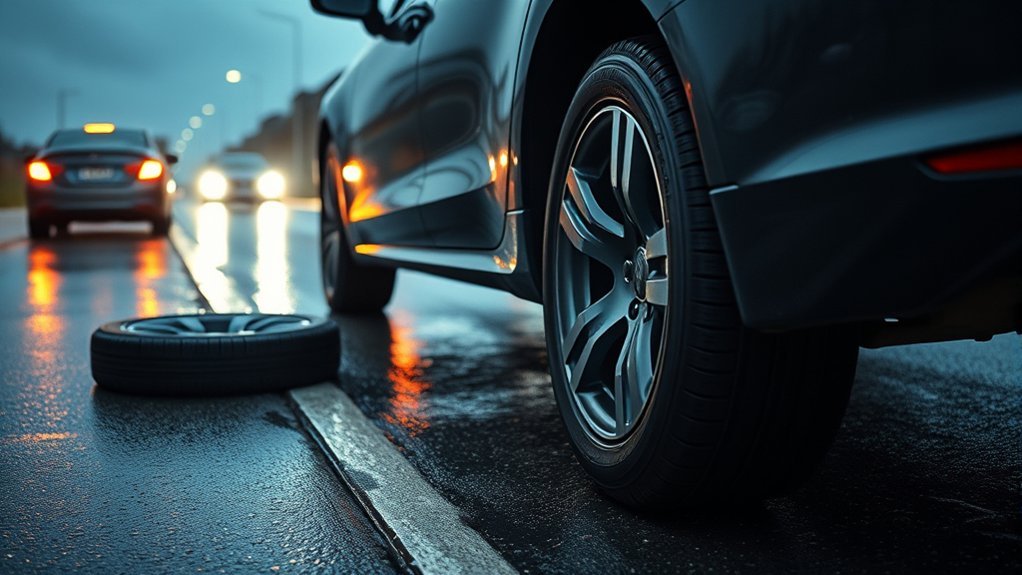
Run-flat tires can be worth it when you value temporary mobility after a puncture more than the lowest tire cost or the softest possible ride. Many run-flat designs let you continue driving for a limited distance after pressure loss, which can help you avoid stopping on a dangerous shoulder. The tradeoff is that they can cost more, may ride firmer, and have stricter repair and replacement considerations than conventional tires.
Quick Answer
Run-flat tires are usually worth considering if avoiding an immediate roadside tire change is a high priority. Many models provide limited mobility after losing pressure, commonly around 50 miles at no more than 50 mph. However, the exact limit depends on the tire and vehicle, while higher cost, firmer ride quality, and repair restrictions can make conventional tires a better value for other drivers.
Key Takeaways
- Run-flat tires are designed to support the vehicle temporarily after substantial pressure loss, helping you reach a safer place or tire shop.
- About 50 miles at a maximum of 50 mph is a common run-flat specification, but it is not universal. Always follow the exact tire and vehicle instructions.
- Vehicles equipped with run-flats rely heavily on a functioning Tire Pressure Monitoring System because pressure loss may not be visually obvious.
- Run-flats often cost more and can feel firmer than comparable conventional tires, but ride, efficiency, handling, and tread life vary by specific tire model.
- A run-flat that has lost pressure must be professionally inspected. Repairability depends on the damage, how far it was driven, remaining pressure, and the tire manufacturer’s policy.
- Run-flats make the most sense for drivers who place a high value on emergency mobility and who are willing to accept their additional cost and service restrictions.
What Are Run-Flat Tires?

Run-flat tires are tires designed to provide temporary mobility after a major loss of air pressure. Instead of immediately collapsing like an unsupported conventional tire may do, a run-flat uses additional structural support to help carry the vehicle for a limited distance.
The most familiar design is the self-supporting run-flat. Its reinforced sidewalls are engineered to carry the load temporarily when inflation pressure falls. Another design uses a support ring attached to the wheel to help support the vehicle after pressure loss.
These designs are different from self-sealing tires. A self-sealing tire contains sealant intended to close certain small tread punctures and prevent or slow pressure loss. A run-flat is designed to remain temporarily mobile even after significant pressure loss. Some tire technologies may combine different features, so check the specific tire rather than assuming the terms mean the same thing.
Run-flats can also allow a vehicle manufacturer to omit a spare tire, jack, or related equipment. That can free cargo space, but the absence of a spare is a vehicle-design choice rather than a rule that applies to every vehicle using run-flats.
How Do Run-Flat Tires Work?
During normal driving, run-flat tires operate at normal inflation pressure just like other tires. If pressure drops sharply, the tire’s reinforced structure is designed to prevent immediate collapse and provide enough support for temporary emergency travel.
That does not mean a deflated run-flat is operating normally. Heat builds rapidly when a tire carries load with little or no air pressure, so manufacturers impose limits on speed, distance, and load.
A functioning Tire Pressure Monitoring System (TPMS) is especially important with run-flat tires. Because the reinforced tire may continue supporting the vehicle after pressure loss, the tire may not look or feel as obviously flat as a conventional tire. The TPMS warning may therefore be your first indication of a problem.
Warning: Run-flat capability is temporary emergency mobility, not permission to continue a trip normally. If your TPMS warns of pressure loss, reduce speed, avoid hard acceleration and cornering, follow the tire and vehicle manufacturer’s instructions, and arrange inspection as soon as possible.
Run-flats may help preserve better stability than a conventional tire that has completely collapsed, but you should not assume steering, braking, cornering, or traction remain identical to normal inflated operation.
Many current run-flat systems use an emergency limit near 50 miles at no more than 50 mph, but the correct limit is always the one specified for your exact tire and vehicle.
How Fast Can You Drive on Run-Flats?
For many popular run-flat tires, manufacturers specify a maximum speed of roughly 50 mph after substantial pressure loss and an emergency travel distance of roughly 50 miles. Michelin ZP, Pirelli Run Flat, Bridgestone DriveGuard, and Continental SSR products are examples of tires that commonly use limits in this range.
However, 50 miles should not be treated as guaranteed remaining range. The distance you can safely travel can be affected by vehicle load, ambient temperature, road surface, the severity of the tire damage, how much pressure remains, and how aggressively the vehicle is driven.
If your tire or owner’s manual specifies a shorter distance or lower speed, follow that limit instead.
After pressure loss:
- Slow down smoothly and avoid abrupt steering or braking.
- Stay below the tire or vehicle manufacturer’s zero-pressure speed limit.
- Avoid potholes, curbs, hard cornering, and unnecessary highway travel.
- Drive only far enough to reach a suitable safe location or tire-service facility.
- Have the tire inspected before returning it to normal service.
If vehicle control feels abnormal, the tire is visibly damaged, more than one tire is affected, or the manufacturer instructs you to stop, do not rely on the run-flat range. Move to safety if possible and arrange roadside assistance.
Run-Flat Tire Benefits
The main benefit of a run-flat tire is temporary mobility after pressure loss. Instead of immediately changing a tire beside moving traffic, at night, or in an isolated area, you may be able to travel to a safer location or tire shop.
That can offer several practical advantages:
- Less roadside exposure: You may avoid changing a wheel on a dangerous shoulder.
- Temporary vehicle control: The reinforced structure is designed to keep the tire from immediately collapsing after pressure loss.
- No immediate tire change: You may be able to reach professional service before replacing or inspecting the tire.
- Potential cargo-space savings: Vehicles designed without a spare tire can use that space elsewhere.
- Useful for remote or late-night travel: Emergency mobility can be valuable when stopping immediately would be inconvenient or unsafe.
These benefits are strongest when the vehicle has a functioning TPMS and when replacement run-flat tires are readily available in the areas where you drive.
Pro Tip: Before a long trip, check your run-flat tire pressures when cold and confirm that your TPMS has no warning or fault. Run-flat construction does not eliminate the need for normal inflation-pressure maintenance.
[Products Worth Considering]

The Tymate TM12 RV TPMS delivers real-time tire pressure and temperature monitoring with a stable 433Hz display for safer long-distance driving. It supports simultaneous monitoring across vehicle and trailer zones, includes six alarm modes for pressure, temperature, leakage, battery, and signal loss, and features easy DIY installation with auto calibration. Power is supplied via USB-C charging or solar recharging, with a wide 0–144 PSI range and up to 50 ft signal coverage for RVs and towable trailers.

TireJect Off-Road Tire Sealant Kit provides 5-in-1 sealing to help fix tread punctures up to 3/8", sidewall punctures up to 3/8", bead leaks, slow leaks, and minor dry rot on low-speed tires. It permanently seals with liquid rubber, recycled tire particles, and Aramid fibers, making it ideal for flats caused by thorns, nails, and screws. The included dispensing cap attaches to the valve stem for a no-mess installation, along with a metal valve core remover tool and valve stem cap. This kit is for off-road use only.

The TYAMATE TM8 solar-powered wireless TPMS delivers real-time tire pressure and temperature monitoring with six alarm modes for safer driving. A vibrant color LCD display shows readings clearly while windshield mounting keeps it hands-free and easy to read. With a wide 0–87 PSI range, strong 433.92 MHz signal transmission, and quick sensor pairing, it’s ideal for RV, sedan, SUV, MPV, and truck use.
Run-Flat Tire Drawbacks
The biggest disadvantages are usually cost, ride characteristics, replacement availability, and repair limitations.
Run-flat tires often cost more than comparable conventional tires because of their specialized construction. The exact difference varies by tire size, brand, performance category, and market, so a fixed percentage premium is not reliable.
The reinforced construction can also create a firmer ride, especially on broken pavement, although modern run-flat designs vary considerably. Some premium run-flats are engineered specifically for comfort or performance, so you should compare the actual tire models rather than assuming every run-flat behaves the same way.
Replacement availability can be another concern. If your vehicle uses an uncommon size or manufacturer-specific tire, a nearby shop may not have an exact replacement in stock.
Repairability can also be more restrictive. Once a run-flat has been driven at very low or zero pressure, internal damage may exist even if the outside still looks usable.
Claims that every run-flat automatically causes worse fuel economy, poorer steering, or shorter tread life are too broad. Rolling resistance, tire weight, compound, tread design, alignment, inflation pressure, driving habits, and vehicle setup all influence those outcomes.
[Products Worth Considering]

AstroAI AIRUN H is a compact 12V tire inflator designed for fast, convenient inflation with an easy-to-read digital pressure gauge. Set your target pressure with programmable controls and let the auto shut-off turn off the pump when the preset is reached. It also includes a backlit screen and LED flashlight for nighttime use, with a ToughUltra durability design for longer service life.

AUTOWN’s 68-piece tire repair kit helps you fix punctures and plug flats quickly and effectively. It includes a T-handle and spiral probe tool for easy insertion, while the steel patch and plug materials are designed for strong adhesion and long-lasting airtight performance. The compact case makes it convenient for roadside repairs across a wide range of vehicles.

Yieokei Tesla jack pads are molded rubber lifting pucks designed for 2016-2026 Model 3/Y/S/X, including Juniper, to fit securely in the jack hole. They cushion the underframe and help position the jack precisely at the factory jack points to reduce risk of battery, paint, or chassis damage. The set also includes a tire repair tool kit for emergency roadside fixes and comes with a portable storage case to keep everything organized.
Can Run-Flat Tires Be Repaired?
Some run-flat tires can be repaired, but not every manufacturer permits it and not every puncture qualifies. A professional must first determine whether the tire has suffered structural damage from the puncture or from being driven while severely underinflated.
For an otherwise repairable passenger tire, industry guidance generally limits repairs to qualifying punctures in the tread area. A puncture extending into the shoulder or sidewall is not considered a normal repair candidate.
A proper puncture repair is also more involved than simply inserting an external plug. The tire should be removed from the wheel so the inside can be inspected. Where repair is permitted, the approved procedure uses a repair that both fills the injury and seals the innerliner.
Note: Run-flat manufacturers can impose stricter repair rules than general passenger-tire repair standards. The amount of pressure lost, how far the tire was driven, vehicle speed, load, heat, and visible or internal damage can all determine whether the tire must be replaced.
Sidewall cuts, bulges, major impact damage, exposed cords, internal abrasion, or damage caused by excessive zero-pressure operation generally mean the tire should be replaced rather than repaired.
Because internal damage cannot always be seen while the tire remains mounted, a professional inspection is essential after a significant run-flat event.
How Long Do Run-Flat Tires Last?
There is no single mileage lifespan that applies to all run-flat tires. Tread life depends on the exact tire model, compound, vehicle, wheel alignment, inflation pressure, rotation pattern, road conditions, driving style, and load.
Some replacement run-flat tires come with a mileage warranty, while many performance or original-equipment tires have different warranty terms or no mileage warranty. For that reason, a blanket estimate such as 25,000 to 50,000 miles can be misleading.
Judge replacement need using several factors:
- Remaining tread depth
- Uneven or abnormal wear
- Cuts, bulges, cracking, impacts, or other damage
- Repeated inflation-pressure loss
- The tire manufacturer’s age recommendation
- The vehicle manufacturer’s guidance
Tire age is separate from tread wear. NHTSA notes that some vehicle and tire manufacturers recommend replacing tires when they are roughly six to 10 years old regardless of remaining tread. Follow the specific age limit supplied by your tire and vehicle manufacturer.
To maximize useful life, check cold inflation pressure at least monthly, inspect for damage, maintain alignment, and rotate the tires when the vehicle and tire design permit rotation.
Are Run-Flat Tires Worth Buying?
Run-flat tires are most worthwhile when avoiding an immediate roadside tire change is a major priority. They can be particularly attractive if you frequently drive alone, travel at night, use roads with narrow shoulders, or own a vehicle designed around run-flat tires without a spare.
Conventional tires can make more sense when ride comfort, replacement availability, lower purchase cost, or easier service options matter more.
| Factor | Run-Flat Tires | Conventional Tires |
| After a major pressure loss | Designed for limited emergency mobility | Normally requires stopping and using a spare, repair kit, or roadside service |
| Purchase price | Often higher | Usually more choices across price ranges |
| Ride | Can feel firmer depending on model | Wider range of comfort-oriented designs |
| Puncture repair | Conditional and manufacturer-specific | Qualifying tread punctures may be repairable under industry procedures |
| Spare tire | Vehicle may be designed without one | Spare, inflator/sealant kit, or roadside plan is advisable |
[Products Worth Considering]

This AUTOWN flat tire repair kit is designed for quick, reliable puncture repairs using a plug kit and spiral probe tool to simplify installation. Built for durability and safe handling, it offers strong adhesion and flexibility to help maintain tire air tightness. With a portable storage case and a multi-vehicle approach, it’s suitable for cars, motorcycles, ATVs, tractors, lawn mowers, RVs, jeeps, and trucks.

This 3-ton scissor car jack tire changing kit helps you lift cars and SUVs with a wide range to reach low sedans or higher vehicles. The set includes a ratchet wrench, multi-size lug wrench, gloves, a tire pressure gauge, and a storage bag for quick emergency repairs. Built for stable, secure lifting and universal compatibility, it’s ready for flat tires and roadside wheel changes.
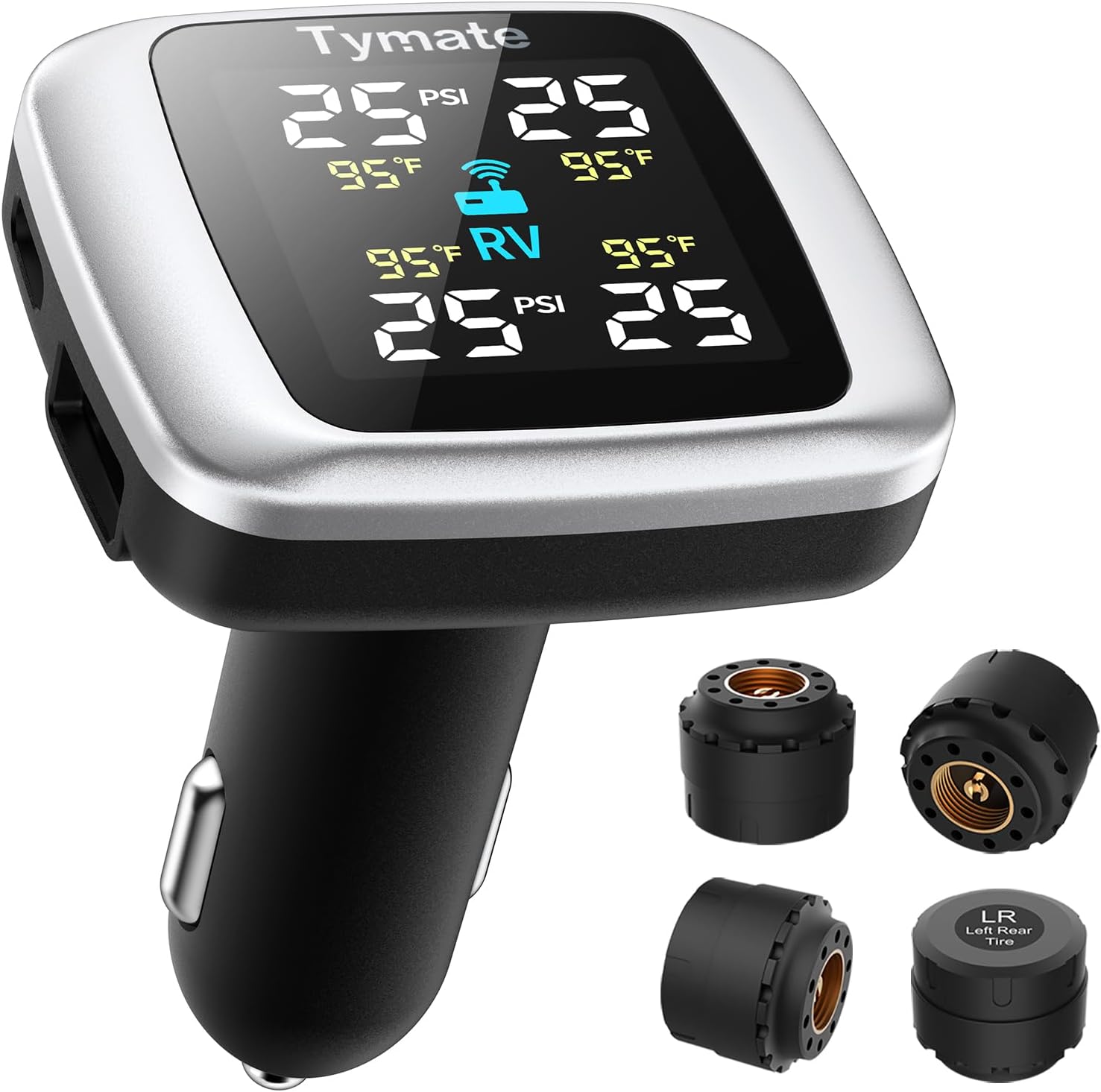
Tymate TM7 is a wireless tire pressure monitoring system that delivers real-time pressure and temperature readings for safer driving. It includes four external sensors, a bright color LCD display with adjustable backlight, and six alarm modes for high/low pressure, fast leakage, high temperature, and sensor signal or battery issues. The system covers a wide 0–144 PSI range and plugs into your vehicle’s cigarette lighter socket for quick DIY setup.
Safety Benefits
The strongest reason to choose run-flats is the ability to maintain temporary mobility after pressure loss. Their supporting structure can help prevent the tire from immediately collapsing, potentially allowing you to leave a dangerous roadside location before dealing with the tire.
That benefit should not be confused with immunity from tire failure. Run-flats can still suffer punctures, sidewall damage, impact damage, tread separation, or other failures that make continued driving unsafe.
A functioning TPMS remains essential because the system alerts you to pressure loss that might otherwise be difficult to recognize immediately.
Cost Tradeoffs
Price is one of the main reasons drivers choose conventional tires instead. Run-flats often carry a premium, but the exact difference changes by size, brand, speed rating, vehicle application, and retailer.
Long-term cost also depends on whether a damaged tire can be repaired, whether an exact replacement is readily available, and whether replacing one tire creates tread-depth or matching concerns on the vehicle.
For some drivers, paying more for emergency mobility is worthwhile. For others who already have a spare tire or reliable roadside assistance, that benefit may not justify the additional cost.
Repair Considerations
A run-flat tire that has been driven after pressure loss should be inspected even if the puncture appears small. The visible hole is only one part of the decision; technicians also need to check the innerliner and supporting structure for heat or abrasion damage.
Never assume that reinflating the tire means it is safe to continue using. Follow the tire manufacturer’s repair policy and the vehicle manufacturer’s instructions.
Can You Replace Run-Flat Tires With Regular Tires?
It may be possible to replace factory run-flats with conventional tires on some vehicles, but you should not treat the change as a simple one-for-one swap without checking the vehicle manufacturer’s guidance.
Changing tire type can affect emergency mobility, handling characteristics, TPMS-related vehicle logic, and the equipment you need to carry. If the vehicle has no spare because it was designed around run-flat tires, switching to conventional tires also means you need another plan for a flat, such as an approved spare-wheel setup, compatible inflator system, or roadside assistance.
The replacement tires still need the correct size, load capacity, speed rating, inflation specification, and other fitment requirements for the vehicle.
If you lease a vehicle, also check return requirements. Some manufacturers or leasing programs require the same tire specification, including run-flat construction where originally equipped.
Frequently Asked Questions
Is There a Downside to Running Flat Tires?
Yes. Run-flat tires often cost more, can provide a firmer ride, may be harder to find in some sizes, and can have stricter repair rules after pressure loss. Their main advantage is temporary emergency mobility, so whether those tradeoffs are worthwhile depends on how highly you value avoiding an immediate roadside tire change.
Has BMW Stopped Using Run-Flat Tires?
No. BMW still uses run-flat tires on some current vehicles and configurations. For example, several current BMW X5 trims are offered with all-season run-flat tires. Equipment varies by model, wheel package, market, and model year, so check the specifications or owner’s information for your exact BMW.
What Is the Lifespan of a Run-Flat Tire?
There is no universal run-flat mileage lifespan. Tread life depends on the specific tire, vehicle, pressure maintenance, alignment, road conditions, load, and driving style. Replace the tire when it reaches its wear limit, develops unsafe damage, or reaches the age limit specified by the tire or vehicle manufacturer.
Is It Better to Have Run-Flat Tires or Regular Tires?
Neither type is automatically better. Run-flats are attractive when emergency mobility after pressure loss is your priority. Conventional tires often offer more choices, lower prices, and more comfort-oriented options. Your vehicle’s original equipment requirements, spare-tire setup, driving environment, and service availability should guide the decision.
Do Run-Flat Tires Need TPMS?
A functioning TPMS is essential for vehicles designed to use run-flat tires. Because the tire’s supporting structure can keep it looking and feeling relatively normal after pressure loss, the TPMS may be the first warning that the tire is underinflated or flat.
Can I Replace Run-Flats With Regular Tires?
Sometimes, but check the vehicle manufacturer’s requirements first. Switching removes run-flat emergency mobility and may change the equipment you need for a puncture. Any replacement must still meet the vehicle’s required size, load capacity, speed rating, pressure, and fitment specifications.
Conclusion
So, are run-flat tires worth it? They can be when avoiding an immediate roadside tire change is worth the additional cost and service restrictions to you. Their biggest advantage is temporary mobility after pressure loss, especially on vehicles designed around run-flat technology.
If you place more value on ride comfort, broad replacement availability, lower purchase cost, or simpler tire-service options, conventional tires may be the better fit. Whichever type you choose, use tires that meet your vehicle’s specifications, maintain the correct pressure, keep TPMS functioning, and treat any significant pressure-loss event as a reason for prompt professional inspection.
Sources
- National Highway Traffic Safety Administration (NHTSA), TireWise — tire aging, inflation, TPMS, inspection, and replacement guidance.
- U.S. Tire Manufacturers Association (USTMA), Puncture Repair Procedures for Passenger and Light Truck Tires — professional puncture inspection and repair criteria.
- Michelin USA, run-flat and flat-tire guidance — Michelin ZP zero-pressure limits and service guidance.
- Bridgestone/Firestone tire maintenance and run-flat guidance — RFT operation, TPMS, repairability, and conversion to conventional tires.
- BMW USA — current run-flat fitments, replacement considerations, and model-specific tire guidance.

![[2026NEW] 5000A Jump Starter with Air Compressor (150PSI)](https://m.media-amazon.com/images/I/71oG4PFNsmL._AC_SL1500_.jpg)