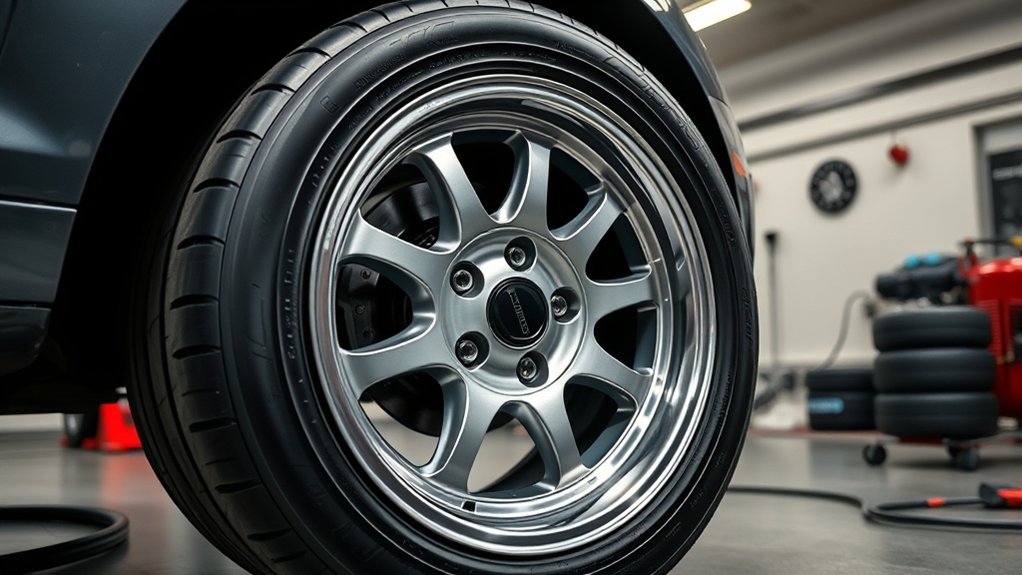
A stretched tire is a tire mounted on a wheel that is wider than the tire is meant to support. The sidewall pulls outward toward the rim, which creates the sharp stance look many car enthusiasts like. It can also reduce the tire’s safety margin if the tire is outside its approved rim-width range.
This guide explains what stretched tires are, why people use them, the real risks, how PSI should be handled, when the setup may be illegal, and when a normal low-profile tire is the safer choice.
Quick Answer
A stretched tire is a narrow tire fitted to a wider wheel for a show-style stance. It may expose the wheel lip, but it can reduce bead security, sidewall support, wet grip, and ride comfort. For street use, the safer choice is a tire size approved for the wheel width, load rating, and vehicle placard PSI.
Key Takeaways
- Stretched tires are mainly a styling choice, not a dependable performance upgrade.
- The safest fitment is one that stays within the tire manufacturer’s approved rim-width range.
- There is no universal stretched-tire PSI. Start with the vehicle’s cold tire pressure guidance and get professional fitment advice for non-standard sizes.
- Aggressive stretch can raise the risk of bead leaks, sidewall damage, impact damage, uneven wear, and blowouts.
- Local inspection rules, fender coverage laws, and insurance policies can affect whether the setup is road legal.
At a Glance
| Time Required | 15–30 minutes for fitment checks, plus professional mounting time |
| Difficulty | Advanced fitment planning; mounting should be handled by a qualified tire professional |
| Tools Needed | Owner’s manual, tire placard, tire pressure gauge, tire size specs, approved rim-width data, and professional mounting equipment |
| Cost | Varies by tire, wheel, shop, balancing, alignment, and whether safer replacement parts are needed |
Warning: Do not force a tire onto a wheel outside the tire maker’s approved rim-width range. If a shop needs excessive pressure or unsafe tricks to seat the bead, stop and choose a safer size.
What Is a Stretched Tire?
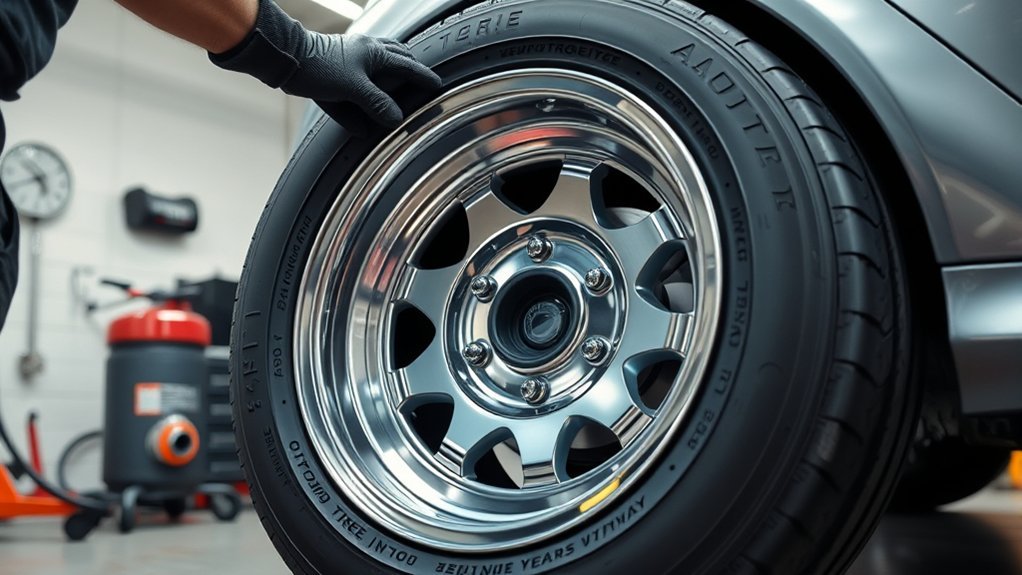
A stretched tire is a tire that sits on a wheel wider than the tire normally supports. Instead of the sidewall rising close to vertical, the sidewall angles outward toward the wheel lip. This creates a lower, cleaner, more exposed-rim look.
The important point is not only how it looks. The important point is whether the tire size is approved for that rim width. Tire diameter must match the wheel diameter, and the tire’s load rating must also meet the vehicle’s needs. U.S. vehicle guidance tells drivers to use the tire size listed in the owner’s manual or on the Tire and Loading Information Label unless a qualified tire professional confirms a safe alternative. NHTSA’s TireWise guide explains that the correct tire size is found on the vehicle label or in the owner’s manual.
In car culture, stretched tires are most common on stance builds, show cars, lowered cars, and aggressive wheel-fitment setups. They are not the same as normal low-profile tires. A low-profile tire can still be correctly matched to the wheel, while a stretched tire may sit outside the tire’s intended fitment range.
Why Do People Stretch Tires?
People stretch tires mostly for appearance. A narrower tire can expose more of the wheel lip and help the rim sit closer to the fender on a lowered car. On some builds, it is part of a wider stance setup with camber, rolled fenders, or custom wheels.
Stretched tires are a styling choice first. Any change in steering feel does not remove the safety tradeoff.
Common reasons include:
- Wheel-lip exposure: The wheel looks wider and more visible.
- Fender clearance: A narrower tire may reduce rubbing on a lowered car.
- Stance styling: The sidewall angle matches the show-car look.
- Custom fitment: Builders may use it to make wide wheels fit under tight arches.
Those reasons are visual. They do not guarantee better braking, cornering, wet grip, or tire life. If the tire is stretched beyond its approved range, the setup may become less forgiving when you hit potholes, carry passengers, drive in rain, or travel at highway speed.
Are Stretched Tires Safe?
Stretched tires are not the safest choice for daily driving, especially when the tire is outside the manufacturer’s approved rim-width range. A tire is designed to carry load, hold air, keep the bead seated, and maintain a stable contact patch. Stretching can reduce the sidewall’s ability to flex normally and can put extra stress near the bead.
NHTSA notes that tire maintenance matters because poor maintenance, including not enough air, can lead to a flat tire, blowout, or tread separation. The same page reports 511 tire-related traffic fatalities in 2024, which is a reminder that tire setup and maintenance are not just cosmetic details. NHTSA TireWise also says proper tire pressure affects safety, durability, and fuel use.
Federal tire-selection rules also focus on load. For vehicles with a gross vehicle weight rating of 10,000 pounds or less, 49 CFR 571.110 says the vehicle maximum load on a tire must not exceed the tire’s maximum load rating. If a stretched setup uses a tire with the wrong load index, the tire may be overloaded even before the car is driven hard.
Note: A tire that looks slightly stretched but remains within the tire maker’s approved rim-width range is different from an aggressive stretch that sits outside safe fitment data.
How to Choose the Right Wheel and Tire
Start with the factory tire size, load rating, speed rating, and cold tire pressure on your vehicle placard. Then compare any new tire size with the tire maker’s approved rim-width range. If the wheel is too wide for that tire, choose a wider tire, a narrower wheel, or a different fitment plan.
[Products Worth Considering]

Accurately measure tire tread depth with a calibrated gauge marked from 0 to 1 inch in 1/32 inch increments. The color-coded bar helps you quickly identify tread condition ranges, supporting safe driving for trucks, motorcycles, automobiles, and passenger vehicles.

The SAFELIFE dial tire tread depth gauge measures tread depth in 1/32 inch increments with clear, easy-to-read 2-inch dial face. Color zones using a traffic light system help you quickly judge whether tread is low, marginal, or ample for safer driving. Built with a durable zinc cast body and a metal detect probe for precise, comfortable use across cars, motorcycles, trucks, and buses.

Measure tire tread depth quickly and accurately with this LUMITECO dial gauge that reads in 1/32" increments up to 14/32". The color-coded green/yellow/red zones make it easy to judge tire wear and know when replacement is needed. A rugged, compact design with a protective pouch helps keep the gauge ready for use on cars, trucks, motorcycles, and more.
Fitment Checklist Before Mounting
| Wheel diameter | Must match the tire’s rim diameter exactly, such as 18-inch tire to 18-inch wheel. |
| Wheel width | Check whether the tire is approved for the rim width. This is the key safety check for stretch. |
| Load rating | The tire must meet or exceed the vehicle’s required load capacity. |
| Overall diameter | Keep the rolling diameter close to the original size so speedometer, ABS, traction control, and stability control are not thrown off. |
| Clearance | Check fenders, suspension, brakes, liners, and full steering lock before driving. |
| Professional mounting | Use a qualified tire shop that is willing to confirm the fitment in writing. |
Pro Tip: If you want a sporty look for daily driving, choose a wider wheel with a tire that is still approved for that wheel width. You get the visual upgrade with a better safety margin.
What PSI Do Stretched Tires Need?
There is no universal PSI for stretched tires. A blanket number like 40–50 PSI can be wrong for your tire, wheel, vehicle weight, load, and driving conditions.
For normal approved fitment, use the vehicle manufacturer’s recommended cold tire pressure from the driver-side door label or owner’s manual. NHTSA explains that the correct tire pressure is the vehicle manufacturer’s listed cold pressure, not simply the number molded on the tire sidewall. If you are using a non-standard tire and wheel combination, ask the tire manufacturer or a qualified tire shop to confirm the correct cold pressure and load capacity.
Follow these rules:
- Check pressure cold: Measure before driving or after the car has sat for at least several hours.
- Do not exceed limits: Never exceed the tire or wheel’s pressure limit.
- Recheck often: Stretched setups can be less forgiving if air pressure drops.
- Watch for bead leaks: Slow pressure loss can mean the tire is not sealing properly.
- Adjust for real use: Passenger load, highway driving, heat, and road conditions all matter.
What Are the Risks of Stretched Tires?
Stretched tires can look clean, but the risk rises as the fitment gets more aggressive. The main risks are mechanical, not cosmetic.
- Bead leaks or debeading: A poorly matched tire and wheel can lose air or unseat from the rim after an impact.
- Sidewall damage: The sidewall may have less room to flex over potholes, curbs, or rough pavement.
- Reduced rim protection: The wheel lip is more exposed to curb rash and impact damage.
- Less predictable wet grip: A compromised contact patch and stiff sidewall behavior can hurt control in rain.
- Uneven wear: Stance setups often combine stretch with camber, which can wear the inner tread quickly.
- Heat and blowout risk: Wrong pressure, overloading, rough roads, or long highway drives can increase heat and stress.
- Insurance and inspection problems: A non-standard setup may be questioned after a crash or during a safety inspection.
Warning: Do not ignore vibration, a bulge, exposed cords, sidewall cracking, fast pressure loss, or a tire that will not hold a bead. Stop driving and have the setup inspected immediately.
Are Stretched Tires Legal?
There is no single legal answer for every location. Some areas may not ban stretched tires by name, but the setup can still fail inspection if the tire is damaged, the tread is unsafe, the wheel sticks out past the body, the load rating is wrong, or the vehicle is considered unsafe for road use.
In the United States, federal rules such as 49 CFR 571.110 address tire selection, rims, load capacity, and tire placard information for vehicles with a GVWR of 10,000 pounds or less. State, provincial, or local inspection rules may add other requirements for fender coverage, tread depth, tire condition, wheel fitment, and unsafe modifications.
Before driving on stretched tires, check:
- Your state or provincial vehicle inspection rules.
- Fender coverage and tire protrusion rules.
- Minimum tread depth and tire condition rules.
- Your insurance policy’s modification language.
- Your tire shop’s willingness to mount and balance the setup safely.
If you cannot confirm those points, choose a standard approved tire size instead.
Stretched Tires vs. Low-Profile Tires
Stretched tires and low-profile tires can look similar, but they are not the same thing. A low-profile tire has a shorter sidewall height compared with its width. It can still be correctly matched to the wheel. A stretched tire is about the tire being too narrow for the wheel or near the edge of acceptable fitment.
| Feature | Stretched Tire | Low-Profile Tire |
| Main purpose | Style and wheel-lip exposure | Sporty handling and shorter sidewall feel |
| Fitment concern | Tire may be too narrow for wheel width | Can be safe if wheel width, load, and diameter are approved |
| Daily-driving comfort | Often harsher and less forgiving | Firm, but usually more predictable when properly matched |
| Best use | Show-focused builds with careful inspection | Street cars when approved by tire and vehicle guidance |
If you want a cleaner stance without the same risk, a properly matched low-profile tire or a mild plus-size setup is usually the better route.
[Products Worth Considering]

Monitor tire tread wear with a smart, color-coded depth gauge that shows clear condition ranges at a glance. The bar is range marked for fast, easy readings, helping you maintain safer traction and performance. Each gauge is portable with a pocket clip, and the set includes 20 units for daily use and sharing.

Measure tyre tread depth precisely with a digital gauge that reads in both MM and inches, helping you monitor safe driving conditions. The large LCD screen is easy to operate, and the compact tool fits for cars, trucks, and motorcycles. It provides high accuracy with a 0-25.4mm range and includes a 1-year warranty for added peace of mind.

Add style while helping protect your tire valve stems with handmade crystal rhinestone caps and a durable plastic insert. These caps resist corrosion and help keep out rain, snow, and muddy water, extending tire life. Textured non-slip design makes them easy to grip for quick install and removal when checking tire pressure.
When to Avoid Tire Stretching
Avoid tire stretching when safety, durability, and predictable handling matter more than show fitment. That includes most daily drivers.
Do not use aggressive stretch if you:
- Drive long highway distances.
- Regularly hit potholes, rough roads, or construction zones.
- Drive in heavy rain, snow, ice, or standing water.
- Carry heavy passengers or cargo.
- Tow or haul with the vehicle.
- Use the car for high-speed driving, racing, or aggressive cornering.
- Cannot confirm the tire’s approved rim-width range.
- Cannot confirm the correct load rating and cold tire pressure.
- Need your vehicle to pass strict inspection rules.
For most street cars, a standard approved fitment gives you better control, better impact protection, and fewer maintenance surprises.
How to Inspect a Stretched Tire Setup
If you already have stretched tires, inspect them more often than a standard setup. A small problem can become serious quickly because the bead and sidewall have less margin for error.
- Check pressure cold every week: A slow leak may point to bead sealing trouble.
- Look at the bead area: Watch for air seepage, uneven seating, or visible gaps.
- Inspect sidewalls: Replace the tire if you see cracks, cuts, bulges, exposed cords, or sidewall bubbles.
- Check tread wear: Inner-edge wear is common on cambered stance setups.
- Watch the rim lip: A bent wheel can break the seal or damage the tire.
- Rebalance after impacts: Vibration after a pothole hit needs immediate attention.
- Check alignment: Excessive camber or toe can destroy a tire quickly.
[Products Worth Considering]

AstroAI’s digital tire pressure gauge inflates and measures with high accuracy, reading within 1% and supporting four pressure units from 3 to 250 PSI. The heavy-duty brass air chuck locks securely on valve stems, while the 19.7-inch stainless braided hose and 360° rotatable dial improve comfort and control for faster single-hand operation. Battery-saver behavior and an integrated flashlight add convenience and safety for everyday roadside and garage use.

Keep your tires properly inflated with this analog VONDIOR tire pressure gauge, designed for fast, easy readings without batteries. The swiveling, two-axis hose and large glow dial help you measure at any tire angle with instant visibility. Built with a protective rubber shield, it supports durable, low-maintenance use for cars and trucks.

This 12-inch LUMITECO dual head tire pressure gauge features an integrated straight-on chuck and a 30° reverse chuck to reach hard-to-access dual wheel valves. Its 10–150 PSI / 1–10 BAR range with a clear, two-sided scale helps you quickly check tire pressure for safer, smoother driving. Heavy-duty construction and a simple no-battery design make it a reliable tool for trucks, cars, RVs, and motorcycles.
What to Do If the Tire Leaks, Vibrates, or Shows Damage
Do not keep driving on a stretched setup that is losing air or showing damage. The right response depends on the symptom:
- Slow leak: Check the valve stem, bead seal, wheel lip, and tire punctures. Do not simply add air forever.
- Fast air loss: Park safely and install a spare or call roadside assistance.
- Vibration: Inspect for a bent wheel, separated tire, bad balance, or suspension damage.
- Sidewall bulge: Replace the tire. A bulge can mean internal structural damage.
- Bead movement: Stop using the setup and choose a safer tire and wheel match.
- Blowout: Hold the wheel firmly, avoid hard braking, ease off the accelerator, and pull over when safe.
Frequently Asked Questions
What are the risks of stretching tires?
The main risks are bead leaks, debeading, sidewall damage, rim damage, uneven wear, reduced wet grip, harsher ride quality, and blowouts. The risk increases when the tire is outside the manufacturer’s approved rim-width range or when the car is driven on rough roads, in bad weather, or at highway speed.
Is it illegal to have stretched tires?
Stretched tires are not treated the same everywhere. Even if your area does not ban them by name, the setup can still fail inspection if the tire is damaged, unsafe, overloaded, sticking out past the body, or not suitable for road use. Check local vehicle rules and your insurance policy before driving.
Are there any benefits to stretched tires?
The real benefit is appearance. Stretched tires can expose the wheel lip and help create a stance-car look. They may also help with tight fender clearance on some show builds. They should not be treated as a reliable performance upgrade for daily driving.
What is the 3 Tire Rule?
There is no universal “3 Tire Rule” that makes stretched tires safe. Forum rules that mention a 3-inch stretch are not a replacement for tire-maker fitment data. Use the tire manufacturer’s approved rim-width range, the vehicle’s load needs, and a qualified tire shop’s guidance instead.
Can I run 40–50 PSI in stretched tires?
Do not use 40–50 PSI as a universal rule. The correct pressure depends on the tire, wheel, vehicle weight, load rating, and driving conditions. Check pressure cold, follow vehicle and tire guidance, and never exceed the tire or wheel’s pressure limit.
Are stretched tires safe in rain or winter?
They are a poor choice for rain, snow, ice, and standing water. Wet and cold conditions already reduce grip, and an aggressive stretched setup can make the tire less forgiving. For winter or heavy rain, use a properly fitted tire designed for those conditions.
Will a tire shop mount stretched tires?
Some shops refuse aggressive stretch because of liability and safety concerns. A reputable shop may decline the job if the tire is outside the approved rim-width range, if the load rating is wrong, or if the bead cannot be seated safely.
Conclusion
A stretched tire can create a sharp show-car stance, but it also reduces the safety margin when the tire is too narrow for the wheel. The safest path is simple: use a tire size approved for the wheel width, confirm the load rating, follow correct cold tire pressure guidance, and have the setup checked by a qualified tire professional.
If you drive daily, travel on rough roads, carry heavy loads, or deal with rain and winter weather, a properly matched low-profile tire is usually the smarter choice. Style matters, but the tire still has to hold air, carry weight, grip the road, and protect you when conditions change.
Sources
- NHTSA TireWise — tire pressure, tire size, tread, tire maintenance, and tire-related crash safety data.
- 49 CFR 571.110 — U.S. tire selection, rim, placard, and load-carrying requirements for light vehicles.
- 49 CFR 571.139 — federal standard for new pneumatic radial tires for light vehicles.
- Extended Pacejka Tire Model for Enhanced Vehicle Stability Control — research context on how tire pressure, temperature, tread depth, and road conditions affect tire force behavior.