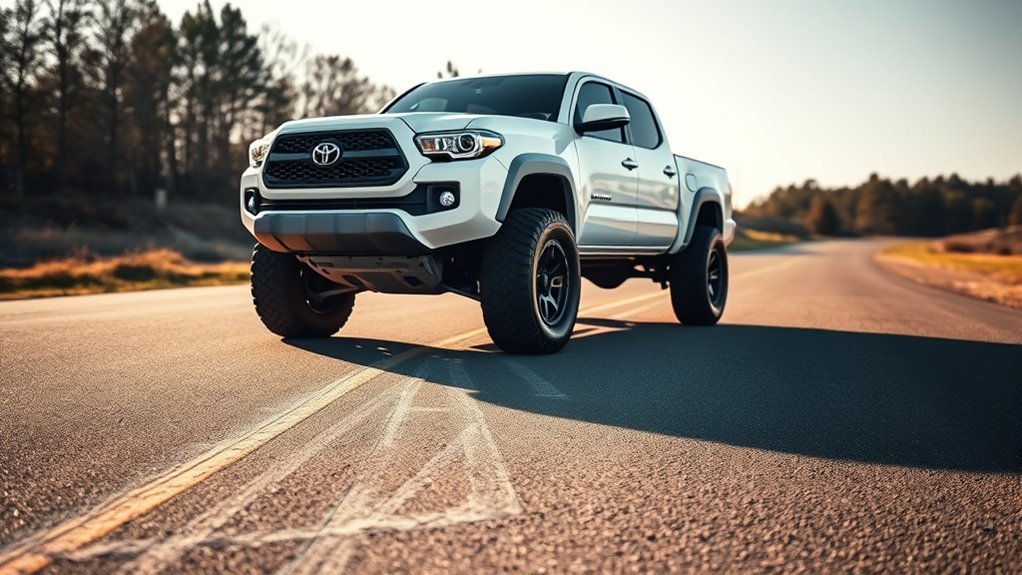
Larger tires can change how your Toyota Tacoma brakes, especially if the new setup is taller, heavier, wider, or more aggressive than stock. The main concerns are brake leverage, rotating mass, tire grip, tire pressure, and whether your brakes, suspension, and safety systems still match the new wheel-and-tire package.
Quick Answer
Larger Tacoma tires can increase stopping distance when they add weight, raise the tire radius, reduce brake leverage, or use a tread compound with less pavement grip. The effect is not a fixed percentage. A factory-supported 33-inch setup is very different from a heavy aftermarket 35-inch mud-terrain setup with extra armor and towing weight.
Key Takeaways
- A taller tire gives the brake system less mechanical leverage at the road, so the truck may need more brake torque to stop the same way.
- A heavier tire and wheel package adds rotating and unsprung weight, which can make braking feel slower and increase brake heat.
- Tire compound and tread pattern matter. A heavy mud-terrain tire may stop worse on wet pavement than a quality all-terrain or highway tire.
- Use the Tacoma owner’s manual, door label, and tire load rating as your baseline before changing size.
- After upsizing, check clearance, alignment, speedometer accuracy, brake condition, tire pressure, and ABS or driver-assist behavior.
At a Glance
| Time Required | 30 to 60 minutes for a basic inspection; longer if alignment, trimming, brake work, or calibration is needed. |
| Difficulty | Moderate. Tire-pressure checks are easy, but brake, clearance, and calibration checks should be handled by a qualified technician if you are unsure. |
| Tools Needed | Tire-pressure gauge, tread-depth gauge, flashlight, torque wrench, tire-size calculator, and a safe test-drive route. |
| Cost | Free for basic checks; alignment, trimming, recalibration, brake pads, rotors, or big-brake kits can add significant cost. |
Understanding the Impact of Tire Size on Vehicle Dynamics
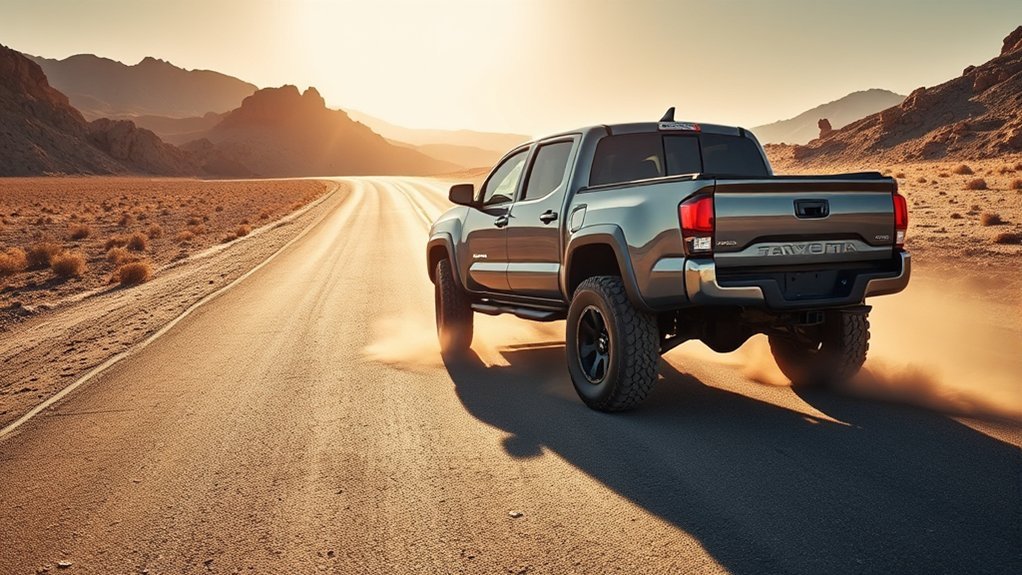
When you increase tire size on your Toyota Tacoma, you are changing more than the look of the truck. Tire diameter, tire weight, tread pattern, wheel offset, and tire pressure can all affect braking, steering, acceleration, fuel use, and suspension movement.
The biggest braking change comes from leverage. Your brakes create torque at the wheel hub. A taller tire moves the road contact patch farther from that hub. That means the same brake torque may create less braking force at the ground. This does not mean every larger tire adds the same amount of stopping distance, but it does explain why a taller tire can make the brakes feel less sharp.
Weight also matters. A larger tire and wheel package often adds rotating weight. That weight must be slowed every time you brake. If you also add steel bumpers, skid plates, a bed rack, camping gear, or towing weight, your brakes must manage even more heat and load.
Warning: Do not judge a tire upgrade by size alone. A light 33-inch all-terrain tire, a heavy 35-inch mud-terrain tire, and a factory 33-inch Tacoma setup can all brake differently. Always inspect the full setup before relying on it at highway speed.
How Tire Size Affects Stopping Power
Tire size affects stopping power through four main factors: diameter, weight, grip, and pressure. These factors work together, so there is no safe universal rule such as “10% bigger tires equal 10% worse braking.” Use that kind of number only as a rough warning that changes in tire size can matter.
Tire Diameter and Brake Leverage
A taller tire changes the effective lever arm between the hub and the ground. If the tire is much taller than stock, your brakes may need more torque to create the same braking force at the contact patch. You may notice this as a softer or less urgent stopping feel, especially during quick stops, towing, downhill driving, or repeated braking.
This is one reason some Tacoma owners upgrade pads, rotors, calipers, or brake lines after moving to much larger tires. It is also why you should compare your new tire diameter with the original tire size, not just the advertised “33” or “35” number.
Rotating Mass and Brake Heat
Heavier tires and wheels are harder to start, harder to stop, and harder for the suspension to control. The added rotating mass can increase brake heat during repeated stops. Heat matters because brake pads and rotors work best within a designed temperature range. If the brakes overheat, you may feel fade, smell hot brakes, or need more pedal pressure.
Unsprung weight also matters. Tires, wheels, and much of the brake assembly move with the suspension. When this weight increases, the truck can feel harsher over bumps and less settled on rough pavement. That can affect traction during braking on uneven roads.
Tire Grip and Tread Pattern
A bigger tire is not automatically a better-stopping tire. A wider or stickier tire may improve dry-road grip, but an aggressive off-road tread can reduce wet-road braking, increase noise, and feel less stable during hard stops. The rubber compound, tread depth, siping, and temperature all affect grip.
Before buying tires, check the tire’s service description, load range, speed rating, and wet-traction information. The NHTSA TireWise guide explains that tire traction grades relate to a tire’s ability to stop on wet pavement, and that the correct tire size should come from the owner’s manual or the Tire and Loading Information Label.
Tire Pressure and Contact Patch
Tire pressure changes the shape of the contact patch. Too little pressure can increase heat, wear the tire unevenly, and make steering and braking feel sloppy. Too much pressure can reduce ride comfort and may reduce the tire’s ability to conform to the road surface.
For stock tires, start with the pressure listed on your Tacoma’s door label or owner’s manual. For aftermarket LT tires or larger sizes, ask a qualified tire shop to calculate a safe pressure based on load capacity, axle load, tire construction, and how you use the truck.
Tire Size and Braking Changes: What to Expect
| Change | How It Can Affect Braking | What to Check |
|---|---|---|
| Taller diameter | Can reduce brake leverage at the road and affect speedometer accuracy. | Compare diameter with stock size and recalibrate if needed. |
| Heavier tire and wheel | Can increase rotating mass, brake heat, and pedal effort. | Weigh the full tire-and-wheel package, not just the tire. |
| More aggressive tread | May help on loose dirt but hurt wet pavement braking. | Review wet traction, road noise, tread design, and compound. |
| Incorrect pressure | Can reduce stability, increase heat, and lengthen stops. | Check pressure cold and match it to load and tire type. |
Toyota Tacoma Factory Context for Larger Tires
Not every Tacoma starts from the same brake and tire setup. Older Tacomas, third-generation trucks, and 2024+ Tacomas can have different brakes, wheels, suspension, and electronic systems. That means tire advice should be tied to your model year and trim.
For the 2024 Tacoma, Toyota says the truck uses four-wheel disc brakes, with TRD models and above getting a larger front brake package. TRD models and above with i-FORCE MAX also add a larger rear brake package. Toyota also equips 2024 Trailhunter and TRD Pro models with 33-inch Goodyear Territory R/T tires from the factory, according to the Toyota Newsroom.
That factory context matters. A factory 33-inch setup on a 2024 Tacoma TRD Pro is not the same as putting heavy 35-inch tires on an older Tacoma without checking brakes, gearing, clearance, and calibration.
Note: If your Tacoma already came with larger factory tires, use that factory setup as your baseline. If you are going beyond the factory tire diameter, weight, or load range, treat it as a new engineering change.
How to Upgrade Your Braking System for Larger Tires
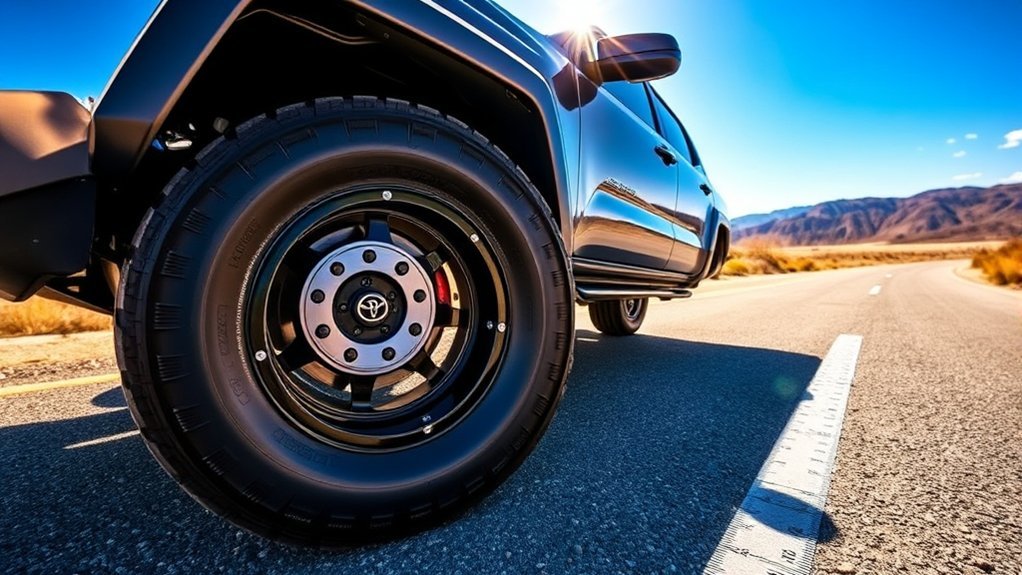
Brake upgrades are not always required for a mild tire change, but they are worth considering when the new tires are much taller, much heavier, or used with towing, mountain driving, armor, camping weight, or aggressive off-road driving.
[Products Worth Considering]
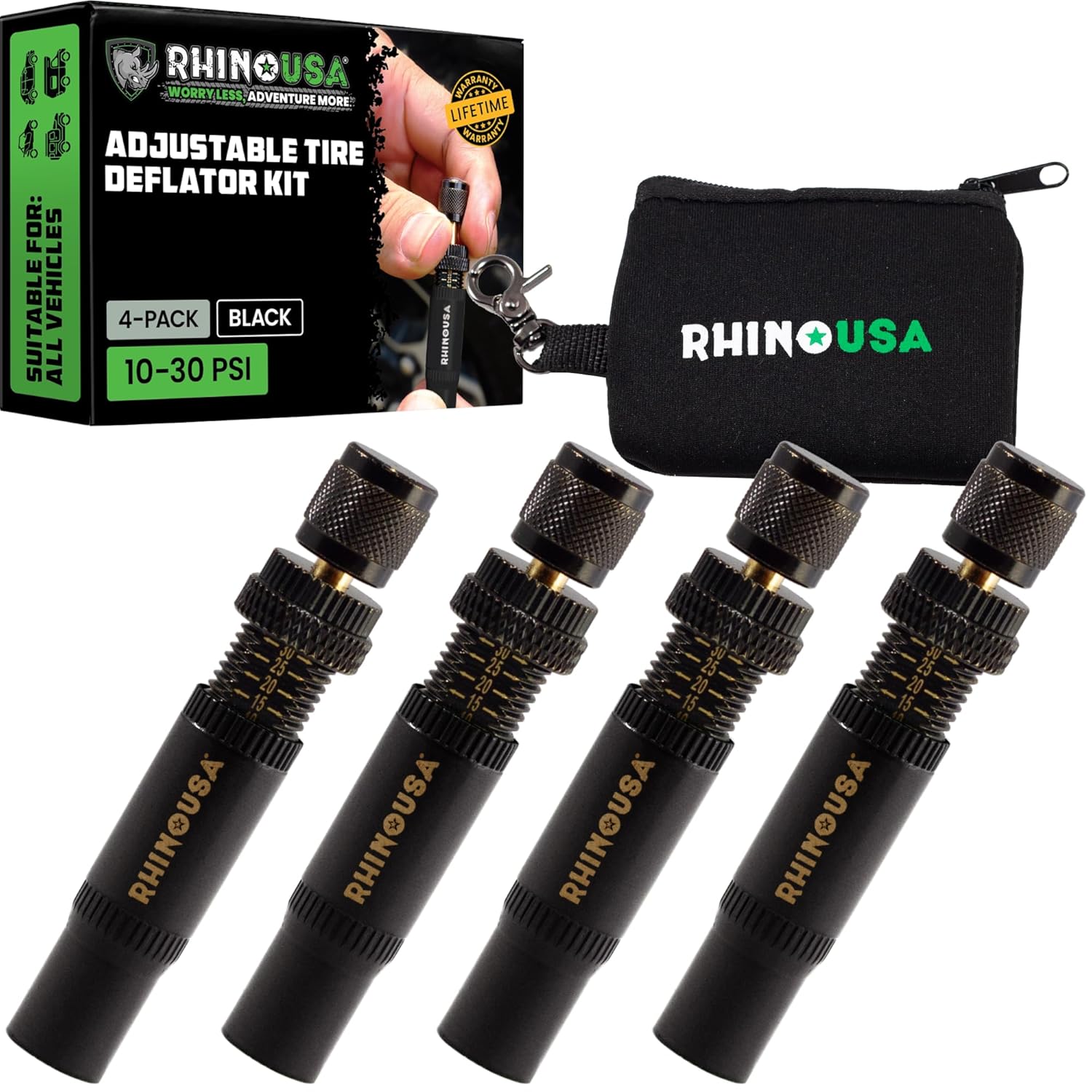
Use the Rhino USA adjustable tire deflators to air down all four tires at once by screwing one deflator onto each valve stem, letting you step away while the tires reach your preset pressure. Each deflator independently adjusts across a 10–30 PSI range with laser-etched indicators for quick setup and verification, making it ideal for beach, sand, and rocky off-road trails.

These aluminum alloy tire valve stem caps with an O-ring seal help protect valve stems from corrosion while adding a clean, stylish look to your vehicle. The universal fit works across cars, trucks, motorcycles, bicycles, and more, making them an easy upgrade for everyday driving and off-road use. Installation is quick, and the included four-pack keeps all your tires dressed and protected.

Monitor tire tread wear with a smart, color-coded depth gauge that shows clear condition ranges at a glance. The bar is range marked for fast, easy readings, helping you maintain safer traction and performance. Each gauge is portable with a pocket clip, and the set includes 20 units for daily use and sharing.
Brake Pads
High-quality pads can improve bite, heat resistance, and pedal feel. Choose pads that match your use. A street-focused pad may be quieter and smoother, while a towing or performance pad may handle heat better but create more dust or noise.
Rotors
Fresh rotors or larger rotors can help manage heat. If your current rotors are thin, warped, heavily grooved, or already near service limits, installing larger tires without brake service can make weak braking feel worse.
Calipers and Big-Brake Kits
A big-brake kit can add larger calipers and rotors for more thermal capacity and stronger braking. This can help with heavy tire setups, but it must fit your wheels and be balanced correctly front to rear. Poorly matched brake parts can create noise, uneven braking, ABS issues, or wheel-fitment problems.
Brake Lines and Fluid
Braided stainless steel brake hoses can improve pedal feel when old rubber hoses are soft or swelling. Fresh brake fluid also matters because moisture-contaminated fluid can boil sooner under hard braking. Follow the correct fluid specification for your Tacoma.
Pro Tip: Before buying a big-brake kit, make sure your wheels have enough inside diameter and spoke clearance. Some brake kits require specific wheel sizes or spacers.
Essential Modifications for Safe Tire Upgrades
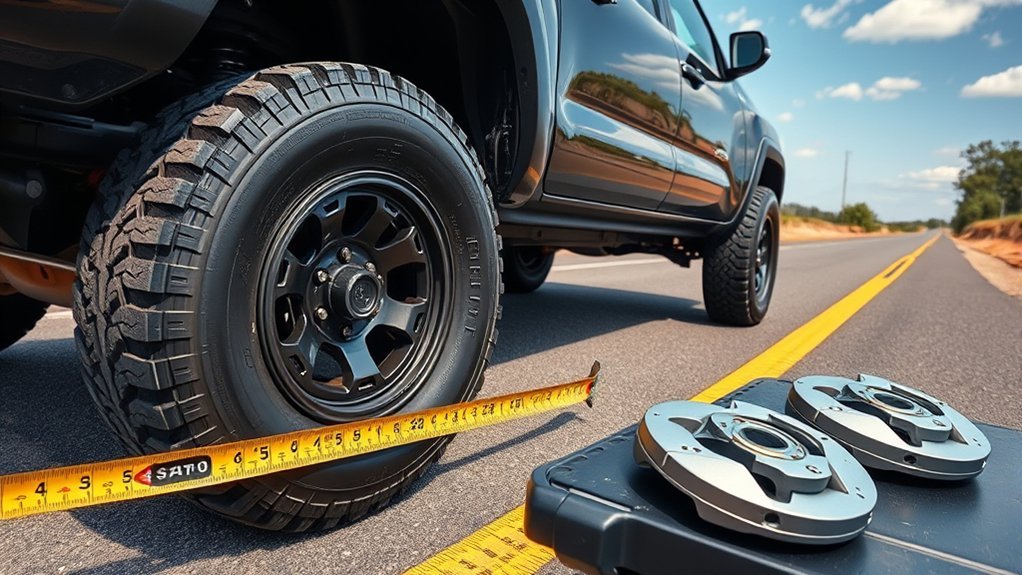
A safe tire upgrade is not just about whether the tires bolt on. You also need to check clearance, suspension travel, alignment, load rating, speedometer accuracy, and brake performance.
[Products Worth Considering]

Vigorder rubber cement glue delivers superior adhesion and cures quickly within about 30 seconds for seamless rubber bonding. Once cured, it helps provide a strong, durable, waterproof seal that holds up to vehicle weight, pressure, and heat. Suitable for cars, motorcycles, trucks, bicycles, and off-road tires, it’s designed for emergency patch and maintenance repairs.

This ALL-TOP auto-stop tire deflator valve kit lets you air down off-road tires quickly without watching pressure, automatically stopping when your preset PSI is reached. Each valve is individually calibrated for reliable performance with an acceptable +/- 2 PSI tolerance. The adjustable deflator range covers 10 to 30 PSI and includes four valves plus valve caps and a zipper pouch for easy setup on trucks, SUVs, RVs, UTVs, and powersports.

Measure tire tread depth quickly and accurately with this LUMITECO dial gauge that reads in 1/32" increments up to 14/32". The color-coded green/yellow/red zones make it easy to judge tire wear and know when replacement is needed. A rugged, compact design with a protective pouch helps keep the gauge ready for use on cars, trucks, motorcycles, and more.
Clearance and Rubbing
Turn the steering wheel fully left and right. Check for rubbing at the fender liner, mud flaps, body mount, upper control arm, sway bar, and inner wheel well. Then check again while the suspension is compressed. A tire that clears in the driveway may still rub while braking, turning, or flexing off-road.
Suspension and Lift Needs
Some Tacoma tire sizes fit with no lift. Others need trimming, different wheel offset, aftermarket upper control arms, or a lift. Do not rely on a blanket rule such as “32-inch tires need this lift” or “35-inch tires need that lift.” Fitment depends on model year, trim, wheel offset, tire width, tire brand, suspension sag, and how much rubbing you will accept.
Alignment
After changing tire size, wheel offset, or suspension height, get a proper alignment. Poor alignment can cause wandering, uneven tire wear, pulling during braking, and reduced stability.
Speedometer, Odometer, and Safety Systems
A taller tire can make your Tacoma travel farther per wheel revolution. This can make the speedometer read low and the odometer record fewer miles than you actually drive. It can also affect shift behavior, ABS, traction control, and driver-assist features. If the size change is significant, ask a qualified shop about recalibration.
Load Rating and Payload
Your new tires must support the truck’s weight, passengers, cargo, and tongue weight if you tow. Do not choose a tire only because it looks right. Check the load index or load range and make sure it fits your real use.
The Role of Tire Pressure in Brake Performance
Maintaining proper tire pressure is one of the simplest ways to protect braking performance. The NHTSA recommends checking tire pressure at least once a month when tires are cold, including the spare. It also says the correct pressure is listed on the Tire and Loading Information Label or in the owner’s manual, not on the tire sidewall.
A larger tire only helps if it is matched to the truck, load, pressure, and surface. Wrong pressure can turn a good tire choice into a poor braking setup.
If you air down for sand, rocks, or trails, air back up before returning to pavement. Low off-road pressure can improve ride and traction on certain surfaces, but it can also overheat the tire, reduce stability, and increase stopping distance at road speed.
Tips for Maintaining Effective Braking Performance
- Inspect pads and rotors often. Larger tires can expose weak or worn brake parts quickly.
- Use quality tires. Do not assume the tallest or most aggressive tire is the safest tire for braking.
- Check pressure cold. Recheck after temperature swings, trail use, towing, or heavy payload changes.
- Retorque wheels. Follow the correct lug-nut torque after wheel changes.
- Watch for pull, vibration, or fade. These can signal brake, alignment, tire, or suspension problems.
- Test in a safe area. After a tire change, practice gentle, moderate, and firm braking away from traffic.
- Leave more following distance. Until you know how the new setup behaves, drive as if your stopping distance is longer.
[Products Worth Considering]

The SAFELIFE dial tire tread depth gauge measures tread depth in 1/32 inch increments with clear, easy-to-read 2-inch dial face. Color zones using a traffic light system help you quickly judge whether tread is low, marginal, or ample for safer driving. Built with a durable zinc cast body and a metal detect probe for precise, comfortable use across cars, motorcycles, trucks, and buses.

This professional wheel and rim cleaning brush set lifts brake dust, grime, and dirt with soft, scratch-free microfiber and synthetic wool fibers. The rim brush bends up to 360 degrees for easy access to hard-to-reach areas around spokes, lips, and faces. Ideal for thorough cleaning of car, truck, motorcycle, bicycle, RV, and more wheel and tire surfaces.

Accurately measure tire tread depth with a calibrated gauge marked from 0 to 1 inch in 1/32 inch increments. The color-coded bar helps you quickly identify tread condition ranges, supporting safe driving for trucks, motorcycles, automobiles, and passenger vehicles.
Evaluating Real-World Braking Experiences With Larger Tires
Many Tacoma owners notice longer stops after moving to heavier or taller tires, especially when jumping from a stock-size all-season tire to a large all-terrain or mud-terrain tire. Others report acceptable braking when the tire change is mild, the tire compound is good, and the brakes are in excellent condition.
The difference usually comes down to the full setup. A Tacoma with light 33-inch all-terrain tires, fresh brakes, correct pressure, and good alignment may feel controlled. A Tacoma with heavy 35-inch mud-terrain tires, worn pads, extra armor, and no recalibration may feel sluggish during hard braking.
Pay close attention during the first week after the change. If the truck pulls, nose-dives, activates ABS too early, rubs while braking and turning, or smells like hot brakes on normal drives, stop and inspect the setup before pushing it harder.
Warranty and Legal Considerations
Aftermarket tires do not automatically void your entire Tacoma warranty. In the United States, warranty law limits a company’s ability to require a branded article or service as a condition of warranty coverage. You can read the relevant language in 15 U.S. Code § 2302. However, if a tire, wheel, lift, or brake modification causes damage, that related repair may be denied under warranty.
Legal rules also vary by state, province, and inspection program. Check local rules for tire coverage, fender flare requirements, bumper height, headlight height, mud flaps, speedometer accuracy, and tire load rating. This is especially important if your Tacoma is used for towing, commercial work, or annual safety inspections.
Warning: Brake, tire, suspension, and steering changes affect safety. If you are unsure whether your setup is safe, have it inspected by a qualified mechanic or alignment shop before highway driving, towing, or trail use.
Frequently Asked Questions
Do larger tires affect fuel efficiency in a Tacoma?
Yes, larger or heavier tires can reduce fuel efficiency because they often add rolling resistance, rotating weight, and aerodynamic drag. A taller tire can also affect gearing, which may change how often the transmission shifts.
Do larger tires always make Tacoma braking worse?
No. The result depends on tire diameter, weight, compound, tread, pressure, brake condition, road surface, and truck load. A mild tire upgrade with good rubber may brake well, while a heavy oversized mud-terrain setup can increase stopping distance.
How do larger tires influence off-road braking?
On loose dirt, sand, snow, or rocks, a larger tire with the right tread and pressure may improve control. On wet pavement or hard-packed roads, an aggressive off-road tire may stop worse than a highway or all-terrain tire. Match the tire to the surface you drive most.
Will larger tires void my Tacoma warranty?
They should not automatically void the whole warranty, but damage linked to the tire, wheel, lift, or brake modification may not be covered. Keep records, use quality parts, and ask your Toyota dealer how a specific change could affect related coverage.
Can I install larger tires without modifying my suspension?
Sometimes. Mild upsizes may fit some Tacomas without a lift, while wider or taller tires may need trimming, different wheel offset, aftermarket control arms, or a lift. Check clearance at full steering lock and during suspension compression.
Do I need bigger brakes for 33-inch Tacoma tires?
Not always. Some newer Tacoma trims come with factory 33-inch tires and upgraded brake packages. If your 33-inch tires are much heavier than stock, or if you tow, carry armor, or drive mountain roads, upgraded pads, rotors, or a larger brake package may be worth considering.
What legal issues should I check before larger tires?
Check local rules for tire coverage, fender flares, bumper height, headlight height, mud flaps, inspection rules, and speedometer accuracy. Laws vary, so confirm the rules where your Tacoma is registered and driven.
Conclusion
Larger tires can change your Toyota Tacoma’s braking distance, but the effect is not a simple fixed percentage. The real difference depends on tire height, tire weight, tread design, pressure, brake condition, vehicle load, road surface, and whether your truck’s systems are calibrated for the new size.
If you stay close to a factory-supported size, choose a quality tire, maintain correct pressure, and keep the brakes fresh, your Tacoma may remain predictable. If you move to much taller or heavier tires, especially with extra armor or towing weight, plan on checking brakes, alignment, clearance, gearing, speedometer accuracy, and legal fitment before you rely on the setup.
Sources
- NHTSA TireWise — tire size, tire pressure, tread, tire maintenance, and traction-rating guidance.
- Toyota USA Newsroom: 2024 Toyota Tacoma — factory Tacoma brake package, 33-inch tire, TRD Pro, and Trailhunter context.
- 15 U.S. Code § 2302 — warranty language relevant to branded parts and warranty conditions.