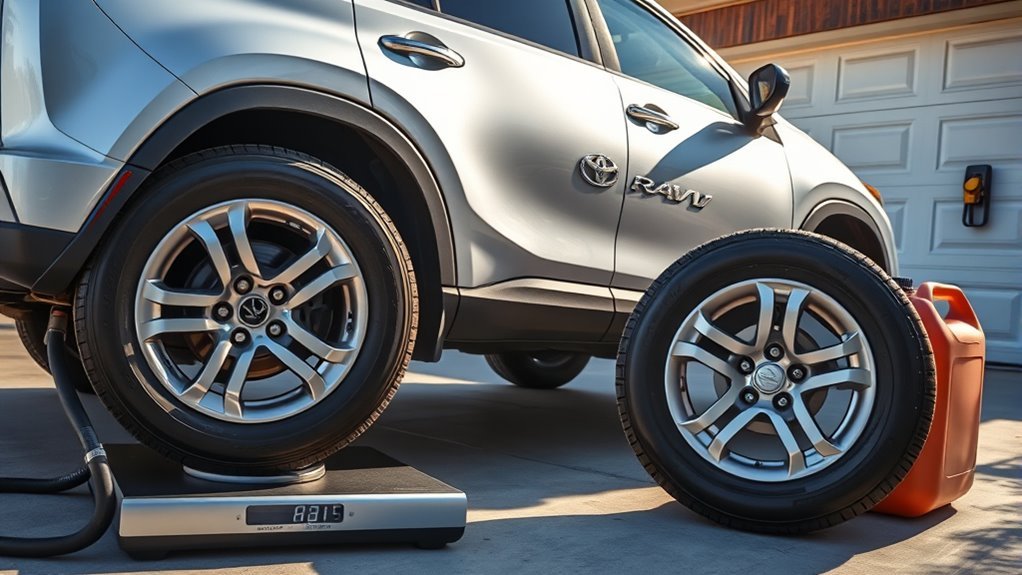
Heavier tires can lower your RAV4’s MPG, but tire weight is only one part of the story. The bigger fuel-economy changes usually come from rolling resistance, tread design, tire pressure, outside temperature, wheel weight, and added aerodynamic drag from racks or cargo boxes. A heavy all-terrain or winter setup can feel like a big MPG hit because it often adds weight and uses a more aggressive, higher-drag tread.
Quick Answer
Heavier RAV4 tires can reduce MPG, especially in stop-and-go driving, but rolling resistance and tread type usually matter more than weight alone. A mild weight increase may cost little, while aggressive all-terrain or winter tires can cause a noticeable drop. Compare tire weight, tread, rolling-resistance claims, and keep PSI at Toyota’s recommended cold pressure.
Key Takeaways
- Tire weight affects MPG most during acceleration because the engine must spin and move more mass.
- Rolling resistance is the bigger steady-speed factor; the U.S. Department of Energy notes that a 10% reduction in tire rolling resistance can reduce fuel use by about 1% to 2% for typical vehicles.
- Underinflation matters: FuelEconomy.gov says gas mileage can fall by about 0.2% for every 1 psi drop in the average pressure of all tires.
- Winter and all-terrain tires may reduce MPG because of softer compounds, deeper tread, larger tread voids, and extra weight.
- Roof cargo can hurt MPG more than tire weight at highway speed; a large roof-top cargo box can reduce fuel economy by 6% to 17% on the highway and 10% to 25% at interstate speeds.
At a Glance
| Time Required | 10–20 minutes to compare tire specs and calculate a rough MPG estimate |
| Difficulty | Easy |
| Tools Needed | Tire spec sheets, tire scale or listed tire weights, calculator, tire pressure gauge |
| Cost | Free if using published specs; $10–$30 for a quality tire pressure gauge |
How Tire Weight Affects RAV4 MPG
When you install heavier tires on a Toyota RAV4, the engine has to do more work in two ways. First, it has to move more total vehicle weight. Second, it has to rotate more mass at each corner. That second part matters most when you accelerate from a stop, climb hills, or drive in city traffic.
On the highway, tire weight still matters, but rolling resistance usually becomes the bigger issue. Rolling resistance is the energy a tire loses as it flexes against the road. A heavier tire with a highway-friendly, low-rolling-resistance tread may perform better than a lighter tire with a very aggressive tread.
For most RAV4 owners, the MPG question is not just “How heavy is the tire?” It is “How heavy, how aggressive, how wide, and how much rolling resistance?”
Why Rotating Mass and Rolling Resistance Matter for MPG
You should consider both rotating mass and rolling resistance because they affect fuel use in different driving conditions. Extra rotating mass hurts most when speed changes. Higher rolling resistance hurts any time the tire is rolling.
Rotational Mass Effects
Rotational mass is the weight the vehicle must spin. Tires, wheels, brake rotors, and hubs all contribute, but tires and wheels are the easiest parts to change. If you swap to a tire that is 8 lb heavier per corner, the RAV4 is carrying 32 lb more total tire weight, and that weight is also being spun every time you accelerate.
This does not mean every heavier tire will destroy MPG. The real-world change depends on your driving mix. City driving, short trips, hills, and frequent acceleration make the penalty more noticeable. Long, steady highway driving usually makes the weight penalty less obvious.
Rolling Resistance Impact
Rolling resistance is often the larger MPG factor. The U.S. Department of Energy explains that a 10% reduction in tire rolling resistance can reduce consumer fuel expenditures by about 1% to 2% for typical vehicles. That relationship is why many original-equipment tires are designed to balance traction, wear, comfort, and low rolling resistance.
| Factor | Why It Matters | When You Notice It Most |
|---|---|---|
| Tire weight | Adds mass and rotating inertia | Acceleration, hills, stop-and-go driving |
| Rolling resistance | Increases energy lost as the tire flexes | All driving, especially steady cruising |
| Tread pattern | Aggressive blocks and voids create more drag and movement | Highway driving and wet/snow traction trade-offs |
| Tire pressure | Low pressure increases flex and heat | Everyday driving, tire wear, safety |
Note: Tire weight and rolling resistance are related, but they are not the same thing. A tire can be heavy and still roll efficiently, or light and still have poor MPG if the tread and compound create high rolling resistance.
How Much Heavier Tires Typically Lower Fuel Economy
There is no universal “1 lb equals X MPG” rule that works for every RAV4 tire swap. Tire weight, tread depth, compound, width, air pressure, temperature, wheel weight, and driving style all overlap. The safest estimate is to treat tire weight as a contributor and rolling resistance as the main MPG variable.
Typical Weight Penalty
A light change of 1–3 lb per tire may be hard to measure in normal driving. A moderate change of 5–10 lb per tire can become noticeable, especially on a hybrid RAV4 where the driver is used to seeing small efficiency changes. A large jump, such as moving from an efficient highway tire to a heavier all-terrain tire, can produce a more obvious drop because the tire is usually heavier, more aggressive, and sometimes wider.
| Scenario | Approximate Added Weight Per Tire | Likely MPG Effect |
|---|---|---|
| Similar replacement tire | 0–3 lb | Usually small and hard to isolate |
| Heavier touring or all-weather tire | 3–7 lb | Small to moderate, depending on rolling resistance |
| All-terrain or severe winter tire | 5–12+ lb | Often noticeable, especially with aggressive tread |
| Heavier tire plus heavier wheel | 10+ lb total per corner | More noticeable in city driving and acceleration |
MPG Drop Estimates
For a practical RAV4 estimate, compare the full tire package, not just the listed tire weight. Look at these three layers:
- Weight change: Add the per-tire weight difference across all four tires.
- Tread and compound: All-terrain, mud-terrain, and winter tires usually trade some efficiency for grip.
- Pressure and conditions: Cold weather, low PSI, roof cargo, and short trips can make the MPG drop look larger than the tire change alone.
FuelEconomy.gov states that keeping tires inflated to the proper pressure can improve gas mileage by 0.6% on average and up to 3% in some cases. It also notes that under-inflated tires can lower gas mileage by about 0.2% for every 1 psi drop in the average pressure of all tires. That makes PSI one of the easiest MPG losses to prevent.
Real-World Variability
Two RAV4 owners can install the same tire and see different MPG changes. A driver in a flat, warm area doing mostly highway miles may notice a small difference. A driver in a cold climate doing short city trips may see a much bigger drop, especially with winter tires and lower seasonal tire pressure.
RAV4 Hybrid owners may notice tire changes more quickly because the trip computer often makes efficiency differences visible. Gas-only RAV4 owners can still see a change, but it may take several tanks to separate tire effects from traffic, weather, fuel blend, and driving style.
How Tire Type and Tread Affect MPG
Tire category matters because each type is designed for a different job. The most efficient tire is not always the safest tire for your conditions, and the grippiest tire is not always the best choice for fuel economy.
[Products Worth Considering]

This manual duck head tire changer kit makes tire installation and removal simpler by letting you embed the duck head into the tire with applied pressure. The integrated design and durable steel construction help reduce friction and improve efficiency and safety during use. Suitable for 16–21 inch wheels, it’s convenient for cars, trucks, SUVs, and ATV tires, with 24-hour after-sales support.

Keep your tires properly inflated with this analog VONDIOR tire pressure gauge, designed for fast, easy readings without batteries. The swiveling, two-axis hose and large glow dial help you measure at any tire angle with instant visibility. Built with a protective rubber shield, it supports durable, low-maintenance use for cars and trucks.

Milton S-921 pencil tire pressure gauge helps you maintain optimal tire pressure for passenger cars with accurate readings in PSI and kPa. It features a built-in deflator valve for convenient pressure adjustments, plus a single chuck head and nylon indicator bar for easy use on the go. Built from durable plated brass and designed for reliable performance, it’s a practical road trip and cold-weather maintenance tool.
All-Season Tires
All-season tires are the default choice for many RAV4 drivers because they balance tread life, comfort, wet traction, and fuel economy. If your RAV4 came with original-equipment all-season tires, Toyota and the tire maker likely chose them to meet a broad mix of efficiency, noise, ride, and handling goals.
All-Weather Tires
All-weather tires are different from standard all-season tires because many carry the three-peak mountain snowflake rating for severe snow service. They can be a smart one-set solution for drivers who see winter weather but do not want dedicated winter tires. The MPG trade-off depends on the model, but all-weather tires often sit between efficient all-season tires and dedicated winter tires.
Winter Tires
Winter tires use compounds and tread designs built for cold, snow, and ice. That extra grip can be worth the MPG trade-off if temperatures regularly fall below about 45°F or 7°C and roads see snow or ice. The downside is that deeper tread, more siping, and softer rubber can increase rolling resistance, especially when used outside their intended season.
All-Terrain Tires
All-terrain tires can make sense if you drive gravel roads, trails, campsites, rough job sites, or snowy rural roads. They can also add durability and sidewall protection. The trade-off is that they are often heavier and have larger tread blocks, which can increase road noise and fuel use on pavement.
Warning: Do not choose tires by MPG alone. A low-rolling-resistance tire that performs poorly in your climate can be a safety downgrade. Match the tire to your roads first, then choose the most efficient option within that category.
Measure Tire Weight and Calculate Expected MPG Change
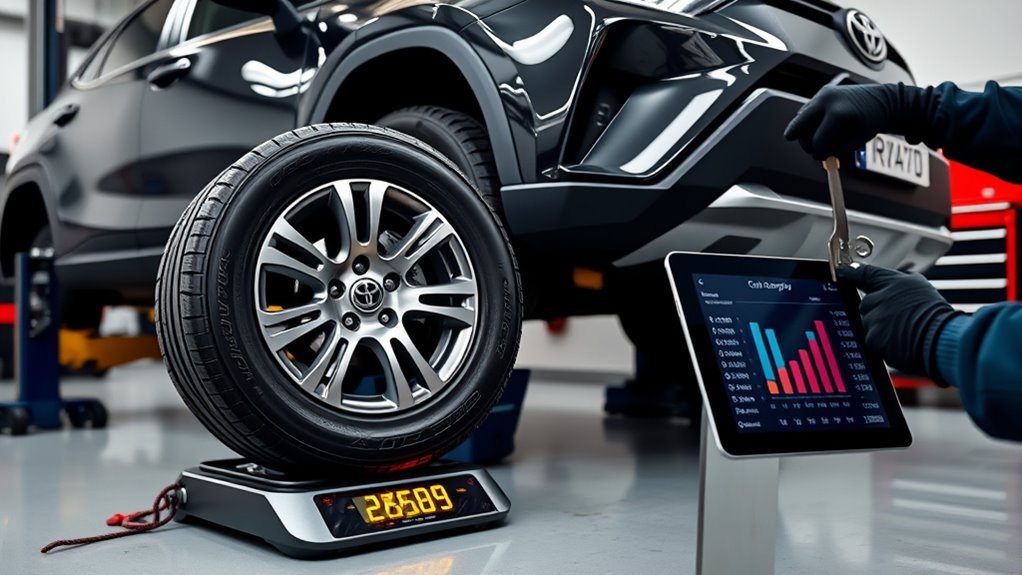
To estimate how a tire swap may affect MPG, start with the numbers you can verify. Do not rely only on forum posts or marketing language. Use the manufacturer’s listed tire weight, size, load rating, speed rating, and tire category.
Step 1: Record Your Current Baseline
Track your current MPG for at least two full tanks if possible. Use the same route mix you normally drive. The dashboard MPG display is useful, but hand-calculating at the pump gives you a better baseline.
Step 2: Compare Tire Weight
Find the listed weight for your current tire and the candidate tire in the same size. If your current tire is 27 lb and the new tire is 34 lb, the difference is 7 lb per tire, or 28 lb across four tires.
Step 3: Check Tread Category and Rolling Resistance
Look for tire lines marketed as low rolling resistance, fuel efficient, eco, touring, highway, all-weather, winter, or all-terrain. These labels are not perfect, but they help you understand the design goal. If available, compare independent rolling-resistance tests from a reputable tire tester.
Step 4: Estimate the Practical MPG Risk
Use this simple decision guide:
- Low MPG risk: Similar weight, similar width, similar all-season tread.
- Moderate MPG risk: 3–7 lb heavier per tire, deeper tread, all-weather or touring tire.
- High MPG risk: 7+ lb heavier per tire, aggressive all-terrain or winter tread, wider size, or heavier wheels.
Then verify after installation by driving the same routes for several tanks. That real-world data will be more useful than a generic formula.
Pro Tip: Compare tire weight and tread depth together. A new tire with deep tread can show worse MPG than a worn tire even if both are the same model because new tread flexes more and has more rubber to move.
Maintenance to Offset Heavier Tires: Pressure, Alignment, Checks
Good maintenance can recover some of the MPG you might lose from heavier or more aggressive tires. It also protects tire life, handling, braking, and safety.
[Products Worth Considering]

Monitor tire tread wear with a smart, color-coded depth gauge that shows clear condition ranges at a glance. The bar is range marked for fast, easy readings, helping you maintain safer traction and performance. Each gauge is portable with a pocket clip, and the set includes 20 units for daily use and sharing.

Steelman white tire marking crayons provide high-contrast, semi-permanent marks for repairing and inspecting tires and equipment. They write on wet or dry, smooth or coarse surfaces including rubber, metal, glass, and wood, making them ideal for puncture location and damage outlining. The lead- and zinc-free crayons resist weather and fading yet wipe away when you no longer need the marks.

Accurately measure tire tread depth with a calibrated gauge marked from 0 to 1 inch in 1/32 inch increments. The color-coded bar helps you quickly identify tread condition ranges, supporting safe driving for trucks, motorcycles, automobiles, and passenger vehicles.
Keep Cold PSI at the Door-Jamb Spec
Use the tire pressure listed on the driver-side door placard or in the Toyota owner’s manual, not the maximum pressure printed on the tire sidewall. Toyota warns that incorrect tire inflation pressure can cause reduced fuel economy, poor handling, reduced tire life, reduced safety, and drivetrain damage.
Check Pressure Monthly
Check tire pressure when the tires are cold, ideally before driving or after the vehicle has been parked for several hours. The National Highway Traffic Safety Administration recommends regular tire checks and notes that tires can lose pressure over time.
Rotate and Balance on Schedule
Rotate tires according to Toyota’s maintenance schedule or the tire manufacturer’s guidance. Many passenger vehicles use a 5,000–8,000 mile tire-rotation interval, but your RAV4’s maintenance schedule should be the final reference. Balance tires if you feel vibration or after tire installation.
Check Alignment After Impacts
A pothole, curb strike, or uneven tire wear pattern can indicate alignment trouble. Poor alignment increases drag and wears tires unevenly, which can make MPG and handling worse.
Choosing RAV4 Tires: Balance Weight, Grip, and Efficiency
The best RAV4 tire is the one that fits your actual use. A commuter in a mild climate should usually prioritize quiet ride, low rolling resistance, wet braking, and long tread life. A driver in snow country may need winter or all-weather traction. A driver who spends weekends on dirt roads may accept lower MPG for stronger all-terrain construction.
[Products Worth Considering]

Measure tire tread depth quickly and accurately with this LUMITECO dial gauge that reads in 1/32" increments up to 14/32". The color-coded green/yellow/red zones make it easy to judge tire wear and know when replacement is needed. A rugged, compact design with a protective pouch helps keep the gauge ready for use on cars, trucks, motorcycles, and more.

The SAFELIFE dial tire tread depth gauge measures tread depth in 1/32 inch increments with clear, easy-to-read 2-inch dial face. Color zones using a traffic light system help you quickly judge whether tread is low, marginal, or ample for safer driving. Built with a durable zinc cast body and a metal detect probe for precise, comfortable use across cars, motorcycles, trucks, and buses.

The VEHLIVE SU-50448 II TPMS relearn tool provides a fast activation reset to restore accurate tire pressure monitoring after sensor replacement or tire rotation. It supports 315 MHz and 433 MHz GM series sensors and helps clear dashboard pressure warnings. With simple two-button operation and horn-confirmed relearning order, you can reprogram sensors conveniently at home.
What to Compare Before Buying
- Exact size: Stay with a Toyota-approved tire size unless you understand the effects on speedometer reading, clearance, load rating, and handling.
- Weight per tire: Compare published tire weights in the same size.
- Load rating: Do not choose a tire with a lower load rating than required for your RAV4.
- Speed rating: Match or exceed the recommended rating unless a qualified tire professional confirms an appropriate alternative.
- Tread category: Touring, all-season, all-weather, winter, and all-terrain tires have different MPG and traction trade-offs.
- Rolling-resistance reputation: Look for independent tests or manufacturer claims focused on fuel efficiency.
- Road noise and comfort: Aggressive tread can increase noise, especially on highway commutes.
When to Prioritize Efficiency
Prioritize fuel-efficient tires if most of your driving is commuting, rideshare work, delivery, long highway trips, or mild-weather family driving. In those cases, a low-rolling-resistance touring or all-season tire may save fuel without sacrificing the traction you actually need.
When to Prioritize Traction or Durability
Prioritize traction or durability if you regularly drive on snow, ice, gravel, mud, rough roads, or remote routes. The MPG loss may be worth it if the tire helps you stop, turn, and avoid damage in the conditions you actually face.
How Wheels, Roof Racks, and Carriers Change RAV4 MPG
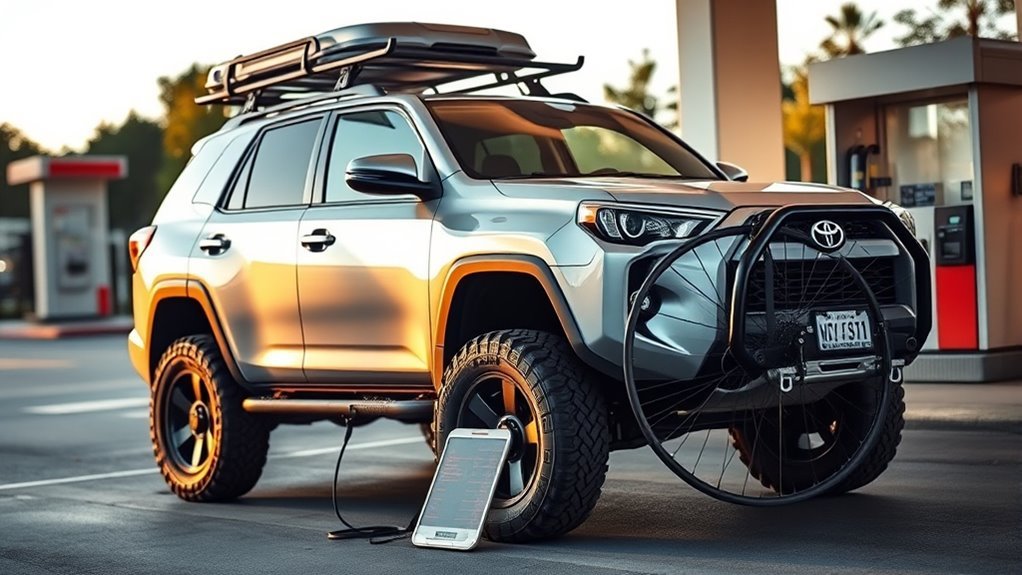
Tires are not the only add-ons that change RAV4 MPG. Wheels, roof racks, roof boxes, hitch carriers, and cargo weight can all affect efficiency.
Wheel Weight
A heavier wheel adds rotating mass just like a heavier tire. If you install both heavier wheels and heavier tires, the total change per corner can be much larger than expected. Lightweight wheels can help offset heavier tires, but strength, load rating, offset, and fitment still matter.
Roof Racks and Roof Boxes
Aerodynamic drag can be a bigger MPG penalty than tire weight at highway speeds. FuelEconomy.gov says a large, blunt roof-top cargo box can reduce fuel economy by about 2% to 8% in city driving, 6% to 17% on the highway, and 10% to 25% at interstate speeds. Remove roof boxes and unused crossbars when you do not need them.
Hitch Carriers
Rear-mounted cargo boxes or trays usually create less aerodynamic drag than roof cargo. FuelEconomy.gov reports that rear-mount cargo boxes or trays reduce fuel economy by about 1% to 2% in city driving and 1% to 5% on the highway. They still add weight, but they usually avoid the large highway drag penalty of rooftop cargo.
Cost-Benefit Checklist: When to Prioritize Economy vs. Traction
Use this checklist before buying heavier RAV4 tires:
- Daily miles: The more you drive, the more a small MPG change costs over time.
- Climate: Snow, ice, and frequent cold weather may justify winter or all-weather tires.
- Road type: Gravel, dirt, and rough roads may justify stronger all-terrain tires.
- Highway speed: Higher speeds make aerodynamic drag and rolling resistance more important.
- Hybrid sensitivity: RAV4 Hybrid drivers may notice tire changes quickly because efficiency is a major part of the vehicle’s appeal.
- Replacement timing: Compare new tires against new tires when possible. A worn tire can make any new tire seem less efficient at first.
- Total package weight: Add tire weight and wheel weight together before judging the swap.
If safety and traction are mission-critical, choose the tire that fits the road conditions and accept the MPG trade-off. If your roads are mild and your driving is mostly commuting, choose the lightest, lowest-rolling-resistance tire that still meets your braking, load, and weather needs.
Frequently Asked Questions
Why is my RAV4 consuming too much fuel?
Common causes include low tire pressure, aggressive acceleration, short trips, cold weather, roof cargo, poor alignment, worn spark plugs, dragging brakes, dirty filters, or a tire change that increased rolling resistance. Start with tire pressure, roof cargo, driving habits, and recent maintenance because those are easy to check.
Do heavier tires always lower MPG?
Heavier tires usually increase the energy needed to accelerate, but they do not always cause a large MPG drop by themselves. Rolling resistance, tread design, tire width, pressure, and driving conditions can matter more than weight alone.
Are all-terrain tires bad for RAV4 MPG?
All-terrain tires can reduce MPG because they are often heavier and use more aggressive tread blocks than highway or touring tires. The trade-off may be worth it if you need gravel-road durability, snow traction, or light off-road capability.
Will winter tires lower my RAV4 MPG?
Winter tires can lower MPG because their soft cold-weather compounds and deeper siped tread may increase rolling resistance. Cold weather itself also reduces fuel economy, so the full winter MPG drop is not caused by the tires alone.
Can higher tire pressure improve MPG?
Proper tire pressure helps protect MPG, tire life, and safety. Use Toyota’s recommended cold tire pressure on the door placard or owner’s manual. Do not inflate based on the maximum pressure printed on the tire sidewall.
How do I know if a tire is fuel efficient?
Look for manufacturer language such as low rolling resistance, fuel efficient, eco, or touring, then verify with independent tire tests when available. Also compare tire weight, tread depth, width, category, and user reports from drivers with similar vehicles and road conditions.
Conclusion
Heavier tires can lower your RAV4’s MPG, but the biggest real-world changes usually come from the full tire package: weight, tread pattern, compound, width, rolling resistance, and inflation pressure. If you want the best efficiency, choose a properly sized tire with moderate weight and low rolling resistance, keep cold PSI at Toyota’s recommended setting, and avoid unnecessary roof cargo. If you need winter grip or all-terrain durability, accept some MPG loss as the cost of better traction and toughness.
Sources
- FuelEconomy.gov — Keeping Your Vehicle in Shape — tire pressure and gas mileage guidance.
- U.S. Department of Energy — A Materials Approach to Fuel-Efficient Tires — rolling resistance and fuel-use relationship.
- Toyota Owners — RAV4 Tire Inflation Pressure — Toyota warnings about incorrect tire inflation pressure.
- FuelEconomy.gov — Driving More Efficiently — roof cargo and fuel economy impact.
- NHTSA — Tires: In the Garage — tire pressure, tire checks, and tire rotation safety guidance.