
Do Off Road Tires Affect Toyota Tacoma Fuel Economy
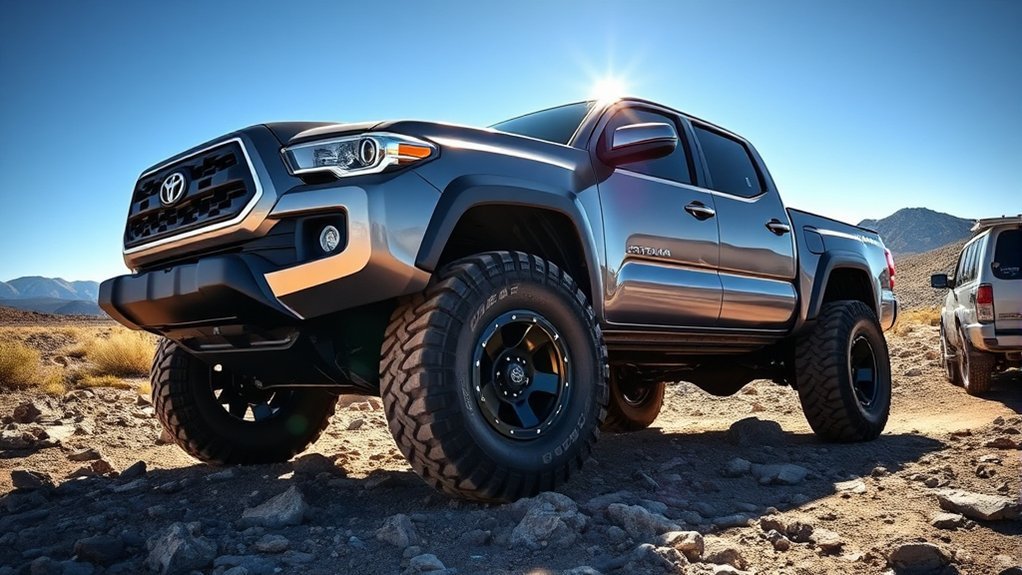
Yes, off-road tires can affect your Toyota Tacoma’s fuel economy, but the size of the MPG change depends on the tire you choose. Weight, tread pattern, width, overall diameter, load range, tire pressure, driving speed, and 4WD use all matter. A mild all-terrain tire may only make a small difference, while a heavy, wide, aggressive tire can make your Tacoma feel slower and use more fuel.
Quick Answer
Off-road tires usually reduce Tacoma MPG when they are heavier, wider, taller, or more aggressive than stock tires. The main reasons are higher rolling resistance, more rotating mass, added aerodynamic drag, and possible speedometer error from larger diameters. Choosing a lighter all-terrain tire and maintaining proper cold tire pressure helps limit the fuel-economy loss.
Key Takeaways
- The biggest MPG factors are tire weight, rolling resistance, tread aggressiveness, width, and overall diameter.
- A lighter all-terrain tire can feel more responsive than a heavier tire in the same size, but it must still meet your Tacoma’s load requirements.
- A 265-width tire usually has an MPG advantage over a 285-width tire when construction and diameter are similar, but load range can change the result.
- Use the pressure shown on your Tacoma’s door placard or owner information, not the maximum PSI printed on the tire sidewall.
- After installing taller tires, check speedometer and odometer accuracy before judging real fuel economy.
Why Off-Road Tires Change Tacoma Fuel Economy
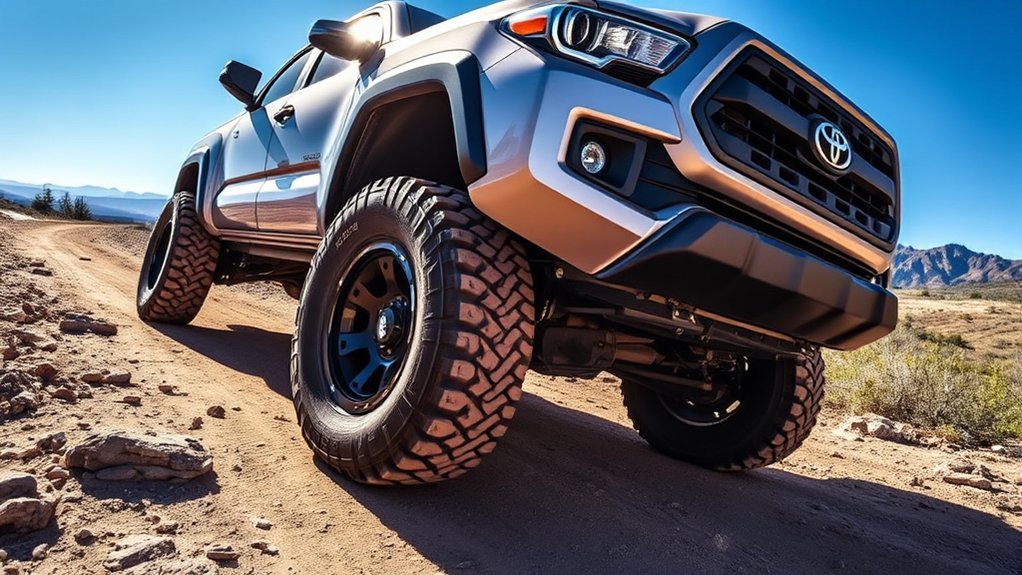
Off-road tires affect MPG because they change how much energy your Tacoma needs to move. A tire with deeper tread blocks, wider shoulders, a heavier casing, or a taller diameter usually creates more resistance than a factory highway tire. That extra resistance makes the engine work harder, especially during stop-and-go driving, hill climbs, towing, and highway cruising.
The National Highway Traffic Safety Administration explains that low rolling resistance tires reduce energy loss and can improve fuel economy. The opposite is also true: more aggressive tires with higher rolling resistance can use more fuel.
For a stock reference point, FuelEconomy.gov’s 2025 Toyota Tacoma listings show that official MPG varies by drivetrain, transmission, and configuration. Modified trucks with larger tires, lifts, armor, roof racks, bed racks, or extra cargo will usually differ from those EPA numbers.
[Products Worth Considering]

EVOULTES heavy duty tire inflator with an integrated gauge delivers accurate pressure readings from 10–120 PSI, helping you inflate, deflate, and check tires in one tool. The 16.5-inch extended dual-head air chuck with swivel base reaches hard-to-access dual wheel valves on trucks and RVs. A brass trigger core and side-mounted air release valve make operation smooth, with standard 1/4" NPT threading and quick-connect compatibility for easy setup.

This portable cordless tire inflator delivers up to 160 PSI with fast 17 L/min airflow to help you quickly top up tires and get back on the road. It features dual power mode, running on a 21V rechargeable battery or a 12V DC adapter for convenient roadside use. An automatic shut-off with digital pressure gauge helps prevent overinflation, and a built-in LED light improves visibility in low-light conditions.

The JACO FlowPro Tire Inflator measures, inflates, and airs down tires up to 100 PSI with battery-free operation and ±2% accuracy after calibration. It features a glowing pressure dial for night visibility, a heavy-duty steel build with a hybrid hose, and a precision push-to-inflate thumb trigger. The patented Lightning Air Chuck locks on for a secure seal, and the kit includes quick-connect hardware for easy inline use with your air compressor.
The Main Tire Factors That Affect MPG
Rolling Resistance
Rolling resistance is the energy a tire loses as it flexes and rolls. Off-road tires often have larger tread blocks and stronger construction, which can increase rolling resistance. This is one reason aggressive tires often cost more fuel than highway-oriented tires.
Tire Weight
More tire weight means more rotating mass. Your Tacoma has to accelerate, slow down, and turn that extra weight every time you drive. The difference is most noticeable in city driving, on hills, and when you frequently accelerate from low speeds.
Tire Width
Wider tires can add weight and increase the contact patch. That can improve traction in some off-road situations, but it may also increase drag and rolling resistance on pavement. This is why a 285 tire often hurts MPG more than a similar 265 tire.
Overall Diameter
Taller tires effectively change your final drive ratio. They may lower engine RPM at some cruising speeds, but they also require more torque to get moving. If the tire is much taller than stock, acceleration can feel softer and the transmission may downshift more often.
Note: Taller tires can make hand-calculated MPG look wrong because the odometer may undercount miles. Use GPS distance, a corrected speedometer, or a calibrated tire-size setting before deciding whether your MPG changed.
Nitto Terra Grappler G3 vs. BFG KO3 and Falken A/T4W Weight Comparison
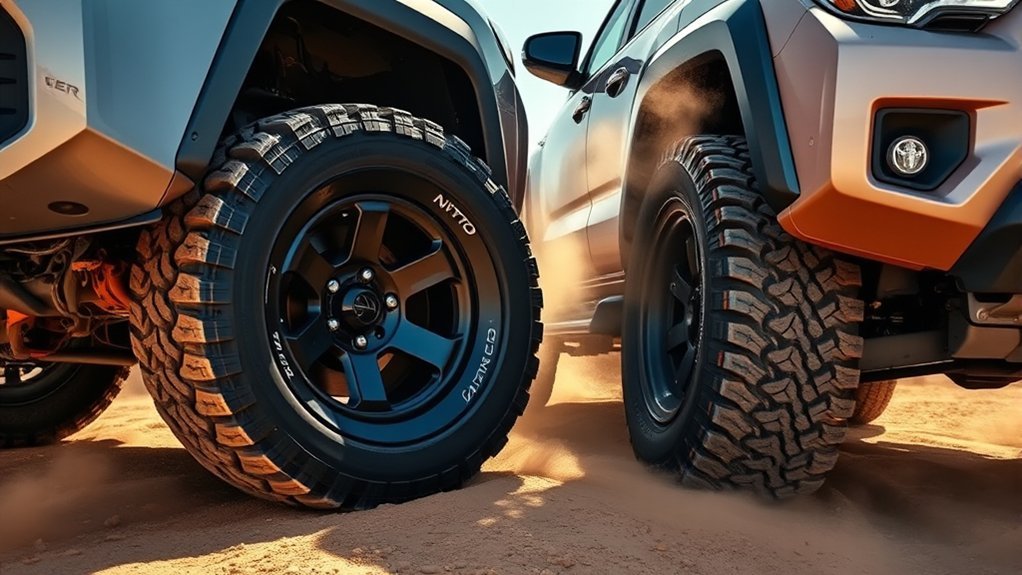
The Nitto Terra Grappler G3 is a good example of why tire weight should be checked by exact size, not by model name alone. Tire weights change by load range, service description, tread depth, and construction. A few pounds per tire can become a noticeable difference across all four wheels.
| Tire Size | Nitto Terra Grappler G3 | BFGoodrich KO3 | Falken WildPeak A/T4W | What It Means |
| LT265/70R17 | 49 lb | 55 lb | 53 lb | The G3 is about 24 lb lighter than the KO3 across four tires in this size. |
| LT275/70R17 | 50 lb | 57 lb | 58 lb listed in a C-load version | Compare load range and service description before treating weights as equal comparisons. |
| LT275/65R20 | 55 lb | 62–63 lb, depending on version | 66 lb | A lighter tire can reduce rotating weight, but fitment and load rating still come first. |
These examples show why “up to 32 lb lighter” should be written carefully. In some comparisons, the savings may be around 24 to 32 lb across a set of four tires, not per tire. In other sizes, the difference may be smaller or larger. Always check the exact tire size and load range before buying.
Is 265 or 285 Better for Tacoma MPG?
For fuel economy, a 265-width tire is usually better than a 285-width tire when the tread design, diameter, and construction are similar. The 265 is often lighter and narrower, which can reduce rolling resistance and road drag. That said, the comparison is not automatic. A heavy LT265 tire can weigh more than a lighter non-LT 285 tire, and a taller 265 can still change gearing.
If your Tacoma is mostly a daily driver with occasional trails, a 265 all-terrain tire is often the better MPG-friendly choice. If you need extra clearance, more sidewall, or a wider footprint for off-road use, a 285 can make sense, but expect a greater chance of MPG loss, rubbing, and calibration changes.
How 4WD Affects Tacoma Fuel Economy
Four-wheel drive can affect MPG in two ways. First, 4WD Tacoma models usually carry extra drivetrain hardware compared with 2WD models. Second, using 4WD on surfaces that do not need it can add drivetrain load. For best efficiency, use the correct drive mode for the surface and follow your Tacoma owner’s information.
Warning: Do not choose a tire only because it is lighter. The tire must have the correct size, load index, speed rating, and load range for your Tacoma, especially if you tow, haul, air down, or drive rocky trails.
Do Lighter Off-Road Tires Compromise Strength and Durability?
Lighter does not automatically mean weaker, and heavier does not automatically mean better. A tire’s durability depends on its load rating, casing construction, sidewall design, tread compound, tread depth, and how you use it. For example, the Nitto Terra Grappler G3 is backed by a limited treadwear warranty of 70,000 miles for hard-metric sizes and 55,000 miles for LT/flotation sizes.
If you drive mostly pavement and mild dirt roads, a lighter all-terrain tire can be a smart balance. If you spend weekends on sharp rocks, heavy loads, or remote trails, sidewall strength and puncture resistance may matter more than saving a few pounds per tire.
[Products Worth Considering]

This portable cordless tire inflator delivers fast, efficient inflation for cars, motorcycles, bikes, and sports balls with a digital pressure gauge. Use the one-click PSI...
Modifications to Boost Fuel Economy With Off-Road Tires
You can reduce the MPG hit from off-road tires by focusing on tire setup, maintenance, and drag reduction. None of these changes can fully erase the effect of a heavy aggressive tire, but they can help your Tacoma run more efficiently.
Choose the Lightest Tire That Still Fits Your Use
Pick a tire that matches your actual driving. A daily-driven Tacoma that sees gravel roads and weekend trails usually does not need the heaviest mud-terrain tire. A balanced all-terrain tire can provide useful traction while keeping weight and road noise more manageable.
Keep Cold Tire Pressure Correct
Check tire pressure when the tires are cold and use the pressure listed on your Tacoma’s door placard or owner information. Do not use the maximum pressure printed on the tire sidewall as your normal street pressure. According to FuelEconomy.gov, under-inflated tires can lower gas mileage by about 0.2% for every 1 PSI drop in the average pressure of all tires.
Rotate and Align on Schedule
Rotating your tires helps even out tread wear, which supports traction and tire life. Alignment also matters because toe or camber problems can increase drag and cause the tires to scrub against the road. If your Tacoma starts pulling, vibrating, or wearing tires unevenly, check alignment instead of blaming the tire model alone.
Reduce Extra Drag
Roof racks, rooftop tents, wide mud flaps, lifts, and exposed cargo can hurt highway MPG. A bed cover may help airflow in some setups, but results vary by truck and driving speed. If you reinstall an air dam or front spoiler, balance the MPG benefit against approach angle and off-road clearance.
Pro Tip: After installing larger tires, track MPG for at least two full tanks using the same route and fuel-up method. Correct for odometer error before comparing the new tires against your old MPG.
Practical Tips for Maintaining Tire Efficiency and Longevity
- Check pressure monthly: Tires naturally lose pressure over time, and temperature changes can shift PSI.
- Reinflate after airing down: Airing down helps off-road traction and comfort, but driving home on low pressure wastes fuel and can overheat tires.
- Watch tread wear: Uneven wear can point to pressure, rotation, suspension, or alignment problems.
- Match tires as a set: Mixed sizes or uneven tread depths can create drivetrain stress, especially on 4WD trucks.
- Keep weight under control: Skid plates, armor, recovery gear, tools, and camping gear all add load and can reduce MPG.
Frequently Asked Questions
Do off-road tires get worse gas mileage?
They often do, especially if they are heavier, wider, taller, or more aggressive than the stock tires. The MPG loss is not the same for every tire. A mild all-terrain tire may have a small effect, while a heavy mud-terrain tire can have a larger effect.
Does 4WD affect a Tacoma’s MPG?
Yes. A 4WD Tacoma can use more fuel than a comparable 2WD model because of extra drivetrain weight and friction. Using 4WD when the surface does not require it can also add load. Use the correct drive mode for the conditions and follow your owner information.
Is 265 or 285 better for gas mileage?
A 265 is usually better for MPG when the tire type and construction are similar because it is often narrower and lighter. A 285 may improve stance, clearance, and traction in some conditions, but it usually carries a higher chance of MPG loss, rubbing, and speedometer error.
Will lighter tires improve Tacoma acceleration?
They can. Reducing rotating weight can help the truck feel more responsive, especially from a stop. The improvement depends on how much weight you save and whether the new tire is also taller, wider, or more aggressive.
Do larger tires make MPG readings inaccurate?
Yes, they can. Taller tires travel farther per wheel revolution, so the odometer may record fewer miles than you actually drove. If you calculate MPG by hand without correcting that error, your fuel economy may look worse than it really is.
Are mud-terrain tires worse for MPG than all-terrain tires?
Usually, yes. Mud-terrain tires tend to have larger tread voids, heavier construction, more road noise, and higher rolling resistance. They are useful for mud and difficult trails, but an all-terrain tire is usually more efficient for daily driving.
Conclusion
Off-road tires do affect Toyota Tacoma fuel economy, but the amount depends on the exact tire and setup. Heavier, wider, taller, and more aggressive tires usually reduce MPG because they increase rolling resistance, rotating mass, and sometimes aerodynamic drag. If you want the best balance, choose the lightest tire that still meets your load and trail needs, keep pressure correct, rotate regularly, check alignment, and verify speedometer accuracy after changing tire size.
Sources
- FuelEconomy.gov Gas Mileage Tips — tire pressure and fuel-economy impact.
- NHTSA TireWise — tire safety, rolling resistance, and fuel economy.
- FuelEconomy.gov 2025 Toyota Tacoma Listings — official EPA MPG baseline by configuration.
- Nitto Terra Grappler G3 — official warranty and product information.
- Tire Rack Nitto Terra Grappler G3 Specs — size-specific weights and dimensions.
- Tire Rack BFGoodrich KO3 Specs and Tire Rack Falken WildPeak A/T4W Specs — competitor tire-weight comparisons.

Related Articles
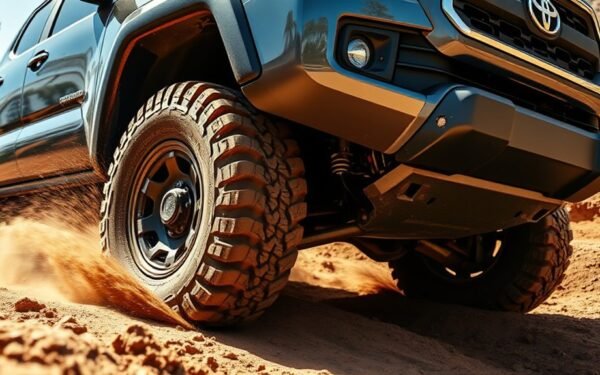
How Tire Weight Affects Toyota Tacoma Performance
How does tire weight influence your Toyota Tacoma's performance and efficiency? Discover the surprising effects that could change your driving experience.
Read More
Tire Noise Levels by Tire Type on a Toyota Tacoma
A comprehensive look at how tire types affect noise levels in your Toyota Tacoma reveals surprising insights that could enhance your driving experience.
Read More
How To Choose Tires for a Dual Use Toyota Tacoma
Unlock the secrets to selecting the perfect tires for your dual-use Toyota Tacoma, ensuring optimal performance and comfort on every adventure. Discover more inside!
Read More