Tire size can change your Toyota Tundra’s fuel economy, ride, speedometer accuracy, and towing feel. A taller or heavier tire may look better and add ground clearance, but it can also make the truck work harder. Before you buy bigger tires, compare the tire’s diameter, weight, tread type, load rating, and the cold tire pressure listed for your exact truck.
Quick Answer
Larger Toyota Tundra tires often reduce MPG because they add weight, increase rolling resistance, and change the truck’s effective gearing. Many owners see a small to moderate drop, often around 1 to 3 MPG, especially with heavy all-terrain or mud-terrain tires. Exact results depend on tire size, pressure, tread, speed, load, and driving style.
Key Takeaways
- Bigger tires can lower MPG, but tire weight and tread design often matter as much as diameter.
- Do not use 40 to 45 psi as a universal rule. Start with the driver-door tire placard and your Toyota owner’s manual.
- A taller tire can make your speedometer and odometer read low unless the truck is recalibrated.
- Highway-terrain tires usually save more fuel than aggressive all-terrain or mud-terrain tires.
- If you change to LT or E-load tires, confirm pressure and load capacity with a qualified tire shop.
At a Glance
| Time Required | 10 to 30 minutes to compare tire sizes, check pressure, and estimate speedometer change |
| Difficulty | Easy for basic checks; moderate if changing tire load range or recalibrating speedometer |
| Tools Needed | Tire pressure gauge, tire-size calculator, owner’s manual, door-jamb tire placard, and MPG log |
| Cost | $0 to check specs; about $5 to $20 for a tire gauge; recalibration cost varies by shop and tool |
Why Tire Size Matters for Fuel Economy
When you install larger tires on a Toyota Tundra, the truck has to turn a larger and often heavier rotating mass. That can reduce fuel economy because the engine needs more energy to accelerate the tires, keep them rolling, and overcome the extra road contact from wider or more aggressive tread blocks.
Tire diameter also changes the truck’s effective gearing. A taller tire travels farther with each wheel rotation, which can make acceleration feel softer and may cause the transmission to downshift more often on hills, into headwinds, or while towing. The result is usually lower MPG, especially in city driving or mixed driving.
That does not mean every larger tire is a bad choice. A mild size increase with a lighter, highway-friendly tire may have a smaller MPG penalty than a heavy all-terrain tire in the same size. The best choice depends on how you use your Tundra.
The biggest MPG losses usually come from the full package: taller diameter, extra tire weight, wider tread, aggressive tread blocks, and incorrect pressure.
What Changes When You Go to a Larger Tire?
The exact factory tire size depends on your Tundra’s year, trim, and package, so always check the tire placard on the driver’s door jamb. Still, the example below shows why a common move from a roughly 33-inch tire to a 34-plus-inch tire can affect MPG and speedometer readings.
| Example Size | Approx. Diameter | What It Means |
| 275/70R18 | About 33.2 inches | Common baseline example for a full-size truck tire |
| 295/70R18 | About 34.3 inches | Roughly 3% to 4% taller, often heavier, and usually more demanding to turn |
A tire that is about 3.4% taller can make the truck travel about 3.4% farther per wheel rotation. If the speedometer is not corrected, an indicated 60 mph may be closer to about 62 mph in real road speed. The odometer may also undercount miles, which can make hand-calculated MPG look lower than it really is.
Note: If you change tire diameter, compare GPS speed with your dashboard speed and ask a qualified shop whether your Tundra can be recalibrated. This is especially important before towing or relying on hand-calculated MPG.
The Role of Tire Weight in Fuel Efficiency
Tire weight matters because the engine has to spin that weight every time you accelerate. A few extra pounds per tire may not sound like much, but the effect is multiplied by four tires and is felt most during stop-and-go driving.
Tire Weight Comparison
Two tires can have the same listed size but very different weights. A highway-terrain tire may be lighter and easier to roll. An LT all-terrain or E-load tire may be stronger for load and puncture resistance, but it can be heavier and stiffer.
- Lighter tires can help acceleration, braking feel, and MPG.
- Heavier tires can improve toughness, but they often cost fuel.
- Wider, aggressive tread can add rolling resistance and road noise.
- LT tires may need different pressure than P-metric tires, so use proper load-inflation guidance.
Impact on MPG
Many Tundra owners report a 1 to 3 MPG drop after moving from factory-style highway tires to larger, heavier all-terrain tires. That range is not a guarantee. A mild upgrade may barely show up, while a heavy tire, roof rack, lift, towing load, and fast highway speeds can combine for a much larger drop.
| Tire Change | Likely MPG Direction | Why |
| Same size, lighter highway tire | Best chance of keeping MPG close to stock | Less rolling resistance and less rotating weight |
| Same size, aggressive all-terrain tire | Small to moderate drop | Heavier tread and more road friction |
| Larger LT all-terrain or E-load tire | Often a noticeable drop | More diameter, weight, stiffness, and rolling resistance |
| Mud-terrain tire | Usually the largest MPG penalty | Large tread voids, weight, noise, and drag |
Lightweight Tire Benefits
A lighter tire can help your Tundra feel more responsive because the engine, brakes, and suspension have less mass to control. If fuel economy matters more than maximum off-road toughness, look for a tire with a lower listed weight, a less aggressive tread, and a load rating that still meets or exceeds your truck’s needs.
How Larger Tires Impact MPG
Larger tires can affect MPG in four main ways: they change gearing, add rotating weight, increase rolling resistance, and sometimes add aerodynamic drag by raising the truck. The loss is usually most obvious after a move to wider all-terrain tires or LT tires with a heavier casing.
On the highway, a taller tire may reduce engine rpm slightly, but that does not always improve MPG. If the tire is heavier, wider, and more aggressive, the added resistance can cancel out any rpm benefit. Around town, the penalty is often clearer because the truck repeatedly accelerates the heavier tires from a stop.
When towing or hauling, larger tires can also make the truck feel like it has taller gearing. That can mean more throttle input, more downshifts, and more fuel use on grades.
Warning: Never choose a tire only because it fits the wheel. Confirm load index, speed rating, wheel width, suspension clearance, spare-tire fit, TPMS compatibility, and pressure requirements before driving or towing.
[Products Worth Considering]

Monitor tire tread wear with a smart, color-coded depth gauge that shows clear condition ranges at a glance. The bar is range marked for fast, easy readings, helping you maintain safer traction and performance. Each gauge is portable with a pocket clip, and the set includes 20 units for daily use and sharing.

Keep your tires properly inflated with this analog VONDIOR tire pressure gauge, designed for fast, easy readings without batteries. The swiveling, two-axis hose and large glow dial help you measure at any tire angle with instant visibility. Built with a protective rubber shield, it supports durable, low-maintenance use for cars and trucks.

Measure tire tread depth quickly and accurately with this LUMITECO dial gauge that reads in 1/32" increments up to 14/32". The color-coded green/yellow/red zones make it easy to judge tire wear and know when replacement is needed. A rugged, compact design with a protective pouch helps keep the gauge ready for use on cars, trucks, motorcycles, and more.
What’s the Best Tire Pressure for Fuel Efficiency?
The best tire pressure for fuel efficiency is the correct cold inflation pressure for your exact Tundra, not a universal number. Start with the tire placard on the driver’s door jamb and the Toyota owner’s manual for your model year.
Proper pressure helps reduce rolling resistance, tire heat, and uneven wear. The National Highway Traffic Safety Administration also recommends checking tire pressure regularly because underinflation can affect safety, tire life, and vehicle performance.
If you replace P-metric tires with LT tires, especially E-load tires, do not simply copy the old pressure or inflate to the sidewall maximum. LT tires often need a pressure that matches the truck’s load requirement. A tire shop can use a load-inflation table to choose a safe pressure for your setup.
- Check pressure when tires are cold, before driving or after the truck has been parked for several hours.
- Use the placard/manual pressure as your starting point for factory-size tires.
- Do not use the tire sidewall “max pressure” as normal daily pressure.
- Recheck pressure monthly and before towing, long trips, or major temperature changes.
- If tire wear is uneven, check alignment, rotation schedule, pressure, and suspension condition.
Pro Tip: Keep a small MPG log for two or three tanks before and after the tire change. Use the same fuel grade, similar routes, and corrected mileage if tire diameter changed.
[Products Worth Considering]

The VEHLIVE SU-50448 II TPMS relearn tool provides a fast activation reset to restore accurate tire pressure monitoring after sensor replacement or tire rotation. It supports 315 MHz and 433 MHz GM series sensors and helps clear dashboard pressure warnings. With simple two-button operation and horn-confirmed relearning order, you can reprogram sensors conveniently at home.

The SAFELIFE dial tire tread depth gauge measures tread depth in 1/32 inch increments with clear, easy-to-read 2-inch dial face. Color zones using a traffic light system help you quickly judge whether tread is low, marginal, or ample for safer driving. Built with a durable zinc cast body and a metal detect probe for precise, comfortable use across cars, motorcycles, trucks, and buses.

The Milton S-693 straight foot dual head air chuck is designed for accurate tire pressure checks and quick, secure valve-core engagement with lock-on threads on both ends. With a 1/4" FNPT connection and a maximum 150 PSI rating, it’s built for use on inner duals and common vehicle tires, including trucks and RVs.
Tire Types and Their MPG Effects
Tire type can matter as much as tire size. A mild highway-terrain tire is usually the most efficient choice for daily driving. An all-terrain tire adds traction and toughness but often costs some fuel. A mud-terrain tire is best reserved for drivers who truly need off-road grip because it usually brings more weight, noise, and rolling resistance.
| Tire Type | Best For | MPG Effect |
| Highway-terrain | Commuting, road trips, light towing | Usually best for fuel economy |
| All-terrain | Mixed pavement, gravel, snow, light trails | Small to moderate MPG loss, depending on weight and tread |
| Mud-terrain | Mud, rocks, deep ruts, serious off-road use | Often the worst for MPG and road noise |
| LT / E-load | Heavier loads, rough roads, added durability | Can reduce MPG because of weight and casing stiffness |
If you drive mostly on pavement, a lighter all-terrain or highway-terrain tire is often the better compromise. If you tow, haul, or drive off-road often, the durability trade-off may be worth the fuel cost.
[Products Worth Considering]

The Airmoto portable tire inflator quickly and accurately fills car, truck, SUV, motorcycle, and bicycle tires up to 120 PSI with auto shut-off when your target pressure is reached. Its large LCD, multi-unit pressure display, and digital gauge make it easy to dial in settings and verify readings, while the built-in LED flashlight helps in low light. The included polyurethane hard carrying case and storage mesh pocket keep the inflator and accessories protected and organized.

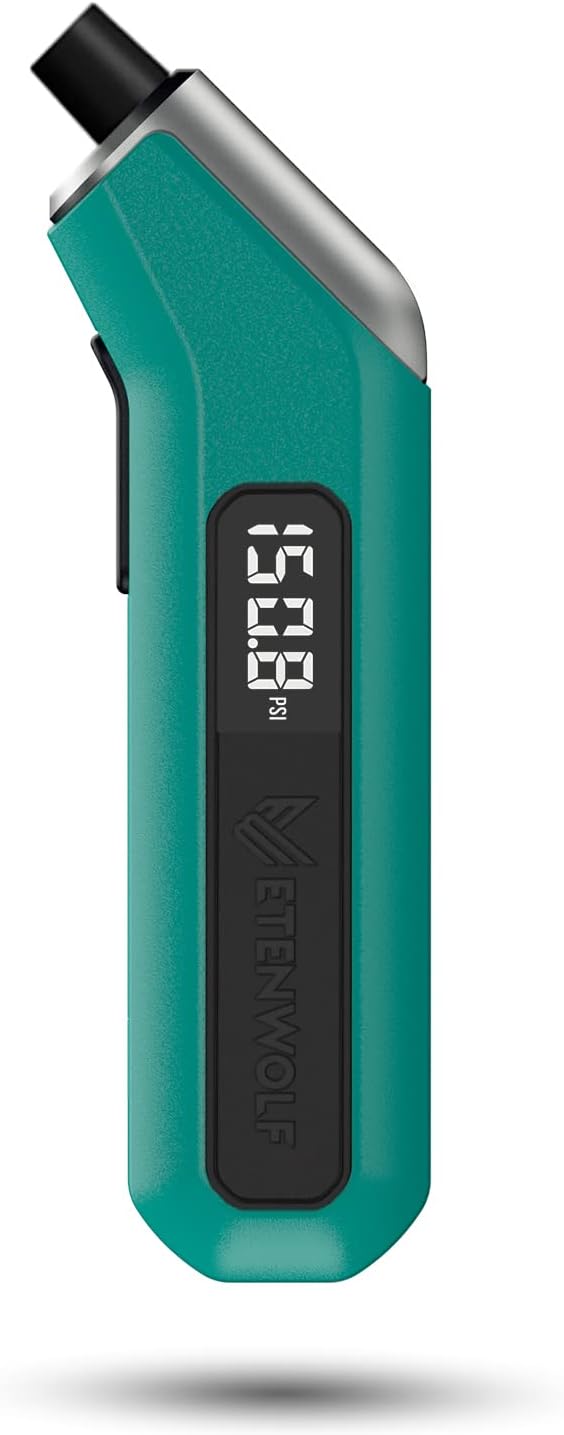
ETENWOLF T300 is a calibrated digital tire pressure gauge for accurate readings from 3 to 200 PSI across light and heavy-duty vehicles. It includes thermal compensation for reliable performance in extreme cold or heat, with an auto shut-off to extend battery life and an LED for easier reading. The sturdy design supports rugged everyday use, making it ideal for pickups, RVs, and industrial applications.

The Topeak SmartGauge D2 delivers precise digital tire pressure readings for bikes, motorcycles, and sports equipment up to 250 psi (17 bar). Its rotating SmartHead works with both Presta and Schrader valves, so you can check pressure quickly without adapters. The LCD display makes it easy to read results in psi, bar, or kg/cm² with an included CR2032 battery for immediate use.
How Driving Habits Affect Your Tundra’s MPG
Tire size is only one part of your Tundra’s MPG. Driving speed, acceleration, braking, idling, wind, terrain, payload, towing, and tire pressure can all change your results. The same tire setup may feel efficient on a calm 55 mph back road and thirsty at 75 mph into a headwind.
The U.S. Department of Energy and EPA fuel economy guidance notes that aggressive driving and higher highway speeds can reduce fuel economy. That matters even more after larger tires because the truck already has more rolling load to overcome.
- Use smooth throttle instead of hard launches.
- Hold steady speeds when traffic allows.
- Avoid carrying unneeded cargo in the bed.
- Remove unused roof racks or accessories that add drag.
- Keep tires inflated to the correct cold pressure.
- Rotate tires on schedule so uneven wear does not add noise and drag.
Real-World MPG Data From Tundra Owners
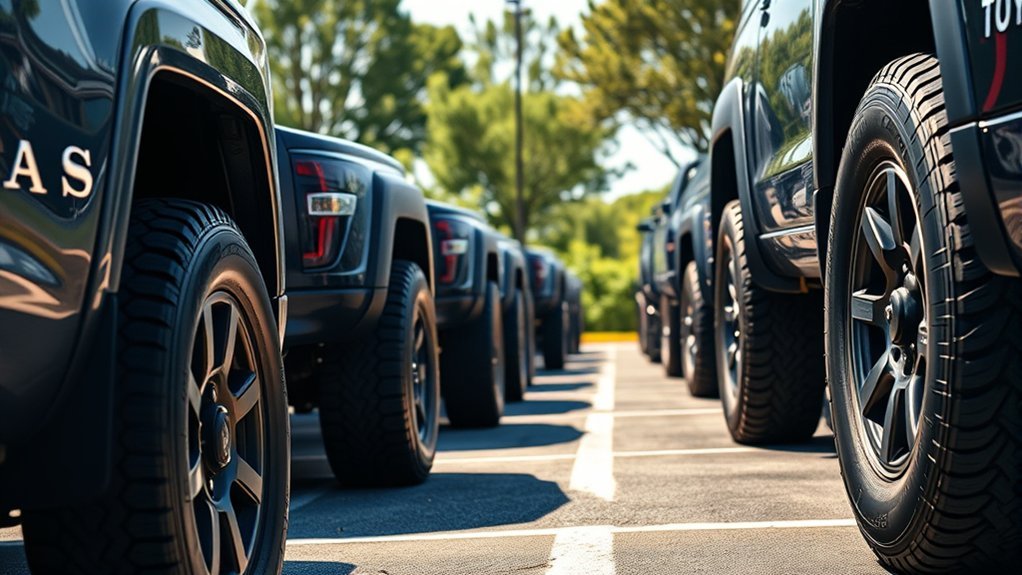
Owner-reported MPG is helpful, but it is not laboratory data. One driver may lose 1 MPG with a mild all-terrain tire, while another may lose 3 MPG after adding taller E-load tires, a lift, a roof rack, and faster highway driving. Use owner reports as a guide, not a promise.
Real-World Experiences
The most common pattern is simple: the more aggressive and heavier the tire, the more likely the Tundra is to lose fuel economy. The drop may be small if the new tire is close to factory diameter and weight. It may be more noticeable if the new tire is taller, wider, and built with a heavy LT casing.
- Daily highway drivers usually notice tire noise and MPG changes quickly.
- Off-road drivers may accept lower MPG for better traction and sidewall strength.
- Towing drivers should pay extra attention to load rating, pressure, braking feel, and transmission behavior.
Tire Size Comparisons
When comparing tire sizes, do not look at diameter alone. Compare all of these items before buying:
- Diameter: affects gearing, speedometer readings, clearance, and odometer accuracy.
- Width: affects road contact, rubbing risk, snow behavior, and rolling resistance.
- Weight: affects acceleration, braking, ride, and MPG.
- Tread pattern: affects noise, wet grip, off-road traction, and rolling resistance.
- Load rating: must safely support the truck and any trailer tongue weight or payload.
How to Measure MPG After a Tire Change
Do not judge MPG from one short trip. Wind, temperature, traffic, fuel blend, and towing can all distort the number. Track at least two or three full tanks before and after the tire change.
- Fill the tank completely and reset your trip meter.
- Drive your normal route for a full tank.
- Fill up at the same pump style if possible.
- Divide miles driven by gallons added.
- If tire diameter changed and the truck was not recalibrated, correct the miles by the tire-size percentage difference.
For example, if the new tire is about 3.4% taller and the truck has not been recalibrated, the odometer may undercount distance by about 3.4%. In that case, multiply the displayed trip miles by 1.034 before calculating MPG.
Before You Upgrade Your Tundra Tires
A tire upgrade should improve the truck for the way you actually drive. Before you buy, use this checklist:
- Confirm your factory tire size on the driver-door placard.
- Check the recommended cold tire pressure in the placard and owner’s manual.
- Compare the new tire’s diameter, width, load index, speed rating, and weight.
- Check whether the tire fits your wheel width.
- Ask whether the tire may rub at full steering lock or suspension compression.
- Confirm the spare tire plan if the new size is much larger.
- Ask whether speedometer recalibration is needed.
- Choose the least aggressive tread that still fits your road, weather, and off-road needs.
Note: The tire sidewall shows the maximum cold pressure for the tire, not the best daily pressure for your Tundra. Use the vehicle placard, manual, and proper load data.
Making Informed Choices About Tire Upgrades
The best tire choice depends on your priorities. If MPG is your top concern, stay close to the factory diameter and choose a lighter highway-terrain tire. If trail traction matters more, accept that a stronger all-terrain or mud-terrain tire may cost fuel.
| Your Priority | Best Tire Strategy |
| Best MPG | Stay near factory size, choose a lighter highway-terrain tire, and keep pressure correct. |
| Balanced daily use | Use a mild all-terrain tire close to factory diameter and avoid unnecessary width. |
| Towing and hauling | Prioritize correct load rating, pressure, braking feel, and stability over appearance. |
| Off-road traction | Choose the needed tread and sidewall strength, but expect more fuel use and road noise. |
For many Tundra owners, the sweet spot is a quality all-terrain tire that stays close to the factory diameter and does not add unnecessary weight. It gives a tougher look and better dirt-road confidence without the biggest MPG penalty.
Frequently Asked Questions
Can I switch back to stock tires for better MPG?
Yes. Switching back to a factory-size, lighter, highway-friendly tire can often improve MPG, especially if your current tires are larger, heavier, wider, or more aggressive. Make sure the replacement tire matches your Tundra’s placard size, load requirement, and wheel size.
How often should I check my tire pressure?
Check tire pressure at least once a month and before long trips, towing, hauling, or major temperature swings. Measure pressure when the tires are cold and use the pressure listed on the driver-door placard or in your owner’s manual.
Do all tire brands affect MPG the same way?
No. Tires in the same size can vary by weight, rubber compound, tread depth, tread pattern, and rolling resistance. A lighter highway tire may return better MPG than a heavy all-terrain tire, even if both fit the same wheel.
Will tire rotation improve fuel economy?
Tire rotation helps tires wear evenly, which can keep the truck smoother and prevent uneven rolling resistance. It will not usually recover a large MPG loss caused by oversized or aggressive tires, but it is still important for tire life and safe handling.
Are larger tires safer despite lower MPG?
Not automatically. Larger tires may improve ground clearance or off-road traction, but safety depends on correct fitment, load rating, pressure, tread condition, braking performance, and wet-road grip. A poorly fitted larger tire can rub, overload components, affect stability systems, or reduce braking confidence.
Do larger tires affect the speedometer?
Yes. A taller tire travels farther per rotation, so the speedometer and odometer may read low if the truck is not recalibrated. This can also affect hand-calculated MPG because the odometer may undercount actual miles driven.
Should I use the tire sidewall PSI for better MPG?
No. The sidewall usually lists the tire’s maximum cold pressure, not the recommended daily pressure for your Tundra. Use the driver-door placard and owner’s manual. If you changed tire type or load range, ask a qualified tire professional to calculate the right pressure.
Conclusion
Tire size can have a clear effect on your Toyota Tundra’s fuel economy, but diameter is only part of the story. Tire weight, width, tread pattern, load range, pressure, driving speed, and odometer correction all matter. For the best MPG, stay close to factory size, choose a lighter road-friendly tire, and keep pressure at the correct cold setting. If you need bigger all-terrain tires for clearance, traction, or work use, plan for a possible MPG drop and confirm the setup is safe before towing or daily driving.
Sources
- Toyota Owner’s Manuals — supports checking the exact model-year manual for factory tire and pressure guidance.
- NHTSA Tire Safety — supports tire-pressure, tire-condition, and tire-safety guidance.
- FuelEconomy.gov: Keeping Your Car in Shape — supports the link between maintenance, tire inflation, and fuel economy.
- FuelEconomy.gov: Driving More Efficiently — supports the impact of driving style and highway speed on fuel use.
- EPA Dynamometer Drive Schedules — supports why fuel economy varies by drive cycle and driving conditions.