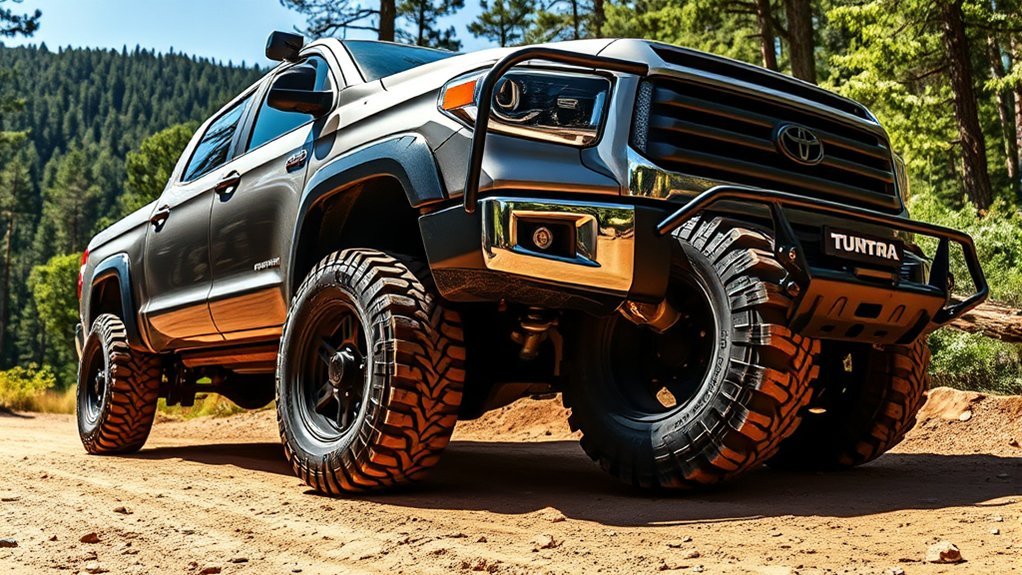
Choosing between 33-inch and 35-inch tires for your Toyota Tundra involves more than deciding which size looks better. The right choice depends on your truck’s model year, suspension, wheel width and offset, intended terrain, towing needs, and tolerance for changes in fuel economy and handling. A setup that clears on one Tundra may rub badly on another.
Quick Answer
For most daily-driven Tundras, 33-inch tires offer the easier fit, lighter steering, lower modification burden, and better fuel economy. Choose 35-inch tires when you genuinely need more off-road clearance and traction and are prepared to verify wheel fitment, trim rubbing points, recalibrate the truck, and accept added weight and operating cost.
Key Takeaways
- Moving from a nominal 33-inch tire to a 35-inch tire adds about one inch of axle or differential clearance, not two inches.
- Tire width, actual measured diameter, wheel offset, backspacing, and alignment can affect rubbing more than lift height alone.
- A larger tire usually increases rotating mass and rolling resistance, but no fixed MPG loss applies to every Tundra.
- Re-gearing is not automatically required for 35s. The decision depends on the original axle ratio, engine, transmission, towing load, and terrain.
- Confirm tire load capacity, wheel compatibility, inflation requirements, TPMS operation, speedometer accuracy, and spare-tire usability before driving.
Warning: Tire fitment is safety-critical. Check your driver-door Tire and Loading Information label, owner’s manual, wheel specifications, and tire load data. A tire that physically fits can still be unsuitable if its load capacity, wheel compatibility, pressure requirement, or clearance is wrong.
Which Tire Size Is Best for Your Tundra?
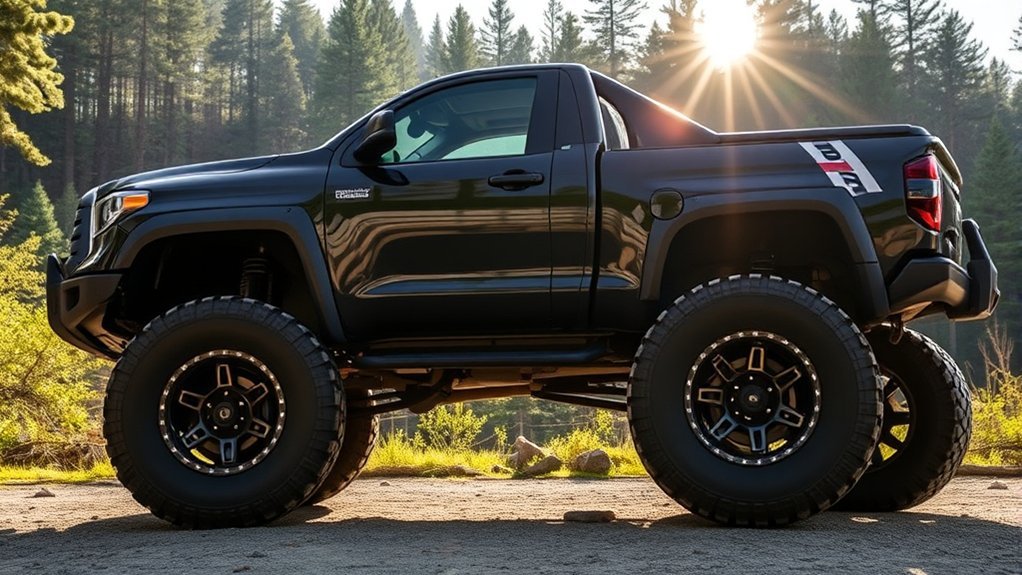
A 33-inch tire is usually the better all-around option when your Tundra spends most of its time commuting, towing on pavement, or traveling long distances. It can deliver a tougher stance and useful trail capability without creating the same fitment, weight, and calibration challenges as a 35-inch tire.
A 35-inch tire makes more sense when off-road clearance, flotation on soft surfaces, and obstacle performance are higher priorities. You should expect a more involved installation process, especially when the tire is wide or mounted on a wheel that pushes it farther outward.
Your Tundra’s generation matters. The 2007–2021 trucks include the older V8 platform, while 2022 and newer Tundras use a different chassis, suspension, transmission, wheel fitment, and powertrain architecture. Toyota’s current Tundra specifications show how different the present platform is from the previous generation. Advice about one generation should not be assumed to apply to another.
What Do 33-Inch and 35-Inch Tire Sizes Actually Mean?
“33-inch” and “35-inch” are convenient size categories, not guaranteed mounted measurements. A tire sold as a 35 may measure less than 35 inches tall in the manufacturer’s specification table. Its installed height can also change slightly with wheel width, pressure, load, and tread wear.
For a metric tire such as 285/70R18, you can estimate unloaded diameter with this formula:
Estimated diameter: Wheel diameter + 2 × (section width × aspect ratio ÷ 25.4). Always use the tire manufacturer’s published dimensions when checking actual fitment.
Width matters as much as height. A narrower 35-inch tire may clear a suspension component that a 35×12.50 tire contacts. Two tires with the same size label can also have different measured widths, tread shapes, shoulder designs, and weights.
Tire Size Differences: 33 vs. 35 Inches
| Factor | 33-Inch Tires | 35-Inch Tires |
|---|---|---|
| Typical fitment difficulty | Lower, but still depends on width, offset, trim, and suspension. | Higher and more likely to require trimming, alignment changes, or suspension work. |
| Axle clearance | Baseline for comparison. | Approximately one inch more than a true 33-inch tire. |
| Weight and rolling resistance | Usually lower when tread type and construction are similar. | Usually higher, especially with wide LT all-terrain or mud-terrain tires. |
| Steering and braking | Usually closer to factory response. | May feel slower or heavier because of added rotating mass and leverage. |
| Off-road benefit | Strong balance for moderate trails and daily use. | Better obstacle clearance and a larger potential contact patch when correctly aired down. |
| Calibration need | May still require correction if substantially larger than the factory tire. | More likely to create noticeable speedometer, odometer, and shift-behavior errors. |
| Overall cost | Usually lower. | Usually higher after tires, wheels, trimming, suspension, calibration, and possible gearing work. |
Clearance and Fitment Issues
Neither size has a universal fit guarantee. Even a 33-inch tire can rub if it is unusually wide, mounted on an aggressive-offset wheel, or installed on a truck with an alignment that moves the tire close to the rear of the wheel opening.
Check these areas before approving a setup:
- Front bumper edge and lower valance
- Inner fender liner and mud flap
- Body mount or cab mount
- Upper control arm
- Sway bar and steering components
- Frame and pinch weld
- Brake hose and ABS wiring
- Rear wheel well under suspension compression
- Spare-tire carrier and exhaust clearance
Impact on MPG
A 35-inch setup often uses more fuel than a comparable 33-inch setup, but the tire’s height is only one factor. A heavy mud-terrain tire on a heavy wheel can cause a larger change than a relatively light, narrow all-terrain tire of similar diameter.
Fuel economy can also appear worse when the odometer has not been recalibrated. A larger tire travels farther per revolution, so the truck may record fewer miles than it actually covered. Correct the odometer or apply a diameter-based correction before comparing hand-calculated MPG.
Appearance and Stance
Thirty-five-inch tires fill the wheel openings more fully and can give the truck a wider, taller appearance. However, pushing the wheels outward solely for appearance can increase rubbing, steering leverage, bearing load, and the amount of debris thrown against the body.
A 33-inch setup often looks proportional without requiring the same amount of trimming. Wheel offset, tire width, sidewall height, and suspension height all influence stance, so tire diameter alone does not determine the final appearance.
Why Your Tundra’s Generation and Trim Matter
Before ordering tires, record your model year, trim, two-wheel-drive or four-wheel-drive configuration, factory wheel size, suspension modifications, and axle information. Also note whether the truck has a TRD package, aftermarket upper control arms, replacement bumpers, wheel spacers, or previous trimming.
The 2021 Tundra used Toyota’s 5.7L V8 and six-speed automatic transmission. The redesigned 2022 and newer trucks use turbocharged V6-based powertrains and a ten-speed transmission. Toyota documents the older platform in its 2021 Tundra model information, while current specifications cover the newer platform.
These differences affect gearing behavior, brake clearance, wheel specifications, electronic calibration, suspension travel, and the locations most likely to rub. Use a fitment example only when it matches your generation, trim, wheel dimensions, tire model, and suspension setup.
How Tire Size Affects Ground Clearance and Off-Road Capability
A tire increases clearance according to its radius, not its full diameter. If a true 33-inch tire is replaced with a true 35-inch tire, the nominal diameter increases by two inches and the radius increases by one inch.
A true 33-to-35-inch change adds approximately one inch beneath the axle or differential before tire deflection and real measured-size differences are considered.
Larger tires can improve the truck’s ability to roll over ruts, rocks, ledges, and loose surfaces. They may also improve approach, departure, and breakover performance when combined with a suitable suspension and bumper setup.
A suspension lift creates more space between the body and axle, but it does not raise the differential housing unless tire radius also increases. It can help body clearance while leaving the lowest axle clearance unchanged.
Traction depends on more than diameter. Tread pattern, compound, carcass construction, width, terrain, pressure, vehicle weight, and driver technique all affect grip. A well-chosen 33-inch tire can outperform an unsuitable 35-inch tire on the same surface.
MPG Impacts of 33 vs. 35-Inch Tires on Tundras
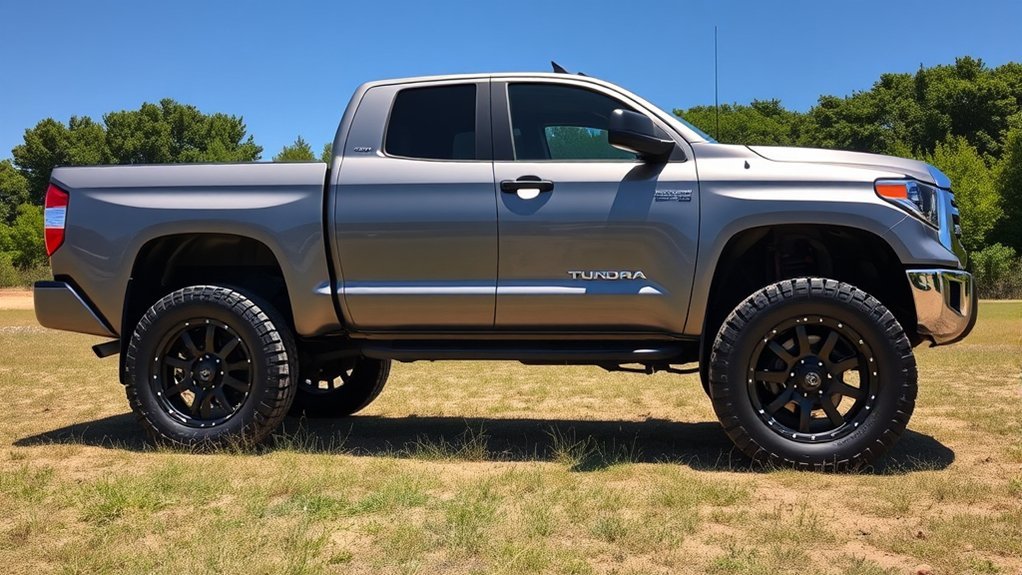
No reliable rule says that every Tundra will lose one, two, or four MPG after moving to 35s. The result depends on the complete wheel-and-tire package and how the truck is used.
The most important variables include:
- Combined tire and wheel weight
- Tread type and rolling resistance
- Tire width and aerodynamic exposure
- Cold inflation pressure
- Actual diameter change
- Axle ratio and transmission behavior
- Lift height and added accessories
- Highway speed, traffic, terrain, and temperature
- Towing or payload
- Speedometer and odometer calibration
The U.S. Department of Energy notes that proper inflation and lower rolling resistance can support fuel efficiency. Review its fleet fuel-efficiency guidance for the relationship between pressure, rolling resistance, and energy use.
How to Measure the Real MPG Change
- Record MPG over at least three comparable tanks before changing tires.
- Use the same fuel grade, pump method, route type, and driving style.
- Install and correctly inflate the new tires.
- Recalibrate the speedometer and odometer or calculate a diameter correction factor.
- Measure at least three additional comparable tanks.
- Compare corrected averages rather than one unusually good or bad tank.
Pro Tip: Compare the complete package weight before buying. A lighter wheel can offset part of the weight gained from a larger tire, although it will not remove the effects of extra diameter, width, or aggressive tread.
Speedometer, Odometer, and Electronic Calibration
A larger tire covers more distance with each revolution. Without correction, your indicated speed may be lower than your true speed, and the odometer may record fewer miles than you traveled.
You can estimate the difference with this formula:
Approximate true speed = indicated speed × new tire diameter ÷ calibrated tire diameter.
For example, moving from a true 33-inch diameter to a true 35-inch diameter changes the circumference by about 6%. The exact correction should use the tire manufacturer’s measured diameter or revolutions-per-mile specification.
Calibration may also affect shift scheduling and the accuracy of vehicle data. Confirm that any calibration device supports your exact model year and powertrain. Some driver-assistance or safety systems may require professional procedures after changes to ride height, alignment, wheels, or tires.
What to Know About Re-Gearing for Larger Tires
Larger tires make the truck’s effective gearing taller. That can reduce engine speed at a given true road speed but also reduces the torque multiplication available at the tire.
Use this formula to estimate the change:
New effective axle ratio = original axle ratio × original tire diameter ÷ new tire diameter.
A 33-to-35-inch change makes the effective ratio approximately 5.7% taller. Whether that change justifies re-gearing depends on your Tundra’s original ratio, transmission, engine torque, elevation, trailer weight, terrain, and performance expectations.
[Products Worth Considering]
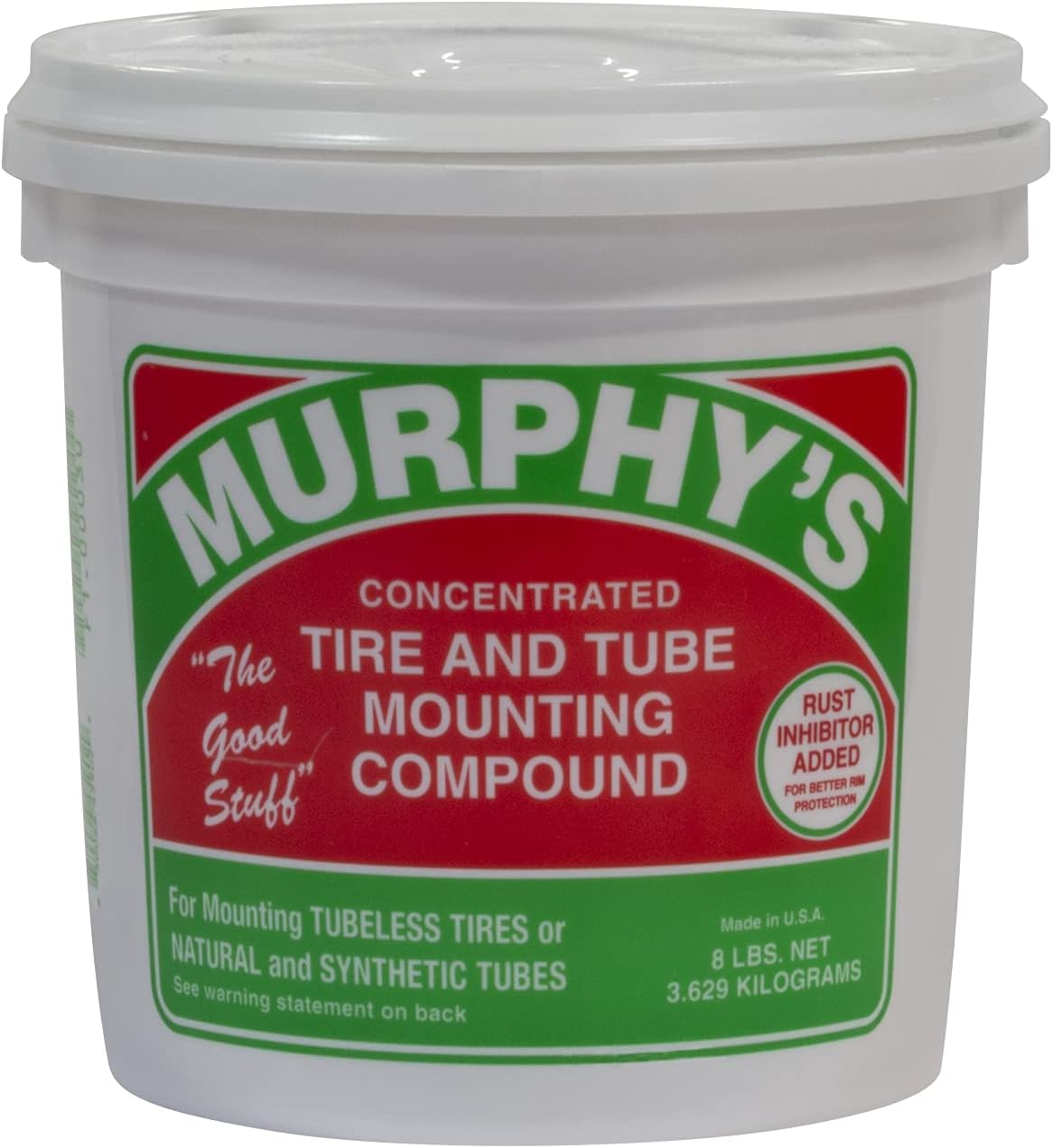
A concentrated tire and tube mounting compound designed to help simplify mounting rubber tires and tubes on passenger, semi truck, construction, and OTR applications. Its ultra-thick formula packs beads effectively and includes rust inhibitors to help protect against corrosion during use.

These universal tire valve stem caps help protect valve cores from dust, debris, and moisture while helping maintain stable tire pressure. The corrosion-resistant metal construction and sealed design provide reliable protection in road grime, mud, and winter conditions. Twist-on installation makes them quick to fit on cars, SUVs, trucks, and motorcycles.

The Topeak SmartGauge D2 delivers precise digital tire pressure readings for bikes, motorcycles, and sports equipment up to 250 psi (17 bar). Its rotating SmartHead works with both Presta and Schrader valves, so you can check pressure quickly without adapters. The LCD display makes it easy to read results in psi, bar, or kg/cm² with an included CR2032 battery for immediate use.
When Re-Gearing May Be Worth Considering
- The truck frequently tows or carries a heavy load.
- It struggles to hold gears on grades.
- Low-speed crawling control has become inadequate.
- Acceleration has declined beyond what you consider acceptable.
- The transmission hunts between gears under normal use.
- You have added substantial armor, bumpers, racks, or other weight.
When Re-Gearing May Not Be Necessary
- The truck remains responsive in its normal driving conditions.
- Towing is light or infrequent.
- Transmission behavior and temperatures remain normal.
- The larger tire is relatively light and narrow.
- You accept a modest reduction in acceleration.
Warning: A four-wheel-drive Tundra requires compatible front and rear final-drive ratios. Do not select a ratio from a generic chart without confirming the truck’s axle code, differential availability, tire diameter, and intended use.
Wheel Width, Offset, and Backspacing
Wheel specifications can determine whether a tire clears the suspension and body. Offset describes the mounting surface’s position relative to the wheel centerline. Backspacing describes the distance from the mounting surface to the wheel’s inner edge.
A wheel that sits farther outward may create more upper-control-arm clearance but can increase contact with the bumper, liner, mud flap, or body mount as the tire turns. It can also increase scrub radius and steering leverage.
A wheel that sits farther inward may reduce outer-body rubbing but contact the upper control arm, sway bar, frame, or brake components. Wheel width also changes the mounted tire’s section width and sidewall shape.
Confirm all of the following:
- Wheel diameter and width approved for the tire
- Bolt pattern and hub fit
- Offset or backspacing
- Wheel load rating
- Brake-caliper clearance
- Stud engagement and correct lug hardware
- Whether spacers are used and how they are secured
[Products Worth Considering]

Replace worn wheelchair rear tires with a universal 24x1 no-flat polyurethane foam option designed to mount tightly on 24-inch rims without the tire falling off. Installation is made easier with included tools and multiple methods, including using a pry bar or softening the tire in hot water to reduce resistance. The package includes two tires plus tie ropes for convenient fitting and handling.

Replace or upgrade your zero-turn lawn mower tires with a universal fit flat-free tire and wheel assembly in a convenient 2-pack. Smooth tread front-caster style helps turning with reduced turf damage, while flat-free design eliminates the maintenance and downtime of air-filled flats. The included adapter kit supports 5/8-inch axles and hub lengths from 3.4 to 5 inches for compatibility across most ZTR mowers.

Keep your tires properly inflated with this analog VONDIOR tire pressure gauge, designed for fast, easy readings without batteries. The swiveling, two-axis hose and large glow dial help you measure at any tire angle with instant visibility. Built with a protective rubber shield, it supports durable, low-maintenance use for cars and trucks.
Rubbing Issues: What to Expect With Larger Tires
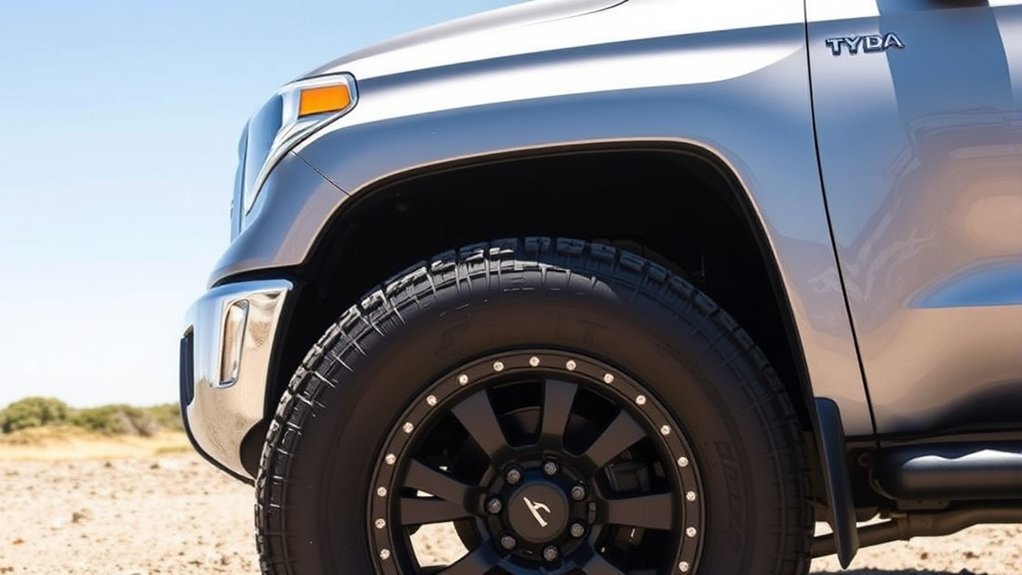
A tire can appear to fit while the truck is parked and still rub during steering, braking, suspension compression, or off-camber articulation. Clearance should be checked dynamically, not only with the wheels pointed straight ahead.
Steering-Lock Clearance
Turn the steering slowly from lock to lock while checking the front and rear edges of both front wheel wells. Repeat the check with the suspension carrying its normal accessories and cargo.
Common front contact points include the bumper edge, liner, mud flap, body mount, sway bar, upper control arm, and frame. Alignment changes can move the tire closer to or farther from some of these areas.
Suspension Compression and Articulation
Off-road use pushes the tire upward and rearward through its travel. A setup that clears during normal street steering may contact the liner, fender, body mount, or wiring under compression.
A lift or leveling kit may create additional static space, but it does not guarantee clearance throughout the full travel range. Larger tires can still rub when the suspension compresses deeply.
Safe Ways to Correct Rubbing
- Confirm alignment and caster settings.
- Reshape or secure a loose liner where safe.
- Remove or replace an interfering mud flap.
- Use a wheel with a more suitable offset.
- Select a narrower tire or a model with smaller measured dimensions.
- Use properly engineered suspension components.
- Have structural trimming or body-mount work completed professionally.
Do not cut brake hoses, wiring, structural parts, or mounting points simply to create tire clearance.
Driving Experience With 33 vs. 35-Inch Tires
A 33-inch setup usually preserves more of the factory steering response and acceleration. A 35-inch setup can feel heavier, especially when the tire and wheel combination adds substantial rotating mass.
Possible changes with 35-inch tires include:
- Slower initial acceleration
- Heavier steering effort
- Less precise on-center response
- More tread noise
- Longer or less consistent braking response
- More frequent transmission shifting on hills
- Stronger impact over sharp bumps if LT construction and pressure are poorly matched
- Better ability to roll over larger trail obstacles
Tread design may have a greater effect on noise and wet-road behavior than diameter. A mild all-terrain 35 can be quieter than an aggressive mud-terrain 33, so compare complete tire specifications rather than size alone.
Towing, Payload, and Tire Load Rating
Do not choose a tire only because its dimensions fit. Confirm that its load capacity is suitable for the truck’s axle ratings and intended load. The NHTSA TireWise guidance directs drivers to the owner’s manual and the Tire and Loading Information label for the manufacturer’s tire specifications.
When changing from a factory passenger-type tire to an LT tire, the correct cold pressure may differ from the original placard pressure. It should be determined from the load carried and the tire manufacturer’s load-and-inflation data. Do not automatically inflate the tire to the maximum sidewall pressure.
Larger and heavier tires may affect acceleration, braking, transmission behavior, and trailer response. They do not increase the Tundra’s certified payload, gross vehicle weight rating, axle ratings, or towing rating.
TPMS, Spare Tire, and Installation Checks
Verify that the tire-pressure monitoring sensors are compatible, installed correctly, and registered when required. Toyota notes that tire-pressure warning valves and transmitters can be damaged during tire or wheel service, as described in its Tundra tire-service guidance.
Your spare should also be considered. A much smaller spare can create drivetrain concerns when used for an extended distance, especially on a four-wheel-drive truck. Confirm that a matching or suitably compatible spare fits the factory carrier without contacting the exhaust, hitch, suspension, or body.
Post-Installation Checklist
- Set the correct cold inflation pressure.
- Confirm TPMS operation.
- Check full steering lock in both directions.
- Inspect brake-line, ABS-wire, control-arm, sway-bar, frame, and body clearance.
- Test suspension compression or articulation safely.
- Perform a professional alignment.
- Calibrate the speedometer and odometer when supported.
- Confirm normal braking and steering in a controlled area.
- Recheck lug torque according to the wheel or vehicle instructions.
- Inspect for fresh rub marks after the first drives and after off-road use.
Costs of 33 vs. 35-Inch Tires
Thirty-five-inch tires generally cost more than comparable 33-inch tires, but the tire price may be only one part of the upgrade. Brand, tread type, load construction, wheel diameter, and regional availability all influence the purchase price.
| Potential Cost | Why It May Be Needed |
|---|---|
| Tires and wheels | The factory wheel may not provide the required width, offset, load rating, or brake clearance. |
| Mounting, balancing, and TPMS | Larger LT tires may require specialized equipment, sensors, or additional balancing work. |
| Alignment and control arms | Extra caster or suspension correction may be needed for clearance and handling. |
| Trimming or body work | Wide 35s may contact the liner, bumper, mud flap, pinch area, or body mount. |
| Calibration | The speedometer, odometer, and transmission data may need correction. |
| Re-gearing | Heavy towing, demanding terrain, or unacceptable performance loss may justify it. |
| Ongoing fuel and wear | Additional mass, tread resistance, and altered suspension geometry can increase operating costs. |
[Products Worth Considering]

These M14x1.5 closed-end chrome lug nuts are a one-piece replacement designed for secure fitment on compatible GM, Ford, and select Chrysler/Dodge models. Featuring a 60-degree conical seat and anti-rust chrome plating, they help resist corrosion and maintain a bright look for everyday driving. Built for long-term durability, they include OEM-style part references and are backed by 12 months of support.

The 22800 wheel stud installer makes replacing wheel studs quick and secure, saving time and effort during tire service. It uses a ratchet or impact wrench to pull new studs firmly into place, helping when existing studs are too long. Compatible with most automotive wheels and light-duty truck wheel studs, it’s designed for easy, tool-assisted installation.

This manual duck head tire changer kit makes tire installation and removal simpler by letting you embed the duck head into the tire with applied pressure. The integrated design and durable steel construction help reduce friction and improve efficiency and safety during use. Suitable for 16–21 inch wheels, it’s convenient for cars, trucks, SUVs, and ATV tires, with 24-hour after-sales support.
Tips for Maximizing MPG With Larger Tires on Your Tundra
- Choose the lightest suitable package: Compare tire and wheel weights while preserving the required load rating and durability.
- Avoid unnecessary width: A narrower tire may reduce weight, frontal exposure, and rubbing risk.
- Use the correct pressure: Check pressure cold and follow a qualified load-based recommendation.
- Correct the calibration: An inaccurate odometer produces misleading MPG calculations.
- Maintain alignment: Incorrect toe increases drag and accelerates tire wear.
- Drive smoothly: Gentle acceleration and moderate highway speeds reduce the energy needed to accelerate and push a modified truck through the air.
- Remove unnecessary weight: Heavy bumpers, racks, armor, tools, and cargo can compound the effect of larger tires.
- Maintain the truck: Address dragging brakes, worn bearings, engine faults, and drivetrain-fluid problems.
Frequently Asked Questions
How much do 35-inch tires affect Tundra MPG?
No fixed loss applies to every Tundra. Tire and wheel weight, tread, width, pressure, gearing, lift, speed, load, and calibration all affect the result. Measure several comparable tanks before and after installation and correct the mileage when the odometer has not been recalibrated.
What is the real-life MPG of a 5.7L Tundra?
The 5.7L V8 applies to the older Tundra generation, including 2007–2021 models. Real MPG varies by year, drivetrain, cab, tires, lift, load, speed, terrain, and maintenance. Use the EPA rating for your exact configuration as a stock baseline, then calculate your own corrected tank average.
How much lift does a Tundra need to fit 35s?
No universal lift height guarantees fitment. Some setups need suspension changes and trimming, while others depend mainly on tire width, wheel offset, caster, liner position, and measured tire dimensions. Check clearance at full steering lock and through suspension compression.
Do 35-inch tires require re-gearing?
Not always. A 33-to-35-inch change makes the effective gearing approximately 5.7% taller. Re-gearing becomes more valuable when the truck tows heavily, struggles on grades, hunts between gears, or needs stronger low-speed control.
Will 35-inch tires affect the speedometer?
Yes, when their rolling diameter is larger than the size used for calibration. The speedometer may read lower than the truck’s true speed, and the odometer may under-record distance. Use manufacturer revolutions-per-mile data and a compatible calibration method.
Can you tow with 35-inch tires on a Tundra?
You can tow when the tires, wheels, pressure, suspension, and clearances are suitable for the truck and load. However, larger tires do not increase the certified towing, payload, axle, or gross vehicle weight ratings. Added rotating mass and taller effective gearing may also reduce acceleration and grade performance.
Sources
- National Highway Traffic Safety Administration: TireWise — tire size, load, pressure, maintenance, and replacement-tire safety guidance.
- Toyota: Current Tundra Specifications — current-generation powertrain, configuration, and vehicle specifications.
- Toyota USA Newsroom: 2021 Tundra — previous-generation 5.7L V8 and six-speed drivetrain information.
- U.S. Department of Energy: Fleet Efficiency Practices — tire pressure and rolling-resistance effects on fuel efficiency.
- Toyota Tundra Owner’s Manual: Tire Service — TPMS components, tire replacement, and wheel-service precautions.
Conclusion
Choose 33-inch tires when you want a practical balance of appearance, trail performance, road manners, fuel economy, and simpler fitment. They are usually the stronger choice for a daily-driven or frequently towed Tundra.
Choose 35-inch tires when the extra obstacle clearance and off-road capability justify the added fitment work, rotating mass, calibration, and operating cost. Before buying, match the setup to your exact Tundra generation, measure the tire rather than trusting its category name, verify load and wheel specifications, and inspect clearance through the truck’s full steering and suspension range.