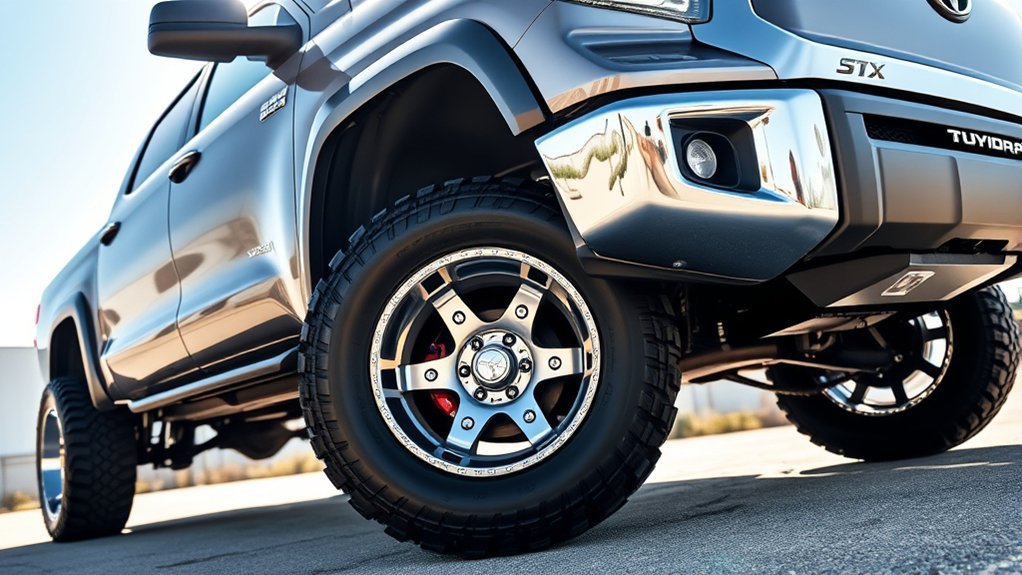
If you’re upgrading a Toyota Tundra with a 2.5-inch leveling kit, the safest tire choice is usually a 33-inch-class tire, but the exact size depends on your model year, wheel offset, wheel width, alignment, and tire tread shape. A 275/70R18 is the easy-fit option for many setups, while 285/70R18 gives a bigger look with a higher chance of minor rubbing.
Quick Answer
For most Tundras with a 2.5-inch leveling kit and 18-inch wheels, 275/70R18 is the safest larger tire, and 285/70R18 is the common aggressive daily-driver choice. Sizes like 295/70R18, 305/65R18, or 285/75R18 can require trimming, offset changes, or extra clearance work.
Key Takeaways
- 275/70R18 is the best low-drama upgrade for many 2.5-inch leveled Tundras because it is about 33.2 inches tall and not overly wide.
- 285/70R18 is about 33.7 inches tall, so it is closer to a 34-inch tire than a true 33-inch tire.
- 295/70R18 is about 34.3 inches tall and should be treated as an aggressive fitment, not a simple bolt-on size.
- Wheel offset matters as much as tire height. A wider tire on the wrong offset can rub the upper control arm, mud flap, bumper liner, or inner fender.
- Never install tires with a lower load index or load-carrying capacity than your Tundra’s door placard or owner’s manual requires.
At a Glance
| Time Required | 1–3 hours for mounting, balancing, and clearance checks; longer if trimming or alignment correction is needed. |
| Difficulty | Moderate. Tire mounting and final alignment should be handled by a tire or alignment shop. |
| Tools Needed | Torque wrench, tire-pressure gauge, flashlight, trim tools, floor jack, jack stands, and access to an alignment rack. |
| Cost | Varies by tire model, load range, mounting, balancing, alignment, TPMS service, and any trimming or suspension work. |
Understanding Tire Sizes for Tundra Leveling Kits
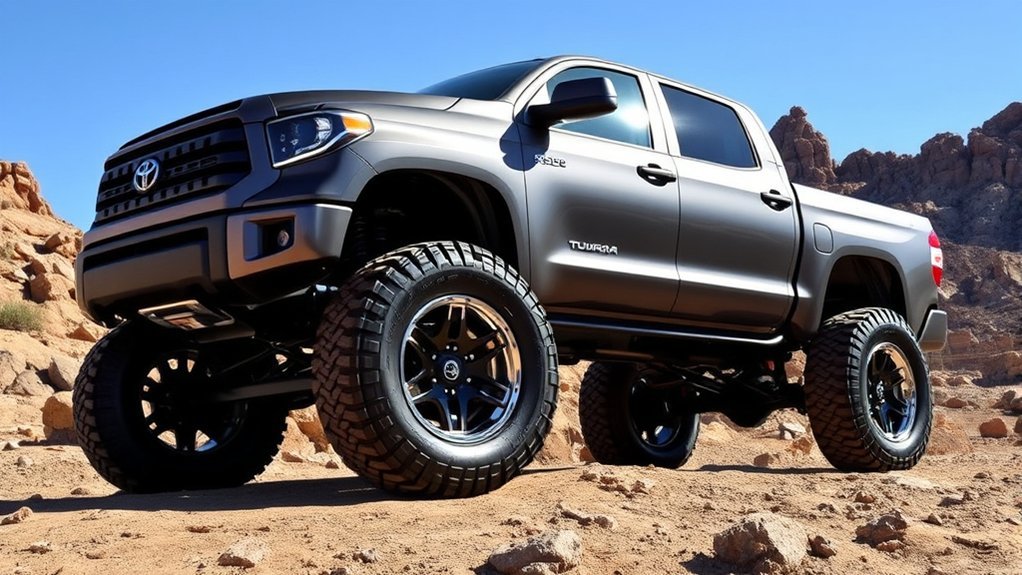
A leveling kit raises the front of the Tundra to reduce factory rake and create more front tire clearance. It does not guarantee that every 33- or 34-inch tire will fit without rubbing. Tire height, section width, tread shoulder shape, wheel offset, caster setting, and your specific Tundra generation all affect the final fit.
The numbers in a tire size matter. In 285/70R18, 285 is the tire’s section width in millimeters, 70 is the sidewall height as a percentage of the width, and 18 is the wheel diameter in inches. That size works out to about 33.7 inches tall, so it is not a true 33-inch tire. A tire-size calculator such as Calculator.net’s tire size calculator can help you compare height, width, circumference, and speedometer change before you buy.
Note: The original 18-inch tire and wheel specs vary by model year and trim. Many 2007–2021 Tundras use 18×8 wheels with high positive offset and common OE sizes such as 275/65R18, while 2022+ Tundras use different OE sizes depending on trim. Always check your door placard and owner’s manual before ordering tires.
Popular Tire Sizes for 2.5-Inch Leveling Kits
For a Tundra with a 2.5-inch leveling kit, the best tire size depends on how much trimming you are willing to do. The table below gives a practical starting point for common 18-inch sizes.
| Tire Size | Approx. Diameter | Approx. Width | Fitment Notes |
|---|---|---|---|
| 275/70R18 | 33.2 in. | 10.8 in. | Best low-risk upgrade. Often clears with little or no trimming on many leveled setups. |
| 285/70R18 | 33.7 in. | 11.2 in. | Most popular aggressive daily-driver size. May need mud-flap, liner, or alignment adjustments. |
| 305/65R18 | 33.6 in. | 12.0 in. | Similar height to 285/70R18 but much wider, so upper control arm and fender-liner clearance matter more. |
| 295/70R18 | 34.3 in. | 11.6 in. | Aggressive fitment. Expect a higher chance of rubbing and trimming. |
| 285/75R18 | 34.8 in. | 11.2 in. | Close to 35-inch territory. Usually not the best choice for a simple 2.5-inch level. |
[Products Worth Considering]

The Trivd Frol 1/2" air impact wrench delivers high performance torque up to 1500 ft-lbs with a twin hammer impact mechanism for strong, balanced blows. It features an ergonomic grip, compact lightweight design, and quick-stop control with 3 forward speeds up to 8000 RPM plus a reverse speed. Built for demanding automotive repair and tire shop work, the rear exhaust helps keep debris away from the surface.

Monitor tire tread wear with a smart, color-coded depth gauge that shows clear condition ranges at a glance. The bar is range marked for fast, easy readings, helping you maintain safer traction and performance. Each gauge is portable with a pocket clip, and the set includes 20 units for daily use and sharing.

Keep your tires properly inflated with this analog VONDIOR tire pressure gauge, designed for fast, easy readings without batteries. The swiveling, two-axis hose and large glow dial help you measure at any tire angle with instant visibility. Built with a protective rubber shield, it supports durable, low-maintenance use for cars and trucks.
Best Tire Size by Driving Style
If you want the cleanest upgrade, choose 275/70R18. It gives the truck a fuller look without pushing too far into clearance problems. If you want the most common aggressive look while keeping daily driving reasonable, choose 285/70R18 and plan for careful test fitting.
- Best daily-driver size: 275/70R18
- Best aggressive daily-driver size: 285/70R18
- Best wide stance candidate: 305/65R18, but only with the right wheel offset and clearance checks
- High-modification sizes: 295/70R18 and 285/75R18
A 2.5-inch level helps, but wheel offset and tire width often decide whether the tire clears. A shorter wide tire can rub more than a taller narrow tire.
[Products Worth Considering]

Measure tire tread depth quickly and accurately with this LUMITECO dial gauge that reads in 1/32" increments up to 14/32". The color-coded green/yellow/red zones make it easy to judge tire wear and know when replacement is needed. A rugged, compact design with a protective pouch helps keep the gauge ready for use on cars, trucks, motorcycles, and more.
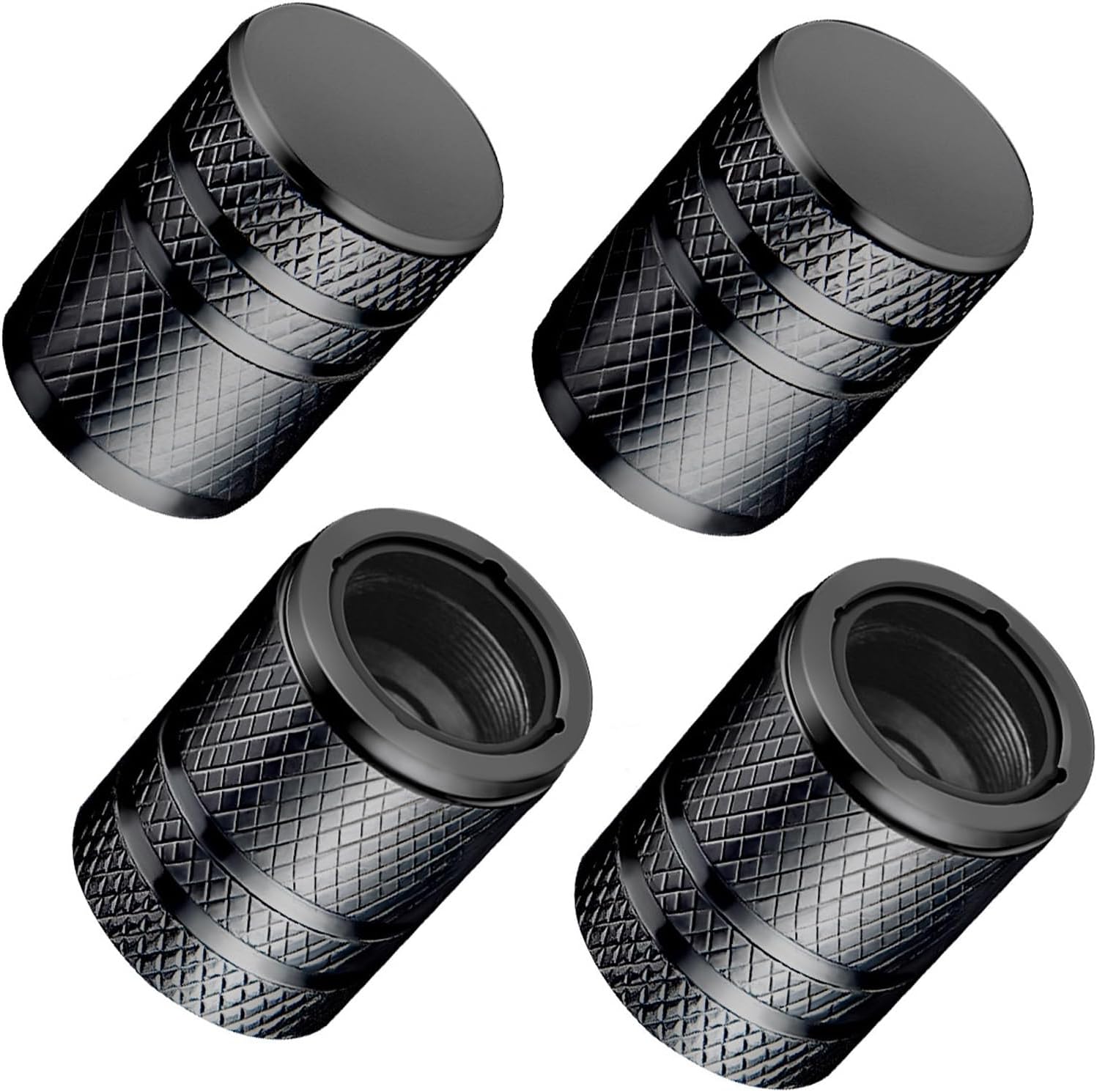
Upgrade your tires with DESOUL premium valve stem caps featuring a corrosion-resistant metal shell and plastic liner. The built-in sealing ring helps prevent leaks and protects tire pressure, while the universal Schrader fit works for cars, trucks, SUVs, motorcycles, bikes, and RVs. Easy by-hand installation is built in with a secure grip design.

The SAFELIFE dial tire tread depth gauge measures tread depth in 1/32 inch increments with clear, easy-to-read 2-inch dial face. Color zones using a traffic light system help you quickly judge whether tread is low, marginal, or ample for safer driving. Built with a durable zinc cast body and a metal detect probe for precise, comfortable use across cars, motorcycles, trucks, and buses.
Identifying Common Clearance Issues With Bigger Tires
Upgrading to larger tires can improve stance and off-road clearance, but the first rubbing points are usually predictable. Check these areas before assuming the tire is too large.
| Rubbing Area | What It Usually Means | Common Fix |
|---|---|---|
| Front mud flaps | The tire is contacting the rear of the front wheel well during turning. | Remove, trim, or replace with a low-profile flap. |
| Inner fender liner | The tire is too tall, too wide, or the alignment/caster is not optimized. | Push liner forward, heat-form carefully, or trim plastic only. |
| Upper control arm | The tire is too wide for the wheel offset/backspacing. | Use a different wheel offset or consult a suspension shop before adding spacers. |
| Skid plate or bumper liner | The tire is contacting at full lock or in reverse. | Adjust, trim plastic, or reposition affected brackets if safe. |
Warning: Do not cut structural parts, brake-line brackets, wiring, or suspension components just to force a tire to fit. If the tire contacts metal or suspension parts, stop and have the setup checked by a qualified tire or alignment shop.
Installation Tips for Tire Upgrades
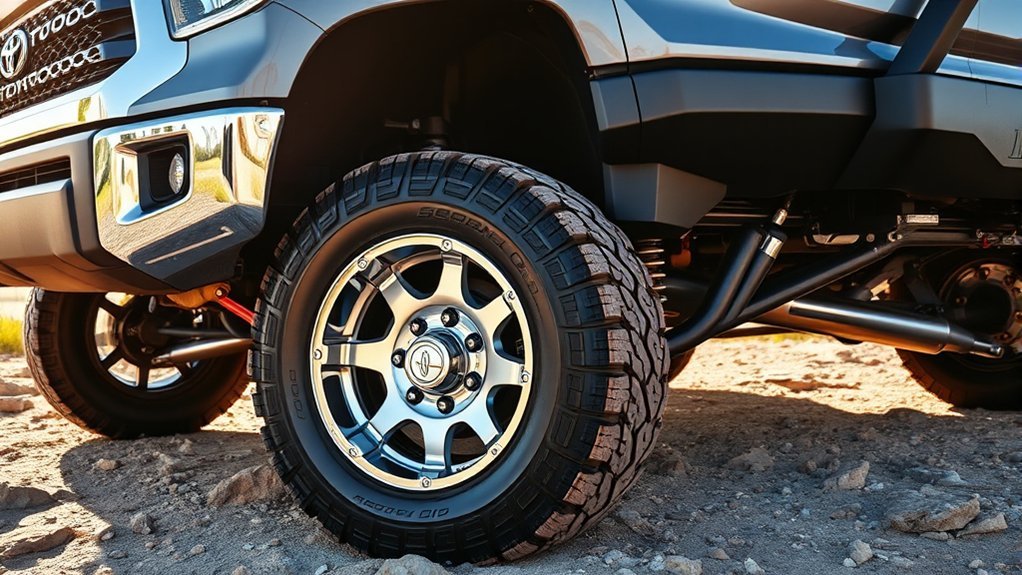
Do not buy the largest tire first and hope it clears. Test fit one front tire, cycle the steering, and check the truck under real turning angles before completing the full install.
- Confirm your baseline: Check your model year, trim, current tire size, wheel width, wheel offset, and door-placard load information.
- Test fit the front first: The front tires are where most clearance problems show up.
- Check full lock both ways: Turn left and right while watching the mud flap, liner, skid plate, bumper edge, and upper control arm.
- Check in reverse: Some Tundras rub only when backing up and turning.
- Get an alignment: A proper alignment can improve tire wear and sometimes helps move the tire away from the rear liner, depending on caster range.
- Recheck after driving: Inspect again after 50–100 miles because fresh rub marks can appear after the suspension settles or the tires flex.
Pro Tip: Ask the tire shop to mount one front tire first before installing all four. That gives you a chance to catch rubbing before paying for a full mount-and-balance job on a size that may not work.
Comparing Aftermarket Tires and Stock Options
Stock tire sizes are chosen for ride comfort, fuel economy, load rating, steering feel, and clearance. Aftermarket tires can improve ground clearance and traction, but they can also add weight, road noise, braking distance, and rubbing risk.
[Products Worth Considering]

The Tymate TM2 RV tire pressure monitoring system keeps you informed with a color LCD display, automatic backlight, and solar charging for dependable operation. It supports up to 10 tire positions with four pre-paired sensors, while offering multiple alarm modes for fast leak detection, pressure extremes, temperature alerts, and low-signal warnings. Built-in monitoring uses accurate readings and reliable 433.92MHz communication to help protect your RV, trailer, truck, or SUV.
This flat-free TICONN wheelbarrow tire features durable polyurethane foam construction that never needs inflation, helping prevent punctures and reducing maintenance on rough outdoor terrain. With a 300 lb max load capacity and stable steel rim design, it supports safer transport for yard work and hauling tasks. An adapter kit with ball bearings and nylon spacers is included for easier fit and customization across common wheelbarrow and cart axle setups.

Malco tire mounting and demounting lubricant is a ready-to-use tire lube formulated to reduce friction during tire installation for passenger cars, light trucks, farm tires, and heavy-duty equipment. It provides rust-inhibiting protection to help reduce corrosion on rims and wheels, and helps support proper tire bead seating during inflation to reduce air leakage. The silicone-free, soap-free formula is whitewall safe to help prevent discoloration on whitewall tires and sensitive sidewall markings.
Aftermarket Tire Benefits
Good all-terrain tires can add stronger sidewalls, better loose-surface traction, and a more planted look. Popular choices include the Toyo Open Country A/T III, Nitto Ridge Grappler, Falken Wildpeak A/T4W, and BFGoodrich All-Terrain T/A KO2. The best tire depends on whether you care most about highway comfort, winter traction, mud performance, tread life, or sidewall strength.
Stock Tire Limitations
Many Tundra owners upgrade because the factory tire looks small after a leveling kit. A stock-size tire keeps factory-like driving manners, but it may leave extra fender gap. Moving to a 275/70R18 or 285/70R18 usually gives a fuller look without jumping into extreme fitment.
Popular Tire Choices
- All-terrain daily driver: Toyo Open Country A/T III, Falken Wildpeak A/T4W, BFGoodrich KO2 or KO3, and similar all-terrain designs.
- Hybrid rugged terrain: Nitto Ridge Grappler and similar hybrid designs for a more aggressive tread with reasonable road manners.
- Mud-terrain: Best for mud and trails, but usually louder, heavier, and more likely to reduce fuel economy.
Load Index, Pressure, and Speedometer Checks
Before buying larger tires, compare the new tire’s load index, speed rating, and load range with the original equipment tire information on your door placard or owner’s manual. The U.S. Tire Manufacturers Association advises that replacement tires should match the size, load index, and speed rating recommended by the vehicle or tire manufacturer and should not have a smaller load-carrying capacity than originally specified.
Larger tires also change effective gearing and speedometer readings. A taller tire travels farther per revolution, so your speedometer may read lower than your actual road speed. If the difference is large, ask a shop about recalibration options for your model year.
Note: The PSI molded into a tire sidewall is the tire’s maximum pressure, not automatically the correct pressure for your truck. Start with the door placard and tire manufacturer guidance, then have a tire professional adjust for load range and use case.
User Experiences With Tire Fitment and Performance
Real-world Tundra fitment reports vary because not every “285/70R18” measures the same once mounted. A square-shouldered mud-terrain can rub where a rounder all-terrain clears. A wheel with lower offset can help upper control arm clearance, but it can also push the tire outward into the fender liner or bumper edge.
Common Tire Sizes
- 275/70R18: Best for owners who want a larger look without much trimming.
- 285/70R18: Best for owners who want a bigger stance and are willing to do minor clearance work if needed.
- 295/70R18: Better for owners who accept trimming, careful wheel selection, and a more involved fitment process.
Rubbing Issues Identified
Rubbing is most common at full steering lock, when reversing, or when the suspension compresses while turning into a driveway. If rubbing is light and only on plastic, a liner adjustment or mud-flap trim may solve it. If the tire hits metal or the upper control arm, the wheel/tire combination needs to be reconsidered.
Personal Modification Experiences
Many owners find that minor plastic trimming solves 275/70R18 or 285/70R18 rubbing. Larger sizes can need more than trimming: alignment adjustment, aftermarket upper control arms, different wheel offset, or a taller lift. The more aggressive the tire size, the more important it becomes to test fit before committing.
Next Steps After Choosing Your Tire Size
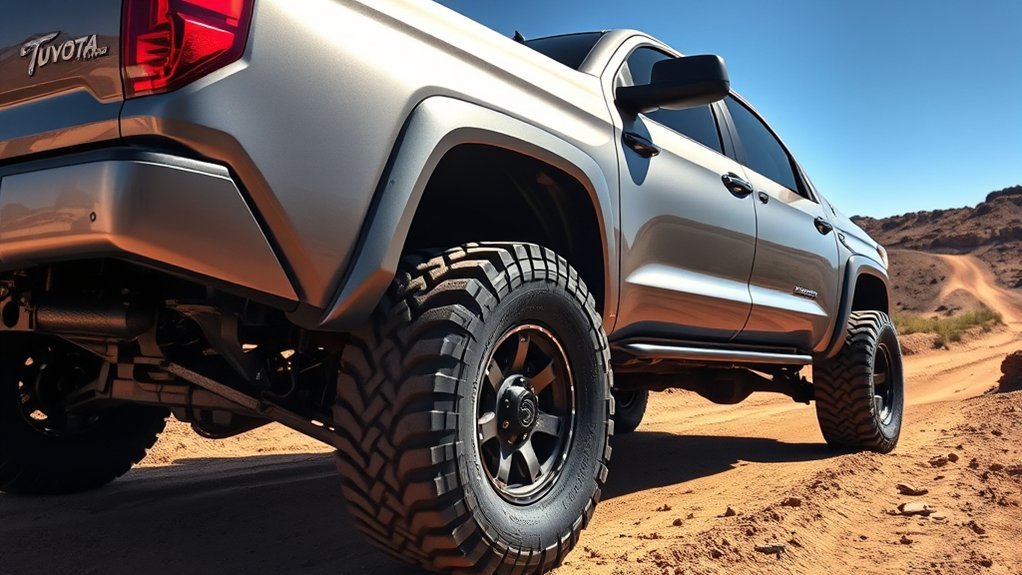
Once you choose a tire size, do not skip the setup checks. A tire that technically fits can still wear poorly or rub under load if the alignment, pressure, or wheel offset is wrong.
| Step | Action | Why It Matters |
|---|---|---|
| 1 | Verify tire load index and speed rating. | Prevents unsafe under-rated tire choices. |
| 2 | Mount and balance the tires. | Reduces vibration and uneven wear. |
| 3 | Perform full-lock and reverse clearance checks. | Catches rubbing before it damages the liner or tire. |
| 4 | Align the truck after installation. | Improves handling and tire life. |
| 5 | Check TPMS and tire pressure. | Helps maintain proper pressure and warning-system function. |
| 6 | Consider speedometer recalibration. | Taller tires can make the speedometer read low. |
Preparing for Installation: Key Considerations
Before installation, collect the information that controls fitment. Guessing based only on lift height is the easiest way to buy the wrong tire.
- Wheel offset: High positive offset keeps the tire tucked in, which may help fender clearance but can reduce upper control arm clearance with wider tires.
- Wheel width: A wider wheel can change the tire’s mounted shape and shoulder position.
- Tread design: Mud-terrain and rugged-terrain tires often have larger shoulder lugs than all-terrain tires in the same size.
- Alignment range: Caster and camber settings can affect where the tire sits in the wheel well.
- Truck use: Towing, hauling, off-roading, and snow driving all affect the best tire choice.
Warning: Larger LT tires are often heavier than stock tires. Extra unsprung weight can affect braking feel, fuel economy, acceleration, and ride comfort. Choose the lightest tire that still meets your load, terrain, and durability needs.
Frequently Asked Questions
Can I use 33-inch tires with a 2.5-inch lift?
Yes. A 33-inch-class tire is the normal target for a 2.5-inch leveled Tundra. A 275/70R18 is about 33.2 inches tall and is usually the safer choice. A 285/70R18 is about 33.7 inches tall and may need minor trimming or liner adjustment.
Will a wider tire affect fuel economy?
Usually, yes. A wider or heavier tire can increase rolling resistance and unsprung weight, which may reduce fuel economy and acceleration. The exact change depends on tire weight, tread pattern, pressure, driving speed, and how much highway driving you do.
How does tire offset impact fitment?
Wheel offset changes where the tire sits side-to-side. More positive offset pulls the tire inward and can create upper control arm clearance issues with wide tires. Less positive or negative offset pushes the tire outward, which can improve inner clearance but increase rubbing at the fender liner, bumper edge, or mud flap.
Do I need to recalibrate my speedometer?
You may need recalibration if the new tire is much taller than stock. Taller tires travel farther per rotation, so the speedometer can read lower than your real speed. A small change may be tolerable, but larger jumps should be checked with GPS speed and recalibrated if possible.
What is the best tire brand for Tundra leveling kits?
There is no single best brand for every Tundra. Toyo, Falken, Nitto, BFGoodrich, Cooper, and Goodyear all make popular truck tires. Choose based on the tire’s actual size, weight, load rating, tread pattern, snow rating, road-noise expectations, and your driving conditions.
Is 295/70R18 too big for a 2.5-inch leveled Tundra?
It can work on some builds, but it is not the easy-fit choice. A 295/70R18 is about 34.3 inches tall, so expect a higher chance of rubbing. Plan on careful wheel-offset selection, alignment work, and possible trimming.
Conclusion
For most Tundra owners with a 2.5-inch leveling kit, the best tire size is the one that gives the look you want without creating constant rubbing. Choose 275/70R18 for the safest upgrade, 285/70R18 for a fuller and more aggressive stance, and treat 295/70R18, 305/65R18, and 285/75R18 as more involved fitments. Before ordering, verify your model year, wheel offset, load rating, tire pressure needs, and clearance at full lock.
Sources
- Toyota Owners Manuals and Warranties — supports checking the correct owner’s manual and vehicle-specific tire information.
- Toyota 2026 Tundra Specifications — supports model-year-specific tire and wheel verification.
- U.S. Tire Manufacturers Association: Replacing Tires — supports replacement tire load index, size, and speed-rating safety guidance.
- NHTSA TireWise — supports tire safety, tire ratings, and maintenance guidance.
- Calculator.net Tire Size Calculator — supports comparing tire dimensions and speedometer effects.
- Toyo Open Country A/T III — supports all-terrain tire feature references.