
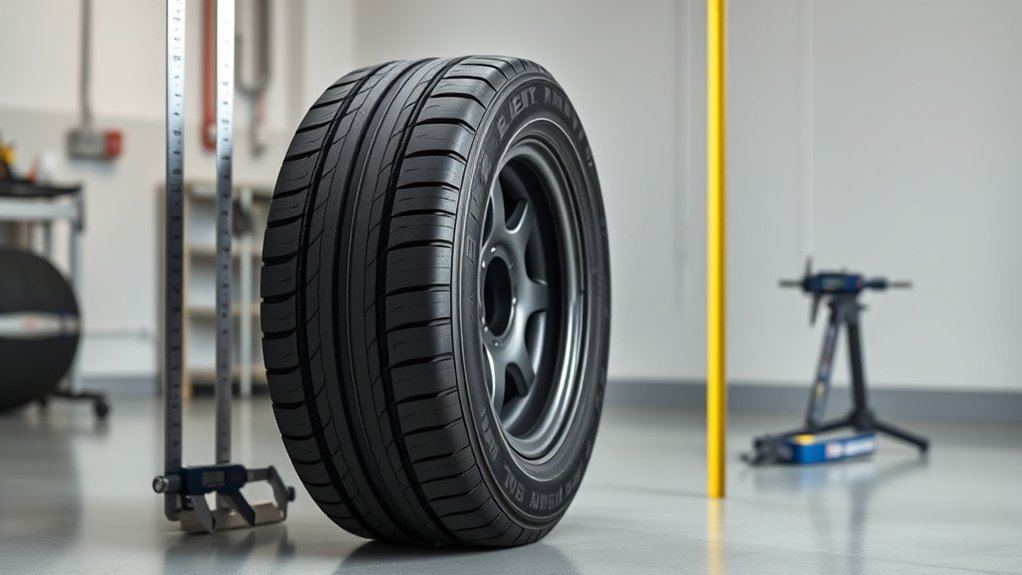
A 305 tire is not one fixed tire height. The number 305 means the tire’s nominal section width is 305 millimeters, which converts to about 12.0 inches. The rest of the tire size, such as 305/70R18, 305/65R17, or 305/55R20, determines the sidewall height, wheel diameter, and overall tire height.
Quick Answer
A 305 tire is about 12.0 inches wide because 305 millimeters equals 12.01 inches. It is not always a 35-inch tire. Height depends on the full size code: a 305/70R18 is about 34.8 inches tall, while a 305/55R20 is about 33.2 inches tall.
Key Takeaways
- A 305 tire has a nominal section width of 305 mm, or about 12.0 inches.
- The first number, 305, is width only; it does not tell you the tire’s total height.
- A 305/70R18 is about 34.8 inches tall, so it is close to a 35-inch tire.
- A 305/65R17 is about 32.6 inches tall, and a 305/55R20 is about 33.2 inches tall.
- Fitment depends on rim width, wheel offset, suspension clearance, brake clearance, load rating, and the vehicle manufacturer’s tire recommendations.
What Is a 305 Tire?
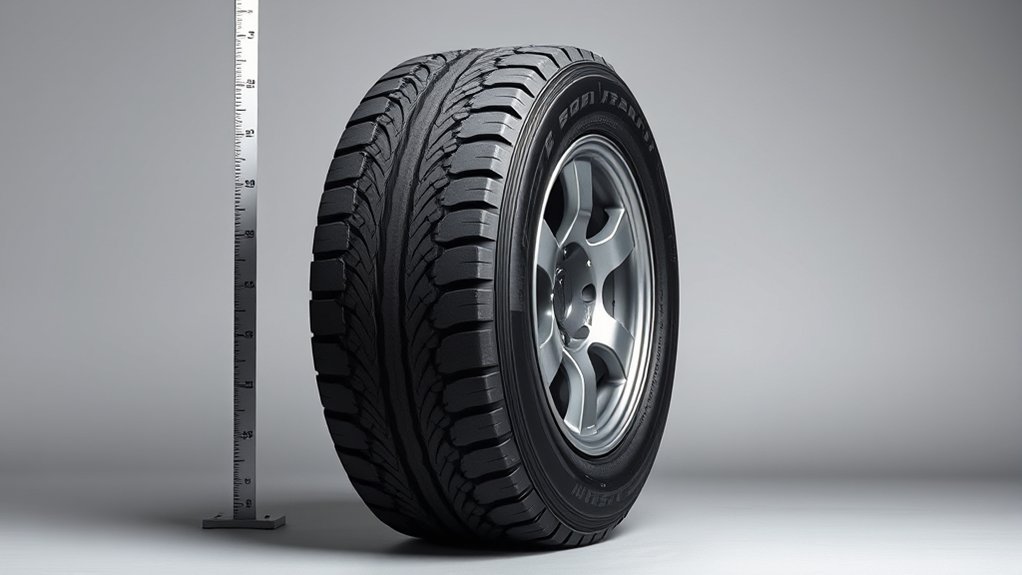
A 305 tire is any tire whose size code begins with 305, such as 305/70R18, 305/65R17, or 305/55R20. In metric tire sizing, the first number is the nominal section width in millimeters. In this case, 305 means the tire is about 305 mm wide from sidewall to sidewall.
The full size code matters. In 305/70R18, the 305 is width, 70 is the aspect ratio, R means radial construction, and 18 is the wheel diameter in inches. Tire manufacturers and safety agencies describe these sidewall markings as separate pieces of information, not one single measurement. You can review the same marking system in Michelin’s guide to tire sidewall markings and NHTSA’s tire safety brochure.
Note: Section width is not always the same as tread width. The 305 mm number refers to the tire’s nominal sidewall-to-sidewall width, while tread width can be narrower and varies by tire model.
How Wide Is a 305 Tire?
A 305 tire is about 12.0 inches wide. The conversion is simple:
305 mm ÷ 25.4 = 12.01 inches
That 12.0-inch figure is the nominal section width. Actual mounted width can change slightly by tire model, tire pressure, wheel width, and measuring method. Tire Rack notes that nominal tire calculations are estimates and that manufacturer specifications should be used when fitment is tight.
A 305-width tire is wider than common 265, 275, and 285 sizes. That wider footprint can help with traction and stance, but it can also increase the chance of rubbing on the fender liner, upper control arm, sway bar, or bumper depending on the vehicle and wheel offset.
What Are the Common 305 Tire Sizes?
Common 305 tire sizes vary because the aspect ratio and wheel diameter change the sidewall height and overall diameter. The table below uses nominal math, so always compare it with the exact tire manufacturer’s spec sheet before buying.
| Tire Size | Section Width | Sidewall Height | Wheel Diameter | Approx. Overall Diameter |
|---|---|---|---|---|
| 305/70R18 | 12.0 in | 8.4 in | 18 in | 34.8 in |
| 305/65R17 | 12.0 in | 7.8 in | 17 in | 32.6 in |
| 305/60R18 | 12.0 in | 7.2 in | 18 in | 32.4 in |
| 305/55R20 | 12.0 in | 6.6 in | 20 in | 33.2 in |
| 305/50R20 | 12.0 in | 6.0 in | 20 in | 32.0 in |
| 305/45R22 | 12.0 in | 5.4 in | 22 in | 32.8 in |
Higher aspect ratios, such as 70, create taller sidewalls and larger overall diameter. Lower aspect ratios, such as 45 or 50, create shorter sidewalls and a lower-profile tire, even when the width stays 305 mm.
[Products Worth Considering]

These pre-assembled 15x6.00-6 front tire and wheel assemblies are designed for quick replacement on riding lawn mowers and lawn tractors. Built with natural rubber pneumatic tires and turf-friendly tread for solid traction and improved shock absorption. A thickened welded rim and 3/4" sintered iron bushing help provide stable, heavy-duty support for everyday mowing use.

ETENWOLF T300 is a calibrated digital tire pressure gauge for accurate readings from 3 to 200 PSI across light and heavy-duty vehicles. It includes thermal compensation for reliable performance in extreme cold or heat, with an auto shut-off to extend battery life and an LED for easier reading. The sturdy design supports rugged everyday use, making it ideal for pickups, RVs, and industrial applications.

This digital tire pressure gauge with built-in inflator helps you accurately check and adjust tire pressure for safer driving and better fuel efficiency. It supports multiple units (PSI, KPA, BAR, KG/CM²) and reads within 1% for reliable results. The 3-in-1 design inflates, deflates, and measures, with a quick-connect air chuck and compatible hose setup for cars, trucks, SUVs, RVs, and motorcycles.
How Do You Convert 305 Tires to Inches?
At a Glance
| Time Required | 2–3 minutes per tire size |
| Difficulty | Easy |
| Tools Needed | Calculator, tire size code, and manufacturer spec sheet |
| Cost | $0 |
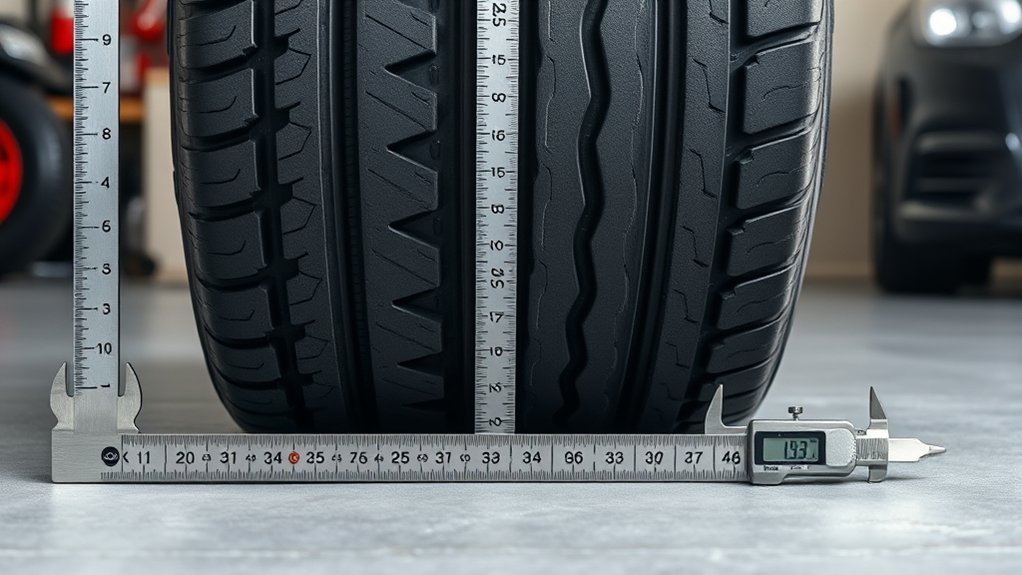
To convert a 305 tire size to inches, use the full tire code. Here is the standard method used for metric tire-size estimates:
- Convert width: 305 ÷ 25.4 = 12.01 inches.
- Find sidewall height: multiply 305 mm by the aspect ratio. For 305/70R18, use 305 × 0.70 = 213.5 mm.
- Convert sidewall to inches: 213.5 ÷ 25.4 = 8.4 inches.
- Calculate overall diameter: sidewall + sidewall + wheel diameter. For 305/70R18, use 8.4 + 8.4 + 18 = 34.8 inches.
The formula is:
Overall diameter = wheel diameter + 2 × (section width × aspect ratio ÷ 25.4)
Pro Tip: Use the formula for a quick estimate, but use the tire manufacturer’s spec sheet for the final buying decision. Actual inflated diameter, section width, tread width, and revolutions per mile can vary by brand and model.
Is a 305 Tire a 35-Inch Tire?
A 305 tire is not automatically a 35-inch tire. The width is 305 mm, but the tire height depends on the aspect ratio and wheel diameter.
A 305/70R18 is close to a 35-inch tire because its nominal diameter is about 34.8 inches. A 305/55R20, however, is only about 33.2 inches tall. Both are 305-width tires, but they are not the same height.
If you are comparing metric sizing to flotation sizing, a 305/70R18 is closer to 34.8×12.0R18 than 35×12.50R18. A 12.50-inch-wide tire is about 317.5 mm wide, which is wider than 305 mm.
What Vehicles Fit 305 Tires?
305 tires are most common on trucks, heavy-duty pickups, off-road SUVs, and performance vehicles that have enough wheel-well space and the correct wheel width. Some 305/70R18 tires are sold for heavy-duty truck and SUV use, but fitment is never guaranteed by the width number alone.
Before installing 305 tires, check the recommended tire size in your owner’s manual or on the vehicle tire information placard. Michelin’s tire-size guidance notes that the vehicle manufacturer’s recommended tire size and inflation pressure are usually found in the owner’s manual or on the driver-side door placard.
Warning: Do not buy 305 tires based on width alone. A tire that is too tall, too wide, or mounted on the wrong wheel can rub, reduce steering clearance, affect braking systems, change speedometer readings, and overload components.
[Products Worth Considering]

AZUNO’s digital tire inflator delivers stable, accurate pressure readings with a bright LCD and a 0.1 resolution display for confident inflation. It supports one-handed operation for inflating and quick deflating, and it’s built with rugged steel and brass components for reliable shop or garage use. With multi-unit pressure display and compatibility across cars, SUVs, motorcycles, and trucks, it’s a convenient accessory for everyday tire maintenance.

The TYAMATE TM8 solar-powered wireless TPMS delivers real-time tire pressure and temperature monitoring with six alarm modes for safer driving. A vibrant color LCD display shows readings clearly while windshield mounting keeps it hands-free and easy to read. With a wide 0–87 PSI range, strong 433.92 MHz signal transmission, and quick sensor pairing, it’s ideal for RV, sedan, SUV, MPV, and truck use.

The Tymate TM12 RV TPMS delivers real-time tire pressure and temperature monitoring with a stable 433Hz display for safer long-distance driving. It supports simultaneous monitoring across vehicle and trailer zones, includes six alarm modes for pressure, temperature, leakage, battery, and signal loss, and features easy DIY installation with auto calibration. Power is supplied via USB-C charging or solar recharging, with a wide 0–144 PSI range and up to 50 ft signal coverage for RVs and towable trailers.
Fitment Checklist Before Buying 305 Tires
Use this checklist before changing to a 305 tire size:
- Confirm the full size: compare 305/70R18, 305/65R17, 305/55R20, and other sizes separately.
- Check wheel diameter: an R18 tire only fits an 18-inch wheel; an R20 tire only fits a 20-inch wheel.
- Check rim width range: the wheel must fall within the tire manufacturer’s approved rim-width range.
- Check wheel offset and backspacing: offset changes where the tire sits in the wheel well.
- Measure steering clearance: turn the wheels fully left and right and check the control arms, sway bar, brake lines, and fender liner.
- Check suspension compression: a tire that clears while parked may rub when the suspension compresses.
- Compare load index and speed rating: replacement tires should meet or exceed the vehicle manufacturer’s required ratings.
- Plan for recalibration: a much taller tire can change speedometer, odometer, transmission shift points, and driver-assistance system behavior.
[Products Worth Considering]

Measure tire tread depth quickly and accurately with this LUMITECO dial gauge that reads in 1/32" increments up to 14/32". The color-coded green/yellow/red zones make it easy to judge tire wear and know when replacement is needed. A rugged, compact design with a protective pouch helps keep the gauge ready for use on cars, trucks, motorcycles, and more.

This professional wheel and rim cleaning brush set lifts brake dust, grime, and dirt with soft, scratch-free microfiber and synthetic wool fibers. The rim brush bends up to 360 degrees for easy access to hard-to-reach areas around spokes, lips, and faces. Ideal for thorough cleaning of car, truck, motorcycle, bicycle, RV, and more wheel and tire surfaces.

AUTOWN’s 68-piece tire repair kit helps you fix punctures and plug flats quickly and effectively. It includes a T-handle and spiral probe tool for easy insertion, while the steel patch and plug materials are designed for strong adhesion and long-lasting airtight performance. The compact case makes it convenient for roadside repairs across a wide range of vehicles.
How 305 Tires Affect Driving
Moving to a 305 tire can change how a vehicle feels. The wider tire can improve stance and may increase grip in some conditions, but it can also add weight, increase rolling resistance, and make steering heavier.
A taller 305 tire, such as 305/70R18, can raise ground clearance and lower engine rpm at a given road speed. It can also reduce effective gearing, which may make acceleration feel slower. A shorter 305 tire, such as 305/50R20, keeps the same 12.0-inch width but has a lower overall diameter, so it affects gearing less than a 305/70R18.
If the new tire diameter is much different from the original tire diameter, ask a qualified tire shop or mechanic whether the speedometer, odometer, and vehicle systems need recalibration.
Frequently Asked Questions
What is a 305 tire equal to in inches?
A 305 tire is about 12.0 inches wide because 305 mm equals 12.01 inches. The height depends on the full size. For example, 305/70R18 is about 34.8 inches tall, while 305/55R20 is about 33.2 inches tall.
Is a 305 tire a 35 in inches?
Sometimes it is close, but not always. A 305/70R18 is about 34.8 inches tall, so many people treat it as close to a 35-inch tire. A 305/65R17 is about 32.6 inches tall, so it is not a 35-inch tire.
Is a 33-inch tire the same as a 305?
No. A 33-inch tire describes overall diameter, while 305 describes section width in millimeters. Some 305 tires are near 33 inches tall, such as 305/55R20, but others, such as 305/70R18, are closer to 35 inches tall.
How much bigger is a 305 tire than a 275?
A 305 tire is 30 mm wider than a 275 tire, which is about 1.18 inches wider. Height difference depends on the full size. A 305/70R18 is about 1.7 inches taller than a 275/70R18, but different aspect ratios can change the comparison.
What rim width does a 305 tire need?
The correct rim width depends on the exact tire model and size. Many 305 light-truck tires use rim-width ranges around 8 to 10 inches or 8.5 to 10 inches, but you should always follow the tire manufacturer’s approved rim-width range.
Will 305 tires rub?
They can rub if the tire is too wide or too tall for the vehicle, wheel offset, suspension setup, or fender clearance. Check clearance at full steering lock and under suspension compression before driving on the road.
Conclusion
A 305 tire is about 12.0 inches wide, but width is only one part of the tire size. A 305/70R18 is about 34.8 inches tall, while other 305 sizes can be closer to 32 or 33 inches tall. Before you buy, compare the full size code, check the manufacturer’s spec sheet, confirm rim-width range, and test fitment for steering and suspension clearance. That gives you a safer tire upgrade and reduces the risk of rubbing, speedometer error, and poor handling.
Sources
- NHTSA Tire Safety Brochure — sidewall markings, aspect ratio, radial construction, rim diameter, and tire safety basics.
- NHTSA TireWise — tire safety ratings and sidewall information.
- Michelin: How to Read Tire Markings and Sidewall Codes — section width, aspect ratio, radial construction, wheel diameter, load rating, and speed rating.
- Michelin: Choosing the Right Tire Size for Your Vehicle — using the owner’s manual and vehicle tire placard for replacement size and inflation guidance.
- Tire Rack: How Do I Calculate Tire Dimensions? — tire-dimension calculation method and nominal-versus-actual tire-size warning.
- Tire Rack: 305/70R18 Tires — examples of 305/70R18 tire categories and heavy-duty truck/SUV applications.

