
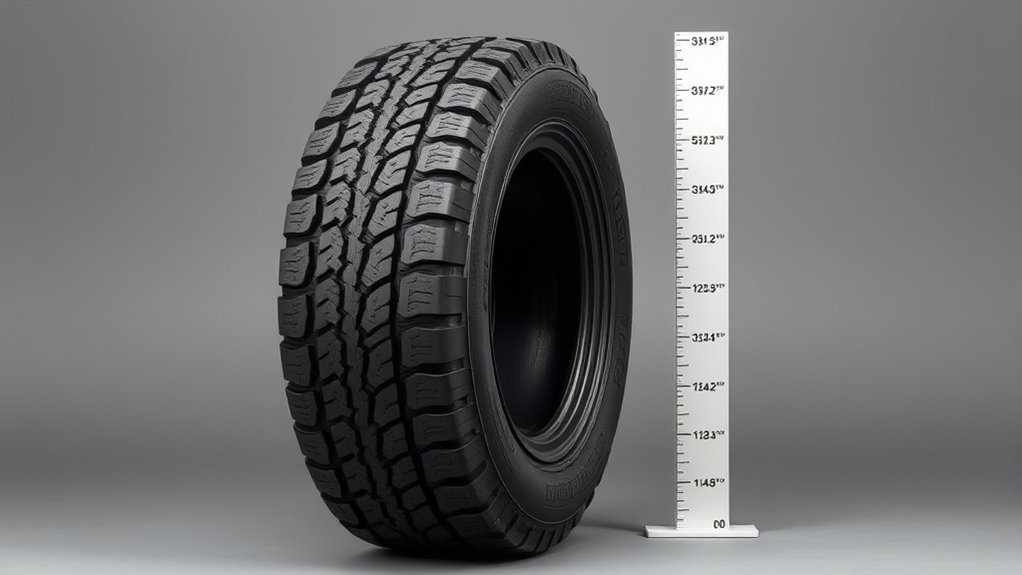
A 305/55R20 tire is a wide 20-inch tire size often used on full-size trucks and SUVs. By the size-code math, it is about 33.2 inches tall, about 12.0 inches wide, and has a sidewall height of about 6.6 inches. Real mounted dimensions can vary slightly by tire model, load range, tread design, and measuring rim.
Quick Answer
A 305/55R20 tire calculates to about 33.2 inches tall, 12.0 inches wide, and 6.6 inches of sidewall. It is close to a 33-inch tire, but it is not a true 35-inch tire. Check the specific tire model’s spec sheet before buying because actual mounted dimensions vary.
Key Takeaways
- A 305/55R20 tire calculates to about 33.21 inches in overall diameter.
- The section width is 305 mm, which converts to about 12.01 inches.
- The sidewall height is about 6.60 inches because 55% of 305 mm equals 167.75 mm.
- Common approved rim widths are often around 8.5 to 11.0 inches, but LT versions and specific models may differ.
- Do not choose this size by diameter alone. Confirm wheel width, offset, clearance, load rating, speed rating, and cold tire pressure requirements.
305/55R20 Specs at a Glance
At a Glance
| Calculated Overall Diameter | 33.21 inches |
| Calculated Width | 12.01 inches |
| Calculated Sidewall Height | 6.60 inches |
| Wheel Diameter | 20 inches |
| Calculated Circumference | 104.33 inches |
| Calculated Revs Per Mile | About 607 |
What Is the Height of a 305/55R20 Tire?
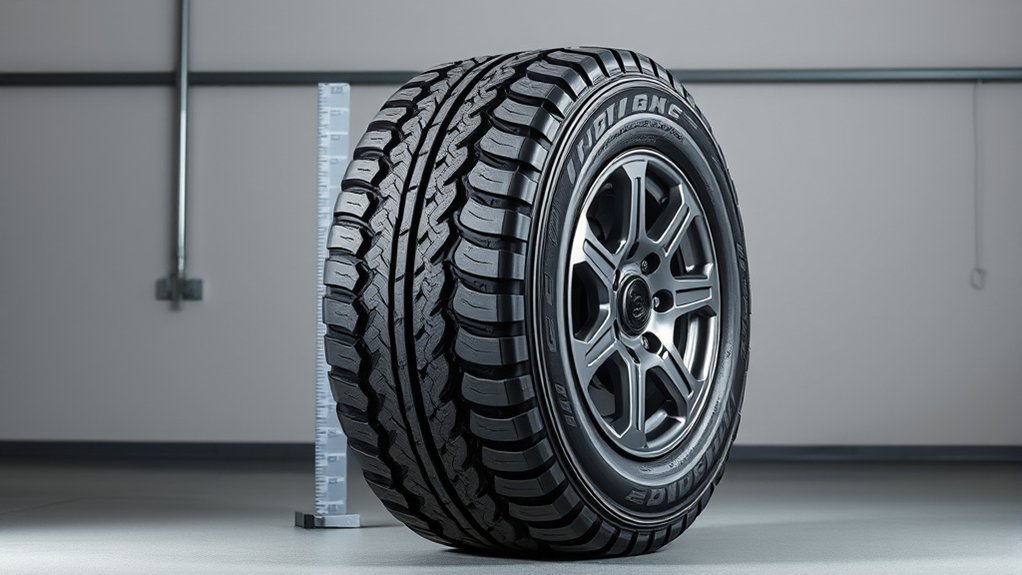
A 305/55R20 tire has a calculated overall height of about 33.21 inches. Most people round that to 33.2 inches. That number comes from the 20-inch wheel diameter plus two sidewalls, because a tire has one sidewall above the wheel and one below it.
The calculated number is the clean size-code answer. The actual mounted diameter can vary a little because different tire brands use different tread depths, casing shapes, and measuring-rim standards. For example, manufacturer spec tables may list a 305/55R20 close to 33.2 inches, while some aggressive all-terrain or hybrid-terrain models may measure a bit taller.
Note: Treat 33.2 inches as the calculated size, not a guarantee that every 305/55R20 tire will measure exactly 33.2 inches when mounted and inflated.
305/55R20 Tire Width and Sidewall Size
A 305/55R20 tire has a nominal section width of 305 mm, which equals about 12.01 inches. The sidewall height is about 167.75 mm, or 6.60 inches. The width number is measured from sidewall to sidewall, not just across the tread blocks.
The tire code follows the standard sidewall pattern: the first number is section width, the second number is aspect ratio, the “R” means radial construction, and the final number is wheel diameter. Toyo Tires explains that section width is the width of the inflated tire from sidewall to sidewall, while aspect ratio is the relationship between section height and section width. Toyo Tires’ sidewall guide is a useful reference for reading these markings.
Tire Width in Inches
The width conversion is simple:
- 305 mm ÷ 25.4 = 12.01 inches
That makes a 305/55R20 wider than many stock half-ton truck tires. The extra width can add contact patch and visual stance, but it can also bring the tire closer to the upper control arm, fender liner, mud flap, and bumper corner.
Sidewall Height Breakdown
The sidewall calculation uses the 55% aspect ratio:
- 305 mm × 0.55 = 167.75 mm
- 167.75 mm ÷ 25.4 = 6.60 inches
That 6.60-inch sidewall helps explain why this tire rides taller than many 20-inch factory sizes. A taller sidewall can improve impact cushioning and off-road compliance, but it also adds height and can create clearance issues on stock-height trucks.
Fitment and Clearance
For proper fitment, do not rely on height alone. A 305/55R20 tire needs enough vertical clearance for its diameter and enough side clearance for its width. The wheel’s width, offset, and backspacing can decide whether the tire clears or rubs.
Many 305/55R20 tires use an approved rim width range around 8.5 to 11.0 inches, but this is model-specific. For example, Nitto’s Ridge Grappler specs list a 305/55R20 with an 8.5-(9.5)-11.0 inch approved rim width range, while the LT305/55R20 version lists 9.0-(9.5)-11.0 inches. Always check the exact tire’s spec sheet before mounting.
Warning: A tire that fits the wheel may still be wrong for the vehicle. Confirm load index, speed rating, wheel load rating, brake clearance, suspension clearance, and the vehicle manufacturer’s approved tire-size guidance before using a larger-than-stock size.
How 305/55R20 Tire Dimensions Are Calculated
You can calculate the main 305/55R20 dimensions from the sidewall code. The size code tells you the tire’s nominal width, sidewall ratio, construction type, and wheel diameter.
Size Code Breakdown
- 305 = nominal section width in millimeters
- 55 = sidewall height is 55% of the section width
- R = radial construction
- 20 = 20-inch wheel diameter
Metric to Inches
| Dimension | Formula | Result |
|---|---|---|
| Section width | 305 ÷ 25.4 | 12.01 inches |
| Sidewall height | 305 × 0.55 ÷ 25.4 | 6.60 inches |
| Overall diameter | 20 + (6.60 × 2) | 33.21 inches |
| Circumference | 33.21 × π | 104.33 inches |
Height and Diameter
The overall tire height and overall diameter are the same measurement in this context. A 305/55R20 is about 33.21 inches tall from the ground-facing tread surface to the top of the tire when calculated from the size code.
That diameter affects ground clearance, effective gearing, acceleration feel, braking feel, and speedometer readings. If your truck was calibrated for a smaller tire, moving to a 305/55R20 can make the speedometer read slightly slower than your actual road speed.
Pro Tip: Compare tire diameter change as a percentage. If you move from a 275/55R20 calculated at about 31.91 inches to a 305/55R20 at about 33.21 inches, the new tire is about 4.1% taller. At an indicated 60 mph, actual speed could be roughly 62.5 mph if the vehicle is not recalibrated.
305/55R20 vs 295/55R20 Size Difference
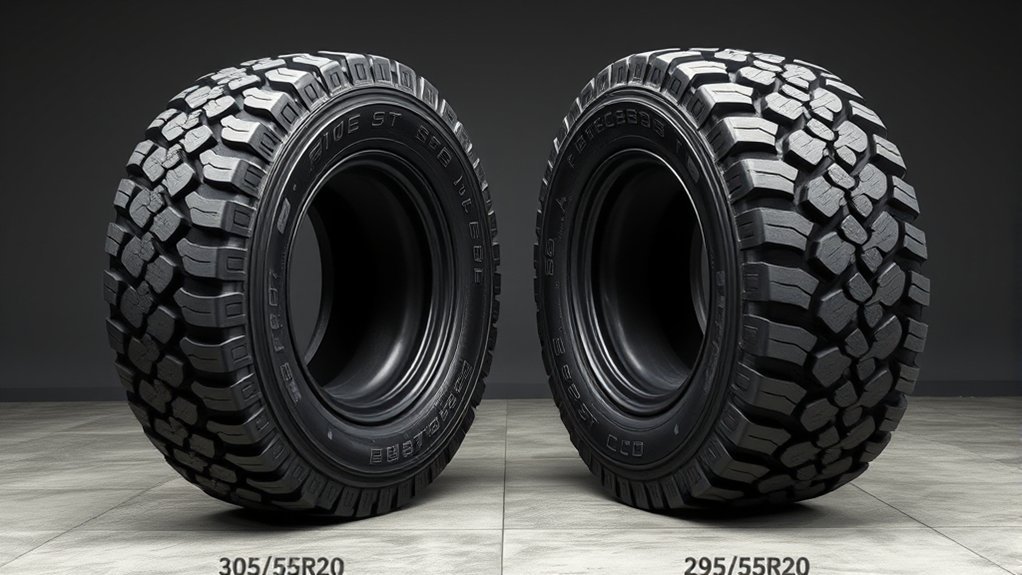
A 305/55R20 is wider and slightly taller than a 295/55R20. The width difference is 10 mm, which equals about 0.39 inch. The calculated overall diameter difference is about 0.43 inch.
| Size | Width | Sidewall | Calculated Diameter |
|---|---|---|---|
| 305/55R20 | 12.01 in | 6.60 in | 33.21 in |
| 295/55R20 | 11.61 in | 6.39 in | 32.78 in |
| Difference | +0.39 in | +0.22 in | +0.43 in |
If you are trying to reduce rubbing, the 295/55R20 may help because it is narrower and a little shorter. Still, wheel offset and tire model matter. A square-shouldered 295 can rub where a rounder 305 might clear, so check the actual spec sheet and test fit when possible.
305/55R20 vs 275/55R20 Size Difference
A 305/55R20 is much larger than a 275/55R20. It is about 1.18 inches wider and about 1.30 inches taller by calculation. That is a meaningful jump in both stance and clearance needs.
| Size | Width | Sidewall | Calculated Diameter |
|---|---|---|---|
| 305/55R20 | 12.01 in | 6.60 in | 33.21 in |
| 275/55R20 | 10.83 in | 5.95 in | 31.91 in |
| Difference | +1.18 in | +0.65 in | +1.30 in |
If your truck came with 275/55R20 tires, switching to 305/55R20 tires may require more clearance, a different offset, trimming, leveling, or recalibration. It can also affect fuel economy, acceleration, transmission shift behavior, and braking feel.
Will 305/55R20 Tires Fit Without Rubbing?
A 305/55R20 tire may fit without rubbing on some trucks, but it depends on the exact vehicle, suspension height, wheel width, offset, tire model, and alignment. This is not a size you should assume will clear just because the wheel diameter is correct.
Before buying, check these areas:
- Upper control arm clearance: Wide tires can sit close to the suspension.
- Fender liner and mud flap clearance: Rubbing often happens at full steering lock.
- Bumper corner and valance clearance: Larger tires can contact plastic trim during turns.
- Compression clearance: A tire that clears on level ground may rub when the suspension compresses.
- Wheel offset and backspacing: A more aggressive offset can push the tire outward and create fender rub.
- Load and speed ratings: Replacement tires should meet or exceed the vehicle’s requirements.
The NHTSA tire safety guidance recommends using the vehicle’s original tire size or another size recommended by the vehicle manufacturer. If you are unsure, ask a qualified tire dealer to verify the replacement size, load rating, and inflation requirements.
[Products Worth Considering]

This universal wheel alignment tool helps you accurately restore tire tilt angles after tire or suspension repairs using an adjustable camber gauge. It features a powerful magnetic base that firmly attaches to brake rotors for stationary, slip-free readings, improving consistency during measurement. Built from durable PC plastic, it resists wear and corrosion and is compact enough for car, truck, RV, and motorcycle alignment tasks.

Keep your tires properly inflated with this analog VONDIOR tire pressure gauge, designed for fast, easy readings without batteries. The swiveling, two-axis hose and large glow dial help you measure at any tire angle with instant visibility. Built with a protective rubber shield, it supports durable, low-maintenance use for cars and trucks.

Upgrade your ride with a 2-pack set of 26x1.95 folding mountain bike tires built for dependable traction on mud, rocks, and trail surfaces. A reinforced puncture-resistant layer helps protect against sharp debris, while included butyl inner tubes provide strong sealing and shock absorption. Ready for fast swaps with included tire levers and universal sizing for most bikes.
Best Trucks and SUVs for 305/55R20 Tires
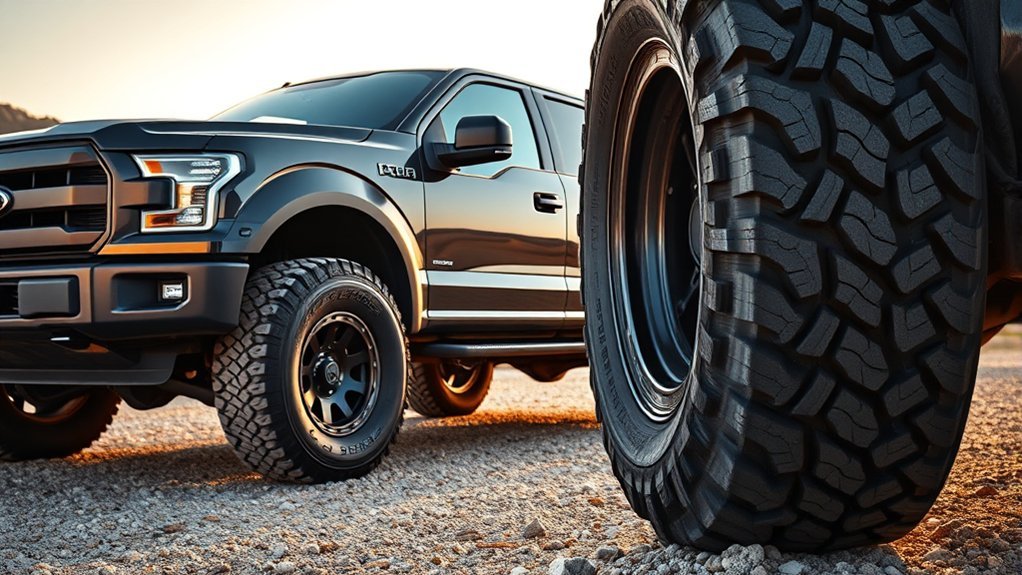
A 305/55R20 tire is most commonly considered for full-size trucks and larger SUVs with enough wheel-well room. It may be a good fit for leveled or lifted setups on vehicles such as the Ford F-150, Chevrolet Silverado 1500, GMC Sierra 1500, Ram 1500, Toyota Tundra, Ford Expedition, Chevrolet Tahoe, and GMC Yukon, depending on trim, wheel offset, and suspension setup.
That does not mean every version of those vehicles clears this size. Factory wheel offset, aftermarket wheel width, ride height, control-arm design, and fender-liner shape can change fitment. A leveled truck may clear a 305/55R20 better than a stock-height truck, but even a leveled setup can rub with the wrong offset.
[Products Worth Considering]

Measure tire tread depth quickly and accurately with this LUMITECO dial gauge that reads in 1/32" increments up to 14/32". The color-coded green/yellow/red zones make it easy to judge tire wear and know when replacement is needed. A rugged, compact design with a protective pouch helps keep the gauge ready for use on cars, trucks, motorcycles, and more.

Monitor tire tread wear with a smart, color-coded depth gauge that shows clear condition ranges at a glance. The bar is range marked for fast, easy readings, helping you maintain safer traction and performance. Each gauge is portable with a pocket clip, and the set includes 20 units for daily use and sharing.

These M14x1.5 closed-end chrome lug nuts are a one-piece replacement designed for secure fitment on compatible GM, Ford, and select Chrysler/Dodge models. Featuring a 60-degree conical seat and anti-rust chrome plating, they help resist corrosion and maintain a bright look for everyday driving. Built for long-term durability, they include OEM-style part references and are backed by 12 months of support.
Best 305/55R20 Tire Options
The best 305/55R20 tire depends on how you drive. Daily highway use, towing, gravel roads, mud, snow, and trail driving all call for different tread designs and load ratings.
Common categories include:
- Highway-terrain tires: Best for quiet pavement use, towing stability, and long tread life.
- All-terrain tires: Best for mixed pavement, dirt, gravel, light mud, and all-weather use.
- Hybrid-terrain or rugged-terrain tires: More aggressive than all-terrain tires, but usually more street-friendly than mud-terrain tires.
- Mud-terrain tires: Best for deep mud and rough off-road use, but usually louder and heavier on pavement.
Examples in this size range include rugged all-terrain and hybrid-terrain models such as the Mickey Thompson Baja Boss A/T, Nitto Ridge Grappler, Toyo Open Country lines, and budget-focused hybrid options such as the Venom Power Terra Hunter X/T. Use those as starting points, not automatic recommendations. Compare the exact size’s load range, tread depth, measured diameter, measured width, weight, warranty, snow rating, and approved rim width before buying.
The Mickey Thompson Baja Boss A/T, for example, is positioned as a premium hybrid all-terrain tire with aggressive off-road features and road-focused manners. Manufacturer pages are the best place to confirm the current specs for the exact tire size you plan to buy.
[Products Worth Considering]

The SAFELIFE dial tire tread depth gauge measures tread depth in 1/32 inch increments with clear, easy-to-read 2-inch dial face. Color zones using a traffic light system help you quickly judge whether tread is low, marginal, or ample for safer driving. Built with a durable zinc cast body and a metal detect probe for precise, comfortable use across cars, motorcycles, trucks, and buses.

Replace your worn or missing TPMS sensors with pre-programmed, direct-fit sensors for compatible Ford, Lincoln, and select Mazda models. Each sensor comes ready to activate with a scan tool, helping restore accurate tire pressure monitoring and trouble-free installation. Built with a long-life CR2032 battery and tested before factory release, this set provides dependable performance with a one-year warranty.

These aluminum alloy tire valve stem caps with an O-ring seal help protect valve stems from corrosion while adding a clean, stylish look to your vehicle. The universal fit works across cars, trucks, motorcycles, bicycles, and more, making them an easy upgrade for everyday driving and off-road use. Installation is quick, and the included four-pack keeps all your tires dressed and protected.
How Tire Type Affects 305/55R20 Performance
A 305/55R20 tire’s size gives it a large footprint, but tread design decides how that footprint behaves. Two tires with the same size code can feel very different on the road.
All-Terrain Versus Mud-Terrain
All-terrain tires are usually the better choice for mixed daily driving. They tend to be quieter, lighter, and more stable on pavement while still giving useful grip on dirt, gravel, and light mud.
Mud-terrain tires use larger voids and more aggressive lugs for deep mud, ruts, and loose terrain. They can provide more bite off-road, but they often add road noise, weight, rolling resistance, and treadwear tradeoffs.
Noise, Grip, and Wear
| Feature | Typical Effect |
|---|---|
| Deep, open tread blocks | More off-road bite, usually more road noise |
| Tighter tread pattern | Quieter pavement ride, less mud evacuation |
| Heavier LT construction | More load capacity and toughness, often firmer ride |
| Tall sidewall | More cushion and flex, but more heat risk if underinflated |
| Correct rotation and alignment | More even wear and better long-term handling |
305/55R20 Tire Pressure Tips
Do not use a universal 30–35 PSI rule for every 305/55R20 tire. The correct cold tire pressure depends on the vehicle, tire load rating, axle load, and replacement-size calculation.
NHTSA says the correct tire pressure is the vehicle manufacturer’s recommended cold inflation pressure listed on the Tire and Loading Information label, certification label, or in the owner’s manual. Cold pressure means the tire has not been driven on for at least three hours. Use the tire sidewall maximum pressure only as a limit, not as the normal daily-driving pressure.
If you changed from the factory tire size to 305/55R20, ask the tire manufacturer, vehicle manufacturer, or a qualified tire dealer to confirm the proper inflation pressure for the new size and load rating. This matters even more with LT tires because load capacity changes with pressure.
Speedometer, Gearing, and Ride Changes
A taller tire travels farther with each rotation. That can make the speedometer read lower than actual speed if the vehicle is still calibrated for a smaller tire.
For example, compared with a 275/55R20 calculated at about 31.91 inches tall, a 305/55R20 calculated at about 33.21 inches is roughly 4.1% taller. That can make an indicated 60 mph closer to about 62.5 mph in real speed. The same change can also make the vehicle feel slightly taller-geared, which may soften acceleration and change shift behavior.
Many modern trucks can be recalibrated with a scan tool, dealer procedure, or approved programmer. Recalibration helps restore more accurate speed, odometer, transmission, and driver-assistance behavior.
Frequently Asked Questions
Is a 305/55R20 the same as a 33×12.50R20?
No. They are close, but they are not the same size. A 305/55R20 calculates to about 33.2 inches tall and 12.0 inches wide. A 33×12.50R20 is usually marketed around 33 inches tall and 12.5 inches wide. Exact mounted dimensions vary by manufacturer and tire model.
What is a 305 tire equal to in inches?
A 305 tire is about 12.0 inches wide because 305 mm divided by 25.4 equals 12.01 inches. The 305 number only tells you width, not total tire height. The height also depends on the aspect ratio and wheel diameter.
Is 305/55R20 a 35-inch tire?
No. A 305/55R20 calculates to about 33.2 inches tall, so it is roughly 1.8 inches shorter than a true 35-inch tire. Some aggressive tread models may measure slightly different, but this size should not be treated as a 35.
Is a 33-inch tire the same as a 305?
No. A 33-inch tire refers mainly to overall diameter, while 305 refers to nominal section width in millimeters. A 305/55R20 happens to calculate close to 33 inches tall, but not every 305 tire is a 33-inch tire.
What rim width do I need for 305/55R20 tires?
Many 305/55R20 tires use approved rim widths around 8.5 to 11.0 inches, but the exact range depends on the tire model and whether it is a metric or LT tire. Always check the specific manufacturer’s spec sheet before mounting.
Will 305/55R20 tires affect my speedometer?
Yes, they can if your vehicle was calibrated for a smaller tire. A taller tire covers more distance per rotation, so your actual speed may be higher than the speedometer shows. Recalibration is recommended after a significant tire-size change.
Conclusion
A 305/55R20 tire is about 33.2 inches tall, 12.0 inches wide, and has about a 6.6-inch sidewall by size-code calculation. It is close to a 33-inch tire, but it is not a true 35-inch tire, and it is not exactly the same as a 33×12.50R20.
If you are considering this size, check more than the diameter. Confirm the tire’s actual spec sheet, approved rim width, load index, speed rating, wheel offset, suspension clearance, and correct cold inflation pressure. That is the safest way to get the stance and capability you want without creating rubbing, handling, or load-capacity problems.
Sources
- Toyo Tires: Reading a Sidewall — supports tire width, aspect ratio, radial construction, wheel diameter, load index, and sidewall-code definitions.
- NHTSA TireWise: Tire Safety Ratings and Awareness — supports replacement-size safety, tire placard guidance, and cold inflation pressure recommendations.
- Nitto Ridge Grappler Specs — supports real-world 305/55R20 and LT305/55R20 manufacturer dimension and rim-width examples.
- Mickey Thompson Baja Boss A/T — supports current manufacturer positioning for a hybrid all-terrain tire option in this category.

