
Do Tires Affect Hyundai Sonata Gas Mileage? Yes, Here’s How
Your Hyundai Sonata’s tires affect MPG every time the car rolls, accelerates, brakes, or cruises. The biggest fuel-economy wins come from using the correct tire pressure for your exact car, choosing tires with sensible rolling resistance, keeping the original recommended size, and fixing uneven wear before it turns into drag, noise, and wasted fuel.
Quick Answer
Tires affect a Hyundai Sonata’s MPG through rolling resistance, inflation pressure, size, weight, tread condition, and alignment. Proper inflation can improve gas mileage by about 0.6% on average and up to 3% in some cases. Low-rolling-resistance tires may help, but the correct cold PSI on your driver-door placard matters most.
Key Takeaways
- Use the cold tire pressure listed on your Sonata’s driver-door placard or owner’s manual, not the maximum pressure on the tire sidewall.
- Underinflation increases rolling resistance and can lower MPG; government guidance estimates about 0.2% MPG loss for every 1 PSI drop in the average pressure of all tires.
- Low-rolling-resistance tires can help, but the gain is usually modest and depends on tire model, weather, road surface, and driving style.
- Larger, heavier, wider, or non-OEM tire sizes can hurt acceleration, MPG, handling, and speedometer accuracy.
- Monthly pressure checks, rotations, alignment checks, and tread inspections protect both fuel economy and safety.
At a Glance
| Time Required | 5–10 minutes for a pressure check; 20–30 minutes for a full tire inspection |
| Difficulty | Easy for pressure and tread checks; professional help recommended for alignment, balancing, or tire-size changes |
| Tools Needed | Accurate tire pressure gauge, air pump, tread-depth gauge or penny, mileage log or fuel-economy app |
| Cost | Usually free to $15 for DIY pressure tools; more for rotation, balancing, alignment, or new tires |
How Tires Affect Hyundai Sonata MPG: The Core Idea
Tires affect your Hyundai Sonata’s MPG by changing how much energy the engine or hybrid system must use to keep the car moving. The main factor is rolling resistance, which is the energy lost as the tire flexes against the road. Tire pressure, tread pattern, rubber compound, tire weight, wheel size, alignment, and tread wear all influence that loss.
The most reliable first step is simple: keep the tires at the vehicle manufacturer’s recommended cold tire pressure. You can find that number on the Tire and Loading Information label on the driver-side door edge or door pillar, and in the owner’s manual. Do not use the maximum PSI printed on the tire sidewall as your normal setting.
The easiest tire-related MPG gain is not buying a special tire. It is keeping the tires inflated to the Sonata’s listed cold pressure and correcting uneven wear early.
[Products Worth Considering]

EVOULTES heavy duty tire inflator with an integrated gauge delivers accurate pressure readings from 10–120 PSI, helping you inflate, deflate, and check tires in one tool. The 16.5-inch extended dual-head air chuck with swivel base reaches hard-to-access dual wheel valves on trucks and RVs. A brass trigger core and side-mounted air release valve make operation smooth, with standard 1/4" NPT threading and quick-connect compatibility for easy setup.

The JACO FlowPro Tire Inflator measures, inflates, and airs down tires up to 100 PSI with battery-free operation and ±2% accuracy after calibration. It features a glowing pressure dial for night visibility, a heavy-duty steel build with a hybrid hose, and a precision push-to-inflate thumb trigger. The patented Lightning Air Chuck locks on for a secure seal, and the kit includes quick-connect hardware for easy inline use with your air compressor.
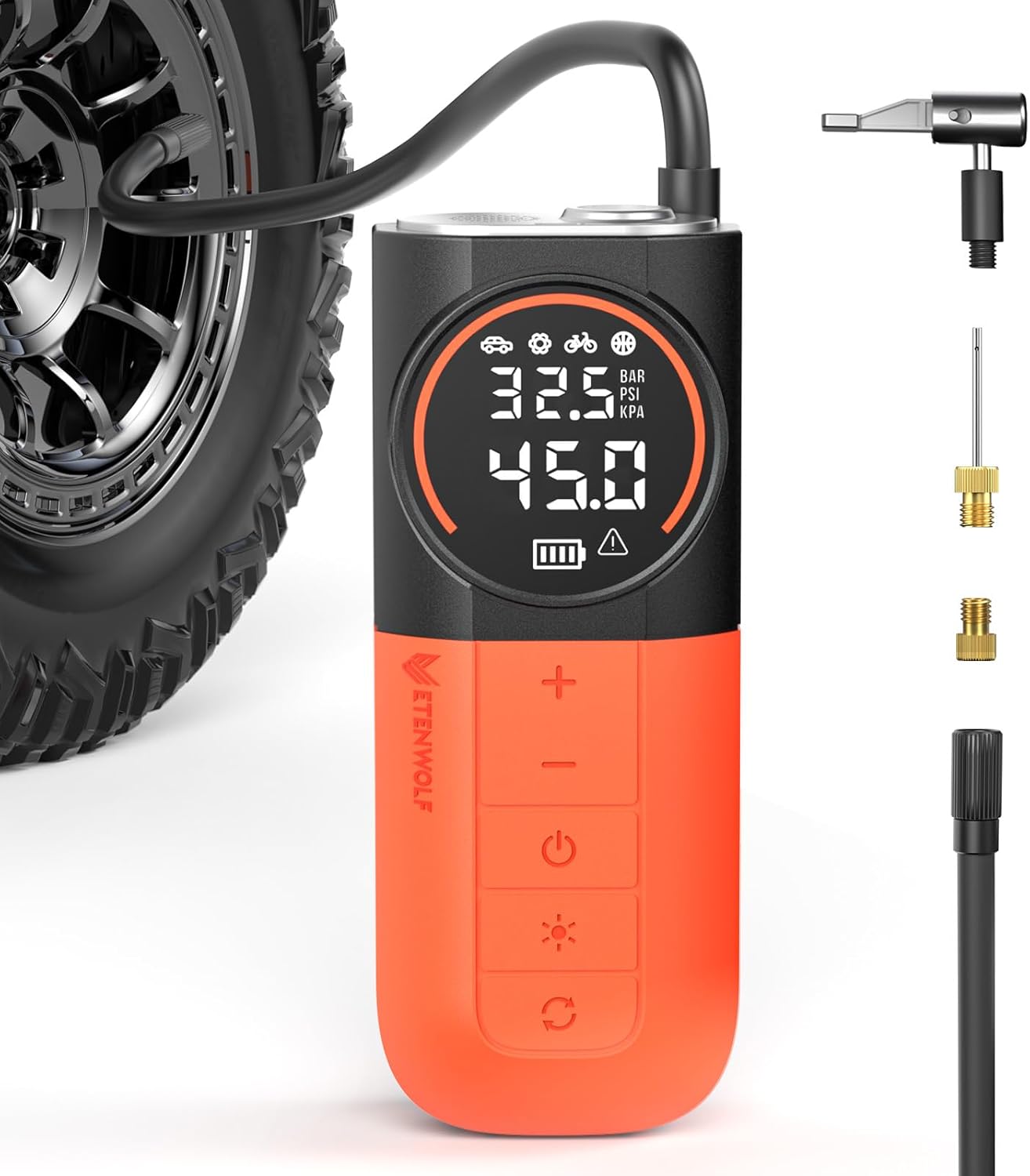
The ETENWOLF S1 cordless tire inflator delivers ultra-fast inflation with up to 160 PSI and a 20 L/min airflow for quicker tire top-offs. Its 5200mAh battery and cooling system support inflating many tires and sports balls on a single charge, while the digital pressure gauge and multi-unit display help you reach the right pressure accurately. With preset modes, pressure memory, an auto-stop feature, and an LED flashlight, it’s built for easy roadside and everyday use.
Tire Pressure: Rolling Resistance and MPG
Tire pressure is the first thing to check because it is cheap, quick, and directly tied to fuel economy and safety. According to FuelEconomy.gov, keeping tires properly inflated can improve gas mileage by about 0.6% on average and up to 3% in some cases. The same guidance estimates that under-inflated tires can lower gas mileage by about 0.2% for every 1 PSI drop in the average pressure of all tires.
For a Hyundai Sonata, the correct pressure is not one universal number. Many Sonatas are in the low-to-mid 30 PSI range, and some recent trims list around 35 PSI, but the right answer is the cold pressure on your own driver-door placard or the exact Hyundai owner’s manual for your model year, tire size, and load.
Warning: Do not overinflate your Sonata’s tires to chase MPG. The pressure on the tire sidewall is a maximum limit, not Hyundai’s normal driving recommendation. Overinflation can reduce ride comfort, reduce the contact patch, increase uneven wear, and create safety risks.
How to Find the Correct Sonata Tire Pressure
- Open the driver-side door.
- Look for the Tire and Loading Information label on the door edge or center pillar.
- Find the recommended cold PSI for the front and rear tires.
- Check whether your car has the original tire size. If the size has changed, ask a tire professional to confirm the correct pressure and fitment.
- Check pressure when the tires are cold, ideally before driving or after the car has been parked for at least three hours.
Optimal Tire Pressure
The best tire pressure for MPG is the pressure Hyundai specifies for your exact Sonata, measured when the tire is cold. Correct pressure lowers unnecessary flexing, helps the tire roll as designed, and protects the tread from abnormal wear. It also keeps handling, braking, and ride quality closer to the way the car was engineered.
Warm tires normally show higher pressure because driving heats the air inside the tire. If you check pressure right after a drive, do not bleed air just because the reading is above the cold number. Recheck later when the tires are cold, then adjust.
Underinflation Effects
Underinflation makes the tire flex more, which raises rolling resistance. That extra flex wastes energy as heat, can reduce MPG, and can accelerate shoulder wear. It may also make the Sonata feel less responsive in steering and braking.
The MPG penalty from one missing PSI is usually not several percent by itself. A better rule is the government estimate of about 0.2% lower gas mileage for every 1 PSI drop in the average pressure of all tires. The cost becomes more noticeable when multiple tires are low, when the car is loaded, or when low pressure goes uncorrected for months.
Pressure Monitoring Tips
TPMS is helpful, but it is not a substitute for a tire gauge. NHTSA explains that tire pressure monitoring systems usually warn only when a tire is significantly underinflated. A tire can be low enough to waste fuel before the warning light appears.
| Task | Tool | Target |
|---|---|---|
| Check pressure | Accurate tire gauge | Cold PSI on the driver-door placard |
| Monitoring frequency | Calendar reminder | At least monthly and before long trips |
| Rotate tires | Service appointment | Follow Hyundai’s schedule; commonly 5,000–8,000 miles if recommended |
| Inspect tread | Tread-depth gauge or penny | Monthly; replace if treadwear indicators are level with the tread |
| Record MPG | Fuel log, trip computer, or app | Compare similar routes and weather, not one random tank |
Tire Types and Their MPG Impact on the Sonata
Tire type matters because the tread compound, casing, width, and pattern all affect rolling resistance. The best tire for MPG is not always the best tire for wet braking, winter traction, steering response, ride comfort, or tread life. Choose based on your climate and driving needs, then compare tires within the correct Sonata size and load rating.
- All-season touring tires: Usually the best balance for most Sonata drivers. They offer reasonable MPG, comfort, tread life, and wet-road performance.
- Low-rolling-resistance tires: Designed to reduce energy loss as the tire rolls. They can help MPG, especially in steady commuting, but results vary by model and condition.
- Performance tires: Often improve steering feel and grip, but wider tread and stickier compounds can increase rolling resistance and reduce MPG.
- Winter tires: Important for snow and ice safety, but their softer compounds and deeper tread often reduce dry-road MPG compared with efficient all-season tires.
- Run-flat tires: May add weight and stiffness. They can be useful for mobility after a puncture, but they may trade off ride comfort and efficiency.
Note: A tire with the best MPG rating is not automatically the safest choice for every driver. In wet, snowy, or high-speed conditions, braking and traction should matter more than a small fuel-economy gain.
Tire Size, Weight, and Effects on Acceleration & Highway MPG
Larger or heavier tires can reduce Sonata MPG because the car must use more energy to rotate them. Extra rotational mass is especially noticeable in stop-and-go driving, where the vehicle repeatedly accelerates from low speed. Wider tires may also increase rolling resistance and aerodynamic drag.
Diameter changes can affect more than MPG. A tire that is much taller or shorter than the original size can change effective gearing and may affect speedometer and odometer accuracy. It can also interfere with suspension clearance, braking behavior, stability-control calibration, and ride quality.
For safety and predictable fuel economy, buy replacement tires in the same size as the original tires or a size Hyundai recommends. NHTSA advises checking the owner’s manual or tire label for the correct size and consulting a tire professional if you are unsure.
How Worn or Uneven Tread Hurts Your Fuel Economy
Worn or uneven tread can hurt fuel economy by increasing drag, reducing smooth rolling, and forcing small steering or throttle corrections. The MPG change may be subtle at first, but uneven wear is also a warning sign that something else may be wrong, such as low pressure, poor alignment, worn suspension parts, or unbalanced wheels.
- Shoulder wear: Often points to underinflation, hard cornering, or alignment issues.
- Center wear: Can indicate overinflation or an incorrect pressure habit.
- Cupping or scalloping: May point to worn shocks, struts, or balance problems.
- One-sided wear: Often suggests alignment problems that can add rolling resistance and shorten tire life.
Check tread at least once a month when you check pressure. Tires have built-in treadwear indicators. When the tread is worn down level with those indicators, it is time to replace the tire. Also inspect for cracks, bulges, cuts, embedded objects, and uneven wear patterns.
Maintenance Steps to Keep Sonata Tires Fuel-Efficient
Good tire maintenance keeps your Sonata closer to its designed MPG while protecting braking, handling, and tire life. Use this routine:
- Check cold tire pressure monthly. Use the PSI on the driver-door placard or owner’s manual.
- Check before long trips. Highway heat, cargo weight, and high speeds make correct pressure more important.
- Rotate tires on schedule. Follow Hyundai’s maintenance schedule. NHTSA notes that rotation every 5,000–8,000 miles may be recommended by some manufacturers.
- Inspect tread and sidewalls. Look for uneven wear, cracks, bulges, nails, and exposed treadwear indicators.
- Fix alignment issues quickly. If the car pulls, the steering wheel sits off-center, or one tire wears faster, schedule an alignment inspection.
- Balance tires when needed. Vibration at speed can indicate imbalance, bent wheels, or tire damage.
- Use the correct tire size and rating. Match Hyundai’s tire size, load index, and speed rating guidance unless a tire professional confirms a safe alternative.
- Track MPG over several tanks. One tank can be affected by weather, traffic, fuel pump shutoff, or driving style.
Pro Tip: Keep a note in your phone with the date, cold PSI, tread depth, tire rotation mileage, and MPG. This makes it easier to spot a slow leak, alignment problem, or tire change that affects fuel economy.
[Products Worth Considering]

This portable cordless tire inflator delivers up to 160 PSI with fast 17 L/min airflow to help you quickly top up tires and get back on the road. It features dual power mode, running on a 21V rechargeable battery or a 12V DC adapter for convenient roadside use. An automatic shut-off with digital pressure gauge helps prevent overinflation, and a built-in LED light improves visibility in low-light conditions.

This portable cordless tire inflator delivers fast, efficient inflation for cars, motorcycles, bikes, and sports balls with a digital pressure gauge. Use the one-click PSI preset with auto shut-off for accurate, hands-free topping to your target pressure up to 150 PSI. It’s compact and rechargeable with a built-in emergency LED light plus valve adapters and accessories for quick, ready-to-go use.
Tire Upgrades That Improve MPG and Their Trade-Offs
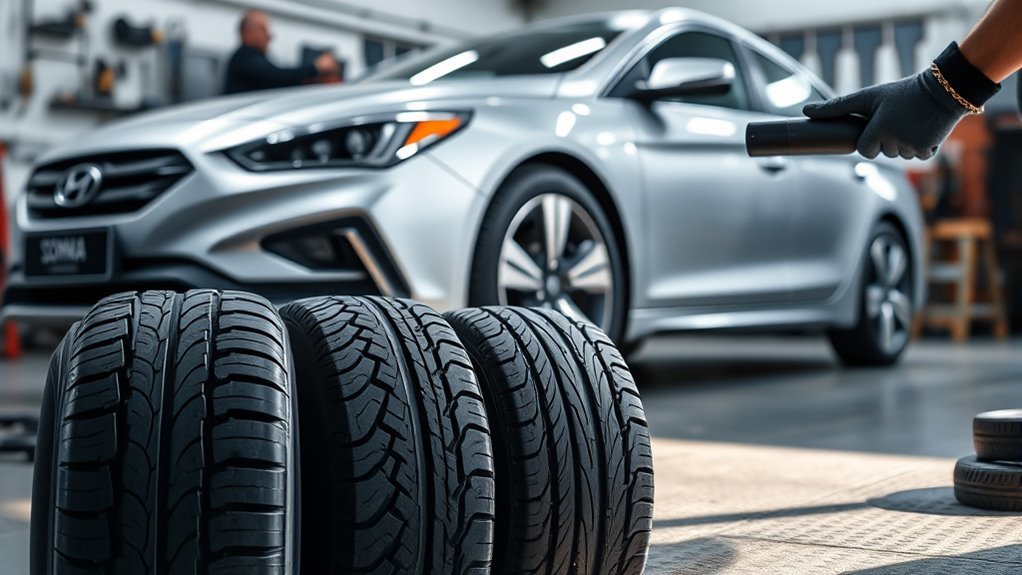
The most MPG-focused upgrade is a quality low-rolling-resistance tire in the correct Sonata size. These tires use tread designs and compounds that reduce energy loss. However, the fuel savings are not guaranteed to be dramatic. Energy.gov cites research showing that a 10% reduction in rolling resistance can reduce consumer fuel expenditures by about 1–2% for typical vehicles.
Low-Rolling-Resistance Tires
Low-rolling-resistance tires can be a smart choice if you commute regularly, drive mostly on paved roads, and want to reduce fuel use without changing the car. Compare tires using independent tests when possible, and avoid choosing by MPG alone. Wet braking, hydroplaning resistance, road noise, ride comfort, and tread life still matter.
Tire Size and Weight
Staying with the original tire size is usually the safest and most efficient choice. A lighter tire in the correct size may reduce rotational effort, but changing diameter or width can create trade-offs. Larger wheels with shorter sidewalls may sharpen steering feel, but they can also add weight, reduce ride comfort, and make tires more expensive.
Tradeoffs: Grip vs. Efficiency
Fuel-efficient tires usually aim to reduce rolling resistance. Performance tires often prioritize grip and steering response. Winter tires prioritize cold-weather traction. None of these goals is wrong; the right tire depends on where and how you drive your Sonata.
- Best MPG priority: Low-rolling-resistance touring tire in the correct size.
- Best comfort balance: Quality all-season touring tire with good wet braking scores.
- Best winter safety: Dedicated winter tire during snow and ice season.
- Best handling: Performance tire, accepting possible MPG, noise, and wear trade-offs.
Monitoring & Tech: TPMS, ScanGauge Tips, and What to Track
TPMS, the Sonata trip computer, a ScanGauge-style monitor, or a fuel-economy app can help you see trends. The key is to compare similar conditions. MPG varies with traffic, speed, temperature, wind, fuel blend, cargo weight, tire temperature, and driving style.
Track these items together:
- Cold tire pressure for all four tires
- Outside temperature
- Tread depth and visible wear pattern
- Rotation and alignment dates
- Average MPG over several tanks
- Typical route, speed, and cargo load
Simple Before-and-After MPG Test
- Fill the tank and reset the trip MPG.
- Check and record cold tire pressure.
- Drive your normal route for at least one full tank.
- Correct tire pressure to the placard value if needed.
- Drive the same route pattern for another full tank.
- Compare hand-calculated MPG, not just the dashboard estimate.
This method will not be lab-perfect, but it is much better than judging a tire or pressure change from one short drive.
Frequently Asked Questions
Do tire brands affect Sonata fuel economy differently?
Yes. Different brands and models use different tread compounds, casing designs, weights, and tread patterns. Those differences can change rolling resistance and MPG. Compare tires within the correct Sonata size and look for independent test results that include fuel economy, wet braking, comfort, and tread life.
Can seasonal tires change my Sonata’s MPG significantly?
Yes. Winter tires often reduce MPG on dry or warm roads because they use softer rubber and deeper tread for cold-weather grip. Summer or efficient all-season tires may roll more easily in warm weather. Use winter tires when conditions require them, but switch back when the season is over.
How does tire alignment frequency influence long-term MPG?
Poor alignment can make tires scrub against the road instead of rolling cleanly. That can increase drag, reduce MPG, and create uneven tread wear. Check alignment if the Sonata pulls to one side, the steering wheel is off-center, tires wear unevenly, or you hit a pothole or curb hard.
Do run-flat tires reduce fuel efficiency in a Sonata?
They can. Run-flat tires are often heavier and stiffer than standard tires, which may increase rolling resistance and reduce ride comfort. The trade-off is mobility after some punctures. If MPG and comfort are priorities, compare the specific run-flat model against standard touring or low-rolling-resistance tires.
Can tire pressure changes affect hybrid Sonata MPG?
Yes. A hybrid Sonata still has tires that create rolling resistance. Low pressure can reduce fuel economy and electric-assist efficiency because the car needs more energy to move. Correct pressure also helps the hybrid system deliver smoother coasting and more predictable MPG.
What tire pressure should I use for my Hyundai Sonata?
Use the cold tire pressure on your driver-door Tire and Loading Information label or in the owner’s manual for your exact model year, tire size, and load. Do not use a generic number from another Sonata or the maximum PSI printed on the tire sidewall.
Can I improve MPG by overinflating the tires?
No. Overinflation may slightly reduce rolling resistance, but it can hurt ride comfort, traction, braking, and tread wear. The safest and most reliable setting is the manufacturer’s recommended cold pressure on the Sonata’s tire placard.
Conclusion
Tires can change your Hyundai Sonata’s MPG, but the biggest practical gains come from maintenance, not guesswork. Use the cold PSI on the driver-door placard, check pressure monthly, rotate tires on schedule, correct alignment problems early, and choose replacement tires in the proper size and rating. Low-rolling-resistance tires can help, but safety, wet grip, tread life, and correct fitment should come first.
Sources
- FuelEconomy.gov — Keeping Your Vehicle in Shape — proper tire inflation and MPG estimates.
- NHTSA TireWise — tire pressure, TPMS, tread, rotation, and tire-size safety guidance.
- Hyundai Manuals & Warranties — official owner’s manual source for Sonata-specific tire pressure, tire size, and maintenance guidance.
- U.S. Department of Energy — A Materials Approach to Fuel-Efficient Tires — rolling resistance and fuel-efficiency relationship.

Related Articles

Danger of Using Summer Tires in Winter on a Hyundai Sonata
Potentially perilous, using summer tires in winter on your Hyundai Sonata can compromise safety—discover the hidden dangers that await you on icy roads.
Read More
Can You Mix Nitrogen and Air in Hyundai Sonata Tires? Answered
Discover the implications of mixing nitrogen and air in your Hyundai Sonata tires—are the benefits worth the risks? Explore the answer inside!
Read More
How to Tell If Hyundai Sonata Tires Are Too Old to Use Safely
Understand how to assess the age of your Hyundai Sonata tires and discover crucial signs of deterioration that could compromise your safety on the road.
Read More