Your Hyundai Sonata’s tire pressure affects MPG because low pressure makes the tire flex more, increases rolling resistance, and forces the engine to use more fuel. The best fix is simple: check the tires when they are cold, use the PSI printed on your Sonata’s driver-side tire label or owner’s manual, and correct low pressure before it turns into wasted fuel, uneven tire wear, or a safety problem.
Quick Answer
Yes. Tire pressure affects Hyundai Sonata MPG. FuelEconomy.gov says under-inflated tires can lower gas mileage by about 0.2% for every 1 PSI drop in the average pressure of all tires. Proper inflation can improve gas mileage by 0.6% on average and up to 3% in some cases.
Key Takeaways
- Use the cold PSI on your Sonata’s driver-side tire label or owner’s manual, not the maximum PSI printed on the tire sidewall.
- Low pressure increases rolling resistance, which can reduce MPG and speed up tire wear.
- Check all four tires at least monthly and before long trips.
- TPMS warnings help, but they are not a substitute for checking pressure with a gauge.
- Do not overinflate tires just to chase MPG; overinflation can hurt ride comfort, traction, and tire wear.
At a Glance
| Time Required | 5–10 minutes |
| Difficulty | Easy |
| Tools Needed | Tire pressure gauge, air compressor or gas-station inflator, valve-cap storage spot |
| Cost | Usually free if you already have a gauge; about $5–$25 for a basic gauge |
Does Tire Pressure Affect Hyundai Sonata MPG?
Yes. Tire pressure has a direct effect on Hyundai Sonata MPG because tire pressure changes rolling resistance. When a tire is underinflated, more of the tread and sidewall flex as the tire rolls. That extra flex creates heat and drag, so the engine has to work harder to keep the car moving.
The fuel-economy effect is measurable. FuelEconomy.gov reports that under-inflated tires can lower gas mileage by about 0.2% for every 1 PSI drop in the average pressure of all tires. The same source says proper inflation can improve gas mileage by 0.6% on average and up to 3% in some cases.
A Sonata running several PSI low may not feel dramatically different at first, but the loss adds up through lower MPG, more heat, and faster tire wear.
Find the Correct PSI for Your Hyundai Sonata
The correct tire pressure for a Hyundai Sonata is not the biggest number printed on the tire sidewall. That sidewall number is the tire’s maximum pressure, not Hyundai’s recommended operating pressure for your car.
For the correct PSI, use this order:
| Best source | Driver-side tire and loading label |
| Second source | Hyundai owner’s manual for your exact model year and tire size |
| Do not use as the target | Maximum PSI printed on the tire sidewall |
Locate the Door-Jamb Tire Label
Open the driver-side door and look for the tire and loading information label on the door edge or B-pillar. This label lists the recommended cold tire pressure for the original tire size on your Sonata.
Many Sonata models use a pressure in the low-to-mid-30 PSI range, but the exact number can vary by model year, tire size, and load rating. Always follow your own label first.
Check the Owner’s Manual
Hyundai’s manual says tire pressures should be checked when the tires are cold. Hyundai defines cold tires as tires on a vehicle that has not been driven for at least 3 hours or has been driven less than 1 mile. You can review Hyundai’s guidance on recommended cold tire inflation pressures.
Checking cold matters because warm tires can read several PSI higher after driving. If you bleed air out of warm tires to hit the cold PSI number, the tires may become underinflated after they cool.
Adjust for Load, Weather, and Temperature
Temperature changes can move tire pressure enough to affect MPG and trigger warnings. Hyundai notes that tire pressure changes by about 1 PSI for every 12°F temperature change in one owner’s manual section. If colder weather is expected, Hyundai says it may be permissible to add up to 3 PSI over the specification, but you should still stay within the manual and tire-label guidance.
Note: Check pressure again during the first major cold snap of the season. A Sonata that was correct at 70°F can be several PSI low on a cold morning.
For heavy loads, do not guess at a random increase. Check the label and owner’s manual for load guidance. Never exceed the maximum inflation pressure printed on the tire sidewall.
MPG Change Per PSI: Real Numbers and Examples
A simple way to estimate the fuel-economy loss is:
Average PSI shortfall across all four tires × 0.2% = approximate MPG loss percentage.
Example: if your Sonata normally averages 32 MPG and all four tires are 5 PSI low, the estimated MPG loss is about 1%.
| Average pressure drop | Estimated MPG loss | 32 MPG example |
| 2 PSI low | About 0.4% | About 31.9 MPG |
| 5 PSI low | About 1.0% | About 31.7 MPG |
| 10 PSI low | About 2.0% | About 31.4 MPG |
These numbers are estimates, not a guarantee. Speed, tire type, road surface, temperature, alignment, traffic, and driving style can all change real-world MPG.
Check and Inflate Your Sonata’s Tires: Step by Step
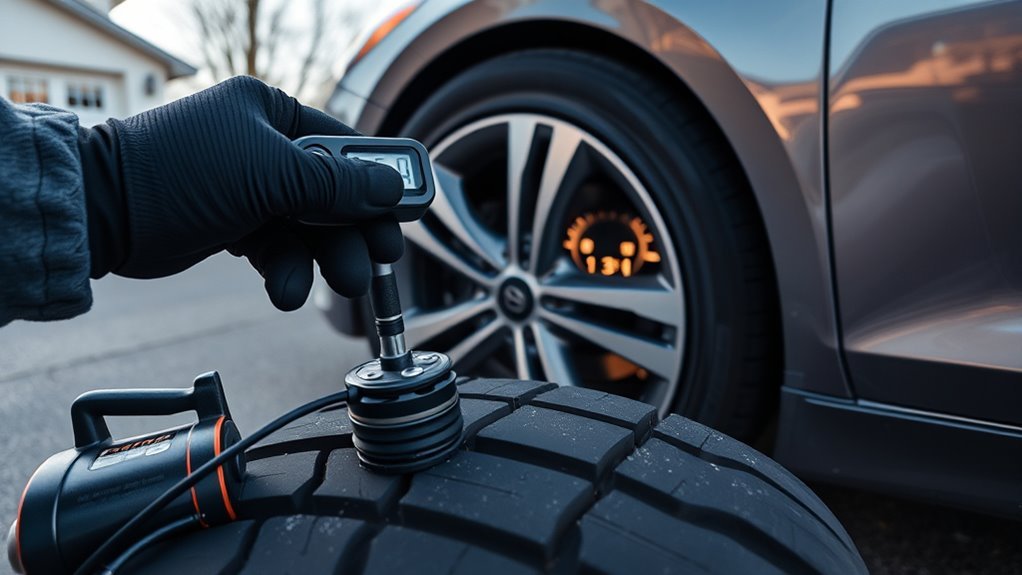
- Park safely and let the tires cool. For the most accurate reading, check them before driving or after the car has been parked for at least 3 hours.
- Find the correct PSI. Use the driver-side tire label or the owner’s manual for your Sonata’s exact tire size.
- Remove the valve cap. Keep it in your pocket or a small tray so it does not roll away.
- Press the gauge firmly onto the valve stem. A brief hiss is normal, but a long hiss usually means the gauge is not seated correctly.
- Compare the reading to the target PSI. If it is low, add air in short bursts.
- Recheck after adding air. If you are using a compressor with a built-in gauge, turn the compressor off before reading the pressure for better accuracy.
- Repeat on all four tires. Check the spare too if your Sonata has one.
- Reinstall valve caps. They help keep dirt and moisture out of the valve stem.
Pro Tip: Keep a small digital gauge in the glove box. Gas-station gauges can be inaccurate or damaged, and TPMS may not warn you until pressure is already significantly low.
[Products Worth Considering]

The TYAMATE TM8 solar-powered wireless TPMS delivers real-time tire pressure and temperature monitoring with six alarm modes for safer driving. A vibrant color LCD display shows readings clearly while windshield mounting keeps it hands-free and easy to read. With a wide 0–87 PSI range, strong 433.92 MHz signal transmission, and quick sensor pairing, it’s ideal for RV, sedan, SUV, MPV, and truck use.

Keep your tires properly inflated with this analog VONDIOR tire pressure gauge, designed for fast, easy readings without batteries. The swiveling, two-axis hose and large glow dial help you measure at any tire angle with instant visibility. Built with a protective rubber shield, it supports durable, low-maintenance use for cars and trucks.

Get precise tire readings with the ETENWOLF T300 Plus digital gauge, calibrated to ANSI B40.7 Grade 2A for reliable accuracy. It measures across a wide 3–200 PSI range and includes thermal compensation for dependable performance from extreme cold to heat. The bright LED display, LED illumination, and replaceable AAA batteries make it easy to check pressures quickly, even in low light.
Best PSI for City, Highway, and Mixed Driving
The best PSI for city, highway, and mixed driving is the same starting point: the cold pressure printed on your Sonata’s tire label or listed in the owner’s manual. Do not create separate city and highway PSI targets unless Hyundai provides different load or tire-size instructions for your vehicle.
| Driving type | Best PSI approach |
| City driving | Use the cold PSI on the label. Do not underinflate for comfort. |
| Highway driving | Use the cold PSI on the label. Do not overinflate just for MPG. |
| Mixed driving | Check monthly and keep all tires matched to the label pressure. |
| Cold weather | Recheck after temperature drops and follow Hyundai’s manual guidance. |
Balancing Comfort and Efficiency
Underinflation may feel slightly softer, but it increases heat, rolling resistance, and shoulder wear. Overinflation may reduce rolling resistance slightly, but it can create a harsher ride and increase center tread wear. The safest balance is the factory-recommended cold PSI.
Seasonal and Temperature Adjustments
Pressure often drops in colder weather and rises after driving. That is why “cold PSI” is the standard. Check the pressure when the car is parked and cool, then adjust to the label value. If a cold snap is coming, follow the owner’s manual guidance rather than guessing.
Safety and Wear: Overinflation vs Underinflation
Tire pressure affects more than MPG. It also changes how your Sonata brakes, steers, rides, and wears its tires.
Warning: Do not overinflate your tires to chase better MPG. Hyundai warns that both overinflation and underinflation can reduce tire life, affect handling, and increase the risk of tire failure.
- Underinflation: More sidewall flex, more heat, lower MPG, shoulder wear, and higher risk of tire damage.
- Overinflation: Harsher ride, smaller contact patch, center tread wear, and more vulnerability to road-hazard damage.
- Correct inflation: Better fuel economy, more even wear, better handling, and safer tire operation.
Rotation, Alignment, and Weight Tips to Improve MPG
Tire pressure is only one part of fuel-saving tire care. Rotation, balance, alignment, and extra weight also affect how efficiently your Sonata rolls.
- Rotate tires on schedule. NHTSA recommends checking the owner’s manual for the correct rotation interval and notes that some vehicles may need rotation every 5,000 to 8,000 miles if recommended by the manufacturer.
- Check alignment if the car pulls or tires wear unevenly. Poor alignment can increase drag and shorten tire life.
- Remove unnecessary weight. FuelEconomy.gov says an extra 100 pounds in a vehicle could reduce MPG by about 1%.
- Avoid roof cargo when possible. Roof boxes add aerodynamic drag, especially at highway speeds.
- Choose replacement tires carefully. Low-rolling-resistance tires can help fuel economy, but traction, tread life, ride comfort, and manufacturer recommendations still matter.
Tools to Check and Inflate Sonata Tires
You do not need expensive tools to maintain tire pressure. A simple, reliable setup is enough:
- Digital tire gauge: Easy to read and useful for quick monthly checks.
- Dial gauge: A good battery-free backup.
- Portable inflator: Helpful at home or on road trips. Automatic shut-off is useful if you set the target PSI correctly.
- Valve caps: Keep a few spares in the glove box.
After inflating a tire, always recheck the pressure with your own gauge. If the tire keeps losing air, do not keep topping it off forever; find the leak.
[Products Worth Considering]

Milton S-921 pencil tire pressure gauge helps you maintain optimal tire pressure for passenger cars with accurate readings in PSI and kPa. It features a built-in deflator valve for convenient pressure adjustments, plus a single chuck head and nylon indicator bar for easy use on the go. Built from durable plated brass and designed for reliable performance, it’s a practical road trip and cold-weather maintenance tool.

Measure tire tread depth quickly and accurately with this LUMITECO dial gauge that reads in 1/32" increments up to 14/32". The color-coded green/yellow/red zones make it easy to judge tire wear and know when replacement is needed. A rugged, compact design with a protective pouch helps keep the gauge ready for use on cars, trucks, motorcycles, and more.

The JACO FlowPro Tire Inflator measures, inflates, and airs down tires up to 100 PSI with battery-free operation and ±2% accuracy after calibration. It features a glowing pressure dial for night visibility, a heavy-duty steel build with a hybrid hose, and a precision push-to-inflate thumb trigger. The patented Lightning Air Chuck locks on for a secure seal, and the kit includes quick-connect hardware for easy inline use with your air compressor.
When to See a Technician: TPMS Alerts, Slow Leaks, and Damage
Your Sonata’s tire pressure monitoring system is helpful, but it is not a replacement for manual pressure checks. Federal TPMS rules require the system to warn drivers when one or more tires are significantly underinflated, and NHTSA advises checking pressure as soon as possible when the TPMS light comes on.
Use this quick guide:
| Symptom | What to do |
| TPMS light stays on | Safely stop, check all tires with a gauge, and inflate to the label PSI. |
| TPMS light flashes, then stays on | The TPMS may have a malfunction. Have the system checked. |
| One tire loses pressure repeatedly | Have a technician inspect for a nail, valve-stem leak, bead leak, or wheel damage. |
| Bulge, cut, vibration, or exposed cords | Stop driving on that tire and get professional service. |
[Products Worth Considering]
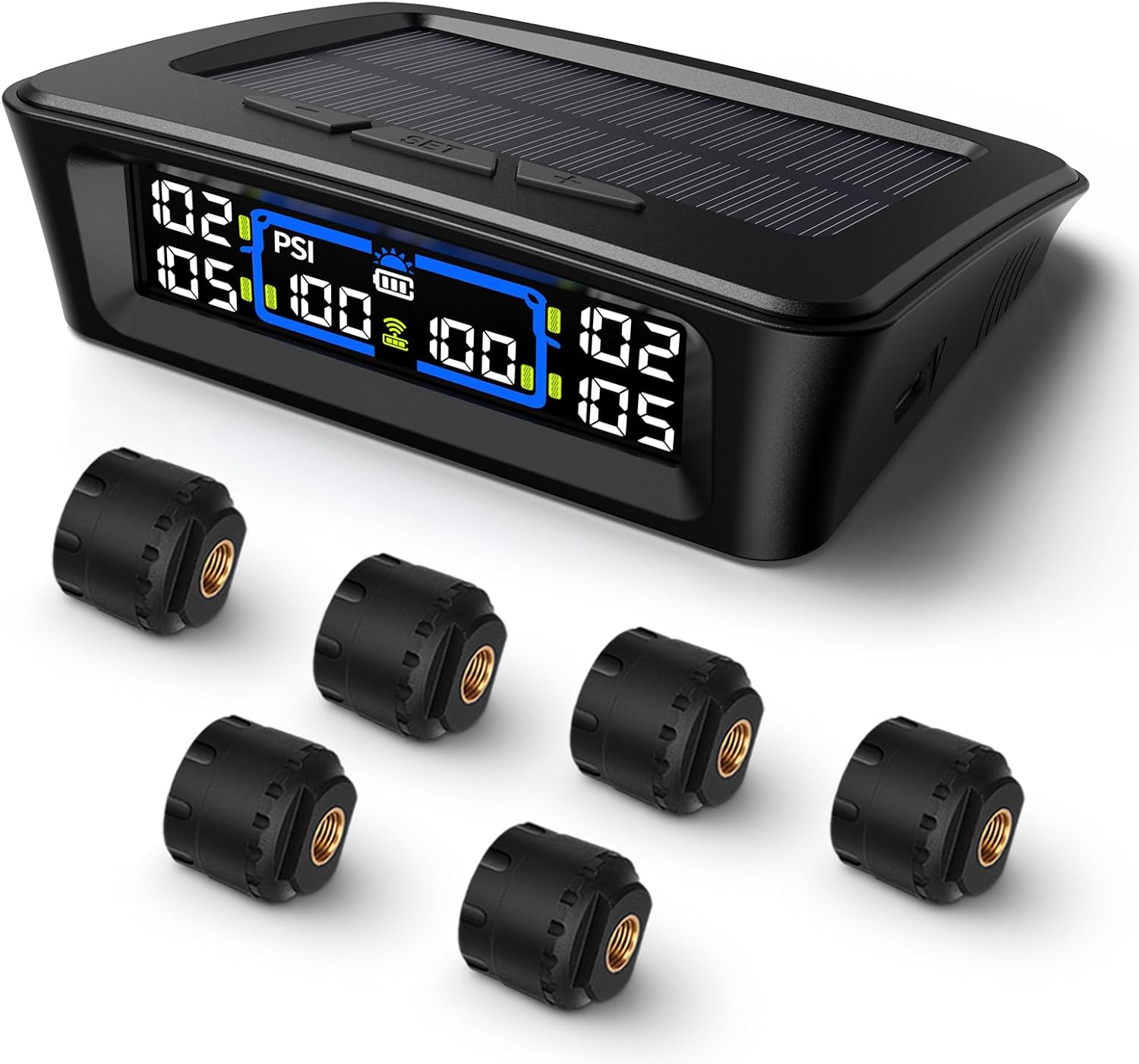
The Tymate TM12 RV TPMS delivers real-time tire pressure and temperature monitoring with a stable 433Hz display for safer long-distance driving. It supports simultaneous monitoring across vehicle and trailer zones, includes six alarm modes for pressure, temperature, leakage, battery, and signal loss, and features easy DIY installation with auto calibration. Power is supplied via USB-C charging or solar recharging, with a wide 0–144 PSI range and up to 50 ft signal coverage for RVs and towable trailers.

This tire inflator with pressure gauge delivers long-lasting performance with a durable rubber-protected gauge and sturdy build. The longer hose and 360 swivel air chuck help you seal the valve securely and keep your hands free while measuring, inflating, or deflating. It’s battery-free for reliable use and provides ±2 PSI accuracy in the mid-range for most typical tires, with universal compatibility for 1/4 NPT compressor outputs.

This heavy-duty tire pressure gauge combines measurement, inflation, and deflation in one compact tool for quick roadside and garage use. Its dual-head chuck helps reach inner and outer dual-wheel positions, while the clear indicator bar makes readings easy to see. Built for durability, it supports a wide pressure range and works across cars, trucks, RVs, SUVs, and motorcycles.
Frequently Asked Questions
Does tire pressure affect miles per gallon?
Yes. Low tire pressure increases rolling resistance, which can reduce MPG. FuelEconomy.gov estimates under-inflated tires can lower gas mileage by about 0.2% for every 1 PSI drop in the average pressure of all tires.
What is the best tire pressure for good gas mileage in a Hyundai Sonata?
The best tire pressure is the cold PSI printed on your Sonata’s driver-side tire label or listed in the owner’s manual. Do not use the sidewall maximum as your target pressure.
Should I increase tire pressure for highway MPG?
Do not increase pressure beyond Hyundai’s recommended cold PSI just to improve highway MPG. Correct pressure is designed to balance fuel economy, braking, handling, comfort, and tire wear.
Why does my Sonata’s tire pressure drop in cold weather?
Air contracts as temperature falls, so tire pressure drops in cold weather. Hyundai notes that tire pressure can change by about 1 PSI for every 12°F temperature change in one owner’s manual section.
Can a Hyundai last 200,000 miles?
Many Hyundai vehicles can reach high mileage with consistent maintenance, but there is no guarantee. Oil changes, cooling-system care, tire pressure, alignment, rotation, and timely repairs all affect long-term reliability.
Are Hyundai Sonatas reliable on gas and mileage?
A Sonata can deliver strong fuel economy when it is maintained well and driven smoothly. Correct tire pressure helps preserve that MPG by reducing avoidable rolling resistance.
Conclusion
Tire pressure does affect Hyundai Sonata MPG. The most accurate advice is not to chase a universal number, but to use the cold PSI on your own Sonata’s driver-side tire label or owner’s manual. Keeping the tires properly inflated can improve fuel economy, reduce uneven wear, protect handling, and help prevent tire-related safety problems.
Check pressure monthly, check it before long trips, and recheck it when the weather changes. If one tire keeps losing pressure or the TPMS light stays on, inspect the tire with a gauge and have a technician check for leaks or damage.
Sources
- FuelEconomy.gov — Keeping Your Vehicle in Shape — supports the 0.2% MPG loss per 1 PSI drop and the 0.6% average / up to 3% proper-inflation benefit.
- Hyundai Owner’s Manual — Recommended Cold Tire Inflation Pressures — supports cold-tire checking, warm-tire caution, and safety effects of overinflation and underinflation.
- NHTSA TireWise — Tire Safety Ratings and Awareness — supports monthly tire pressure checks, TPMS limitations, rotation guidance, and tire safety warnings.
- eCFR 49 CFR 571.138 — Tire Pressure Monitoring Systems — supports federal TPMS warning requirements for significant underinflation.
- FuelEconomy.gov — Driving More Efficiently — supports the estimate that an extra 100 pounds can reduce MPG by about 1%.