
You lose fuel whenever tires deform more than they should, drag because of poor alignment, or run below the vehicle manufacturer’s recommended pressure. The main culprit is rolling resistance: the energy your tires use as they flex, heat up, and roll across the road. You cannot remove it completely, but you can reduce it with correct tire pressure, sound alignment, regular rotation and balancing, smart tread-depth checks, and the right low-rolling-resistance tire for your vehicle.
Quick Answer
Tire rolling resistance affects fuel economy because the engine must burn extra fuel to overcome tire flex, heat loss, and road contact. Proper inflation can improve gas mileage by up to 3% in some cases, and a 10% reduction in tire rolling resistance can improve vehicle fuel economy by about 1% to 2%.
Key Takeaways
- Rolling resistance comes mainly from tire deformation, heat buildup, tread design, compound choice, vehicle load, and road surface.
- The fastest win is tire pressure: use the pressure on the driver-door placard or owner’s manual, not the maximum pressure printed on the sidewall.
- Low-rolling-resistance tires can save fuel, but compare wet grip, load rating, tread life, noise, and warranty before buying.
- Rotation, balancing, alignment, and tread-depth checks reduce wasted energy and help tires last longer.
- Fleets should track pressure, tread depth, alignment findings, fuel use, and replacement dates to calculate real payback.
At a Glance
| Time Required | 5–10 minutes for pressure and tread checks; 30–90 minutes for alignment or balancing at a shop |
| Difficulty | Easy for basic checks; moderate for fleet tracking |
| Tools Needed | Tire pressure gauge, tread-depth gauge or penny, maintenance log, and access to an air pump |
| Cost | Low for DIY checks; alignment, balancing, or replacement costs vary by vehicle and tire size |
Rolling Resistance and Why It Matters for Fuel Economy
Rolling resistance is the force that works against a tire as it rolls. Each tire flattens slightly where it meets the road, then returns toward its original shape. That repeated flexing creates heat, and that heat is wasted energy. The more energy the tire wastes, the more work the engine or electric motor must do.
According to the U.S. Department of Energy, a 10% reduction in tire rolling resistance can reduce fuel use by about 1% to 2% for a typical vehicle. That may sound small for one fill-up, but it adds up over thousands of miles, especially for high-mileage drivers and fleets.
A 10% reduction in rolling resistance can improve vehicle fuel economy by about 1% to 2%, which makes tire maintenance a measurable fuel-saving habit rather than a guess.
Rolling resistance is not the only factor in fuel economy. Speed, aerodynamics, traffic, driving style, vehicle weight, weather, engine condition, and road surface all matter. Still, tires are one of the easiest areas to control because pressure checks, rotation, balancing, and alignment are routine maintenance tasks.
How Tire Design and Materials Affect Rolling Resistance
Tire design affects fuel use because every part of the tire changes how much it flexes, heats, grips, and wears. A tire built only for minimum rolling resistance could sacrifice wet grip or durability, while a tire built only for maximum grip may use more energy. The best choice balances efficiency with the driving conditions the vehicle actually sees.
Tread Pattern and Contact Patch
A smoother tread pattern may reduce energy loss on dry pavement, but it may not move water, snow, or mud as well as a more aggressive pattern. A wider tire can increase grip by creating a larger contact patch, but it can also increase weight, aerodynamic drag, and rolling resistance depending on the vehicle and road surface.
Rubber Compounds and Hysteresis
The biggest material issue is hysteresis, which is the energy lost when rubber flexes and rebounds. Modern low-rolling-resistance tires often use silica-enhanced compounds, optimized tread bases, lighter materials, and stiffer construction zones to reduce heat loss while still preserving traction.
Load Rating, Speed Rating, and Fitment
Do not choose a tire only because it promises better fuel economy. The replacement tire must match the vehicle manufacturer’s required size, load index, and speed rating. A tire that is too small, overloaded, or not approved for the vehicle can create safety problems and may wear quickly.
Note: In the European Union, tire labels include fuel efficiency, wet grip, and external rolling-noise classes. The official EU tire-label regulation is useful as a model because it reminds buyers to compare efficiency with safety and noise, not fuel use alone.
Tire Pressure: How Inflation Affects Rolling Resistance and How Often to Check
Tire pressure is the simplest and most overlooked rolling-resistance control. When a tire is underinflated, the sidewalls flex more, the tread squirm increases, heat builds faster, and the tire needs more energy to roll.
FuelEconomy.gov reports that keeping tires inflated to the proper pressure can improve gas mileage by 0.6% on average and up to 3% in some cases. It also notes that underinflated tires can lower gas mileage by about 0.2% for every 1 psi drop in the average pressure of all tires.
How to Check Tire Pressure Correctly
- Find the recommended cold tire pressure on the driver-door placard or in the owner’s manual.
- Check all tires, including the spare if your vehicle has one, when the tires are cold.
- Use a reliable gauge instead of relying only on a visual inspection.
- Add or release air until each tire matches the vehicle manufacturer’s recommended pressure.
- Recheck after large temperature changes, before long trips, and after hitting a pothole or curb.
Warning: Do not inflate tires to the maximum pressure printed on the sidewall unless your vehicle manufacturer specifically calls for it. The correct everyday pressure is the cold inflation pressure listed on the vehicle placard or in the owner’s manual.
The National Highway Traffic Safety Administration recommends checking tire pressure at least once a month when the tires are cold. It also warns that Tire Pressure Monitoring Systems usually alert you only after a tire is significantly underinflated, so a monthly gauge check still matters.
Tread Depth, Wear Patterns, and Their Effect on Safety and Fuel Use
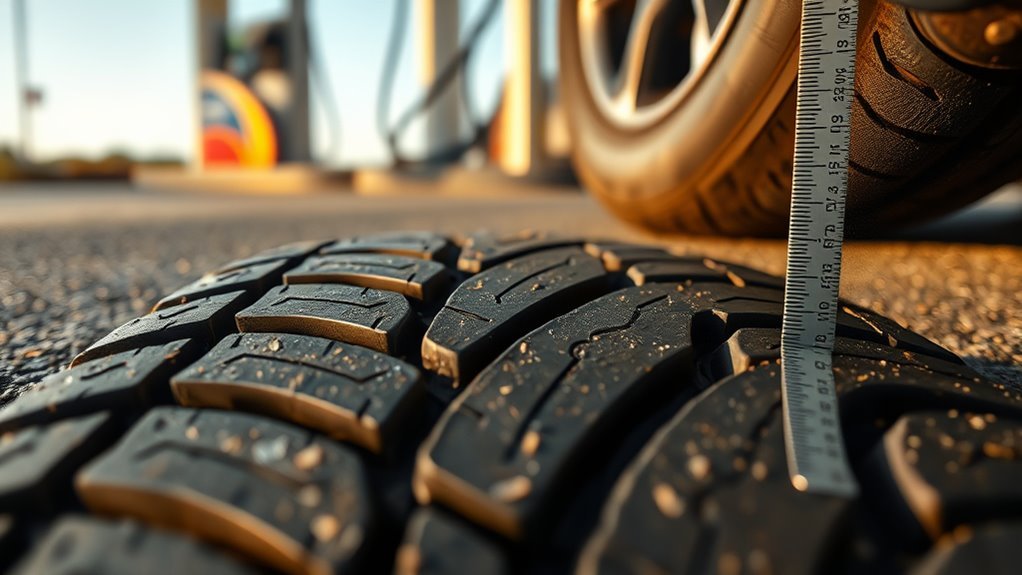
Tread depth affects safety first and fuel use second. Deep enough tread channels water away from the contact patch, improves wet grip, and helps reduce hydroplaning risk. As tread wears, wet braking and water evacuation decline.
NHTSA says tires are not safe and should be replaced when tread is worn down to 2/32 of an inch. That is the minimum replacement point, not a comfort zone. If you drive often in rain, snow, or on high-speed roads, start planning replacement earlier instead of waiting until the wear bars are flush.
Common Wear Patterns and What They Mean
| Wear Pattern | Likely Cause | Fix |
|---|---|---|
| Both outer edges worn | Underinflation or hard cornering | Set correct pressure and inspect suspension if wear continues |
| Center worn faster | Overinflation or mismatched tire for load | Use placard pressure and confirm tire size/load rating |
| One edge worn | Alignment issue, camber problem, or worn suspension | Get alignment and suspension checked |
| Cupping or scalloping | Imbalance, worn shocks/struts, or loose components | Balance tires and inspect suspension |
| Feathering | Toe alignment problem | Correct alignment before the tire wears out early |
Uneven tread wear wastes money because it can force early tire replacement. It can also increase rolling losses because the tire no longer rolls as designed.
Measured Fuel and CO₂ Savings From Low-Rolling-Resistance Tires
Low-rolling-resistance tires are designed to waste less energy as they roll. For gasoline and diesel vehicles, that can reduce fuel use. For electric vehicles, it can increase driving range. The exact savings depend on the tire, vehicle weight, speed, route, temperature, driver behavior, and maintenance quality.
Fuel Savings Quantified
A practical way to estimate savings is to separate two different effects:
- Maintenance savings: Correct tire pressure can improve mileage by up to 3% in some cases, based on FuelEconomy.gov guidance.
- Tire-design savings: Lower rolling resistance can improve efficiency, with DOE and NHTSA citing roughly 1% to 2% better fuel economy for a 10% reduction in rolling resistance.
For example, if a vehicle uses 600 gallons of gasoline per year, a 1% fuel reduction saves 6 gallons annually. A 2% reduction saves 12 gallons. If a fleet operates 50 similar vehicles, that becomes 300 to 600 gallons per year before considering additional savings from fewer premature tire replacements.
CO₂ Reduction Estimates
Fuel savings also reduce tailpipe CO₂. The U.S. Environmental Protection Agency uses a standard factor of 8,887 grams of CO₂ per gallon of gasoline burned. Using that factor, saving 100 gallons of gasoline avoids about 889 kilograms of CO₂.
For diesel fleets, use the correct diesel emissions factor instead of the gasoline number. The calculation is simple:
Gallons saved × CO₂ per gallon = tailpipe CO₂ avoided
Pro Tip: For fleet reporting, track fuel saved in gallons or liters first, then convert to CO₂. That keeps the payback calculation clear and prevents mixing fuel economy, emissions, and tire cost into one confusing number.
Maintenance to Lower Rolling Resistance: Alignment, Rotation, Balancing
Good maintenance keeps tires rolling the way the manufacturer intended. It also prevents irregular wear, vibration, steering pull, heat buildup, and early replacement.
[Products Worth Considering]

Accurately measure tire tread depth with a calibrated gauge marked from 0 to 1 inch in 1/32 inch increments. The color-coded bar helps you quickly identify tread condition ranges, supporting safe driving for trucks, motorcycles, automobiles, and passenger vehicles.

Keep your tires properly inflated with this analog VONDIOR tire pressure gauge, designed for fast, easy readings without batteries. The swiveling, two-axis hose and large glow dial help you measure at any tire angle with instant visibility. Built with a protective rubber shield, it supports durable, low-maintenance use for cars and trucks.

Measure tire tread depth quickly and accurately with this LUMITECO dial gauge that reads in 1/32" increments up to 14/32". The color-coded green/yellow/red zones make it easy to judge tire wear and know when replacement is needed. A rugged, compact design with a protective pouch helps keep the gauge ready for use on cars, trucks, motorcycles, and more.
Proper Wheel Alignment
Alignment controls the angles of the wheels relative to the vehicle and the road. When alignment is off, tires scrub across the pavement instead of rolling cleanly. That increases wear, adds drag, and can make the vehicle pull left or right.
Have alignment checked when you notice steering pull, uneven shoulder wear, a crooked steering wheel, vibration after impacts, or after hitting a curb or pothole hard. For fleets, alignment checks should also follow tire-wear inspections, not just fixed calendar intervals.
Regular Tire Balancing
Balancing helps the wheel and tire assembly rotate smoothly. An out-of-balance tire can create vibration, driver fatigue, uneven wear, and extra stress on suspension parts. New tires should be balanced when installed, and existing tires should be checked if vibration appears.
Tire Rotation
Rotation spreads wear across all four tires so one position does not wear out early. NHTSA recommends checking the owner’s manual for the correct pattern and frequency. If the manufacturer recommends it, many vehicles use a 5,000- to 8,000-mile rotation interval.
Some vehicles cannot use a standard rotation pattern because they have directional tires, staggered tire sizes, or different front and rear fitments. Always confirm the correct pattern before rotating.
Fleet Tactics to Cut Rolling Resistance Without Replacing All Tires
You do not need to replace every tire at once to reduce rolling resistance. Many fleets can capture early savings by controlling pressure, wear, alignment, and driver behavior first.
[Products Worth Considering]

This tire inflator with pressure gauge delivers long-lasting performance with a durable rubber-protected gauge and sturdy build. The longer hose and 360 swivel air chuck help you seal the valve securely and keep your hands free while measuring, inflating, or deflating. It’s battery-free for reliable use and provides ±2 PSI accuracy in the mid-range for most typical tires, with universal compatibility for 1/4 NPT compressor outputs.

The SAFELIFE dial tire tread depth gauge measures tread depth in 1/32 inch increments with clear, easy-to-read 2-inch dial face. Color zones using a traffic light system help you quickly judge whether tread is low, marginal, or ample for safer driving. Built with a durable zinc cast body and a metal detect probe for precise, comfortable use across cars, motorcycles, trucks, and buses.

ETENWOLF’s tire pressure gauge helps you quickly and accurately check tire PSI across cars, trucks, motorcycles, bikes, and more. It’s manually calibrated to ANSI B40.1 Grade A for reliable readings, includes a large glow dial for easy nighttime viewing, and features a 360-degree swivel chuck for use at any valve angle. The gauge also works consistently in extreme hot or cold weather.
Build a Simple Fleet Tire Program
- Standardize pressure checks: Check cold pressure on a fixed schedule and before long routes.
- Record tread depth: Measure across inner, center, and outer tread zones, not just one spot.
- Flag uneven wear early: Send vehicles with edge wear, cupping, or feathering for inspection before the tire is ruined.
- Track fuel by vehicle: Compare fuel use before and after maintenance changes.
- Replace strategically: Choose low-rolling-resistance tires where duty cycle, safety needs, and payback justify the cost.
For high-mileage trucks, delivery vans, taxis, and service vehicles, even small improvements matter because tires roll through so many miles. The bigger the annual mileage, the faster a pressure, alignment, or tire-selection improvement can pay back.
Quick Checklist: Consumer and Fleet Actions You Can Do Today
Use this checklist to reduce rolling resistance without guessing. The key is consistency: one perfect tire check per year is less useful than a simple routine you actually follow.
| Task | Recommended Frequency | Why It Matters |
|---|---|---|
| Check cold tire pressure | Monthly and before long trips | Reduces excess flex, heat, and fuel waste |
| Inspect tread depth | Monthly | Protects wet grip and identifies replacement timing |
| Look for uneven wear | Monthly | Catches pressure, alignment, and suspension problems early |
| Rotate tires | Follow owner’s manual; often 5,000–8,000 miles if recommended | Promotes even wear and longer tire life |
| Balance tires | At installation or when vibration appears | Reduces shake, uneven wear, and driver fatigue |
| Check alignment | After impacts, when wear is uneven, or when the vehicle pulls | Prevents tire scrub, steering pull, and premature replacement |
Cost vs. Benefit: Calculating Payback for Tires and Maintenance
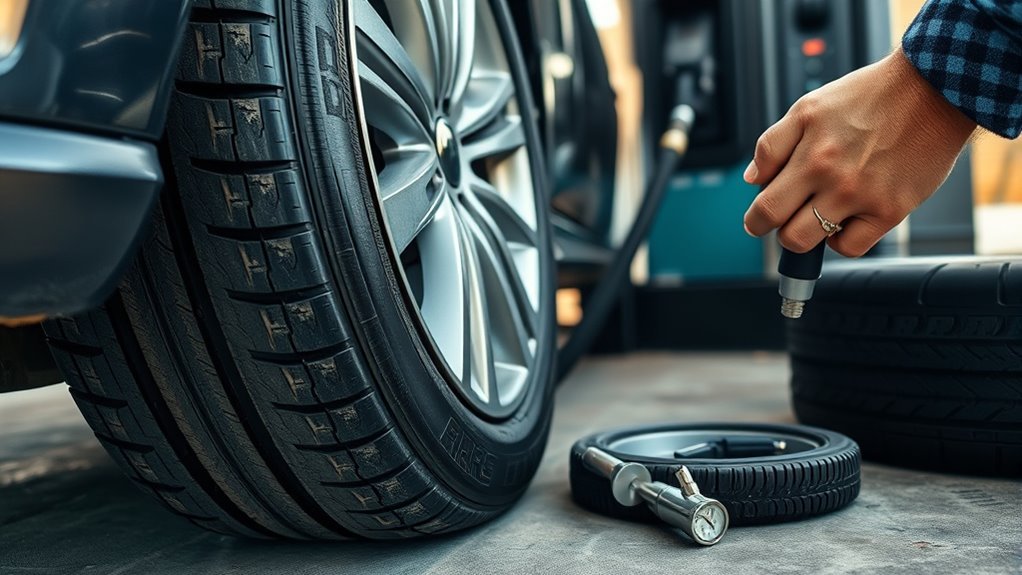
A simple payback calculation shows whether low-rolling-resistance tires or extra maintenance checks are worth the cost. You do not need a complex spreadsheet to start.
[Products Worth Considering]

Monitor tire tread wear with a smart, color-coded depth gauge that shows clear condition ranges at a glance. The bar is range marked for fast, easy readings, helping you maintain safer traction and performance. Each gauge is portable with a pocket clip, and the set includes 20 units for daily use and sharing.
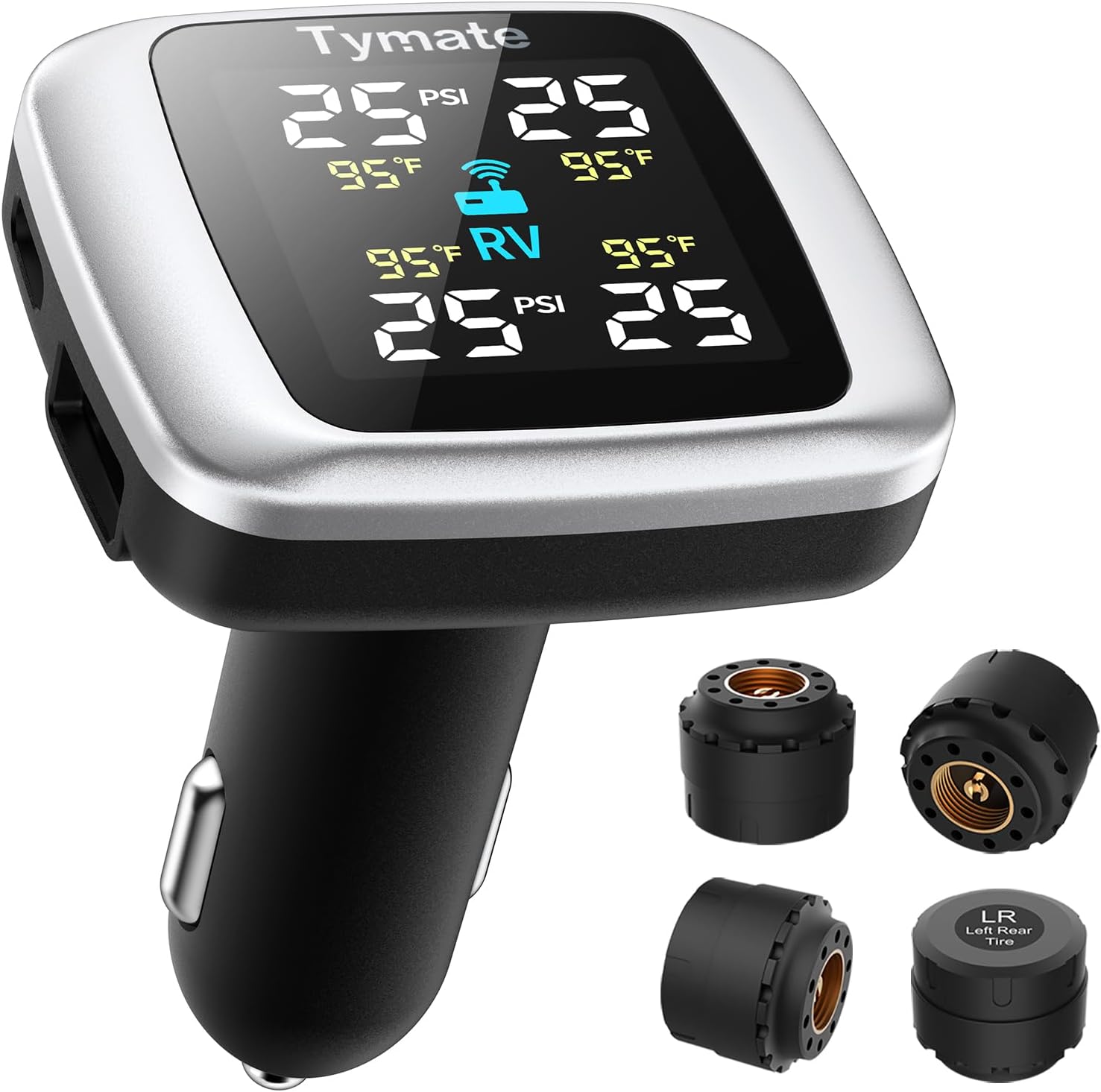
Tymate TM7 is a wireless tire pressure monitoring system that delivers real-time pressure and temperature readings for safer driving. It includes four external sensors, a bright color LCD display with adjustable backlight, and six alarm modes for high/low pressure, fast leakage, high temperature, and sensor signal or battery issues. The system covers a wide 0–144 PSI range and plugs into your vehicle’s cigarette lighter socket for quick DIY setup.

Get precise tire readings with the ETENWOLF T300 Plus digital gauge, calibrated to ANSI B40.7 Grade 2A for reliable accuracy. It measures across a wide 3–200 PSI range and includes thermal compensation for dependable performance from extreme cold to heat. The bright LED display, LED illumination, and replaceable AAA batteries make it easy to check pressures quickly, even in low light.
Simple Payback Formula
Payback distance or time = Added cost ÷ Savings per mile or per month
Use these inputs:
- Extra cost of the fuel-efficient tire compared with your standard tire
- Expected fuel savings percentage
- Vehicle’s current fuel use per mile or per 100 miles
- Fuel price
- Expected tire life
- Maintenance cost for pressure checks, rotation, balancing, and alignment
- Value of longer tire life from reduced uneven wear
Example Payback Calculation
Suppose a vehicle uses 600 gallons of gasoline per year and fuel costs $3.50 per gallon. A 2% fuel reduction saves 12 gallons per year, or $42 annually. If the more efficient tire set costs $120 extra, fuel savings alone would pay back in about 2.9 years. If the tires also last longer because pressure and alignment are controlled, the real payback can be faster.
For fleets, repeat this calculation by vehicle class. A delivery van running 30,000 miles per year may justify a different tire than a personal car driven 8,000 miles per year.
Mistakes That Increase Rolling Resistance
- Using sidewall maximum pressure as the target: Use the vehicle placard instead.
- Ignoring TPMS until the warning light appears: The tire may already be significantly underinflated by then.
- Buying the cheapest tire without checking efficiency or wet grip: A low purchase price can become a high operating cost.
- Skipping alignment after a curb strike: Small alignment changes can ruin tread quickly.
- Running mismatched tires: Different sizes, ratings, or tread patterns can hurt handling and wear.
- Waiting until tires are bald: Fuel cost matters, but wet-weather control matters more.
Frequently Asked Questions
How does rolling resistance affect fuel efficiency?
Rolling resistance affects fuel efficiency by forcing the engine or motor to use energy to overcome tire deformation, heat buildup, and road contact. Lower rolling resistance means less wasted energy, so the vehicle can travel farther on the same amount of fuel or battery charge.
Do brand-new tires make you lose MPG because of rolling resistance?
They can. New tires often have deeper tread than the worn tires they replace, and deeper tread can flex more. That may cause a small temporary MPG drop. The effect depends on tire design, tread depth, pressure, compound, size, and driving conditions.
Is 60 mph more efficient than 70 mph?
Usually, yes. FuelEconomy.gov notes that gas mileage typically decreases rapidly above 50 mph. The exact difference between 60 mph and 70 mph depends on the vehicle, gearing, wind, road grade, tire pressure, and load, but slowing down often saves fuel on the highway.
Are low-rolling-resistance tires safe in the rain?
Many are, but you must compare wet-grip ratings and independent test results. Do not choose a tire only because it has low rolling resistance. The right tire should match your vehicle, climate, load needs, speed rating, and wet-weather safety requirements.
How often should I check tire pressure for best fuel economy?
Check tire pressure at least once a month, before long trips, and after large temperature changes. Measure pressure when the tires are cold and use the recommended pressure on the driver-door placard or in the owner’s manual.
Can overinflating tires improve MPG?
Overinflation may reduce tire flex, but it can also reduce ride comfort, change handling, increase center tread wear, and reduce grip. For normal driving, use the vehicle manufacturer’s recommended cold tire pressure rather than overinflating for a small fuel-economy gain.
Conclusion
Rolling resistance is a quiet but measurable fuel-economy loss. The good news is that you can control much of it with basic tire care: keep tires at the recommended cold pressure, check tread depth monthly, rotate when the owner’s manual recommends it, balance tires when needed, and correct alignment problems early.
When it is time to buy tires, compare rolling resistance with wet grip, tread life, load rating, noise, and warranty. For fleets, track the numbers before and after pressure programs, alignment checks, and tire changes. That turns tire efficiency from a marketing claim into a clear cost-and-emissions decision.
Sources
- FuelEconomy.gov: Keeping Your Vehicle in Shape — tire pressure and fuel-economy impact
- NHTSA TireWise — tire pressure, tread depth, rotation, balancing, alignment, and tire safety guidance
- U.S. Department of Energy: A Materials Approach to Fuel-Efficient Tires — rolling resistance and fuel-consumption relationship
- U.S. EPA Greenhouse Gas Equivalencies Calculator References — CO₂ per gallon of gasoline and diesel emissions factors
- FuelEconomy.gov: Driving More Efficiently — speed and fuel-economy guidance
- Regulation (EU) 2020/740 — official tire-label requirements for fuel efficiency, wet grip, and rolling noise


1 thought on “Rolling Resistance & Fuel Efficiency: The Hidden Cost”