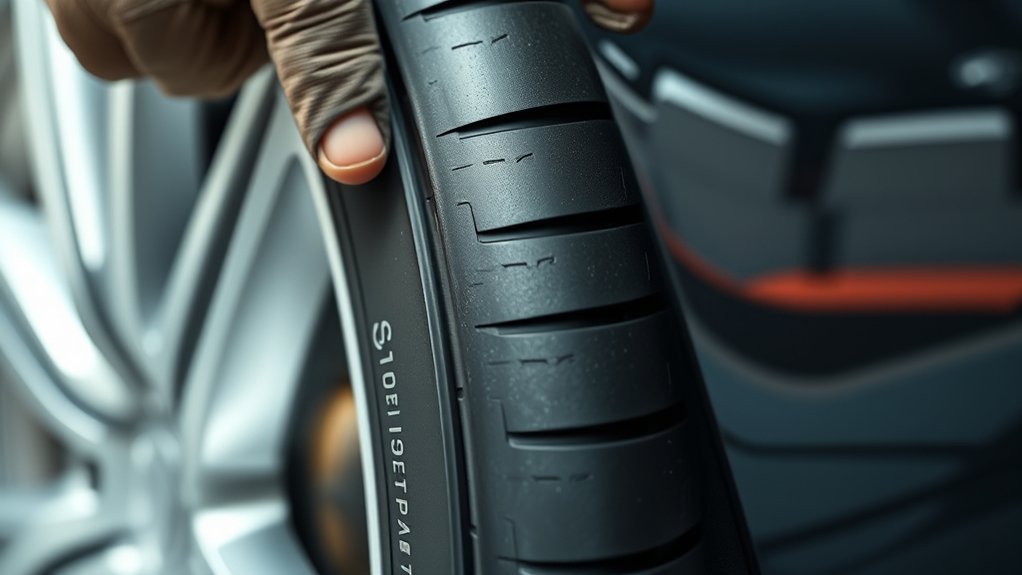
A W on a tire means the tire has a speed rating of up to 168 mph (270 km/h) under controlled test conditions. You usually see it at the end of the tire size code, right after the load index, such as 94W or 225/50R17 98W. The letter helps you confirm whether the tire matches your vehicle’s required speed capability, handling design, and load needs.
Quick Answer
A W-rated tire is approved for sustained speeds up to 168 mph (270 km/h) when used at the proper load and inflation pressure. It does not mean you should drive that fast. Always follow posted speed limits and match or exceed the tire size, load index, and speed rating listed by your vehicle manufacturer.
Key Takeaways
- A W speed rating means the tire is rated up to 168 mph (270 km/h) in controlled lab conditions.
- The speed rating appears after the load index, as in 94W, 95W, or 225/50R17 98W.
- The tire must also match the vehicle’s required size, load index, inflation pressure, and tire type.
- If you mix speed ratings, the lowest-rated tire limits the whole set.
- A higher speed rating does not automatically mean longer tread life, better wet grip, or better winter performance.
What Does W Mean on a Tire?
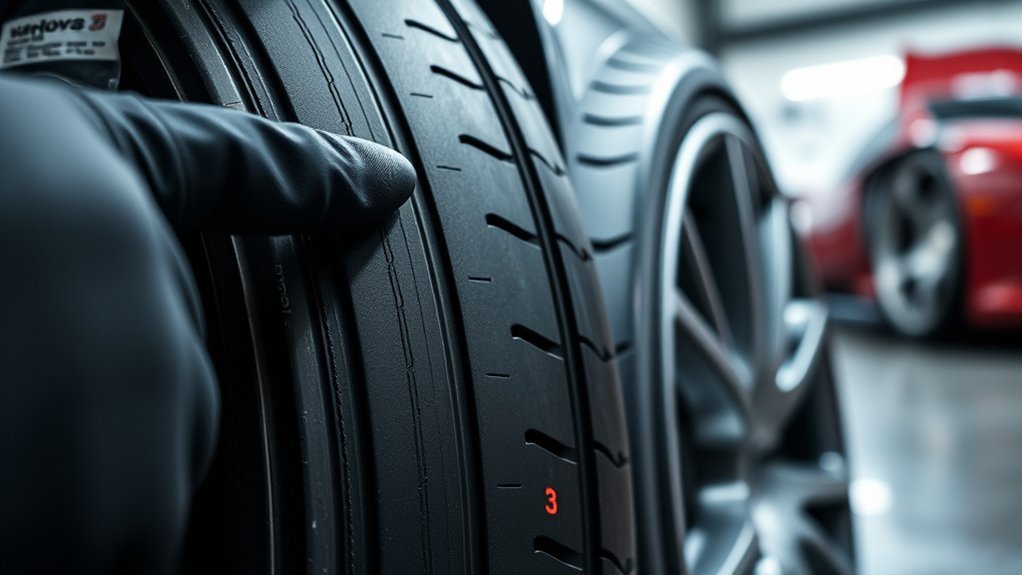
The “W” on a tire is the tire’s speed symbol. It means the tire is rated for speeds up to 168 mph (270 km/h) when the tire is in good condition, correctly inflated, properly loaded, and tested under controlled conditions.
You will normally find the W at the end of the service description on the sidewall. For example, in P205/60R16 82W, the number 82 is the load index, and the letter W is the speed rating. That combination tells you both how much load the tire can carry and the maximum tested speed category.
W-rated tires are common on performance sedans, sports cars, summer performance tires, and some higher-speed touring fitments. They are built to handle more heat and stress at high speed than lower-rated tires, but the rating is still a technical limit, not a driving recommendation. For more detail on tire performance rating, compare the rating with the exact tire model, tread design, and your vehicle’s original equipment requirements.
Warning: A W speed rating does not allow you to exceed posted speed limits. It also does not make a worn, damaged, underinflated, overloaded, or mismatched tire safe at high speed.
How Tire Speed Ratings Work
Tire speed ratings are standardized letter codes that show the highest speed a tire can sustain under controlled test conditions while carrying its rated load. The rating is part of the tire’s service description, which usually appears after the tire size.
Here is a simple example:
| Sidewall code | What it means |
|---|---|
| P205/60R16 | Tire type, width, aspect ratio, construction, and wheel diameter |
| 82 | Load index |
| W | Speed rating up to 168 mph (270 km/h) |
The speed rating does not work alone. A tire also needs the correct load index, size, construction, inflation pressure, and seasonal design. A W-rated summer performance tire, for example, may handle high-speed heat well but still be the wrong choice for freezing temperatures or snow.
It also helps to understand that UTQG ratings are separate from speed ratings. UTQG grades compare treadwear, traction, and temperature resistance on many passenger tires, while the speed symbol tells you the tire’s tested speed category.
How Fast Is a W-Rated Tire?
A W-rated tire is rated up to 168 mph (270 km/h). That rating gives a high-speed safety margin for vehicles designed to use it, but it does not mean the tire is safe at that speed in all real-world conditions.
Road heat, tire age, tread depth, impact damage, inflation pressure, vehicle load, alignment, and weather can all change how a tire performs. If your tire is underinflated or overloaded, heat builds up faster. If the tire is old, cracked, patched incorrectly, or unevenly worn, its real-world safety margin drops.
A W rating is a tested capability, not a promise of unlimited safety. Your vehicle, road conditions, tire condition, and local speed laws still set the real limit.
[Products Worth Considering]
A concentrated tire and tube mounting compound designed to help simplify mounting rubber tires and tubes on passenger, semi truck, construction, and OTR applications. Its ultra-thick formula packs beads effectively and includes rust inhibitors to help protect against corrosion during use.

The SAFELIFE dial tire tread depth gauge measures tread depth in 1/32 inch increments with clear, easy-to-read 2-inch dial face. Color zones using a traffic light system help you quickly judge whether tread is low, marginal, or ample for safer driving. Built with a durable zinc cast body and a metal detect probe for precise, comfortable use across cars, motorcycles, trucks, and buses.

The Kurgo Seasonal Tire Tote helps protect your car interior, clothes, and garage from tire grime, brake dust, and residue during seasonal tire changes. Its universal design fits most passenger tires between 22" and 31" in diameter, making storage and transport simpler with less mess. Built for rugged, repeated use, it’s machine washable for easy care and comes with a lifetime warranty.
W, V, Y, and Z Speed Ratings Compared
W sits above V and below Y in common passenger tire speed ratings. You may also see ZR on some performance tires. ZR is an older high-speed marking that means the tire is rated above 149 mph, while the service description gives the more specific W or Y rating.
| Speed symbol | Maximum rated speed | Common use |
|---|---|---|
| H | 130 mph (210 km/h) | Touring cars, sedans, crossovers |
| V | 149 mph (240 km/h) | Performance all-season and summer tires |
| W | 168 mph (270 km/h) | High-performance cars and performance tire fitments |
| Y | 186 mph (300 km/h) | Very high-performance vehicles |
| ZR | Above 149 mph, with exact rating shown by W or Y in the service description | Performance tires with older-style high-speed marking |
Note: A tire marked (Y) or sometimes (W) may indicate a speed capability above the normal Y or W category, but you should verify that detail with the tire manufacturer’s specifications for that exact tire model.
[Products Worth Considering]

Steelman white tire marking crayons provide high-contrast, semi-permanent marks for repairing and inspecting tires and equipment. They write on wet or dry, smooth or coarse surfaces including rubber, metal, glass, and wood, making them ideal for puncture location and damage outlining. The lead- and zinc-free crayons resist weather and fading yet wipe away when you no longer need the marks.

This tire inflator with pressure gauge delivers long-lasting performance with a durable rubber-protected gauge and sturdy build. The longer hose and 360 swivel air chuck help you seal the valve securely and keep your hands free while measuring, inflating, or deflating. It’s battery-free for reliable use and provides ±2 PSI accuracy in the mid-range for most typical tires, with universal compatibility for 1/4 NPT compressor outputs.

Replace worn tires quickly with this universal 4.80/4.00-8 tire and inner tube set designed for wheelbarrows and outdoor utility carts. The ribbed tread helps reduce turf damage while the natural rubber construction supports longer service life. Compatible with 15.5-inch outer diameter, 4-inch width, and 8-inch rim diameter wheels, it uses a straight TR-13 valve stem for easy installation. For best results, inflate with a manual pump and do not exceed 25 PSI.
Where to Find Your Tire Rating
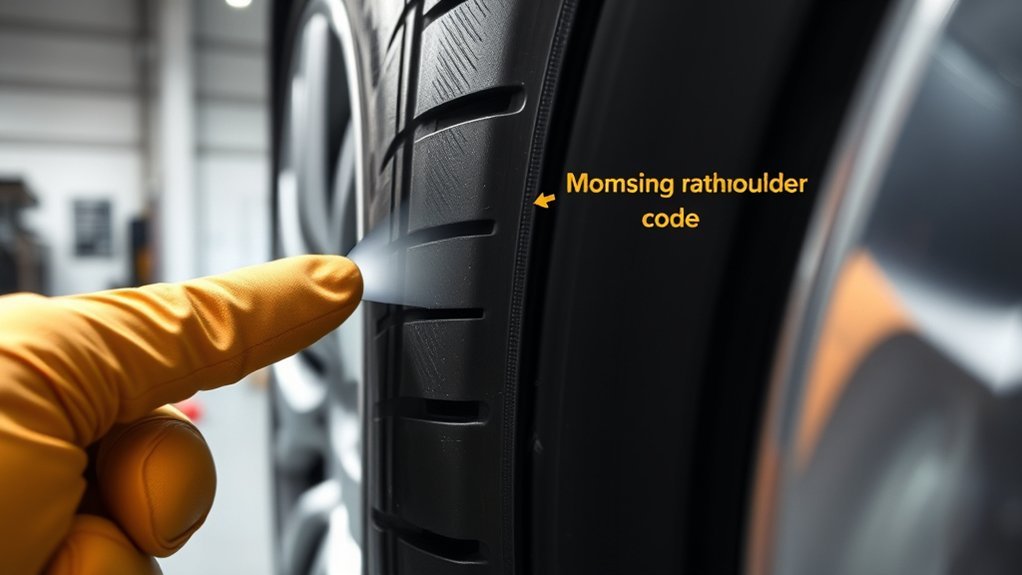
You can find your tire rating in three main places: the tire sidewall, the driver’s door jamb placard, and your owner’s manual. Check all three before buying replacement tires, because the right tire must match your vehicle’s required size, load index, speed rating, and inflation pressure.
Sidewall Code Location
Look at the outer sidewall for the tire size and service description. In a code like 225/50R17 98W, each section has a specific meaning:
| Mark | Meaning | What it tells you |
|---|---|---|
| 225 | Section width | The tire is about 225 mm wide |
| 50 | Aspect ratio | Sidewall height is 50% of tire width |
| R | Radial construction | The tire uses radial ply construction |
| 17 | Wheel diameter | Fits a 17-inch wheel |
| 98 | Load index | About 1,653 lb per tire |
| W | Speed rating | Up to 168 mph (270 km/h) |
Door Jamb Placard
The driver’s side door jamb usually has a tire and loading placard. This label lists the vehicle manufacturer’s recommended tire size and cold inflation pressure. Depending on the vehicle, it may also show load and speed information or direct you to the owner’s manual for approved tire specifications.
Use the placard as your first check before replacing tires. The pressure molded on the tire sidewall is not the normal daily pressure recommendation. It is the tire’s maximum pressure rating, not your vehicle’s recommended cold inflation pressure.
Owner’s Manual Details
Your owner’s manual gives the most complete tire fitment guidance. It may list approved sizes, winter tire notes, performance tire requirements, spare tire limits, and tire-pressure recommendations for different loads.
| Check | What you confirm |
|---|---|
| Owner’s manual | Approved tire sizes, speed ratings, and load guidance |
| Door placard | Factory tire size and cold inflation pressure |
| Current tire sidewall | Actual size, load index, speed rating, and tire type now installed |
| Tire professional | Fitment, seasonal use, and compatibility if you are changing tire types |
Can You Mix Different Tire Ratings?
Mixing tires with different speed ratings is not recommended unless every tire still meets or exceeds your vehicle manufacturer’s original equipment requirements. When different speed ratings are installed, the lowest speed rating controls the safe limit of the full set.
For example, if three tires are W-rated but one tire is T-rated, the vehicle should be treated as limited by the T-rated tire. The lower-rated tire may respond differently to heat, load, cornering, and braking. That can reduce predictable handling, especially during emergency maneuvers.
For the best result, use four matching tires with the same size, load index, speed rating, tire category, and tread design. This matters even more on AWD vehicles, staggered performance setups, and vehicles with sensitive stability-control systems. Understanding tire load and speed ratings helps you avoid mismatched replacement choices.
How to Choose the Right Speed Rating
To choose the right speed rating, start with the vehicle manufacturer’s recommendation, not the highest letter you can find. Your replacement tires should usually match or exceed the original equipment speed rating unless your owner’s manual, tire placard, or a qualified tire professional gives a specific approved alternative.
A W-rated tire may be the right choice if your vehicle originally came with W-rated tires or if you need a performance tire that supports the vehicle’s handling design. But a W rating may be unnecessary for many daily drivers whose vehicles call for H, T, or V-rated tires. A higher speed symbol can also come with trade-offs such as firmer ride, higher cost, or shorter tread life depending on the tire model.
Pro Tip: Match the OE speed rating first, then compare tire type, wet braking, treadwear warranty, noise rating, ride comfort, and seasonal performance. The speed letter is only one part of the tire decision.
Use this quick replacement checklist before buying:
- Confirm the exact tire size on the door placard or owner’s manual.
- Match or exceed the required load index.
- Match or exceed the required speed rating.
- Choose the right tire type for your climate, such as all-season, all-weather, summer, or winter.
- Avoid mixing tire models or speed ratings unless the vehicle manufacturer allows it.
- Keep the tires inflated to the vehicle’s recommended cold pressure.
- Replace damaged, aged, or unevenly worn tires before relying on high-speed capability.
When comparing models, consider UTQG rating, wet traction, temperature grade, comfort, and warranty details. A tire’s treadwear warranty can help set expectations, but actual life depends on alignment, rotation, inflation, driving style, climate, and road surface.
[Products Worth Considering]

AstroAI AIRUN H is a compact 12V tire inflator designed for fast, convenient inflation with an easy-to-read digital pressure gauge. Set your target pressure with programmable controls and let the auto shut-off turn off the pump when the preset is reached. It also includes a backlit screen and LED flashlight for nighttime use, with a ToughUltra durability design for longer service life.

Measure tire tread depth quickly and accurately with this LUMITECO dial gauge that reads in 1/32" increments up to 14/32". The color-coded green/yellow/red zones make it easy to judge tire wear and know when replacement is needed. A rugged, compact design with a protective pouch helps keep the gauge ready for use on cars, trucks, motorcycles, and more.

This manual duck head tire changer kit makes tire installation and removal simpler by letting you embed the duck head into the tire with applied pressure. The integrated design and durable steel construction help reduce friction and improve efficiency and safety during use. Suitable for 16–21 inch wheels, it’s convenient for cars, trucks, SUVs, and ATV tires, with 24-hour after-sales support.
Frequently Asked Questions
Is W or V better for tires?
W is higher than V because it is rated up to 168 mph, while V is rated up to 149 mph. That does not automatically make W better for every driver. The better choice is the rating your vehicle manufacturer recommends, combined with the right tire type, load index, weather performance, and tread design.
What does 94V and 94W mean on a tire?
In 94V or 94W, the number 94 is the load index, which equals about 1,477 lb per tire. The letter is the speed rating. V is rated up to 149 mph, while W is rated up to 168 mph. Choose the one that matches or exceeds your vehicle’s required specification.
What is a 95W tire?
A 95W tire has a 95 load index, which equals about 1,521 lb per tire, and a W speed rating, which means up to 168 mph under controlled test conditions. It must still be the correct size and type for your vehicle.
What does 225/50R17 98W mean?
225/50R17 98W means the tire is 225 mm wide, has a sidewall height equal to 50% of its width, uses radial construction, fits a 17-inch wheel, has a 98 load index of about 1,653 lb per tire, and carries a W speed rating of up to 168 mph.
Can I replace W-rated tires with V-rated tires?
Only do this if your vehicle manufacturer allows a V-rated replacement for your exact vehicle and tire size. If the vehicle originally requires W-rated tires, stepping down to V may reduce the tire set’s speed capability and may affect handling response. Check the owner’s manual, door placard, and a qualified tire professional before changing ratings.
Does a W speed rating mean better grip?
Not by itself. A W rating shows high-speed capability, but grip depends on tread compound, tire category, tread pattern, temperature range, road surface, and tire condition. A W-rated summer tire may grip well in warm weather but perform poorly in freezing temperatures or snow.
Conclusion
When you see a W on a tire, it means the tire is rated up to 168 mph (270 km/h) under controlled test conditions. The rating appears after the load index, such as 94W, 95W, or 225/50R17 98W. For safe replacement, match your vehicle’s required tire size, load index, speed rating, and inflation pressure. A W rating can be important for performance vehicles, but it is never a reason to ignore speed limits, tire condition, road conditions, or manufacturer guidance.
Sources
- Discount Tire: Tire Speed Ratings and How to Choose the Right Tires — supports W = 168 mph, speed-rating location after load index, and lowest-rating guidance when tires are mixed.
- Goodyear: Tire Speed Rating Chart — supports common speed-rating categories and tire sidewall interpretation.
- NHTSA: Tires — supports tire safety, tire maintenance, inflation, and replacement awareness.
- 49 CFR § 571.110: Tire Selection and Rims for Motor Vehicles — supports vehicle tire placard and tire-selection requirements.
- 49 CFR § 575.104: Uniform Tire Quality Grading Standards — supports UTQG treadwear, traction, and temperature context.