
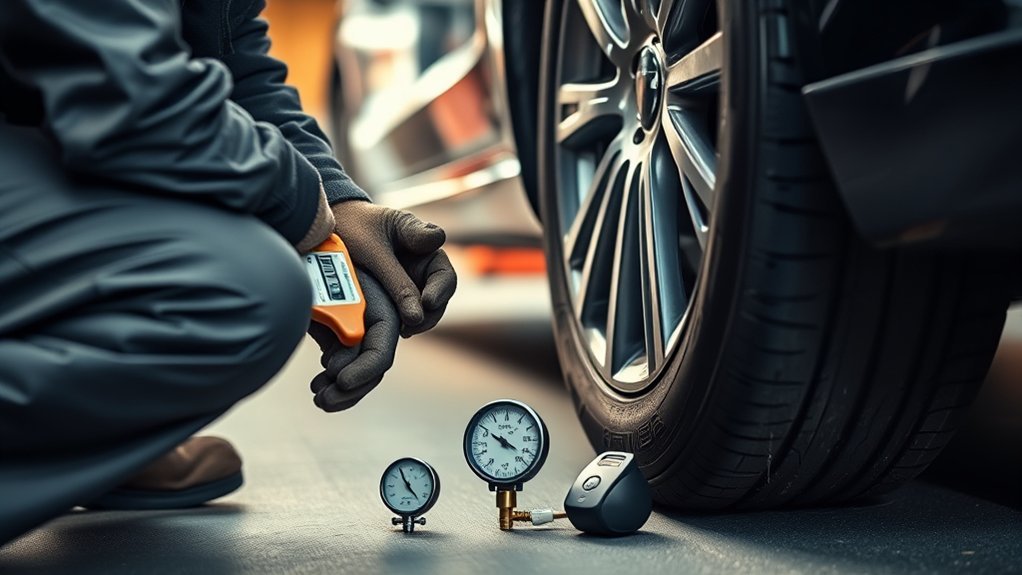
Check your tires when they’re cold, and keep pressure at the door placard or owner’s manual spec. Measure tread depth across each tire; replace them at 2/32 inch or before wear bars appear. Inspect sidewalls for cracks, cuts, or bulges that signal hidden damage. Look for uneven wear that points to alignment or inflation problems. Rotate tires on schedule, and replace any tire that’s aged out or unsafe—you’ll see how each check works together.
Key Takeaways
- Check tire pressure when cold and match it to the manufacturer’s recommended setting.
- Measure tread depth across each tire and replace tires before reaching wear bars or 2/32 inch.
- Inspect sidewalls for cracks, cuts, bulges, or dry rot that could indicate dangerous damage.
- Look for uneven wear patterns that may signal alignment or inflation problems.
- Rotate tires regularly and replace them by age or when worn, even if tread remains.
[Products Worth Considering]

Monitor tire tread wear with a smart, color-coded depth gauge that shows clear condition ranges at a glance. The bar is range marked for fast, easy readings, helping you maintain safer traction and performance. Each gauge is portable with a pocket clip, and the set includes 20 units for daily use and sharing.

The SAFELIFE dial tire tread depth gauge measures tread depth in 1/32 inch increments with clear, easy-to-read 2-inch dial face. Color zones using a traffic light system help you quickly judge whether tread is low, marginal, or ample for safer driving. Built with a durable zinc cast body and a metal detect probe for precise, comfortable use across cars, motorcycles, trucks, and buses.

Measure tire tread depth quickly and accurately with this LUMITECO dial gauge that reads in 1/32" increments up to 14/32". The color-coded green/yellow/red zones make it easy to judge tire wear and know when replacement is needed. A rugged, compact design with a protective pouch helps keep the gauge ready for use on cars, trucks, motorcycles, and more.
Check Tire Pressure Before You Drive

Check your tire pressure before you drive, because even a small drop can affect handling, braking, and fuel economy.
You should verify tire pressure when the tires are cold, ideally before the vehicle has been driven or after it’s sat for at least three hours.
Use an accurate gauge, remove each valve cap, and compare the reading with the manufacturer’s recommended value on the door placard or owner’s manual.
If the pressure’s low, add air in small increments and recheck. If it’s high, release air gradually until you reach the target.
Consistent tire pressure helps your tires maintain their designed contact patch, supports stable steering response, and reduces heat buildup.
Make this check part of your routine before long trips and weekly commuting.
Proper inflation isn’t just a maintenance detail; it’s a direct factor in driving safety and overall vehicle control.
Measure Tire Tread Depth for Grip
Tire pressure affects how the tread meets the road, but tread depth determines how well that contact patch can channel water, bite into snow, and maintain traction. You should measure it at several grooves across each tire, since uneven tread wear can hide a weak spot and reduce grip performance.
Tire pressure shapes contact, but tread depth controls water channeling, snow bite, and traction.
Use a tread depth gauge for the most accurate reading, or compare the tread blocks to the wear bars molded into the grooves. If the tread reaches those bars, replace the tire. For road use, deeper tread generally improves wet-weather control, while shallow tread raises stopping distances and hydroplaning risk.
- Check all four tires, not just one.
- Measure in the center and on both shoulders.
- Record readings to track tread wear over time.
- Replace tires before legal minimums become the limit.
Inspect Tire Sidewalls for Cracks and Bulges
Inspect the tire sidewalls for visible cracks, cuts, or dry rot, since these defects can weaken the casing and reduce structural integrity.
You should also check for bulges or blisters, which often indicate internal damage and a possible failure point.
If you find either condition, replace the tire before you continue driving.
Spot Sidewall Cracks
Even if the tread looks fine, sidewall damage can quickly make a tire unsafe, so you should examine the outer rubber for small cracks, cuts, bulges, or blisters. Use bright light and rotate each wheel slowly to spot splits that follow the carcass cords.
Check closely near the bead, lettering, and scuffed areas, because tire age and seasonal changes can harden rubber and open fine fractures.
- Look for shallow surface crazing.
- Compare both sides for uneven wear.
- Wipe away dirt before inspection.
- Replace tires showing deep cracking.
If you find cords, exposed fabric, or cracks wider than a hairline, schedule replacement soon.
Don’t ignore repeated cracking on the same tire; it signals material fatigue that reduces structural strength and increases failure risk in service.
Check For Bulges
Bulges along the sidewall usually mean the tire’s internal structure has failed, so you should treat any raised area as a serious safety issue.
You should inspect both sidewalls in bright light, rotating the tire slowly to expose the full circumference. Feel for soft spots, uneven swelling, or visible cords beneath the rubber.
Common bulge causes include impact damage from potholes, curb strikes, overload, and chronic underinflation, which stress the carcass and separate internal layers.
If you find a bulge, remove the tire from service immediately and have a qualified technician evaluate it.
For bulge prevention, maintain correct pressure, avoid overloading, and drive carefully around road hazards.
Regular inspections let you catch damage early and reduce the risk of sudden blowouts.
Spot Uneven Tire Wear Early
When you catch uneven tire wear early, you can often prevent faster tread loss and identify alignment, inflation, or suspension problems before they worsen. Inspect each tire’s tread blocks, shoulders, and center rib for patterns that reveal tire alignment issues or pressure imbalance.
Use a tread depth gauge at several points across the width, and compare left to right. You should also note how your driving habits, such as hard cornering or frequent curb strikes, affect wear patterns.
- Feathered edges can indicate toe misalignment.
- Excess shoulder wear often points to low pressure.
- Center wear usually suggests overinflation.
- Cupping can signal worn suspension components.
Document any irregularity and check the spare if you carry one. If one area wears faster, schedule a professional inspection promptly.
Early detection helps you keep handling predictable and avoids compounding damage that can shorten tire service life.
[Products Worth Considering]

Accurately measure tire tread depth with a calibrated gauge marked from 0 to 1 inch in 1/32 inch increments. The color-coded bar helps you quickly identify tread condition ranges, supporting safe driving for trucks, motorcycles, automobiles, and passenger vehicles.

Measure tyre tread depth precisely with a digital gauge that reads in both MM and inches, helping you monitor safe driving conditions. The large LCD screen is easy to operate, and the compact tool fits for cars, trucks, and motorcycles. It provides high accuracy with a 0-25.4mm range and includes a 1-year warranty for added peace of mind.

Milton S-921 pencil tire pressure gauge helps you maintain optimal tire pressure for passenger cars with accurate readings in PSI and kPa. It features a built-in deflator valve for convenient pressure adjustments, plus a single chuck head and nylon indicator bar for easy use on the go. Built from durable plated brass and designed for reliable performance, it’s a practical road trip and cold-weather maintenance tool.
Rotate Tires to Extend Tire Life
Once you’ve confirmed tread wear patterns, rotate the tires on a regular schedule to help the set wear more evenly and last longer. You reduce the effects of drivetrain load, steering input, and braking forces by moving each tire to a different position. This equalizes wear across the tread and preserves consistent handling.
Follow the vehicle maker’s recommended pattern, since front-wheel drive, rear-wheel drive, and all-wheel drive systems place different stresses on the tires. You should also match rotation type to tire design and size. The tire rotation benefits include improved tread life, steadier traction, and better ride consistency.
Check your owner’s manual or service schedule for the ideal rotation frequency, which often falls between 5,000 and 8,000 miles, but always defer to the manufacturer. When you rotate, inspect inflation pressure, valve stems, and wheel fasteners so you can keep the system operating within specification and maintain predictable performance.
Replace Your Tires at the Right Time
How do you know it’s time to replace a tire? You should measure tread depth, inspect sidewalls, and track age. When tread reaches 2/32 inch, grip drops sharply, especially in wet braking. Most tires also have a practical tire lifespan of six to ten years, even if the tread looks usable.
Heat, ozone, and seasonal changes accelerate rubber hardening and crack formation. Replace tires if you see bulges, cords, punctures in the shoulder, or uneven wear that rotation can’t correct.
- Check the DOT date code on every tire.
- Replace pairs or full sets to preserve handling balance.
- Don’t wait for vibration, hydroplaning, or reduced steering response.
- Match tire type to your climate and seasonal changes.
If you drive in snow or heavy rain, choose replacements before conditions worsen. Timely replacement keeps braking distances shorter and helps your vehicle maintain predictable control.
Frequently Asked Questions
How Often Should I Balance My Tires?
You should balance your tires whenever you notice vibration, uneven tire wear, or after new tire installation; many drivers also schedule balancing techniques every 5,000 to 7,000 miles to keep handling smooth and precise.
What Tire Pressure Is Best in Winter?
You’ll want your tires at the vehicle placard pressure, not lower, even in cold weather; pressure drops about 1 psi per 10°F, so check weekly to preserve tire performance and handling.
Can I Use a Spare Tire Long-Term?
No, you shouldn’t use a spare tire long-term; its spare tire longevity is limited, and safety considerations matter. You’ll usually need a full-size replacement quickly, since spares aren’t built for sustained speed, distance, or load.
Do Wheel Alignments Affect Tire Safety?
Yes—wheel alignments do affect tire safety. Like a compass in a brass age chartroom, proper wheel alignment benefits you by reducing tire wear patterns, improving grip, steering accuracy, and preventing dangerous handling or blowouts.
Should I Clean Tires With Special Products?
Yes, you should clean tires with special products. You’ll gain tire cleaning benefits by removing grime and ozone damage, and the best cleaning products protect rubber. Use pH-balanced cleaners; avoid harsh solvents that can dry or crack sidewalls.
Conclusion
By checking tire pressure, tread depth, sidewalls, and wear patterns, you keep your vehicle safer and more predictable on the road. Rotate your tires on schedule to balance wear and extend service life, and replace them when tread or damage reaches the limit. These simple checks can save you money and prevent trouble before it starts. When it comes to tire safety, an ounce of prevention is worth a pound of cure.
[Products Worth Considering]

This Dr.Roc tire valve stem puller tools set helps install or remove snap-in tubeless valve stems safely and efficiently. It includes ozone-resistant EPDM snap-in valve stems, a valve stem installer, and a valve core remover for quick core removal or installation during tire service. Designed for reliable tubeless tire repair on motorcycles, ATVs, lawn equipment, cars, and trucks.

ETENWOLF T300 is a calibrated digital tire pressure gauge designed for reliable readings across low and high pressure ranges. It includes thermal compensation for stable performance in extreme cold or heat, an LED light for visibility, and an auto shut-off to help preserve battery life. Ideal for pickups, RVs, and heavy-duty vehicles, it delivers accurate PSI measurements with sturdy durability.

This 100-piece set of snap-in tubeless tire valve stems is designed for standard 0.453 in (11.5 mm) rim holes and helps maintain reliable, steady tire pressure. Made with ozone-resistant rubber and brass cores, the valves are built for durability and long-term use. Easy to install by hand, they support safe driving and are suitable for cars, light trucks, trailers, and more.
