
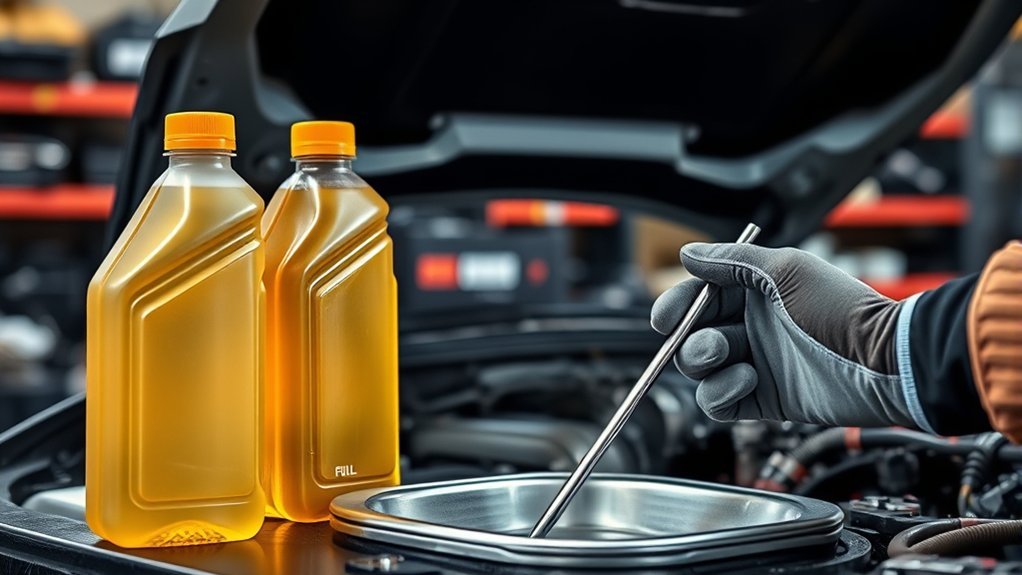
Quick Answer
Use 0W-16 when your engine specifies 0W-16 and 0W-20 when it specifies 0W-20. Both meet the same 0W cold-temperature classification, but 0W-20 is a higher viscosity grade when hot. Do not switch grades for summer, towing, mileage, or extra “protection” unless your owner’s manual permits it.
Last checked: October 5, 2026. Dates and figures were verified against official sources.
Key Takeaways
Key Takeaways
- The 0W part means both oils meet SAE requirements for the same winter-viscosity grade; it does not mean every 0W oil has identical cold-flow behavior.
- The main difference is the hot-viscosity grade: SAE 16 is lower-viscosity than SAE 20 under the conditions used to classify engine oils.
- A hotter climate or heavier driving does not automatically justify changing from 0W-16 to 0W-20; use an alternative only when the manufacturer allows it.
- For current passenger-car oils, ILSAC GF-7B applies only to SAE 0W-16, while 0W-20 can qualify under GF-7A.
- Brand name matters less than choosing the correct viscosity plus the API, ILSAC, and any automaker specification required for your exact vehicle.
[Products Worth Considering]

Universal magnetic jack pad with aluminum grooved design to protect vehicle pinch welds during lifting. Durable nylon pad inserts are upgraded and secured with screws to resist damage and keep in place. Designed to fit most single vehicle pinpoint welds for safer, stable jacking when changing tires, repairs, or performing oil changes.

Keep your tires properly inflated with this analog VONDIOR tire pressure gauge, designed for fast, easy readings without batteries. The swiveling, two-axis hose and large glow dial help you measure at any tire angle with instant visibility. Built with a protective rubber shield, it supports durable, low-maintenance use for cars and trucks.

This universal magnetic jack pad is designed to protect pinch welds when lifting vehicles, helping prevent seam damage or warping. Crafted from solid aluminum with a nylon pad insert, it provides reinforced structural support and a secure fit for most single-vehicle pinch welds. Slotted for strong magnet holding, it supports safe jacking for cars, SUVs, trucks, and more.
Which Oil Does Your Engine Need?
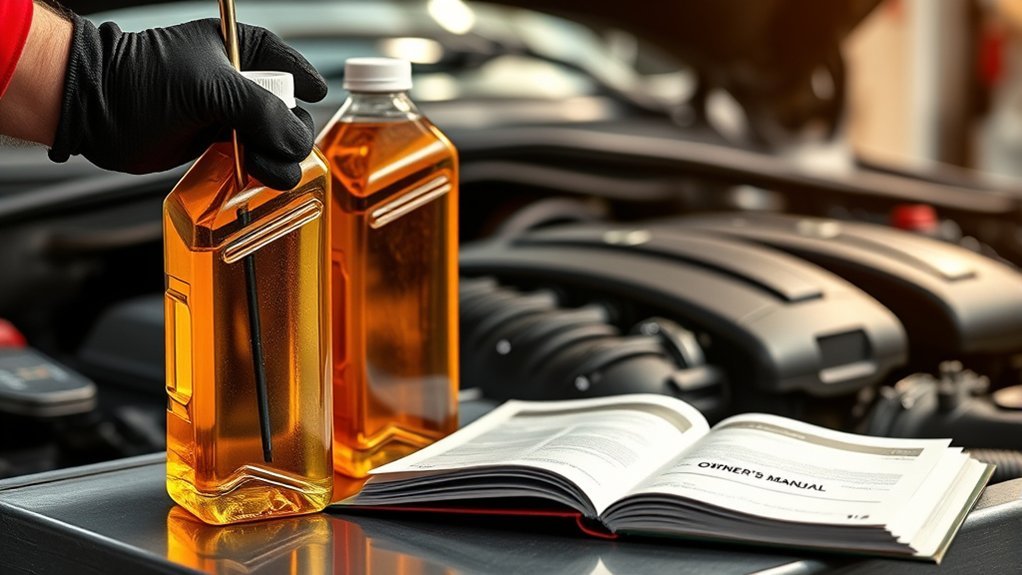
Your engine needs the viscosity and performance specification listed by its manufacturer. Check the owner’s manual, oil-fill cap, and any model-specific maintenance information before choosing between 0W-16 and 0W-20. The correct answer can vary by engine, model year, and market even when two vehicles look similar.
Do not choose by viscosity alone. The bottle may also need to meet an API or ILSAC performance category and, on some vehicles, an automaker-specific approval. These requirements cover properties that the SAE viscosity grade itself does not describe, such as deposit control, wear performance, low-speed pre-ignition protection, and fuel-economy testing.
If your manual gives one viscosity only, stay with it. If it lists more than one grade, use the conditions and limits printed in that manual rather than making a general “thicker is safer” or “thinner is more efficient” assumption.
How 0W-16 and 0W-20 Differ
0W-16 and 0W-20 share the same 0W winter grade, but their high-temperature viscosity classifications differ. SAE J300 is the standard that defines engine-oil viscosity grades in rheological terms; it does not, by itself, rate an oil’s total wear protection, cleanliness, or additive quality.
That distinction matters because the second number is not a simple quality score. A higher number is not automatically “better,” and a lower number is not automatically “too thin.” The engine is validated around a particular viscosity range and performance specification.
| Factor | 0W-16 | 0W-20 |
|---|---|---|
| Winter grade | 0W | 0W |
| Hot-viscosity grade | SAE 16 | SAE 20 |
| Relative hot viscosity | Lower | Higher |
| Current ILSAC category, when applicable | GF-7B | GF-7A |
| Best use | Engines that specify or approve 0W-16 | Engines that specify or approve 0W-20 |
Because both oils carry the 0W rating, they must satisfy the low-temperature limits for that winter grade. Individual formulations can still have different measured viscosities, additive packages, volatility, and performance approvals, so the shared 0W label does not make the oils interchangeable.
When 0W-16 Is the Better Choice
0W-16 is the better choice when the manufacturer specifies 0W-16. Engines approved for it are designed and validated to operate with that lower hot-viscosity grade while meeting the required durability, emissions, and fuel-economy targets.
Lower-viscosity oil can reduce viscous drag and pumping losses, which is one reason automakers use grades such as 0W-16 in efficiency-focused gasoline and hybrid powertrains. That benefit only matters when the engine is designed for the grade; using 0W-16 in an engine that requires 0W-20 is not a safe way to chase a small fuel-economy gain.
For passenger-car gasoline oil standards, the American Petroleum Institute’s Motor Oil Guide lists ILSAC GF-7B as the current category that applies only to SAE 0W-16. The same guide says GF-6B became obsolete on October 1, 2026 and directs users to GF-7B where GF-6B was recommended.
That does not mean every vehicle requiring 0W-16 automatically accepts every bottle labeled GF-7B. Your manual may also name an API category or another manufacturer requirement, so match all required specifications.
When 0W-20 Makes More Sense
0W-20 makes more sense when your engine specifies 0W-20 or explicitly allows it as an alternative. It is a higher hot-viscosity grade than 0W-16, but that alone is not a reason to switch because of summer heat, highway driving, towing, or engine age.
Some manufacturers do allow a controlled substitution. For example, the 2024 Toyota RAV4 owner information specifies SAE 0W-16 but says SAE 0W-20 may be used when 0W-16 is unavailable, with a return to 0W-16 at the next oil change. That is manufacturer permission for a specific vehicle, not a general rule for every 0W-16 engine.
If your manual specifies 0W-20 and does not list 0W-16, do not step down to 0W-16 just because both oils start with 0W. The engine maker’s required viscosity takes priority over general advice about fuel economy or cold starts.
Warning: Do not change viscosity solely because the weather is hot, the engine has high mileage, or you expect heavy use. Use a different grade only if the owner’s manual or manufacturer information for your exact engine permits it.
[Products Worth Considering]

The GOOLOO A3 3000A 12V jump starter delivers fast, reliable starts for dead vehicles while also providing a built-in 150 PSI cordless tire inflator. It supports gas and diesel engines up to 9.0L/6.5L and includes multiple inflation modes with smart shutoff and an LED display for convenient pressure control. A high-efficiency BMS provides 10 safety protections, and the unit also functions as a flashlight and device-charging power bank.

These aluminum alloy tire valve stem caps with an O-ring seal help protect valve stems from corrosion while adding a clean, stylish look to your vehicle. The universal fit works across cars, trucks, motorcycles, bicycles, and more, making them an easy upgrade for everyday driving and off-road use. Installation is quick, and the included four-pack keeps all your tires dressed and protected.

This metal-free wheel and tire cleaning brush uses dense, fluffy synthetic wool to safely clean rims, spokes, fenders, and engine areas without worrying about damaging surfaces. Its flexible, comfortable design helps you reach detailed areas while maintaining durability, and the extra absorbent fibers work well with wheel spray cleaners for faster cleanup. Reusable and washable performance helps prevent grime and build-up for cleaner vehicles and easier maintenance at home.
How to Choose the Right Oil
Choose engine oil by matching viscosity, performance category, and vehicle-specific approval in that order. This is more reliable than choosing by brand, price, “full synthetic” wording, or the belief that a thicker oil always protects better.
- Confirm the exact engine. The same model can use different engines, and oil requirements can change by model year or market.
- Read the specified viscosity. If the manual says 0W-16, use 0W-16. If it says 0W-20, use 0W-20. If it lists alternatives, follow the stated conditions.
- Match the required performance standard. Look for the API, ILSAC, and any automaker specification named by the manufacturer.
- Check the certification mark on the bottle. Current ILSAC passenger-car oils use different API certification marks for GF-7A and GF-7B, so the label helps confirm you have the intended category.
- Follow the vehicle’s oil-change schedule. Drain intervals depend on the vehicle and service conditions, not on whether the bottle says 0W-16 or 0W-20.
The SAE J300 viscosity standard defines viscosity classification in rheological terms only. In other words, a viscosity grade tells you how the oil fits defined flow and viscosity limits; it does not replace the separate performance and manufacturer requirements your engine may need.
High mileage is also not a reason by itself to move to a thicker grade. If an older engine is consuming oil, leaking, or showing low oil pressure, diagnose the cause and use only a viscosity the manufacturer permits unless a qualified technician recommends a different approach for that specific engine.
Frequently Asked Questions
Can I Mix 0W-16 and 0W-20 Oils?
You should avoid mixing 0W-16 and 0W-20 for a planned oil change because the mixture no longer represents the exact viscosity grade your engine specifies. API guidance says that if mixing oil brands is necessary, use the same viscosity grade and API service category to maintain performance. Follow your vehicle manual for any emergency top-off guidance.
Does Oil Brand Matter as Much as Viscosity?
No. The brand name is less important than meeting the exact viscosity, API or ILSAC performance category, and any automaker approval required by your vehicle. A reputable oil that carries the required certifications is a better choice than a familiar brand in the wrong viscosity or specification.
How Often Should I Change 0W-16 or 0W-20?
Change either oil at the interval specified by your vehicle manufacturer. The correct interval depends on the vehicle, engine, driving conditions, and maintenance schedule, not simply on whether the oil is 0W-16 or 0W-20. Follow the severe-service schedule when your manual says your use qualifies.
Can Using the Wrong Oil Void My Warranty?
Using the wrong oil does not automatically erase an entire U.S. vehicle warranty. However, a manufacturer may deny coverage for damage it can show was caused by improper maintenance or an unsuitable product, so use the specified oil and keep maintenance records. Service contracts can have different terms.
Is Synthetic Oil Required for Both Viscosities?
Not because of the viscosity label alone. SAE 0W-16 and 0W-20 describe viscosity grades, while your vehicle manufacturer sets the required oil performance and any synthetic-oil requirement. Many 0W oils use synthetic base stocks, but you should follow the wording in your owner’s manual rather than assume the grade itself requires full synthetic.
Conclusion
The safest 0W-16 vs 0W-20 decision is simple: use the grade and performance specification your engine requires. 0W-16 can reduce viscous losses in engines designed for it, while 0W-20 is the correct choice where the manufacturer specifies or permits it. Do not change viscosity based on a general rule when the owner’s manual gives you an engine-specific one.
Sources
- American Petroleum Institute Motor Oil Guide: current API and ILSAC categories, GF-7A/GF-7B application, certification marks, and mixing guidance.
- SAE J300 Engine Oil Viscosity Classification: scope and purpose of the SAE viscosity classification system.
- Toyota 2024 RAV4 maintenance data: manufacturer example allowing temporary 0W-20 use when specified 0W-16 is unavailable.
- Federal Trade Commission auto warranty guidance: U.S. warranty coverage, maintenance records, and when related damage may be excluded.
”’
import re
words=re.findall(r”\b[\w’’-]+\b”, re.sub(r”<[^>]+>
[Products Worth Considering]

Upgrade your Toyota’s wheels with durable aluminum alloy valve stem caps that help protect valve cores from corrosion and direct exposure to road grime, clay, water, and snow. Rubber rings improve sealing to help prevent air leakage and maintain stable tire pressure for safer driving. These caps are easy to install or remove without tools and add a unique, stylish look to your car.
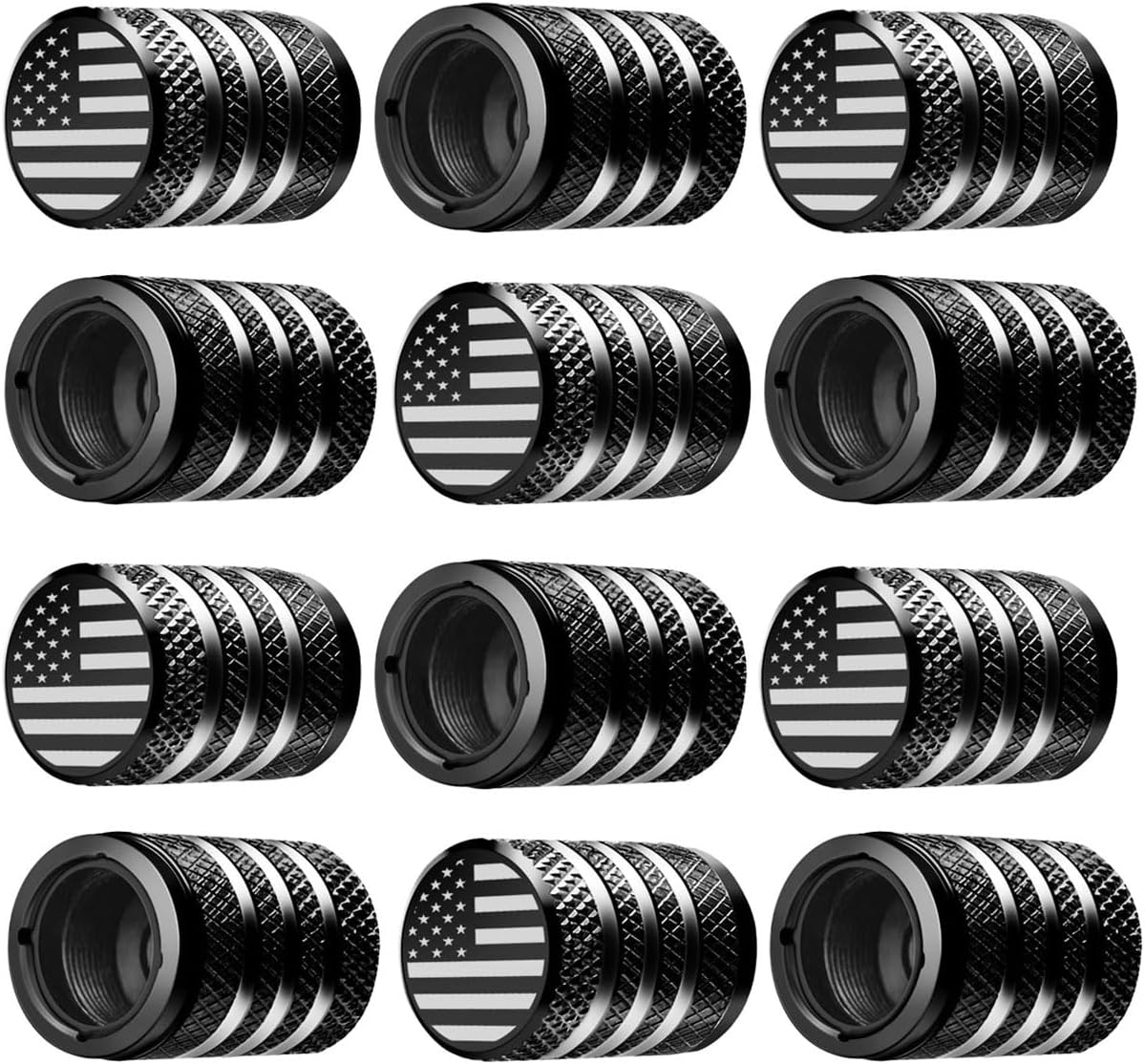
These DECURCAR valve stem caps feature a metal shell with a plastic liner to help prevent corrosion and keep your Schrader valve stems protected in wet or cold conditions. A built-in sealing ring provides leak-proof coverage to help reduce the risk of tire air loss, while the anti-seize design supports easy hand installation and removal. The anodized aluminum alloy look adds a stylish American flag emblem to your wheels.

AstroAI AIRUN H is a compact 12V tire inflator designed for fast, convenient inflation with an easy-to-read digital pressure gauge. Set your target pressure with programmable controls and let the auto shut-off turn off the pump when the preset is reached. It also includes a backlit screen and LED flashlight for nighttime use, with a ToughUltra durability design for longer service life.
