
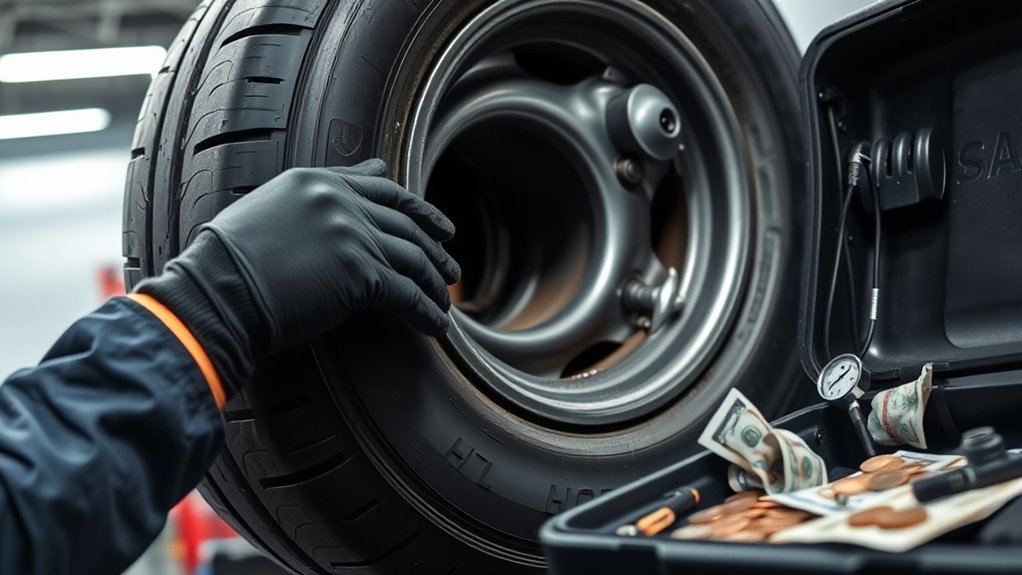
A nail or screw in the tread does not always mean you need a new tire. Tire patch cost depends on the shop, tire type, repair method, and whether your retailer includes flat repair as a free service. The important part is paying for a proper repair rather than choosing a quick outside plug simply because it costs less.
Quick Answer
A professional tire puncture repair often costs about $20 to $40 at many U.S. shops, although some retailers repair eligible flats for free. A safe permanent repair is not a patch alone: the tire should be removed, inspected internally, and repaired with both a stem or plug and an inside patch.
Last checked: October 5, 2026. Dates and figures were verified against official sources.
Key Takeaways
- A repairable puncture must generally be in the tread area and no larger than 1/4 inch (6 mm).
- USTMA guidance requires removing the tire from the wheel so the inside can be inspected.
- A plug alone or patch alone is not the industry-recommended permanent repair; the injury needs both a filler stem and an inner-liner patch.
- Sidewall, shoulder, overlapping-repair, or serious run-flat damage usually means replacement instead of repair.
- Retailer benefits and road-hazard coverage can reduce your out-of-pocket repair cost to zero.
How Much Does a Tire Patch Cost?

For a standard passenger-car puncture, a professional repair commonly falls around $20 to $40, although there is no nationwide fixed rate. Published shop prices show why the amount varies: Firestone Complete Auto Care says a simple repair on a basic touring tire can start around $30, while specialty tires can cost more.
You may also pay nothing. Discount Tire currently advertises free flat repair for most repairable punctures, even when the tire was bought elsewhere, subject to inspection and USTMA repair guidelines.
That means the cheapest safe option is not necessarily the shop advertising the lowest patch price. Ask whether the quoted service includes dismounting the tire, inspecting the inside, filling the puncture channel, sealing the inner liner, remounting the tire, checking pressure, and verifying that the repair does not leak.
Shops often use the word “patch” as shorthand for flat-tire repair. However, a proper modern puncture repair usually involves a combination patch-and-stem repair, not simply sticking a patch over the hole.
[Products Worth Considering]

Replace worn or malfunctioning GM TPMS sensors with this 433MHz pre-programmed sensor set designed for compatibility with many Chevrolet, Buick, GMC, and Cadillac models. It includes guidance for proper OBDII relearning/pairing after installation and supports reliable long-term operation with a high-performance CR2032 battery. Quality tested for durability and performance to help restore accurate tire pressure monitoring.
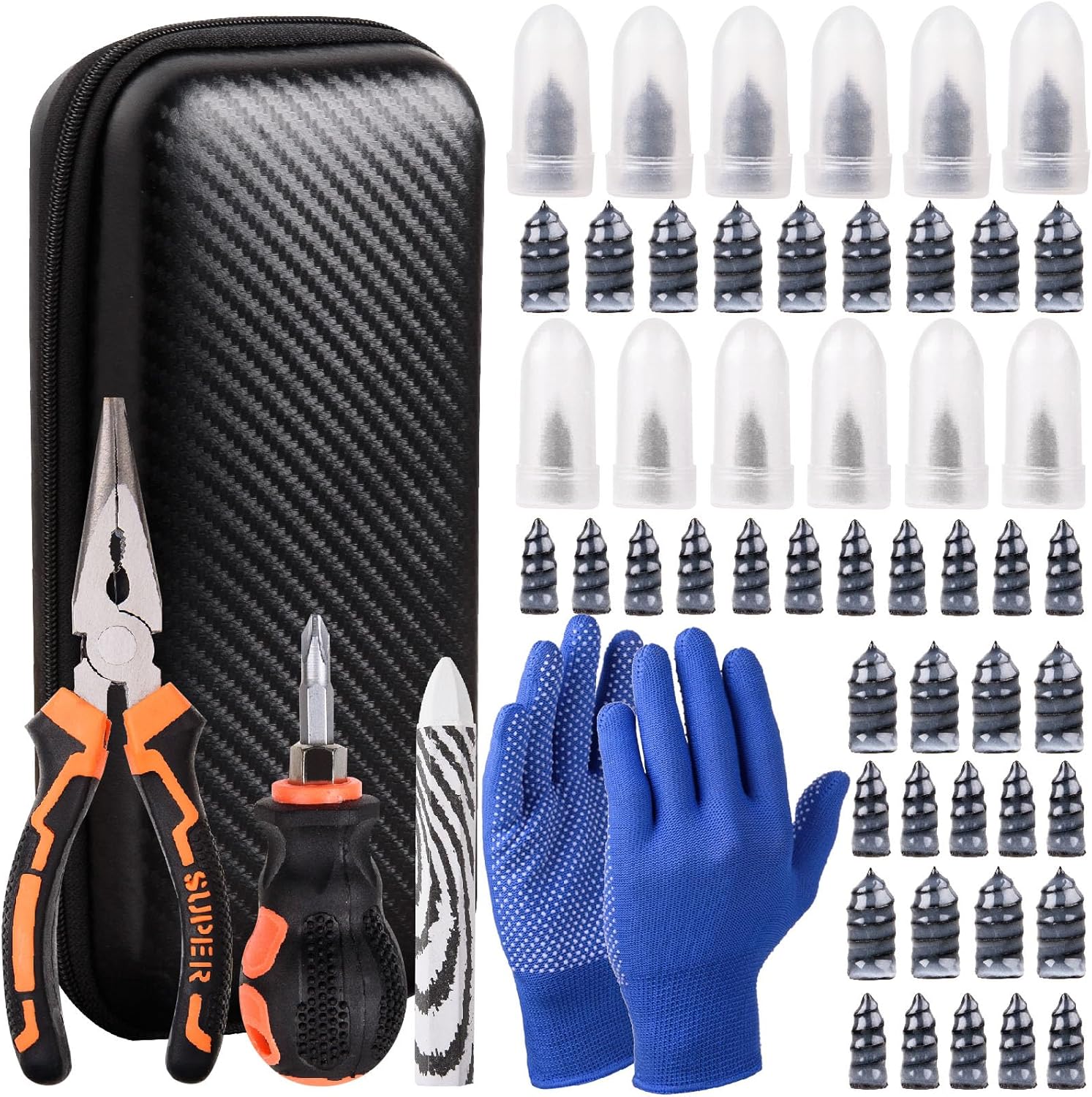
This tire sidewall puncture repair kit fixes flats fast without removing the tire, helping you get back on the road in minutes. It includes self-tapping repair nails, essential tools, gloves, and a portable storage bag for convenient roadside use. Designed for tubeless tires, it helps create a tight, leak-resistant seal for cars, motorcycles, trucks, SUVs, and ATVs.
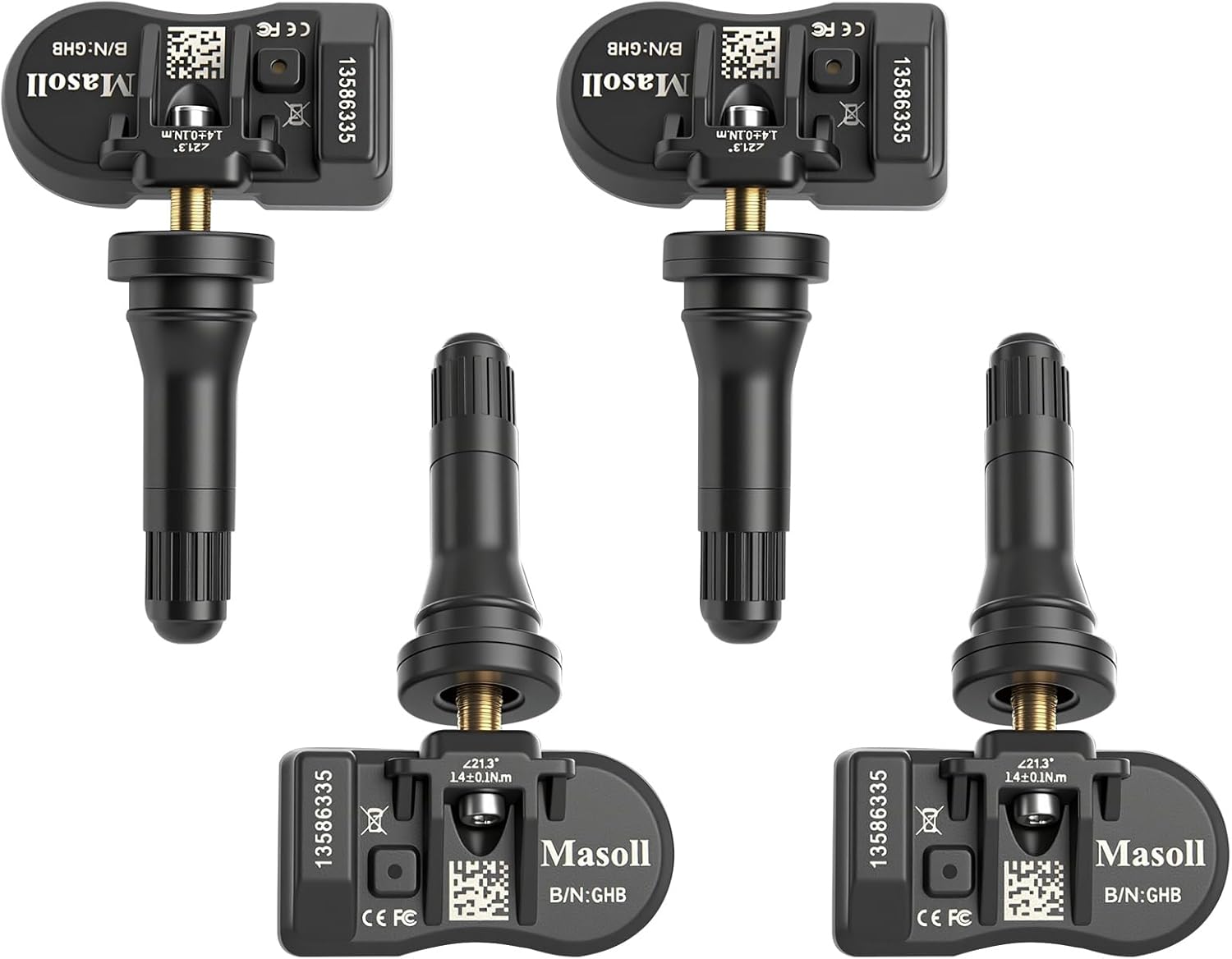
Masoll TPMS sensors are designed for most GM vehicles after 2006, helping you clear tire pressure warnings with OEM-level 315/433MHz compatibility. The 4-pack includes pre-programmed sensors, but re-learning is required after installation using a GM TPMS relearn tool or scan tool. Built with a dual-antenna design and a long-life CR2050 battery, these sensors deliver reliable performance in extreme temperatures with corrosion-resistant valve construction.
What Affects Tire Patch Prices?
The final price depends mostly on how much work the technician must perform and what type of tire is being serviced. A basic puncture on a conventional passenger tire is usually simpler than work involving a specialty, performance, low-profile, or difficult-to-service tire.
| Factor | Price impact |
|---|---|
| Labor and inspection | Dismounting, internal inspection, repair, remounting, and leak checking add shop time |
| Tire type | Specialty or performance tires may cost more to service |
| Damage location | Determines whether the tire can be repaired at all |
| Repair method | A proper internal combination repair takes more work than an outside plug |
| Retailer coverage | Free-service benefits or road-hazard coverage may reduce the cost |
Balancing, valve-stem work, TPMS service, mobile service, or other problems found during inspection may also change the total. Ask what is included before comparing two quotes because a cheap outside plug is not equivalent to a full professional puncture repair.
When Is Patching a Tire Safe?
A tire can usually be repaired only when the injury is small, confined to the approved tread area, and the rest of the tire remains structurally sound. The U.S. Tire Manufacturers Association puncture-repair procedure limits passenger and light-truck puncture repairs to injuries no larger than 1/4 inch (6 mm) and requires the tire to be removed from the wheel for inspection.
- The puncture is no larger than 1/4 inch (6 mm).
- The injury is in the repairable tread area, not the shoulder or sidewall.
- The tire can be removed and inspected for hidden internal damage.
- The new repair will not overlap another repair.
- The tire has not suffered internal damage from being driven flat or severely underinflated.
- The tread and overall tire condition remain suitable for continued service.
Michelin’s tire-repair guidance also says the puncture must stay within the tread, measure no more than 1/4 inch, and be inspected with the tire removed from the wheel. Michelin does not recommend repairing tires worn to 2/32 inch or less.
Warning: Do not continue driving on a flat or severely underinflated tire simply to reach a repair shop. Driving without enough air can damage the sidewall and internal structure, turning an otherwise small tread puncture into an unrepairable tire.
Visible bulges, exposed cords, deep cuts, severe cracking, belt damage, or sidewall injuries are also reasons to stop treating the problem as a simple puncture.
Note: A trained tire technician should make the final repairability decision after inspecting the tire. Run-flat, speed-rated, foam-lined, and other specialty tires may have additional manufacturer-specific repair restrictions.
Should You Patch, Plug, or Replace?
If the puncture is repairable, the safest permanent option is generally a combination repair that both fills the puncture channel and seals the inner liner. Choosing between a patch, plug, and replacement is therefore less about preference and more about whether the proposed method follows accepted repair procedures.
A patch by itself seals the inner liner but does not fill the path made through the tread. An outside plug fills the hole but does not let a technician inspect and properly seal the inner liner. USTMA guidance says neither a plug alone nor a patch alone is the proper complete repair.
A proper permanent puncture repair fills the injury with a stem or plug and seals the inner liner with a patch.
An outside string plug can serve as an emergency measure when you have no safer immediate option, but it should not replace professional inspection. The permanent repair should be performed with the tire off the wheel.
Replacement is the safer choice when the puncture reaches the shoulder or sidewall, exceeds the repair-size limit, overlaps an existing repair, or inspection finds structural damage. Tires that were driven flat may also require replacement even when the original nail hole looks small.
Speed-rated tires deserve one extra check. USTMA advises following the individual tire maker’s repair policy, and Goodyear’s puncture-repair bulletin includes additional limits for retaining the speed rating on certain tires.
What Happens During a Professional Tire Repair?
A proper repair takes more work than pushing a plug into the tread from outside. The technician needs access to the inner liner so hidden damage can be found before the tire goes back into service.
- Locate the leak. The shop confirms where air is escaping and checks the exterior condition.
- Remove the wheel and tire. The tire must then be dismounted from the wheel for a proper internal inspection.
- Inspect the inside. The technician checks the inner liner, puncture path, sidewall, and surrounding structure for damage that was not visible externally.
- Prepare the injury. If the tire qualifies, the puncture area and inner liner are prepared according to the repair-material procedure.
- Fill and seal the puncture. A rubber stem or plug fills the injury channel while an internal patch seals the liner.
- Remount and check the tire. The tire is reinstalled, inflated correctly, and checked for leaks; balancing and TPMS checks may be performed as needed.
This process explains why a professional tire patch cost is mostly a service charge rather than the price of a small piece of repair material. You are paying for inspection, correct repair preparation, mounting work, and confirmation that the tire is fit to return to service.
[Products Worth Considering]

TP-M13W combination repair unit kit includes wrapped stems with matching patches for fast, reliable tire repairs. It’s suitable for both radial and bias ply tires and is designed for chemical or heat vulcanization. Gray vulcanizing gum with blue backing helps create a strong bond, with the stem portion wrapped for added effectiveness.

This self-service tire repair nail kit includes 60 pieces (30 small + 30 large) to help seal punctures quickly without needing an auto shop visit. The nails are designed to fit different hole sizes and provide a tight connection with sealing glue to help prevent air and water intrusion. Suitable for cars, motorcycles, trucks, and other vehicles, it’s an easy, efficient way to patch roadside tire damage.

Marsflex brand TPMS replacement sensors help restore tire pressure monitoring for compatible Toyota, Lexus, Scion, and Pontiac models. Each sensor is pre-programmed for the vehicle application and includes a long-life battery for up to 8 years of normal use. Designed to replace common OE numbers and requires relearning using a TPMS scan tool after installation.
Where Can You Get a Tire Patch?
You can get a proper puncture repair at a tire retailer, qualified auto repair shop, or dealership service department equipped to remove the tire from its wheel. The key question is not simply whether the business “patches tires,” but whether it performs an inside inspection and a complete combination repair.
- Tire shops: often the most convenient choice because puncture inspection, mounting, balancing, and tire-specific equipment are part of their regular work.
- Auto repair garages: useful if your vehicle is already there for other maintenance, provided the shop follows accepted tire-repair procedures.
- Dealership service centers: useful for specialty tires or when vehicle- or tire-manufacturer repair policies need to be followed closely.
Before approving the work, ask whether the tire will be removed from the rim and repaired from the inside. If the answer is simply “we’ll plug it from the outside,” that is not the complete permanent procedure recommended by USTMA.
For most drivers, DIY string-plug kits are best treated as emergency equipment rather than a substitute for professional repair. Proper internal repair requires tire-removal equipment and an inspection you cannot perform while the tire remains mounted on the wheel.
Can a Tire Patch Be Free or Covered by Warranty?
Yes. Your out-of-pocket tire patch cost can be zero when a retailer offers complimentary flat repair or your tire is covered by a qualifying service or road-hazard program. Coverage varies widely, so the place where you purchased the tire matters.
For example, Discount Tire currently offers free repair for most qualifying punctures. Les Schwab also includes free flat repairs on covered tires and describes its professional repair as a repair intended to last for the life of the tire.
Road-hazard programs can help as well. The Costco road-hazard warranty says eligible treadface injuries are repaired according to USTMA standards, while nonrepairable covered road-hazard damage may qualify for prorated replacement credit under its terms.
Do not assume the tire manufacturer’s standard defect warranty covers a nail or road debris. Michelin states that its standard workmanship and materials warranty does not cover road-hazard cuts or punctures, although a retailer may sell or include separate road-hazard protection.
Frequently Asked Questions
How Long Does a Tire Patch Typically Last?
A properly installed combination patch-and-plug is intended as a permanent repair and can last for the tire’s remaining service life, provided the tire stays otherwise serviceable. A plug-only emergency repair does not have the same expectation. Keep checking pressure and inspect the tire if you notice new air loss.
Can a Patched Tire Be Driven on Highways?
Yes, a properly repaired tire can generally return to normal highway use if the puncture met repair limits and the tire manufacturer allows the repair. Speed-rated tires can have manufacturer-specific rules, so follow the tire maker’s policy if high-speed capability matters.
Will a Patch Affect Tire Pressure Monitoring Sensors?
Usually not. The patch is applied to the inner liner, while the TPMS sensor is normally attached near the valve stem. A shop may inspect, reset, or service TPMS if needed after the tire is remounted, but the puncture repair itself does not normally require sensor replacement.
Is a Tire Patch Covered by Warranty?
Sometimes. Standard tire manufacturer warranties often exclude road-hazard punctures, but retailer road-hazard plans or service benefits may cover repair. Check your purchase receipt or warranty terms before paying, because some tire retailers provide flat repair at no charge.
How Soon Can You Drive After a Tire Patch?
You can usually drive once the professional repair is complete, the tire is remounted, inflated correctly, and checked for leaks. There is no universal 30-to-60-minute waiting rule for every tire repair. Follow the technician’s instructions if the repair materials or tire manufacturer require anything different.
Conclusion
A professional tire puncture repair is usually far cheaper than replacing a sound tire, and many drivers will pay roughly $20 to $40 or even nothing under a retailer’s flat-repair policy. The more important question is whether the damage qualifies for repair. For a small tread puncture, choose a shop that removes the tire, inspects it internally, and performs a complete patch-and-stem repair rather than relying on an outside plug alone.
Sources
- U.S. Tire Manufacturers Association: Repairable area, 1/4-inch puncture limit, internal inspection, and patch-plus-stem procedure.
- Michelin USA tire repair guidance: Repair criteria, sidewall restrictions, tread-depth limit, and tire-removal requirement.
- Firestone Complete Auto Care: Current repair pricing example, inspection criteria, and service process.
- Discount Tire: Free flat-repair policy and USTMA-based repair procedure.
- Les Schwab Tire Centers: Covered flat-repair benefits, combination repair method, and repair longevity.
- Costco Road Hazard Warranty: Covered road-hazard repairs, repair standards, and warranty conditions.
- Michelin USA FAQs: Manufacturer-warranty exclusions for road-hazard punctures and cuts.
- Goodyear Product Service Bulletin: USTMA repair procedures and speed-rated tire repair considerations.
[Products Worth Considering]

AUTOWN’s 68-piece tire repair kit helps you fix punctures and plug flats quickly and effectively. It includes a T-handle and spiral probe tool for easy insertion, while the steel patch and plug materials are designed for strong adhesion and long-lasting airtight performance. The compact case makes it convenient for roadside repairs across a wide range of vehicles.

Vigorder rubber cement glue delivers superior adhesion and cures quickly within about 30 seconds for seamless rubber bonding. Once cured, it helps provide a strong, durable, waterproof seal that holds up to vehicle weight, pressure, and heat. Suitable for cars, motorcycles, trucks, bicycles, and off-road tires, it’s designed for emergency patch and maintenance repairs.

Replace your worn or missing TPMS sensors with pre-programmed, direct-fit sensors for compatible Ford, Lincoln, and select Mazda models. Each sensor comes ready to activate with a scan tool, helping restore accurate tire pressure monitoring and trouble-free installation. Built with a long-life CR2032 battery and tested before factory release, this set provides dependable performance with a one-year warranty.
