

Yes, Discount Tire patches most repairable flat tires for free, even if you did not buy the tire there. The catch is that the tire must pass a safety inspection: the puncture needs to be in the repairable tread area, the casing must still be sound, and the tire cannot have damage that makes a repair unsafe.
Quick Answer
Discount Tire offers free flat tire repair for most punctures that meet its safety standards, including tires purchased elsewhere. A technician removes and inspects the tire, then uses an internal patch-and-plug repair when appropriate. Sidewall, shoulder, badly damaged, excessively worn, or otherwise unsafe tires must be replaced instead.
Key Takeaways
- You do not have to buy the tire from Discount Tire to qualify for its free flat-repair service.
- Repairable punctures generally must be confined to the tread and pass an inside-and-out inspection.
- Discount Tire uses a combination patch-and-plug repair rather than an exterior plug alone.
- Sidewall or shoulder damage, run-flat damage, excessive wear, age, and previous repairs can make a tire nonrepairable.
- You can walk in, although an appointment may shorten your wait.
Does Discount Tire Patch Tires for Free?

Yes. Discount Tire’s flat tire repair policy says it provides free repair for most punctures that are safe to repair, even when the tire was purchased somewhere else.
The free service is not a promise that every flat can be patched. A technician first checks the puncture location, tread condition, inner liner, sidewall, previous repairs, and signs that the tire was driven while severely underinflated or flat.
If the tire passes that inspection, Discount Tire removes it from the wheel and performs an internal combination repair. If the tire fails the safety criteria, replacement is the appropriate option rather than attempting to seal an unsafe tire.
Warning: Do not assume a nail automatically means the tire is safe to drive to the shop. A tire that is rapidly losing pressure, visibly damaged, or unable to support the vehicle should not be driven farther than necessary to reach a safe location.
[Products Worth Considering]

This screw-in tire plug kit provides a fast, efficient way to repair punctures without flaring tools. Choose the correct plug size, then screw the rubber nail plug into the tire hole for a secure, sealed connection that helps prevent water intrusion. The 70-piece set is designed for universal emergency roadside use across cars, motorcycles, trucks, ATVs, bicycles, and more.

This self-service tire repair nail kit includes 60 pieces (30 small + 30 large) to help seal punctures quickly without needing an auto shop visit. The nails are designed to fit different hole sizes and provide a tight connection with sealing glue to help prevent air and water intrusion. Suitable for cars, motorcycles, trucks, and other vehicles, it’s an easy, efficient way to patch roadside tire damage.

This 60-piece tire repair nail kit provides a fast, do-it-yourself way to seal punctures on tubeless car, motorcycle, and SUV tires without removing the tire. Simply align, twist clockwise, and finish in seconds for a reliable sealing effect that helps prevent water intrusion. The kit includes tire glue and durable rubber-and-steel repair nails for strong adhesion and long-lasting repairs.
Which Punctures Qualify for Repair?
A puncture has the best chance of qualifying when it is small, located well inside the tread area, and has not caused internal or structural damage. Nails and screws through the main tread are common examples, but the final decision requires the tire to be removed and inspected.
The U.S. Tire Manufacturers Association repair guidance limits repairs to the tread area and says the tire must be removed from the wheel so the inside can be inspected. Its general maximum puncture size is 1/4 inch (6 mm).
Discount Tire’s more detailed current repair procedure is slightly stricter in its wording. Its repair criteria list an injury of 1/4 inch or larger as nonrepairable and place the repairable area at least 1/2 inch in from the edge of the tread.
| Condition | Likely Result |
|---|---|
| Small nail or screw puncture in the repairable tread area | May qualify after inspection |
| Damage in the shoulder or sidewall | Not repairable |
| Puncture around 1/4 inch or larger | Expect Discount Tire to reject the repair under its detailed criteria |
| Damage overlaps an existing repair | Not repairable |
| Tread depth of 2/32 inch or less | Not repairable |
| Tire is 10 years old or older | Discount Tire will not service it |
The tire can also be rejected if it has three or more existing repairs, a failed previous repair, a previous non-USTMA repair, or internal damage from being driven flat.
How Discount Tire Fixes Punctures
Discount Tire does more than insert an exterior plug. The company removes the tire so the puncture and inner liner can be inspected, prepares the injury, fills the puncture channel, and seals the inner liner with a patch.
That approach follows the basic industry principle that both parts of the injury need attention. The stem or plug fills the puncture channel, while the internal patch seals the inner liner so air cannot escape through the damaged area.
- Inspect the damage. The technician locates the puncture, removes the object, and checks its size, angle, and location.
- Remove and inspect the tire. The inside is checked for hidden damage that cannot be seen while the tire remains mounted.
- Prepare the puncture. The injury channel and inner liner are prepared so the repair materials can bond correctly.
- Install the repair. A rubber plug or stem fills the injury, and an internal patch seals the inner liner.
- Finish and check the repair. The excess stem is trimmed and the completed repair is inspected.
- Reassemble the wheel. Discount Tire says the tire is rebalanced, reinstalled, and tested for leaks before being returned to service.
A plug pushed in from the outside without removing the tire does not provide the same inspection or repair. USTMA specifically says a plug alone or an on-the-wheel repair is not an acceptable permanent repair.
When Discount Tire Won’t Patch a Tire
Discount Tire will refuse a patch when the tire cannot meet its safety standards. The decision depends on more than the size of the visible hole because a seemingly minor puncture can hide internal damage.
Expect replacement rather than repair when any of these conditions applies:
- The puncture reaches the shoulder or sidewall.
- The puncture falls outside Discount Tire’s approved repairable tread area.
- The injury is at or beyond the size allowed under the store’s repair criteria.
- The new repair would overlap an existing repair.
- The tire has 2/32 inch of tread or less.
- The tire is 10 years old or older by its DOT date code.
- The tire already has three or more repairs.
- A previous repair has failed.
- A previous repair was performed using a method Discount Tire considers non-USTMA-compliant.
- The tire has internal damage from being driven flat or from a severe impact.
Sidewall and shoulder damage are especially important because those areas flex and carry loads differently from the center tread. A patch cannot restore structural strength to a damaged sidewall.
[Products Worth Considering]

Vigorder rubber cement glue delivers superior adhesion and cures quickly within about 30 seconds for seamless rubber bonding. Once cured, it helps provide a strong, durable, waterproof seal that holds up to vehicle weight, pressure, and heat. Suitable for cars, motorcycles, trucks, bicycles, and off-road tires, it’s designed for emergency patch and maintenance repairs.

TP-M13W combination repair unit kit includes wrapped stems with matching patches for fast, reliable tire repairs. It’s suitable for both radial and bias ply tires and is designed for chemical or heat vulcanization. Gray vulcanizing gum with blue backing helps create a strong bond, with the stem portion wrapped for added effectiveness.

Wykodra tire plugs provide quick vulcanizing repairs for tubeless tires, helping you seal punctures and get back on the road. The industrial-strength rubber creates a long-lasting, leak-resistant bond and is designed for emergency fixes without removing the tire. Choose between two standard plug sizes with color-matched options for small to larger damage across many vehicles and off-road uses.
What Happens During a Tire Repair Visit?
Your visit starts with an inspection, not an automatic patch. The technician examines the tire and determines whether the damage meets Discount Tire’s repair requirements before beginning the repair itself.
You do not have to make an appointment. Discount Tire’s official FAQ says walk-ins are accepted, although an appointment is recommended for a faster visit.
If the puncture is repairable, the technician removes the tire from the wheel, performs the internal repair, reinstalls and rebalances the tire, inflates it correctly, and checks it for leaks. If the tire fails inspection, the shop explains why it cannot safely be repaired and discusses replacement instead.
Pro Tip: If you notice a nail or screw but the tire is still holding air, avoid pulling the object out before inspection. Removing it can cause the tire to lose pressure much faster and may leave you unable to drive safely to a repair facility.
Frequently Asked Questions
Does Discount Tire Repair Run-Flat Tires?
Some run-flat punctures may be repairable, but not every run-flat tire can be repaired. Discount Tire says repairability depends on the puncture and whether the tire was driven too far or too fast after losing pressure. Its run-flat tire guidance also notes that damage from excessive driving while flat cannot be repaired, so the tire manufacturer’s limits still matter.
How Long Does a Tire Patch Usually Last?
A correctly performed combination repair is intended to be a permanent repair, not a temporary roadside fix. How long the tire remains usable still depends on tread wear, age, inflation, loads, road conditions, and whether new damage develops elsewhere on the tire.
Do I Need an Appointment for Tire Repair?
No, Discount Tire accepts walk-ins for tire service. The company recommends making an appointment when possible because it can reduce your wait, but an appointment is not required before bringing in a flat or damaged tire for inspection.
Can Discount Tire Repair Tires Purchased Elsewhere?
Yes. Discount Tire says its free flat-repair service covers most safely repairable punctures even when you purchased the tire from another retailer. The tire still has to pass the same inspection and repairability requirements as any other tire.
Will a Repaired Tire Affect My Warranty?
A proper puncture repair does not automatically cancel every type of tire warranty, but coverage depends on the tire manufacturer and the warranty involved. Discount Tire’s warranty guidance notes that manufacturer terms vary and that improper maintenance or misuse can affect coverage, so the specific tire warranty controls.
Conclusion
Discount Tire will patch most safely repairable tire punctures for free, including qualifying tires purchased elsewhere. The important question is not simply whether the tire has a nail, but whether the location, size, tread condition, age, previous repair history, and internal condition make a proper repair safe.
If the damage is in the shoulder or sidewall, the tire was damaged while driven flat, or it fails another repair criterion, replacement is the safer choice. Have a leaking tire inspected promptly instead of relying on an exterior plug as a permanent fix.
Sources
- Discount Tire — Flat Tire Repair: Confirms free repair for most repairable punctures, including tires purchased elsewhere, and describes the repair process.
- Discount Tire — Tire Repair Process: Supports Discount Tire’s repair-area, tread-depth, tire-age, prior-repair, and damage criteria.
- U.S. Tire Manufacturers Association — Tire Repair Basics: Supports industry repair limits, internal inspection, and combination patch-and-plug procedures.
- Discount Tire — FAQs: Confirms walk-ins are accepted and appointments are recommended for faster service.
- Discount Tire — Run-Flat Tires: Supports run-flat repairability limitations and damage caused by driving while deflated.
- Discount Tire — Tire Warranty Guidance: Supports the explanation that manufacturer warranty terms vary and improper use or maintenance can affect coverage.
[Products Worth Considering]

Steelman white tire marking crayons provide high-contrast, semi-permanent marks for repairing and inspecting tires and equipment. They write on wet or dry, smooth or coarse surfaces including rubber, metal, glass, and wood, making them ideal for puncture location and damage outlining. The lead- and zinc-free crayons resist weather and fading yet wipe away when you no longer need the marks.
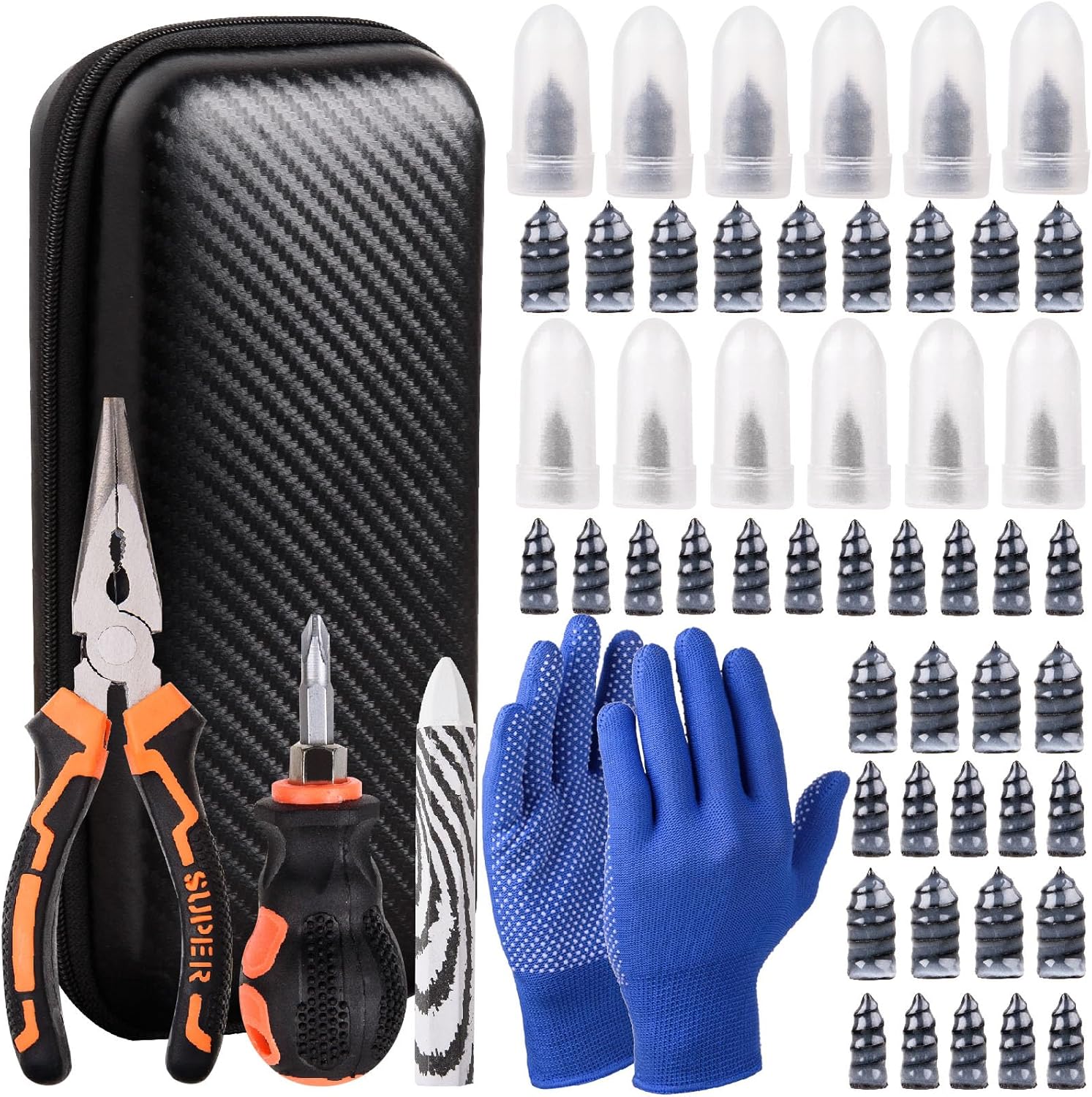
This tire sidewall puncture repair kit fixes flats fast without removing the tire, helping you get back on the road in minutes. It includes self-tapping repair nails, essential tools, gloves, and a portable storage bag for convenient roadside use. Designed for tubeless tires, it helps create a tight, leak-resistant seal for cars, motorcycles, trucks, SUVs, and ATVs.

This screw-in tire plug kit provides a fast, no-tire-removal fix for tubeless flat tires by aligning and screwing the plugs into the puncture. Built for a reliable, airtight seal, the thick rubber plugs create a durable repair that helps prevent slow leaks. The kit includes two plug sizes for handling different puncture widths and comes in a compact case for quick roadside use.
