
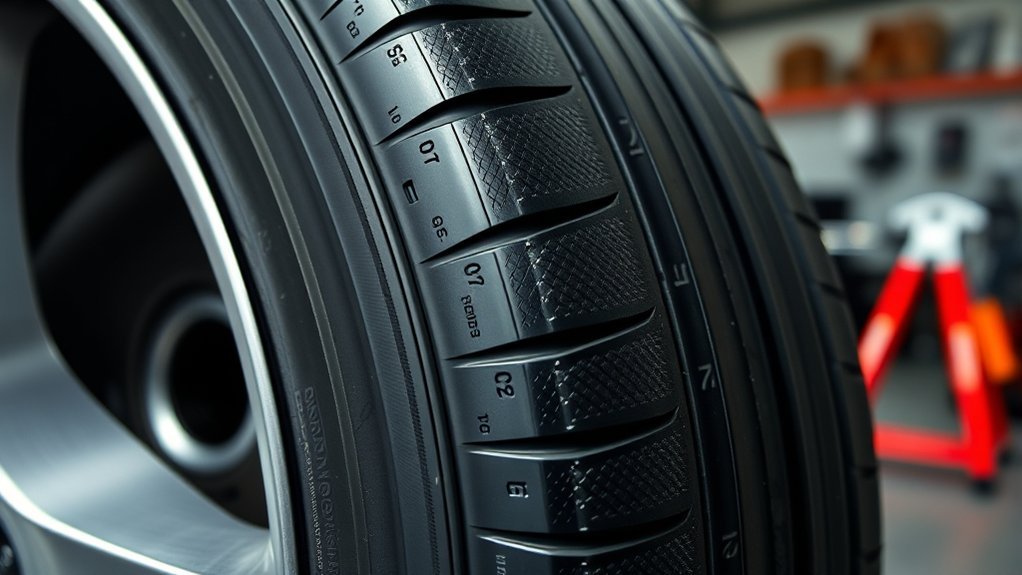
A 245 tire means the tire’s nominal section width is 245 millimeters from sidewall to sidewall. That number tells you width, not the full tire size. To choose the right tire, you still need the aspect ratio, wheel diameter, load index, speed rating, and the size approved for your vehicle.
Quick Answer
The number 245 on a tire means the tire is 245 millimeters wide at its nominal section width. It does not tell you the sidewall height, wheel size, load capacity, or speed rating by itself. Always read the full code, such as 245/45R18 100V, before choosing a replacement.
Key Takeaways
- 245 on a tire means the tire’s nominal section width is 245 millimeters.
- A wider tire can improve dry grip and steering response, but only when it fits the rim, suspension, and vehicle correctly.
- The aspect ratio tells you sidewall height as a percentage of the tire width.
- The load index tells you how much weight each tire can carry when properly inflated.
- The speed rating tells you the maximum speed the tire is rated to carry its load under specified conditions.
- Before changing from 235, 225, or 255 tires, check your owner’s manual, tire placard, rim width, clearance, load index, and speed rating.
At a Glance
| Time Required | 2 to 5 minutes to read the sidewall and compare the tire placard |
| Difficulty | Easy if you can see the tire sidewall and driver-side tire label |
| Tools Needed | Your tire sidewall, owner’s manual, Tire and Loading Information Label, and a tire pressure gauge |
| Cost | Free to check; professional fitment inspection may cost extra |
What Does 245 Mean on a Tire?
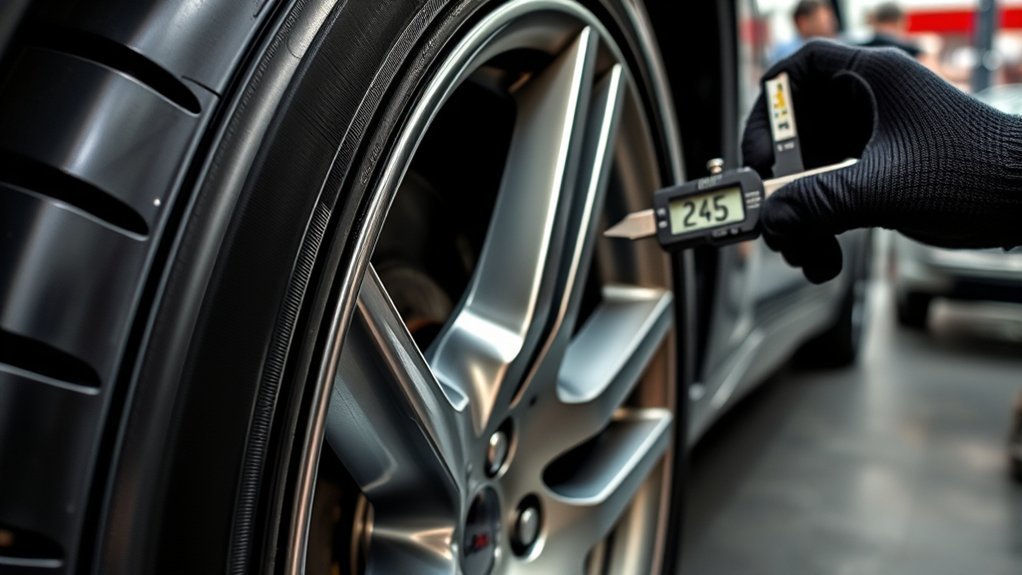
The number 245 means the tire’s nominal section width is 245 millimeters. In simple terms, it describes how wide the tire is from sidewall to sidewall when mounted on its measuring rim. Michelin explains that the width number in a tire size is the nominal section width measured in millimeters, while the next number is the aspect ratio.
For example, in 245/45R18, the 245 is the width. It does not mean the tread alone is exactly 245 mm wide, and it does not mean the tire is 245 mm tall. Tire shape can vary by brand, rim width, inflation pressure, and model, so two tires with the same printed size may not measure exactly the same once mounted.
You should match the width to your rim and vehicle specification because the right fit keeps handling predictable and helps avoid rubbing or uneven wear. A wider tire can give you a larger footprint and stronger steering feel, but it can also change ride comfort, fuel economy, and clearance. Understanding tire performance criteria can help you compare width, tread design, season rating, and comfort together instead of judging by width alone.
Warning: Do not install 245 tires only because they look wider. Use the tire size approved on your vehicle’s Tire and Loading Information Label, owner’s manual, or manufacturer documentation. If you change sizes, the new tire must have suitable clearance and meet or exceed the required load index and speed rating.
How to Read a 245 Tire Size Code
A 245 tire size code breaks down into specific parts that tell you how the tire fits and performs. You read it from left to right. The width comes first, followed by aspect ratio, construction type, wheel diameter, load index, and speed rating.
Here is a common example:
| Code Part | What It Means | Example: 245/45R18 100V |
| 245 | Nominal section width in millimeters | 245 mm wide |
| 45 | Aspect ratio, or sidewall height as a percentage of width | Sidewall height is 45% of 245 mm |
| R | Radial construction | Radial tire |
| 18 | Wheel diameter in inches | Fits an 18-inch wheel |
| 100 | Load index | Maximum load rating from a standardized load table |
| V | Speed rating | Rated for a specified maximum speed under proper conditions |
The aspect ratio helps you estimate sidewall height. In a 245/45R18 tire, the sidewall height is 245 × 0.45, or about 110 mm. A 245/60R18 tire has the same nominal width but a taller sidewall because 60% of 245 mm is about 147 mm.
That is why 245 alone is not enough. A 245/35 tire, 245/45 tire, and 245/60 tire can feel and fit very differently. When you understand the full code, you can select fitment with confidence and compare tire performance characteristics more accurately.
What 245 Does Not Tell You
The 245 number gives you only one part of the tire size. It does not tell you whether the tire fits your wheel, whether it can carry your vehicle’s weight, or whether it matches your vehicle’s speed requirements.
- It does not tell you sidewall height. You need the aspect ratio for that.
- It does not tell you wheel diameter. You need the number after the construction letter, such as 17, 18, or 20.
- It does not tell you load capacity. You need the load index and the correct inflation pressure.
- It does not tell you speed capability. You need the speed rating letter.
- It does not guarantee fitment. You still need rim width, suspension clearance, fender clearance, and manufacturer approval.
Note: The maximum pressure printed on the tire sidewall is not your vehicle’s recommended operating pressure. Use the pressure on the driver-side tire placard or owner’s manual, and check pressure when the tires are cold.
What Tire Load Index Means
The load index is the number that tells you how much weight one tire can carry when it is properly inflated. You’ll find the load index after the wheel diameter. In a size like 245/45R18 100V, the load index is 100.
Michelin describes the load rating as the maximum weight a single tire can carry when properly inflated. That matters because your tires must support the vehicle, passengers, cargo, and any added equipment. For passenger tires, a load index such as 94, 98, 100, or 102 points to a standardized maximum load value.
For example, a 94 load index supports about 1,477 pounds, or 670 kg, per tire when used under the right conditions. If you drive Light Truck Tires, you may see different load information, load range markings, or dual load indexes for single and dual rear-wheel use.
Do not choose a lower load index than your vehicle requires. Overloading a tire can increase heat, stress the casing, and reduce control. NHTSA advises checking the owner’s manual or the Tire and Loading Information Label for the correct tire size, and Continental notes that approved tire sizes must meet the required load index and speed rating. A replacement tire must match your vehicle’s required specifications, not just the width number.
What Tire Speed Rating Means
The speed rating is the letter that shows the maximum speed the tire is rated to carry its load under specified conditions. You’ll usually see it after the load index. In 245/45R18 100V, the speed rating is V.
- L means up to 75 mph.
- H means up to 130 mph.
- V means up to 149 mph.
- Z generally indicates more than 149 mph, often with W or Y in the full service description.
These ratings assume the tire is in good condition, correctly inflated, not overloaded, and used within its design limits. If a tire is underinflated, damaged, overloaded, or aged, the printed speed rating does not protect you from failure.
NHTSA reports that tire-related crashes remain a real safety issue, with 511 tire-related crash fatalities in 2024. That is why tire size, inflation, load, tread, age, and damage checks all matter. Maintaining proper tire maintenance helps your tires perform as intended in wet, hot, and high-speed conditions.
How 245 Tires Affect Fit and Handling
With 245 tires, width matters because that number affects the tire’s contact patch, steering feel, and clearance. A 245 tire can feel more planted than a narrower tire when the rim, suspension, and tire model suit the vehicle. You may notice stronger cornering stability, firmer steering response, and a wider stance.
Still, a wider tire is not always better. A 245 tire can increase rolling resistance, add weight, change road noise, and reduce fuel efficiency depending on the tire design. NHTSA’s tire fuel-efficiency rule explains that rolling resistance depends on the tire, road surface, inflation pressure, load, and speed. FuelEconomy.gov also notes that proper tire inflation improves fuel economy and that underinflated tires can lower gas mileage.
Your aspect ratio also changes the ride. A lower-profile 245 tire may feel sharper but ride firmer over potholes. A taller 245 tire may cushion bumps better but may feel less responsive. The tread pattern, rubber compound, sidewall construction, and air pressure can change the result as much as the width.
Fitment is critical. If the 245 tire does not match the rim width, you can get poor bead seating, vague steering, or uneven wear. If the tire is too wide or too tall for your vehicle, it may rub the fender liner, strut, control arm, or inner wheel well under load or at full steering lock. Also consider tire type so your tire matches your climate, road surface, and driving habits.
Pro Tip: Before comparing tire widths online, take a photo of your current tire sidewall and driver-side tire placard. Then compare the full size, not just the first number.
[Products Worth Considering]

The SAFELIFE dial tire tread depth gauge measures tread depth in 1/32 inch increments with clear, easy-to-read 2-inch dial face. Color zones using a traffic light system help you quickly judge whether tread is low, marginal, or ample for safer driving. Built with a durable zinc cast body and a metal detect probe for precise, comfortable use across cars, motorcycles, trucks, and buses.

Keep your tires properly inflated with this analog VONDIOR tire pressure gauge, designed for fast, easy readings without batteries. The swiveling, two-axis hose and large glow dial help you measure at any tire angle with instant visibility. Built with a protective rubber shield, it supports durable, low-maintenance use for cars and trucks.

The 22800 wheel stud installer makes replacing wheel studs quick and secure, saving time and effort during tire service. It uses a ratchet or impact wrench to pull new studs firmly into place, helping when existing studs are too long. Compatible with most automotive wheels and light-duty truck wheel studs, it’s designed for easy, tool-assisted installation.
How to Check Whether a 245 Tire Fits Your Vehicle
Use this checklist before you move to a 245 tire or replace a 245 tire with a different size:
- Check the tire placard. Look on the driver-side door jamb or door edge for the approved tire size and cold inflation pressure.
- Check the owner’s manual. Some vehicles list alternate tire sizes for different trims or wheel packages.
- Match or exceed the required load index. Never step down to a lower load rating than your vehicle requires.
- Match the required speed rating. Use the manufacturer’s required rating unless a tire professional confirms an approved alternative.
- Confirm rim width range. The tire must fit the wheel width safely.
- Compare overall diameter. A larger or smaller diameter can affect speedometer accuracy, gearing, ABS, traction control, and clearance.
- Inspect clearance. Check space near the fender liner, strut, suspension arms, and bodywork.
- Use the correct pressure. Follow the vehicle placard, not the maximum pressure on the tire sidewall.
If you are changing tire size, ask a qualified tire shop to confirm rim width, offset, clearance, load rating, and speed rating. That short check can prevent rubbing, poor handling, vibration, and premature tire wear.
[Products Worth Considering]

Malco tire mounting and demounting lubricant is a ready-to-use tire lube formulated to reduce friction during tire installation for passenger cars, light trucks, farm tires, and heavy-duty equipment. It provides rust-inhibiting protection to help reduce corrosion on rims and wheels, and helps support proper tire bead seating during inflation to reduce air leakage. The silicone-free, soap-free formula is whitewall safe to help prevent discoloration on whitewall tires and sensitive sidewall markings.

This professional wheel and rim cleaning brush set lifts brake dust, grime, and dirt with soft, scratch-free microfiber and synthetic wool fibers. The rim brush bends up to 360 degrees for easy access to hard-to-reach areas around spokes, lips, and faces. Ideal for thorough cleaning of car, truck, motorcycle, bicycle, RV, and more wheel and tire surfaces.

Measure tire tread depth quickly and accurately with this LUMITECO dial gauge that reads in 1/32" increments up to 14/32". The color-coded green/yellow/red zones make it easy to judge tire wear and know when replacement is needed. A rugged, compact design with a protective pouch helps keep the gauge ready for use on cars, trucks, motorcycles, and more.
245 vs 235, 255, and Other Nearby Widths
Tire width changes in millimeters, so a 245 tire is 10 mm wider than a 235 tire and 10 mm narrower than a 255 tire. That sounds small, but it can affect steering feel, clearance, and how the tire sits on the wheel.
| Width | Compared With 245 | What to Expect |
| 225 | 20 mm narrower | May improve clearance and fuel economy, but may reduce dry grip depending on the tire model. |
| 235 | 10 mm narrower | Often close enough to compare, but only safe if the full size and ratings are approved. |
| 245 | Baseline | A common width for sedans, crossovers, SUVs, and performance trims, depending on full tire size. |
| 255 | 10 mm wider | May add grip and stance, but can increase rubbing risk, road noise, weight, and rolling resistance. |
Do not compare width alone. A 245/45R18 and a 255/45R18 are not just different widths; the 255/45 tire also has a slightly taller sidewall because the aspect ratio is a percentage of width. That can change overall diameter and clearance.
[Products Worth Considering]

The Topeak SmartGauge D2 delivers precise digital tire pressure readings for bikes, motorcycles, and sports equipment up to 250 psi (17 bar). Its rotating SmartHead works with both Presta and Schrader valves, so you can check pressure quickly without adapters. The LCD display makes it easy to read results in psi, bar, or kg/cm² with an included CR2032 battery for immediate use.

This 12-inch LUMITECO dual head tire pressure gauge features an integrated straight-on chuck and a 30° reverse chuck to reach hard-to-access dual wheel valves. Its 10–150 PSI / 1–10 BAR range with a clear, two-sided scale helps you quickly check tire pressure for safer, smoother driving. Heavy-duty construction and a simple no-battery design make it a reliable tool for trucks, cars, RVs, and motorcycles.

The Big Rig Defense Tire Thumper is a truck tire pressure checker that lets you quickly check multiple tires by giving them a firm whack. Listen for a reassuring thump and feel the stick bounce when a tire is fully inflated, helping you get back on the road safely. It features a comfortable, glove-friendly handle and a secure wrist strap for confident use on busy routes.
Frequently Asked Questions
Can I Replace 235 Tires With 245?
Yes, you can replace 235 tires with 245 tires only if your vehicle allows that size. Check your owner’s manual, tire placard, rim width, overall diameter, wheel-well clearance, load index, and speed rating first. A 245 tire is 10 mm wider than a 235 tire, so it may fit some vehicles but rub on others.
Is There a Big Difference Between 225 and 245 Tires?
Yes, there can be a noticeable difference because a 245 tire is 20 mm wider than a 225 tire. The wider tire may add grip and steering response if the wheel and suspension support it. It may also add weight, road noise, rolling resistance, and rubbing risk. Compare the full size, not only the width.
Which Tire Is Wider, 245 or 255?
A 255 tire is wider than a 245 tire by 10 mm. That extra width can improve stance and grip on the right vehicle, but it can also reduce clearance or change steering feel. Make sure the full tire size, rim width, load index, and speed rating match your vehicle requirements.
Are 245 Tires Good?
Yes, 245 tires can be good when they match your vehicle and driving needs. They can provide confident grip, stable cornering, and a strong steering feel. The result depends on the tire model, tread pattern, season rating, pressure, alignment, and fitment. A poorly matched 245 tire can ride worse or wear faster.
Does 245 Mean the Tire Is 245 mm Tall?
No. The 245 number means the tire’s nominal section width is 245 mm. Tire height depends on the aspect ratio and wheel diameter. For example, a 245/45R18 tire has a shorter sidewall than a 245/60R18 tire, even though both are 245 mm wide.
Where Do I Find the Correct Tire Size for My Car?
Look at the Tire and Loading Information Label on the driver-side door edge or door jamb. You can also check your owner’s manual. The tire sidewall shows the size currently installed, but the placard and manual show the size the vehicle manufacturer approved.
Conclusion
When you read 245 on a tire, you are seeing the tire’s width in millimeters. That number matters, but it is only one part of the full tire code. The aspect ratio, wheel diameter, load index, and speed rating all work together to decide whether the tire fits safely.
If you stay with the size listed on your vehicle placard or choose an approved alternative, you protect handling, comfort, fuel economy, and tire life. A 245 tire can give you confident control when it matches the vehicle, rim, and driving conditions. The safest choice is the one that fits the whole code, not just the width.
Sources
- NHTSA TireWise — supports tire safety, approved tire size guidance, placard use, tire maintenance, and 2024 tire-related crash fatality data.
- NHTSA Tire Buyers’ FAQ — supports checking the owner’s manual or Tire and Loading Information Label for the correct tire size.
- Michelin Tire Markings Explained — supports section width, aspect ratio, construction type, load rating, speed rating, sidewall pressure, and tire date-code explanations.
- Continental Tire Size Guide — supports matching approved tire size, load index, speed rating, and alternative size guidance.
- FuelEconomy.gov Tire Inflation Guidance — supports proper tire inflation, fuel economy, and using the vehicle placard pressure instead of sidewall maximum pressure.
- Federal Register: Tire Fuel Efficiency Consumer Information Program — supports rolling resistance, tire fuel efficiency, and the effect of tire dimensions and design on handling, traction, noise, wear, and fuel economy.

