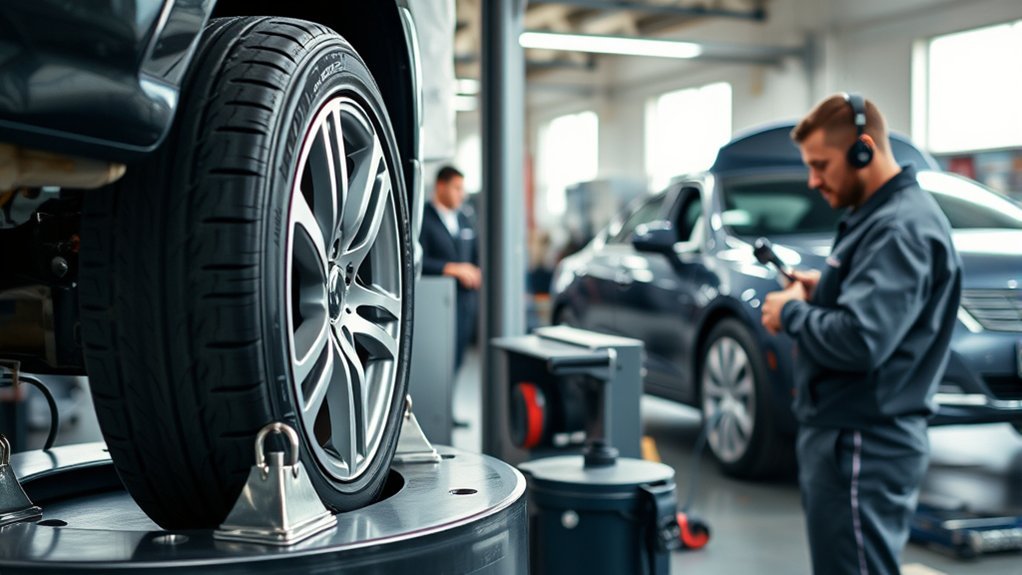
Tire balancing and wheel alignment both help your vehicle ride smoothly, but they fix different problems. Balancing corrects uneven weight in the tire and wheel assembly, while alignment adjusts suspension angles so the tires point and contact the road correctly. If you know which symptom points to which service, you can avoid wasted repairs and protect your tires.
Quick Answer
Tire balancing usually fixes speed-related vibration, especially through the steering wheel, seat, or floor. Wheel alignment usually fixes pulling, an off-center steering wheel, and uneven edge wear. New tires should be balanced when installed, while alignment should be checked after impacts, suspension work, new tires, or unusual tire wear.
Key Takeaways
- Choose tire balancing when the main symptom is vibration that gets worse at certain speeds.
- Choose wheel alignment when the car pulls, the steering wheel sits off-center, or the tires wear more on one edge.
- New tires should be balanced when installed, according to NHTSA TireWise.
- Check alignment after hitting a curb or pothole, replacing suspension or steering parts, installing new tires, or seeing unusual tire wear.
- Severe vibration, sudden pulling, steering looseness, tire bulges, or exposed cords need prompt inspection before you keep driving.
At a Glance
| Time Required | 5 to 10 minutes for a driveway symptom check; about 30 to 90 minutes for most shop visits, depending on the vehicle and service. |
| Difficulty | Easy to inspect symptoms; professional equipment is required for accurate balancing and alignment. |
| Tools Needed | Tire pressure gauge, tread-depth gauge or penny, flashlight, owner’s manual, and a repair shop with a balancer or alignment rack. |
| Cost | Balancing varies by shop and tire size. Alignment costs vary by vehicle, shop, and region; many U.S. quotes run about $50 to $100 for two-wheel alignment and $100 to $200 for four-wheel alignment. |
Tire Balancing vs Wheel Alignment: The Main Difference
The simplest way to separate the two services is this: balancing deals with weight around the wheel, while alignment deals with wheel angles under the vehicle. A tire can be perfectly aligned but still vibrate if the tire and wheel assembly is out of balance. A tire can also be perfectly balanced but still wear unevenly if the alignment is off.
| Service | What It Fixes | Common Symptoms |
| Tire balancing | Uneven weight distribution in the tire and wheel assembly. | Steering wheel, seat, or floor vibration, often at certain speeds. |
| Wheel alignment | Suspension and steering angles, including camber, caster, toe, and sometimes thrust angle. | Vehicle pulling, off-center steering wheel, rapid edge wear, or a crooked steering feel. |
What Is Tire Balancing?
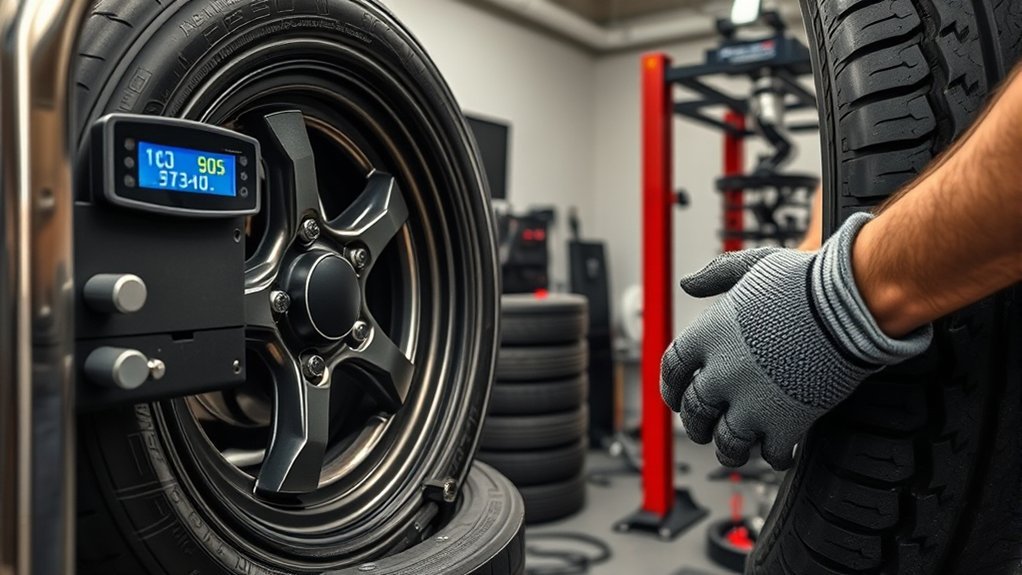
Tire balancing corrects uneven weight in a mounted tire and wheel assembly. Even a small heavy spot can create vibration as the wheel spins. A technician places the assembly on a balancing machine, spins it, measures the imbalance, and adds small weights to the wheel to help it rotate smoothly.
You usually need balancing when you install new tires, repair a tire, replace a wheel, lose a wheel weight, or feel speed-related vibration. NHTSA notes that balancing helps wheels rotate properly and helps prevent shaking or vibration.
Pro Tip: If vibration started right after new tires were installed, ask the shop to recheck both balance and wheel mounting. A small seating issue, missing weight, bent wheel, or tire defect can feel like a balance problem.
What Is Wheel Alignment?
Wheel alignment adjusts the angles of your wheels so they match the vehicle maker’s specifications as closely as the suspension allows. The main alignment angles are camber, caster, toe, and sometimes thrust angle. Tire Rack explains that alignment measures suspension angles and can affect how the tires operate, wear, and track on the road.
Camber describes how much the tire leans inward or outward when viewed from the front. Caster affects steering stability and return-to-center feel. Toe describes whether the tires point slightly inward or outward when viewed from above. Toe is especially important for tire wear because a small error can make the tires scrub instead of roll straight.
Alignment does not fix a tire that is out of balance. It also cannot correct worn ball joints, loose tie rods, bent control arms, or damaged suspension parts until those parts are repaired first.
How to Spot When Your Tires Need Balancing?
You may need tire balancing when the main complaint is vibration, especially if it appears at a certain speed and fades when you slow down. Front tire imbalance often shows up in the steering wheel. Rear tire imbalance may feel stronger through the seat or floor.
- Steering wheel vibration: Often points to front tire or wheel imbalance.
- Seat or floor vibration: Can point to rear tire imbalance or another drivetrain issue.
- Vibration after new tires: The tire and wheel assembly may need rechecking.
- Patchy or cupped tread wear: Can come from imbalance, worn shocks or struts, or suspension issues.
- Lost wheel weight: A missing clip-on or stick-on weight can create a new shake.
Do not assume every shake is a balance problem. Bent rims, tire belt damage, brake rotor pulsation, worn wheel bearings, loose suspension parts, mud or ice stuck inside the wheel, and incorrect tire pressure can feel similar.
Warning: Do not keep driving normally if vibration is severe, the steering feels loose, the vehicle suddenly pulls, or you see a tire bulge, exposed cords, or rapid air loss. Have the vehicle inspected before highway driving.
How to Recognize Wheel Alignment Needs?
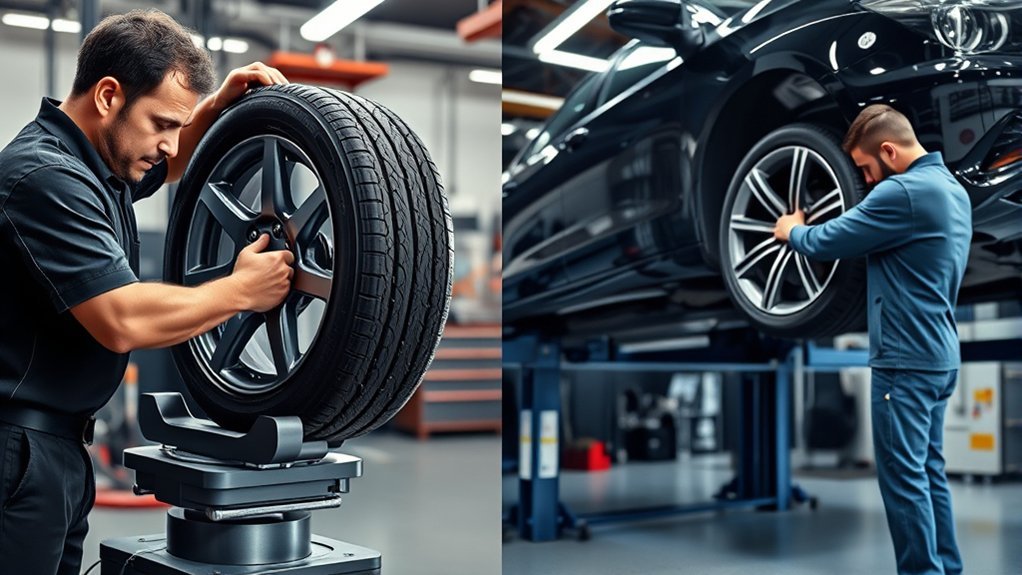
Wheel alignment problems usually show up as steering or tire-wear symptoms rather than a pure speed vibration. If your vehicle drifts or pulls on a straight, level road, the steering wheel sits off-center, or the tires wear more on one edge, alignment should be checked.
- Vehicle pulls left or right: Check tire pressure first, then alignment and suspension.
- Steering wheel is off-center: The toe or thrust angle may be out of specification.
- Inside or outside edge wear: Camber or toe may be wrong, or suspension parts may be worn.
- Rapid uneven wear after an impact: A pothole or curb may have changed the alignment.
- Loose or wandering steering: Alignment may be involved, but worn steering parts need inspection too.
Some road crown is normal, so test carefully on a safe, flat road. Also check tire pressure before blaming alignment. A low tire on one side can make a vehicle pull even when the alignment is correct.
When to Schedule Balancing and Alignment Services?
Schedule tire balancing whenever you install new tires, remount a tire, repair a tire, replace a wheel, or notice vibration that changes with speed. Many drivers also have balance checked during tire rotations, especially when the shop already has the wheels off the vehicle.
Schedule an alignment check when your vehicle pulls, the steering wheel sits off-center, the tires show uneven edge wear, or you hit a curb, pothole, or road debris hard enough to jolt the steering. Alignment should also be checked after replacing suspension or steering parts, changing ride height, installing lift or lowering parts, or mounting new tires if the old tires wore unevenly.
For rotation intervals, follow your owner’s manual. NHTSA says that if the vehicle manufacturer recommends rotation, many vehicles use a 5,000 to 8,000 mile interval. That does not mean every car needs a full alignment or rebalancing at the same mileage.
Note: A Tire Pressure Monitoring System is a warning system, not a replacement for regular checks. Federal TPMS rules are designed to warn of significant underinflation, but drivers still need to maintain correct tire pressure.
[Products Worth Considering]

Measure tire tread depth quickly and accurately with this LUMITECO dial gauge that reads in 1/32" increments up to 14/32". The color-coded green/yellow/red zones make it easy to judge tire wear and know when replacement is needed. A rugged, compact design with a protective pouch helps keep the gauge ready for use on cars, trucks, motorcycles, and more.

The Ziopetru adjustable magnetic wheel alignment tool helps you check and restore camber and caster positioning after removing and reinstalling undercarriage components. With a clear leveling/bubble measurement system and an easy zeroing adjustment knob, it supports precise horizontal angle checking. The strong magnetic base mounts to metal surfaces for convenient use at home on cars, motorcycles, trucks, vans, and SUVs.

This universal wheel alignment tool helps you accurately restore tire tilt angles after tire or suspension repairs using an adjustable camber gauge. It features a powerful magnetic base that firmly attaches to brake rotors for stationary, slip-free readings, improving consistency during measurement. Built from durable PC plastic, it resists wear and corrosion and is compact enough for car, truck, RV, and motorcycle alignment tasks.
Do You Need Balancing, Alignment, or Both?
You may need both services if you install new tires and the old tires showed uneven wear. In that case, balancing helps the new tire and wheel assemblies rotate smoothly, while alignment helps the new tires wear evenly from the start.
Use this quick symptom guide:
- Vibration at 55 to 70 mph: Start with tire balance, tire condition, wheel condition, and road-force testing if needed.
- Car pulls on a flat road: Start with tire pressure, tire condition, alignment, and steering/suspension inspection.
- Steering wheel off-center: Start with alignment, especially toe and thrust angle.
- Inside or outside edge wear: Start with alignment and suspension inspection.
- Pulsing while braking: Check brakes too, because rotor runout can feel like wheel vibration.
NHTSA reported 511 traffic fatalities in tire-related crashes in 2024, which makes tire pressure, tread, balance, alignment, and regular inspection more than just comfort issues.
[Products Worth Considering]

Replace or upgrade your zero-turn lawn mower tires with a universal fit flat-free tire and wheel assembly in a convenient 2-pack. Smooth tread front-caster style helps turning with reduced turf damage, while flat-free design eliminates the maintenance and downtime of air-filled flats. The included adapter kit supports 5/8-inch axles and hub lengths from 3.4 to 5 inches for compatibility across most ZTR mowers.

Monitor tire tread wear with a smart, color-coded depth gauge that shows clear condition ranges at a glance. The bar is range marked for fast, easy readings, helping you maintain safer traction and performance. Each gauge is portable with a pocket clip, and the set includes 20 units for daily use and sharing.
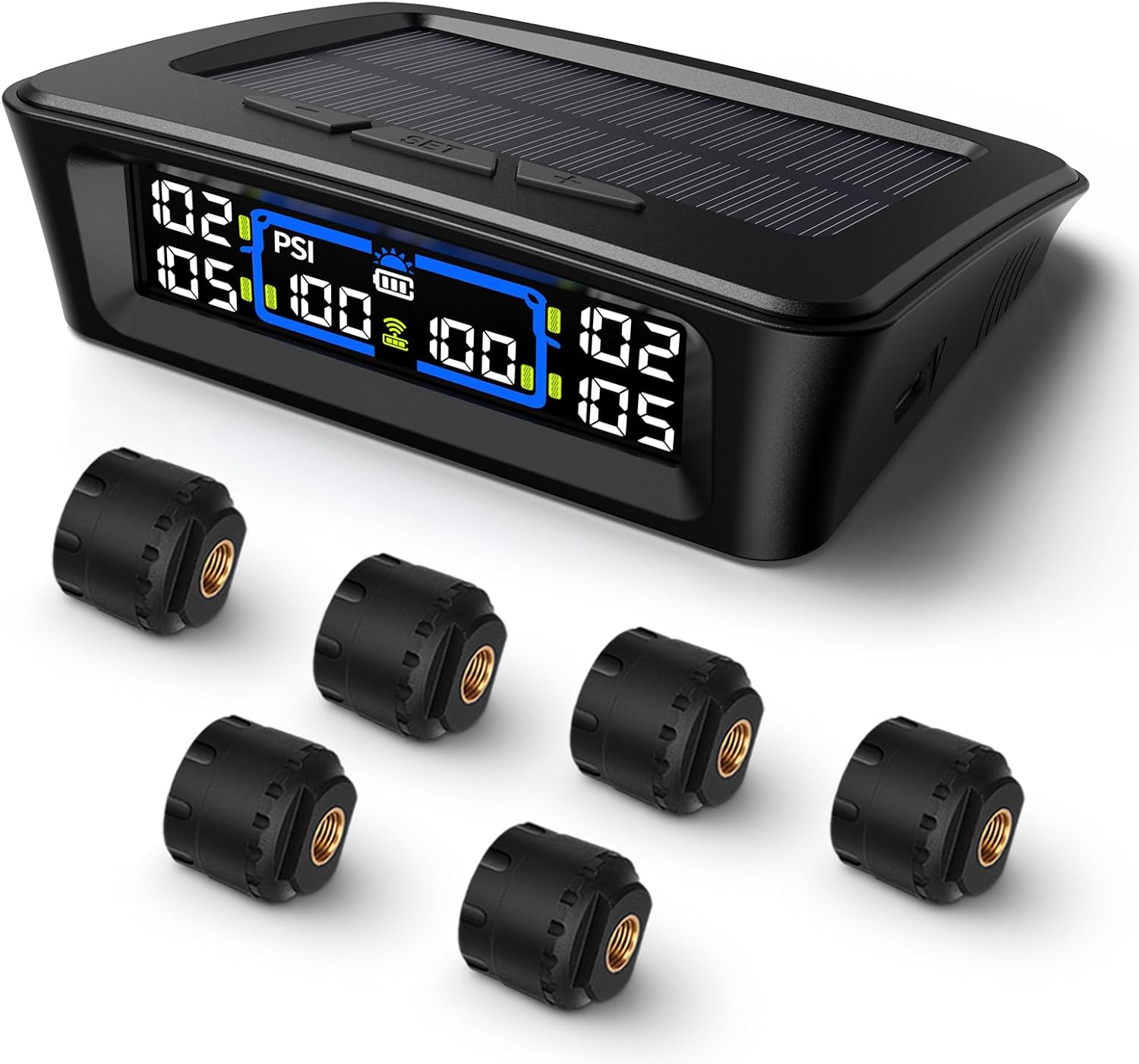
The Tymate TM12 RV TPMS delivers real-time tire pressure and temperature monitoring with a stable 433Hz display for safer long-distance driving. It supports simultaneous monitoring across vehicle and trailer zones, includes six alarm modes for pressure, temperature, leakage, battery, and signal loss, and features easy DIY installation with auto calibration. Power is supplied via USB-C charging or solar recharging, with a wide 0–144 PSI range and up to 50 ft signal coverage for RVs and towable trailers.
What a Technician Checks During Each Service
During tire balancing, the technician usually removes each wheel, mounts it on a balancer, spins it, and adds weights where needed. Some shops may use road-force balancing when a normal balance does not fix vibration. This test presses a roller against the tire to help find tire uniformity problems, wheel runout, or match-mounting issues.
During wheel alignment, the technician places sensors on the wheels, measures current angles, compares them with vehicle specifications, and adjusts what the suspension design allows. Many modern vehicles need four-wheel alignment or thrust-angle alignment, not just a front-end adjustment. Ask for a before-and-after printout so you can see what changed.
[Products Worth Considering]

The TYAMATE TM8 solar-powered wireless TPMS delivers real-time tire pressure and temperature monitoring with six alarm modes for safer driving. A vibrant color LCD display shows readings clearly while windshield mounting keeps it hands-free and easy to read. With a wide 0–87 PSI range, strong 433.92 MHz signal transmission, and quick sensor pairing, it’s ideal for RV, sedan, SUV, MPV, and truck use.

The SAFELIFE dial tire tread depth gauge measures tread depth in 1/32 inch increments with clear, easy-to-read 2-inch dial face. Color zones using a traffic light system help you quickly judge whether tread is low, marginal, or ample for safer driving. Built with a durable zinc cast body and a metal detect probe for precise, comfortable use across cars, motorcycles, trucks, and buses.

Replace worn or malfunctioning GM TPMS sensors with this 433MHz pre-programmed sensor set designed for compatibility with many Chevrolet, Buick, GMC, and Cadillac models. It includes guidance for proper OBDII relearning/pairing after installation and supports reliable long-term operation with a high-performance CR2032 battery. Quality tested for durability and performance to help restore accurate tire pressure monitoring.
Frequently Asked Questions
How do I know if I need a balance or alignment?
Choose balancing first if the main symptom is vibration at certain speeds. Choose alignment first if the vehicle pulls, the steering wheel is off-center, or the tires show uneven edge wear. If both vibration and uneven wear are present, ask the shop to inspect tires, wheels, suspension, balance, and alignment together.
How much should a full alignment cost?
Alignment cost depends on your vehicle, shop, region, and whether you need a two-wheel, thrust-angle, or four-wheel alignment. As a broad U.S. reference, many two-wheel alignments fall around $50 to $100, while many four-wheel alignments fall around $100 to $200. Repairs for worn suspension or steering parts cost extra.
Does a Jeep Wrangler need an alignment?
Yes. A Jeep Wrangler should be aligned when it pulls, the steering wheel is off-center, tires wear unevenly, or suspension and steering parts are changed. Alignment is also smart after hard off-road impacts, lift kit installation, larger tire installation, or repeated pothole and curb hits.
Which is more important, alignment or balancing?
Neither service replaces the other. Alignment is more important when the issue is pulling, off-center steering, or uneven tire wear. Balancing is more important when the issue is speed-related vibration. For new tires, balancing is normally required, and alignment is wise if the previous tires wore unevenly.
Can unbalanced tires cause uneven tire wear?
Yes. An unbalanced tire can bounce or vibrate as it rolls, which may create patchy or cupped wear over time. However, cupping can also come from worn shocks, struts, wheel bearings, or suspension parts, so a full inspection matters if the tread already looks uneven.
Should I get an alignment every time I buy new tires?
You do not always need an alignment just because you bought new tires, but it is a good idea if the old tires had uneven wear, the vehicle pulls, the steering wheel is off-center, or the suspension has been repaired. Starting new tires with poor alignment can shorten their life quickly.
Conclusion
Tire balancing and wheel alignment both protect ride quality, handling, and tire life, but they solve different problems. Balance the tires when you install new ones, repair or remount a tire, replace a wheel, or feel speed-related vibration. Check alignment when your vehicle pulls, the steering wheel is crooked, tires wear unevenly, or the suspension takes a hard impact. When in doubt, ask the shop to inspect tire pressure, tread wear, wheel condition, suspension play, balance, and alignment before replacing parts.
Sources
- NHTSA TireWise — tire safety, pressure checks, tread depth, rotation, balancing, alignment, and 2024 tire-related fatality data.
- 49 CFR 571.138, Tire Pressure Monitoring Systems — TPMS purpose, warning threshold, and driver maintenance responsibility.
- Tire Rack Alignment Settings Guide — camber, caster, toe, thrust angle, and when alignment should be checked.
- Investopedia Wheel Alignment Cost Guide — broad U.S. cost ranges for two-wheel and four-wheel alignments.