
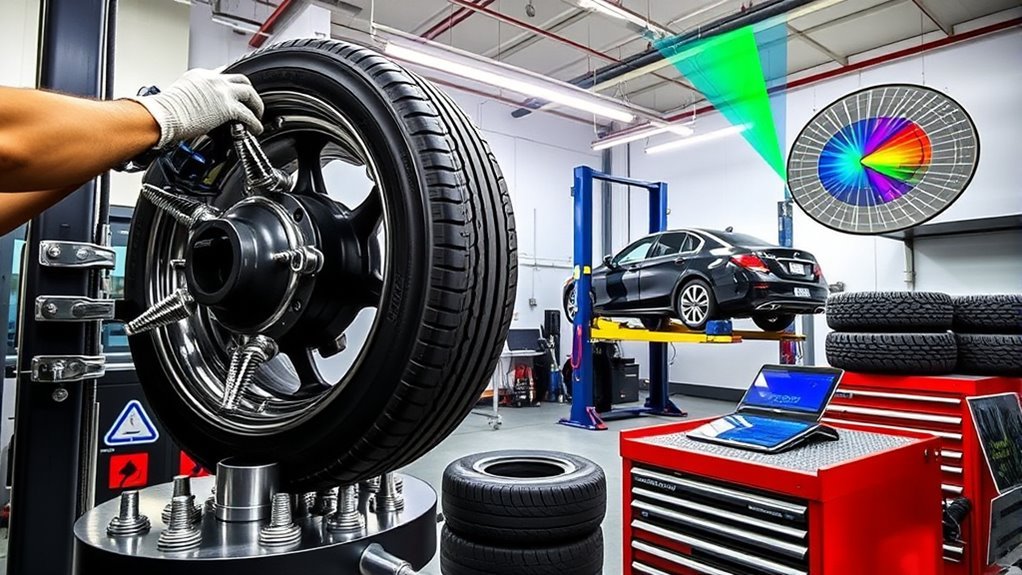
When your car shakes at highway speed or drifts on a straight road, the right fix depends on the symptom. Tire balancing corrects uneven weight in the tire and wheel assembly. Wheel alignment adjusts suspension angles so the tires meet the road correctly. You may need one service, or both, depending on vibration, pulling, tire wear, and recent road impacts.
Quick Answer
Choose tire balancing when you feel vibration, shaking, or shimmy, especially at highway speed. Choose wheel alignment when the car pulls, the steering wheel sits off-center, or the tread wears unevenly. New tires should be balanced, and alignment should be checked after hard pothole hits, suspension work, or persistent pulling.
Key Takeaways
- Vibration usually means tire balancing should be checked first. A shop spins the tire and wheel assembly, then adds small weights to correct heavy spots.
- Pulling usually means wheel alignment should be checked first. A technician adjusts camber, toe, caster, and thrust angle where your vehicle allows it.
- New tires should be balanced when installed. The National Highway Traffic Safety Administration says balancing helps prevent shaking and vibration.
- Balance and alignment are not the same service. Balancing fixes weight distribution, while alignment fixes wheel angle and tire contact.
- Do not ignore tire symptoms. Poor tire maintenance can shorten tire life, hurt handling, and increase safety risk.
At a Glance
| Time Required | Usually 30 to 90 minutes for one service. Plan longer if the shop inspects suspension parts, repairs damage, or performs both services. |
| Difficulty | Professional service. Balancing requires a wheel balancer, and alignment requires an alignment rack with trained setup. |
| Tools Needed | Wheel balancer, alignment machine, wheel weights, tire pressure gauge, torque tools, and a trained technician. |
| Cost | Balancing is usually charged per tire or included with tire installation. Alignment often ranges from about $50 to $200, depending on vehicle, shop, location, and two-wheel vs. four-wheel service. |
Vibration vs. Pulling: Balancing or Alignment?
Start with what you feel from the driver’s seat. A vibration, shimmy, or shake often points toward tire balancing. A steady pull, crooked steering wheel, or uneven tread wear often points toward wheel alignment.
| Symptom | Most Likely Service | Why It Happens |
| Steering wheel vibration at highway speed | Tire balancing | Weight is not evenly distributed around the tire and wheel assembly. |
| Car pulls left or right on a straight, level road | Wheel alignment | Wheel angles may be outside the vehicle manufacturer’s specification. |
| Steering wheel sits off-center | Wheel alignment | Toe or thrust angle may be off, even if the car still drives forward. |
| New tires installed | Balancing, plus alignment check if wear or pulling exists | New tire and wheel assemblies need even weight distribution before driving. |
| Uneven shoulder wear or feathered tread | Wheel alignment | The tire may be scrubbing the road instead of rolling straight. |
Do not diagnose by one symptom alone. Low tire pressure, bent wheels, worn suspension parts, and brake problems can feel similar. A qualified technician can inspect the full tire, wheel, steering, and suspension system before replacing parts.
Warning: If vibration begins suddenly, becomes severe, or appears with a tire bulge, visible damage, or pressure loss, slow down safely and have the vehicle inspected before continuing normal driving.
Quick Decision Checklist Before You Book
Use this simple order before calling the shop. It can help you describe the problem clearly and avoid paying for the wrong first service.
- Check tire pressure cold. Use the pressure listed on the driver-door label or owner’s manual, not the tire sidewall maximum.
- Look for visible tire damage. Bulges, exposed cords, deep cuts, or tread separation need inspection before normal driving.
- Notice when the symptom happens. Vibration at highway speed points more toward balancing. Pulling on a straight, level road points more toward alignment.
- Check tread wear patterns. Feathering, one-edge wear, or diagonal wear often means the alignment, pressure, or suspension needs attention.
- Tell the shop about recent impacts. Potholes, curb hits, off-road impacts, and suspension repairs can change the diagnosis.
If you feel both vibration and pulling, ask the shop to inspect both balance and alignment. One problem can hide another, especially after a pothole hit or new tire installation.
How Tire Balancing Smooths Out Your Ride
Tire balancing corrects weight imbalance in the tire and wheel combination. Even a small heavy spot can create a shake as the wheel spins faster. The National Highway Traffic Safety Administration explains that tire balancing helps wheels rotate properly and prevents shaking or vibration.
Here is what usually happens during balancing:
- The tire and wheel assembly is mounted on a balancer. The machine spins the assembly and detects heavy spots.
- The machine measures the imbalance. It tells the technician where weight is needed.
- Small wheel weights are added. These weights offset the heavy spots so the assembly spins evenly.
- The technician confirms the correction. The assembly is usually spun again to verify that the imbalance is reduced.
Balanced tires can improve ride comfort, reduce steering wheel shake, and help prevent irregular tread wear. They can also reduce stress on steering and suspension parts that would otherwise absorb repeated vibration.
NHTSA reported 511 traffic fatalities in tire-related crashes in 2024, which makes basic tire care more than a comfort issue.
Why Alignment Keeps Your Car Driving Straight
Wheel alignment adjusts the angles of your vehicle’s suspension so the tires contact the road correctly. According to Bridgestone, alignment is not an adjustment of the tire itself. It is an adjustment of the suspension system that affects how the tires meet the road.
Proper alignment helps the vehicle track straight, reduces uneven tread wear, and improves steering response. If the alignment is off, the car may pull to one side, the steering wheel may sit crooked, or the tread may wear faster on one edge.
Corrects Wheel Angles
An alignment check focuses on the angles that control tire contact and steering behavior. The main angles are:
- Camber: The inward or outward tilt of the tire when viewed from the front of the vehicle.
- Toe: Whether the tires point slightly inward or outward when viewed from above.
- Caster: The steering-axis angle when viewed from the side of the vehicle.
- Thrust angle: The relationship between the rear wheels and the vehicle centerline.
Not every vehicle allows every angle to be adjusted. Some vehicles may need worn suspension or steering parts replaced before an alignment can hold correctly.
Prevents Vehicle Drifting
When alignment is off, the vehicle may drift or pull even when the road is straight and level. You may find yourself making constant small corrections just to stay centered in the lane. That is tiring, and it can make emergency steering less predictable.
A proper alignment helps restore straight-line tracking. It also helps the steering wheel return to center and gives the tires a more even contact patch.
Extends Tire Lifespan
Misalignment can make tires scrub across the road instead of rolling cleanly. That scrubbing can create feathering, shoulder wear, camber wear, or other uneven patterns.
You help your tires last longer when you keep the wheels aligned, maintain correct tire pressure, and rotate tires according to the owner’s manual. NHTSA also notes that rotation, balance, and alignment can help tires last longer and save money over time.
Note: Alignment cannot fix a tire that is already severely cupped, separated, bald, or structurally damaged. The tire may need replacement even after the alignment is corrected.
When to Balance Tires: After Rotation, Flats, and Vibrations
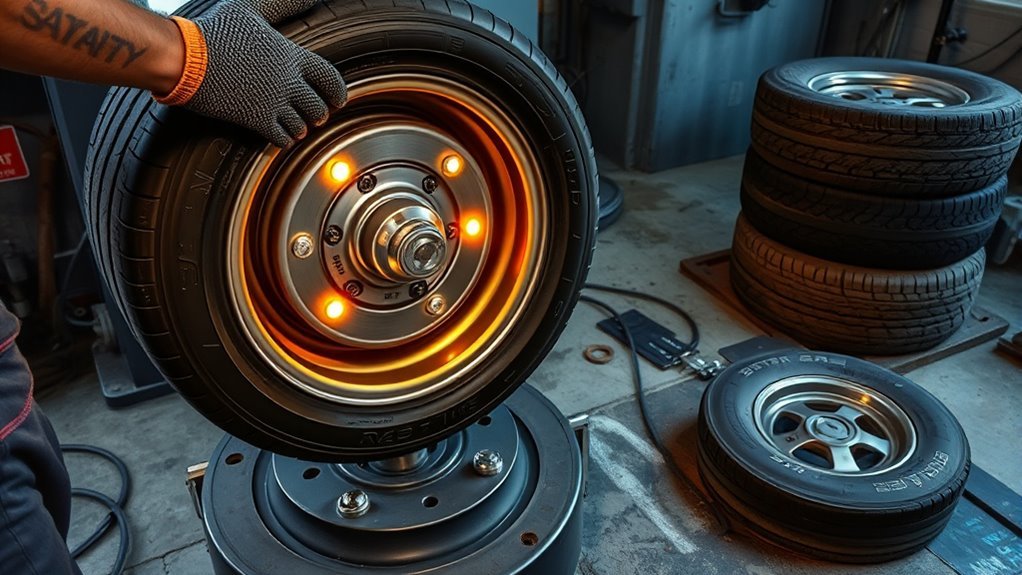
You should balance tires when the tire and wheel assembly may no longer spin evenly. The most common triggers are vibration, new tire installation, flat repair, and wheel-weight loss.
Book tire balancing when:
- You feel vibration at speed. A shake through the steering wheel often points to a front tire or wheel imbalance. A vibration through the seat may point to the rear.
- You install new tires. NHTSA says new tires should always be balanced when installed.
- You repair a flat tire. Removing and remounting a tire can change the balance.
- You rotate tires and notice a new shake. Rotation can move an existing imbalance to a position where you feel it more clearly.
- A wheel weight falls off. Missing weights can bring back vibration quickly.
- You hit a curb or pothole. The impact may bend a wheel, shift balance, or damage suspension parts.
Balancing is not the same as tire rotation. Rotation moves tires to different positions to help even out wear. Balancing corrects weight distribution so each tire and wheel assembly spins smoothly.
When to Align Wheels: Pothole Damage, New Tires, and Pulling
Wheel alignment is the right service when the vehicle’s geometry may be off. That can happen slowly through normal wear or suddenly after a hard impact.
Schedule an alignment check when:
- The vehicle pulls left or right. Test on a straight, level road when traffic is safe. If the pull remains, alignment should be checked.
- The steering wheel is off-center. A crooked wheel while driving straight often points to toe or thrust-angle issues.
- You see uneven tread wear. Inner-edge, outer-edge, feathered, or diagonal wear can point to alignment, pressure, or suspension problems.
- You hit a pothole or curb hard. A sharp impact can move alignment angles outside specification.
- You replace steering or suspension parts. Tie rods, control arms, ball joints, struts, and other parts can change alignment settings.
- You install new tires on a vehicle with old wear problems. Fresh tires should not be forced to run on bad geometry.
Pro Tip: Ask the shop for the before-and-after alignment printout. It shows which angles were out of specification and confirms what was corrected.
Two-Wheel vs. Four-Wheel Alignment
A two-wheel alignment, often called a front-end alignment, focuses on the front wheels. A four-wheel alignment checks and corrects all four wheels where adjustments are available. The right choice depends on the vehicle design, suspension type, and manufacturer specifications.
Many modern cars, crossovers, SUVs, all-wheel-drive vehicles, four-wheel-drive vehicles, and vehicles with independent rear suspension may need four-wheel alignment. Older vehicles with simpler rear suspension may only need front-end or thrust-angle alignment. A shop should choose the service based on your vehicle, not just the cheapest menu option.
The printout matters more than the label. Good alignment work should bring adjustable angles within the vehicle manufacturer’s specification and leave the steering wheel centered during a road test.
[Products Worth Considering]

Accurately measure tire tread depth with a calibrated gauge marked from 0 to 1 inch in 1/32 inch increments. The color-coded bar helps you quickly identify tread condition ranges, supporting safe driving for trucks, motorcycles, automobiles, and passenger vehicles.

Measure tire tread depth quickly and accurately with this LUMITECO dial gauge that reads in 1/32" increments up to 14/32". The color-coded green/yellow/red zones make it easy to judge tire wear and know when replacement is needed. A rugged, compact design with a protective pouch helps keep the gauge ready for use on cars, trucks, motorcycles, and more.

This universal wheel alignment tool helps you accurately restore tire tilt angles after tire or suspension repairs using an adjustable camber gauge. It features a powerful magnetic base that firmly attaches to brake rotors for stationary, slip-free readings, improving consistency during measurement. Built from durable PC plastic, it resists wear and corrosion and is compact enough for car, truck, RV, and motorcycle alignment tasks.
How to Read an Alignment Printout
An alignment printout usually shows before and after measurements for camber, toe, caster, and thrust angle. Shops often use red for out-of-spec readings and green for in-spec readings, but the exact colors vary by machine.
- Before readings show what the vehicle looked like when it arrived.
- After readings show what the technician corrected.
- Green does not always mean perfect. It means the measurement is inside the allowed range.
- Unchanged red readings need an explanation. The vehicle may have worn parts, bent parts, or non-adjustable angles.
Ask the technician to explain any angle that remains outside specification. A proper explanation is more useful than a printout alone.
Why You May Need Both Services
Tire balancing and wheel alignment are different services, but they often work together. Balancing corrects how the tire and wheel spin. Alignment corrects how the tire points and contacts the road.
You may need both when:
- You buy a new set of tires and want to protect them from the start.
- Your old tires show uneven wear and the new tires are being installed.
- You feel vibration and also notice pulling.
- You hit a pothole and now feel shaking or steering drift.
- You recently replaced suspension or steering parts.
Michelin explains that a vehicle can be properly aligned and still vibrate from imbalance. The reverse is also true: a balanced wheel can still wear unevenly if alignment angles are wrong.
Skipping either service can cost more later. Unbalanced tires can create vibration and irregular wear. Poor alignment can cause pulling, uneven tread wear, and reduced steering confidence. Together, the two services help protect tire life, comfort, and handling.
Symptoms That Can Mimic Balance or Alignment Problems
Not every shake or pull comes from balance or alignment. A good shop should check nearby causes before selling a service that will not fix the issue.
- Brake vibration: If the vibration happens mainly while braking, the issue may involve brake rotors or other brake parts.
- Low tire pressure: A low tire can make the vehicle pull and can also damage the tire if ignored.
- Bent wheel: A wheel can bend after a pothole impact and continue to vibrate even after balancing.
- Worn suspension parts: Loose ball joints, tie rods, bushings, or wheel bearings can cause wandering, noise, or uneven wear.
- Tire damage: A separated belt, bubble, or severe cupping can cause vibration that balancing cannot fully remove.
- Road crown: Some roads slope for drainage, so a slight drift on one road is not always an alignment problem.
If the symptom is sudden, severe, or paired with noise, pressure loss, or visible damage, treat it as a safety concern and have the vehicle inspected promptly.
What Happens During Tire Balancing and Wheel Alignment
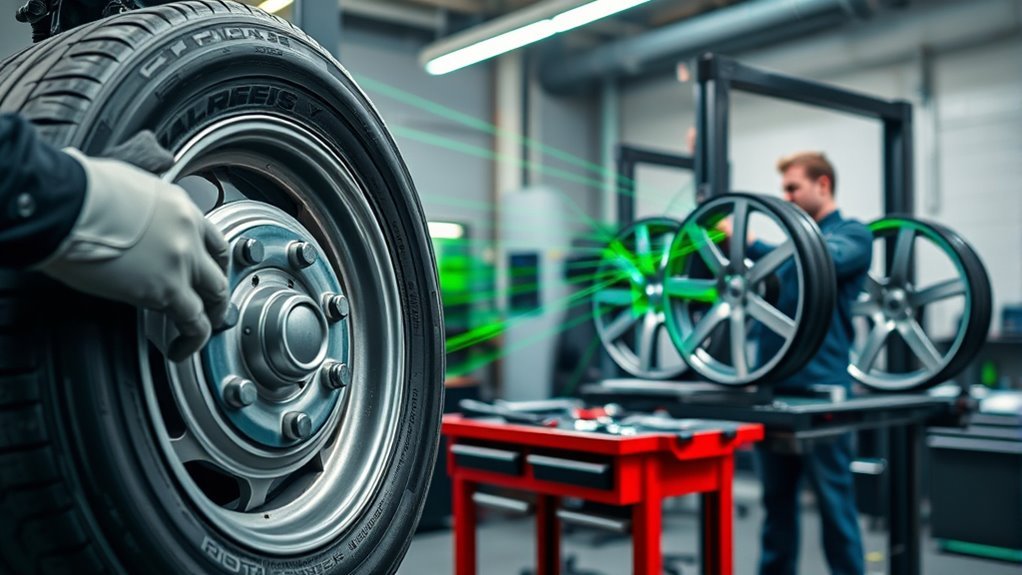
During tire balancing, the technician removes the wheel from the vehicle, mounts the tire and wheel assembly on a balancing machine, and spins it. The machine identifies imbalance and tells the technician where to place wheel weights. After adding weights, the technician verifies the correction.
During wheel alignment, the technician places the vehicle on an alignment rack and attaches sensors to the wheels. The machine compares your vehicle’s camber, toe, caster, and thrust angle to the manufacturer’s specifications. The technician then adjusts the angles that are adjustable on your vehicle.
Balancing usually focuses on each tire and wheel assembly. Alignment focuses on the whole vehicle’s suspension geometry. That is why one service cannot replace the other.
[Products Worth Considering]

The Ziopetru adjustable magnetic wheel alignment tool helps you check and restore camber and caster positioning after removing and reinstalling undercarriage components. With a clear leveling/bubble measurement system and an easy zeroing adjustment knob, it supports precise horizontal angle checking. The strong magnetic base mounts to metal surfaces for convenient use at home on cars, motorcycles, trucks, vans, and SUVs.

The SAFELIFE dial tire tread depth gauge measures tread depth in 1/32 inch increments with clear, easy-to-read 2-inch dial face. Color zones using a traffic light system help you quickly judge whether tread is low, marginal, or ample for safer driving. Built with a durable zinc cast body and a metal detect probe for precise, comfortable use across cars, motorcycles, trucks, and buses.

The Topeak SmartGauge D2 delivers precise digital tire pressure readings for bikes, motorcycles, and sports equipment up to 250 psi (17 bar). Its rotating SmartHead works with both Presta and Schrader valves, so you can check pressure quickly without adapters. The LCD display makes it easy to read results in psi, bar, or kg/cm² with an included CR2032 battery for immediate use.
Can You DIY Tire Balancing or Wheel Alignment?
You can do basic tire checks at home, but accurate balancing and alignment are shop services. You can check cold tire pressure, inspect tread depth, look for missing wheel weights, and watch for visible tire damage. Those checks help you decide whether the vehicle is safe to drive to a shop.
True tire balancing needs a machine that spins the tire and wheel assembly and measures where weight is needed. True alignment needs a level rack, wheel sensors, vehicle specifications, and adjustment knowledge. Home methods may help race teams or experienced mechanics make temporary checks, but they do not replace a proper road-car alignment.
Do not try to compensate for pulling by guessing at tie-rod adjustments. A small toe change can create fast tire wear and unstable steering if it is wrong.
[Products Worth Considering]

Monitor tire tread wear with a smart, color-coded depth gauge that shows clear condition ranges at a glance. The bar is range marked for fast, easy readings, helping you maintain safer traction and performance. Each gauge is portable with a pocket clip, and the set includes 20 units for daily use and sharing.

Replace or upgrade your zero-turn lawn mower tires with a universal fit flat-free tire and wheel assembly in a convenient 2-pack. Smooth tread front-caster style helps turning with reduced turf damage, while flat-free design eliminates the maintenance and downtime of air-filled flats. The included adapter kit supports 5/8-inch axles and hub lengths from 3.4 to 5 inches for compatibility across most ZTR mowers.

ETENWOLF T300 is a calibrated digital tire pressure gauge designed for reliable readings across low and high pressure ranges. It includes thermal compensation for stable performance in extreme cold or heat, an LED light for visibility, and an auto shut-off to help preserve battery life. Ideal for pickups, RVs, and heavy-duty vehicles, it delivers accurate PSI measurements with sturdy durability.
How Often to Balance and Align: Mileage Guidelines
There is no single perfect interval for every vehicle, tire, and driving condition. Your owner’s manual and tire warranty should guide your maintenance schedule. Still, many drivers use tire rotation time as a natural checkpoint.
NHTSA says to check the owner’s manual for tire rotation frequency and notes that, if recommended by the vehicle manufacturer, tires are often rotated every 5,000 to 8,000 miles or sooner if uneven wear appears. Bridgestone also states that having tires aligned and balanced every 5,000 to 6,000 miles can help maximize tire lifespan and performance.
Use these practical rules:
- Balance tires when installing new tires, after a flat repair, when you feel vibration, or when the shop recommends it after rotation.
- Check alignment when the vehicle pulls, the steering wheel is off-center, tread wear looks uneven, or you hit a pothole or curb hard.
- Inspect tire pressure and tread monthly. NHTSA recommends checking tire pressure when tires are cold and checking tread regularly.
- Do not wait for severe symptoms. Early correction usually protects tires better than delayed repair.
Balancing vs. Alignment vs. Rotation vs. Pressure
These tire services are easy to confuse because they all affect ride quality and tire life. Here is the simple difference:
- Balancing: Corrects uneven weight in the tire and wheel assembly.
- Alignment: Corrects suspension angles so the tires point and contact the road correctly.
- Rotation: Moves tires to different vehicle positions to help even out wear.
- Tire pressure check: Confirms each tire is inflated to the vehicle manufacturer’s recommended cold pressure.
You need all four over the life of the tires. Balancing and alignment handle mechanical precision. Rotation and pressure checks help keep tread wear even and reduce avoidable tire stress.
Frequently Asked Questions
Does a Jeep Wrangler need an alignment?
Yes. A Jeep Wrangler should have alignment checked when it pulls, the steering wheel sits off-center, tread wear looks uneven, or suspension parts have been changed. It is also smart to check alignment after hard off-road impacts, pothole hits, curb strikes, lift-kit installation, or steering component replacement.
How much should a full alignment cost?
Alignment cost varies by vehicle, location, shop, and whether you need a two-wheel or four-wheel alignment. Investopedia’s 2026 cost guide lists typical ranges around $50 to $100 for two-wheel alignment and $100 to $200 for four-wheel alignment. Kelley Blue Book also lists tire alignment service commonly around $100 to $200, with dealership averages near $183. Ask whether the quote includes camber, toe, caster checks, a road test, and a printout.
Which is more important, alignment or balancing?
Neither service replaces the other. Balancing matters when the tire and wheel assembly shakes or vibrates. Alignment matters when the vehicle pulls, the steering wheel is off-center, or tread wear is uneven. For best results, use the symptom to decide which service to check first.
Do I need an alignment every time I rotate tires?
Not always. Tire rotation and wheel alignment are different services. You should consider an alignment check during rotation if the tread shows uneven wear, the vehicle pulls, the steering wheel is off-center, or the vehicle recently hit a pothole or curb.
Should I get an alignment with new tires?
You should balance new tires when they are installed. You should also check alignment if the old tires had uneven wear, the vehicle pulled before tire replacement, the steering wheel was off-center, or suspension parts were recently repaired. Good alignment helps protect the new tread from early uneven wear.
Can alignment fix vibration?
Sometimes, but vibration is more often linked to tire balance, tire damage, bent wheels, brake problems, or worn suspension parts. Alignment is more likely to fix pulling, off-center steering, and uneven tread wear. If vibration remains after balancing, ask the shop to inspect the tires, wheels, brakes, and suspension.
Can bad tires still vibrate after balancing?
Yes. A tire with a separated belt, severe cupping, sidewall bubble, flat spot, or internal damage may still vibrate after balancing. A bent wheel, brake issue, or worn suspension part can also cause vibration that balancing will not solve.
Is four-wheel alignment always necessary?
No. Some vehicles only need a front-end or thrust-angle alignment, while many modern cars, AWD vehicles, 4WD vehicles, and vehicles with independent rear suspension may need four-wheel alignment. The shop should follow your vehicle manufacturer’s specifications and explain which angles are adjustable.
How long do tire balancing and wheel alignment take?
A simple tire balance or alignment often takes about 30 to 90 minutes, depending on the vehicle and shop workload. It can take longer if the technician finds bent wheels, seized adjustment parts, worn suspension components, tire damage, or other problems that must be fixed first.
Conclusion
Tire balancing and wheel alignment solve different problems. If your car vibrates or shakes, start with balancing. If it pulls, wanders, wears tread unevenly, or has an off-center steering wheel, start with alignment. If you recently installed tires, repaired a flat, hit a pothole, or replaced suspension parts, ask the shop whether both services should be checked.
Your tires are the only connection between the vehicle and the road. Treat vibration, pulling, and uneven wear as early warnings, not minor annoyances. A timely balance or alignment can protect your tires, improve handling, and make every drive feel smoother and safer.
Sources
- National Highway Traffic Safety Administration TireWise — tire safety, pressure, tread, balance, alignment, rotation, and tire-related crash data.
- Bridgestone Tire Alignment Guide — alignment definition, camber, toe, caster, balancing process, and practical service interval guidance.
- Michelin Wheel Alignment & Balancing Explained — how alignment and balancing differ, why both may be needed, and vibration/wear context.
- Michelin Symptom: Vibration — tire vibration diagnosis, balancing triggers, and when to inspect suspension components.
- Investopedia Wheel Alignment Cost Guide — 2026 alignment cost ranges and cost factors.
- Kelley Blue Book Wheel Alignment Guide — current alignment cost context, four-wheel alignment guidance, and professional service requirements.
