

A 4Runner shimmy around 60 mph usually comes from something that spins at road speed: tires, wheels, hubs, brakes, or driveline parts. Start with the simple checks first, then move to road force balancing, alignment, suspension, and driveline inspection. Do not guess, because one wrong repair can leave the shake unchanged.
Quick Answer
A Toyota 4Runner shimmy at 60 mph is most often caused by tire imbalance, tire runout, bent wheels, uneven tire wear, alignment issues, worn steering or suspension parts, brake pulsation, or driveline vibration. Check tire pressure and tire condition first, then ask for road force balancing and a written inspection report.
Key Takeaways
- A steering wheel shake at 55–70 mph usually points first to tires, wheels, balance, runout, or front-end parts.
- A shake felt more through the seat or floor may point to rear tires, driveshaft, U-joints, axle parts, or rear suspension.
- Road force balancing can catch tire uniformity, rim runout, bead seating, and pull issues that a standard balance may miss.
- Do not perform highway tests, neutral coasting, or 4WD checks unless you can do so legally, safely, and within your owner’s manual instructions.
- Keep every balance sheet, alignment printout, tire pressure reading, and dealer repair order if you plan to request warranty help.
At a Glance
| Time Required | 15 minutes for basic checks; 1–2 hours for shop diagnosis |
| Difficulty | Easy for pressure and visual checks; professional for balance, alignment, suspension, brakes, and driveline work |
| Tools Needed | Tire pressure gauge, tread depth gauge, flashlight, torque wrench, alignment printout, road force balance report |
| Cost | Often free for DIY checks; shop costs vary by balance, alignment, tire replacement, brake work, or worn parts |
Warning: Do not diagnose a vibration by making sudden lane changes, hard braking, or shifting modes in traffic. Use a safe road, obey local laws, keep both hands on the wheel, and stop testing if the shake feels severe, new, or unstable.
What Causes the 4Runner Shimmy at 60 MPH?
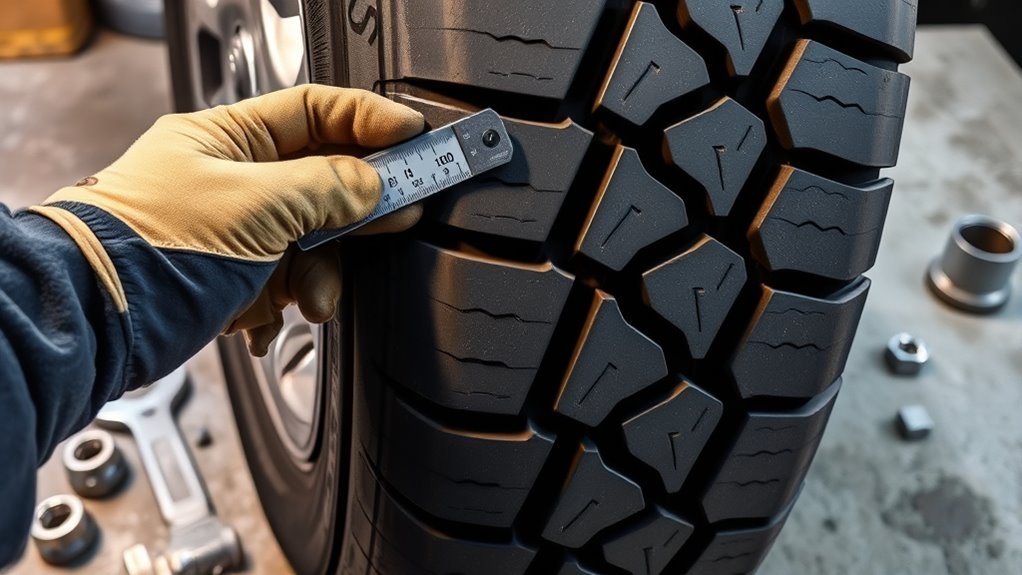
When your 4Runner shakes around 60 mph, the cause is usually tied to wheel speed. That means the first suspects are tire balance, tire runout, uneven tread wear, bent wheels, loose wheel hardware, hub issues, or a tire that is not seated evenly on the rim.
NHTSA tire safety guidance notes that tire balancing helps prevent shaking or vibration, while wheel alignment helps tire life and straight-line tracking. That matches the usual diagnostic order: check tire pressure, inspect the tires and wheels, balance the assemblies, then verify alignment and mechanical wear.
Suspension and steering parts can also amplify a tire problem. Worn shocks, loose tie rods, weak bushings, bad ball joints, and worn wheel bearings may turn a small imbalance into a clear steering wheel shimmy. Brakes can enter the picture too, especially if the vibration appears while braking from highway speed.
| What you feel | Most likely area to check first |
| Steering wheel shakes at 55–70 mph | Front tire balance, tire runout, bent wheel, front steering or suspension wear |
| Seat or floor shakes more than the wheel | Rear tires, rear wheels, driveshaft, U-joints, rear axle, rear suspension |
| Vibration appears mainly while braking | Brake rotor runout, pad deposits, caliper issues, loose or worn front-end parts |
| Shake gets worse after installing larger tires or wheels | Road force balance, wheel centering, hub-centric rings, lug torque, tire load rating, alignment |
Tires or Drivetrain: How to Tell What’s Causing Your Shake
You can narrow the cause by paying attention to speed, feel, load, and location. A tire or wheel issue usually follows road speed. It often peaks in a narrow range, such as 55–70 mph, then may fade above or below that range. A driveline vibration may feel deeper in the floor or seat and may change when the drivetrain load changes.
Start With Basic Tire Checks
- Check cold tire pressure. Use the pressure listed on your 4Runner’s door placard or owner’s manual, not the maximum pressure molded into the tire sidewall. NHTSA recommends checking tire pressure at least once a month when tires are cold.
- Inspect tread and sidewalls. Look for cupping, feathering, flat spots, bulges, cuts, separated tread blocks, or uneven wear from side to side.
- Check wheel condition. Look for bent lips, missing weights, packed mud, stones, ice, or debris inside the wheel barrel.
- Confirm lug nut torque. Use the correct torque spec for your model year and wheel type. Uneven torque can distort brake rotors or leave a wheel slightly off-center.
Use Road Speed, Not Engine Speed
A 60 mph shimmy that stays tied to vehicle speed usually points to parts that keep spinning at that speed: tires, wheels, hubs, bearings, axles, driveshafts, or brake rotors. If the vibration changes mostly with engine rpm while road speed stays the same, the cause may be engine, transmission, mount, or exhaust related.
Note: A neutral coast test is not a first step and should not be done in traffic. If a qualified technician uses it, the point is to see whether vibration follows road speed or engine load. A vibration that continues in neutral can still come from tires, wheels, hubs, brakes, axles, or driveshafts.
What to Tell the Shop
Give the technician exact details. Say when the shimmy starts, when it peaks, whether it fades above 70 mph, whether it is felt in the steering wheel or seat, whether braking changes it, and whether it started after tire rotation, new tires, off-road use, a lift, or wheel installation.
Does Road Force Balancing Actually Fix 4Runner Shimmy?
Road force balancing often helps when a normal balance does not. A standard spin balance corrects weight imbalance, but it may miss tire stiffness variation, rim runout, bead seating problems, and tire-and-wheel combinations that are round separately but not smooth as an assembly.
Hunter’s Road Force wheel balancer information explains that the machine uses a diagnostic load roller to simulate road conditions and identify vibration issues that standard balancers may not detect. It can also identify tire uniformity issues, rim runout, improper bead seating, and pull-related problems.
[Products Worth Considering]

Monitor tire tread wear with a smart, color-coded depth gauge that shows clear condition ranges at a glance. The bar is range marked for fast, easy readings, helping you maintain safer traction and performance. Each gauge is portable with a pocket clip, and the set includes 20 units for daily use and sharing.

Measure tire tread depth quickly and accurately with this LUMITECO dial gauge that reads in 1/32" increments up to 14/32". The color-coded green/yellow/red zones make it easy to judge tire wear and know when replacement is needed. A rugged, compact design with a protective pouch helps keep the gauge ready for use on cars, trucks, motorcycles, and more.

The SAFELIFE dial tire tread depth gauge measures tread depth in 1/32 inch increments with clear, easy-to-read 2-inch dial face. Color zones using a traffic light system help you quickly judge whether tread is low, marginal, or ample for safer driving. Built with a durable zinc cast body and a metal detect probe for precise, comfortable use across cars, motorcycles, trucks, and buses.
How It Works
During a road force balance, the shop spins the mounted tire and wheel while a roller presses against the tread. The machine measures how evenly the assembly rolls under load. If the tire has a stiff spot or the wheel has runout, the machine can recommend match-mounting, which means rotating the tire on the rim to place the tire’s high spot against the wheel’s low spot.
- Measure the assembly. The machine checks balance and road force variation.
- Check wheel and tire runout. The technician looks for bent wheels, out-of-round tires, or mounting problems.
- Match-mount if needed. The tire may be repositioned on the wheel to reduce vibration.
- Print the results. Ask for the before-and-after road force numbers for each tire and wheel.
When Road Force Balancing Helps Most
Road force balancing is worth requesting when the 4Runner still shakes after a standard balance, when the vibration appeared after new tires, when the tires are all-terrain or larger than stock, or when the steering wheel shakes in a narrow highway-speed range.
When Road Force Balancing Will Not Fix It
Road force balancing will not repair worn ball joints, loose tie rods, warped or uneven brake rotors, failing wheel bearings, damaged CV axles, worn U-joints, bad shocks, or incorrect alignment. If the road force numbers are acceptable and the shake remains, move to mechanical inspection instead of paying for repeated balances.
Pro Tip: Ask the shop to mark each wheel position before rotating or balancing. If the shimmy moves from the steering wheel to the seat after tire rotation, you have strong evidence that one tire or wheel assembly is involved.
What Actually Fixed the 4Runner Shimmy Owner Reports
Owner reports are useful, but they are not proof by themselves. Use them as clues and confirm the cause with measurements. The most common successful fixes usually follow the same pattern: tire pressure correction, road force balancing, tire replacement, wheel repair, alignment, or worn-part replacement.
- Road force balancing: Often helps when standard balancing fails, especially with all-terrain tires or newly installed tires.
- Replacing one bad tire: A tire can look fine but still have excessive road force or runout.
- Repairing or replacing a bent wheel: Even a small bend can show up at highway speed.
- Alignment correction: Bad toe, caster, or camber can increase tire wear and make a vibration more noticeable.
- Front-end repairs: Tie rods, ball joints, bushings, shocks, and wheel bearings should be checked when tire and wheel numbers look good.
- Brake work: If the shake appears mainly under braking, inspect rotor runout, pad condition, calipers, and wheel torque.
Do not keep paying for the same repair without new data. Ask for tire pressure readings, tread depth readings, road force results, wheel runout readings, and an alignment printout. Those numbers show whether the repair changed anything.
Is Your 4Runner’s Suspension Causing the Shake?

Your suspension may not create the original imbalance, but it can make the shake easier to feel. Shocks, struts, bushings, tie rods, control arms, ball joints, and steering rack components all help control wheel movement. When those parts wear, the tire can bounce, shimmy, or transmit more vibration into the cabin.
Warning: Do not crawl under a 4Runner supported only by a jack. Use proper jack stands on a stable surface, or let a qualified shop inspect the suspension, steering, brakes, and driveline.
Ask the technician to inspect these areas:
- Shocks and struts: Look for leaks, weak damping, uneven bounce, or damaged mounts.
- Ball joints and tie rods: Check for play, torn boots, and looseness under load.
- Control arm bushings: Look for cracking, separation, or movement that changes alignment under speed.
- Wheel bearings and hubs: Check for growling, looseness, heat, or play.
- Steering rack and mounts: Check for movement, leaks, or worn bushings.
If your 4Runner has a lift kit, oversized tires, wheel spacers, or heavy aftermarket wheels, the inspection matters even more. Modified setups can increase leverage on steering and suspension parts, make balance more sensitive, and require a careful alignment from a shop that understands lifted 4Runners.
[Products Worth Considering]

Accurately measure tire tread depth with a calibrated gauge marked from 0 to 1 inch in 1/32 inch increments. The color-coded bar helps you quickly identify tread condition ranges, supporting safe driving for trucks, motorcycles, automobiles, and passenger vehicles.

Replace or upgrade your zero-turn lawn mower tires with a universal fit flat-free tire and wheel assembly in a convenient 2-pack. Smooth tread front-caster style helps turning with reduced turf damage, while flat-free design eliminates the maintenance and downtime of air-filled flats. The included adapter kit supports 5/8-inch axles and hub lengths from 3.4 to 5 inches for compatibility across most ZTR mowers.

This universal wheel alignment tool helps you accurately restore tire tilt angles after tire or suspension repairs using an adjustable camber gauge. It features a powerful magnetic base that firmly attaches to brake rotors for stationary, slip-free readings, improving consistency during measurement. Built from durable PC plastic, it resists wear and corrosion and is compact enough for car, truck, RV, and motorcycle alignment tasks.
Test in 4WD High: Ruling Out Driveline Vibration
A driveline issue can feel different from a front tire imbalance. You may feel it more through the seat, floor, or center of the vehicle. It may also change under acceleration, coasting, hill climbing, or load.
Be careful with 4WD testing. Some 4Runner trims have part-time 4WD modes that should not be used on dry, high-traction pavement. Other trims have full-time 4WD or different center differential behavior. Check the correct Toyota owner’s manual and warranty resource for your exact model year and drivetrain before using any 4WD mode as a diagnostic test.
If your manual allows the mode and the road surface is appropriate, a technician may compare how the vibration feels in different drive modes. A change in vibration can point toward driveshaft angles, U-joints, CV axles, transfer case output, or differential load. If you are unsure, skip this test and ask a shop to inspect the driveline on a lift.
Common driveline checks include:
- U-joints: Look for play, rust dust, binding, or dry movement.
- Driveshaft: Check for dents, missing balance weights, worn slip yoke, or incorrect phasing.
- CV axles: Inspect boots, joints, and angle changes after a lift.
- Differentials and transfer case: Check fluid condition, leaks, mounts, and abnormal noises.
Aftermarket Wheels, Lifts, and All-Terrain Tires
Many 4Runner shimmy complaints start after tire or wheel changes. Larger all-terrain tires, aggressive tread blocks, heavier wheels, spacers, and lift kits can all make a small imbalance easier to feel.
Check these details before blaming the suspension:
- Hub-centric fit: If the wheel center bore is larger than the hub, you may need the correct hub-centric rings.
- Lug-centric mounting: Some aftermarket wheels need careful hand tightening in stages before final torque.
- Wheel offset and spacers: More poke can increase steering feedback and bearing load.
- Tire load rating and construction: Heavy LT tires may ride harsher and need a precise balance.
- Alignment after lift: Caster, toe, and camber should be checked after suspension changes.
[Products Worth Considering]

These M14x1.5 closed-end chrome lug nuts are a one-piece replacement designed for secure fitment on compatible GM, Ford, and select Chrysler/Dodge models. Featuring a 60-degree conical seat and anti-rust chrome plating, they help resist corrosion and maintain a bright look for everyday driving. Built for long-term durability, they include OEM-style part references and are backed by 12 months of support.

This professional wheel and rim brush kit makes it easy to lift brake dust, grime, and dirt from wheels and tires without scratching finishes. The brushes feature soft, metal-free wool heads and a flexible 360-degree rim brush design for reaching hard-to-clean areas. Includes multiple brush types plus accessories for thorough car, motorcycle, and general vehicle detailing.

These pre-assembled 15x6.00-6 front tire and wheel assemblies are designed for quick replacement on riding lawn mowers and lawn tractors. Built with natural rubber pneumatic tires and turf-friendly tread for solid traction and improved shock absorption. A thickened welded rim and 3/4" sintered iron bushing help provide stable, heavy-duty support for everyday mowing use.
Which 4Runner Shimmy Issues Toyota Actually Covers
Toyota coverage depends on your model year, mileage, warranty status, modifications, diagnosis, and whether the failed part is a covered component or a wear item. Toyota lists a 36-month/36,000-mile basic coverage period for covered components other than normal wear and maintenance items, and a 60-month/60,000-mile powertrain coverage period for major powertrain systems.
That does not mean every vibration repair is covered. Tire wear, routine balancing, alignment after impacts, modified suspension geometry, aftermarket wheels, and road damage may be treated differently from a defective covered steering, suspension, bearing, or driveline part.
Improve your odds of a fair review by documenting everything:
- Write down the symptom. Note speed, road surface, temperature, load, tire pressure, and whether it happens while braking or accelerating.
- Request written repair orders. Ask the dealer or shop to describe the vibration, not just “customer states shake.”
- Keep measurements. Save road force balance sheets, alignment printouts, tire tread readings, and inspection notes.
- Disclose modifications. Lifts, spacers, aftermarket wheels, and non-stock tire sizes can affect coverage and diagnosis.
- Escalate calmly. If the same issue returns, ask for a shop foreman road test and contact Toyota customer support with your repair history.
How to Keep Your 4Runner Smooth After the Fix

Once the shimmy is fixed, keep the same system from coming back. NHTSA recommends monthly cold tire pressure checks, regular tread checks, balancing, alignment service, and tire rotation based on your owner’s manual or every 5,000 to 8,000 miles when recommended by the manufacturer.
Use this maintenance rhythm:
- Monthly: Check cold tire pressure, tread depth, sidewall condition, and wheel damage.
- Every rotation: Look for cupping, feathering, uneven shoulder wear, and missing wheel weights.
- After new tires: Ask for balance results and consider road force balancing if you use larger or more aggressive tires.
- After impacts: Inspect wheels and alignment after potholes, curb hits, trail impacts, or hard off-road use.
- After suspension changes: Get a proper alignment and recheck torque on modified components as recommended by the part maker.
Do not rely only on TPMS. NHTSA says TPMS is not a substitute for regular tire maintenance because it warns only when pressure is significantly low. A tire can be low enough to affect ride quality before the warning light appears.
Frequently Asked Questions
Does tire pressure affect the 4Runner shimmy?
Yes. Incorrect tire pressure can make a shimmy worse, increase uneven wear, and change how the tire contacts the road. Check all tires when cold and use the pressure listed on the door placard or in the owner’s manual.
Can aftermarket wheels cause worse vibrations?
Yes. Aftermarket wheels can cause vibration if they are not centered correctly, need hub-centric rings, have incorrect offset, are bent, use the wrong lug seat, or are paired with tires that need road force balancing.
Is the shimmy dangerous to ignore long-term?
It can be. A mild balance issue may only wear tires faster, but a severe or worsening shake can point to tire damage, loose steering parts, worn bearings, brake problems, or driveline wear. If the vibration is new, strong, or getting worse, have it inspected.
Do TRD models have more shimmy issues?
TRD models do not automatically have more shimmy issues. However, aggressive tires, off-road use, added weight, lifts, and wheel changes can make balance, alignment, and suspension condition more noticeable at highway speed.
Will Toyota buy back my vibrating 4Runner?
Toyota will not automatically buy back a 4Runner because it vibrates. Buyback or lemon law relief depends on your state, warranty status, repair history, mileage, defect type, and documented repair attempts. Keep every dealer repair order and ask for written test results.
Should I ask for standard balancing or road force balancing?
Start with a proper balance if the tires have not been balanced recently. If the shake remains, ask for road force balancing with printed results because it can reveal tire uniformity, rim runout, bead seating, and match-mounting problems.
Why does my 4Runner shake only around 60 mph?
A vibration can peak at one speed because the tire, wheel, suspension, or driveline reaches a speed where the imbalance is easiest to feel. That is why a 4Runner may feel smooth at 40 mph, shake at 60 mph, then feel less obvious at 75 mph.
Conclusion
Your 4Runner’s shimmy at 60 mph is not something to ignore, but it is something you can diagnose in order. Start with cold tire pressure, tire condition, wheel damage, and lug torque. Then move to road force balancing, alignment, brakes, suspension, wheel bearings, and driveline parts.
The best fix is the one backed by measurements. Get the balance report, alignment printout, tire readings, and inspection notes. Once you know whether the vibration follows the tire, wheel, brake, suspension, or driveline, you can stop guessing and get your 4Runner smooth again.
Sources
- NHTSA TireWise — tire pressure, tire maintenance, balance, alignment, rotation, TPMS, and tire safety guidance.
- Hunter Engineering Road Force Wheel Balancers — road force balancing, diagnostic load roller, tire uniformity, rim runout, bead seating, and pull detection.
- Toyota Manuals and Warranties — owner manual lookup, warranty overview, and coverage reference.
