
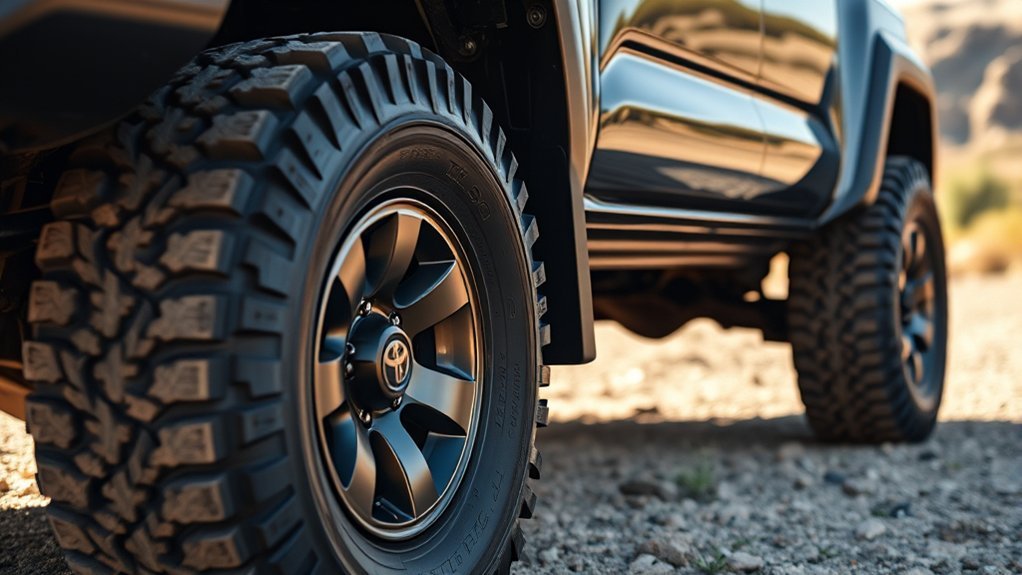
Choosing tires for a Toyota Tacoma TRD Off-Road is not just about picking the biggest size that looks good. The right tire has to match your model year, wheel diameter, load rating, suspension clearance, speedometer accuracy, and the way you actually drive. For most 2020–2023 Tacoma TRD Off-Road trucks, the factory tire size is P265/70R16, while newer fourth-generation models use different factory fitments, so always confirm the tire placard on the driver-side doorjamb before buying.
Quick Answer
Most 2020–2023 Toyota Tacoma TRD Off-Road models use P265/70R16 tires on 16-inch wheels. For 2024 and newer Tacomas, check your door-jamb tire label because factory TRD Off-Road sizing moved to larger 17- and package-dependent 18-inch fitments. Popular upgrades include 275/70R17 and 285/70R17, but they may need clearance work.
Key Takeaways
- Factory size for most 2020–2023 TRD Off-Road trucks: P265/70R16.
- 2024+ trucks are different: Toyota’s newer Tacoma generation uses larger factory tire fitments, so do not assume a 2020–2023 size applies.
- 275/70R17 and 285/70R17 can work for many builds, but clearance depends on lift height, wheel offset, tire brand, and suspension setup.
- Never choose a lower load rating than the tire specified on your Tacoma’s tire placard or owner information.
- Measure before ordering: check fender-liner, mud-flap, upper-control-arm, sway-bar, and cab-mount clearance at full steering lock.
At a Glance
| Time Required | 15–30 minutes to check tire label, measure clearance, and compare upgrade sizes |
| Difficulty | Easy for stock replacement; moderate for upsizing |
| Tools Needed | Tape measure, flashlight, tire-pressure gauge, straightedge, calculator or tire-size comparison tool |
| Cost | $0–$25 to measure at home; tire cost varies by brand, load rating, and size |
Understanding the Impact of Tire Size on Performance
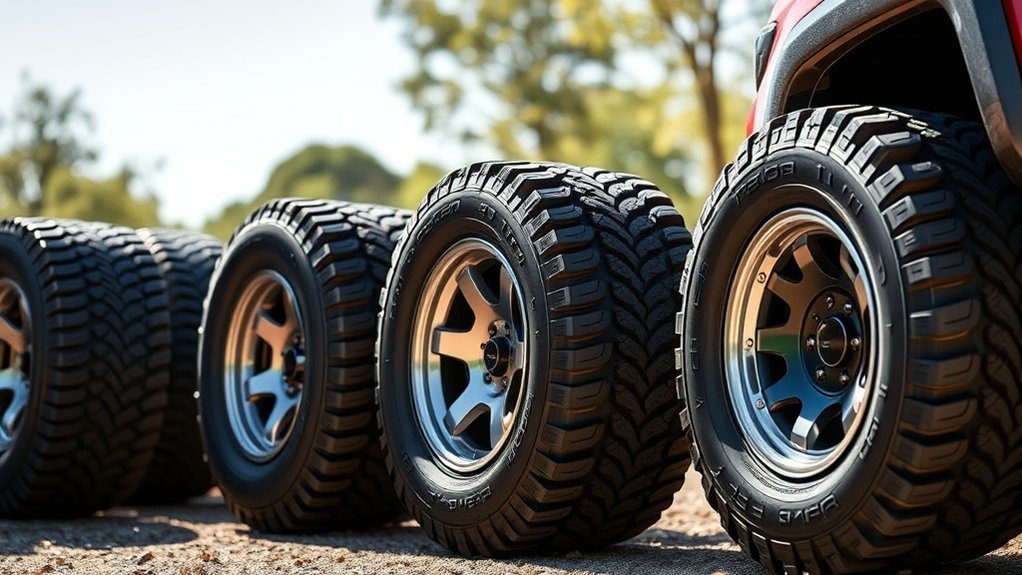
Tire size affects more than the look of your Tacoma. A taller tire can increase ground clearance and improve the approach angle slightly, but it also changes the effective gearing, rotating weight, braking feel, acceleration, and speedometer reading. A wider tire may add grip in some conditions, but it can also rub the upper control arm, fender liner, mud flap, or cab mount if the wheel offset and suspension setup are not right.
The factory size is the safest starting point because Toyota designed the truck’s clearance, gearing, tire-pressure recommendation, stability systems, and load capacity around that tire. The National Highway Traffic Safety Administration recommends checking the owner’s manual or Tire and Loading Information Label on the driver-side door edge or post to confirm the correct tire size and pressure for your vehicle.
Warning: Do not install tires with a lower load index, lower speed rating, or less load-carrying capacity than the original tire specified for your Tacoma. Under-rated tires can overheat, wear poorly, or fail under payload, towing, or off-road use.
Toyota Tacoma TRD Off-Road Tire Size by Year
For most 2020–2023 Tacoma TRD Off-Road models, the factory tire size is P265/70R16. Toyota’s 2021, 2022, and 2023 Tacoma brochures list 16-inch machined contrast alloy wheels with P265/70R16 tires for the TRD Off-Road trim. For 2024 and newer models, the fourth-generation Tacoma changed the factory fitment, so you should not copy a 2020–2023 tire size without checking your truck’s door label.
| Model Year | Common Factory TRD Off-Road Tire Size | What to Check |
|---|---|---|
| 2020–2023 | P265/70R16 | Confirm the driver-side door placard, especially if wheels were changed by a previous owner or dealer package. |
| 2024+ | 265/70R17 on many TRD Off-Road builds; some packages use larger 18-inch-wheel tire fitments | Check the tire label, window sticker, or build sheet because fourth-generation packages vary. |
Toyota’s 2024 Tacoma brochure lists TRD Off-Road tire fitments including 265/70R17 and available 265/70R18 all-terrain tires. Toyota’s 2026 Tacoma release also notes that the TRD Off-Road i-FORCE Premium Package features 18-inch TRD wheels paired with 32-inch Goodyear All-Terrain tires. That is why the door-jamb label matters more than a generic year range.
How to Read a Tacoma Tire Size
A size like P265/70R16 is easier to understand when you break it down:
- P: P-metric passenger-vehicle tire designation. Some replacement tires may be LT-rated, but they should still meet the truck’s required load capacity.
- 265: Section width in millimeters.
- 70: Aspect ratio. The sidewall height is 70% of the tire’s width.
- R: Radial construction.
- 16: Wheel diameter in inches. A 16-inch tire must be mounted on a 16-inch wheel.
The tire size alone is not the whole specification. Also match or exceed the original load index and use a speed rating appropriate for the vehicle. The U.S. Tire Manufacturers Association recommends replacement tires with the same size, load index, and speed rating designation recommended by the vehicle or tire manufacturer.
What Tire Sizes Fit Your Toyota Tacoma?
For a simple replacement on a 2020–2023 Toyota Tacoma TRD Off-Road, stay with P265/70R16 unless your door label shows something else. This keeps the ride, gearing, speedometer, ABS/traction-control behavior, and spare-tire match closest to factory.
If you want a taller tire, common upgrade sizes include 265/70R17, 275/70R17, and 285/70R17. These sizes are popular because they add height and a wider stance, but they are not automatic bolt-on upgrades for every Tacoma. Fitment depends on your wheel offset, suspension height, tire brand, alignment settings, and whether your truck still has the factory mud flaps and body mount position.
| Tire Size | Approx. Diameter | Fitment Notes |
|---|---|---|
| 265/70R16 | 30.6 in. | Factory-style fit for most 2020–2023 TRD Off-Road trucks. |
| 265/70R17 | 31.6 in. | Common 17-inch-wheel size; verify wheel diameter and clearance before swapping. |
| 275/70R17 | 32.2 in. | May need careful offset, alignment, mud-flap trimming, or minor liner adjustment. |
| 285/70R17 | 32.7 in. | Often requires lift, trimming, cab-mount clearance work, aftermarket wheels, or upper-control-arm clearance checks. |
Pro Tip: A tire that is one inch taller does not raise the whole truck one inch. It raises the axle and frame by about half the tire-diameter increase. The rest of the height sits above the axle.
[Products Worth Considering]

These aluminum alloy tire valve stem caps with an O-ring seal help protect valve stems from corrosion while adding a clean, stylish look to your vehicle. The universal fit works across cars, trucks, motorcycles, bicycles, and more, making them an easy upgrade for everyday driving and off-road use. Installation is quick, and the included four-pack keeps all your tires dressed and protected.

A concentrated tire and tube mounting compound designed to help simplify mounting rubber tires and tubes on passenger, semi truck, construction, and OTR applications. Its ultra-thick formula packs beads effectively and includes rust inhibitors to help protect against corrosion during use.

LiQuiTube Premium Heavy Duty Tire Sealant provides permanent flat tire protection to help maintain proper air pressure while sealing punctures and leaks. It seals bead, rim, and porosity weathering leaks and helps prevent flats in heavy ply industrial tires. Designed for versatile use on trailers and off-road equipment, it can be installed in tubeless tires and also inside tubes.
Essential Factors for Selecting Off-Road Tires
Selecting the right off-road tires for your Toyota Tacoma TRD Off-Road comes down to six main factors: size, load rating, tread pattern, tire construction, wheel offset, and the terrain you drive most often.
[Products Worth Considering]

Replace worn or missing TPMS sensors with a pre-programmed 4-pack designed for compatible GM vehicles. These 315MHz sensors provide real-time tire pressure monitoring and alert you if pressure is too high, too low, or if a rapid air leak occurs. Most installations are ready with minimal relearn effort after mounting, helping improve safety and driving confidence.

Keep your tires properly inflated with this analog VONDIOR tire pressure gauge, designed for fast, easy readings without batteries. The swiveling, two-axis hose and large glow dial help you measure at any tire angle with instant visibility. Built with a protective rubber shield, it supports durable, low-maintenance use for cars and trucks.

The Tymate TM12 RV TPMS delivers real-time tire pressure and temperature monitoring with a stable 433Hz display for safer long-distance driving. It supports simultaneous monitoring across vehicle and trailer zones, includes six alarm modes for pressure, temperature, leakage, battery, and signal loss, and features easy DIY installation with auto calibration. Power is supplied via USB-C charging or solar recharging, with a wide 0–144 PSI range and up to 50 ft signal coverage for RVs and towable trailers.
Tread Pattern
All-terrain tires are usually the best daily-driver choice because they balance highway manners, wet-road traction, gravel performance, and trail grip. Mud-terrain tires can work better in deep mud and sharp rocks, but they often add road noise, weight, and wet-pavement compromise.
Load Rating and Speed Rating
Check the load index and speed rating on the tire placard or current tire sidewall. If you tow, carry recovery gear, add armor, or install a bed rack and tent, pay extra attention to load capacity. Never buy a replacement tire with less load-carrying capacity than the original specification.
P-Metric vs. LT Tires
Many Tacoma owners choose LT-rated tires for stronger construction and better sidewall durability on rocks and rough trails. The tradeoff is that LT tires are often heavier and may ride firmer. A heavier tire can reduce acceleration and fuel economy, so choose LT construction because you need the durability, not just because it sounds tougher.
Wheel Offset and Clearance
Wheel offset determines how far the tire sits inward or outward. Too much inward position can rub the upper control arm. Too much outward position can push the tire into the fender liner or mud flap during turns. That is why two Tacomas with the same tire size can have different rubbing results.
Common Tacoma TRD Off-Road Tire Fitment Questions
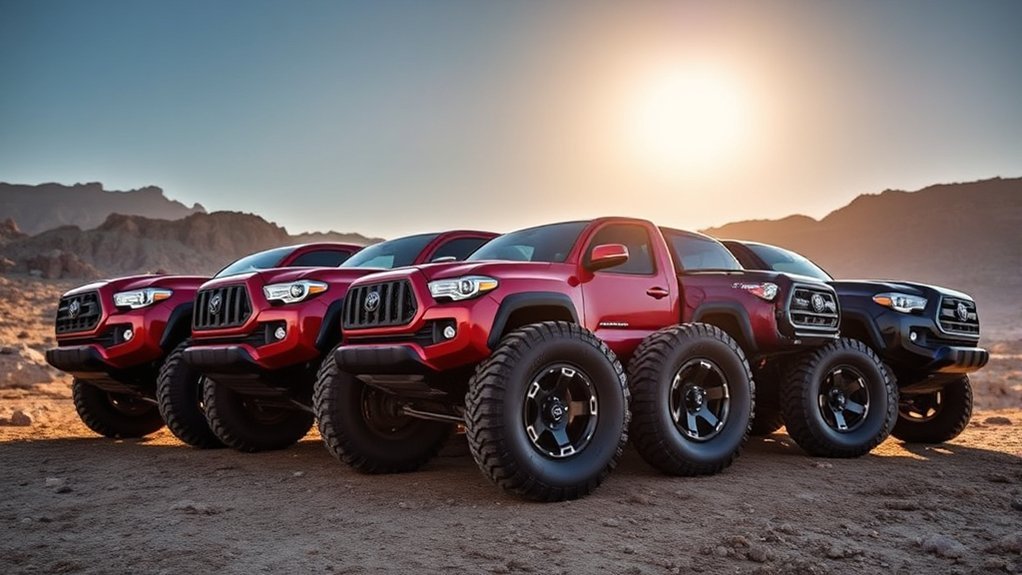
The factory tire size is important because it protects the truck’s intended balance of clearance, ride comfort, steering response, load capacity, and electronic-system calibration. Upgrades such as 275/70R17 or 285/70R17 can improve stance and trail clearance, but they can also create rubbing, add weight, and change speedometer accuracy.
For tire longevity, check cold tire pressure at least monthly and before long trips. Toyota’s 2023 Tacoma maintenance guide lists tire rotation at 5,000 miles or 6 months. Rotate sooner if you see uneven shoulder wear, cupping, or feathering after trail use.
Note: Use the cold tire pressure on your Tacoma’s door-jamb label, not the maximum pressure printed on the tire sidewall. The sidewall number is the tire’s maximum pressure rating, not Toyota’s recommended pressure for your truck.
How to Measure Your Tacoma for Tire Upgrades?
Measuring your Tacoma before ordering tires helps you avoid rubbing, returns, and expensive trial-and-error fitment problems. Use this process whether your truck is stock, leveled, or lifted.
- Confirm your current tire size. Read the tire sidewall and the driver-side door-jamb label. If they do not match, the truck may already have aftermarket wheels or tires.
- Measure vertical wheel-well clearance. Measure from the top of the tire to the fender liner and from the ground to the fender opening.
- Check steering clearance. Turn the steering wheel fully left and fully right. Look for the closest points at the mud flap, fender liner, sway bar, body mount, and upper control arm.
- Measure inner clearance. Use a flashlight to check the gap between the inside sidewall and the upper control arm. Wider tires may reduce this gap quickly.
- Record wheel offset. Offset affects whether a wider tire rubs inside or outside. If you do not know the offset, check the wheel markings or the wheel manufacturer’s specs.
- Account for real tire dimensions. Two tires with the same printed size can measure differently because tread depth, casing shape, and brand design vary.
- Test slowly after installation. Drive at low speed, turn lock-to-lock, reverse while turning, and check for fresh rub marks before going off-road.
A 2-inch lift can help with larger tires, but it does not guarantee clearance for every 32- or 33-inch tire. Alignment settings, caster, aftermarket upper control arms, wheel width, and wheel offset all matter. When in doubt, ask an experienced Tacoma shop to test-fit the tire size you want.
Speedometer, Spare, and TPMS Considerations
When you install a taller tire, each wheel revolution carries the truck farther. That means the speedometer and odometer can read low unless the vehicle is recalibrated. A jump from a 30.6-inch tire to a 32.7-inch tire is large enough to notice on the highway.
Do not forget the spare tire. If your spare is much smaller than the tires on the truck, it should only be used cautiously and temporarily. For regular off-road travel, a matching full-size spare is the better choice. Also make sure your tire-pressure monitoring system sensors are transferred or replaced correctly when changing wheels.
[Products Worth Considering]

The TYAMATE TM8 solar-powered wireless TPMS delivers real-time tire pressure and temperature monitoring with six alarm modes for safer driving. A vibrant color LCD display shows readings clearly while windshield mounting keeps it hands-free and easy to read. With a wide 0–87 PSI range, strong 433.92 MHz signal transmission, and quick sensor pairing, it’s ideal for RV, sedan, SUV, MPV, and truck use.

This compact tire repair kit includes a heavy-duty universal plug kit for fast roadside puncture repairs in most tubeless tires. It comes with a durable MOLLE storage pouch so you can keep the tools organized and easily store them in your UTV, ATV, truck, motorcycle, RV, or overlanding gear. Ideal for getting back on the road, trail, or job site with confidence.

The SAFELIFE dial tire tread depth gauge measures tread depth in 1/32 inch increments with clear, easy-to-read 2-inch dial face. Color zones using a traffic light system help you quickly judge whether tread is low, marginal, or ample for safer driving. Built with a durable zinc cast body and a metal detect probe for precise, comfortable use across cars, motorcycles, trucks, and buses.
Frequently Asked Questions
What is the stock tire size for a 2020–2023 Toyota Tacoma TRD Off-Road?
Most 2020–2023 Toyota Tacoma TRD Off-Road models use P265/70R16 tires. Because wheels and tires can be changed by previous owners, dealers, or packages, confirm the tire placard on the driver-side doorjamb before ordering replacements.
What tire size does a 2024 or newer Tacoma TRD Off-Road use?
Many 2024+ Tacoma TRD Off-Road models use 265/70R17, while certain packages can use larger 18-inch-wheel tire fitments. Check the tire label, window sticker, or Toyota build information for your exact truck.
Can I put 285/70R17 tires on a Tacoma TRD Off-Road?
Often, yes, but not as a guaranteed no-rub fit. A 285/70R17 is about 32.7 inches tall and may require a lift, correct wheel offset, alignment changes, trimming, cab-mount clearance work, or aftermarket upper control arms.
Should I choose P-metric or LT tires for off-roading?
Choose based on use. P-metric tires usually ride lighter and smoother. LT tires can add sidewall strength and load capacity for rocks, towing, armor, and overlanding gear, but they are often heavier and firmer. Either way, match or exceed the original load rating.
How often should I rotate Tacoma TRD Off-Road tires?
Toyota’s 2023 Tacoma maintenance guide lists tire rotation at 5,000 miles or 6 months. Rotate sooner if you see uneven wear, and check pressure monthly when the tires are cold.
What is the best oil to use for a Toyota Tacoma?
Many late-model Tacomas specify 0W-20, but the exact oil specification and service interval depend on model year, engine, and driving conditions. For a 2023 Tacoma using 0W-20, Toyota lists normal oil service at 10,000 miles or 12 months, with 5,000-mile or 6-month service under special conditions such as frequent dirt-road driving, towing, short trips in freezing weather, or long idling.
Conclusion
The best Toyota Tacoma TRD Off-Road tire size depends on your model year and goals. For most 2020–2023 trucks, P265/70R16 is the factory-size replacement. If you want a more aggressive upgrade, sizes like 275/70R17 or 285/70R17 can add clearance and stance, but only after you confirm load rating, wheel offset, fender clearance, spare-tire plan, TPMS compatibility, and speedometer impact. Start with the door-jamb tire label, measure carefully, and choose the tire that fits your Tacoma’s real use—not just the largest size that looks good online.
Sources
- Toyota 2023 Tacoma eBrochure — backs up 2023 TRD Off-Road factory wheel/tire information.
- Toyota 2024 Tacoma eBrochure — backs up 2024 TRD Off-Road tire fitment changes and available larger all-terrain tire package.
- Toyota USA Newsroom: 2026 Tacoma — backs up current 2026 TRD Off-Road package updates.
- NHTSA TireWise — backs up tire size, pressure, rotation, tread, and tire-maintenance safety guidance.
- U.S. Tire Manufacturers Association: Replacing Tires — backs up load index, speed rating, and replacement tire safety guidance.
- Toyota 2023 Tacoma Warranty & Maintenance Guide — backs up tire rotation and oil-service interval details.

