
Biggest Tire That Fits a Stock Toyota Tacoma Without Rubbing
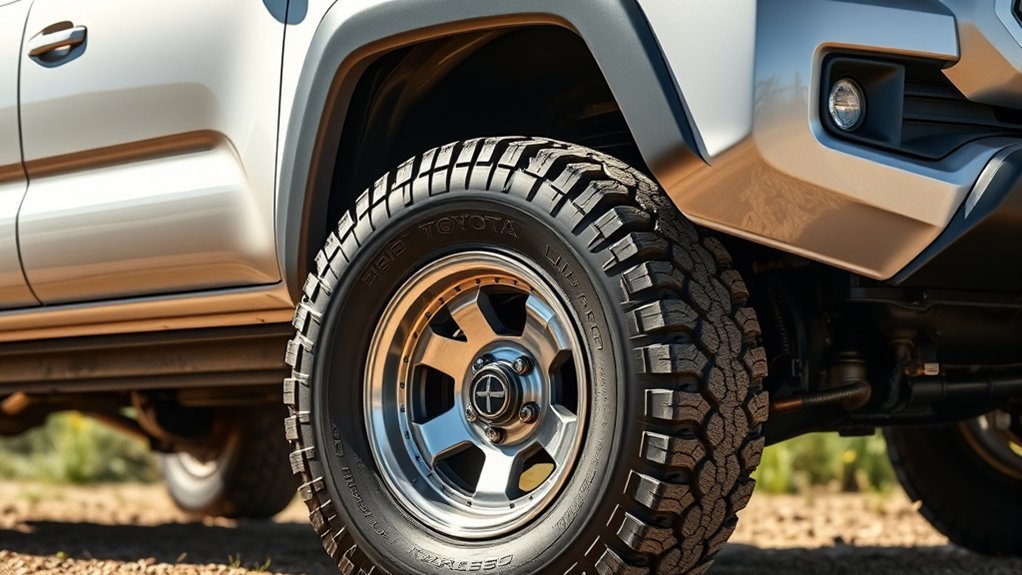
Fitting the biggest tire on a stock Toyota Tacoma sounds simple, but the right answer depends on the truck’s generation, wheel size, wheel offset, trim, tire model, and how strict you are about “no rubbing.” A tire that clears on a 2024–2026 Tacoma may rub badly on a 2016–2023 Tacoma, even when both trucks are stock.
Quick Answer
For a stock 2016–2023 Toyota Tacoma, the safest no-rub upgrade is usually 265/75R16 or 265/70R17, about 31.6 inches tall. For 2024–2026 Tacomas, fitment is different: some trims come factory with 265/70R18 tires, and many stock-offset 17-inch setups can clear 285/70R17, but test-fit before buying.
Key Takeaways
- 2016–2023 Tacoma: 265/75R16 or 265/70R17 is the common stock-suspension sweet spot with minimal rubbing risk.
- 2024–2026 Tacoma: factory tire sizes are larger on some trims, so do not use a third-gen fitment answer for every truck.
- 33-inch tires: usually need trimming or careful offset choices on older Tacomas, but may be easier on 2024+ trucks.
- Wheel offset matters: a negative-offset wheel can make the same tire rub where it would not rub on a stock wheel.
- Safety comes first: confirm load index, speed rating, tire pressure, spare-tire fit, and full-lock clearance before driving.
At a Glance
| Time Required | 30–60 minutes to research, measure, and test-fit before buying |
| Difficulty | Moderate; easy if staying near stock size, harder with 33s or wider tires |
| Tools Needed | Tape measure, flashlight, tire-size calculator, tire-pressure gauge, and a shop test-fit if possible |
| Cost | Varies by tire; trimming, alignment, spare-tire upgrades, or recalibration add cost |
Understanding Stock Tacoma Tire Limits
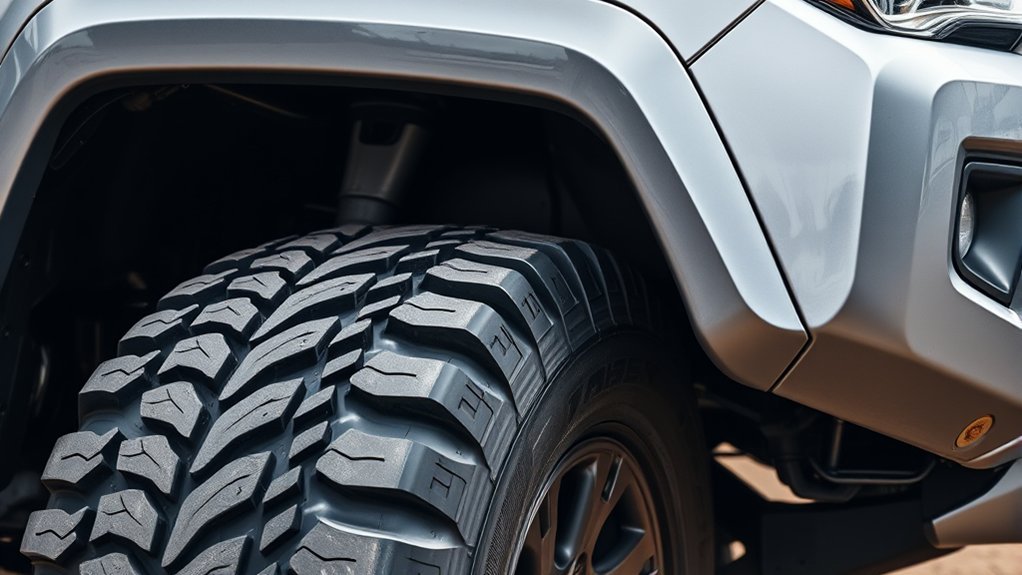
A stock Tacoma has limited clearance at the front fender liner, mud flap area, upper control arm, cab mount or crash pad area, and rear of the wheel opening. The tire must clear these areas while driving straight, turning at full lock, reversing, braking, and compressing the suspension.
The biggest mistake is looking only at tire height. Width, tread shoulder shape, wheel offset, and alignment can matter just as much. A narrow 31.6-inch tire may clear easily, while a wider tire with the same diameter can rub the upper control arm or fender liner.
Warning: Do not rely on tire size alone. Two tires with the same printed size can have different real-world tread width, shoulder shape, and mounted height. Always test clearance at full steering lock before regular driving.
[Products Worth Considering]

EVOULTES heavy duty tire inflator with an integrated gauge delivers accurate pressure readings from 10–120 PSI, helping you inflate, deflate, and check tires in one tool. The 16.5-inch extended dual-head air chuck with swivel base reaches hard-to-access dual wheel valves on trucks and RVs. A brass trigger core and side-mounted air release valve make operation smooth, with standard 1/4" NPT threading and quick-connect compatibility for easy setup.

This portable cordless tire inflator delivers up to 160 PSI with fast 17 L/min airflow to help you quickly top up tires and get back on the road. It features dual power mode, running on a 21V rechargeable battery or a 12V DC adapter for convenient roadside use. An automatic shut-off with digital pressure gauge helps prevent overinflation, and a built-in LED light improves visibility in low-light conditions.

The JACO FlowPro Tire Inflator measures, inflates, and airs down tires up to 100 PSI with battery-free operation and ±2% accuracy after calibration. It features a glowing pressure dial for night visibility, a heavy-duty steel build with a hybrid hose, and a precision push-to-inflate thumb trigger. The patented Lightning Air Chuck locks on for a secure seal, and the kit includes quick-connect hardware for easy inline use with your air compressor.
Ideal Tire Sizes for Stock Suspension
The cleanest no-rub tire size depends on which Tacoma you own. The safest answer for a stock third-generation truck is not the same as the answer for a fourth-generation truck.
Stock Tire Size Options
| Tacoma generation | Common factory tire examples | Common no-rub upgrade range | Notes |
|---|---|---|---|
| 2016–2023 Tacoma | 245/75R16, 265/70R16, 265/65R17, 265/60R18 | 265/75R16 or 265/70R17 | Best balance for stock suspension and stock-style wheels. |
| 2024–2026 Tacoma | 245/70R17, 265/70R17, 265/65R18, 265/70R18 | Trim-dependent; 285/70R17 may clear on many stock-offset setups | Verify by trim, wheel offset, tire model, and full-lock clearance. |
For 2016–2023 trucks, 265/75R16 and 265/70R17 both calculate to roughly 31.6 inches tall. That is why they are popular: they look noticeably larger than many factory tires without pushing deep into 33-inch territory.
For 2024–2026 trucks, be more careful with generic advice. Some fourth-generation trims already use larger factory sizes than older Tacomas, including 265/70R18 on Trailhunter and TRD Pro trims. That means the “biggest stock Tacoma tire” answer has to be separated by year and trim.
To check a tire’s calculated diameter, use this formula: (section width × aspect ratio ÷ 2540 × 2) + wheel diameter. For example, a 285/70R17 calculates to about 32.7 inches tall. You can also use a tire size calculator to compare diameter, width, circumference, and speedometer change.
Clearance Limitations Explained
Clearance problems usually show up in four places:
- Front mud flaps: often the first point of contact with larger tires.
- Inner fender liner: common rubbing spot at full lock.
- Cab mount or crash pad area: a major limitation on many larger tire setups.
- Upper control arm: more likely to be an issue with wider tires or high-positive-offset wheels.
A lift can help with static ride height, but it does not magically solve every rubbing problem. When the suspension compresses, the tire still moves through the wheel well. That is why some lifted trucks still need liner trimming, mud flap removal, or cab mount work.
Recommended Tire Brands
Instead of choosing by brand name alone, choose by exact size, load rating, weight, tread design, and real mounted dimensions. Well-known all-terrain options from BFGoodrich, Falken, Toyo, Goodyear, Michelin, Nitto, and Yokohama can all work on Tacomas, but the same printed size can fit differently from one model to another.
Pro Tip: Before ordering a full set, ask the tire shop whether they can test-fit one front tire and check full-lock clearance in both forward and reverse. This can save you from buying a size that technically fits on paper but rubs in real driving.
Selecting the Optimal Tire Size for Off-Road Performance
Larger tires can improve ground clearance and help the truck roll over rocks, ruts, and trail obstacles more easily. The trade-off is added rotating weight, slower acceleration, possible fuel-economy loss, more braking effort, and speedometer error.
| Tire Size | Approx. Diameter | Best Use | Typical Stock Tacoma Fitment Notes |
|---|---|---|---|
| 265/75R16 | 31.6 in. | Daily driving, mild trails, overlanding | Excellent no-rub choice for many 2016–2023 trucks |
| 265/70R17 | 31.6 in. | Daily driving and trail use on 17-inch wheels | Excellent no-rub choice for many 2016–2023 trucks |
| 275/70R17 | 32.2 in. | More stance and clearance | May rub on older trucks; often easier on 2024+ trucks |
| 285/70R17 | 32.7 in. | Aggressive 33-inch-style setup | Usually needs trimming on 2016–2023 trucks; test-fit carefully on 2024+ trucks |
If you drive mostly pavement with occasional dirt roads, 265/75R16 or 265/70R17 is the practical upgrade on many third-gen trucks. If you spend more time off-road, a larger tire can be worth the trade-offs, but you should budget for possible trimming, alignment changes, spare-tire changes, and speedometer correction.
Tips to Prevent Rubbing With Larger Tires
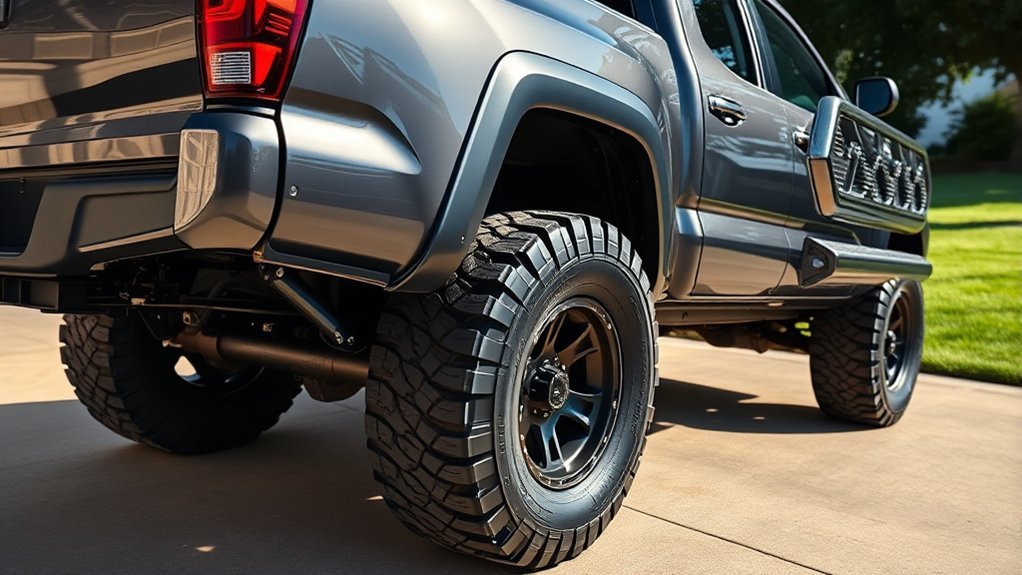
Rubbing is easiest to prevent before you buy the tires. Once the tires are mounted and used, returns can be difficult. Use the checklist below before committing to a bigger size.
Proper Tire Selection
- Confirm your Tacoma generation and trim. A 2023 TRD Off-Road and a 2026 Trailhunter do not start with the same tire clearance.
- Check your current tire placard. The tire placard and owner’s manual show the manufacturer’s recommended tire information. NHTSA recommends using the original tire size or another size recommended by the manufacturer, and consulting a tire dealer if you are unsure.
- Match or exceed load capacity. Do not install a tire with an inadequate load index for your truck, cargo, towing, or overlanding weight.
- Compare tire weight. Heavy E-load all-terrain tires can feel harsher and slower than lighter standard-load or C-load options.
- Check the spare. If you upsize the main tires, the factory spare may no longer match closely enough for long-distance use.
Adjust Wheel Offset
Wheel offset controls how far the tire sits inward or outward. A more negative offset pushes the tire outward. That can create more upper-control-arm clearance, but it can also make the tire hit the fender liner, flare, mud flap, or cab mount sooner.
For a low-risk stock Tacoma setup, stay close to factory wheel width and offset. The farther you move away from factory wheel specs, the more likely you are to need trimming, alignment changes, or suspension upgrades.
Monitor Suspension Clearance
After installing larger tires, inspect the truck in real driving positions, not just parked straight ahead. Turn the wheel fully left and right, move slowly forward and backward, and listen for rubbing. Then recheck after a few days of driving because fresh tire marks often reveal contact points you missed at the shop.
Note: A tiny plastic-liner rub in reverse is different from hard contact with metal, suspension, brake lines, or the body mount. Any contact with structural or safety-related parts should be fixed before regular driving.
When to Perform a Body Mount Chop?
A body mount chop is usually considered when the tire contacts the cab mount area and smaller fixes are not enough. On many 2016–2023 Tacomas, 33-inch-class tires such as 285/70R17 can rub the cab mount area, especially with wider tires or lower-offset wheels.
Do not make a body mount chop your first step. Start with the least invasive checks first:
- Remove or adjust front mud flaps if they are the only rubbing point.
- Heat and reshape the plastic liner only if the contact is minor and safe to correct that way.
- Confirm alignment and caster settings with a shop that understands Tacoma fitment.
- Consider different wheels or a narrower tire before cutting metal.
- Use a qualified fabricator if a body mount chop is truly needed.
A body mount chop is a permanent modification. Done poorly, it can create corrosion points, weaken the area, or look rough. If your goal is a simple stock-suspension setup, stay with a tire size that avoids this work.
[Products Worth Considering]

Universal magnetic jack pad with aluminum grooved design to protect vehicle pinch welds during lifting. Durable nylon pad inserts are upgraded and secured with screws to resist damage and keep in place. Designed to fit most single vehicle pinpoint welds for safer, stable jacking when changing tires, repairs, or performing oil changes.

This solid brass tire inflation hose adapter screws into your inflator and uses a locking press clip to securely clamp onto the tire valve stem. It helps reduce air leakage for fast, efficient pumping and is designed for reliable performance with a wide range of vehicles and inflator setups.
How Larger Tires Affect Tacoma Performance
Bigger tires change more than the look of your Tacoma. They affect the truck every time it accelerates, brakes, turns, or shifts.
- Fuel economy: taller and heavier tires usually reduce MPG because the engine has to turn more rotating mass.
- Acceleration: larger tires effectively make the gearing taller, which can make the truck feel slower.
- Braking: heavier tires can increase stopping effort and brake wear.
- Speedometer accuracy: a taller tire travels farther per revolution, so your actual speed may be higher than the speedometer shows.
- Ride quality: heavy Load Range E tires can ride stiff on an unloaded midsize truck.
- Off-road clearance: taller tires can improve ground clearance at the differential and help with approach over small obstacles.
A mild tire upgrade is usually the best value on a stock Tacoma. Once you push into true 33-inch and larger setups, the tire cost is only part of the project.
Addressing Common Tire Size FAQs
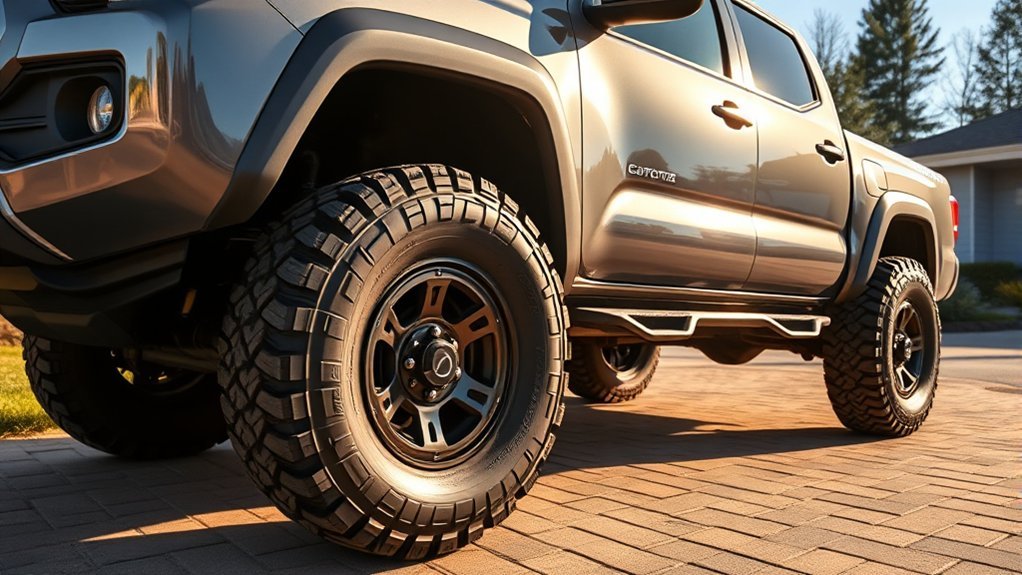
The most common Tacoma tire-size questions come down to clearance, rubbing, and whether a lift is really required. The answers below assume stock suspension unless noted.
Frequently Asked Questions
What is the biggest tire on a stock 2016–2023 Toyota Tacoma without rubbing?
The safest common answer is 265/75R16 or 265/70R17, both about 31.6 inches tall. These sizes give a noticeable upgrade over many factory tires while staying much easier to clear than 285/70R17 or other 33-inch-class tires.
What is the biggest tire on a stock 2024–2026 Toyota Tacoma?
It depends on trim and wheel setup. Some 2024–2026 trims come with larger factory tires than older Tacomas, including 265/70R18 on Trailhunter and TRD Pro trims. Many owners look at 285/70R17 on stock-offset 17-inch wheels, but you should test-fit because tire model, tread shape, and offset can still cause rubbing.
Can I fit 33-inch tires on a stock Tacoma?
On most 2016–2023 Tacomas, 33-inch-class tires usually require trimming, careful alignment, and sometimes cab mount work. On 2024–2026 Tacomas, 33-inch-class fitment is more realistic on some stock-offset setups, but it is still not a universal no-rub guarantee.
Do I need a lift to fit bigger tires?
Not for mild upgrades like 265/75R16 or 265/70R17 on many third-gen trucks. A lift helps with stance and static clearance, but it does not fix every rubbing point because the tire still moves through the wheel well during steering and suspension compression.
Will bigger tires affect my speedometer?
Yes. A taller tire covers more distance per wheel revolution, so your actual speed can be higher than the speedometer shows. Compare your factory tire to the new size with a tire-size calculator and recalibrate if the difference is large.
What happens if you put oversized tires on a stock suspension truck?
Oversized tires can rub the fender liner, mud flap, cab mount, crash pad, or suspension parts. They can also reduce fuel economy, change steering feel, affect braking, create speedometer error, and accelerate wear if the tire is too heavy or poorly matched to the wheel.
Conclusion
The biggest tire that fits a stock Tacoma without rubbing is not one universal size. For 2016–2023 Tacomas, 265/75R16 or 265/70R17 is the practical no-rub sweet spot. For 2024–2026 Tacomas, the answer changes because the truck has different factory tire sizes and wheel-well clearance. Before buying, confirm your year, trim, wheel offset, tire load rating, and full-lock clearance. The right tire should improve capability without turning every drive into a rubbing, trimming, and recalibration project.
Sources
- Toyota Owners Manual: 2024 Tacoma Tire Inflation Pressure — supports using vehicle-specific tire pressure information.
- NHTSA Tire Safety Brochure — supports tire placard, manufacturer-recommended size, and cold inflation-pressure guidance.
- TireSize.com: 2023 Toyota Tacoma Tire Sizes — supports late third-generation factory tire-size examples.
- TireSize.com: 2026 Toyota Tacoma Tire Sizes — supports fourth-generation factory tire-size examples by trim.
- TireSize.com Tire Size Calculator — supports tire diameter calculations and speedometer-change comparison.
- Toyota USA Newsroom: 2024 Tacoma Redesign — supports the fourth-generation Tacoma redesign and platform context.

Related Articles
Best Toyota Tacoma Tire Set Deals
You rely on your Tacoma for daily driving, work runs, and weekend adventures, so picking the right tire set matters more than you might…
Read More
Best Winter Tire Deals for Toyota Tacoma
Choosing the right winter tires for your Toyota Tacoma matters because it directly affects your safety, traction, and confidence when roads turn icy or…
Read More
Best Highway Tire Deals for Toyota Tacoma
You rely on your Tacoma for long drives, towing, and everyday hauling, so picking the right highway tire matters more than you might think.…
Read More