Choosing the right tire width for your Toyota Hilux is not just about a tougher stance. Width affects steering feel, rubbing clearance, fuel use, load capacity, braking, and off-road grip. Start with the tyre placard on your vehicle, then compare any upgrade against rim width, load rating, overall diameter, offset, suspension height, and local road rules.
Quick Answer
For many current Toyota HiLux models, the safe baseline is a 265 mm tire width, commonly 265/65R17 or 265/60R18 depending on grade and market. A 275 mm or 285 mm tire can work on some builds, but only after checking load rating, rim width, offset, rubbing clearance, speedometer change, and legal limits.
Key Takeaways
- A 265 mm tire width is the most sensible starting point for many Hilux owners because it matches common factory sizes.
- Wider tires can improve flotation and sidewall footprint off-road, but tread pattern, pressure, and compound matter just as much as width.
- Never choose tire width alone. Match the full size, load index, speed rating, rim width, and offset to your vehicle.
- A tire upgrade that rubs, lowers load capacity, changes track too far, or breaches local modification rules is not a safe upgrade.
At a Glance
| Time Required | 10 minutes to read the placard and compare sizes; longer if checking lift, offset, or rubbing clearance. |
| Difficulty | Easy for stock replacement; moderate for wider tires or 33-inch upgrades. |
| Tools Needed | Vehicle tyre placard, owner’s manual, tape measure, tire-size calculator, pressure gauge, and advice from a qualified tire fitter for upgrades. |
| Cost | Free to check fitment basics; tire, wheel, lift, alignment, and certification costs vary by market and build. |
Understanding Tire Width: Why It Matters for Your Hilux
Tire width is the first number in a tire size. For example, in 265/65R17, the tire is about 265 mm wide from sidewall to sidewall. The second number, 65, is the sidewall height as a percentage of the width. The final number, 17, is the wheel diameter in inches.
That means tire width is only one part of fitment. A 265/65R17 and a 265/60R18 are both 265 mm wide, but they fit different rim diameters. They also have very similar overall diameter, which is why they can appear across different factory wheel packages.
Current Toyota Australia HiLux specifications list common factory combinations such as 265/65R17 and 265/60R18, depending on grade and wheel package. Other countries, older model years, and special trims can differ, so the most important source is still your own vehicle’s tyre placard.
Warning: Do not fit a tire just because another Hilux owner says it “fits.” Your year, body style, rim offset, suspension height, tray weight, bull bar, flares, and local regulations can change what is safe and legal.
Tire Width Choices for Your Toyota Hilux
The best Hilux tire width depends on how you use the ute. A work vehicle carrying tools every day needs a safe load rating and predictable handling. A touring 4×4 needs durability, clearance, and puncture resistance. A city-driven Hilux may be better with the factory size because it keeps steering, fuel use, and speedometer accuracy close to Toyota’s design.
[Products Worth Considering]

This tire inflator with pressure gauge delivers long-lasting performance with a durable rubber-protected gauge and sturdy build. The longer hose and 360 swivel air chuck help you seal the valve securely and keep your hands free while measuring, inflating, or deflating. It’s battery-free for reliable use and provides ±2 PSI accuracy in the mid-range for most typical tires, with universal compatibility for 1/4 NPT compressor outputs.

Keep your tires properly inflated with this analog VONDIOR tire pressure gauge, designed for fast, easy readings without batteries. The swiveling, two-axis hose and large glow dial help you measure at any tire angle with instant visibility. Built with a protective rubber shield, it supports durable, low-maintenance use for cars and trucks.
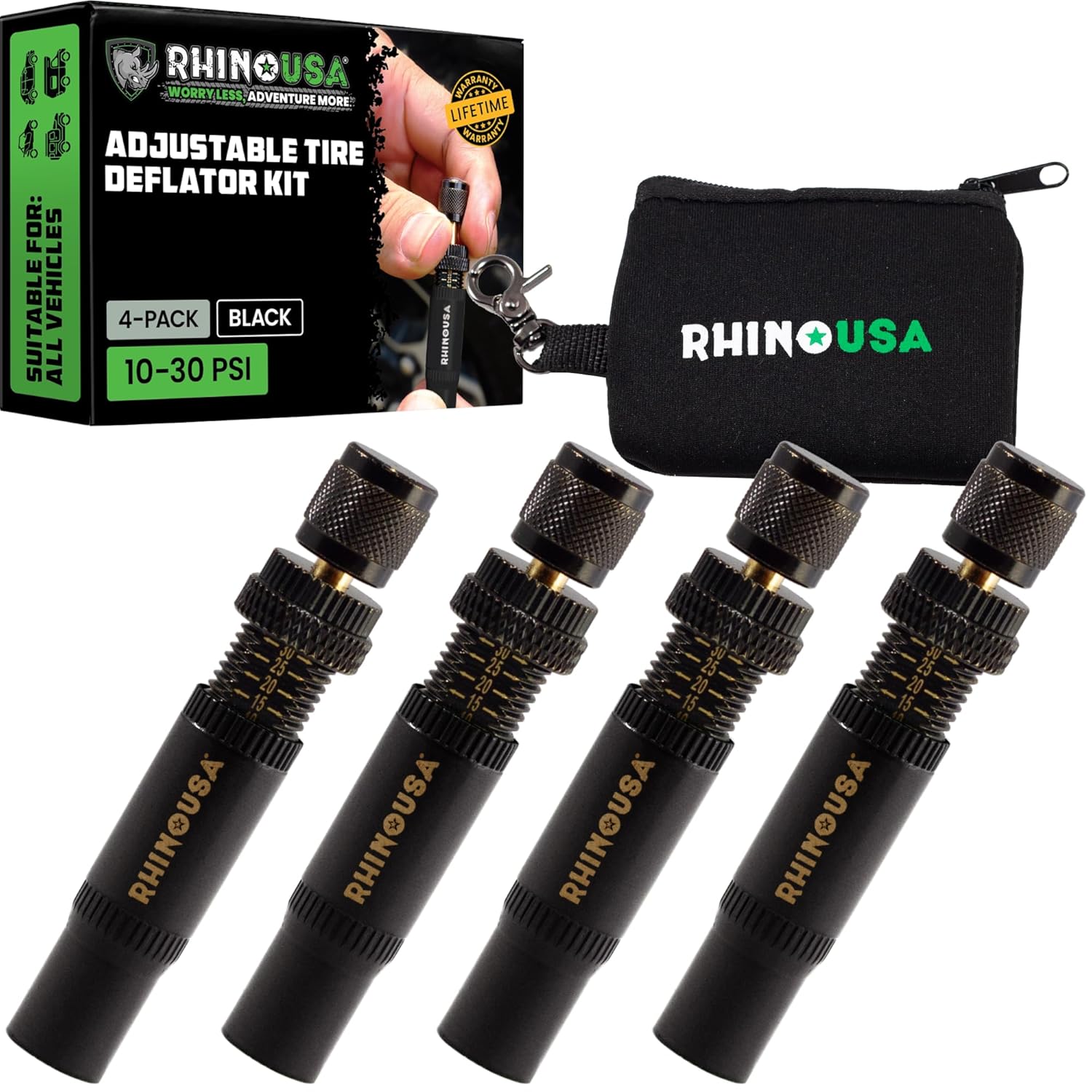
Use the Rhino USA adjustable tire deflators to air down all four tires at once by screwing one deflator onto each valve stem, letting you step away while the tires reach your preset pressure. Each deflator independently adjusts across a 10–30 PSI range with laser-etched indicators for quick setup and verification, making it ideal for beach, sand, and rocky off-road trails.
Recommended Tire Widths
Use this table as a starting guide, not as a replacement for your tyre placard or a qualified fitment check.
| Tire Width | Best Use | What to Check First |
|---|---|---|
| 245 mm | Only for market-specific or placard-approved setups | Load rating, rim width, and whether this size is approved for your Hilux |
| 265 mm | Best all-round starting point for many stock Hilux models | Factory size, pressure placard, load index, and speed rating |
| 275 mm | Mild upgrade for some owners wanting a slightly wider footprint | Rubbing at full lock, rim-width approval, offset, and legal diameter change |
| 285 mm | Common off-road/touring upgrade on modified builds | Suspension clearance, mud flap and body mount clearance, speedometer change, spare fitment, and certification rules |
Impact on Handling
Wider tires can give a larger contact patch and a more planted feel, especially on loose or soft terrain. But wider is not automatically better. Extra width can add steering weight, increase rolling resistance, throw more road spray, reduce clearance, and increase the chance of rubbing on the guard liner, mud flap, upper control arm, or body mount.
On wet roads, a quality tread pattern and correct pressure are usually more important than width alone. A poorly chosen wide tire can feel vague or heavy compared with a correctly rated factory-width tire.
How Tire Width Impacts Performance and Handling
Tire width changes how the Hilux feels because it affects the shape of the contact patch, the sidewall, and the leverage placed on steering and suspension parts. The biggest changes usually show up in these areas:
- Steering response: A wider tire may feel more stable but heavier, especially at low speed.
- Fuel use: Heavier or more aggressive tires can increase rolling resistance.
- Ride comfort: Width, sidewall height, construction, and pressure all affect ride quality.
- Off-road flotation: Wider tires can help in sand or mud when combined with the right tread and pressure.
- Braking and safety systems: Large diameter changes can affect braking feel, gearing, speedometer accuracy, and stability-control behaviour.
- Load carrying: The load index matters more than width. A wider tire with a lower load rating is not an upgrade.
Note: A 265 mm tire with the right load index, correct pressure, and good tread can outperform a wider tire that is too heavy, underinflated, or poorly matched to the rim.
Choosing Tire Widths for Different Conditions
For daily road use, the safest choice is usually the placard size or a size approved by your tire professional for your exact Hilux. This keeps the vehicle close to factory steering, braking, gearing, and fuel-use expectations.
For touring and gravel roads, many owners stay with 265 mm or move to a stronger all-terrain tire in a similar overall diameter. This improves durability without creating major clearance or legal issues.
For sand, mud, and rocky tracks, a wider tire such as 275 mm or 285 mm can help, but only if the tire clears the body and suspension through the full range of movement. Airing down off-road can also widen the footprint, so pressure management often matters more than buying the widest tire possible.
The best Hilux tire width is the one that keeps load rating, clearance, pressure, and legality in balance. Width alone does not make a tire safer or more capable.
[Products Worth Considering]

Black Magic Tire Wet delivers a deep wet-look shine that makes tires appear dark, rich, and freshly detailed. Its long-lasting formula helps resist rain, dust, and road grime for weeks of glossy protection, not days. Apply by spraying onto clean, dry tires—no buffing or wiping required—with a low-sling design to reduce splatter on paint and wheels.

These aluminum alloy tire valve stem caps with an O-ring seal help protect valve stems from corrosion while adding a clean, stylish look to your vehicle. The universal fit works across cars, trucks, motorcycles, bicycles, and more, making them an easy upgrade for everyday driving and off-road use. Installation is quick, and the included four-pack keeps all your tires dressed and protected.

AstroAI’s digital tire pressure gauge with inflator helps you quickly check, inflate, and deflate tires with an easy lock-on chuck and integrated bleed valve. It delivers calibrated accuracy within 1% for a clear PSI readout from 3 to 250 PSI, supporting dependable tire maintenance. Designed for many vehicle types, it connects to common compressor outputs and standard Schrader valves.
Installing Wider Tires: Compatibility With Lift Kits?
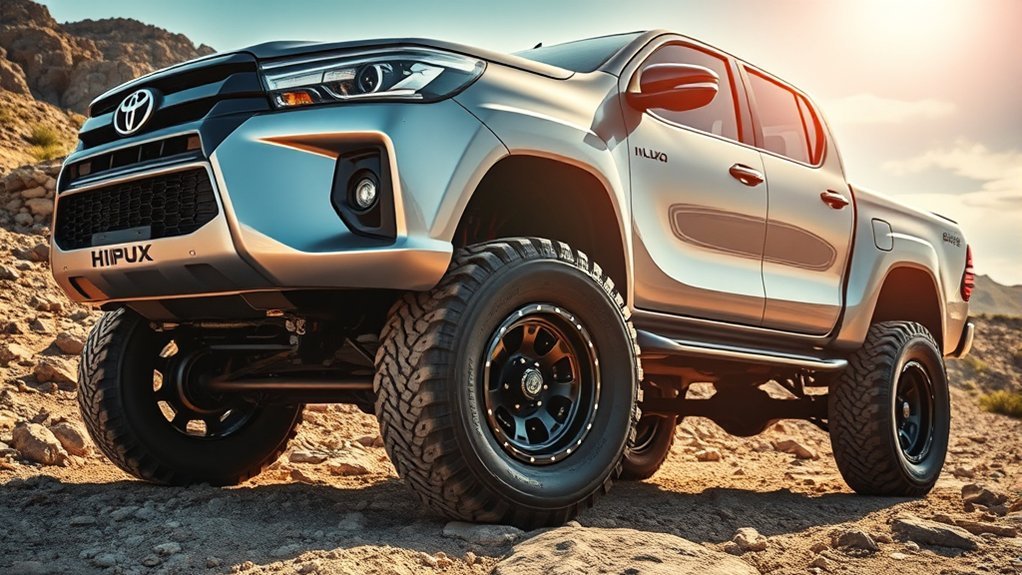
Wider tires may need more than just a new set of rubber. A 275 mm or 285 mm tire can sit closer to the upper control arm, guard liner, mud flap, and body mount. If the overall diameter also increases, the tire can rub when steering, braking, flexing off-road, or carrying a load.
Before fitting wider tires, check:
- Rim width: The tire must be approved for the wheel width being used.
- Wheel offset: Offset changes can improve inner clearance but may push the tire outside the guard or increase steering/suspension load.
- Overall diameter: A wider tire may also be taller, which affects gearing and speedometer reading.
- Full-lock clearance: Turn the steering fully both ways and check the front and rear of the wheel well.
- Suspension compression: Check clearance under load and during off-road articulation, not just while parked on flat ground.
- Spare wheel fit: Some larger tires do not fit in the factory spare location.
- Local laws: Vehicle modification rules vary by country and state.
In Australia, the Vehicle Standards Bulletin 14 is the national code used for many light-vehicle modification requirements, but state and territory approval rules still apply. Check the rules before buying wheels, tires, or a lift kit.
Pro Tip: Test fit one front wheel and one rear wheel before committing. Check steering lock, brake-line clearance, guard clearance, and suspension movement with the vehicle loaded the way you actually use it.
[Products Worth Considering]

Measure tyre tread depth precisely with a digital gauge that reads in both MM and inches, helping you monitor safe driving conditions. The large LCD screen is easy to operate, and the compact tool fits for cars, trucks, and motorcycles. It provides high accuracy with a 0-25.4mm range and includes a 1-year warranty for added peace of mind.

Measure tire tread depth quickly and accurately with this LUMITECO dial gauge that reads in 1/32" increments up to 14/32". The color-coded green/yellow/red zones make it easy to judge tire wear and know when replacement is needed. A rugged, compact design with a protective pouch helps keep the gauge ready for use on cars, trucks, motorcycles, and more.

The Topeak SmartGauge D2 delivers precise digital tire pressure readings for bikes, motorcycles, and sports equipment up to 250 psi (17 bar). Its rotating SmartHead works with both Presta and Schrader valves, so you can check pressure quickly without adapters. The LCD display makes it easy to read results in psi, bar, or kg/cm² with an included CR2032 battery for immediate use.
Frequent Pitfalls in Choosing Tire Width for Your Hilux
Most Hilux tire-width mistakes happen because owners compare only the width number. Real fitment depends on the full tire size, wheel specs, and vehicle setup.
Common Tire Width Missteps
- Ignoring the tyre placard: The placard is the first check for size, pressure, and load information.
- Choosing width without checking diameter: A 285/70R17 is much taller than a 265/65R17, not just wider.
- Forgetting rim width: Tires must be mounted on rims within the approved range for that tire.
- Using the wrong offset: Too much offset change can create guard, bearing, steering, or legal issues.
- Skipping an alignment: Wider or taller tires can make poor alignment more obvious and increase uneven wear.
- Copying another build: Bull bars, springs, flares, trays, and suspension brands can change fitment.
Ignoring Load Ratings
Load rating is one of the most important safety checks for a Hilux, especially if you tow, carry tools, tour with accessories, or run a canopy. The load index is the number near the end of the tire size, such as 108S or 112S. According to Toyo Tires’ load index chart, load index 104 equals 900 kg, 108 equals 1,000 kg, and 112 equals 1,120 kg per tire under the specified service conditions.
Do not replace an original tire with one that has a lower load index unless the vehicle manufacturer or a qualified tire professional confirms it is suitable for your exact vehicle and use. Width does not replace load rating.
Compromising Vehicle Stability
Large tire changes can affect more than appearance. Wider or taller tires can change steering feel, scrub radius, braking performance, gearing, speedometer accuracy, and electronic stability-control behaviour. The risk increases when a tire upgrade is combined with a lift, heavy accessories, or aggressive negative offset.
For road use, the goal is not the widest tire that can physically bolt on. The goal is the widest tire that fits safely, carries the required load, clears the body and suspension, and remains legal.
Measuring Your Tire Width: Best Practices
You usually do not need to measure tire width manually because the size is printed on the sidewall. In a size like 265/65R17, the width is 265 mm. Still, measuring can help when checking clearance after an upgrade.
For a practical clearance check:
- Read the current tire size from the sidewall and the recommended size from the tyre placard.
- Measure the gap between the tire and the upper control arm, guard liner, mud flap, and body mount.
- Turn the steering fully left and right, then check again.
- Repeat the check with the vehicle loaded if you carry tools, camping gear, towing equipment, or a canopy.
- After fitting tires, drive slowly over a ramp or uneven surface and listen for rubbing before heading off-road.
Also compare overall diameter. Approximate examples:
- 265/65R17: about 30.6 inches overall diameter.
- 265/60R18: about 30.5 inches overall diameter.
- 285/70R17: about 32.7 inches overall diameter.
This is why “33s” are a bigger change than a simple width upgrade. They usually require more clearance planning.
Benefits of Upgrading to Wider Tires on Your Hilux
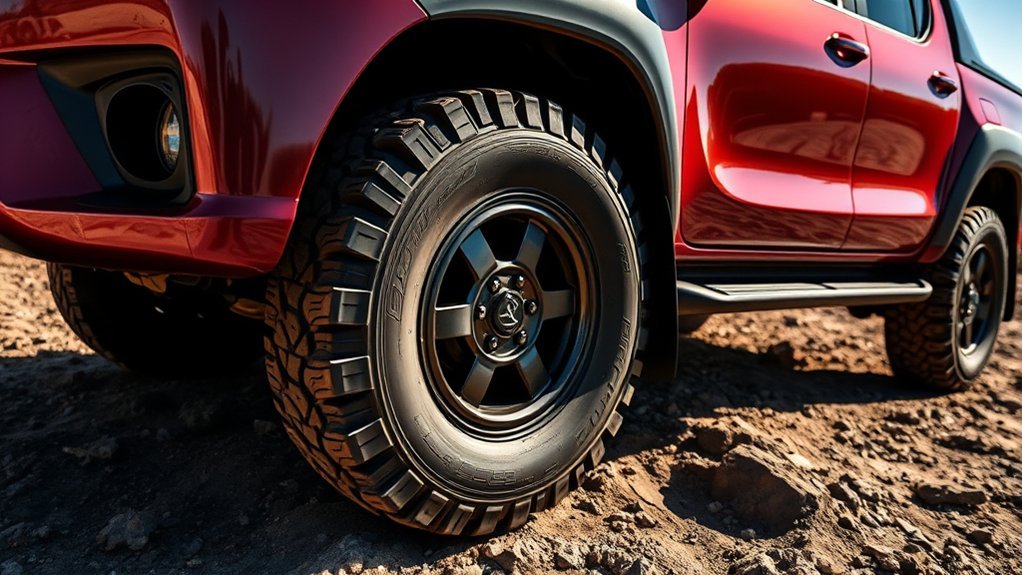
A wider tire can be worthwhile when it is chosen correctly. The main benefits are:
- More off-road footprint: Helpful in sand, mud, and loose terrain when matched with suitable pressure.
- Stronger stance: Wider tires can give the Hilux a more planted appearance.
- More tire choices: Popular off-road sizes often have a wide range of all-terrain and mud-terrain options.
- Sidewall options: Some larger sizes offer stronger light-truck construction, depending on brand and model.
- Improved touring confidence: The right tire can improve puncture resistance and traction on rough roads.
The tradeoffs are just as important. Wider tires can cost more, weigh more, reduce fuel economy, increase steering effort, throw more debris, and require lift or trimming. For many owners, a high-quality 265 mm all-terrain tire is a better upgrade than a poorly planned wider tire.
Maintaining Proper Tire Pressure for Optimal Performance
Do not use one universal pressure for every Hilux. Tire pressure depends on tire size, axle load, vehicle load, tire construction, and driving conditions. The correct starting point is the vehicle placard and owner’s manual. The NHTSA tire safety guide notes that placards and owner’s manuals provide recommended tire size, inflation pressure, and load limits.
For best results:
- Check pressure when the tires are cold.
- Check at least monthly and before long trips.
- Adjust for heavy loads according to the placard or tire professional’s advice.
- Reinflate after airing down for off-road use.
- Inspect tread, sidewalls, and valves at the same time.
Underinflated tires can overheat and reduce handling, braking, fuel economy, and tire life. Overinflated tires can reduce ride comfort and contact patch. Correct pressure is one of the cheapest ways to keep your Hilux safe.
Frequently Asked Questions
What size tyres can I put on my Hilux?
Start with the size on your tyre placard. Many current Australian HiLux variants use 265-width tyres such as 265/65R17 or 265/60R18, but fitment varies by market, grade, and year. For upgrades, check load index, speed rating, rim width, offset, diameter, clearance, and local rules before buying.
Can you fit 33s on a Hilux?
Yes, 33-inch tires can fit some Hilux builds, but they are not a simple bolt-on for every vehicle. They often need the right wheel offset, suspension lift, trimming, alignment, and legal approval. Check clearance at full steering lock and suspension compression before driving off-road.
What size wheels will the 2026 Hilux have?
For the current Toyota Australia HiLux specification sheet, the listed factory wheel sizes are mainly 17-inch and 18-inch, with tyres such as 265/65R17 and 265/60R18 depending on grade. Aftermarket wheels may be available in other diameters, but factory fitment and legal fitment are separate questions.
What size tyres can you fit on an N80 Hilux?
Many N80 Hilux owners run factory-size 265-width tyres or move to mild upgrades such as 275 mm or 285 mm, depending on wheels, lift, and body clearance. The safe answer depends on your exact year, trim, suspension, rim offset, and local road rules. Always confirm load rating and clearance before fitting.
Is 285 mm better than 265 mm for a Hilux?
Not always. A 285 mm tire can give more footprint and a tougher look, but it may add weight, reduce fuel economy, rub, and require lift or trimming. A quality 265 mm tire with the correct load rating is often the better choice for daily driving, towing, and mixed road use.
Conclusion
The best tire width for your Toyota Hilux is not simply the widest tire that fits. For many owners, a 265 mm tire width is the safest and most balanced starting point. Wider options such as 275 mm or 285 mm can work well for off-road and touring builds, but only when the full tire size, load rating, rim width, offset, clearance, pressure, and legal requirements all line up. Check the placard first, plan the upgrade carefully, and your Hilux will be safer, more capable, and easier to live with.
Sources
- Toyota Australia HiLux specifications — factory wheel and tyre sizes for current HiLux variants.
- NHTSA Tire Safety Guide — tire pressure, placard, load limits, and tire maintenance guidance.
- U.S. Tire Manufacturers Association Tire Care & Safety Guide — tire size, load capacity, inflation, and replacement guidance.
- Vehicle Standards Bulletin 14 — Australian light-vehicle modification framework for tyres, rims, suspension, and steering.
- Toyo Tires Speed Symbol and Load Index Chart — load index examples used in the article.