How Rim Width Affects Tire Size on the Toyota Hilux
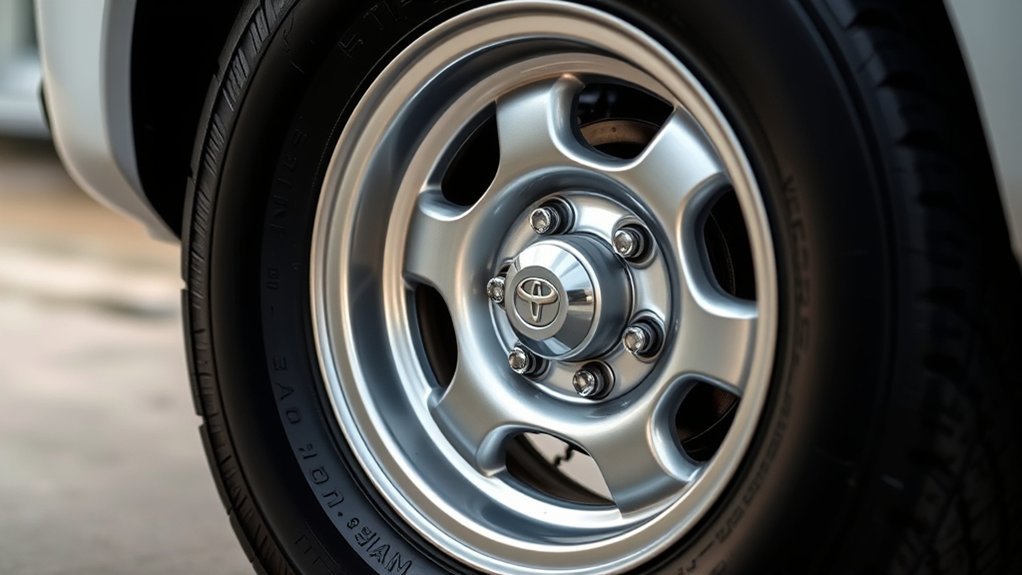
Rim width changes how a tire sits on your Toyota Hilux wheel, which affects sidewall shape, bead seating, steering feel, clearance, and tire wear. The safest choice is not the widest rim that looks aggressive; it is the rim width approved for your exact tire size and tire model, with the right offset, load rating, and cold inflation pressure.
Quick Answer
Rim width affects tire size on a Toyota Hilux by changing the tire’s sidewall shape, measured section width, bead support, and clearance. A rim that is too narrow can make the tire bulge and feel vague, while a rim that is too wide can stretch the sidewall and increase damage risk. Always use the tire maker’s approved rim-width range.
Key Takeaways
- Rim width does not change the tire’s printed size, but it changes the tire’s mounted shape and measured width.
- For common Hilux sizes such as 265/65R17, many tire models use an approved rim-width range around 7.5–9.5 inches, but the exact range must come from the tire’s spec sheet.
- A wider tire also needs the right wheel offset, suspension clearance, load index, speed rating, and pressure setting.
- Do not use rim width alone to decide whether 285s, 33s, or wider tires will fit your Hilux.
At a Glance
| Time Required | 15–30 minutes to check specs before buying wheels or tires |
| Difficulty | Moderate; easy to compare numbers, but final fitment should be confirmed by a tire professional |
| Tools Needed | Tire spec sheet, wheel width and offset specs, tire placard, tape measure, pressure gauge |
| Cost | Free to check; professional fitting, balancing, alignment, lift, or trimming costs vary by setup |
Why Rim Width Matters for Your Tires
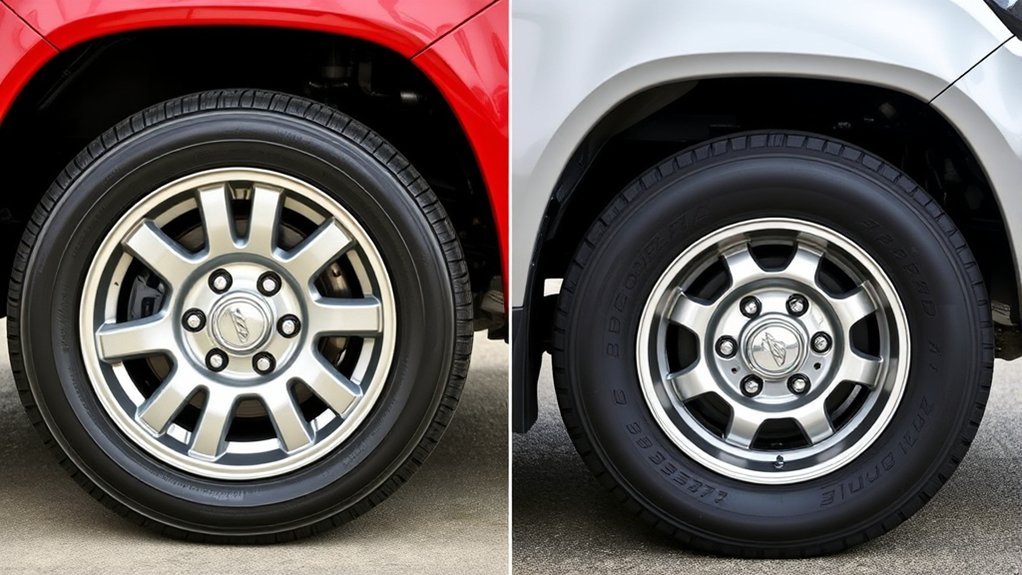
Rim width matters because the tire bead must sit securely on the wheel, and the sidewalls need enough support to work as designed. The wheel width is measured between the bead seats, not across the outside lip of the rim. That is why a wheel that looks 9 inches wide from the outside may have a different official width stamped or listed by the manufacturer.
A rim that is too narrow for the tire can create a rounded, ballooned sidewall. That may improve sidewall cushioning off-road, but too much bulge can make steering feel slower, increase sidewall movement, and encourage uneven shoulder wear. A rim that is too wide can pull the sidewalls outward, leaving the bead and sidewall more exposed to rock rash, pothole damage, and reduced off-road protection.
The most reliable rule is simple: use the approved rim-width range for the exact tire model you plan to buy. Tire makers and tire data sources publish this range because the same printed size can vary slightly by tread design, casing, load range, and construction.
Warning: Never mount a tire on a wheel outside the tire manufacturer’s approved rim-width range. Poor bead seating, sidewall stress, and incorrect load performance can lead to tire damage or loss of control.
[Products Worth Considering]
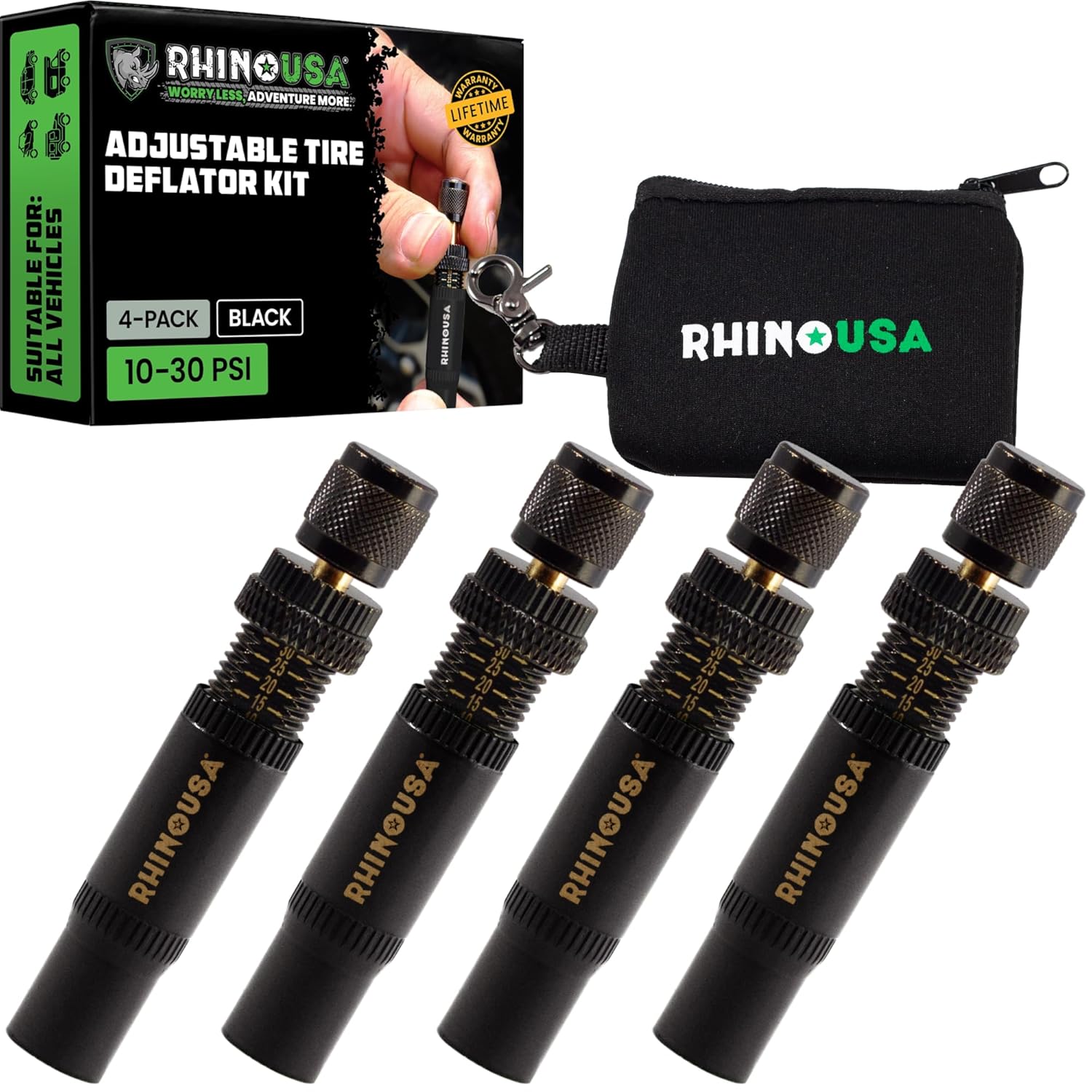
Use the Rhino USA adjustable tire deflators to air down all four tires at once by screwing one deflator onto each valve stem, letting you step away while the tires reach your preset pressure. Each deflator independently adjusts across a 10–30 PSI range with laser-etched indicators for quick setup and verification, making it ideal for beach, sand, and rocky off-road trails.

Malco tire mounting and demounting lubricant is a ready-to-use tire lube formulated to reduce friction during tire installation for passenger cars, light trucks, farm tires, and heavy-duty equipment. It provides rust-inhibiting protection to help reduce corrosion on rims and wheels, and helps support proper tire bead seating during inflation to reduce air leakage. The silicone-free, soap-free formula is whitewall safe to help prevent discoloration on whitewall tires and sensitive sidewall markings.

Monitor tire tread wear with a smart, color-coded depth gauge that shows clear condition ranges at a glance. The bar is range marked for fast, easy readings, helping you maintain safer traction and performance. Each gauge is portable with a pocket clip, and the set includes 20 units for daily use and sharing.
How Rim Width Affects Tire Fitment and Performance
Rim width affects tire fitment in four main ways: tire shape, measured section width, handling feel, and clearance. It does not change the size printed on the sidewall. A 265/65R17 remains a 265/65R17 whether it is mounted on a 7.5-inch or 8.5-inch wheel, but the tire’s mounted shape will change.
When a tire is mounted on a wider rim within its approved range, the sidewalls stand more upright and the measured section width may increase slightly. When mounted on a narrower rim within its range, the sidewalls curve outward more and the section width may measure slightly narrower. Tire Rack notes that section width can change by about 0.2 inch for every 0.5-inch change in rim width from the measuring rim.
That small change can matter on a Hilux because clearance is often tight near the upper control arm, mud flaps, inner guard, bumper edge, and body mount. A wheel that is only half an inch wider, or a different offset, can be the difference between a clean fit and rubbing at full steering lock.
Current Hilux Wheel and Tire Size Baseline
Before changing tire size, check what your Hilux came with. Current Toyota HiLux specifications vary by market and grade, but Toyota Australia’s current HiLux spec table shows many grades using 17-inch wheels with 265/65R17 tires and several 4×4 grades using 18-inch wheels with 265/60R18 tires. Your own door placard and owner’s manual are still the final reference for your vehicle.
Factory tire sizes are useful because they give you a baseline for overall diameter, load rating, speed rating, and tire pressure. If you increase tire diameter, move to a wider tire, or switch from a passenger construction to an LT construction, you need to recheck more than rim width.
Note: Hilux specifications vary by country, generation, trim, body style, and accessories. Use Toyota’s current HiLux specification table as an example only, then confirm your own vehicle’s placard and manual.
Common Tire Sizes and Recommended Rim Widths
The table below gives practical Hilux guidance, but it is not a substitute for the tire manufacturer’s data. Always check the approved rim-width range for the exact tire model, load range, and size you are buying.
| Tire Size | Common Use on a Hilux | Typical Rim-Width Guidance | Fitment Notes |
|---|---|---|---|
| 265/65R17 | Common 17-inch OE-style Hilux size | Many models list about 7.5–9.5 inches; 8 inches is a common measuring rim on some tires | Usually easy to fit when load rating and offset match the vehicle |
| 265/60R18 | Common 18-inch OE-style Hilux size | Check the tire model’s data sheet; many 265-width SUV tires suit mid-width 18-inch wheels | Good choice for road use, towing, and OE-like handling |
| 285/70R17 | Popular larger all-terrain or off-road upgrade | Many LT285/70R17 tires list about 7.5–9.5 inches, with 8.5 inches common as a measuring rim | Often needs careful offset, clearance checks, and sometimes lift or trimming |
| 31×10.50R15 | Older 15-inch off-road style fitment | Check the exact tire; many flotation tires are designed for moderate-width rims | Confirm brake clearance before buying 15-inch wheels |
| 33-inch tires | Aggressive off-road upgrade | Depends heavily on whether the tire is metric, LT-metric, or flotation sizing | Clearance, gearing, speedometer, legality, and payload effects must be checked |
Measuring Rim Width vs. Approved Rim Width Range
Two terms cause confusion: measuring rim width and approved rim-width range. The measuring rim width is the wheel width used when the tire’s published dimensions are measured. The approved rim-width range is the safe range of wheel widths the tire can be mounted on.
For example, Tire Rack’s published data for a Michelin Defender LTX M/S2 in 265/65R17 lists a 7.5–9.5-inch rim-width range and an 8-inch measuring rim. A BFGoodrich All-Terrain T/A KO3 in LT285/70R17 lists a 7.5–9.5-inch rim-width range and an 8.5-inch measuring rim. These examples show why the exact tire model matters.
Staying near the measuring rim often gives the tire its most predictable shape. Moving toward the narrow end usually adds sidewall bulge. Moving toward the wide end usually makes the sidewall stand more upright. Both can be acceptable if the wheel is inside the approved range and the vehicle has enough clearance.
How Rim Width Influences Sidewall Height
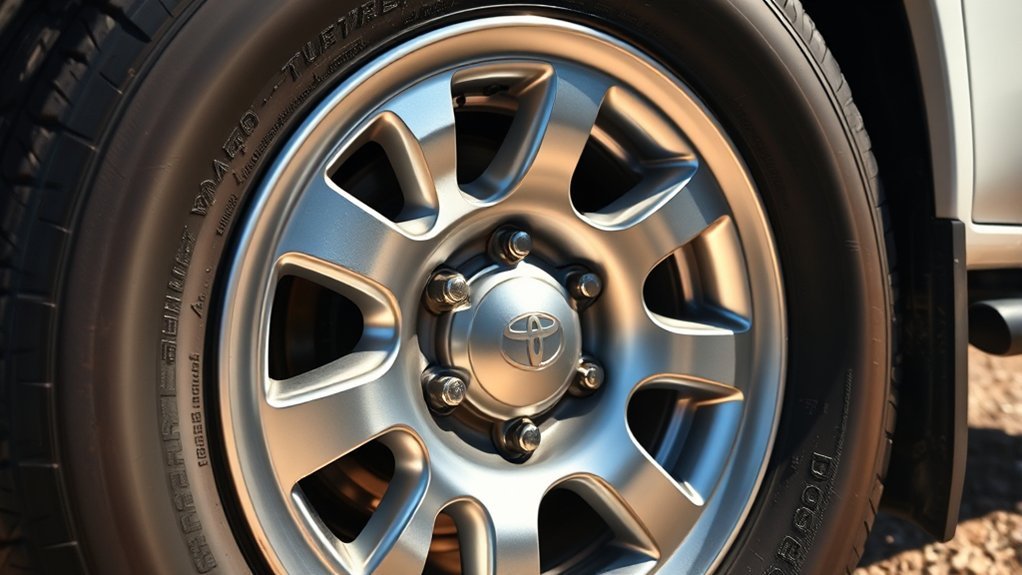
Rim width does not change the tire’s mathematical sidewall height. A 265/65R17 tire still has a sidewall height based on 65% of 265 mm. What changes is the tire’s mounted profile. A narrower rim pulls the beads closer together, so the sidewall curves outward more. A wider rim moves the beads farther apart, so the sidewall becomes straighter.
On a Hilux used off-road, a little sidewall bulge can protect the wheel lip and help the tire flex over rocks and ruts. Too much bulge can make steering less precise on the road. On the other hand, a wider rim can sharpen response, but it may expose the wheel lip and sidewall to damage when aired down or driven on rocky tracks.
Pro Tip: For a daily-driven Hilux that also sees trails, choose a rim width near the tire’s measuring rim or the middle of the approved range. It usually gives the best balance of steering feel, sidewall support, and wheel protection.
Offset, Backspacing, and Clearance Matter Too
Rim width is only one part of fitment. Wheel offset and backspacing decide where the tire sits in the guard. A wider wheel with the wrong offset can rub the upper control arm on the inside or poke outside the fender on the outside. A tire that clears while parked may still rub when the suspension compresses or the steering is at full lock.
Before buying wheels or tires, check these points:
- Inner clearance to the upper control arm, strut, brake lines, and chassis.
- Outer clearance to the guard, flare, mud flap, bumper edge, and body mount.
- Clearance at full steering lock in both directions.
- Clearance with suspension compressed, not just while parked on level ground.
- Local road rules for tire protrusion, track-width changes, lift height, and speedometer accuracy.
This is why two Hilux owners can run the same tire size and get different results. Suspension height, wheel offset, bull bar weight, canopy load, alignment settings, and even tire tread design can change the outcome.
Risks of Incorrect Rim Width for Tire Fitment
Using the wrong rim width can create safety and performance problems. A rim that is too narrow can make the tire feel unstable and increase sidewall flex. A rim that is too wide can stretch the tire, reduce rim protection, and make sidewall damage more likely on rough tracks.
The biggest risks include:
- Poor bead support: the tire may not seat or retain pressure as intended.
- Uneven wear: incorrect shape can overload the center or shoulders of the tread.
- Vague steering: excessive sidewall movement can reduce steering response.
- Sidewall damage: overly wide rims expose the sidewall and wheel lip to impacts.
- Clearance problems: wider mounted section width can cause rubbing under load or at full lock.
For modified Hilux setups, a tire professional should confirm the tire’s approved rim range, wheel load rating, nut seat type, hub fitment, brake clearance, and final mounted balance.
Load Index, Speed Rating, and Payload Safety
A bigger tire does not increase your Hilux’s legal payload, gross vehicle mass, gross combined mass, or axle ratings. It only changes the tire fitted to the vehicle. The replacement tire still needs a load index and speed rating that meet or exceed the vehicle manufacturer’s requirement.
The load index is the tire’s maximum load capacity when properly inflated. The speed rating is the maximum speed capability under specified conditions. Michelin’s tire guidance explains that these ratings are part of the tire’s service description and should be checked on the vehicle placard, owner’s manual, and tire sidewall.
A wider tire with the wrong load index is not an upgrade. For towing, touring, work loads, and off-road travel, load rating is just as important as rim width.
[Products Worth Considering]

Keep your tires properly inflated with this analog VONDIOR tire pressure gauge, designed for fast, easy readings without batteries. The swiveling, two-axis hose and large glow dial help you measure at any tire angle with instant visibility. Built with a protective rubber shield, it supports durable, low-maintenance use for cars and trucks.

This professional wheel and rim cleaning brush set lifts brake dust, grime, and dirt with soft, scratch-free microfiber and synthetic wool fibers. The rim brush bends up to 360 degrees for easy access to hard-to-reach areas around spokes, lips, and faces. Ideal for thorough cleaning of car, truck, motorcycle, bicycle, RV, and more wheel and tire surfaces.

These aluminum alloy tire valve stem caps with an O-ring seal help protect valve stems from corrosion while adding a clean, stylish look to your vehicle. The universal fit works across cars, trucks, motorcycles, bicycles, and more, making them an easy upgrade for everyday driving and off-road use. Installation is quick, and the included four-pack keeps all your tires dressed and protected.
Visualizing Rim Width Effects on Tire Appearance
Rim width changes the way a tire looks on your Hilux. A narrower rim can create a rounded sidewall and more “ballooned” off-road look. A wider rim can create a flatter sidewall and a more squared-off stance. Neither look is automatically better; the best choice depends on your tire size, driving use, and whether the wheel stays inside the tire’s approved range.
| Rim Width Choice | Typical Tire Appearance | Driving Effect |
|---|---|---|
| Near narrow end of approved range | More sidewall bulge | More wheel-lip protection, softer feel, less sharp steering |
| Near measuring rim or middle range | Balanced sidewall shape | Best all-round choice for most daily and touring Hilux builds |
| Near wide end of approved range | Straighter, squared-off sidewall | Sharper road response, but more wheel and sidewall exposure off-road |
Adjusting Tire Pressure Based on Rim Width
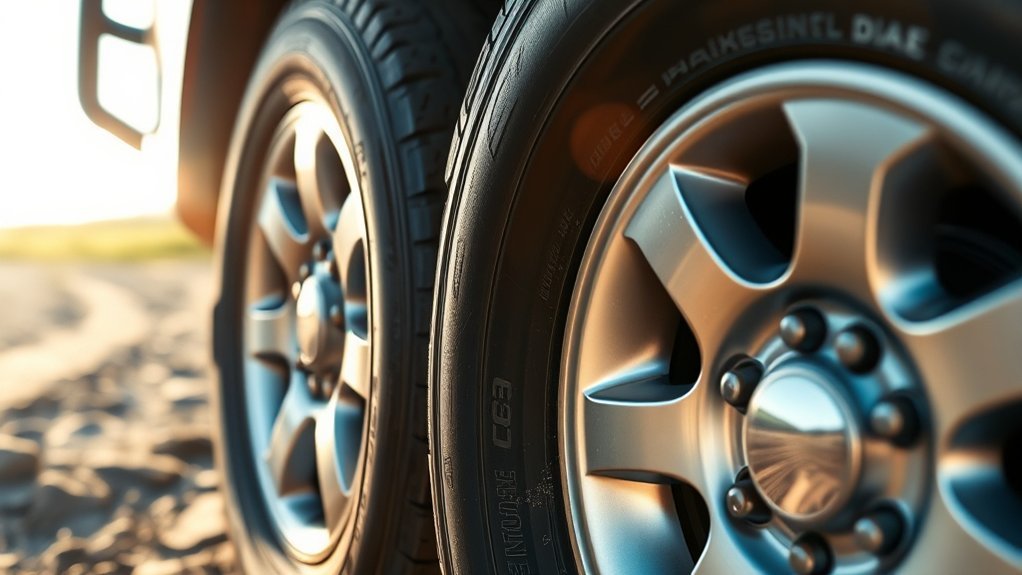
Do not set tire pressure by rim width alone. The correct pressure depends on tire size, tire construction, load rating, vehicle load, driving speed, and whether the tire is the original size or a replacement size. For OE-size tires, start with the cold inflation pressure on the Hilux tire placard or owner’s manual. NHTSA’s TireWise guidance says tire pressure should be checked cold, before the tire has been driven long enough to heat up.
If you change to a different tire size or load range, ask a qualified tire shop to use load/inflation data to match the tire’s load capacity to the Hilux’s axle loads. The maximum pressure printed on the tire sidewall is not the normal everyday target pressure; it is the maximum permitted pressure for that tire.
Off-road drivers often reduce pressure on sand, rocks, or corrugations to improve comfort and traction. That is a temporary off-road technique, not a highway pressure setting. Reinflate before returning to sealed roads or higher speeds.
Warning: Driving fast on underinflated tires can overheat and damage the casing. After airing down off-road, reinflate before highway driving and recheck pressures when cold.
Speedometer, Odometer, and Gearing Effects
Changing rim width alone has only a small effect on tire measurements. Changing overall tire diameter has a much bigger effect. Moving from an OE-style 265/65R17 to a larger 285/70R17 can increase overall diameter, which may affect speedometer reading, odometer accuracy, acceleration, braking feel, transmission behavior, and effective gearing.
A larger tire also weighs more in many all-terrain and mud-terrain constructions. Extra rotating mass can reduce fuel economy and make the Hilux feel slower off the line. If you tow, carry tools, or tour with a canopy and roof load, include tire weight and load rating in your decision instead of choosing by appearance only.
Maintenance Tips for Hilux Wheels and Tires
Correct rim width is only the starting point. To keep your Hilux tires safe and wearing evenly, follow a regular maintenance routine:
- Check pressure cold: use the placard or tire-shop recommendation for your exact setup.
- Inspect after off-road trips: look for cuts, sidewall bulges, cracked beads, bent rims, and missing wheel weights.
- Rotate regularly: follow the owner’s manual or tire maker’s schedule, especially with all-terrain tires.
- Re-torque wheel nuts: after wheel changes, follow the wheel or vehicle manufacturer’s torque procedure.
- Watch wear patterns: feathering, shoulder wear, and cupping may point to pressure, alignment, balance, or suspension issues.
- Align after major changes: new wheels, lifts, upper control arms, or larger tires should be followed by an alignment check.
Real Experiences With Rim Width and Tire Choices
Hilux owners often choose wider wheels and tires for a stronger stance, more sidewall, and better off-road grip. A 17×8 or 17×8.5 wheel is a common practical range for many 265 and 285 all-terrain setups because it supports the tire without making the sidewall look overly stretched. A 17×9 can also work for many tires, but offset and clearance become more important.
For touring, towing, and daily driving, the best setup is usually conservative: a tire within the approved rim range, an offset that does not create rubbing, and a load rating that suits the Hilux’s real axle loads. For harder off-road use, extra sidewall and wheel protection may matter more than the widest possible stance.
The main lesson from real-world fitment is that tire size alone does not tell the whole story. A 285/70R17 on one wheel offset may clear well, while the same tire on another wheel may rub badly. Tread pattern also matters because aggressive shoulder lugs can be wider than the basic section-width number suggests.
How to Check Rim and Tire Fitment Before Buying
Use this checklist before spending money on new Hilux wheels or tires:
- Read your tire placard: note OE tire size, load rating, and pressure.
- Choose a tire size: compare overall diameter, width, load range, and intended use.
- Open the tire spec sheet: confirm approved rim-width range and measuring rim width.
- Check wheel specs: confirm width, diameter, offset, center bore, stud pattern, nut seat, and wheel load rating.
- Measure clearance: check inside and outside clearance at ride height and full lock.
- Consider suspension travel: allow for compression, turning, towing load, and off-road articulation.
- Confirm legality: check local rules for track width, tire protrusion, lift height, speedometer accuracy, and insurance.
- Use a professional installer: have the tires mounted, balanced, pressure-set, and inspected correctly.
Frequently Asked Questions
What size wheels are best for a Toyota Hilux?
For many Hilux owners, 17-inch or 18-inch wheels are the most practical choices. A 17-inch wheel usually gives more tire sidewall for touring and off-road use, while an 18-inch wheel can keep an OE-style road feel on trims that came with 18s. Width depends on the tire, but 7.5–8.5 inches suits many common 265-width Hilux tires.
Does rim width affect tire size?
Yes, but it does not change the tire’s printed size. Rim width changes the tire’s mounted shape, sidewall angle, and measured section width. A wider rim can make the tire measure slightly wider, while a narrower rim can make it bulge more.
Can you fit 33s on a Hilux?
Often yes, but not always without changes. A 33-inch tire may need the right wheel offset, suspension lift, trimming, alignment, and careful clearance checks. You also need to check speedometer accuracy, roadworthiness rules, load rating, and whether the tire clears at full lock and suspension compression.
Is a wider rim better for off-road driving?
Not always. A wider rim can improve steering response, but a slightly narrower approved rim can give more sidewall bulge and wheel-lip protection off-road. For rocks, sand, and corrugations, many drivers prefer a balanced rim width near the tire’s measuring rim rather than the widest possible wheel.
Do I need different tire pressure after changing rim width?
Maybe, but pressure should not be changed by rim width alone. Start with the vehicle placard for OE-size tires. If you change size, load range, or construction, ask a tire professional to set pressure using load/inflation guidance for your tire and vehicle load.
Conclusion
Rim width affects tire size on a Toyota Hilux by changing how the tire sits, measures, flexes, and clears the vehicle. The right wheel width supports the bead, keeps the sidewall in a safe shape, and helps the tire perform as intended. The wrong width can cause poor handling, uneven wear, bead problems, or clearance issues.
For the best result, start with your Hilux tire placard, then match the tire’s approved rim-width range, wheel offset, load rating, speed rating, and pressure guidance. If you are moving to 285s, 33s, or any non-factory size, confirm the full setup with a qualified tire shop before driving.
Sources
- Toyota Australia HiLux specifications — current HiLux wheel and tire examples by grade.
- Tire Rack: What Is the Rim Width Range for a Tire? — approved rim-width range and section-width change explanation.
- Tire Rack: Measuring Rim Width — measuring rim width and tire dimension context.
- NHTSA TireWise — cold tire-pressure and tire-safety guidance.
- Michelin Tire Pressure Guide — pressure, grip, braking, tire life, and fuel-consumption guidance.
- Michelin Load Rating and Speed Rating Guide — load index and speed-rating safety guidance.
[Products Worth Considering]

This professional wheel and rim brush kit makes it easy to lift brake dust, grime, and dirt from wheels and tires without scratching finishes. The brushes feature soft, metal-free wool heads and a flexible 360-degree rim brush design for reaching hard-to-clean areas. Includes multiple brush types plus accessories for thorough car, motorcycle, and general vehicle detailing.

The 22800 wheel stud installer makes replacing wheel studs quick and secure, saving time and effort during tire service. It uses a ratchet or impact wrench to pull new studs firmly into place, helping when existing studs are too long. Compatible with most automotive wheels and light-duty truck wheel studs, it’s designed for easy, tool-assisted installation.

This VEVOR tire bead breaker uses a slide-hammer impact and wedge tip to separate tire beads from rims quickly and efficiently without damaging hub surfaces. The long handle and sturdy steel construction help reduce user strain while providing reliable, portable tire changing for cars, trucks, and more. Ideal for home mechanics and repair shops handling multiple vehicle tire sizes.

Related Articles

Best High-Performance Tires for Toyota Hilux
You rely on your Hilux for work, adventure, and everyday driving, so choosing high-performance tires matters more than you might think. The right tires…
Read More
Best Premium Off-Road Tires for Toyota Hilux
You rely on your Hilux to handle rough trails, heavy loads and unpredictable weather, so choosing the right premium off-road tires matters. The right…
Read More
Best Premium Winter Tires for Toyota Hilux
Choosing the right premium winter tires for your Toyota Hilux matters because you rely on strong traction and load capacity when roads turn icy…
Read More