
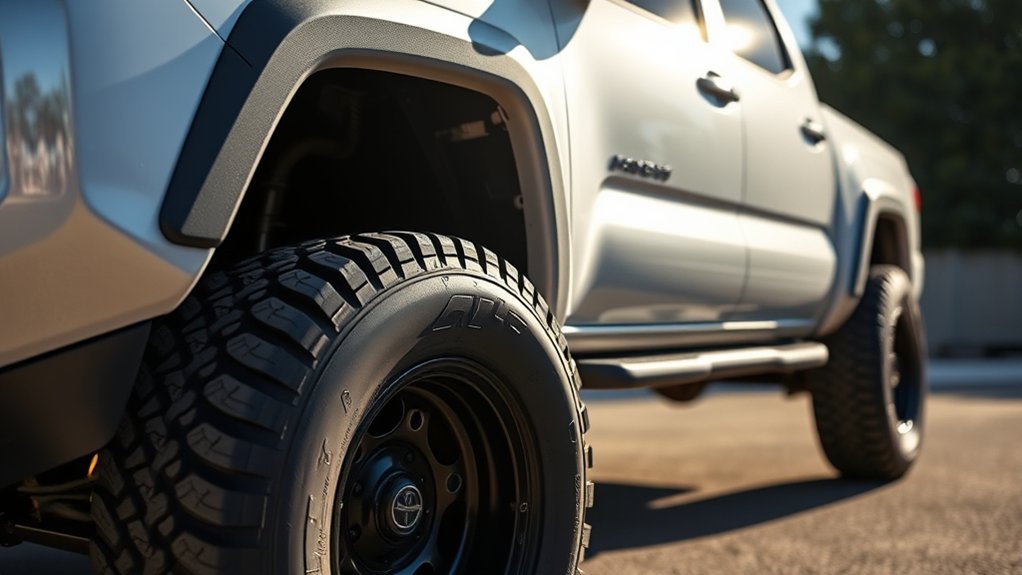
Thinking about putting 275/70R17 tires on your Toyota Tacoma? It can work on some setups, but it is not a guaranteed no-rub fit on every stock Tacoma. The answer depends on your model year, trim, factory tire size, wheel width, wheel offset, alignment, mud flaps, and how hard the suspension flexes.
Quick Answer
Yes, 275/70R17 tires can rub on a Toyota Tacoma, especially on stock suspension during full-lock turns, reverse turns, dips, or off-road flex. Some Tacoma owners can make them work with the right wheel offset and alignment, but others need trimming, mud-flap removal, a lift, or a smaller tire size.
Key Takeaways
- 275/70R17 is roughly a 32.2-inch tire, so it is larger than many Tacoma factory tire sizes.
- The most common rubbing spots are the upper control arm, mud flaps, fender liner, and cab/body mount area.
- A lift can help with vertical clearance, but offset, alignment, and tire width still decide whether the tire rubs.
- Before buying, confirm your door placard tire data, wheel width, load index, speed rating, and cold tire pressure.
- If you want a safer stock-suspension choice, 265/70R17 is usually easier to fit than 275/70R17.
At a Glance
| Time Required | 30–60 minutes to inspect clearances and test for rubbing |
| Difficulty | Moderate; easy inspection, but trimming or alignment changes may need a shop |
| Tools Needed | Flashlight, tape measure, tire-pressure gauge, level ground, helper for steering checks |
| Cost | Inspection is free; alignment, lift, trimming, spacers, or new wheels add cost |
Understanding Tire Size Compatibility for Your Tacoma
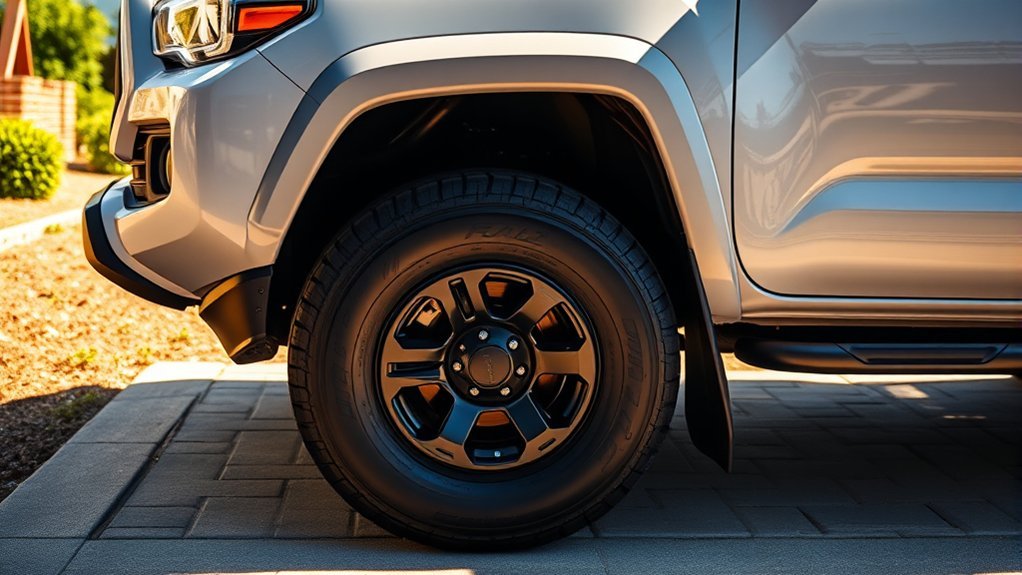
A 275/70R17 tire is about 32.2 inches tall and 10.8 inches wide. That makes it a popular “near-33-inch” upgrade for Tacoma owners who want more ground clearance and a fuller wheel-well look without jumping straight to 285s.
The catch is that tire fitment is not based on diameter alone. A Tacoma can rub because of width, wheel offset, alignment, suspension compression, and the shape of the inner fender area. Two Tacomas with the same tire size can behave differently if one has stock wheels and the other has aftermarket wheels with a different offset.
Warning: Do not choose tires by size alone. Check the driver-side door placard, owner’s manual, load index, speed rating, wheel width, and cold tire pressure before installing any non-factory tire size. The National Highway Traffic Safety Administration recommends using the original tire size or another size recommended by the vehicle manufacturer.
Will 275/70R17 Fit a Stock Tacoma?
Sometimes, but not always. On some Tacoma setups, 275/70R17 tires fit with little or no rubbing. On others, they rub at full steering lock, while backing up, over bumps, or when the suspension flexes off-road. The biggest difference is usually the truck’s factory tire size, wheel offset, and alignment.
Current Tacoma models also do not all leave the factory with the same tires. Some trims use 17-inch wheels, while others use 18-inch wheels. Toyota’s current Tacoma specifications and press information show different wheel and tire packages across the lineup, so “stock Tacoma” is too broad to be a safe fitment answer.
| Starting Point | How 275/70R17 Compares | Rubbing Risk |
|---|---|---|
| 245/70R17 factory tire | Much taller and wider than stock | Higher risk on stock suspension |
| 265/70R17 factory tire | Slightly taller and wider | Moderate risk depending on offset and alignment |
| 265/65R18 or 265/70R18 factory tire | Requires changing to 17-inch wheels; brake and wheel clearance must be checked | Depends on the replacement wheel specs |
Why Installing 275/70R17 Tires Without Modifications Can Be Risky
Installing 275/70R17 tires without checking clearance can lead to rubbing, uneven tire wear, steering interference, and damaged liners or mud flaps. The risk is highest when the steering is turned sharply and the suspension compresses at the same time.
Clearance Issues
The common rubbing points on a Tacoma include:
- Upper control arm: Usually a width and wheel-offset issue.
- Mud flaps: Often the first place a larger tire touches on stock trucks.
- Inner fender liner: Can rub during tight turns or suspension compression.
- Cab mount or body mount area: More likely with larger tires, aggressive offset, or off-road flex.
- Front bumper edge or lower valance: May touch depending on trim and wheel position.
A tire that clears while parked can still rub while driving. That is why full-lock testing, reverse testing, and compression testing matter before assuming the setup is safe.
Suspension and Alignment Factors
Bigger tires do not automatically damage suspension geometry, but they can expose clearance problems in the steering and suspension cycle. Alignment settings, especially caster, can move the tire slightly forward or backward inside the wheel well. That small change can decide whether a 275/70R17 clears the mud flap or rubs the cab mount area.
| Issue | Impact | Best Fix |
|---|---|---|
| UCA contact | Tire can rub the control arm during turns | Correct wheel offset, properly installed hub-centric spacer, or different tire size |
| Mud-flap or liner rub | Noise, plastic wear, and tire scuffing | Trim, reshape, remove mud flaps, or use smaller tires |
| Cab/body mount rub | Hard contact under compression or reverse turns | Alignment adjustment, lift, trimming, or body-mount modification by a qualified shop |
| Heavier LT tire | May reduce acceleration, braking feel, fuel economy, and ride comfort | Compare tire weight and load range before buying |
Rubbing Issues With 275/70R17 Tires on Stock Suspension
On a stock-suspension Tacoma, 275/70R17 rubbing is most likely during:
- Full-lock turns in parking lots.
- Reverse turns, which often show rubbing before forward driving does.
- Driveway dips where the front suspension compresses.
- Off-road articulation where one side of the suspension tucks upward.
- Loaded driving with gear, passengers, towing tongue weight, or bed weight.
If the tire only brushes plastic at full lock, a small liner adjustment may solve it. If it hits metal, the cab/body mount, or suspension parts, do not ignore it. Metal contact can damage the tire or create unsafe steering interference.
Pro Tip: Dust the suspected rubbing area with chalk, then do slow full-lock turns forward and backward. Fresh marks on the chalk will show exactly where the tire is touching.
How a Lift Kit Can Enhance Tire Fitment
A lift kit can improve clearance by raising the truck and increasing room during suspension movement. For many Tacoma owners, a 2-inch to 2.5-inch lift makes 275/70R17 tires easier to live with, especially if the truck sees dirt roads or mild trails.
However, a lift is not a magic fix. A lift helps vertical clearance, but it may not solve rubbing at the upper control arm or cab/body mount if the wheel offset is wrong. After a lift, the truck still needs a proper alignment, and the tire still needs to be checked at full steering lock and under compression.
If your Tacoma already rubs badly on stock suspension, plan the whole setup together: tire size, wheel offset, lift height, alignment, and any needed trimming. Buying the tire first and solving the rubbing later can become more expensive than choosing the correct setup from the start.
[Products Worth Considering]

This manual duck head tire changer kit makes tire installation and removal simpler by letting you embed the duck head into the tire with applied pressure. The integrated design and durable steel construction help reduce friction and improve efficiency and safety during use. Suitable for 16–21 inch wheels, it’s convenient for cars, trucks, SUVs, and ATV tires, with 24-hour after-sales support.

Keep your tires properly inflated with this analog VONDIOR tire pressure gauge, designed for fast, easy readings without batteries. The swiveling, two-axis hose and large glow dial help you measure at any tire angle with instant visibility. Built with a protective rubber shield, it supports durable, low-maintenance use for cars and trucks.

These aluminum alloy tire valve stem caps with an O-ring seal help protect valve stems from corrosion while adding a clean, stylish look to your vehicle. The universal fit works across cars, trucks, motorcycles, bicycles, and more, making them an easy upgrade for everyday driving and off-road use. Installation is quick, and the included four-pack keeps all your tires dressed and protected.
Real User Experiences With 275/70R17 Tires
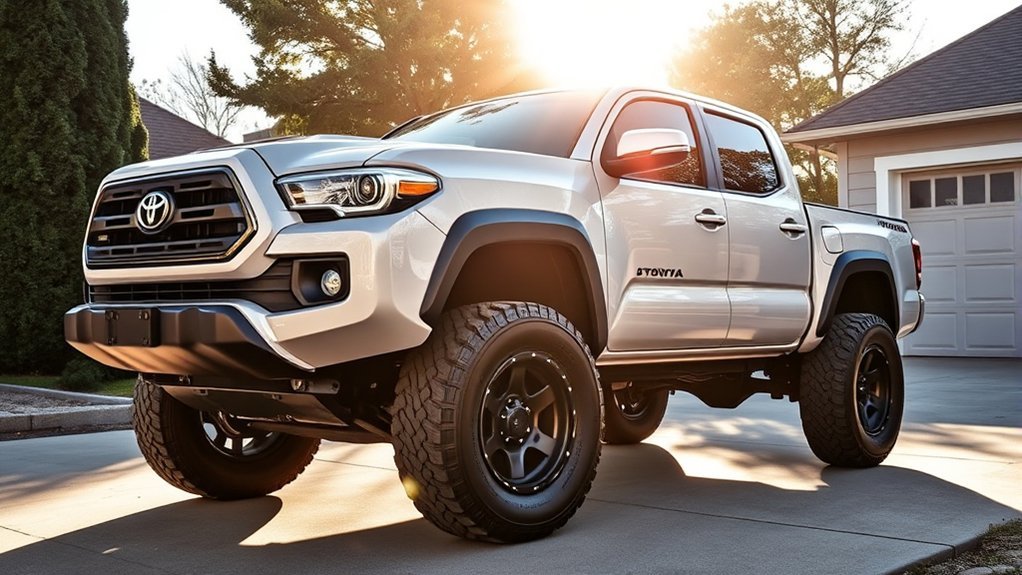
Tacoma owners report mixed results with 275/70R17 tires because their trucks are not all configured the same way. Some drivers run this size on factory-style wheels with only slight plastic rubbing. Others need mud-flap removal, liner trimming, caster adjustment, aftermarket wheels, or a lift.
The pattern is simple: the closer your Tacoma already is to a 32-inch factory tire, the easier the jump to 275/70R17 usually is. The smaller your factory tire and the more conservative your wheel clearance, the more likely you are to rub.
Note: Tire brand matters too. Two 275/70R17 tires can measure slightly differently once mounted. Aggressive all-terrain and mud-terrain tires often have wider shoulders than highway tires in the same listed size.
Best Alternative Tire Sizes for Tacoma’s Stock Setup
If you want a better chance of avoiding rubbing on stock suspension, consider a slightly smaller or narrower tire. These options still improve the look and capability of the truck without pushing clearance as hard as 275/70R17.
[Products Worth Considering]

This professional wheel and rim cleaning brush set lifts brake dust, grime, and dirt with soft, scratch-free microfiber and synthetic wool fibers. The rim brush bends up to 360 degrees for easy access to hard-to-reach areas around spokes, lips, and faces. Ideal for thorough cleaning of car, truck, motorcycle, bicycle, RV, and more wheel and tire surfaces.

This professional wheel and rim brush kit makes it easy to lift brake dust, grime, and dirt from wheels and tires without scratching finishes. The brushes feature soft, metal-free wool heads and a flexible 360-degree rim brush design for reaching hard-to-clean areas. Includes multiple brush types plus accessories for thorough car, motorcycle, and general vehicle detailing.

This 3-piece wheel brush set makes it easy to clean wheels and tires with soft, scratch-free brushes designed for lifting brake dust and grime. The flexible rim brush bends up to 360 degrees to reach hard-to-access areas for a thorough clean, while the comfortable grip helps control during detailing. A dedicated detailing brush supports gentle cleaning for sensitive surfaces, including interior use.
Recommended Smaller Sizes
- 265/70R17: One of the safest 17-inch choices for many Tacomas. It keeps a strong sidewall look while reducing rubbing risk.
- 255/75R17: A narrower “pizza cutter” style option. It can help with UCA and fender clearance because it is not as wide.
- 265/75R16: A common choice for Tacoma owners with 16-inch wheels. Do not use this if your truck has 17- or 18-inch wheels unless you are also changing wheels.
- 275/65R17: Similar width to 275/70R17 but shorter, which may reduce rubbing at the front and rear of the wheel well.
Temporary Tire Options
If you plan to add a lift later but need tires now, a 265/70R17 is usually the smarter temporary size than 275/70R17. It is easier to fit, easier to align around, and less likely to create rubbing that forces you into rushed trimming.
That said, always match the tire to your actual wheel diameter. A 17-inch tire only fits a 17-inch wheel. If your Tacoma came with 18-inch wheels, you need an 18-inch tire or a proper 17-inch wheel swap that clears the brakes and matches the correct bolt pattern, offset, and load requirements.
Essential Pre-Upgrade Checks for Tire Fitment
Before installing 275/70R17 tires, run through these checks:
- Read the tire placard: Check the factory size, cold tire pressure, load index, and speed rating on the driver-side door placard and in the owner’s manual. The Tire Industry Association says not to install tires with a lower load index than the original equipment tire listed on the placard or manual.
- Confirm wheel width: A 275/70R17 tire is commonly approved for 17-inch wheels in a specific width range, but you must verify the tire manufacturer’s specs for the exact tire you are buying.
- Check wheel offset: More positive offset can push the tire closer to the upper control arm. Less positive or negative offset can push the tire outward and increase fender, mud-flap, and body-mount rubbing.
- Inspect the front wheel wells: Look for mud flaps, liner bulges, bumper edges, and cab/body mount areas that may contact the tire.
- Test at full lock: Turn the steering wheel fully left and right while a helper watches the clearance.
- Test in reverse: Back up slowly at full lock both directions. This often reveals rubbing that forward turns miss.
- Check compression clearance: Drive slowly over a driveway dip or small ramp while watching the front tire area.
- Plan for alignment: Larger tires and lift changes should be followed by a professional alignment.
- Check the spare: Make sure your spare tire plan makes sense. A much smaller spare can affect drivability and may not be ideal for long distances.
- Recheck tire pressure cold: Set pressure based on the placard or tire professional guidance, not the maximum pressure printed on the sidewall.
A 275/70R17 is not just “one size bigger.” It changes tire height, width, steering clearance, and often the way the Tacoma feels under braking and acceleration.
[Products Worth Considering]

Secure a full-size spare on your trailer with this powder-coated steel spare tire mount bracket. It fits most 4-, 5-, and 6-lug wheel bolt patterns and mounts to trailer tongues up to 4 in wide and 5 in tall. Built for reliable carry with a max 150 lb load rating and includes zinc-plated hardware for straightforward installation.

The Trivd Frol 1/2" air impact wrench delivers high performance torque up to 1500 ft-lbs with a twin hammer impact mechanism for strong, balanced blows. It features an ergonomic grip, compact lightweight design, and quick-stop control with 3 forward speeds up to 8000 RPM plus a reverse speed. Built for demanding automotive repair and tire shop work, the rear exhaust helps keep debris away from the surface.

The Ziopetru adjustable magnetic wheel alignment tool helps you check and restore camber and caster positioning after removing and reinstalling undercarriage components. With a clear leveling/bubble measurement system and an easy zeroing adjustment knob, it supports precise horizontal angle checking. The strong magnetic base mounts to metal surfaces for convenient use at home on cars, motorcycles, trucks, vans, and SUVs.
Top Tips From Tacoma Enthusiasts
If you are set on 275/70R17 tires, use these practical tips before committing:
- Choose tire model carefully: A mild all-terrain may clear where a chunky mud-terrain rubs.
- Avoid guessing on offset: Wheel offset can fix one rubbing point and create another.
- Do not ignore light rubbing: Plastic rubbing can get worse once the tire heats up, the truck is loaded, or the suspension flexes.
- Get an alignment after changes: Alignment can improve handling and may reduce rubbing at the front or rear of the wheel opening.
- Keep your old size in mind: The bigger the jump from your factory tire, the more careful you need to be.
- Ask your tire shop to test-fit one tire first: Mounting one front tire before buying the full set can prevent an expensive mistake.
Frequently Asked Questions
Do 275/70R17 tires rub on a Tacoma?
They can. Some Tacomas clear 275/70R17 tires with minor or no rubbing, while others rub at the upper control arm, mud flaps, fender liner, or cab/body mount area. Stock suspension, factory wheel offset, alignment, and tire model all affect the result.
Can I run 275/70R17 tires on stock Tacoma suspension?
Possibly, but it is not guaranteed. If your Tacoma came with a smaller factory tire, the jump to 275/70R17 is more likely to rub. A test fit is the safest way to know before buying a full set.
Do I need a lift kit for 275/70R17 tires?
A lift kit is not always required, but it often helps. A 2-inch to 2.5-inch lift can improve clearance, especially off-road, but it may not solve upper-control-arm or body-mount rubbing if wheel offset and alignment are not right.
Is 265/70R17 better than 275/70R17 for a stock Tacoma?
For stock suspension, 265/70R17 is usually the safer choice. It is slightly smaller and narrower, so it gives you more clearance while still improving the stance compared with many factory sizes.
Will 275/70R17 tires affect my Tacoma’s speedometer?
Yes, if the 275/70R17 is taller than your original tire. A taller tire travels farther per rotation, so your speedometer may read slightly slower than your actual road speed. The exact difference depends on your original factory tire size.
Are wheel spacers a good fix for 275/70R17 rubbing?
Wheel spacers can move the tire away from the upper control arm, but they can also push the tire outward and increase rubbing at the fender liner, mud flap, or body mount. Use only high-quality hub-centric spacers installed and torqued correctly, and recheck fitment afterward.
Conclusion
So, do 275/70R17 tires rub on a Toyota Tacoma? They can, especially on stock suspension. The size is popular because it gives the Tacoma a stronger stance and more sidewall, but it is large enough to create clearance issues on many setups.
If you want the cleanest fit, check your factory tire size, wheel width, offset, load rating, alignment, and rubbing points before you buy. If you want fewer headaches on a stock truck, consider 265/70R17. If you want 275/70R17 and plan to wheel the truck off-road, budget for the right alignment, possible trimming, and maybe a lift kit.
Sources
- Toyota Tacoma specifications — current Tacoma factory specification reference.
- Toyota Owners Manual: Tire information — tire markings and owner-manual tire guidance.
- NHTSA Tire Safety — tire replacement and safety guidance.
- Tire Industry Association: Tire Replacement — load index, placard, and replacement tire safety guidance.
- TireSize.com 275/70R17 specifications — 275/70R17 diameter, width, circumference, and rim-width range.
- Toyota USA Newsroom: 2026 Tacoma — current Tacoma trim/package updates and 32-inch all-terrain tire reference.

