
Biggest Tire With a 2 Inch Lift on a Toyota Tacoma
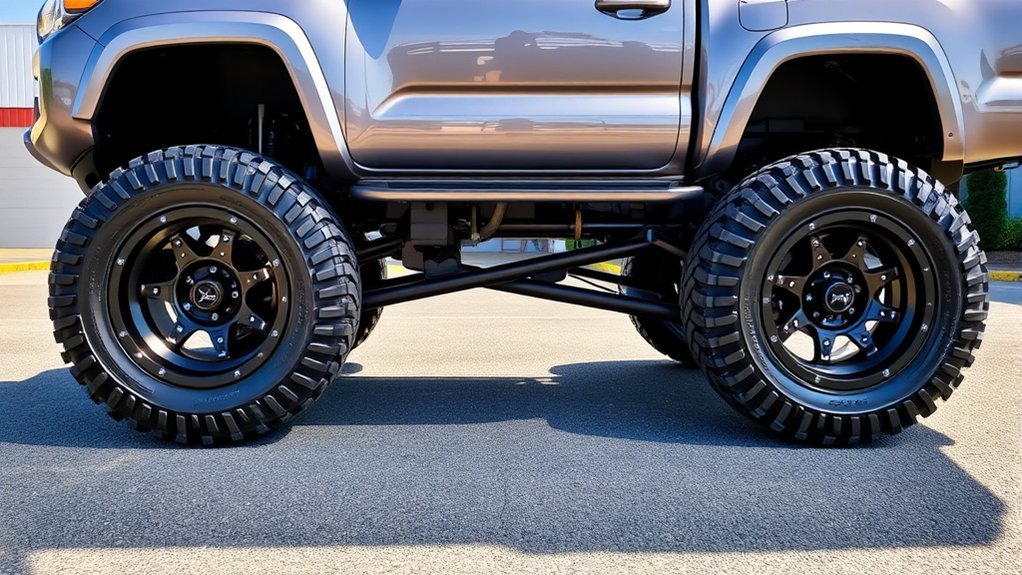
Choosing the biggest tire for a Toyota Tacoma with a 2-inch lift is not just about the lift height. The real fit depends on your Tacoma generation, wheel width, offset, backspacing, alignment caster, tire brand, and how much trimming you are willing to do. For many 2016–2023 Tacomas, a 275/70R17 or similar 32-inch-class tire is a practical upper limit, while 285-series 33-inch tires usually need more supporting work.
Quick Answer
With a 2-inch lift on a Toyota Tacoma, the biggest practical tire for many 2016–2023 trucks is usually 275/70R17 or a similar 32-inch-class size. A 285/70R17 can fit some builds, but it often needs trimming, careful wheel offset, alignment adjustment, and sometimes upper control arms.
Key Takeaways
- Best low-drama upgrade: 265/70R17 or 265/75R16 on many Tacoma setups.
- Common 2-inch-lift max: 275/70R17 or 275/75R16 if the tire brand offers that size.
- Aggressive 33-inch setup: 285/70R17 or 285/75R16 usually needs trimming, ideal wheel specs, and more careful alignment.
- A suspension lift helps fender clearance, but larger tires are what increase axle and differential ground clearance.
- Always check load rating, cold tire pressure, full-lock steering clearance, and rubbing under suspension compression before trail use.
At a Glance
| Time Required | 30–60 minutes to measure and plan fitment; several hours for lift, tire, alignment, and trimming work. |
| Difficulty | Moderate for tire selection; advanced for suspension installation, alignment, trimming, or body-mount work. |
| Tools Needed | Tape measure, wheel-spec information, tire-size chart, torque wrench, jack stands, alignment rack access, and a professional tire installer. |
| Cost | Fitment planning is free. Final cost depends on tires, lift type, alignment, wheels, trimming, and whether upper control arms are needed. |
Understanding Suspension Lifts and Their Impact on Tire Size
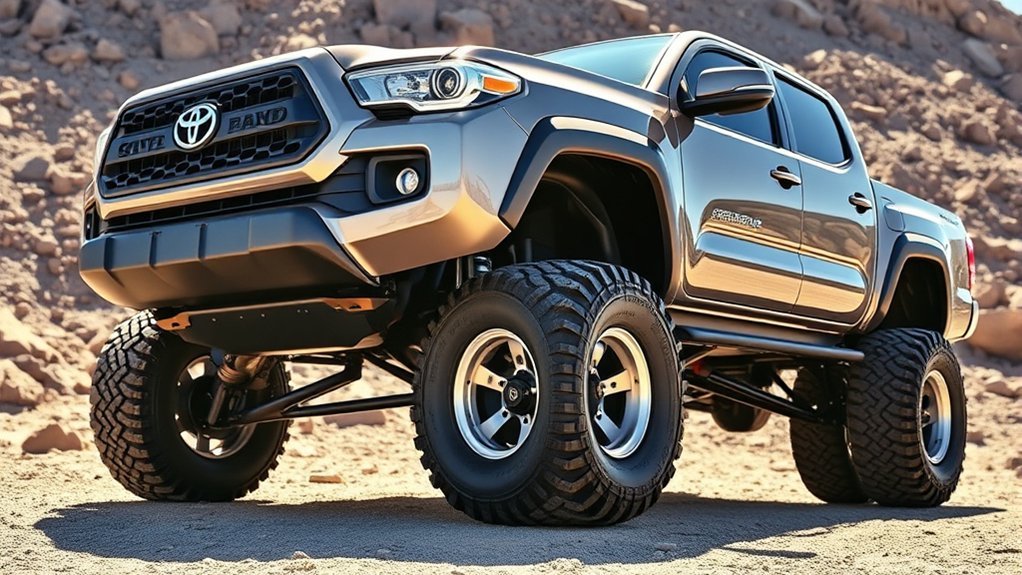
A 2-inch suspension lift raises the Tacoma’s body and frame relative to the wheels, which creates more room in the fender area. That extra room helps when turning or flexing the suspension, but it does not automatically guarantee that every 32- or 33-inch tire will clear.
The tire itself affects several important areas: overall diameter, section width, sidewall shape, tread shoulder shape, wheel position, and spare-tire fit. Toyota’s 2023 Tacoma brochure lists factory tire packages such as P245/75R16, P265/70R16, P265/65R17, and P265/60R18, depending on trim and package. That means your starting point matters before you upsize.
Note: This guide is most useful for 2016–2023 Tacoma fitment. The 2024+ Tacoma uses a newer platform and different factory wheel/tire combinations, so 2024+ owners should verify fitment with a shop that has experience with that generation.
Largest Tire Size for a Tacoma With a 2-Inch Lift
For most owners, the best answer is not one single size. It is a range based on how much rubbing, trimming, and extra work you are willing to accept.
| Tire Size | Approx. Class | Fitment Difficulty | Best For | Likely Notes |
|---|---|---|---|---|
| 265/75R16 | About 31.5–31.7 inches | Easy to moderate | Daily driving and mild trails | Often a safe 16-inch-wheel upgrade. |
| 265/70R17 | About 31.5–31.7 inches | Easy to moderate | Low-drama 17-inch upgrade | Usually easier than 275 or 285 widths. |
| 275/70R17 | About 32.2 inches | Moderate | Common 2-inch-lift max | May need liner/mud-flap trimming and correct offset. |
| 275/75R16 | About 32.2 inches | Moderate | 16-inch equivalent to 275/70R17 | Availability depends on tire brand and model. |
| 285/70R17 | About 32.7–32.8 inches | Aggressive | Owners willing to trim | Commonly needs trimming, offset changes, caster adjustment, and sometimes UCAs. |
If you want the least trouble, stay near 265/70R17 or 265/75R16. If you want the biggest tire that still keeps the build fairly mild, 275/70R17 is usually the better target. If you want a more aggressive stance and a 33-inch look, 285/70R17 can work on some Tacomas, but it should be treated as a modification project rather than a simple tire swap.
How to Determine the Largest Tire Size for Your 2-Inch Lift
Start by checking four things: your Tacoma generation, current tire size, wheel specs, and how the truck is used. A pavement-focused daily driver can usually stay narrower and quieter. A trail-focused truck may benefit from a larger all-terrain tire, but that tire can also add weight, reduce fuel economy, and increase rubbing risk.
Step 1: Confirm Your Current Tire and Wheel Size
Read the tire sidewall and the driver-side door placard. A size like 265/70R17 means the tire is 265 mm wide, the sidewall height is 70% of that width, and it fits a 17-inch wheel. Before changing sizes, compare the new diameter and width to your current setup.
Step 2: Check Wheel Width, Offset, and Backspacing
Wheel specs decide where the tire sits in the wheel well. A tire that clears on one wheel can rub badly on another. Factory-style positive offset keeps the tire tucked inward, which may cause upper-control-arm contact with wider tires. Lower offset or mild negative offset pushes the tire outward, but too much poke can increase fender, mud-flap, and cab-mount rubbing.
Step 3: Compare Actual Tire Specs, Not Just the Sidewall Size
Two tires with the same labeled size can measure differently. Tire construction, tread shoulder, load range, and sidewall lugs all change real-world clearance. BFGoodrich notes that tire dimensions are average design values and can vary by size and rim width, so always check the tire manufacturer’s spec sheet before buying.
Step 4: Plan for Alignment
After lifting the truck and installing larger tires, alignment matters. More positive caster can help pull the tire away from the rear of the fender opening, but there are limits. If the shop cannot bring alignment into a safe range, aftermarket upper control arms may help restore geometry and caster adjustment.
Pro Tip: Before buying tires, ask the tire shop for the exact measured diameter, section width, recommended rim width, and load rating of the tire model you want. Do not assume every 275/70R17 or 285/70R17 measures the same.
Common Rubbing Issues and Solutions for Larger Tires
Rubbing usually shows up in predictable places. Check these areas before and after installing larger tires:
- Inner fender liner: Often rubs during full-lock turns. Light heat-gun reshaping or trimming may help.
- Mud flaps: Factory mud flaps can contact wider tires. Removing or trimming them may solve mild rub.
- Upper control arms: Wider tires on high-positive-offset wheels can rub the UCA. Wheel offset changes may help, but avoid extreme poke.
- Cab/body mount: Larger 33-inch tires may contact the cab mount under turn and compression. A body-mount chop should be done only by an experienced shop.
- Sway bar: Some wheel/tire combinations rub near full lock.
- Pinch weld and plastic trim: These areas may need careful trimming on aggressive setups.
Warning: Do not ignore rubbing on suspension parts, brake lines, or the tire sidewall. Tire damage, steering resistance, or rubbing under compression can become a safety problem. Fix the contact point before daily driving or off-roading.
How to Pick the Best Backspacing for Your Tires
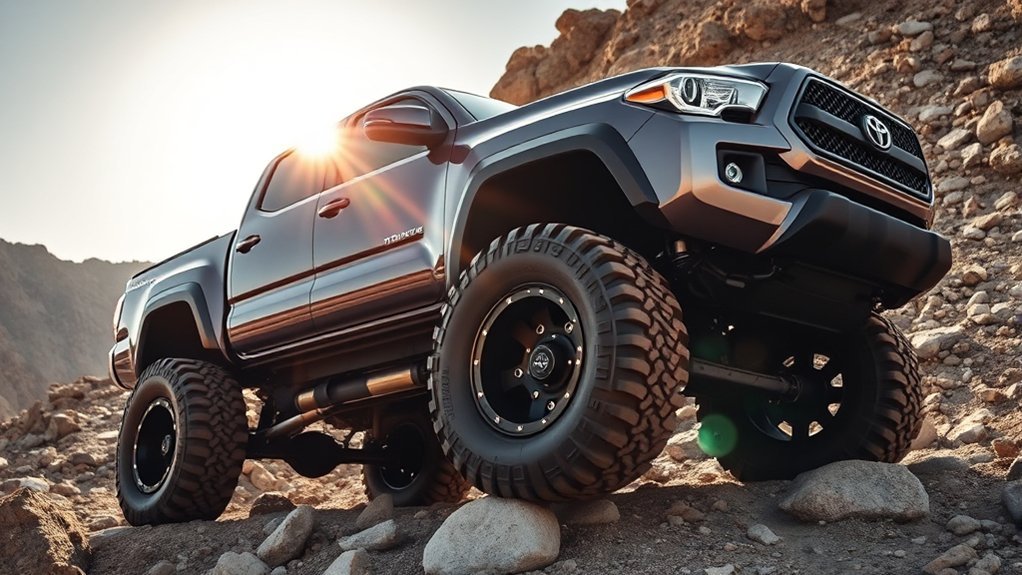
Backspacing is the distance from the wheel’s mounting surface to the inner lip of the wheel. Offset is the distance between the wheel centerline and the mounting surface. They are related, but owners usually talk about offset because it is easier to compare when shopping for aftermarket wheels.
Wheel Offset Explained
A positive offset pulls the tire inward toward the suspension. A zero or mild negative offset moves the tire outward. Moving the tire outward can help UCA clearance, but it can also make the tire contact the fender liner or body mount sooner during turns.
For many Tacoma builds, the goal is not the most negative offset possible. The goal is just enough outward movement to clear the UCA and frame without creating new rubbing farther outboard. A mild offset change is usually easier to live with than an extreme stance setup.
Ideal Backspacing Range
For many 17×8 or 17×8.5 Tacoma wheels, a backspacing range around 4.5 to 5 inches is a common starting point for larger tire fitment. However, this is not a universal rule. Tire width, actual tread shoulder, suspension lift height, fender trimming, and alignment all affect the final result.
Note: Wheel spacers and aggressive negative-offset wheels can solve UCA rubbing, but they may increase stress on wheel bearings and can create fender or cab-mount rubbing. Use the least offset change needed for clearance.
Recommended Tire Sizes for Off-Road Performance
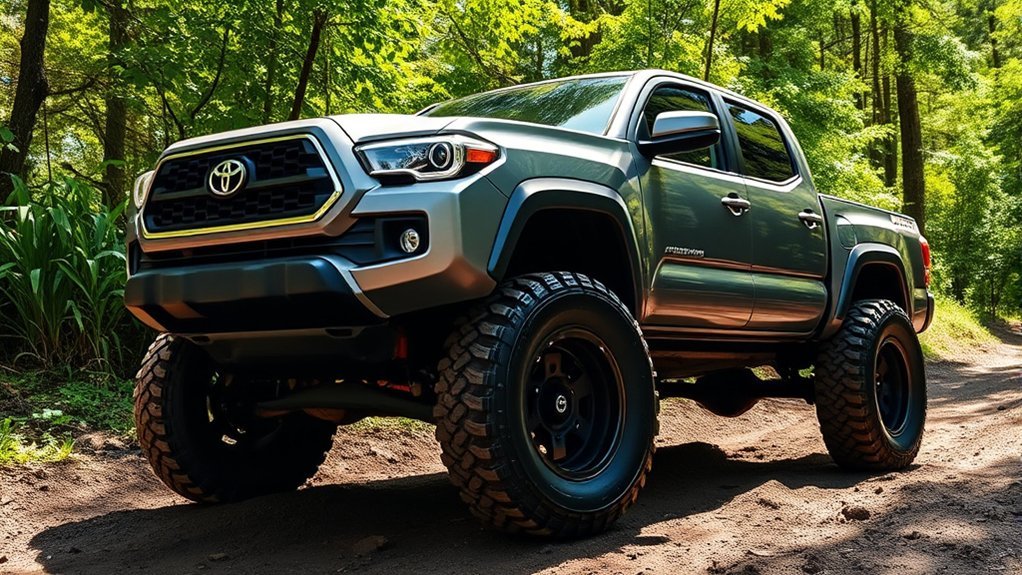
Off-road tire choice should balance clearance, traction, weight, sidewall height, and drivability. Bigger is not always better. A heavy E-load tire can be durable, but it can also make the Tacoma feel slower, ride firmer, and stop less confidently.
Tire Size Compatibility
For a 2-inch Tacoma lift, these are the most useful size categories:
- Daily driver with mild trails: 265/75R16 or 265/70R17.
- Balanced off-road upgrade: 275/70R17 or 275/75R16 where available.
- Aggressive 33-inch build: 285/70R17 or 285/75R16 with trimming and supporting mods.
If you want to avoid a body-mount chop, stay conservative. If you want maximum tire size, budget for trimming, alignment work, and possibly wheels or upper control arms.
Off-Road Performance Benefits
Larger tires can improve approach angle, breakover feel, and traction on loose surfaces. A taller tire also raises the differential slightly, which a suspension lift alone does not do. Wider tires can improve flotation in sand or loose soil, while narrower tires can cut through mud and snow more effectively in some conditions.
The most useful Tacoma tire is the largest size that clears safely at full lock, under compression, and with the truck loaded the way you actually drive it.
Recommended Brands and Models
Popular all-terrain options include the BFGoodrich All-Terrain T/A KO2, Falken Wildpeak A/T, Toyo Open Country A/T, Nitto Terra Grappler, and Goodyear Wrangler DuraTrac. The best tire depends on your mix of highway driving, rain, snow, rocks, mud, and payload.
Do not choose by brand alone. Compare actual diameter, width, load range, weight, tread depth, and rim-width range. A lighter C-load all-terrain may ride better on a daily-driven Tacoma than a heavy E-load tire, while a heavier LT tire may be better for towing, rocky trails, or loaded overlanding.
Essential Modifications for a Smooth Tire Fit
With a 2-inch lift, the cleanest setup usually combines the right tire size, sensible wheel specs, and proper alignment. Depending on your chosen tire, you may need:
- Alignment with enough caster: Helps keep the tire away from the rear of the fender opening.
- Minor plastic trimming: Often enough for 275/70R17 on many builds.
- Mud-flap removal or trimming: Common on wider tires.
- Aftermarket upper control arms: Useful when the lift reduces alignment range or when more caster is needed.
- Different wheels: A better offset can prevent UCA contact and reduce rubbing.
- Body-mount chop: Usually reserved for more aggressive 33-inch setups such as 285/70R17.
For the smoothest daily-driver setup, avoid stacking too many compromises. A slightly smaller tire that clears everywhere is usually better than a larger tire that rubs, damages liners, or makes the truck unpleasant to drive.
Tips for Installing a Lift and Tires Safely
Follow a safety-first process when installing a lift and larger tires:
- Confirm tire load rating: The tire must safely carry the Tacoma’s weight and intended payload.
- Use the correct cold tire pressure: Follow the vehicle placard, tire professional guidance, and load requirements.
- Have tires professionally mounted: Tire and wheel mounting can be dangerous if done incorrectly.
- Torque lug nuts properly: Recheck torque after the initial drive according to wheel or shop guidance.
- Get an alignment: Do this after lift installation and tire changes.
- Check clearance at full lock: Turn both directions on flat ground and while slowly backing up.
- Check clearance under compression: Load the truck, flex the suspension safely, and inspect for contact.
- Test drive slowly first: Listen and feel for rubbing before highway speeds.
The NHTSA TireWise program recommends checking tire condition, treadwear, and inflation regularly. NHTSA also advises choosing tires that match the original size or another manufacturer-recommended size, and consulting a tire dealer if you are unsure.
How Bigger Tires Affect Driving
Before jumping to the largest possible tire, consider the trade-offs:
- Speedometer accuracy: A taller tire can make the speedometer read lower than actual road speed.
- Acceleration: Larger and heavier tires increase rotating mass and can make the truck feel slower.
- Braking: Heavier tires can increase stopping effort and distance.
- Fuel economy: Larger all-terrain tires usually reduce MPG.
- Gearing: A big tire effectively changes the final drive ratio. Regearing may be worth considering for heavy 33-inch or larger setups.
- Spare tire fit: Make sure the spare fits under the bed or plan another spare-mounting solution.
- TPMS and pressure: Keep tire-pressure monitoring sensors working and use the correct pressure for the tire/load combination.
Frequently Asked Questions
How much does it cost to put a 2-inch lift on a Tacoma?
A basic spacer or leveling kit may cost a few hundred dollars before labor, while a higher-quality suspension lift, installation, alignment, and supporting parts can cost much more. If larger tires require wheels, upper control arms, trimming, or body-mount work, the total project cost rises quickly. Always price the full setup, not just the lift kit.
Will 275/70R17 tires fit a Tacoma with a 2-inch lift?
On many 2016–2023 Tacomas, 275/70R17 tires can fit with a 2-inch lift, but they are not guaranteed rub-free. Wheel offset, tire model, alignment caster, mud flaps, and fender liner clearance all matter. Expect to check for minor rubbing and make small adjustments if needed.
Can I run 285/70R17 tires with only a 2-inch lift?
Some Tacoma owners run 285/70R17 tires with a 2-inch lift, but this is an aggressive setup. It often needs the right wheel offset, more caster, trimming, mud-flap removal, and sometimes a body-mount chop or aftermarket upper control arms. Do not assume 285s are a simple bolt-on fit.
Do I need upper control arms for 275/70R17 tires?
Not always. Many 275/70R17 setups can work without aftermarket upper control arms if the wheel specs and alignment are right. UCAs become more useful when the lift reduces alignment range, when you need more caster, or when the tire/wheel setup creates clearance problems.
What tire size is best for daily driving with a 2-inch Tacoma lift?
For daily driving, 265/70R17, 265/75R16, or 275/70R17 are usually better choices than a heavy 285-series tire. They keep the truck more comfortable, reduce rubbing risk, and usually preserve better braking, acceleration, and fuel economy.
Will bigger tires affect my speedometer?
Yes. A taller tire travels farther per revolution, so the speedometer may read slower than your actual speed. The larger the jump from stock diameter, the bigger the error. A speedometer calibration tool or shop adjustment may be needed.
Conclusion
A 2-inch Tacoma lift opens the door to larger tires, but it does not make every 33-inch tire an easy fit. For a clean daily-driver setup, 265/70R17 or 265/75R16 is the low-drama choice. For a more capable and still reasonable upgrade, 275/70R17 is often the practical upper limit. If you want 285/70R17, plan for trimming, careful wheel specs, alignment work, and a proper clearance test.
The best tire is the one that clears safely, carries the load correctly, and matches how you actually use the truck. Measure first, choose the tire second, and fix any rubbing before the Tacoma sees highway speed or trail flex.
Sources
- Toyota 2023 Tacoma eBrochure — factory wheel and tire package examples by trim.
- NHTSA TireWise — tire safety, treadwear, and maintenance guidance.
- NHTSA Tire Safety Brochure — replacement tire size and pressure safety guidance.
- BFGoodrich All-Terrain T/A KO2 — tire construction notes, size variation warnings, and load/pressure cautions.
- Tire Rack BFGoodrich KO2 Specs — example measured tire diameters, widths, load ranges, and rim-width ranges.
- Rough Country Tacoma Lift Kits — current lift-kit cost ranges and common lift-kit components.

Related Articles
Best Toyota Tacoma Tire Set Deals
You rely on your Tacoma for daily driving, work runs, and weekend adventures, so picking the right tire set matters more than you might…
Read More
Best Winter Tire Deals for Toyota Tacoma
Choosing the right winter tires for your Toyota Tacoma matters because it directly affects your safety, traction, and confidence when roads turn icy or…
Read More
Best Highway Tire Deals for Toyota Tacoma
You rely on your Tacoma for long drives, towing, and everyday hauling, so picking the right highway tire matters more than you might think.…
Read More