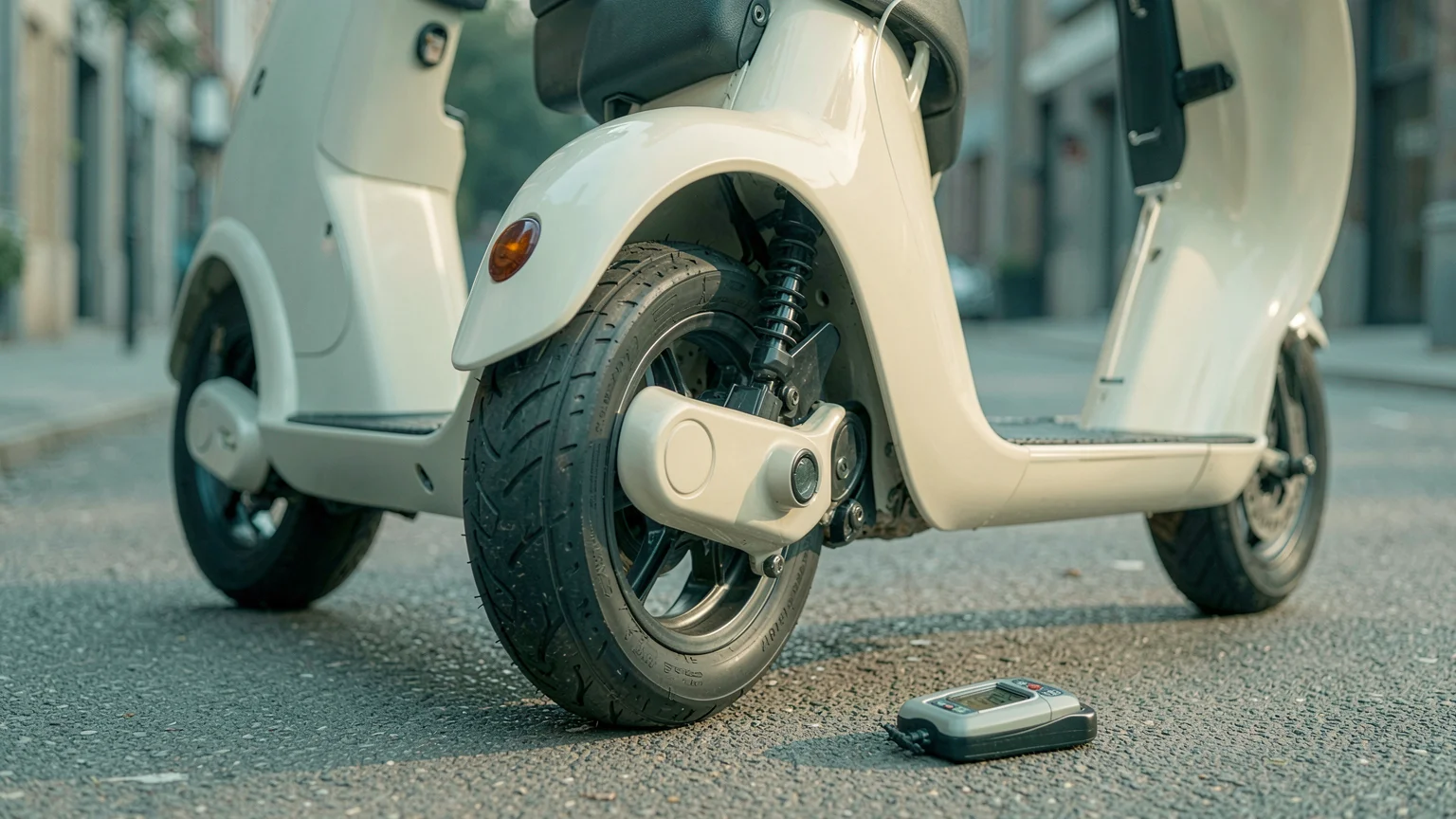
Scooter tire pressure for most scooters and mopeds runs about 22 to 29 psi up front and 25 to 36 psi at the rear, but the right number depends on your model. The chart below lists the cold pressures from owner’s manuals for 18 popular scooters, from the Honda PCX and Activa to the Vespa GTS and TVS Jupiter.
Quick Answer
Use the cold pressures in your owner’s manual or on your scooter’s tire label. For most scooters that is about 22–29 psi front and 25–36 psi rear, and the rear is usually higher. If your manual lists a passenger value, add air at the rear before riding two-up: the Honda PCX goes from 33 to 36 psi. Always check when the tires are cold.
Key Takeaways
- Use your scooter’s own numbers. The PSI on the tire sidewall is a maximum, not the pressure to run.
- The rear tire usually needs more air than the front.
- Many manuals raise the rear pressure for a passenger or a heavy load.
- Check cold, at least once a month; weekly is better.
- Small scooter tires hold little air, so a small loss is a big change.
Scooter Tire Pressure Chart by Model
All values are cold pressures from the owner’s manual or the manufacturer’s own page. Values marked ≈ are our conversions from bar or kg/cm². Manuals differ by market and model year, so confirm against yours.
| Model | Tire sizes (front / rear) | Front, cold | Rear, cold | Passenger or heavy load |
| Honda PCX (157cc), US 2025 | 110/70-14 / 130/70-13 | 29 psi (200 kPa) | 33 psi (225 kPa) | Over 200 lbs added: rear 36 psi (250 kPa) |
| Honda PCX125, EU 2021 | 110/70-14 / 130/70-13 | 29 psi (200 kPa) | 33 psi (225 kPa) | With passenger: rear 36 psi (250 kPa) |
| Honda ADV160, Malaysia | 110/80-14 / 130/70-13 | 29 psi (200 kPa) | 33 psi (225 kPa) | Same |
| Honda Activa 6G, India | 90/90-12 / 90/100-10 | 22 psi (150 kPa) | 29 psi (200 kPa) | With passenger: rear 36 psi (250 kPa) |
| Honda Ruckus, US 2018 | 120/90-10 / 130/90-10 | 25 psi (175 kPa) | 25 psi (175 kPa) | – |
| Honda Metropolitan, US | 80/100-10 / 80/100-10 | 18 psi (125 kPa) | 29 psi (200 kPa) | – |
| Yamaha NMAX 155, Malaysia/Indonesia | 110/70-13 / 130/70-13 | 22 psi (150 kPa) | 36 psi (250 kPa) | Same |
| Yamaha Zuma 125, US 2009–2012 | 120/70-12 / 130/70-12 | 25 psi (175 kPa) | 29 psi (200 kPa) | 90–155 kg load: 29 / 33 psi (200 / 225 kPa) |
| Yamaha XMAX 300, 2021 | 120/70-15 / 140/70-14 | 29 psi (200 kPa) | 33 psi (225 kPa) | Same |
| Vespa Primavera 125/150, 2015 | 110/70-11 / 120/70-11 | 1.6 bar (≈23 psi) | 1.8 bar (≈26 psi) | Not listed |
| Vespa Sprint 125/150, 2015 | 110/70-12 / 120/70-12 | 1.8 bar (≈26 psi) | 2.0 bar (≈29 psi) | Not listed |
| Vespa GTS 300 hpe, EU 2019 | 120/70-12 / 130/70-12 | 1.8 bar (≈26 psi) | 2.0 bar (≈29 psi) | With passenger: rear 2.2 bar (≈32 psi) |
| Suzuki Access 125, India | 90/90-12 / 90/100-10 | 22 psi | 29 psi | With pillion: rear 36 psi |
| TVS Jupiter 110, India 2026 | 90/90-12 / 90/90-12 | 24 psi (1.70 kg/cm²) | 32 psi (2.25 kg/cm²) | Two riders: rear 36 psi (2.53 kg/cm²) |
| Kymco Agility S 125i/150i, Italy | 100/80-16 / 120/80-14 | 1.5 bar (≈22 psi) | 2.0 bar (≈29 psi) | With passenger: 1.75 / 2.25 bar (≈25 / 33 psi) |
| Kymco Like 200i | 120/70-12 / 130/70-12 | 1.75 kg/cm² (≈25 psi) | 2.25 kg/cm² (≈32 psi) | Not listed |
| Genuine Buddy 125/150/170, US | 100/90-10 / 100/90-10 | 22 psi | 25 psi | – |
| Piaggio Liberty 125/150, 2013 | 80/90-15 / 100/80-14 | 2.0 bar (≈29 psi) | 2.2 bar (≈32 psi) | Full load: rear 2.5 bar (≈36 psi) |
Notes: NMAX values come from Southeast Asian manuals, and other markets may differ. Zuma values are from first-generation manuals; the current model uses the same tire sizes. ADV160 values are from the Malaysian manual. Suzuki Access values are from Suzuki India’s own blog. Some Genuine Buddy listings show 3.50-10 tires, so check your sidewall. Older TVS Jupiter models use different values: the Jupiter Grande manual lists 24/28 psi solo and 24/32 psi with two riders.
Products Worth Considering

This compact electric tire pump inflates bikes, motorcycles, scooters, and sports balls with preset pressure control and an LED display for precise readings. It automatically stops at your target PSI and supports up to 150 PSI, with fast inflation that reaches 80–100 PSI in about 25 seconds. Designed for easy carry, it fits in a jersey pocket or bag and remembers your last two pressure settings.

The Topeak SmartGauge D2 delivers precise digital tire pressure readings for bikes, motorcycles, and sports equipment up to 250 psi (17 bar). Its rotating SmartHead works with both Presta and Schrader valves, so you can check pressure quickly without adapters. The LCD display makes it easy to read results in psi, bar, or kg/cm² with an included CR2032 battery for immediate use.

The ETENWOLF T500 digital tire pressure gauge with inflator delivers accurate readings across a wide 0–250 PSI range, calibrated to ANSI B40.7 Grade 2A. An all-in-one tool combines gauge, air chuck, hose, inflating and controlled bleed for checking, inflating, and deflating tires on many vehicle types. It’s built for reliable use in extreme temperatures and features an illuminated backlit display with replaceable AAA batteries for convenient operation.
Why the Rear Tire Needs More Air
On almost every scooter in the chart, the rear pressure is higher than the front. The rear tire sits under the engine and the rider, so it carries more of the weight. The gap can be large: Yamaha lists 22 psi front and 36 psi rear for the NMAX 155, and Honda lists 18 psi front and 29 psi rear for the Metropolitan. The Honda Ruckus is the exception, at 25 psi on both ends.
How to Adjust for a Passenger or Cargo
Many manuals give a second, higher rear pressure for riding two-up or carrying cargo. The Honda PCX125, Activa 6G, Suzuki Access 125 and TVS Jupiter all go to 36 psi at the rear, and the Vespa GTS 300 goes from 2.0 to 2.2 bar. The Kymco Agility and Yamaha Zuma raise both tires.
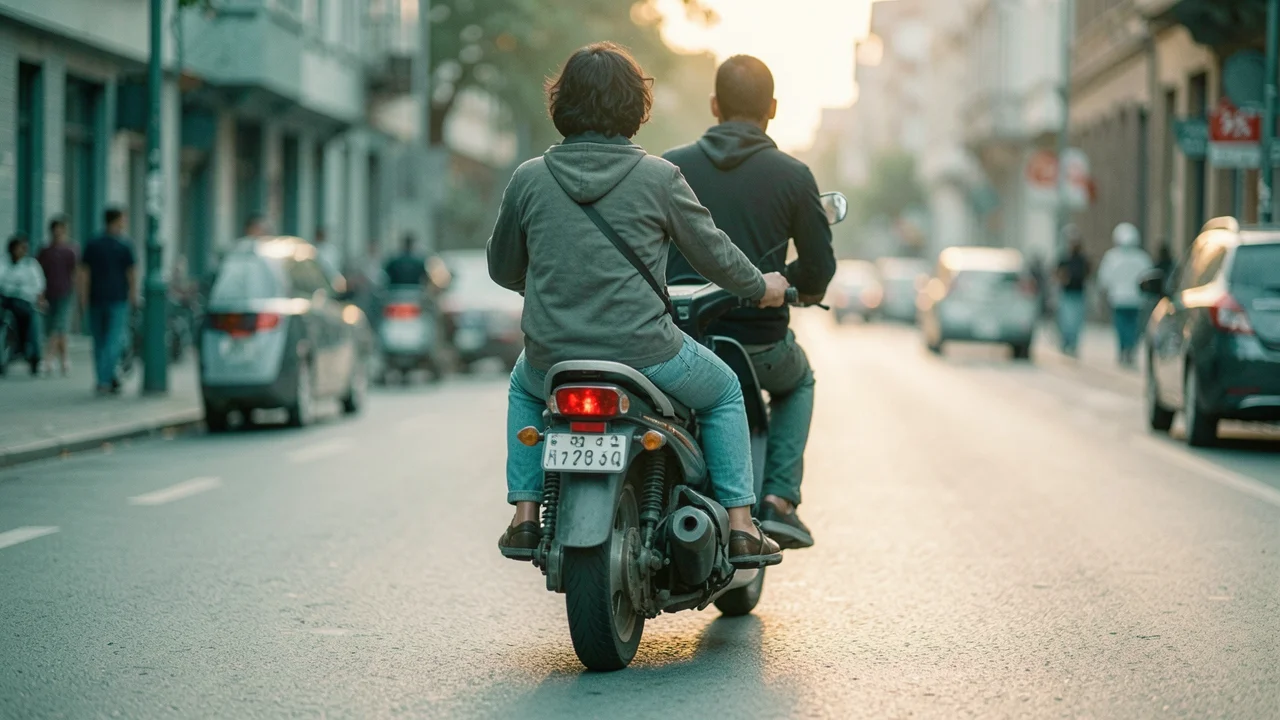
Michelin advises setting the loaded pressure before you add the passenger or luggage, then returning to the solo pressure afterward. Bridgestone adds that you should never go above the manufacturer’s figure.
How to Check Scooter Tire Pressure
- Check cold. Michelin defines cold as not ridden for two hours, or ridden less than two miles at low speed. Bridgestone says parked for at least three hours.
- Find your numbers in the owner’s manual or on the tire label. Bridgestone notes the figure on the sidewall is the tire’s maximum.
- Remove the valve cap and press the gauge straight onto the valve.
- Add or release air to match the manual, then check again.
- Refit the cap and repeat on the other tire.
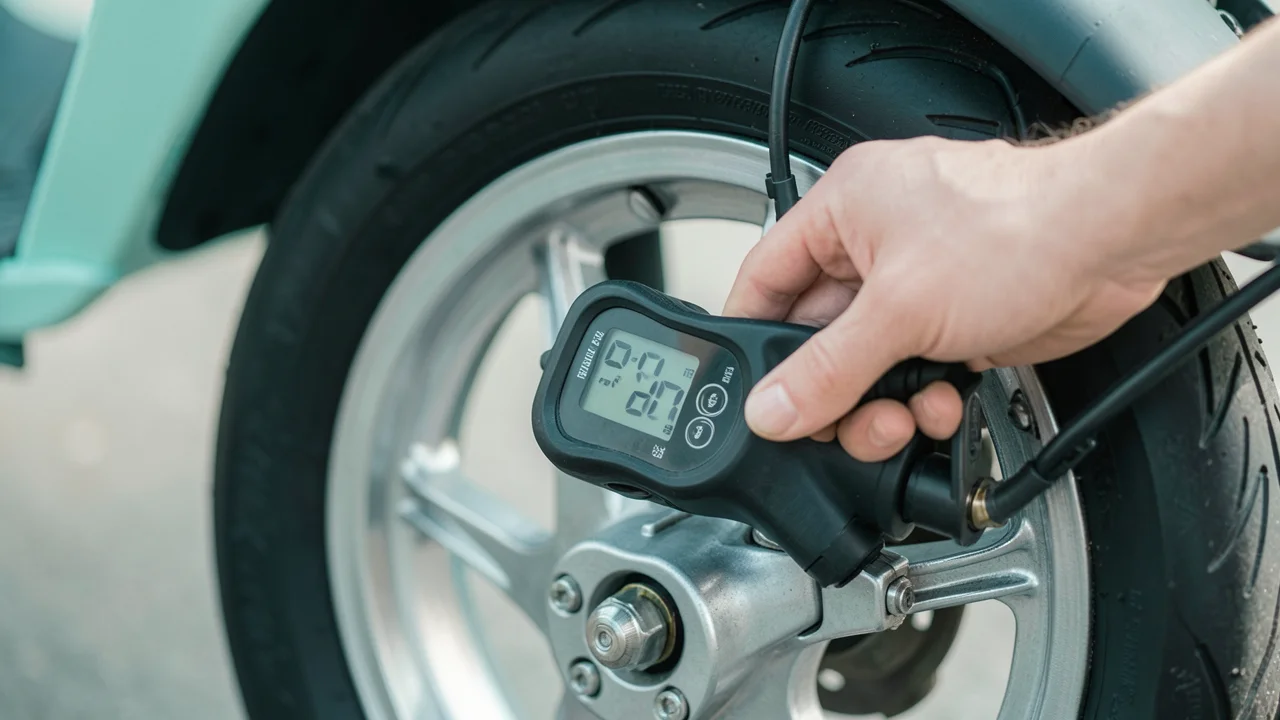
Never let air out of a hot tire to reach the cold figure. As for how often to check, Honda says at least monthly, Yamaha says before each ride, Bridgestone and TVS say weekly, and Michelin suggests every two weeks if you ride often. For motorcycles, see our motorcycle tire pressure guide.
Products Worth Considering

Replace worn inner tubes on compatible Razor and kids electric mini dirt bikes with a correct 12.5x2.75 straight valve stem tube. It helps prevent leakage and keeps tires working safely for daily rides and rough terrain use. The package includes two tubes, a valve core wrench, brass valve stem cores, and red valve caps.

Replace worn tires quickly with this universal 4.80/4.00-8 tire and inner tube set designed for wheelbarrows and outdoor utility carts. The ribbed tread helps reduce turf damage while the natural rubber construction supports longer service life. Compatible with 15.5-inch outer diameter, 4-inch width, and 8-inch rim diameter wheels, it uses a straight TR-13 valve stem for easy installation. For best results, inflate with a manual pump and do not exceed 25 PSI.

AstroAI’s digital tire pressure gauge inflates and measures with high accuracy, reading within 1% and supporting four pressure units from 3 to 250 PSI. The heavy-duty brass air chuck locks securely on valve stems, while the 19.7-inch stainless braided hose and 360° rotatable dial improve comfort and control for faster single-hand operation. Battery-saver behavior and an integrated flashlight add convenience and safety for everyday roadside and garage use.
Why Small Scooter Tires Need Frequent Checks
Scooter tires hold far less air than car tires, so losing a psi or two is a bigger share of the total. Michelin makes this point about motorcycle and scooter tires, and Bridgestone says losing more than 2 psi a month may mean the tire is damaged.
Under-inflation hurts in three ways. Honda warns that underinflated tires wear unevenly, handle poorly and can fail from overheating. Bridgestone explains that the extra flexing builds heat that can damage the tire’s structure. Michelin notes longer stopping distances, especially in the wet.
How to Read Scooter Tire Sizes
Take a size like 120/70-12 51L:
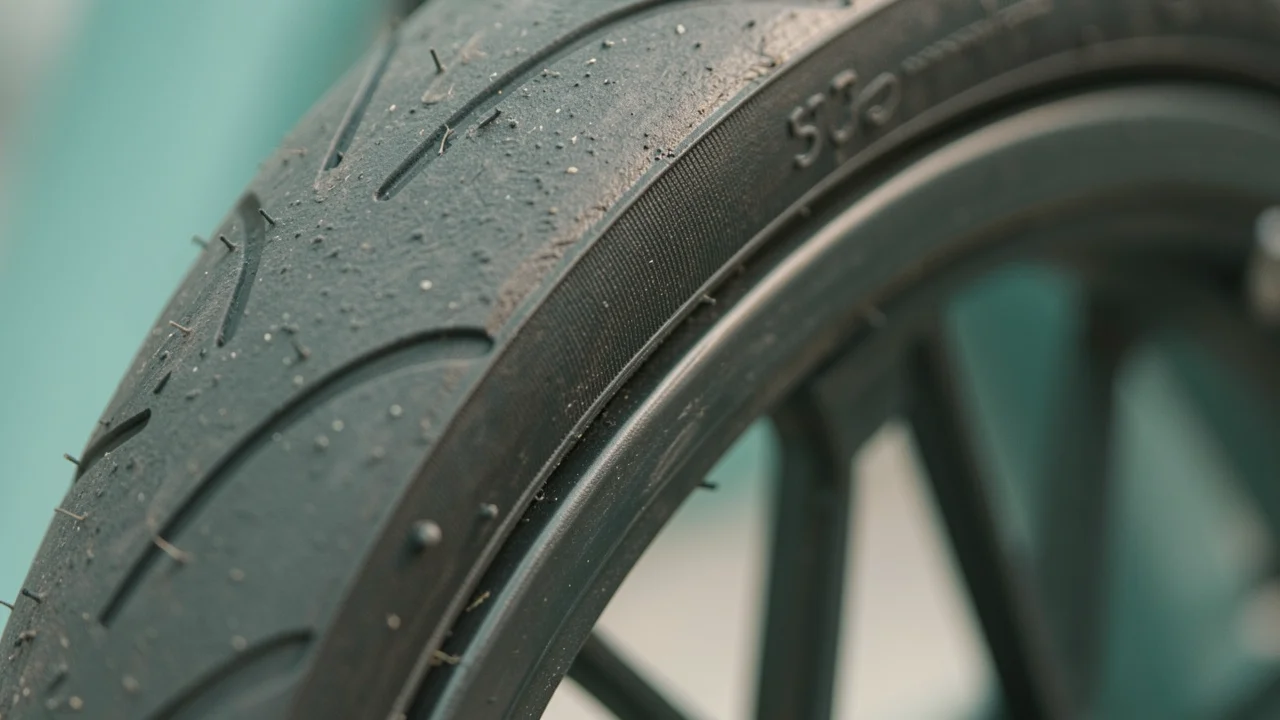
- 120 is the tire width in millimeters.
- 70 means the sidewall height is 70% of the width.
- The dash means bias construction; R would mean radial and B bias-belted.
- 12 is the rim diameter in inches.
- 51L is the load index (51 = 195 kg per tire) and the speed symbol (L = 120 km/h).
Older inch sizes such as 3.50-10 4PR TT mean a tire 3.5 inches wide on a 10-inch rim. 4PR is a four-ply rating, and TT (tube type) tires must run with an inner tube. Continental says tube-type tires must not be fitted to tubeless rims, and Honda warns never to put a tube inside a tubeless tire, because heat build-up can make it burst. When you buy a replacement, Pirelli says to match or exceed the original load index. More detail is in our guides to reading motorcycle tire sizes and tube-type vs. tubeless tires.
Age matters too. Honda says to replace tires 10 years after manufacture, even if the tread looks fine. The last four digits of the tire date code show the week and year it was made.
Frequently Asked Questions
What should my scooter tire pressure be?
Use the cold pressures in your owner’s manual. Across the 18 models in our chart, front pressures run from 18 to 29 psi and rear pressures from 25 to 36 psi, with the rear usually higher.
What is the Honda PCX tire pressure?
Honda lists 29 psi front and 33 psi rear, cold. The US manual raises the rear to 36 psi when you add more than 200 lbs of rider and cargo, and the EU PCX125 manual uses 36 psi rear with a passenger.
What is the Honda Activa tire pressure?
The Activa 6G manual lists 22 psi front and 29 psi rear, and 36 psi rear with a passenger.
What is the right Vespa tire pressure?
The 2015 Primavera 125/150 manual lists 1.6 bar front and 1.8 bar rear. The Sprint 125/150 and GTS 300 list 1.8 bar front and 2.0 bar rear, and the GTS goes to 2.2 bar rear with a passenger.
Should scooter tires have the same pressure front and rear?
Usually not. Most manuals list more air at the rear, which carries the engine and most of the rider’s weight. The Honda Ruckus is an exception, at 25 psi front and rear.
Sources
- Honda PCX owner’s manual (US, 2025)
- Honda PCX125 owner’s manual (2021)
- Honda UK – PCX125 specifications
- Honda ADV160 owner’s manual (Malaysia)
- Honda ADV160 2026 brochure
- Honda Activa 6G owner’s manual
- Honda Ruckus owner’s manual (2018), ManualsLib
- Honda Metropolitan owner’s manual page
- Yamaha NMAX owner’s manual (Yamaha Malaysia)
- Yamaha Zuma 125 owner’s manual (2012)
- Yamaha XMAX 300 owner’s manual (2021)
- Vespa Primavera 150 3V owner’s manual
- Vespa Sprint 150 3V ABS owner’s manual
- Vespa GTS 300 hpe owner’s manual (2019)
- Suzuki India – scooter tyre pressure
- TVS Jupiter 110 owner’s manual (2026)
- Kymco Agility S 125i owner’s manual
- Kymco Like 200i workshop manual
- Genuine Buddy owner’s manual
- Piaggio Liberty 125 ie owner’s manual, ManualsLib
- Michelin – Check your motorcycle tire pressure
- Michelin – Scooter tyre pressure
- Bridgestone – Motorcycle tire safety and maintenance
- Bridgestone – Proper inflation of motorcycle tires
- Michelin – How to read a motorcycle tire
- Pirelli motorcycle tyre guide – load and speed tables
- Continental – Tubeless and tube-type motorcycle tires and rims
- Honda owner’s manual – tire safety (tubes and tire age)
- Honda NSS250 owner’s manual – tire pressure, ManualsLib
- Cyclepedia – motorcycle tire sizes
Products Worth Considering

This all-in-one air compressor accessory kit combines a digital tire pressure gauge with an inflator and blow gun in a single easy-to-use unit. The heavy duty, corrosion-resistant construction helps you quickly set and read tire PSI up to 200, and the vent valve releases excess air without removing the chuck. It connects to any 1/4 inch NPT air compressor output and includes multiple nozzles, adaptors, and stem caps for versatile inflating and blowing tasks.

ETENWOLF T300 is a calibrated digital tire pressure gauge for accurate readings from 3 to 200 PSI across light and heavy-duty vehicles. It includes thermal compensation for reliable performance in extreme cold or heat, with an auto shut-off to extend battery life and an LED for easier reading. The sturdy design supports rugged everyday use, making it ideal for pickups, RVs, and industrial applications.

AZUNO’s digital tire inflator delivers stable, accurate pressure readings with a bright LCD and a 0.1 resolution display for confident inflation. It supports one-handed operation for inflating and quick deflating, and it’s built with rugged steel and brass components for reliable shop or garage use. With multi-unit pressure display and compatibility across cars, SUVs, motorcycles, and trucks, it’s a convenient accessory for everyday tire maintenance.