Tubed vs tubeless motorcycle tires: choose tubed tires if you ride rough off-road terrain, use traditional center-laced spoked wheels, or want the simplest low-cost tube replacement setup. Choose tubeless tires if you ride mostly on pavement, tour long distances, commute, or want easier roadside plug repairs. Tubeless motorcycle tires need a compatible airtight rim, a good bead seal, and a sound valve stem. Tubed tires need the correct tube size, rim strip, and tire marking. The safest choice is the system your motorcycle wheel and tire manufacturer allow.
Last updated: July 7, 2026
Quick Answer
- Choose tubed tires if you ride primarily off-road, use traditional spoked wheels that are not tubeless-ready, or want cheaper initial parts. Be ready to remove the wheel to patch or replace the tube.
- Choose tubeless tires if you ride mostly on paved roads, want slower air loss from many small punctures, and prefer quick roadside plug repairs without removing the wheel.
- Check the sidewall and rim before mixing systems. A tire marked TT is tube-type. A tire marked TL is tubeless. Only add a tube to a tubeless-marked tire or wheel when the tire maker, rim maker, or motorcycle manual allows it.
Tubed vs Tubeless Motorcycle Tires: At-a-Glance Comparison
| Decision factor | Tubed tires | Tubeless tires |
|---|---|---|
| Best fit | Traditional spoked rims, dirt riding, older motorcycles | Cast wheels, tubeless-ready spoked wheels, street and touring bikes |
| Flat behavior | Can lose pressure quickly when the tube is pierced | Often leaks more gradually after many small tread punctures |
| Roadside repair | Wheel removal, bead breaking, tube patch or tube replacement | Plug tread puncture, reinflate, then inspect or replace as needed |
| Main safety check | Tube size, rim strip, valve alignment, pinch-flat risk | Airtight rim, bead seat, valve seal, plug limits |
| Cost pattern | Lower parts cost, more labor during flats | Higher setup cost if wheels are not already compatible, easier small puncture repair |
Quick Guide: Should You Choose Tubed or Tubeless Motorcycle Tires?
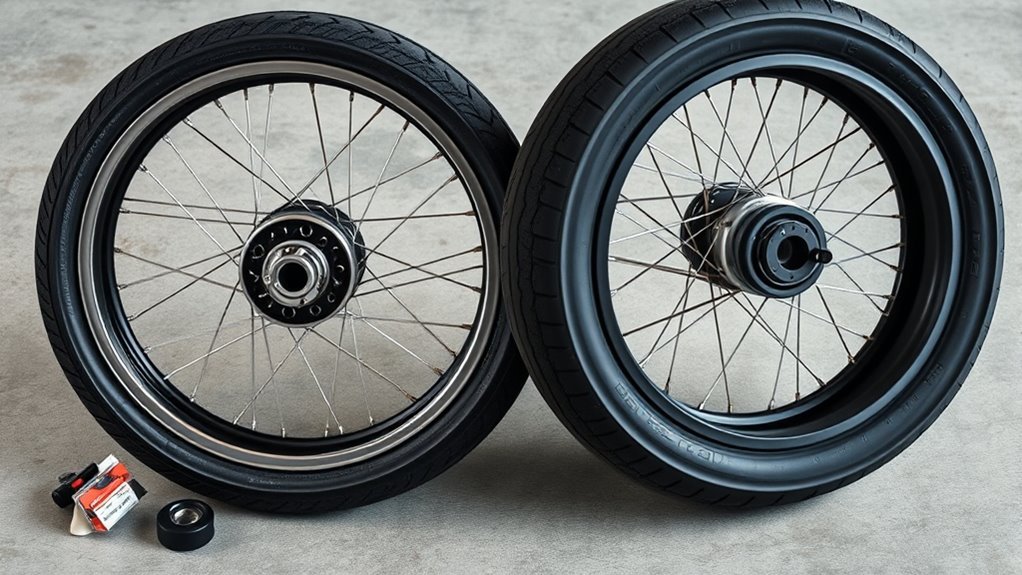
Deciding which tire type fits your motorcycle depends on your wheel design, riding surface, speed, load, and repair comfort. Tubed tires work well on many traditional spoked wheels because the inner tube holds the air while the tire provides grip and shape. They are still common for dirt, enduro, and older bikes because tube swaps are simple once you have the tools and a spare tube.
Tubeless tires seal air between the tire bead and the rim. They suit paved riding because many tread punctures can be plugged without removing the wheel. They also remove tube-to-casing friction, which can reduce heat buildup. The trade-off is fitment: the wheel must be tubeless-ready, the bead seat must match, and the valve stem must seal cleanly. If the rim is not compatible, a tubeless tire may leak or fail to seat safely.
Use tubed tires for rugged off-road riding, traditional spoked rims, and field repairs where you already carry tire irons and tubes. Use tubeless for commuting, sport riding, and touring when your wheels are designed for it. When in doubt, follow the motorcycle manual and tire sidewall markings before mounting anything.
How Tubed Motorcycle Tires Work
A tubed setup uses an outer tire mounted over a separate rubber inner tube. The tube holds the air. The tire casing handles road grip, braking, cornering, and impact protection. The valve stem is part of the tube and passes through the rim. Because the tube is separate from the tire, a nail, spoke-end rub, pinched tube, or damaged valve base can cause fast pressure loss.
What happens inside a tubed motorcycle tire?
When you run a tubed tire, the tire carcass and the inner tube act as two separate parts. The tire gives the wheel its road contact and structural shape. The inner tube contains compressed air and presses the tire outward. A rim strip protects the tube from spoke nipples or sharp rim edges. If the tube gets pinched between the rim and a rock, the tube can split even when the outer tire looks usable.
| Component | Role | What to inspect |
|---|---|---|
| Tire carcass | Grip, shape, and impact protection | Cuts, bead damage, uneven wear |
| Inner tube | Air containment | Correct size, folds, patches, valve base |
| Rim strip | Tube protection | Coverage over spokes and sharp edges |
How does the tube valve affect pressure?
The inner tube routes air through a molded valve stem. Motorcycle tubes normally use Schrader-style stems, but the important checks are stem angle, stem length, rim-hole fit, and the condition of the valve base. If the tube creeps inside the tire, the valve can tilt or tear. That is a warning sign that pressure, mounting, rim lock setup, or tire movement needs attention. Check pressure before rides, after hard off-road impacts, and after any repair.
How Tubeless Motorcycle Tires Work
Tubeless tires rely on an airtight seal between the tire bead and the rim. A dedicated valve stem mounts directly to the wheel. If a small puncture happens in the tread area, the tire and rim usually keep most of the air inside long enough for you to slow down and stop. A plug kit can often seal that tread puncture temporarily so you can reach a repair shop or replace the tire when needed.
What makes a tubeless motorcycle tire stay sealed?
The airtight seal between the tire bead and rim keeps a tubeless tire inflated. The bead must sit evenly on a compatible bead seat. The rim surface must be clean, smooth, and free from corrosion or dents. A tubeless valve must also seal tightly at the rim hole.
- Bead profile: The tire bead must match the rim contour.
- Bead seating: The tire must seat evenly around the full rim.
- Rim surface: Dirt, corrosion, bends, and old sealant can create leaks.
- Valve seal: A cracked rubber base or loose metal stem can leak slowly.
- No tube friction: Removing the inner tube reduces one source of internal heat.
Why does the tubeless valve stem matter?
The valve stem is a separate component bolted or snapped directly to the rim. Its rubber or metal seat must maintain an uninterrupted seal against the wheel. Many riders use right-angle valve stems to make pressure checks easier around large brake rotors. Inspect the stem and seal for corrosion, cracking, loose fittings, and aging whenever you change tires. A slow leak at the valve can feel like a tire problem even when the tread is not punctured.
How does a tubeless tire behave after a puncture?
Tubeless motorcycle tires usually lose air through the puncture path itself rather than through a torn inner tube. That can make many small tread punctures easier to control. A plug repair may get you moving again, but it is not a license to ignore the damage. Large cuts, sidewall punctures, bead damage, or a tire ridden while flat need professional inspection and often replacement.
- Small tread punctures may be repairable with a motorcycle-rated plug kit.
- Sidewall or shoulder damage should not be treated like a simple tread puncture.
- A strong bead seat helps the tire stay mounted while pressure drops.
- Sealants can help with minor leaks, but check tire, TPMS, and warranty compatibility first.
- Controlled air loss gives you more time to slow down, but it does not remove crash risk.
Rims and Fitment: Can Your Wheel Take Tubeless?
You cannot mount a tubeless tire safely on every motorcycle wheel. You must confirm rim compatibility first. Tubeless systems require a compatible bead seat, an airtight rim bed, and a valve stem that seals at the rim. Many cast aluminum wheels and some newer cross-spoked adventure wheels are tubeless-ready. Older wheels and many traditional center-laced spoked rims usually need an inner tube because the spoke holes open into the air chamber.
If you want to convert a standard spoked wheel, use only a conversion system approved for your wheel type and riding use. Rim tape or sealing strips can block spoke nipples, but they cannot correct a damaged rim, wrong bead profile, bent flange, or incompatible tire. Conversions also add maintenance because tape edges, spoke nipples, and sealant condition must be checked over time.
Before buying, compare three markings: the motorcycle manual, the rim marking, and the tire sidewall. TT means tube-type and requires an inner tube. TL means tubeless and requires a compatible airtight rim when used without a tube. If any marking conflicts, ask the tire maker or a qualified motorcycle tire technician before installation.
[Products Worth Considering]

Upgrade your ride with a 2-pack set of 26x1.95 folding mountain bike tires built for dependable traction on mud, rocks, and trail surfaces. A reinforced puncture-resistant layer helps protect against sharp debris, while included butyl inner tubes provide strong sealing and shock absorption. Ready for fast swaps with included tire levers and universal sizing for most bikes.

Get back on the road fast with this compact tire plug repair kit for tubeless tires. It includes self-vulcanizing rubber plugs, T-handle rasp and insert tools, and a storage box that fits in your glove compartment for easy access. Also included are a 4-way valve steam tool set with valve cores and caps for added roadside convenience.

Switch to tubeless with this Muc-Off rim tape designed to create an airtight seal for smooth-running setups. The pressure-sensitive adhesive offers the right stretch for strength and durability, while the semi-transparent material helps you locate the valve hole quickly. It includes four seal patches for a secure finishing seal after wrapping.
Tire Pressure Monitoring Systems (TPMS)
One advantage of many tubeless wheels is the easier use of a Tire Pressure Monitoring System (TPMS). Sensors may attach to the valve stem or mount inside the rim, depending on the motorcycle and kit. They report pressure, and many systems also estimate or display temperature. Because many tubeless punctures lose pressure gradually, a TPMS can warn you before the tire is fully flat. That early warning helps you slow down, avoid heat damage, and stop in a safer place.
TPMS does not replace manual checks. Batteries fail, sensors can leak, and external caps can be damaged. Check pressure with a reliable gauge when tires are cold, especially before highway riding, two-up touring, or carrying luggage.
[Products Worth Considering]

This flat tire repair kit lets you handle punctures quickly with two plug sizes for different damage, helping restore drivability on the spot. It includes T-handle insertion and spiral probe tools plus lubricant and a utility knife, all packed in a compact bag for easy carry. Universal compatibility makes it suitable for tubeless tires across cars, motorcycles, ATVs, trucks, jeeps, and more.

Vigorder rubber cement glue delivers superior adhesion and cures quickly within about 30 seconds for seamless rubber bonding. Once cured, it helps provide a strong, durable, waterproof seal that holds up to vehicle weight, pressure, and heat. Suitable for cars, motorcycles, trucks, bicycles, and off-road tires, it’s designed for emergency patch and maintenance repairs.

This screw-in tire plug kit seals punctures fast using the included screwdriver, letting you repair tread damage without removing the tire or using messy glue. It includes two plug sizes for different puncture types and uses high-density rubber for an airtight, heat-resistant temporary seal that helps you reach a tire shop safely. Compact and universal, it works on tubeless tires across cars, trucks, motorcycles, tractors, and more.
Safety Risks: Sudden Flats, Slow Leaks, and Overheating
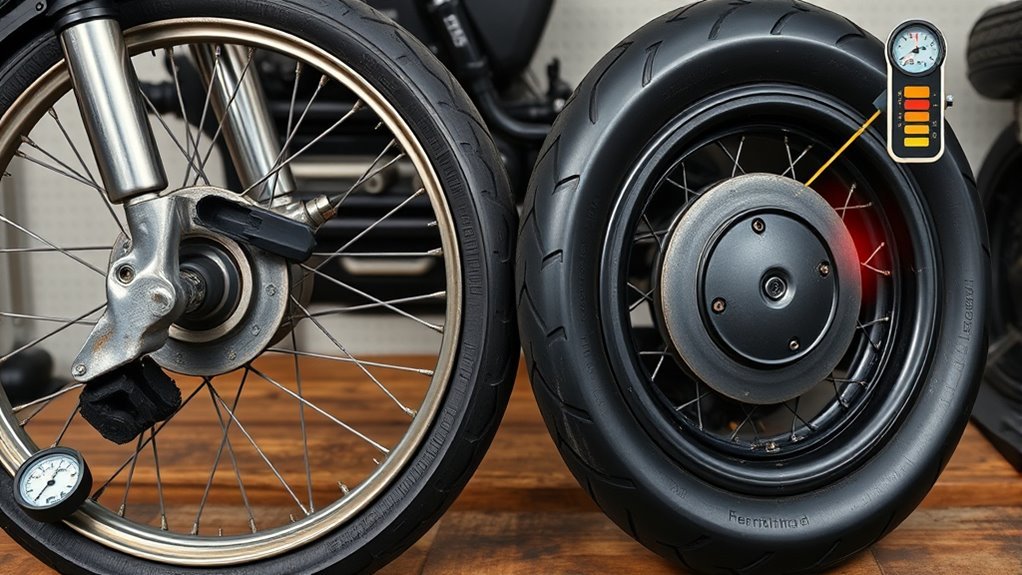
Because tubed tires rely on an inner tube, a puncture can damage the tube and drop pressure quickly. The exact speed of air loss depends on puncture size, tire condition, speed, load, and whether the tube tears. Tubeless systems often leak more slowly from small tread punctures because the tire bead and rim still form the air chamber. Either system can become dangerous if you keep riding after a major pressure loss.
- Fast flats: A torn tube or damaged valve can leave very little reaction time.
- Slow leaks: Tubeless punctures often leak gradually, but bead or valve leaks can still surprise you.
- Heat buildup: Tube friction, underinflation, overload, and high speed can all raise tire heat.
- Pinch flats: Tubed tires can pinch between rocks and the rim during low-pressure off-road riding.
- Rim damage: Both systems can fail if the rim is bent, cracked, corroded, or badly repaired.
Roadside Repairs for Motorcycles: Plugs, Patches, and Tube Swaps
A roadside flat is handled differently depending on your setup. A tubeless puncture in the tread can often be plugged without removing the wheel. You still need a reamer or insertion tool, plugs, and a way to reinflate the tire. After plugging, ride cautiously and arrange a proper inspection because a plug does not fix every internal injury.
Fixing a tube-type tire takes more work. You may need to put the bike on a stand, remove the wheel, break the bead, use tire irons, pull the tube, find the puncture, patch or replace the tube, then reinflate and reseat the tire. Adventure riders who run tubes should carry a spare front tube, a rear tube or patch kit, tire irons, valve-core tool, rim-protection method, and a pump or compact compressor.
For street riders on tubeless wheels, a compact plug kit, valve-core tool, pressure gauge, and small 12v compressor can solve many tread punctures. For remote riders on tubes, practice the repair at home before relying on it on a trail.
Tubed vs Tubeless: Performance by Terrain
You should match your tire type to the surfaces you ride most often. Tubed tires remain practical for heavy trail use, traditional spoked wheels, and riders who accept tube repairs. Tubeless setups favor street performance, high-speed stability, and easier small-puncture recovery on pavement.
Match tire type to your wheel and terrain: tubed for traditional spoked off-road setups, tubeless for compatible street and touring wheels.
- Off-road: Tubed tires remain common for motocross, enduro, and rough trail riding where rim impacts are frequent.
- Pavement: Tubeless tires suit street riding because many tread punctures can be plugged quickly.
- Mud/Wet: Tire tread pattern, compound, pressure, and rider input matter more than tube status alone.
- Everyday commuting: Tubeless is usually more convenient because a small tread puncture may not require wheel removal.
- Long-distance touring: Tubeless reduces roadside downtime when your wheels are compatible and you carry a repair kit.
Cost and Maintenance: Short‑Term vs Long‑Term Expense
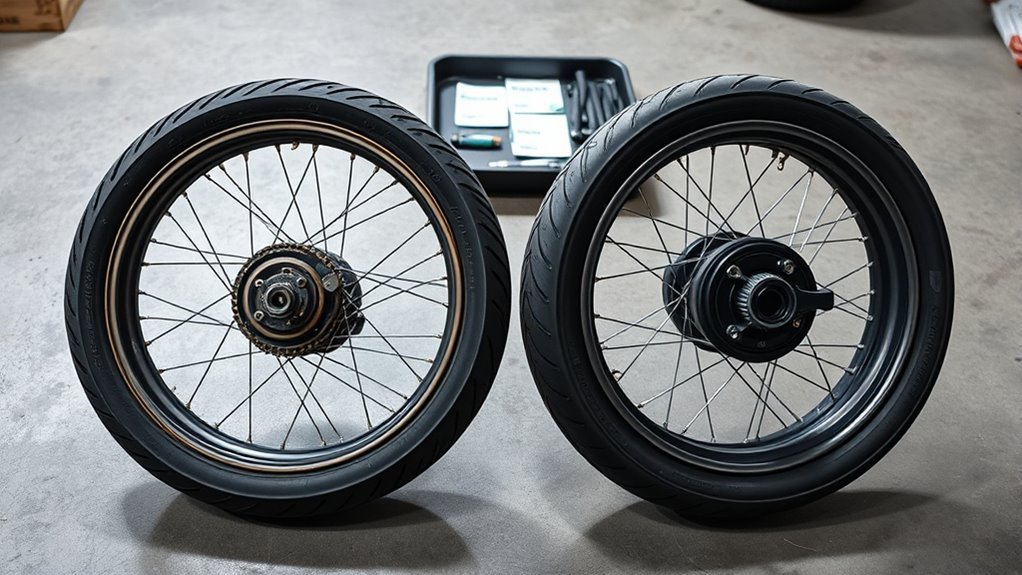
Tubeless setups can cost more if your motorcycle does not already have tubeless-ready wheels. You may need compatible rims, new valve stems, sealing parts, or professional conversion work. If your motorcycle already uses tubeless wheels, maintenance is usually simple: inspect the bead, replace worn valve stems, monitor pressure, and carry a plug kit.
Tubed tires often cost less upfront, but tube repairs can cost more time. Pinch flats, valve tears, rim-strip damage, and tube replacement can turn a small puncture into a long roadside job. If you ride remote trails, that trade-off may still be acceptable because tubes work with traditional spoked wheels and can be replaced far from a shop.
Practical Buying Checklist for Motorcycle Tires
Your riding style, wheel design, and tire sidewall markings determine what will perform best. Use this checklist before buying or converting.
- Confirm wheel compatibility: Check your motorcycle manual and rim marking before choosing tube-type or tubeless.
- Read the tire sidewall: Match TT and TL markings to the intended setup.
- Match the terrain: Go tubeless for compatible street, sport, commuting, and touring wheels. Stay tubed for many traditional spoked off-road setups.
- Plan the repair: Decide whether you want a fast plug repair or you are comfortable breaking a bead and replacing a tube.
- Review tire specs: Always match the motorcycle maker’s recommended size, load rating, speed rating, and inflation guidance.
- Inspect the rim: Do not trust a tubeless setup on a bent, corroded, cracked, or poorly sealed wheel.
[Products Worth Considering]

Wykodra tire plugs provide quick vulcanizing repairs for tubeless tires, helping you seal punctures and get back on the road. The industrial-strength rubber creates a long-lasting, leak-resistant bond and is designed for emergency fixes without removing the tire. Choose between two standard plug sizes with color-matched options for small to larger damage across many vehicles and off-road uses.

Rhino USA’s 86-piece tire repair kit provides everything you need for quick, emergency flat repairs, including a reamer and plug insertion tool plus 60 reusable tire plugs. The heavy-duty, metal-handled design helps you fix punctures from nails and screws on tubeless tires for cars, trucks, motorcycles, ATVs, UTVs, and more. A high-visibility compact case stores easily for on-the-go use, with illustrated instructions to help you complete repairs with confidence.
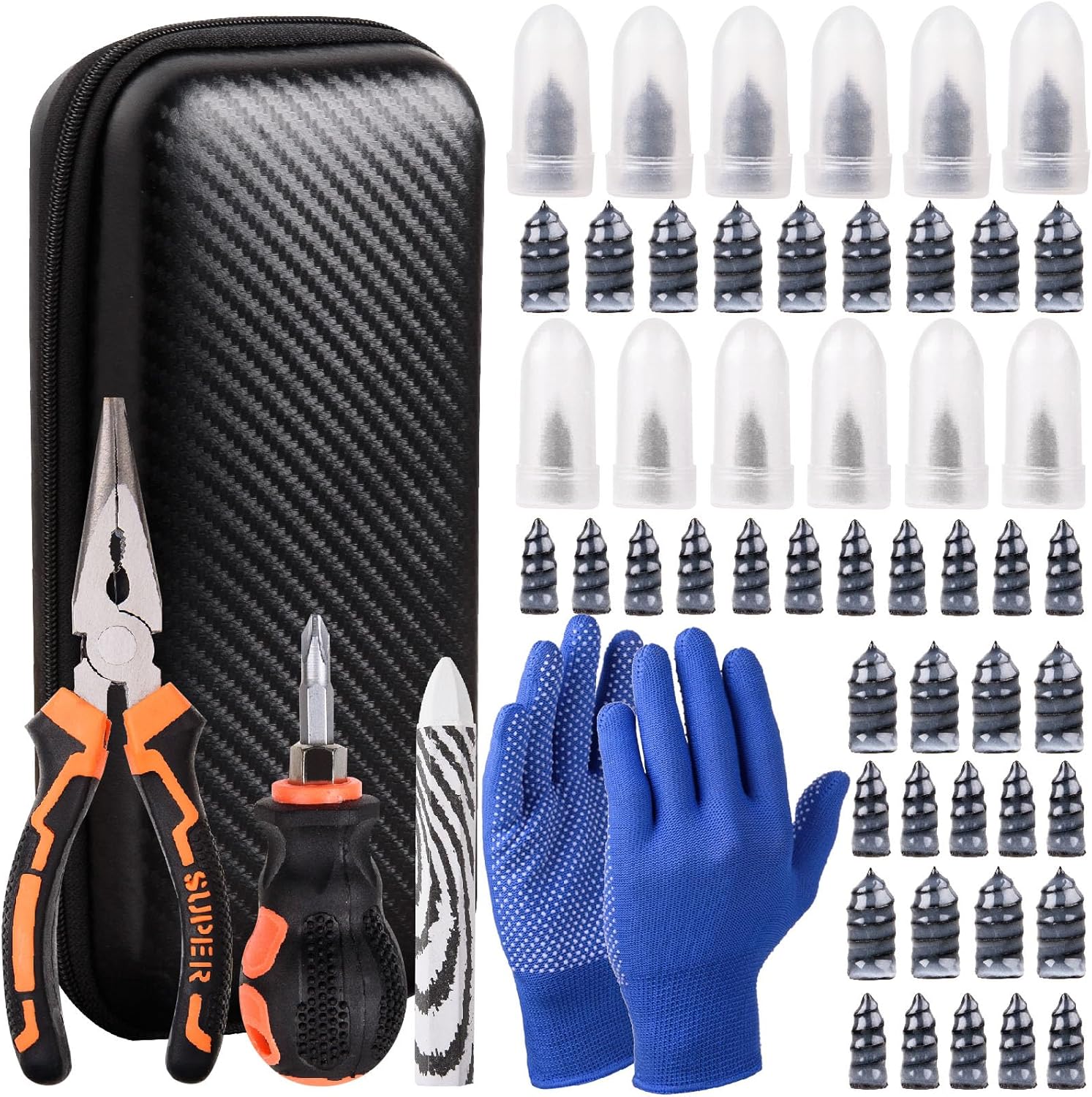
This tire sidewall puncture repair kit fixes flats fast without removing the tire, helping you get back on the road in minutes. It includes self-tapping repair nails, essential tools, gloves, and a portable storage bag for convenient roadside use. Designed for tubeless tires, it helps create a tight, leak-resistant seal for cars, motorcycles, trucks, SUVs, and ATVs.
Frequently Asked Questions
Are Tubeless Tires Better for Motorcycles?
For most street and touring motorcycles, yes, when the wheel is tubeless-compatible. Tubeless tires often leak more slowly after small tread punctures, run without tube friction, and can often be repaired with a plug without removing the wheel. Good tire maintenance still matters because underinflation, overload, valve leaks, and rim damage can make either system unsafe.
Is Tube or Tubeless Better for a Bike?
Tubeless is generally better for paved roads, commuting, sport riding, and touring if your wheels support it. Tubed tires still make sense for many dirt, motocross, enduro, and vintage motorcycles with traditional spoked rims. The correct answer is the setup your tire, rim, and motorcycle maker approve.
What Are the Disadvantages of Tube Tires?
The main disadvantages are faster air loss after some punctures, pinch-flat risk, tube heat and friction, valve-stem damage, and a repair process that usually requires removing the wheel. Tubes are not bad by default, but they demand more tools and more skill during roadside repairs.
Can You Put a Tube in a Tubeless Motorcycle Tire?
Only do it when the tire maker, rim maker, or motorcycle manual allows it. Some tubeless-marked motorcycle tires can be used with tubes on tube-type rims, but not every combination is safe. Check bead profile, valve fit, heat risk, and sidewall guidance before mounting.
What Do TT and TL Mean on Motorcycle Tires?
TT means tube-type and requires an inner tube. TL means tubeless and is designed to hold air with a compatible tubeless rim. These markings do not override your motorcycle manual, rim marking, or tire maker guidance.
Why Do Many Spoked Motorcycle Wheels Use Tubes?
Traditional center-laced spoked wheels have spoke holes in the rim bed. Those holes make it difficult to hold air without a tube. Some modern cross-spoked adventure wheels route spokes outside the sealed air chamber, so they can use tubeless tires.
Conclusion
Choosing between tube and tubeless motorcycle tires comes down to your wheel design, terrain, repair plan, and risk tolerance. A tubed setup is simple, rugged, and still useful for many off-road and vintage motorcycles. A tubeless setup is usually the better choice for compatible street, commuting, and touring bikes because small tread punctures are easier to manage.
Before you buy, check three things: the tire sidewall, the rim marking, and your motorcycle manual. If they do not clearly agree, ask a qualified motorcycle tire technician before riding.