
Toyota Tundra 2nd Gen (2007–2021) Tire Size Chart: Factory Specs by Trim
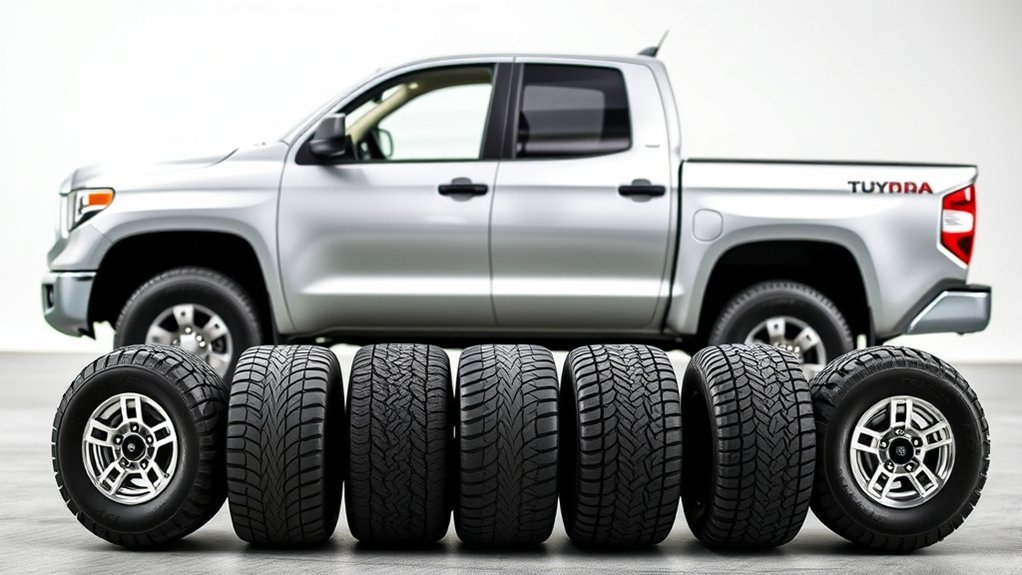
If you’re choosing tires for a Toyota Tundra 2nd Gen (2007–2021), start with the tire size on your driver-door Tire and Loading Information Label, then match the load rating, wheel size, offset, and clearance needs before buying. Most U.S. and Canadian 2nd-gen Tundras used 18- or 20-inch factory wheels, but the exact tire size changed by year, trim, and package.
Quick Answer
Common factory tire sizes for the Toyota Tundra 2nd Gen include P255/70R18, P275/65R18, and P275/55R20, depending on year, trim, package, and wheel option. Some listings may vary, so the safest answer is always the tire size printed on your truck’s driver-door placard.
Key Takeaways
- For late 2nd-gen trucks, Toyota’s 2021 Tundra brochure shows factory wheel/tire combinations such as P255/70R18, P275/65R18, and P275/55R20.
- The door-jamb Tire and Loading Information Label is the source of truth for your exact truck’s tire size, cold tire pressure, and load information.
- A mild upsize near 33 inches may fit some stock trucks, but wheel offset, actual tire dimensions, mud flaps, fender liners, and suspension compression decide whether it rubs.
- Never choose a replacement tire with a lower load capacity than the original tire listed for your truck.
- Bigger tires can affect speedometer accuracy, braking feel, gearing, fuel economy, ABS/traction-control behavior, and TPMS setup.
At a Glance
| Time Required | 15–30 minutes to confirm factory size, pressure, wheel specs, and upgrade clearance needs |
| Difficulty | Easy for factory replacement; moderate for upsizing or aftermarket wheels |
| Tools Needed | Driver-door placard, owner’s manual, tire-pressure gauge, tape measure, and tire-size calculator |
| Cost | Free to check fitment; tire and wheel cost varies by brand, size, load rating, and installation |
Understanding Tire Specifications for the Toyota Tundra
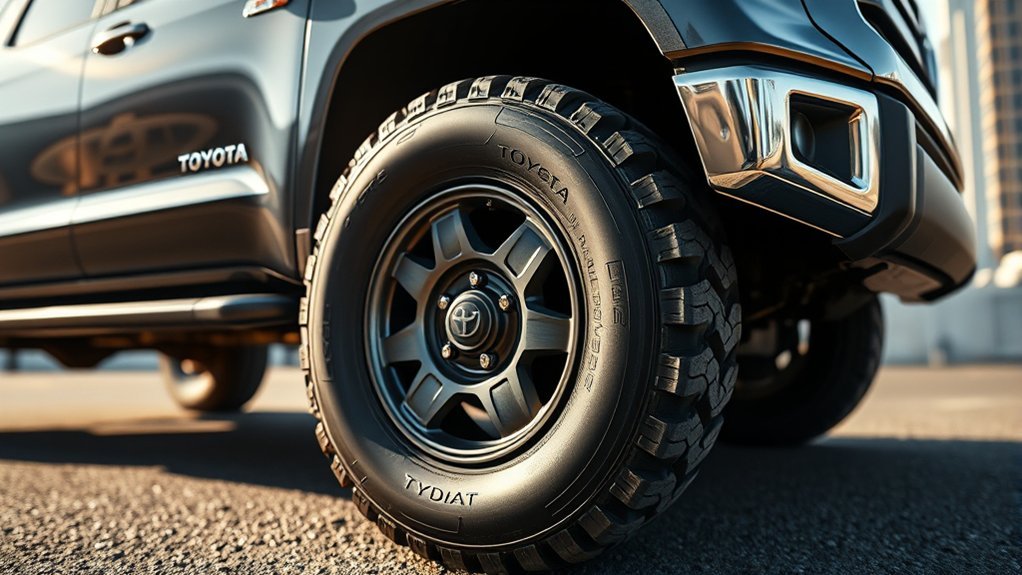
Before you compare tire upgrades, make sure you know how to read the sidewall. A size such as P275/65R18 breaks down like this:
- P: passenger-vehicle tire classification. Some replacement tires may use LT construction, but LT tires usually need different load and pressure considerations.
- 275: section width in millimeters.
- 65: aspect ratio, meaning the sidewall height is 65% of the tire width.
- R: radial construction.
- 18: wheel diameter in inches.
After the size, you will usually see a load index and speed rating, such as 114T or 111H. These matter just as much as the size because a Tundra is often used for towing, hauling, off-road driving, and long highway trips.
Warning: Do not choose a tire with a lower load capacity than the original tire listed on your truck’s Tire and Loading Information Label. NHTSA advises drivers to use the owner’s manual or driver-door label to confirm the correct tire size and pressure.
The 2nd-gen Tundra also has wheel-fitment details you must match when replacing wheels: bolt pattern, center bore, lug thread, wheel width, offset, and backspacing. The common 2007–2021 Tundra wheel pattern is 5×150 mm, with a commonly listed 110.1 mm center bore and M14x1.5 lug thread, but verify your exact wheel before ordering aftermarket parts.
[Products Worth Considering]

EVOULTES heavy duty tire inflator with an integrated gauge delivers accurate pressure readings from 10–120 PSI, helping you inflate, deflate, and check tires in one tool. The 16.5-inch extended dual-head air chuck with swivel base reaches hard-to-access dual wheel valves on trucks and RVs. A brass trigger core and side-mounted air release valve make operation smooth, with standard 1/4" NPT threading and quick-connect compatibility for easy setup.
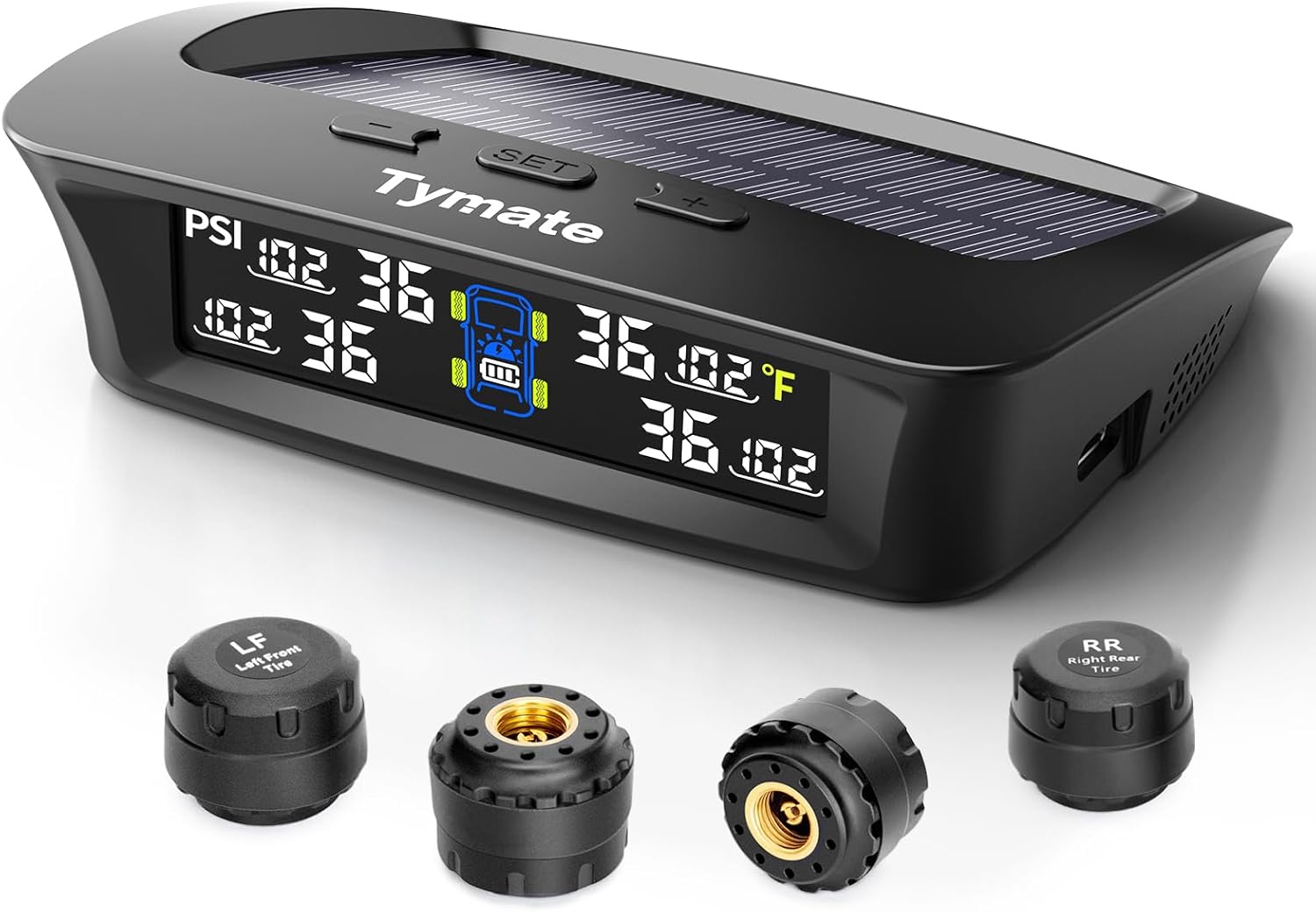
The Tymate TM3 RV TPMS delivers real-time tire pressure monitoring from 0 to 144 PSI with accurate readings and dependable wireless communication. It includes four external sensors with pre-pairing, six alarm modes for rapid leak, pressure extremes, temperature, and signal loss, plus an easy-reference setup for alert thresholds. Solar and USB-C charging help keep the display powered, while the color LCD and adaptive backlight improve visibility for safer driving and towing.

Keep RV, trailer, or truck dual-axle tires protected with waterproof, UV-resistant covers that help guard against sunlight, snow, rust, and dirt. The dual tire covers are easy to install with a rope/bungee fastener for a stable fit that won’t easily slip. Designed for 27–30 inch diameter wheels, they help maintain tire condition through harsh weather.
Factory Tire Sizes by Trim Level
Factory tire size is not one-size-fits-all across 2007–2021 Tundras. Toyota used different wheel and tire combinations depending on model year, cab, drivetrain, trim, and packages such as TRD Off-Road, TRD Sport, Trail Special Edition, Nightshade, Platinum, 1794 Edition, and TRD Pro.
For example, the 2021 Toyota Tundra brochure lists multiple factory wheel/tire combinations, including 18-inch styled steel wheels with P255/70R18 tires, 18-inch alloy or TRD Off-Road wheels with P275/65R18 tires, 20-inch wheels with P275/55R20 tires, and TRD Pro BBS wheels with P275/65R18 tires.
Common OEM Tire Sizes Overview
| Common factory size | Typical wheel | Where you may see it | Approx. diameter |
|---|---|---|---|
| P255/70R18 | 18-inch steel or select 18-inch package wheels | Base/SR/SR5-style fitments and some special packages, depending on year | About 32.1 inches |
| P275/65R18 | 18-inch alloy, TRD Off-Road, or TRD Pro wheel | SR5/Limited 18-inch options, TRD Off-Road package, and late 2nd-gen TRD Pro | About 32.1 inches |
| P275/55R20 | 20-inch alloy or chrome-clad wheel | Limited, Platinum, 1794 Edition, TRD Sport, Nightshade, and other 20-inch packages | About 31.9 inches |
Note: Tire databases sometimes list additional sizes for specific markets, years, or dealer-installed options. For a direct replacement, match the tire size, load index, and pressure information on your truck’s placard first.
Early vs. Late Second-Generation Tundra Fitment
The 2nd-gen Tundra launched for 2007 and ran through 2021, with a major styling and trim refresh for 2014. The core truck platform stayed similar enough that many wheel and tire fitment principles carry across the generation, but factory packages changed over time.
Early 2007 Toyota Tundra specifications from Toyota Canada show 18-inch styled steel wheels, 18-inch aluminum alloy wheels, and 20-inch aluminum alloy wheels, with package references to P275/65R18 tires. Late 2nd-gen U.S. brochures show the same general 18- and 20-inch pattern, but with trim/package-specific wheel designs.
Choosing the Right Tire: Key Factors to Consider
Choosing the right tire for a Toyota Tundra is not just about filling the wheel well. Use this checklist before you buy:
- Factory placard match: Confirm the original tire size and cold inflation pressure on the driver-door label.
- Load capacity: Match or exceed the original load rating. This is especially important if you tow, haul tools, carry passengers, or add accessories like bumpers, racks, winches, or bed campers.
- Wheel diameter and width: Make sure the tire manufacturer approves the tire for your wheel width.
- Offset and backspacing: These determine whether the tire moves inward toward suspension parts or outward toward the fender and mud flap.
- Use case: Highway tires ride quieter; all-terrain tires add trail grip; mud-terrain tires improve deep-mud traction but can be louder and heavier.
- Weather: If you drive in snow or ice, look for a winter tire or a severe-snow-rated all-terrain tire with the three-peak mountain snowflake symbol.
Pro Tip: Take a photo of your door placard, current tire sidewall, and wheel stamping before shopping. That gives a tire shop the exact size, load rating, pressure, and wheel information needed to avoid guesswork.
How Tire Size Affects Performance and Safety
Tire size changes how the truck feels, stops, accelerates, steers, and clears obstacles. Bigger tires can look better and add ground clearance, but they also add rotating weight and can change the effective gear ratio.
Handling and Stability
A wider tire can add grip, but it can also follow road grooves more, feel heavier through the steering wheel, and rub if the wheel offset is wrong. A taller tire can improve sidewall cushion off-road, but it can also add body roll and reduce steering response.
Acceleration and Braking
Oversized tires are usually heavier than factory tires. That extra rotating mass can slow acceleration and increase braking effort. A larger overall diameter also changes how far the truck travels per tire revolution, which can affect speedometer accuracy and shift feel.
Tire Wear Patterns
Wrong pressure, poor alignment, worn suspension, or an aggressive wheel offset can cause uneven wear. Edge wear often points to underinflation, hard cornering, or alignment issues. Center wear can point to overinflation. Feathering or cupping can point to alignment, balance, or worn shocks.
Key Considerations for Tire Upgrades
Many 2nd-gen Tundra owners upgrade because they want a tougher stance, better off-road traction, or more ground clearance. The safest approach is to treat upsizing as a full fitment system: tire size, wheel width, wheel offset, suspension height, alignment, and intended use all work together.
Toyo Tires explains plus sizing as increasing wheel and/or tire size from the original equipment size, usually with a wider and lower-profile tire. On a truck, the same principle applies, but with extra attention to load rating, sidewall strength, and clearance.
Popular Upgrade Size Ranges
- Factory-size replacement: Best for no-rub reliability, correct speedometer behavior, ride comfort, and towing predictability.
- Near-33-inch upgrade: Often possible on stock suspension with the right wheel offset, but some combinations still rub mud flaps, fender liners, or body-mount areas.
- 35-inch tires: Usually require a leveling kit or lift, careful wheel offset, alignment, and possible trimming.
- 37-inch tires: Major modification territory. Expect a larger lift, cutting/trimming, gearing considerations, and more stress on steering, braking, and driveline parts.
Warning: Never assume that “33-inch,” “35-inch,” or “37-inch” labels guarantee fitment. Actual tire height and width vary by brand and tread design, even when the printed size is the same.
Avoiding Common Tire Fitment Issues for the Tundra
Most Tundra tire-fitment problems come from one of four things: too much tire diameter, too much tire width, the wrong wheel offset, or not checking clearance under real driving conditions.
Proper Wheel Offset Selection
Offset is the distance between the wheel’s mounting surface and its centerline. More positive offset pulls the tire inward toward the suspension. Lower or negative offset pushes the tire outward toward the fender. Both can cause problems if taken too far.
| Wheel spec | Why it matters |
|---|---|
| Bolt pattern | Must match the truck. The common 2nd-gen pattern is 5×150 mm. |
| Center bore | A hub-centric fit helps reduce vibration. If the wheel bore is larger, hub-centric rings may be needed. |
| Offset | Controls inward/outward tire position and affects suspension, fender, and mud-flap clearance. |
| Backspacing | Shows how much wheel/tire package sits behind the mounting surface toward the suspension. |
| Lug nut seat | Aftermarket wheels may require different lug nuts than factory Toyota wheels. Use the wheel manufacturer’s required seat type. |
Suspension Lift Requirements
A leveling kit raises the front of the truck to reduce factory rake. A suspension lift adds more clearance and usually changes suspension geometry more significantly. For many 2nd-gen Tundras, a near-33-inch tire is the realistic mild-upgrade zone. Tires around 35 inches usually need a leveling kit or lift plus trimming. Tires around 37 inches are not a simple bolt-on upgrade.
After any lift, leveling kit, or major tire change, get an alignment and recheck clearance. Look at the front fender liner, mud flap, bumper edge, upper control arm, body mount area, brake lines, and sway bar area.
Using Lift Kits to Maximize Tire Fitment on Your Tundra
A lift kit can create room for a taller tire, but it does not automatically fix every rubbing issue. A wide tire on the wrong offset can still hit the fender liner or body mount, even with extra ride height.
- Leveling kit: Good for a mild front lift and moderate tire upsizing. Ride quality depends heavily on kit quality and alignment.
- Suspension lift: Better for larger tires and trail clearance, but more expensive and more involved.
- Upper control arms: Often useful when alignment range or coil clearance becomes a problem.
- Trimming: May be required for aggressive 35-inch and nearly all serious 37-inch setups.
Note: Toyota’s own off-road guidance warns that off-roading is inherently dangerous and abusive use can cause bodily harm or vehicle damage. Treat tire and suspension upgrades as safety-critical changes, not just appearance upgrades.
[Products Worth Considering]

Replace worn wheelchair rear tires with a universal 24x1 no-flat polyurethane foam option designed to mount tightly on 24-inch rims without the tire falling off. Installation is made easier with included tools and multiple methods, including using a pry bar or softening the tire in hot water to reduce resistance. The package includes two tires plus tie ropes for convenient fitting and handling.

Universal magnetic jack pad with aluminum grooved design to protect vehicle pinch welds during lifting. Durable nylon pad inserts are upgraded and secured with screws to resist damage and keep in place. Designed to fit most single vehicle pinpoint welds for safer, stable jacking when changing tires, repairs, or performing oil changes.
Understanding Wheel and Tire Offsets for Better Fitment
Offset and tire width decide where the tire sits under the truck. A factory-style offset keeps the tire tucked closer to the original position. A lower offset creates a wider stance, but it can increase rubbing at the fender and mud flap and can add stress to wheel bearings and steering components.
For daily driving, towing, and long tire life, stay conservative unless you are prepared to trim, align carefully, and accept more road spray, steering effort, and potential wear. For off-road builds, a wider stance can help stability, but clearance must be tested at full steering lock and under suspension compression.
Recommended Aftermarket Wheels for the Toyota Tundra
When shopping for aftermarket wheels, do not buy by looks alone. Use these rules:
- Match the bolt pattern: The common 2nd-gen Tundra pattern is 5×150 mm.
- Confirm hub bore: Use hub-centric wheels or quality hub-centric rings when needed.
- Choose the right width: Many truck tire sizes fit best on 8- to 9.5-inch-wide wheels, but check the tire maker’s approved rim-width range.
- Use the correct lug nuts: Factory Toyota lug nuts may not match the seat type required by aftermarket wheels.
- Check load rating: Wheels must be rated for truck use, not just sized to fit.
Tips for Maintaining Your Tundra Tires for Longevity
Tire maintenance is one of the easiest ways to protect ride quality, fuel economy, braking, and safety. NHTSA’s tire-safety guidance emphasizes proper pressure, load limits, road-hazard awareness, and regular inspection as key steps to avoid tire failure.
- Check cold tire pressure monthly: Use the driver-door placard, not the maximum PSI printed on the tire sidewall. Some late 2nd-gen placards may show 30 PSI front and 33 PSI rear, but your label is the final authority.
- Rotate on schedule: A common interval is every 5,000 to 7,000 miles, or with oil changes if your maintenance plan uses that rhythm.
- Inspect tread and sidewalls: Look for cracks, bulges, punctures, exposed cords, uneven wear, and missing tread blocks.
- Balance and align: Balance when installing tires and align after suspension work, uneven wear, or hard impacts.
- Respect payload: Toyota’s towing and payload ratings depend on configuration, passengers, cargo, and equipment. The load label on the truck tells you how much passenger and cargo weight your exact vehicle can carry.
The best tire size is not always the largest tire that fits. It is the tire that matches your load needs, clears safely, keeps the truck predictable, and suits how you actually drive.
Frequently Asked Questions
What size tire is standard on a Toyota Tundra 2nd Gen?
Common factory sizes include P255/70R18, P275/65R18, and P275/55R20, depending on year, trim, wheel, and package. Always confirm with the driver-door Tire and Loading Information Label because it reflects your exact truck.
What size tires came on the 2021 Tundra TRD Pro?
Toyota’s 2021 Tundra brochure lists the TRD Pro with 18-inch forged-aluminum BBS wheels and Michelin P275/65R18 tires. If your truck has changed wheels or tires since new, check the placard and current wheel specs before replacing them.
Can I fit 33-inch tires on a stock 2nd-gen Tundra?
Many mild 33-inch-style setups can work on a stock 2nd-gen Tundra, but fitment depends on actual tire dimensions, wheel width, offset, alignment, mud flaps, fender liners, and suspension condition. Test clearance at full steering lock and during suspension compression.
Do 35-inch tires fit a 2nd-gen Tundra?
Usually not as a simple no-mod fit. Most 35-inch setups need a leveling kit or suspension lift, careful wheel offset, alignment, and possible trimming. The exact answer depends on tire brand, wheel specs, and how much rubbing you are willing to correct.
What tire pressure should I use on my Tundra?
Use the cold tire pressure listed on your driver-door Tire and Loading Information Label. Do not use the tire sidewall maximum as your normal pressure. Pressure can vary by tire size, load, and vehicle configuration.
Which 2nd-gen Tundra engine is best for towing?
For late 2nd-gen trucks, Toyota’s 5.7L i-FORCE V8 is the key towing engine. Toyota listed an available maximum towing capacity of up to 10,200 pounds on properly equipped 2021 Tundras, but your exact tow rating depends on cab, drivetrain, bed, trim, equipment, passengers, cargo, and hitch setup.
Sources
- Toyota 2021 Tundra eBrochure — factory wheel/tire combinations, TRD Pro tire size, towing, payload, and off-road cautions.
- Toyota Owners Manuals and Warranties — owner-manual lookup and vehicle-specific reference point.
- Toyota Canada 2007 Tundra Specifications — early 2nd-gen wheel and package references.
- NHTSA TireWise — tire-size label, tire ratings, inflation, and tire-safety guidance.
- NHTSA Tire Safety Brochure — tire pressure, load limits, inspection, and tire-failure prevention.
- Toyo Tires Plus Sizing Guide — plus-sizing concepts and professional fitment guidance.
Conclusion
The right tire size for a Toyota Tundra 2nd Gen depends on your exact year, trim, wheel package, and how you use the truck. For a factory-style replacement, match the door-jamb placard and keep the original load capacity. For upgrades, think beyond diameter: wheel offset, load rating, clearance, alignment, braking, gearing, and speedometer accuracy all matter. A well-chosen tire gives your Tundra the stance, traction, and durability you want without sacrificing safety or drivability.

Related Articles
Toyota Tundra Tire and Wheel Package: What to Consider Before Buying
Unlock the secrets to choosing the perfect tire and wheel package for your Toyota Tundra—essential tips await to enhance your ride.
Read More
Do Bigger Tires Void a Toyota Tundra Warranty? Magnuson-Moss Act Explained
Bigger tires might not void your Toyota Tundra warranty, but understanding the Magnuson-Moss Act is crucial—discover how to protect your investment effectively.
Read More
Toyota Tundra Tire Rack Setup: Garage Storage Ideas for Seasonal Sets
Better tire storage for your Toyota Tundra awaits—discover essential tips to maximize space and protect your seasonal sets in the garage!
Read More