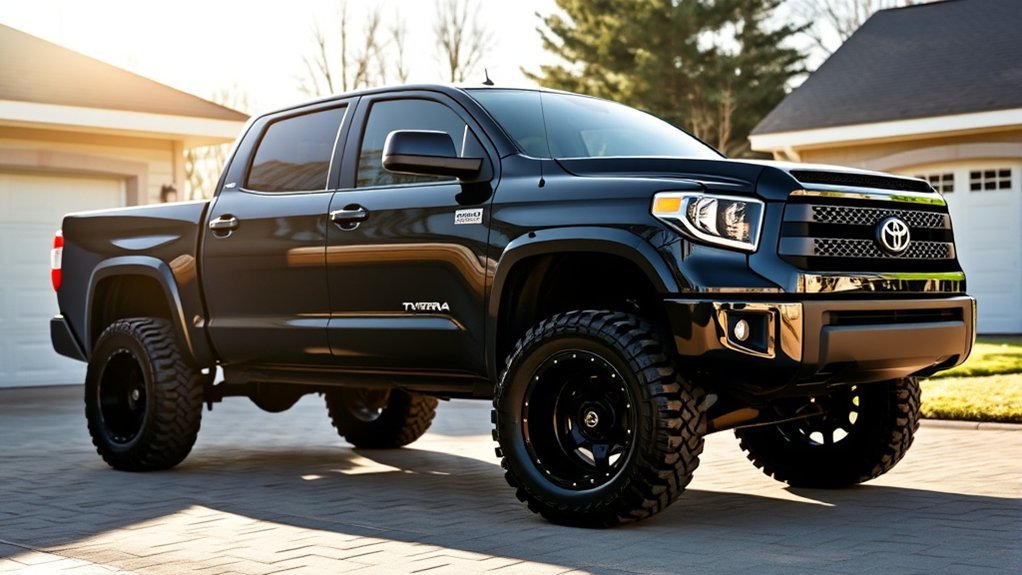
Fitting 305/55R20 tires on a Toyota Tundra with no lift is possible on some setups, but it is not a guaranteed bolt-on fit for every truck. The answer depends on your Tundra’s year, trim, factory wheel width, wheel offset, tire model, alignment, mud flaps, and how much rubbing or trimming you are willing to accept.
Quick Answer
A 305/55R20 tire is usually about 33.2 inches tall and 12 inches wide. It can fit many stock Toyota Tundras, but rubbing is possible at full steering lock or suspension compression. Check your exact wheel width, offset, tire placard, and clearance before buying.
Key Takeaways
- 305/55R20 is not a 32-inch tire; it is generally about 33.2 inches tall and 12.0 inches wide.
- The biggest fitment problem is usually width and offset, not height alone.
- Some stock Tundras may clear with no major changes, while others may need liner or mud-flap trimming.
- Use the driver-door tire placard and tire manufacturer load data for pressure and load decisions.
- If you want the least hassle, consider a narrower 33-inch tire instead of jumping straight to 305 width.
At a Glance
| Time Required | 30–60 minutes to measure and inspect clearance before buying; longer if trimming is needed after installation. |
| Difficulty | Moderate. The tire swap is simple, but confirming clearance takes careful checking. |
| Tools Needed | Tape measure, flashlight, tire-pressure gauge, floor jack, jack stands, torque wrench, and painter’s tape for rub checks. |
| Cost | Tire cost varies by brand and load rating. Budget extra for mounting, balancing, alignment, TPMS service, or minor trimming. |
Will 305/55R20 Tires Fit a Stock Toyota Tundra?
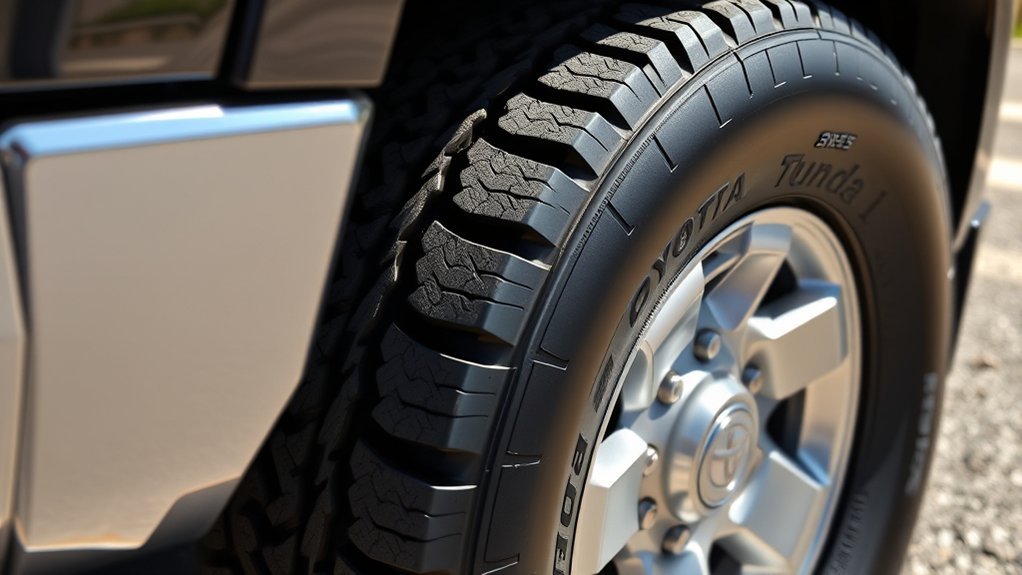
In many cases, 305/55R20 tires can be made to work on a stock Toyota Tundra, but the safest answer is “measure first.” The tire is wide enough that two trucks with the same tire size can behave differently if they have different wheels, offsets, mud flaps, alignment settings, or tire tread designs.
A 305/55R20 tire is commonly listed at about 33.2 inches in diameter and 12.0 inches in section width. That size is close enough to a 33-inch tire that height alone is not always the issue. The bigger concern is the extra width near the front fender liner, mud flap, frame area, upper control arm, and sway-bar area.
Do not assume every Tundra has the same factory tire size. Toyota’s 2024 Tundra brochure lists factory tire options such as 245/75R18, 265/70R18, 265/60R20, 265/50R22, and 285/65R18, depending on trim and package. Older Tundras may have other factory sizes, including 275/55R20. Always start with your driver-door tire placard.
Warning: A tire that clears while parked can still rub while turning, reversing, braking hard, driving into a steep driveway, or compressing the suspension off-road. Check clearance under real driving angles before calling the fitment safe.
[Products Worth Considering]

These universal tire valve stem caps help protect valve cores from dust, debris, and moisture while helping maintain stable tire pressure. The corrosion-resistant metal construction and sealed design provide reliable protection in road grime, mud, and winter conditions. Twist-on installation makes them quick to fit on cars, SUVs, trucks, and motorcycles.

Measure tire tread depth quickly and accurately with this LUMITECO dial gauge that reads in 1/32" increments up to 14/32". The color-coded green/yellow/red zones make it easy to judge tire wear and know when replacement is needed. A rugged, compact design with a protective pouch helps keep the gauge ready for use on cars, trucks, motorcycles, and more.

The SAFELIFE dial tire tread depth gauge measures tread depth in 1/32 inch increments with clear, easy-to-read 2-inch dial face. Color zones using a traffic light system help you quickly judge whether tread is low, marginal, or ample for safer driving. Built with a durable zinc cast body and a metal detect probe for precise, comfortable use across cars, motorcycles, trucks, and buses.
305/55R20 Size Explained
The size code tells you the tire’s basic shape. In 305/55R20, “305” is the section width in millimeters, “55” is the sidewall aspect ratio, and “20” is the wheel diameter in inches. The actual mounted size can vary slightly by brand, tread style, wheel width, and inflation pressure.
| Tire Size | Approx. Diameter | Approx. Width | What It Means |
|---|---|---|---|
| 275/55R20 | 31.9 in. | 10.8 in. | Common older 20-inch Tundra size; much narrower than 305/55R20. |
| 265/60R20 | 32.5 in. | 10.4 in. | Common newer 20-inch Tundra size; about 1.6 inches narrower than 305/55R20. |
| 305/55R20 | 33.2 in. | 12.0 in. | Aggressive 33-inch fitment; width is the main clearance concern. |
| 285/60R20 | 33.5 in. | 11.2 in. | Taller but narrower than 305/55R20; may be easier to clear in some setups. |
Compared with a 275/55R20, a 305/55R20 is about 1.3 inches taller and about 1.2 inches wider. Compared with a 265/60R20, it is only about 0.7 inch taller but about 1.6 inches wider. That is why a Tundra may clear the tire vertically but still rub when the steering is turned.
Where 305/55R20 Tires Usually Rub
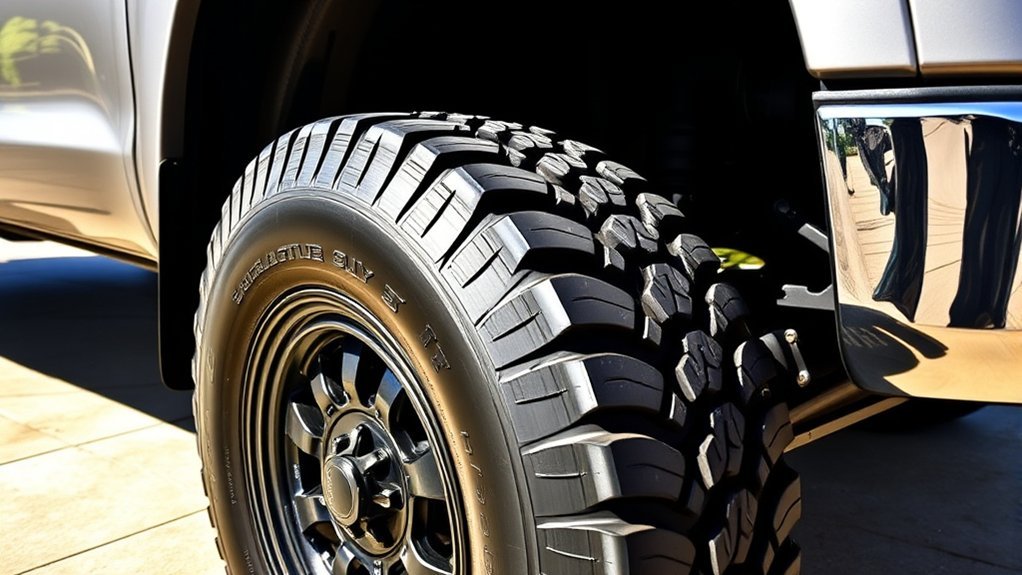
Rubbing usually shows up in a few predictable places. The front fender liner and mud flap are common contact points because the tire moves close to them at full steering lock. A wider tire can also get close to the frame, sway bar, upper control arm, or bumper-side liner area, depending on wheel offset.
Check for rubbing in these situations:
- Full lock left and right: Turn the steering wheel fully in both directions while the truck is parked and while moving slowly.
- Reverse turning: Some setups rub more in reverse than forward.
- Driveway angles: Suspension compression can make a tire touch even if it cleared on flat pavement.
- Loaded bed or towing: Extra weight changes suspension position and can expose clearance issues.
- Off-road articulation: A trail or uneven surface can push the tire into areas that never touch during normal street driving.
Pro Tip: Put painter’s tape on the front liner, mud flap, and nearby rub-prone areas before a test drive. If the tape is scuffed afterward, you found the contact point before the tire damages the plastic.
[Products Worth Considering]

Keep your tires properly inflated with this analog VONDIOR tire pressure gauge, designed for fast, easy readings without batteries. The swiveling, two-axis hose and large glow dial help you measure at any tire angle with instant visibility. Built with a protective rubber shield, it supports durable, low-maintenance use for cars and trucks.

Malco tire mounting and demounting lubricant is a ready-to-use tire lube formulated to reduce friction during tire installation for passenger cars, light trucks, farm tires, and heavy-duty equipment. It provides rust-inhibiting protection to help reduce corrosion on rims and wheels, and helps support proper tire bead seating during inflation to reduce air leakage. The silicone-free, soap-free formula is whitewall safe to help prevent discoloration on whitewall tires and sensitive sidewall markings.

Upgrade your 2024-2026 Tesla Model 3 Highland with REEVAA all-weather mud flaps designed for seamless fit along the original body lines. The set of four delivers strong splash protection against mud, gravel, and road debris while using OEM-grade durable materials. Installation is non-destructive with original hole positions and snap-in clips, and the aerodynamic design helps minimize impact on efficiency.
Wheel Width, Offset, and Backspacing Matter
A 305 tire is wide, so the wheel matters as much as the tire. Many 305/55R20 tires are listed for an approved rim-width range of about 8.5 to 11 inches, but you must confirm the exact range from the tire manufacturer for the specific tire you plan to buy.
If your factory wheel is narrower than the tire manufacturer’s approved range, choose a different tire size or wheel. Mounting a tire on a wheel that is too narrow can affect sidewall shape, handling, tread wear, and bead seating.
Offset also changes fitment:
- Higher positive offset: Keeps the tire tucked inward. This can help with outer fender clearance but may bring the tire closer to suspension or frame parts.
- Lower positive or negative offset: Pushes the tire outward. This can help inner clearance but may cause mud-flap, fender-liner, or bumper-side rubbing.
- Wider aftermarket wheels: Can make the same 305/55R20 tire rub more than it would on a narrower wheel.
[Products Worth Considering]

Monitor tire tread wear with a smart, color-coded depth gauge that shows clear condition ranges at a glance. The bar is range marked for fast, easy readings, helping you maintain safer traction and performance. Each gauge is portable with a pocket clip, and the set includes 20 units for daily use and sharing.

Secure your trailer or RV tires with a scissor-style wheel chock stabilizer that applies opposing force to help prevent wheel shift. It fits tight wheel gaps from 3.5 inches up to 12 inches and works for travel trailers, campers, fifth wheels, toy haulers, and heavy-duty trucks. The surface uses new electrophoretic technology to help prevent rust for reliable travel use.

Accurately measure tire tread depth with a calibrated gauge marked from 0 to 1 inch in 1/32 inch increments. The color-coded bar helps you quickly identify tread condition ranges, supporting safe driving for trucks, motorcycles, automobiles, and passenger vehicles.
How to Check 305/55R20 Fitment Before Buying
Use this process before ordering tires. It will not replace a professional fitment check, but it can help you avoid the most common mistakes.
- Read your tire placard. Open the driver door and note the factory tire size, load rating, and cold inflation pressure.
- Confirm your wheel size. Find the wheel width and offset. If you cannot confirm it, ask a tire shop to check.
- Check the tire maker’s spec sheet. Confirm approved rim width, overall diameter, section width, load index, speed rating, and maximum load.
- Measure inner clearance. Look at the space between your current tire and the upper control arm, frame, sway bar, and inner liner.
- Measure outer clearance. Check the mud flap, front fender liner, bumper-side liner, and fender edge.
- Compare the size change. Remember that 305/55R20 adds both height and width compared with most factory Tundra sizes.
- Plan for a test drive. After installation, test full-lock turns forward and backward, then inspect for fresh rub marks.
- Schedule alignment and balancing. New tires should be balanced, and alignment helps prevent pull and uneven wear. The NHTSA tire safety guide also recommends balancing new tires and using alignment to maximize tire life.
Note: “No lift” does not always mean “no trimming.” A stock-height Tundra may still need small plastic-liner or mud-flap adjustments to make a 305-wide tire quiet and safe through the full steering range.
Driving Changes With 305/55R20 Tires
Switching to 305/55R20 tires can improve the truck’s stance and may add traction, especially if you choose an all-terrain or rugged-terrain tread. The tradeoff is that a wider and heavier tire can change how the Tundra drives.
Expect possible changes in:
- Steering feel: Wider tires can feel heavier and may follow road grooves more.
- Fuel economy: More tire weight and rolling resistance can reduce mileage.
- Braking feel: Heavier tires can add rotating mass.
- Road noise: Aggressive tread patterns are usually louder than highway tires.
- Acceleration: Taller tires effectively raise the gearing slightly.
- Speedometer accuracy: If your original tire was 275/55R20, a 305/55R20 can make actual road speed roughly 4% higher than indicated. If your original tire was 265/60R20, the change is closer to about 2%.
The height of a 305/55R20 is usually manageable on a Tundra. The 12-inch section width is what makes wheel offset, liner clearance, and steering-lock checks so important.
Load Rating, Tire Pressure, and Towing
Do not choose tire pressure by guessing or by using only the maximum PSI printed on the tire sidewall. The NHTSA says the proper cold inflation pressure is the vehicle manufacturer’s recommended pressure shown on the tire placard or in the owner’s manual.
That gets more important if you move from a factory P-metric tire to an LT tire. LT tires often need different pressure to carry the same load comfortably and safely. The correct pressure depends on the tire’s load index, load range, axle weight, payload, towing load, and the tire manufacturer’s load-inflation table.
Before towing or hauling with 305/55R20 tires, check:
- The tire’s load index and load range.
- Your Tundra’s GVWR, GAWR, payload, and towing limits.
- The tire manufacturer’s recommended pressure for your load.
- Whether the spare tire matches closely enough for safe temporary use.
Warning: Never reduce pressure just to stop rubbing. Low pressure can create heat, poor handling, uneven wear, and tire damage. Fix the clearance problem instead.
305/55R20 vs. Other Tundra Tire Sizes
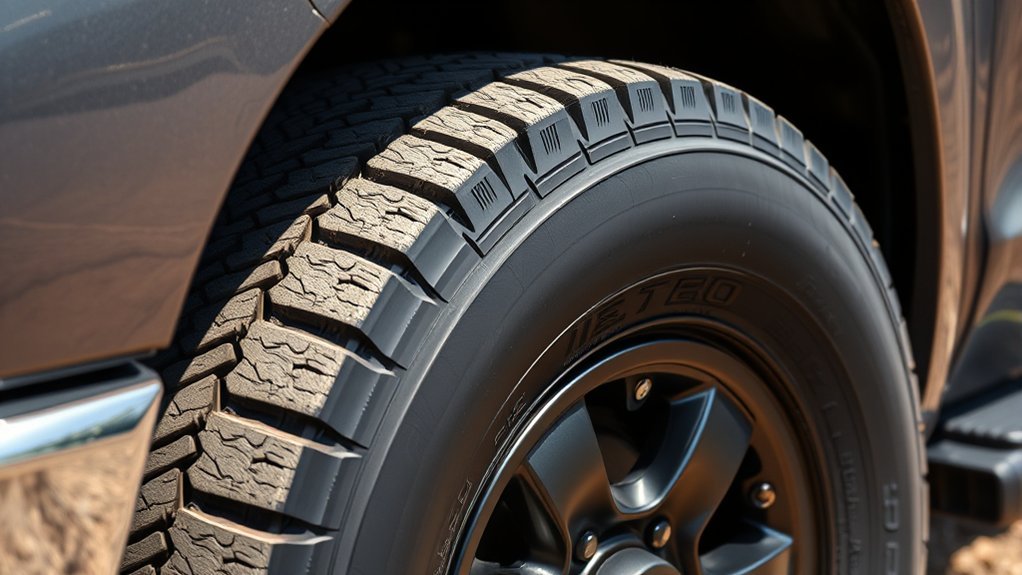
If you like the 33-inch look but want fewer clearance problems, compare 305/55R20 with narrower sizes. A narrower tire can sometimes clear better even if it is similar in height.
| Size | Approx. Size | Best For | Fitment Note |
|---|---|---|---|
| 275/60R20 | 33.0 x 10.8 in. | Cleaner daily-driver fitment | Narrower than 305/55R20, often easier to clear. |
| 285/60R20 | 33.5 x 11.2 in. | Tall 33-inch look with less width | Still needs measurement, but less wide than 305. |
| 305/55R20 | 33.2 x 12.0 in. | Aggressive stance and wider footprint | Most likely of these sizes to rub because of width. |
| 295/55R20 | 32.8 x 11.6 in. | Middle ground | Slightly narrower and shorter than 305/55R20. |
Should You Upgrade to 305/55R20?
Choose 305/55R20 if you want a wider, more aggressive stance and you are willing to verify fitment carefully. It is a strong option for owners who care about appearance, traction, and a fuller wheel-well look without jumping to a true 35-inch tire.
Choose a narrower size if you want a quieter, simpler, lower-risk setup with less chance of rubbing. For many daily drivers, a narrower 33-inch tire gives a clean look without as much trimming or steering-lock contact.
The best decision depends on how you use your Tundra:
- Daily commuting: Prioritize quiet tread, correct load rating, and no-rub fitment.
- Off-road use: Leave extra clearance for suspension articulation and mud buildup.
- Towing or hauling: Prioritize load rating, tire pressure accuracy, and stable handling.
- Appearance build: Expect the wheel offset and stance to matter as much as the tire size.
Frequently Asked Questions
Will 305/55R20 tires affect my fuel economy?
Yes, they can. A 305/55R20 tire is usually wider and heavier than many factory Tundra tires, which can increase rolling resistance and rotating mass. The exact change depends on tire weight, tread design, inflation pressure, driving speed, and load.
How much weight can 305/55R20 tires support?
It depends on the exact tire. Check the sidewall and manufacturer spec sheet for load index, load range, and maximum load. Do not assume all 305/55R20 tires have the same rating. For towing or heavy payloads, use the tire maker’s load-inflation table and stay within your Tundra’s GVWR and axle ratings.
What is the best tire brand for 305/55R20 tires?
The best brand depends on how you drive. For quiet highway use, choose an all-season or mild all-terrain tire. For trail use, choose a tougher all-terrain or rugged-terrain tire with the right load rating. Compare weight, tread depth, wet traction, winter rating, road noise, warranty, and approved rim-width range before choosing.
Can I rotate 305/55R20 tires regularly?
Yes, as long as all four tires are the same size and type. Follow Toyota’s maintenance schedule and the tire manufacturer’s rotation guidance. If you add a matching full-size spare, ask your tire shop whether a five-tire rotation pattern is appropriate.
What tools do I need for installation?
For a basic wheel swap, you need a floor jack, jack stands, lug wrench, torque wrench, tire-pressure gauge, and wheel chocks. For fitment checks, add a flashlight, tape measure, and painter’s tape. Mounting and balancing should be done by a tire shop with the correct equipment.
Will 305/55R20 tires rub on stock suspension?
They might. Some stock Tundras clear 305/55R20 tires with little or no rubbing, while others rub at full lock, in reverse, or during suspension compression. Wheel offset, tire model, mud flaps, and alignment make a big difference.
Do I need a lift for 305/55R20 tires on a Tundra?
Not always. A lift or leveling kit can help with clearance, but it does not automatically fix every rubbing point. A wide tire can still rub depending on offset and wheel position. Measure first and plan for possible liner or mud-flap trimming.
Will 305/55R20 tires affect my speedometer?
Yes, if they are taller than your factory tires. A taller tire travels farther per rotation, so your actual speed can be higher than the speedometer shows. The difference is usually small, but recalibration may be worth it if accuracy matters to you.
Conclusion
You can fit 305/55R20 tires on some stock Toyota Tundras, but the fit is not universal. The size is attractive because it gives the truck a wider, tougher stance while staying near a 33-inch diameter. The tradeoff is that the 12-inch width can create rubbing at the liner, mud flap, frame, or suspension area.
Before buying, confirm your factory tire size, wheel width, offset, approved rim range, load rating, and cold inflation pressure. If you want the aggressive look and do not mind careful clearance checks, 305/55R20 can be a good upgrade. If you want the easiest no-lift fitment, a narrower 33-inch tire may be the smarter choice.
Sources
- TireSize.com 305/55R20 tire size data — supports the 33.2-inch diameter, 12.0-inch width, and common approved rim-width range.
- Toyota 2024 Tundra brochure — supports factory Tundra tire-size variation by trim and package.
- Toyota Owners: 2024 Tundra tires — supports checking tire condition, treadwear, and rotation guidance through Toyota’s owner information.
- Toyota Owners: tire inflation pressure — supports using recommended tire inflation procedures.
- NHTSA TireWise tire safety guide — supports placard-based tire pressure, replacement-size caution, balancing, rotation, and alignment guidance.