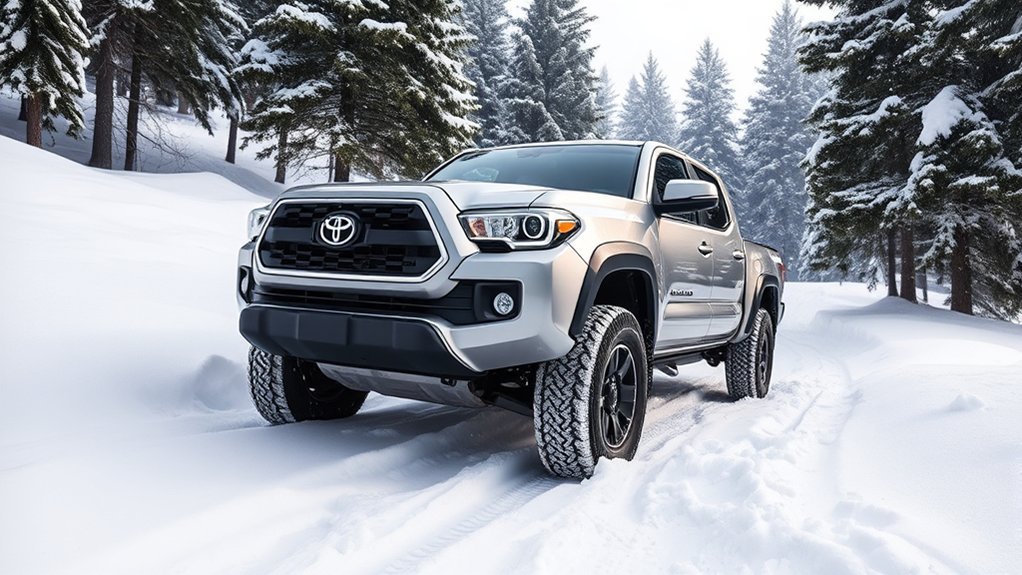
All-terrain tires can work well in snow on a Toyota Tacoma, but they are not all equal. The best choice depends on the tire’s snow rating, tread depth, rubber condition, load rating, your drivetrain, and whether you drive mostly in light snow, packed snow, deep snow, slush, or ice.
Quick Answer
Yes, all-terrain tires can be good in snow for a Toyota Tacoma if they carry the Three-Peak Mountain Snowflake rating and have healthy tread. They are best for light to moderate snow, mixed pavement, gravel, and occasional trails. For frequent ice, mountain passes, or severe winter driving, dedicated winter tires are still safer.
Key Takeaways
- Choose a 3PMSF-rated all-terrain tire if your Tacoma sees regular snow but you still need year-round off-road capability.
- Do not treat 3PMSF as an ice-performance guarantee; it does not replace dedicated winter tires on glare ice.
- Current options such as the BFGoodrich All-Terrain T/A KO3, Toyo Open Country A/T III, and Falken Wildpeak A/T4W are more up to date than older KO2/A/T3W-only recommendations.
- For the safest winter setup, match the tire size and load rating to your Tacoma and keep pressure at the vehicle manufacturer’s recommended cold PSI.
What Are All-Terrain Tires and How Do They Perform in Snow?
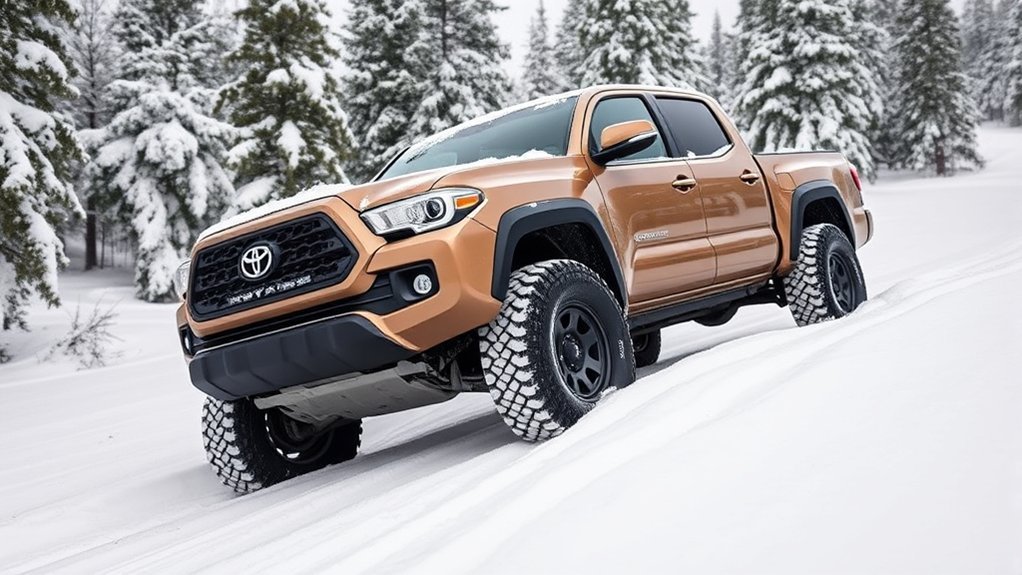
All-terrain tires are built to balance pavement driving, gravel, dirt, mud, and light off-road use. On a Toyota Tacoma, they make sense if you want one tire that can handle daily driving, trail access, wet roads, and winter weather without switching to a dedicated snow tire every season.
In snow, the best all-terrain tires rely on open tread blocks, biting edges, siping, and cold-weather-friendly rubber compounds. These features help the tire pack, release, and grip snow instead of turning into a smooth, clogged surface. That is why many Tacoma owners look for all-terrain tires with the Three-Peak Mountain Snowflake symbol, often shortened to 3PMSF.
Good examples include the BFGoodrich All-Terrain T/A KO3, the older BFGoodrich All-Terrain T/A KO2 in remaining sizes, the Toyo Open Country A/T III, and the Falken Wildpeak A/T4W. These tires can be very useful in light to moderate snow, but they still have limits in deep snow, polished ice, and steep winter roads.
Warning: Four-wheel drive helps your Tacoma move forward, but it does not shorten stopping distance by itself. Your tires still control braking, steering, and emergency grip on snow and ice.
What the 3PMSF Symbol Does—and Does Not—Promise
The Three-Peak Mountain Snowflake symbol is one of the most important things to check when shopping for all-terrain tires for snow. A tire with this mark has met an industry snow-traction requirement, which makes it a better starting point than a tire marked only M+S.
However, 3PMSF is not a magic winter-tire badge. The test is based on acceleration traction in medium-packed snow. It does not directly test ice braking, snow cornering, slush resistance, or downhill stopping on a loaded truck. That means a 3PMSF all-terrain tire can still lose to a true winter tire when the road is icy or temperatures stay below freezing for long stretches.
Note: If your Tacoma regularly sees black ice, packed mountain roads, lake-effect snow, or winter towing, use dedicated winter tires instead of relying only on all-terrain tires.
All-Terrain vs. Dedicated Snow Tires: Which Is Better?
All-terrain tires are best when you need one tire for mixed use: pavement, gravel, dirt roads, mild trails, rain, and occasional snow. They are tougher than most highway tires and more practical year-round than winter tires.
Dedicated snow tires, also called winter tires, are designed mainly for cold temperatures, snow, slush, and ice. Their rubber stays softer in freezing weather, and their tread patterns are built for winter braking and cornering. If winter safety is the top priority, snow tires are the better tool.
| Driving Condition | Best Choice | Why |
| Light snow and wet pavement | 3PMSF all-terrain | Good balance of snow traction, durability, and daily driving comfort. |
| Gravel roads with occasional snow | 3PMSF all-terrain | Stronger casing and tread blocks handle rough roads better than many winter tires. |
| Frequent ice or freezing rain | Dedicated winter tire | Winter compounds and siping usually provide better braking and control on slick surfaces. |
| Deep, unplowed snow | Winter tire or aggressive 3PMSF all-terrain | All-terrain tires can work, but tread design, vehicle weight, and snow depth matter a lot. |
| Winter towing or mountain passes | Dedicated winter tire | Extra weight and grades increase the need for predictable braking and steering. |
[Products Worth Considering]

The Big Rig Defense Tire Thumper is a truck tire pressure checker that lets you quickly check multiple tires by giving them a firm whack. Listen for a reassuring thump and feel the stick bounce when a tire is fully inflated, helping you get back on the road safely. It features a comfortable, glove-friendly handle and a secure wrist strap for confident use on busy routes.

Keep your tires properly inflated with this analog VONDIOR tire pressure gauge, designed for fast, easy readings without batteries. The swiveling, two-axis hose and large glow dial help you measure at any tire angle with instant visibility. Built with a protective rubber shield, it supports durable, low-maintenance use for cars and trucks.

These aluminum alloy tire valve stem caps with an O-ring seal help protect valve stems from corrosion while adding a clean, stylish look to your vehicle. The universal fit works across cars, trucks, motorcycles, bicycles, and more, making them an easy upgrade for everyday driving and off-road use. Installation is quick, and the included four-pack keeps all your tires dressed and protected.
Real User and Test Experiences With All-Terrain Tires in Snow
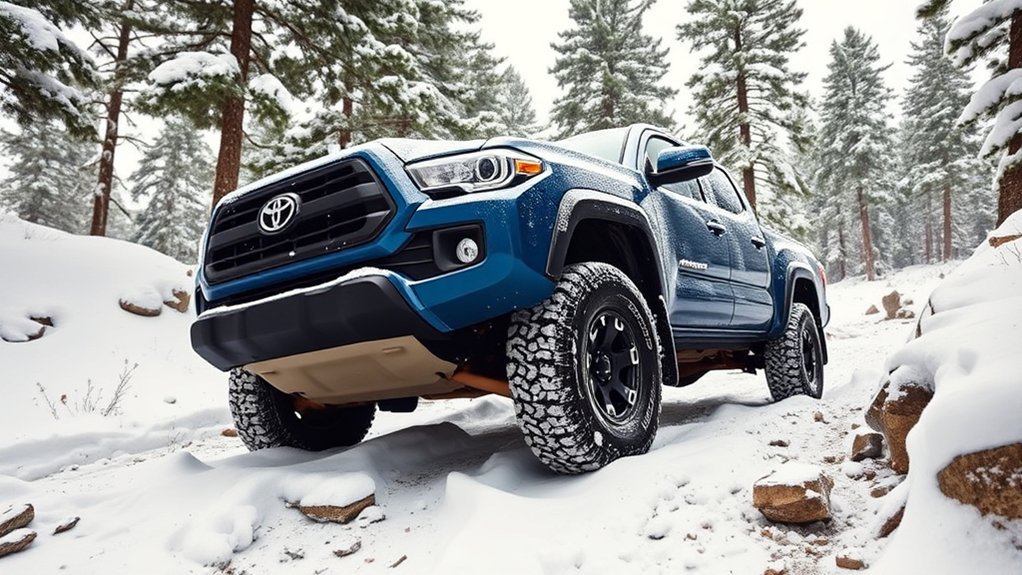
Tacoma owners often report good results with 3PMSF all-terrain tires in normal winter conditions. They tend to work best on fresh snow, packed snow, cold gravel roads, and snowy trailheads. The experience changes quickly on ice, steep hills, and heavy wet snow.
Independent winter testing also shows that all-terrain tires can vary widely. Some snow-rated all-terrain tires launch and brake well in snow, while others trade winter grip for tread life, heat resistance, or off-road durability. This is why the brand, model, tire size, and load range matter—not just the “all-terrain” label.
Performance in Deep Snow
In deep snow, an all-terrain tire needs open channels, strong shoulder lugs, and enough tread depth to keep biting. A Tacoma with 4WD and a good 3PMSF all-terrain tire can do well in fresh snow, especially at low speeds. Problems start when the snow is heavy, wet, rutted, or deep enough to pack into the tread.
The BFGoodrich KO2 built a strong reputation in this area, and the newer KO3 is designed to improve on the KO2 with better snow traction in many fitments. Toyo Open Country A/T III is another strong balanced choice because it combines all-terrain tread with 3PMSF qualification. Still, if your winter driving includes frequent unplowed roads, a dedicated winter tire will usually be more predictable.
Handling on Icy Roads
Ice is where all-terrain tires show their biggest weakness. Even with 3PMSF, an all-terrain tire is not the same as a winter tire built for icy braking and cornering. On polished intersections, bridges, steep driveways, and freezing rain, you should expect longer stopping distances and less steering grip than you would get from a proper winter tire.
If you keep all-terrain tires on your Tacoma through winter, drive as if you have less grip than the tire marketing suggests. Leave more space, brake earlier, avoid sudden steering inputs, and use 4WD as a traction aid—not as a safety net.
What Affects All-Terrain Tire Performance in Snow?
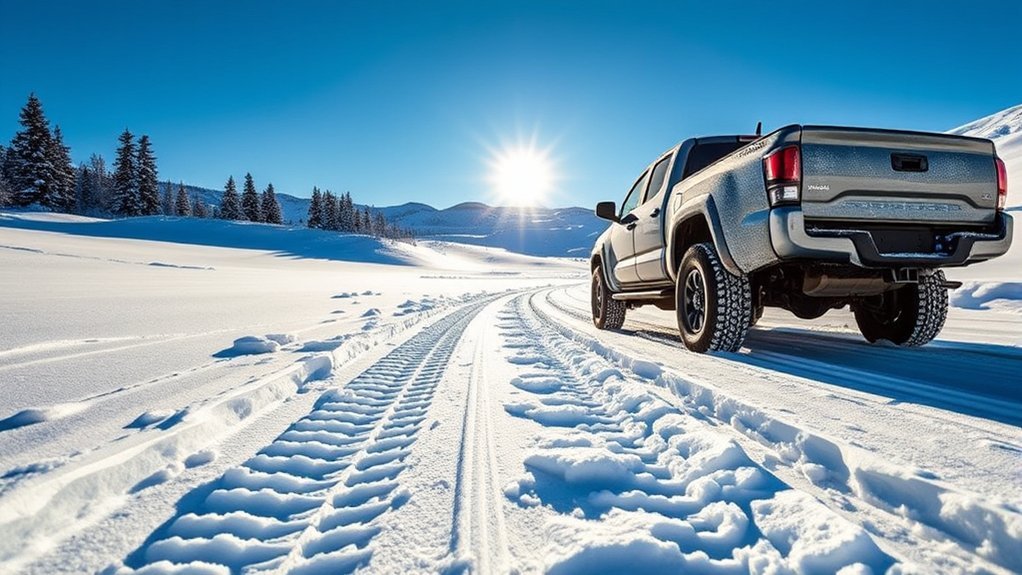
Snow performance is not based on one feature. The best Tacoma winter setup depends on the full tire and vehicle combination.
- 3PMSF rating: This is the first thing to check if snow traction matters.
- Tread depth: More depth helps the tire bite into snow and clear slush. Do not wait until the legal minimum if you depend on winter traction.
- Siping: Small cuts in the tread blocks create more biting edges on packed snow.
- Rubber compound: Some all-terrain compounds stay more flexible in cold weather than others.
- Load range: LT tires can be tougher, but they may ride firmer and may not always match the snow feel of a P-metric or SL version.
- Tire pressure: Cold weather lowers pressure. Use the Tacoma’s door placard or owner’s manual pressure, not the maximum PSI on the tire sidewall.
- Vehicle setup: Extra weight, towing, lift kits, wider tires, and worn shocks can all affect winter control.
Pro Tip: For winter use, a narrower tire in the correct Tacoma-approved size can sometimes cut through snow better than an oversized, wide tire that floats and slides on top.
Choosing the Best All-Terrain Tires for Your Tacoma
Start with your Tacoma’s factory tire size, load rating, and recommended cold PSI. Then match the tire to your winter roads. A Tacoma that sees plowed city roads and weekend trails does not need the same tire as a Tacoma used for mountain passes, snow-packed forest roads, or winter towing.
Here is the simple buying checklist:
- Confirm the correct size and load rating for your Tacoma trim, wheel size, and payload needs.
- Look for 3PMSF if you expect snow every winter.
- Read results for your tire type because LT, P-metric, and different sizes can behave differently.
- Prioritize braking and handling over aggressive looks if you drive on icy roads.
- Replace worn tires before winter if snow traction is important.
[Products Worth Considering]

Monitor tire tread wear with a smart, color-coded depth gauge that shows clear condition ranges at a glance. The bar is range marked for fast, easy readings, helping you maintain safer traction and performance. Each gauge is portable with a pocket clip, and the set includes 20 units for daily use and sharing.

These universal tire valve stem caps help protect valve cores from dust, debris, and moisture while helping maintain stable tire pressure. The corrosion-resistant metal construction and sealed design provide reliable protection in road grime, mud, and winter conditions. Twist-on installation makes them quick to fit on cars, SUVs, trucks, and motorcycles.

Measure tire tread depth quickly and accurately with this LUMITECO dial gauge that reads in 1/32" increments up to 14/32". The color-coded green/yellow/red zones make it easy to judge tire wear and know when replacement is needed. A rugged, compact design with a protective pouch helps keep the gauge ready for use on cars, trucks, motorcycles, and more.
Recommendations for All-Terrain Tires That Excel in Snow Conditions
The best snow-capable all-terrain tire for your Tacoma depends on your tire size and how much winter driving you do. These options are stronger starting points than generic M+S all-terrain tires.
| Tire | Best For | Winter Notes |
|---|---|---|
| BFGoodrich All-Terrain T/A KO3 | Tacoma owners who want a tough all-terrain with updated snow traction. | 3PMSF-rated and newer than the KO2 in many sizes. A strong choice for snow plus trail use. |
| BFGoodrich All-Terrain T/A KO2 | Drivers who already run KO2s or find them in the correct remaining size. | Still a proven 3PMSF all-terrain, but KO3 is the fresher model where available. |
| Toyo Open Country A/T III | Balanced daily driving, snow, wet roads, and trail access. | 3PMSF-qualified with good all-around winter manners for a true all-terrain tire. |
| Falken Wildpeak A/T4W | Drivers who want tread life, wet-weather capability, and severe-snow certification. | 3PMSF-rated, but check reviews for your exact size and load range because LT versions can feel different in snow. |
| Falken Wildpeak A/T3W | Owners replacing an existing A/T3W set or buying closeout stock. | A well-known 3PMSF all-terrain, but the A/T4W is the newer successor. |
Other aggressive hybrid or mud-terrain-style tires may look better on a Tacoma, but they are not automatically better in snow. Before choosing a tire for winter, check the actual sidewall and manufacturer specs for 3PMSF. If the tire does not have the symbol, do not assume it will perform like a snow-rated all-terrain.
[Products Worth Considering]

The Continental Grand Prix 5000 is an allround road bike tire engineered for faster rolling, improved ride comfort, and enhanced puncture protection. It features a Vectran Breaker cut-protection layer, Lazer Grip micro-profile tread for confident cornering control, and Active Comfort Technology to damp vibration for smoother rides. BlackChili compound optimizes grip and speed for everyday performance and long-lasting confidence.

The SAFELIFE dial tire tread depth gauge measures tread depth in 1/32 inch increments with clear, easy-to-read 2-inch dial face. Color zones using a traffic light system help you quickly judge whether tread is low, marginal, or ample for safer driving. Built with a durable zinc cast body and a metal detect probe for precise, comfortable use across cars, motorcycles, trucks, and buses.

MORNYRAY universal tire covers help protect RV, truck, SUV, trailer, and camper tires from sun, rain, and snow with waterproof, anti-UV fabric and a soft inner lining. Elasticized bands and windproof buckle design help keep covers securely in place for easy on and off use. The set includes a storage bag for convenient handling when not in use.
Maintenance Tips for All-Terrain Tires in Winter Weather
Even the best snow-rated all-terrain tire will perform poorly if it is worn, underinflated, overloaded, or damaged. Winter maintenance matters as much as the tire model.
- Check tire pressure at least monthly and before long winter trips. Check when the tires are cold.
- Use the Tacoma’s recommended PSI from the door placard or owner’s manual, not the maximum pressure molded into the tire.
- Measure tread depth before winter. If the tire is near the wear bars, it is not a good snow tire anymore.
- Rotate your tires regularly so the tread wears evenly across all four corners.
- Inspect for sidewall damage, cracks, bulges, and punctures before snow season.
- Replace old tires even if tread remains if the rubber is cracking, hardened, or showing age-related damage.
- Store off-season tires correctly in a cool, dry place away from sunlight and chemicals.
The safest winter Tacoma setup is not the most aggressive-looking tire. It is the tire that brakes, steers, and stays predictable on the roads you actually drive.
Frequently Asked Questions
Can all-terrain tires be used year-round on my Tacoma?
Yes, all-terrain tires can be used year-round if they match your Tacoma’s size, load rating, and driving needs. For year-round snow confidence, choose a 3PMSF-rated model. If your winters are icy or severe, switch to dedicated winter tires during the cold season.
Are all-terrain tires as good as snow tires?
No. A good 3PMSF all-terrain tire can work well in light to moderate snow, but a dedicated winter tire is usually better for ice, hard-packed snow, freezing rain, and cold-weather braking.
Does 4WD make winter tires unnecessary on a Tacoma?
No. Four-wheel drive helps with acceleration, but it does not create extra braking grip. Tires still determine how well your Tacoma stops, turns, and avoids sliding on snow or ice.
How do all-terrain tires wear in extreme cold conditions?
Cold weather can stiffen rubber, reduce grip, and expose weak spots in old or damaged tires. Snow-rated all-terrain tires are designed to handle cold better than basic all-season tires, but winter tires still use compounds made specifically for freezing temperatures.
Are all-terrain tires noisy on icy roads?
They can be. Many all-terrain tires have larger tread blocks, which can create more road noise than highway tires. Noise also depends on tread wear, tire pressure, road surface, and the exact tire model.
Do all-terrain tires impact fuel efficiency in winter?
Yes, they can. All-terrain tires often have more rolling resistance than highway tires, and cold weather can lower tire pressure, which may reduce fuel economy. Keeping tires properly inflated helps limit the loss.
How often should I check tire pressure in winter?
Check tire pressure at least once a month and before long trips. Always check pressure when the tires are cold, and inflate them to the Tacoma’s recommended PSI from the door placard or owner’s manual.
Conclusion
All-terrain tires can be a smart winter choice for a Toyota Tacoma if you choose a snow-rated model, keep the tread healthy, and drive mostly in light to moderate snow. They are especially useful when you need one tire for daily roads, gravel, trails, and changing weather.
For serious winter conditions, dedicated snow tires are still the safer option. If you regularly drive on ice, steep grades, unplowed roads, or mountain passes, do not rely on all-terrain tires alone. Choose the tire for the worst road you expect to face, not just the average day.
Sources
- NHTSA Winter Weather Driving Tips — tire pressure, winter vehicle preparation, and tire safety guidance.
- Tire Rack: What Are All-Weather Tires? — explanation of what the 3PMSF test does and does not measure.
- BFGoodrich All-Terrain T/A KO3 — current KO3 product details and 3PMSF/severe snow rating.
- Falken Wildpeak A/T4W — A/T4W 3PMSF rating, winter positioning, and warranty details.
- Toyo Open Country A/T III — 3PMSF qualification and all-terrain snow-traction features.
- Tire Reviews: 2025 All-Terrain Winter Test — independent snow and ice testing context for current all-terrain tires.