
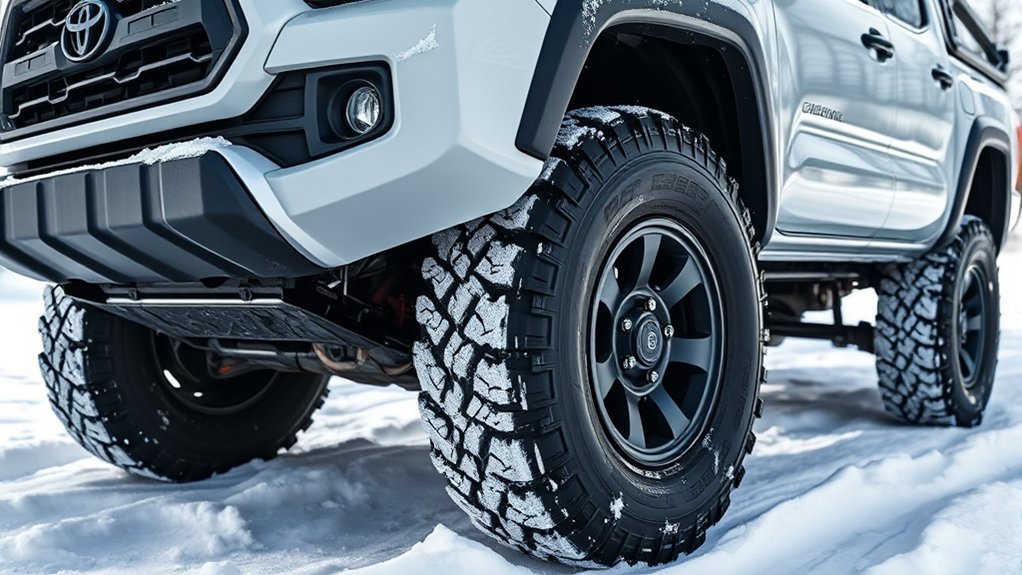
If you’re getting your Toyota Tacoma ready for snow, ice, slush, and cold morning roads, the right tire matters more than any single drivetrain feature. Four-wheel drive can help your Tacoma get moving, but tires are what help it turn, brake, and stay predictable when the road gets slick. For the best winter setup, focus on the correct fitment first, then choose a tire type that matches where you drive most: icy highways, mountain snow, mixed pavement, or snowy trails.
Quick Answer
The best winter tires for a Toyota Tacoma are tires in the exact size, load rating, and speed rating listed on your door placard or owner’s manual, preferably with the Three-Peak Mountain Snowflake symbol. Choose a dedicated winter tire for ice and deep cold, or a 3PMSF all-terrain tire if you need snow traction plus trail durability.
Key Takeaways
- Start with your Tacoma’s tire placard, not a generic size list. Size, load index, speed rating, and cold PSI must match your truck’s setup.
- Look for the Three-Peak Mountain Snowflake symbol for severe-snow capability, but remember that it does not make every tire equally strong on glare ice.
- Dedicated winter tires are best for icy roads and freezing temperatures; 3PMSF all-terrain tires are better for mixed snow, dirt, gravel, and daily truck use.
- Replace winter tires before they reach “barely legal” tread depth. Winter traction drops long before a tire looks completely worn out.
At a Glance
| Time Required | 15–30 minutes to check fitment and compare tire types before ordering |
| Difficulty | Easy for research; professional mounting and balancing recommended |
| Tools Needed | Owner’s manual, driver-door tire placard, tire pressure gauge, tread-depth gauge, and retailer fitment checker |
| Cost | Varies by size, load range, brand, season, and installation. Compare the full installed price, not just the tire price. |
Essential Features for Selecting Winter Tires for Your Tacoma
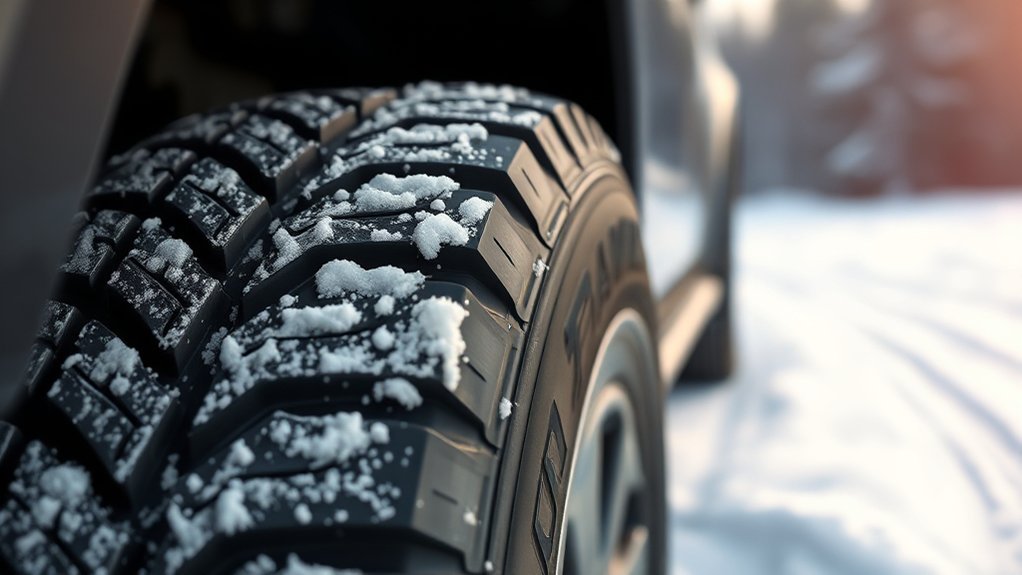
When choosing winter tires for your Tacoma, begin with the basics: tire size, load index, speed rating, wheel diameter, and cold inflation pressure. Toyota warns owners not to use tires with a different load rating or speed symbol than what is specified on the tire pressure label or in the owner’s manual, so your door placard should be your first checkpoint. You can review Toyota’s official tire guidance here: Toyota Tacoma tire information.
Next, look for the Three-Peak Mountain Snowflake symbol, often shortened to 3PMSF. This marking identifies tires that meet specific snow-traction requirements and is more meaningful for winter use than the older M+S marking alone. Continental explains the difference between winter tire markings here: winter tire markings.
The best winter tires for a Tacoma usually share several features: deep circumferential grooves to move slush, dense siping for biting edges, rubber compounds that remain flexible in low temperatures, and a tread pattern that clears snow instead of packing it into the blocks. For trucks that tow, haul, or run on rough winter roads, sidewall strength and the correct load range also matter.
Warning: Do not choose a tire only because it “looks aggressive.” A mud-terrain or rugged-terrain tread can look winter-ready but still perform poorly on ice if the compound and siping are not designed for freezing conditions.
[Products Worth Considering]

Monitor tire tread wear with a smart, color-coded depth gauge that shows clear condition ranges at a glance. The bar is range marked for fast, easy readings, helping you maintain safer traction and performance. Each gauge is portable with a pocket clip, and the set includes 20 units for daily use and sharing.

These aluminum alloy tire valve stem caps with an O-ring seal help protect valve stems from corrosion while adding a clean, stylish look to your vehicle. The universal fit works across cars, trucks, motorcycles, bicycles, and more, making them an easy upgrade for everyday driving and off-road use. Installation is quick, and the included four-pack keeps all your tires dressed and protected.

These universal tire valve stem caps help protect valve cores from dust, debris, and moisture while helping maintain stable tire pressure. The corrosion-resistant metal construction and sealed design provide reliable protection in road grime, mud, and winter conditions. Twist-on installation makes them quick to fit on cars, SUVs, trucks, and motorcycles.
Best Tire Type for Your Winter Driving
Before picking a brand, decide what kind of winter driving your Tacoma actually sees. A driver in mild city slush needs a different tire than a driver climbing icy mountain roads every weekend.
| Tire Type | Best For | Trade-Off |
| Dedicated winter tire | Ice, packed snow, cold highways, mountain passes | Wears faster in warm weather and is not meant for year-round use |
| 3PMSF all-terrain tire | Mixed pavement, light off-road use, gravel, snow, and daily truck driving | Usually not as strong on ice as a true winter tire |
| All-weather tire | Drivers who want one set year-round in moderate winter areas | Less trail toughness than many truck-focused all-terrain tires |
| Mud-terrain tire | Mud, loose dirt, rocks, and off-road traction | Often weak on ice and wet pavement unless specifically winter-rated |
Best All-Terrain Tires for Winter: Performance Comparisons
All-terrain tires are popular on Tacomas because they balance road manners, dirt-road durability, and snow traction. The key is choosing an all-terrain tire that carries the 3PMSF symbol in your exact size.
[Products Worth Considering]

The 22800 wheel stud installer makes replacing wheel studs quick and secure, saving time and effort during tire service. It uses a ratchet or impact wrench to pull new studs firmly into place, helping when existing studs are too long. Compatible with most automotive wheels and light-duty truck wheel studs, it’s designed for easy, tool-assisted installation.
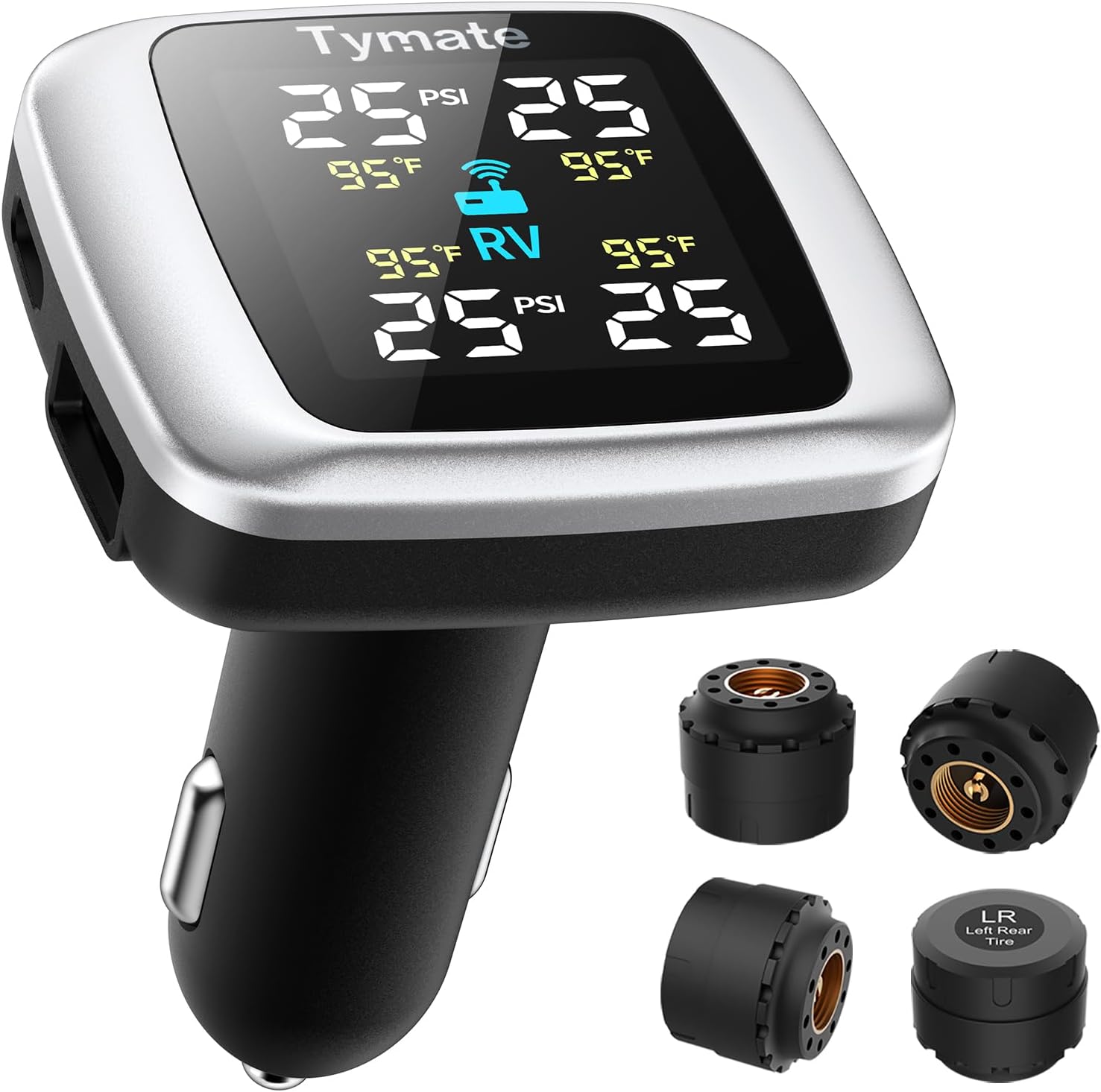
Tymate TM7 is a wireless tire pressure monitoring system that delivers real-time pressure and temperature readings for safer driving. It includes four external sensors, a bright color LCD display with adjustable backlight, and six alarm modes for high/low pressure, fast leakage, high temperature, and sensor signal or battery issues. The system covers a wide 0–144 PSI range and plugs into your vehicle’s cigarette lighter socket for quick DIY setup.
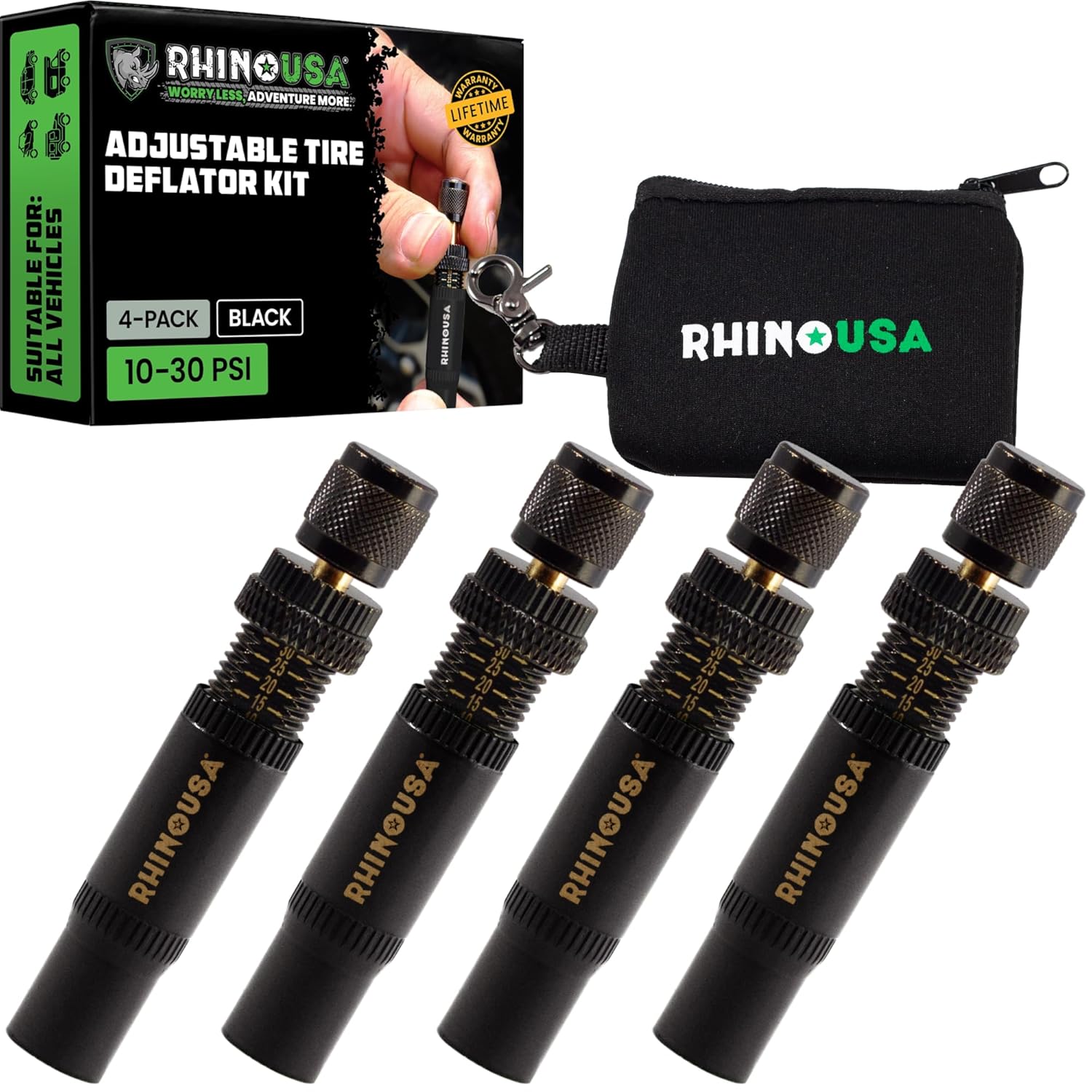
Use the Rhino USA adjustable tire deflators to air down all four tires at once by screwing one deflator onto each valve stem, letting you step away while the tires reach your preset pressure. Each deflator independently adjusts across a 10–30 PSI range with laser-etched indicators for quick setup and verification, making it ideal for beach, sand, and rocky off-road trails.
Performance in Snow Conditions
The BFGoodrich All-Terrain T/A KO2 is a strong example of a winter-capable all-terrain tire because BFGoodrich lists it as 3PMSF rated and severe snow rated. It is a good match for Tacoma owners who want a tire that can handle snow, dirt, gravel, and trail use without switching to a pure winter tire.
The Toyo Open Country A/T III is another balanced all-terrain option. Toyo describes it as an on-/off-road all-terrain tire focused on off-road traction, wet performance, durability, and treadwear life. For Tacoma drivers who split time between highways and light trails, that balance can be more useful than an overly aggressive tread.
The Sailun Terramax R/T and similar rugged-terrain tires can also work for snowy mixed-terrain driving when the exact size is 3PMSF-rated. However, rugged-terrain tires should be judged carefully. They may have deep tread and strong sidewalls, but that does not automatically mean they will brake well on ice.
Versatility Across Terrains
If your Tacoma sees snow-covered forest roads, unplowed driveways, ski-area parking lots, and daily commuting, a 3PMSF all-terrain tire is often the most practical compromise. Look for these features:
- 3PMSF marking: Helps confirm the tire meets severe-snow traction requirements.
- Full-depth siping: Helps the tread keep biting edges as it wears.
- Open shoulder blocks: Help clear loose snow and slush.
- Strong sidewalls: Useful for potholes, gravel, frozen ruts, and loaded truck use.
- Reasonable road noise: Important if the Tacoma is also your daily driver.
Pro Tip: If you regularly drive on glare ice, choose a dedicated winter tire over an all-terrain tire. If you mostly drive in snow, slush, dirt, and gravel, a 3PMSF all-terrain tire may be the better all-around Tacoma setup.
Top Winter Tires for Toyota Tacoma: Enhance Traction
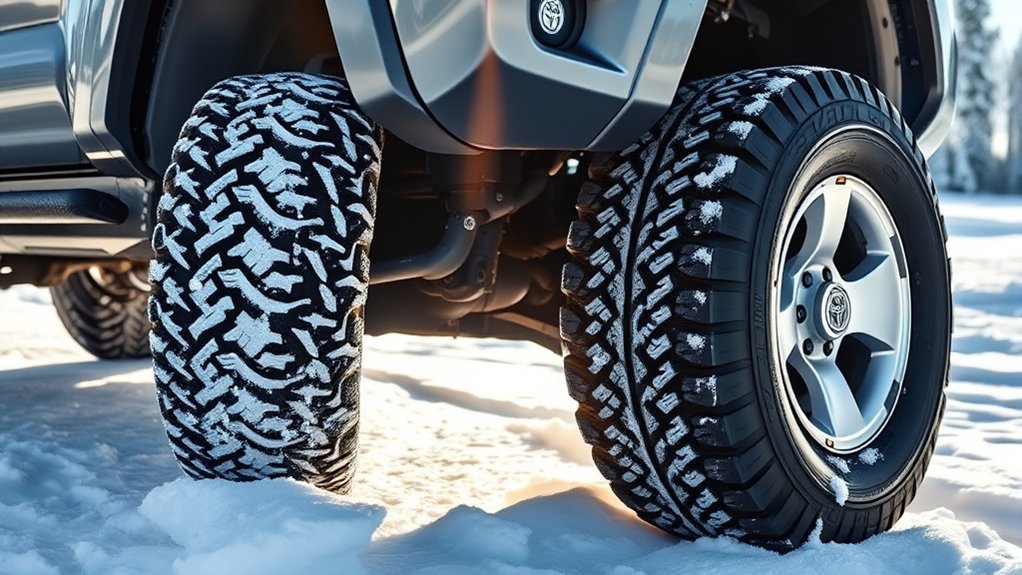
For the strongest winter grip, look beyond all-terrain tires and compare dedicated snow and ice tires. A dedicated winter tire is usually the better choice if your Tacoma spends winter on icy roads, steep grades, mountain passes, or long cold-weather highway drives.
The Nokian Hakkapeliitta R5 SUV is a non-studded winter tire for SUVs and crossovers. Nokian highlights stability, durability, ice-focused technology, and Aramid Strong Sidewalls, which are useful qualities for heavier vehicles and rough winter roads.
The Bridgestone Blizzak DM-V2 is another respected winter tire category option for SUVs, CUVs, and light trucks. It is designed for winter grip and braking in snow and ice, making it worth comparing if it is available in your Tacoma’s required size and load rating.
The Michelin X-Ice Snow family is also worth comparing for drivers who want a studless winter tire designed for cold, snow, slush, and ice. As with every tire on this list, verify size, load index, speed rating, and retailer fitment before ordering.
The NEXEN Winguard Winspike 3 is a studdable winter tire. It can be useful in areas where studded tires are legal and roads are frequently icy, but studs are not allowed everywhere and may be restricted to certain months.
Note: Tire availability changes by rim diameter, load range, and production cycle. Always search by your Tacoma’s exact tire size and confirm that the tire carries the rating you need in that size.
[Products Worth Considering]

The SAFELIFE dial tire tread depth gauge measures tread depth in 1/32 inch increments with clear, easy-to-read 2-inch dial face. Color zones using a traffic light system help you quickly judge whether tread is low, marginal, or ample for safer driving. Built with a durable zinc cast body and a metal detect probe for precise, comfortable use across cars, motorcycles, trucks, and buses.

Milton S-921 pencil tire pressure gauge helps you maintain optimal tire pressure for passenger cars with accurate readings in PSI and kPa. It features a built-in deflator valve for convenient pressure adjustments, plus a single chuck head and nylon indicator bar for easy use on the go. Built from durable plated brass and designed for reliable performance, it’s a practical road trip and cold-weather maintenance tool.

Accurately measure tire tread depth with a calibrated gauge marked from 0 to 1 inch in 1/32 inch increments. The color-coded bar helps you quickly identify tread condition ranges, supporting safe driving for trucks, motorcycles, automobiles, and passenger vehicles.
How Different Tires Perform in Snow and Ice
Snow and ice are not the same problem. A tire that paddles well through loose snow may still struggle to stop on polished ice. That is why tread design, rubber compound, siping, and tire type all matter.
Tire Tread Design Impact
Tread design affects how a tire bites, clears slush, and maintains contact with the road. Deep grooves help move water and slush away. Sipes create small biting edges. Shoulder blocks help with snow evacuation and lateral grip. Directional winter tread patterns can improve slush control, while all-terrain patterns often trade some ice grip for durability and loose-surface traction.
- Deep grooves: Help evacuate water, slush, and loose snow.
- Dense siping: Helps create grip on packed snow and ice.
- Flexible winter compound: Helps the tire stay pliable in low temperatures.
- Open tread voids: Help in deeper snow and loose surfaces.
- Stable center rib: Helps highway tracking and steering feel.
Performance in Deep Snow
Deep snow calls for tread that can clear itself. A 3PMSF all-terrain tire can work well when the snow is loose, rutted, or mixed with gravel. A dedicated winter tire can be better when deep snow is paired with ice, steep grades, or packed surfaces underneath. Tacoma owners who air down for off-road snow should also understand the risks: too little pressure can damage tires, unseat beads, and affect steering response.
Ice Traction Capabilities
Ice traction depends heavily on compound and siping, not just tread depth. Studless winter tires usually outperform all-terrain tires on cold, icy pavement because they are designed to stay flexible and create micro-grip. Studded tires can help on ice where legal, but they can be noisy, restricted by law, and less pleasant on dry pavement.
Four-wheel drive helps your Tacoma accelerate in snow. Winter tires help it brake and steer. In an emergency stop, tire grip matters more than drivetrain confidence.
User Feedback on Popular Winter Tires for Tacoma
Owner feedback is useful, but it should not replace fitment checks or safety ratings. When reading reviews, focus on Tacoma-relevant details instead of star ratings alone. Look for reviews from drivers with similar road conditions, tire size, load range, and truck setup.
For example, reviews from a lifted Tacoma on E-load all-terrain tires may not apply to a stock Tacoma used mainly for icy commuting. Likewise, a tire that feels excellent in powder may not be the best choice for freezing rain or polished intersections.
When comparing real-world feedback, look for comments about:
- Ice braking and downhill control
- Deep snow traction
- Wet-road braking
- Noise on the highway
- Treadwear after one or two winters
- Ride comfort on a light or unloaded Tacoma bed
- Performance while towing or carrying winter gear
What You Should Know About Tire Costs and Performance
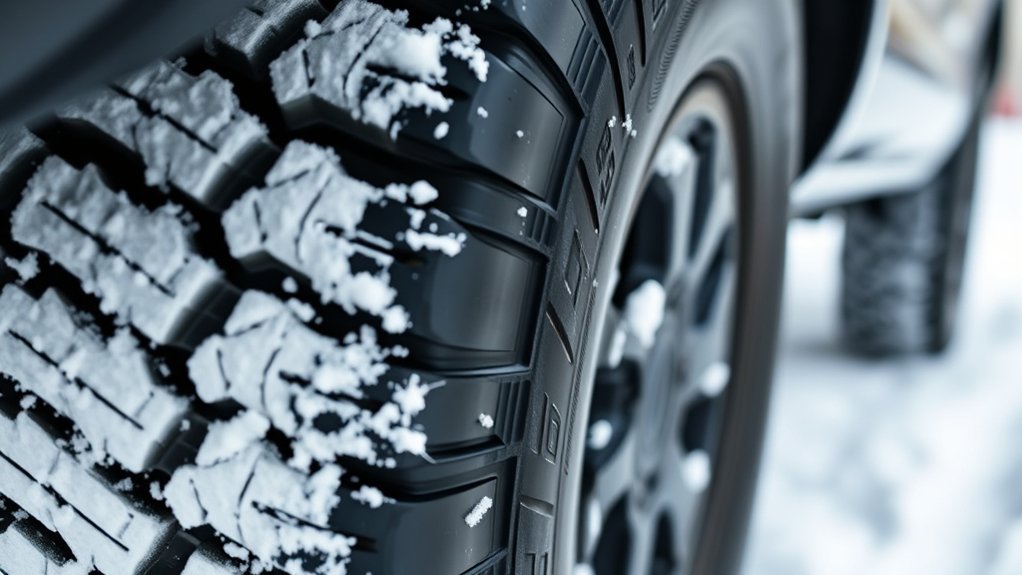
Winter tire cost depends on tire size, load range, brand, speed rating, retailer, rebates, and installation. Do not judge a tire by the per-tire price alone. Compare the installed out-the-door total, including mounting, balancing, valve stems or TPMS service, disposal fees, alignment if needed, and seasonal storage if you use a shop.
Performance also has a cost side. A cheaper tire that wears quickly, gets noisy, or performs poorly on ice may cost more over time if it has to be replaced sooner. On the other hand, a premium dedicated winter tire may be unnecessary if your Tacoma only sees occasional light snow and mostly dry winter roads.
Use this simple buying filter:
- Severe ice and mountain roads: Prioritize a dedicated winter tire.
- Snow plus trails: Prioritize a 3PMSF all-terrain tire.
- Mild winter city driving: Consider all-weather or 3PMSF all-terrain options.
- Heavy towing or hauling: Match the correct load rating and do not downsize capacity.
Maintenance Tips for Extending Winter Tire Life
Winter tires work best when they are maintained. Cold weather lowers tire pressure, and AAA notes that tire pressure can drop about 1 PSI for every 10°F decrease in temperature. Check pressure when the tires are cold and set it to the Tacoma placard recommendation, not the maximum pressure printed on the tire sidewall.
NHTSA says tire tread should be at least 2/32 inch, but that is a minimum safety threshold, not an ideal winter target. For winter driving, plan replacement earlier. Continental recommends at least 4 mm of tread depth in winter conditions, which is close to 5/32 inch.
To extend tire life and keep traction predictable:
- Check cold tire pressure at least monthly and before long winter trips.
- Rotate tires on schedule, commonly every 5,000 to 7,500 miles unless your manual or tire shop recommends otherwise.
- Measure tread depth across the inner, center, and outer tread.
- Inspect for sidewall cuts, bulges, cracking, punctures, and uneven wear.
- Store off-season tires in a cool, dry place away from sunlight, heat, and ozone sources.
- Remove dedicated winter tires when temperatures stay warm to avoid faster wear.
Seasonal Factors to Consider When Choosing Tires
Your local winter matters. A Tacoma in the Pacific Northwest may see wet slush and mountain snow. A Tacoma in the Rockies may see packed snow, ice, and subzero temperatures. A Tacoma in a mild climate may only need occasional cold-weather traction.
Climate Impact on Tires
Dedicated winter tires are designed for cold conditions. Their rubber compounds stay more flexible when temperatures fall, which helps with grip on snow, ice, and cold wet pavement. All-terrain tires are built for broader durability and mixed surfaces, but their winter performance depends heavily on the compound, siping, and whether the exact tire is 3PMSF-rated.
Tread Design Considerations
Choose tread based on your most dangerous condition, not your most common condition. If you usually drive dry roads but occasionally face icy downhill grades, ice braking should matter more than aggressive looks. If your main challenge is unplowed snow over gravel, open tread blocks and shoulder bite become more important.
Note: Do not mix winter tires with non-winter tires on the same Tacoma. A mismatched set can create uneven grip and unpredictable handling, especially during braking or emergency lane changes.
Tire Specifications: Finding the Right Fit for Your Tacoma
Finding the right tire starts with the numbers on your truck, not the numbers from another Tacoma owner’s build. Check the driver-door placard and owner’s manual before buying.
Confirm these details:
- Tire size: Match the placard size unless a qualified tire professional confirms an alternate size.
- Load index/load range: Must support your Tacoma, passengers, cargo, accessories, and towing needs.
- Speed rating: Follow the tire pressure label or owner’s manual guidance.
- Wheel diameter and width: The tire must fit the wheel safely.
- TPMS compatibility: If you buy a second wheel set, you may need compatible sensors.
- Clearance: Lift kits, offset wheels, mud flaps, and fender liners can affect rubbing.
- Cold PSI: Set pressure based on the vehicle placard, then recheck as temperatures change.
If your Tacoma has a lift, aftermarket wheels, armor, a camper shell, a bed rack, or a constant overlanding load, ask a tire professional to confirm fitment and load capacity before ordering.
Where to Find the Best Deals on Tacoma Winter Tires
The best deal is the tire that fits correctly, performs safely, and includes the services you need. Compare online retailers, local tire shops, warehouse clubs, and Toyota dealers. Local shops can be especially helpful if you need fitment advice, TPMS setup, seasonal swaps, or help choosing between load ranges.
Before buying, compare:
- Installed out-the-door price
- Manufacturer rebates
- Road-hazard coverage
- Rotation and balancing policy
- Availability of your exact tire size
- Return policy if the tire does not fit
- Shipping time before the first storm of the season
Do not wait until the first major snowstorm. Popular Tacoma sizes and winter tires can sell out quickly once cold weather arrives.
Common Mistakes to Avoid
- Buying by appearance: Aggressive tread does not always mean good ice traction.
- Ignoring the placard: The wrong load rating or speed symbol can create safety and handling problems.
- Assuming 4WD solves braking: Four-wheel drive does not shorten stopping distance on ice.
- Waiting too long to replace tires: Winter traction fades before tires reach the legal minimum tread depth.
- Forgetting stud laws: Studded tires may be restricted by location and season.
- Using winter tires year-round: Warm pavement can wear winter compounds faster.
Frequently Asked Questions
Are Toyota Tacomas good in snow and ice?
Yes, a Tacoma can be very capable in snow, especially with four-wheel drive, good ground clearance, and the right tires. The key limitation is braking and steering on ice. Winter tires or 3PMSF-rated tires are what give the truck the grip it needs to stop and turn safely.
Do I need dedicated winter tires or all-terrain tires for my Tacoma?
Choose dedicated winter tires if you regularly drive on ice, packed snow, freezing rain, or mountain highways. Choose 3PMSF all-terrain tires if you need one tire for snow, gravel, dirt roads, and daily truck use.
What does 3PMSF mean on a Tacoma tire?
3PMSF stands for Three-Peak Mountain Snowflake. It means the tire meets specific snow-traction requirements. It is a better winter indicator than M+S alone, but it does not mean every 3PMSF tire performs equally on ice.
Can I put bigger winter tires on my Tacoma?
Sometimes, but bigger is not always better. Oversized tires can rub, change speedometer accuracy, reduce clearance under load, and affect braking or gearing. Check wheel width, offset, suspension setup, and load rating before changing sizes.
Are studded winter tires worth it for a Tacoma?
Studded tires can help on ice, but they are noisy, can wear roads, and are restricted in many places. They make the most sense where icy roads are common and local law allows them during your driving season.
Conclusion
The right winter tire can transform how your Toyota Tacoma feels in snow and ice. For icy highways and mountain passes, choose a dedicated winter tire in the correct size and load rating. For mixed snow, gravel, and daily truck use, choose a 3PMSF all-terrain tire with strong siping and reliable wet-road behavior. Above all, confirm your Tacoma’s exact fitment, maintain cold tire pressure, monitor tread depth, and avoid assuming four-wheel drive can make up for poor tire grip.
Sources
- Toyota Tacoma Owner’s Manual Tire Information — backs fitment, load rating, speed symbol, tire pressure, and rotation guidance.
- NHTSA Winter Driving Tips — backs winter tire and tread safety guidance.
- Continental Winter Tire Markings — backs 3PMSF vs. M+S explanation and winter tread-depth context.
- BFGoodrich All-Terrain T/A KO2 — backs KO2 3PMSF and severe-snow-rated product details.
- Toyo Open Country A/T III Product Information — backs Toyo A/T III all-terrain, wet-performance, durability, and treadwear claims.
- Nokian Hakkapeliitta R5 SUV — backs dedicated winter SUV tire features and sidewall durability claims.

