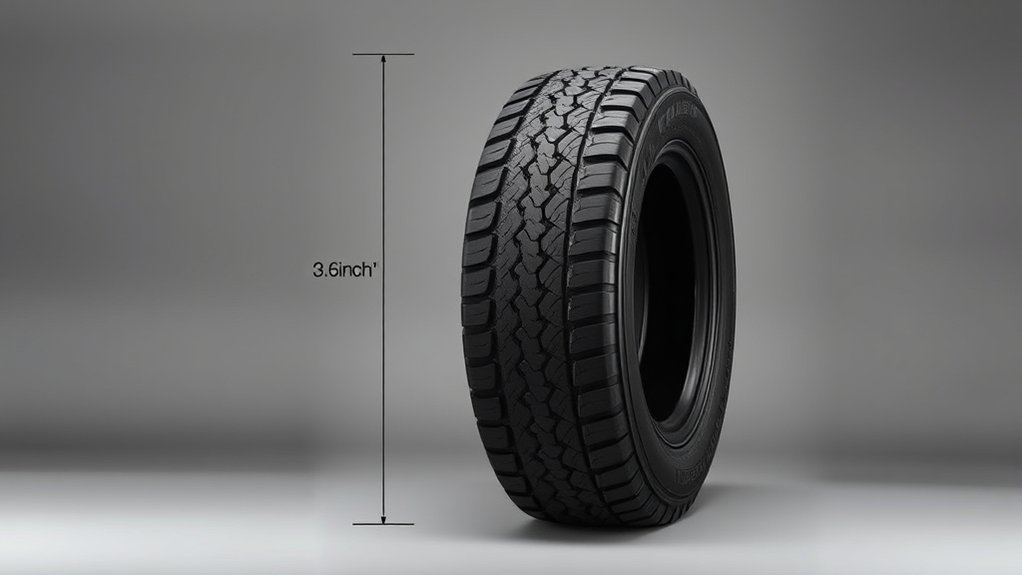
A 265/70R18 tire is about 32.6 inches tall, 10.4 inches wide, and has a 7.3-inch sidewall. In metric terms, that is roughly 828 mm in overall diameter, 265 mm in section width, and 185.5 mm in sidewall height. Its calculated circumference is about 102.4 inches, with roughly 619 revolutions per mile.
This size sits just under a true 33-inch tire. Compared with a 265/65R18, it is about 1 inch taller overall, but the actual ground-clearance gain is only about half that because only the radius changes.
Quick Answer
A 265/70R18 tire measures about 32.6 inches tall, 10.4 inches wide, and 7.3 inches from rim to tread. It is roughly 1 inch taller than a 265/65R18 and raises ride height by about 0.5 inch. Verify clearance, load rating, wheel fitment, and cold tire pressure before switching sizes.
Key Takeaways
- A 265/70R18 tire is about 32.6 inches tall, or roughly 828 mm in overall diameter.
- The section width is 265 mm, which equals about 10.4 inches.
- The sidewall height is about 185.5 mm, or 7.3 inches.
- Compared with 265/65R18, the 265/70R18 is about 1.04 inches taller overall and adds about 0.52 inch of ground clearance.
- Pressure should come from your vehicle placard, owner’s manual, or a load/inflation calculation, not from a generic PSI range.
How Tall Is a 265/70R18 Tire?
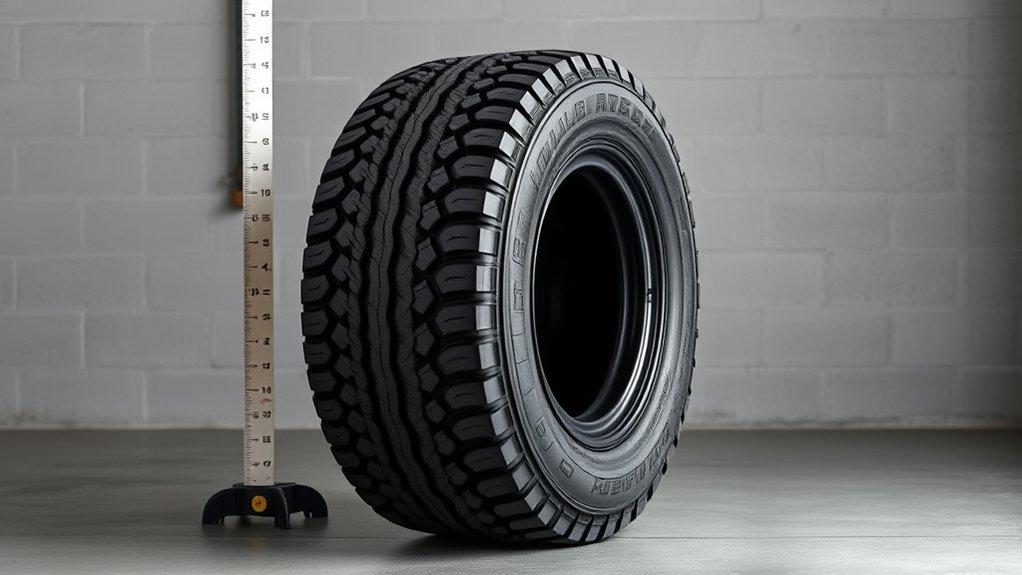
A 265/70R18 tire is about 32.6 inches tall overall. That height comes from a simple formula: the 265 is the tire’s section width in millimeters, the 70 is the aspect ratio, and the 18 is the wheel diameter in inches. Bridgestone explains that aspect ratio shows sidewall height as a percentage of tire width, so a 70-series tire has a sidewall height equal to 70% of its section width. Bridgestone tire-size guide
For this size, 265 mm × 0.70 = 185.5 mm of sidewall height. Convert that to inches and you get about 7.3 inches. Add two sidewalls to the 18-inch wheel, and the total comes out near 32.6 inches.
Note: Tire sizes are nominal. The exact measured diameter can vary slightly by brand, model, tread depth, load rating, wheel width, air pressure, and whether the tire is mounted and loaded on a vehicle.
265/70R18 Tire Dimensions
The table below shows the common calculated dimensions for a 265/70R18 tire. Use these numbers as a planning guide for clearance, speedometer change, gearing, and fitment checks.
| Dimension | Approx. Value | What It Means |
|---|---|---|
| Overall diameter | 32.6 in / 828 mm | Total calculated tire height from bottom to top |
| Section width | 10.4 in / 265 mm | Nominal sidewall-to-sidewall width |
| Sidewall height | 7.3 in / 185.5 mm | Distance from rim edge to tread area |
| Circumference | 102.4 in / 2,602 mm | Calculated distance traveled per full tire rotation |
| Revolutions per mile | About 619 | Useful estimate for speedometer and gearing checks |
These dimensions are calculated from the metric tire-size formula, so they work well for comparison shopping. Still, actual mounted tire specs can vary by tire model. Some manufacturers publish measured overall diameter, approved rim width, tread depth, and revolutions per mile on each tire’s product page.
A 265/70R18 is a near-33-inch tire, but it is not a true 33. Use the 32.6-inch calculated diameter when checking clearance, gearing, and speedometer change.
Your tread pattern still matters. A highway-terrain 265/70R18 and an all-terrain 265/70R18 may share the same nominal size, but they can feel different in rain, snow, road noise, steering response, and light off-road traction. For related examples, compare how tire performance in rain and snow changes by tread design, not size alone.
Common 18-Inch Sizes Close to 265/70R18
If you are comparing nearby 18-inch tire sizes, look at height, width, and sidewall together. A tire can be close in diameter but still be wider, heavier, or harder to fit because of wheel offset and fender clearance.
| Size | Approx. Diameter | Approx. Width | Main Difference |
|---|---|---|---|
| 265/65R18 | 31.6 in | 10.4 in | Shorter sidewall and closer to many stock SUV/truck sizes |
| 265/70R18 | 32.6 in | 10.4 in | Same nominal width as 265/65R18, with about 1 inch more height |
| 275/70R18 | 33.2 in | 10.8 in | Closer to a true 33-inch tire, but wider and harder to clear |
| 285/65R18 | 32.6 in | 11.2 in | Similar height to 265/70R18, but noticeably wider |
Do not choose a size by diameter alone. A wider tire may rub the upper control arm, sway bar, mud flap, or fender liner even when its height looks acceptable on paper.
[Products Worth Considering]

Measure tire tread depth quickly and accurately with this LUMITECO dial gauge that reads in 1/32" increments up to 14/32". The color-coded green/yellow/red zones make it easy to judge tire wear and know when replacement is needed. A rugged, compact design with a protective pouch helps keep the gauge ready for use on cars, trucks, motorcycles, and more.

Keep your tires properly inflated with this analog VONDIOR tire pressure gauge, designed for fast, easy readings without batteries. The swiveling, two-axis hose and large glow dial help you measure at any tire angle with instant visibility. Built with a protective rubber shield, it supports durable, low-maintenance use for cars and trucks.

Upgrade your 2024-2026 Tesla Model 3 Highland with REEVAA all-weather mud flaps designed for seamless fit along the original body lines. The set of four delivers strong splash protection against mud, gravel, and road debris while using OEM-grade durable materials. Installation is non-destructive with original hole positions and snap-in clips, and the aerodynamic design helps minimize impact on efficiency.
265/70R18 vs. 265/65R18
The 265/70R18 is taller than the 265/65R18 because it has a taller sidewall. Both sizes have the same 265 mm nominal section width, so the main difference is height, not width.
| Size | Diameter | Width | Sidewall | Best For |
|---|---|---|---|---|
| 265/65R18 | About 31.6 in | About 10.4 in | About 6.8 in | Sharper road feel and closer-to-stock speedometer readings |
| 265/70R18 | About 32.6 in | About 10.4 in | About 7.3 in | More sidewall, a softer ride, and slightly more clearance |
The overall diameter difference is about 1.04 inches. That means your axle, frame, and underbody rise by about 0.52 inch when you move from 265/65R18 to 265/70R18, assuming both tires measure close to their nominal size.
On pavement, the 265/65R18 usually feels a little sharper because the sidewall is shorter. The 265/70R18 usually feels more forgiving over potholes, gravel, expansion joints, and rough pavement because it has more sidewall between the wheel and the road.
Fuel economy can also change. A taller tire may weigh more and can change effective gearing, so acceleration may feel slightly softer and mileage may drop a little. The exact effect depends on tire weight, tread pattern, pressure, vehicle gearing, and driving speed.
When comparing tires for mixed driving, look at category and construction too. A highway tire, all-season tire, and all-terrain tire can behave very differently even when the size is identical. That is why on- and off-road traction depends on more than the sidewall numbers.
[Products Worth Considering]

Monitor tire tread wear with a smart, color-coded depth gauge that shows clear condition ranges at a glance. The bar is range marked for fast, easy readings, helping you maintain safer traction and performance. Each gauge is portable with a pocket clip, and the set includes 20 units for daily use and sharing.

ETENWOLF’s tire pressure gauge helps you quickly and accurately check tire PSI across cars, trucks, motorcycles, bikes, and more. It’s manually calibrated to ANSI B40.1 Grade A for reliable readings, includes a large glow dial for easy nighttime viewing, and features a 360-degree swivel chuck for use at any valve angle. The gauge also works consistently in extreme hot or cold weather.

The SAFELIFE dial tire tread depth gauge measures tread depth in 1/32 inch increments with clear, easy-to-read 2-inch dial face. Color zones using a traffic light system help you quickly judge whether tread is low, marginal, or ample for safer driving. Built with a durable zinc cast body and a metal detect probe for precise, comfortable use across cars, motorcycles, trucks, and buses.
What Changes in Clearance and Ride Height?
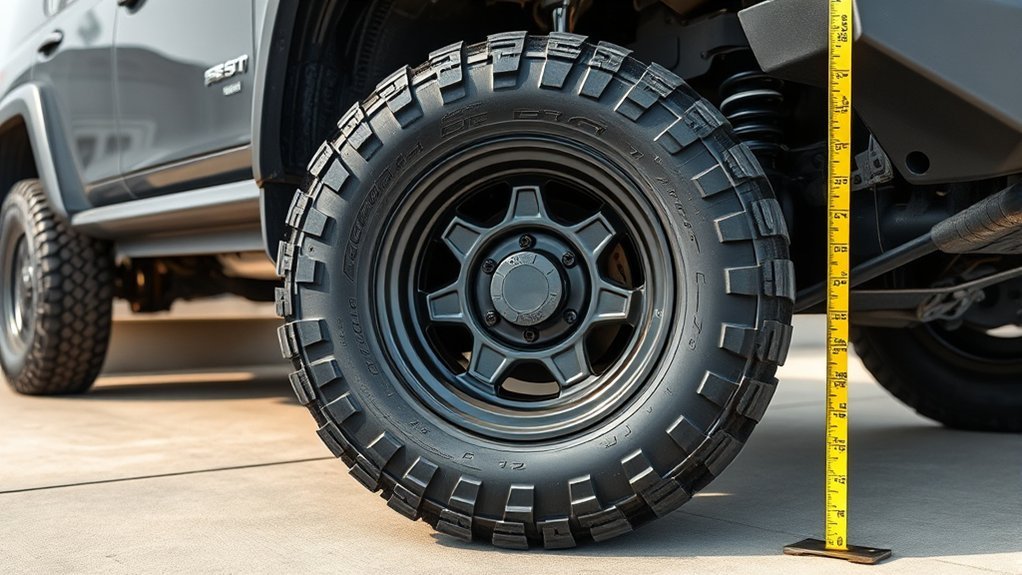
Switching from 265/65R18 to 265/70R18 adds about 1 inch of total tire diameter, but only about half an inch of ground clearance. That is because the axle sits at the tire’s radius, not at the full diameter.
That half inch can still help on ruts, rocks, snow buildup, and steep driveways. You also get a taller sidewall, so the tire can absorb impacts before the wheel takes the hit. For light off-road use, that extra sidewall is often more noticeable than the small lift itself.
Warning: A taller tire can rub even when the diameter difference looks small on paper. Check the front fender liner, mud flaps, upper control arm area, sway bar clearance, bumper corners, and full-lock steering clearance before you buy a full set.
For trail use, size is only one piece of the setup. Tread pattern, casing strength, sidewall protection, and pressure control often matter more. A well-matched all-terrain tire can improve grip and comfort without relying on size alone.
Speedometer and Odometer Change
A taller tire travels farther with each rotation. If your vehicle was calibrated for a 265/65R18 and you install a 265/70R18, your actual speed will be about 3.3% higher than indicated.
| Speedometer Shows | Approx. Actual Speed | What It Means |
|---|---|---|
| 30 mph | 31 mph | Small city-speed difference |
| 60 mph | 62 mph | Common highway-speed difference |
| 70 mph | 72.3 mph | More noticeable on long highway drives |
Your odometer can also record slightly fewer miles than you actually travel. If your vehicle allows speedometer recalibration, ask a qualified shop whether it can be adjusted after the tire change. Tire revolutions per mile are always estimates because loaded radius changes with tire model, pressure, load, and tread depth. Mickey Thompson revolutions-per-mile chart
On-Road Comfort and Fuel Economy
With a 265/70R18, you usually get a smoother ride than a shorter 65-series tire in the same width. The 7.3-inch sidewall gives the tire more room to flex over broken pavement, bridge joints, gravel roads, and potholes.
The tradeoff is steering feel. A taller sidewall can make turn-in feel slightly slower, especially on heavier SUVs and trucks. If your priority is sharp handling on pavement, a shorter sidewall usually feels more direct. If your priority is comfort and rough-road compliance, the 265/70R18 has the advantage.
Fuel economy can drop slightly after moving to a taller or heavier tire. Larger diameter changes effective gearing, and heavier tread designs add rotating mass. You may not notice a large change during normal driving, but aggressive all-terrain tread and heavy-duty construction can make the difference more obvious.
Durability also depends on tire construction, not just size. For example, some tires use stronger casings or reinforced sidewalls, while others focus on quiet highway comfort.
Off-Road Grip and Load Rating
A 265/70R18 can work well for mild off-road use because it gives you a taller sidewall, slightly more clearance than 265/65R18, and enough width for a stable stance. The 70-series sidewall helps the tire conform over uneven surfaces, which can improve ride comfort and traction on gravel, dirt, ruts, and light rocks.
Do not assume every 265/70R18 tire has the same load capacity. Load index varies by tire model and service description. Goodyear explains that tire load index is the number that corresponds to how much weight a tire can support when properly inflated. A load index of 116 equals 2,756 pounds when that is the applicable rating for your setup. Goodyear tire load index chart
[Products Worth Considering]

The TYAMATE TM8 solar-powered wireless TPMS delivers real-time tire pressure and temperature monitoring with six alarm modes for safer driving. A vibrant color LCD display shows readings clearly while windshield mounting keeps it hands-free and easy to read. With a wide 0–87 PSI range, strong 433.92 MHz signal transmission, and quick sensor pairing, it’s ideal for RV, sedan, SUV, MPV, and truck use.

Clean grills, fenders, fender flares, bumpers, and wheel wells with a long-handled brush built for detailed car washing. The soft, triple-flagged bristles and dense scrub coverage help lift dirt gently while making coverage fast and easy. Use it with your favorite car wash soap for tires and exterior surfaces, and it also works for bike, motorcycle, boat, or RV cleaning.

These M14x1.5 closed-end chrome lug nuts are a one-piece replacement designed for secure fitment on compatible GM, Ford, and select Chrysler/Dodge models. Featuring a 60-degree conical seat and anti-rust chrome plating, they help resist corrosion and maintain a bright look for everyday driving. Built for long-term durability, they include OEM-style part references and are backed by 12 months of support.
Off-Road Traction Benefits
The main off-road benefit comes from sidewall height, not a wider tread. Compared with a 265/65R18, a 265/70R18 keeps the same nominal 265 mm section width but adds more sidewall. That extra sidewall can flex over rocks and ruts, which helps the tread stay in contact with uneven ground.
Tread pattern still controls most of the grip difference. A highway-terrain 265/70R18 will not bite into mud or loose rock like a proper all-terrain or mud-terrain tire. If you drive in snow, mud, gravel, or rocky trails, choose the tire category first and treat size as the fitment step.
P-Metric vs. LT 265/70R18 Tires
You may see this size sold as a P-metric tire, a metric SUV/light-truck tire, or an LT tire. LT versions often use heavier construction and may carry different load indexes, load ranges, maximum pressures, ride quality, and weight. That can help with towing, payload, and off-road durability, but it can also make the ride firmer and increase rotating weight.
Read the full service description on the actual tire sidewall. Some LT tires show two load-index numbers, such as a single-wheel rating and a dual-wheel rating. Use the rating that matches your vehicle setup, and never assume one 265/70R18 can replace another without checking load index, speed rating, wheel rating, and inflation requirements.
Load Rating Capacity
Load rating matters if you tow, carry tools, add armor, mount a roof tent, or regularly drive with passengers and cargo. The tire’s load index must meet or exceed your vehicle’s requirements. Check your tire placard, owner’s manual, gross axle weight ratings, wheel rating, and the exact tire sidewall before you buy.
If your 265/70R18 is marked 116 as the applicable load index, it is rated for 2,756 pounds per tire when properly inflated for that load. Some LT 265/70R18 tires may carry a different load index or dual service description. Always match the tire to your vehicle, wheel rating, payload, and towing needs.
265/70R18 Fitment, Pressure, and Wear Tips
The 265/70R18 tire measures about 32.6 inches tall and 10.4 inches wide, so you should confirm fitment before installing it on a vehicle that came with a smaller tire. Check clearance at full steering lock, during suspension compression, and with the vehicle loaded.
- Check front and rear fender liner clearance.
- Check mud flaps, splash guards, and bumper corners.
- Check upper control arm and sway bar clearance.
- Confirm wheel width and offset work with the tire manufacturer’s approved rim range.
- Make sure the spare tire location can hold the larger tire.
- Confirm brake caliper and wheel clearance.
- Confirm the tire load index and speed rating meet or exceed your vehicle requirements.
- Recheck alignment after installation, especially after a lift or leveling kit.
- Consider speedometer recalibration if your vehicle supports it.
Pro Tip: Test fit one front tire before mounting the full set if you are close on clearance. Turn the steering from lock to lock and check again with the suspension compressed.
For tire pressure, start with your vehicle’s tire information placard or owner’s manual. NHTSA says the correct pressure is the vehicle manufacturer’s recommended pressure, not the maximum pressure printed on the tire sidewall. NHTSA TireWise tire safety guide
If 265/70R18 is not the original size for your vehicle, ask a qualified tire shop to calculate the correct cold pressure using the tire’s load rating and a load/inflation table. Toyo Tires notes that optional replacement sizes may require load and inflation tables when the new size is not listed on the vehicle placard. Toyo Tires load and inflation tables
Watch tire wear after the first few thousand miles. Shoulder wear can point to low pressure, hard cornering, alignment issues, or underloaded pressure settings. Center wear can point to excessive pressure for the load. Uneven edge wear often means alignment or suspension problems. Rotate on schedule and inspect tread depth often, because tread depth has a direct effect on wet traction and stopping performance.
Frequently Asked Questions
Is 265/70R18 a 33-inch tire?
No. A 265/70R18 is about 32.6 inches tall, so it is slightly under a true 33-inch tire. Many people round it up in casual conversation, but you should use the real 32.6-inch calculated diameter when checking clearance, gearing, and speedometer change.
What size is a 33-inch tire on an 18-inch rim?
A common metric size close to 33 inches on an 18-inch rim is 275/70R18, which measures about 33.2 inches tall. It is also wider than a 265/70R18, so check wheel width, offset, fender clearance, and steering clearance before switching.
How much taller is a 70 tire than a 65 tire?
For these two sizes, a 265/70R18 is about 1.04 inches taller overall than a 265/65R18. The sidewall increases from about 6.8 inches to about 7.3 inches. Your ground clearance rises by about half the diameter difference, or roughly 0.5 inch.
Is a 31-inch tire the same as a 265 tire?
No. “265” refers to section width in millimeters, while “31-inch” refers to overall tire diameter. A 265/70R18 is about 32.6 inches tall, not 31 inches. Always compare the full size, including width, aspect ratio, wheel diameter, load index, and speed rating.
Will 265/70R18 tires affect my speedometer?
Yes, if your vehicle was calibrated for a smaller tire such as 265/65R18. Moving from 265/65R18 to 265/70R18 changes diameter by about 3.3%, so when your speedometer shows 60 mph, your real speed may be close to 62 mph.
What PSI should I run in 265/70R18 tires?
Use the vehicle manufacturer’s tire placard or owner’s manual as your starting point. If 265/70R18 is not the original size, ask a tire professional to set pressure using the tire’s load index, axle weights, and a load/inflation table.
Can I replace 265/65R18 with 265/70R18?
Sometimes, but you need to verify clearance, wheel width, load index, speed rating, spare-tire storage, and speedometer change first. The 265/70R18 is about 1 inch taller, so it may rub on some vehicles that fit 265/65R18 without issues.
Is 285/65R18 the same height as 265/70R18?
It is very close in calculated height, at about 32.6 inches, but it is wider. A 285/65R18 is about 11.2 inches wide, while a 265/70R18 is about 10.4 inches wide. That extra width can create clearance problems even when the height is similar.
Conclusion
A 265/70R18 tire gives you a practical near-33-inch size with about 32.6 inches of overall diameter, 10.4 inches of section width, and 7.3 inches of sidewall. Compared with a 265/65R18, it adds about 1 inch of tire height and roughly half an inch of real ground clearance.
Choose this size if you want more sidewall, a softer ride, and a little extra clearance without moving to a much wider tire. Before you buy, confirm fitment, wheel compatibility, load index, speed rating, speedometer change, and cold tire pressure. Those checks matter more than the number printed on the sidewall.
Sources
- Bridgestone: How to Read & Determine Tire Size — backs up tire width, aspect ratio, construction, and rim-size decoding.
- Mickey Thompson: Diameter, Rollout, and Revolutions Per Mile Chart — backs up circumference and revolutions-per-mile use for drivetrain estimates.
- NHTSA TireWise Tire Safety — backs up tire pressure guidance from the vehicle placard or owner’s manual.
- Toyo Tires Load & Inflation Tables — backs up optional tire-size pressure guidance and load/inflation table use.
- Goodyear Tire Load Index Chart — backs up load-index meaning and the 116 load-index capacity value.