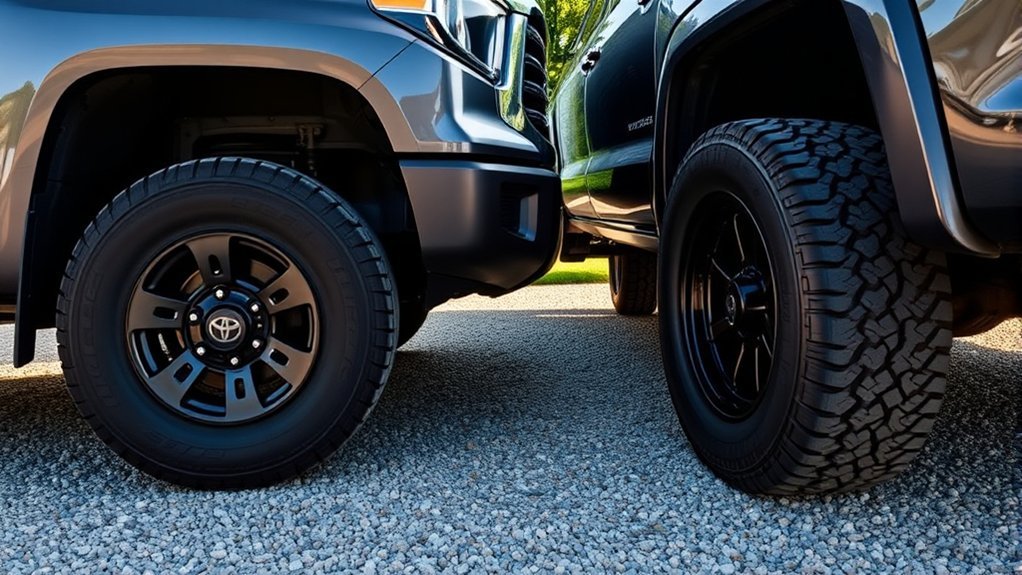
Choosing between 265/70R18 and 275/70R18 tires for a Toyota Tundra is mostly a choice between a safer stock-style fit and a mild upsizing. The 275/70R18 is only 10 mm wider and about 0.55 inches taller overall, so it can add a tougher stance and a little more clearance, but it also changes speedometer accuracy and may require a closer fitment check.
Quick Answer
For most Tundra owners who want the safest, closest-to-stock choice, 265/70R18 is the better pick if it matches the door-jamb tire placard. Choose 275/70R18 if you want a wider look, slightly more off-road footprint, and about 0.28 inches more axle clearance, but verify clearance, load rating, and speedometer error first.
Key Takeaways
- 275/70R18 is not a huge jump: it is about 0.39 inches wider and 0.55 inches taller than 265/70R18.
- Ground clearance gain is modest: because only half the tire-height difference lifts the axle, the real gain is about 0.28 inches.
- Speedometer error increases: if your Tundra is calibrated for 265/70R18, a 275/70R18 tire makes an indicated 60 mph roughly 61 mph in actual road speed.
- Fitment depends on the truck: model year, trim, wheel offset, suspension, mud flaps, alignment, and tire design all matter.
- Never ignore load rating: replacement tires should meet or exceed the load index and speed rating recommended on the vehicle placard or owner’s manual.
How 265/70R18 and 275/70R18 Compare for Your Tundra
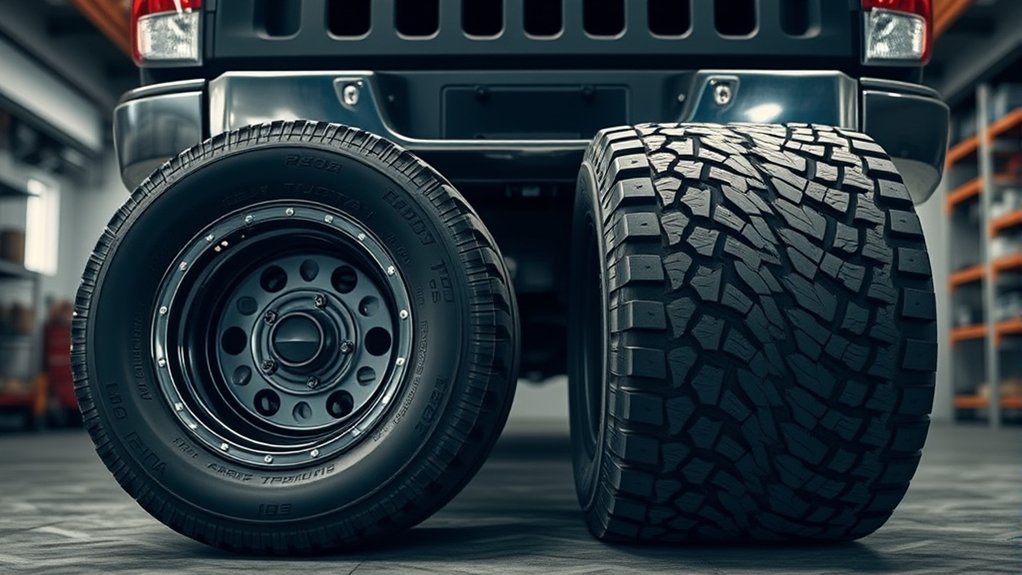
The main difference is simple: the 275/70R18 is wider and taller. It has a 275 mm section width instead of 265 mm, and because both tires use a 70-series sidewall, the wider tire also gets a slightly taller sidewall.
That extra size can help the truck look more planted and may give a bit more bite on loose surfaces. The trade-off is that the larger tire turns fewer revolutions per mile, which affects speedometer reading, effective gearing, braking feel, and sometimes fuel economy.
| Measurement | 265/70R18 | 275/70R18 | Difference |
|---|---|---|---|
| Section width | 10.43 in. | 10.83 in. | +0.39 in. |
| Sidewall height | 7.30 in. | 7.58 in. | +0.28 in. |
| Overall diameter | 32.61 in. | 33.16 in. | +0.55 in. |
| Circumference | 102.44 in. | 104.17 in. | +1.69% |
| Approx. revs per mile | 619 | 608 | About 11 fewer |
Note: Tire dimensions are calculated from the metric tire-size formula and can vary slightly by brand, tread design, load range, and actual mounted measurement. Always check the tire manufacturer’s published specs before buying.
Will 275/70R18 Fit a Stock Tundra?
In many cases, a 275/70R18 can fit a stock Toyota Tundra, especially when the truck already has generous 18-inch wheel clearance. But it should not be treated as a universal guaranteed fit. Toyota Tundra tire sizes vary by model year and trim, and the safest reference is always the driver-door tire placard or the owner’s manual.
Before installing 275/70R18 tires, check these points:
- Original tire size: If your placard lists 265/70R18, the 275/70R18 is a mild upsizing. If your placard lists a different size, compare the diameter difference first.
- Wheel offset: Aftermarket wheels with lower offset can push the tire outward and change rubbing points.
- Mud flaps and liners: A wider tire may contact front mud flaps, fender liners, or splash guards at full lock.
- Suspension and alignment: A leveling kit, lift kit, worn suspension, or aggressive alignment can change clearance.
- Tire model: Two tires with the same size code can fit differently because all-terrain and mud-terrain shoulders can be more squared-off.
- Load index and speed rating: Do not install a tire with a lower load index or lower required service rating than Toyota specifies for your truck.
Warning: A tire that “fits” while parked may still rub while turning, braking, reversing, towing, or compressing the suspension off-road. Test full-lock steering in both directions and check clearance after installation.
[Products Worth Considering]

This 100-piece set of snap-in tubeless tire valve stems is designed for standard 0.453 in (11.5 mm) rim holes and helps maintain reliable, steady tire pressure. Made with ozone-resistant rubber and brass cores, the valves are built for durability and long-term use. Easy to install by hand, they support safe driving and are suitable for cars, light trucks, trailers, and more.

These universal tire valve stem caps help protect valve cores from dust, debris, and moisture while helping maintain stable tire pressure. The corrosion-resistant metal construction and sealed design provide reliable protection in road grime, mud, and winter conditions. Twist-on installation makes them quick to fit on cars, SUVs, trucks, and motorcycles.

Upgrade your 2024-2026 Tesla Model 3 Highland with REEVAA all-weather mud flaps designed for seamless fit along the original body lines. The set of four delivers strong splash protection against mud, gravel, and road debris while using OEM-grade durable materials. Installation is non-destructive with original hole positions and snap-in clips, and the aerodynamic design helps minimize impact on efficiency.
Speedometer Accuracy: What to Expect With Each Size?
Speedometer accuracy depends on the tire size your Tundra is calibrated for. If your truck is calibrated for 265/70R18 and you install 275/70R18, the larger tire travels farther per revolution. That means your actual speed will be slightly higher than the speed shown on the speedometer.
Speed Discrepancies Explained
| Speedometer reading with 275/70R18 | Approx. actual speed if calibrated for 265/70R18 | Difference |
|---|---|---|
| 30 mph | 30.5 mph | +0.5 mph |
| 60 mph | 61.0 mph | +1.0 mph |
| 70 mph | 71.2 mph | +1.2 mph |
This is a small change, but it still matters for highway speed, trip mileage, fuel-economy tracking, ABS behavior, traction control, and transmission shift feel. If you want the speedometer as close to factory as possible, stay with the size listed on the placard or ask a shop whether recalibration is available for your model year.
Maintaining Accurate Readings
- Start with the placard: Check the driver-door tire and loading label for the original tire size and cold inflation pressure.
- Compare diameter, not just width: A small width change can still create a speedometer change if the sidewall height changes too.
- Use manufacturer specs: Compare the exact tire model’s published diameter and revolutions per mile.
- Recalibrate if needed: If your truck allows recalibration, it can reduce speedometer and odometer error after upsizing.
Installation Considerations: Installing 265 vs. 275 Tires
The 265/70R18 is usually the easier installation choice when it matches the factory placard because it keeps the truck close to the intended tire diameter, width, gearing, and clearance. It is also the safer choice for owners who tow, haul, commute daily, or want fewer surprises.
The 275/70R18 is the mild upsizing choice. It can look better in the wheel wells and add a little more tire under the truck, but installation should include more than simply mounting and balancing. Ask the installer to check full steering lock, inner liner clearance, mud flap clearance, upper control arm clearance, and spare-tire compatibility.
Pro Tip: If you are comparing the same tire model in both sizes, check the published weight. A heavier tire can affect acceleration, braking feel, ride comfort, and fuel economy more than the size code alone suggests.
[Products Worth Considering]

These aluminum alloy tire valve stem caps with an O-ring seal help protect valve stems from corrosion while adding a clean, stylish look to your vehicle. The universal fit works across cars, trucks, motorcycles, bicycles, and more, making them an easy upgrade for everyday driving and off-road use. Installation is quick, and the included four-pack keeps all your tires dressed and protected.

Keep your tires properly inflated with this analog VONDIOR tire pressure gauge, designed for fast, easy readings without batteries. The swiveling, two-axis hose and large glow dial help you measure at any tire angle with instant visibility. Built with a protective rubber shield, it supports durable, low-maintenance use for cars and trucks.

These pre-assembled 15x6.00-6 front tire and wheel assemblies are designed for quick replacement on riding lawn mowers and lawn tractors. Built with natural rubber pneumatic tires and turf-friendly tread for solid traction and improved shock absorption. A thickened welded rim and 3/4" sintered iron bushing help provide stable, heavy-duty support for everyday mowing use.
Performance Impact: How Tire Size Affects Your Tundra
Tire size affects how your Tundra feels because the tire is part of the truck’s final gearing, suspension compliance, contact patch, and rolling resistance. The 275/70R18 is not dramatically larger than the 265/70R18, but the change is still noticeable enough to consider before buying.
Power Loss Considerations
A larger and heavier 275/70R18 can make the truck feel slightly slower off the line because it has more rotating mass and a larger rolling circumference. The change is usually mild, but it can be more noticeable with heavier all-terrain or LT-rated tires.
The 265/70R18 often feels a little lighter and more responsive, especially in city driving. It may also be better for owners who care most about fuel economy, braking consistency, and factory-like ride quality.
Fuel Economy and Ride Quality
The 275/70R18 may reduce engine rpm slightly at cruising speed because it turns fewer revolutions per mile. That does not automatically mean better fuel economy. Added tire weight, tread aggressiveness, and rolling resistance can cancel out the rpm benefit.
For the smoothest and most predictable ride, compare tire construction as closely as size. A P-metric highway-terrain tire in 265/70R18 may ride softer than a heavier LT all-terrain in 275/70R18, even if the size difference looks small on paper.
Towing, Payload, and Load Rating
This is where many tire-size comparisons miss the most important point. A Tundra is a truck, so the replacement tire must be suitable for the truck’s load, towing use, and recommended cold inflation pressure. The tire’s load index and speed rating should meet or exceed what Toyota lists on the vehicle placard or owner’s manual.
Do not choose a tire only because it fits the wheel and clears the fender. If you tow, haul tools, carry passengers, or travel long distances in heat, load capacity and proper cold pressure matter more than the look.
User Feedback: Insights on 265/70R18 and 275/70R18
Tundra owners usually choose between these two sizes based on priorities, not because one size is perfect for everyone.
- Daily drivers usually prefer 265/70R18 because it keeps the truck closer to factory behavior and reduces fitment risk.
- Appearance-focused owners often like 275/70R18 because it fills the wheel wells slightly better.
- Light off-road drivers may prefer 275/70R18 for the wider footprint and small clearance gain.
- Towing and hauling owners should choose whichever size offers the right load index, pressure rating, and predictable handling for their setup.
- Winter drivers should compare tread design carefully. Width alone does not determine snow performance; compound, siping, and tread pattern matter heavily.
Aesthetic Appeal: Which Tire Size Looks Better?
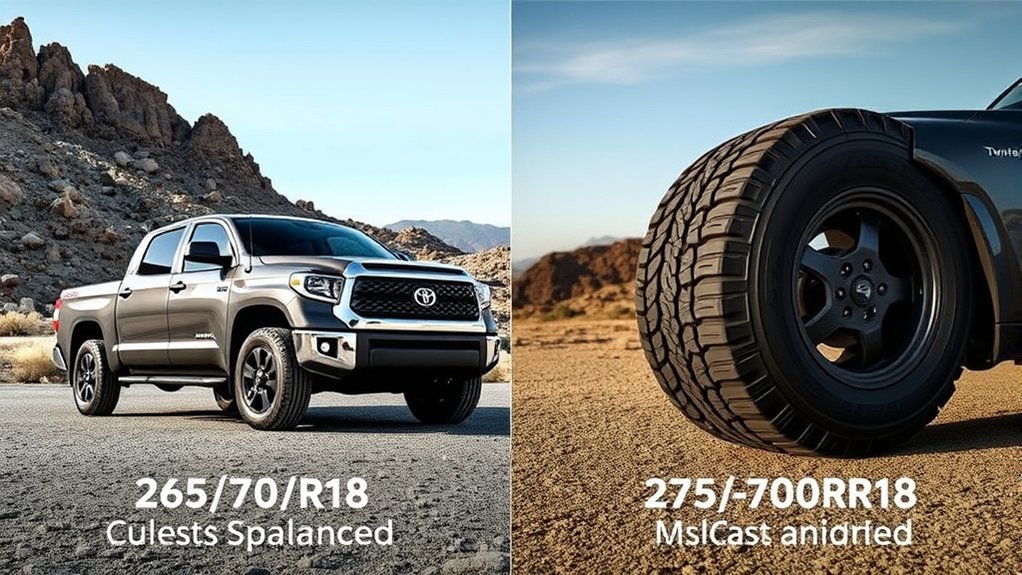
The 265/70R18 gives the Tundra a clean, factory-style look. It is not undersized, and on many trucks it looks balanced without making the tires the main visual feature.
The 275/70R18 looks slightly fuller. It adds width, a taller sidewall, and a more aggressive stance without jumping into a much larger tire category. If your goal is a subtle upgrade rather than a major build, this is why the 275/70R18 is appealing.
Still, appearance should not override fitment. A tire that looks great but rubs the liner, affects towing stability, or has the wrong load rating is not a good upgrade.
Cost: 265 vs. 275 Tire Sizes
Cost depends on tire brand, tread type, load range, seasonal rebates, and local availability. In the same tire model, the 275/70R18 may cost a little more because it is larger, but that is not guaranteed across every retailer or tire line.
When comparing prices, compare the same tire model, load rating, and speed rating in both sizes. A cheap tire with the wrong rating is not a good deal. Also consider installation, balancing, valve stems or TPMS service kits, alignment, and any possible recalibration.
| Priority | Better choice | Why |
|---|---|---|
| Lowest fitment risk | 265/70R18 | Closer to stock when this is the placard size. |
| Bolder stance | 275/70R18 | Wider and taller with a fuller wheel-well look. |
| Best factory-like speedometer behavior | Placard size | The truck is calibrated around the original tire diameter. |
| Light off-road use | 275/70R18 | Slightly wider footprint and small clearance gain. |
| Towing and payload | Correct load-rated tire | Load index, pressure, and stability matter more than size alone. |
Off-Road Capability: Comparing Performance
The 275/70R18 has a small off-road advantage because it is wider and slightly taller. The added sidewall height can help absorb bumps, and the added width can help on gravel, dirt, and loose surfaces. The difference is not dramatic, but it is real.
The 265/70R18 can still be a strong off-road tire size, especially with a quality all-terrain tread. Its narrower profile may cut through slush or loose snow better in some conditions, and it keeps weight down compared with many larger tire options.
For off-road performance, tread design matters more than the 10 mm width difference. A high-quality 265/70R18 all-terrain can outperform a basic 275/70R18 highway tire on trails. Choose the tread for your terrain first, then choose the size that fits your truck safely.
[Products Worth Considering]
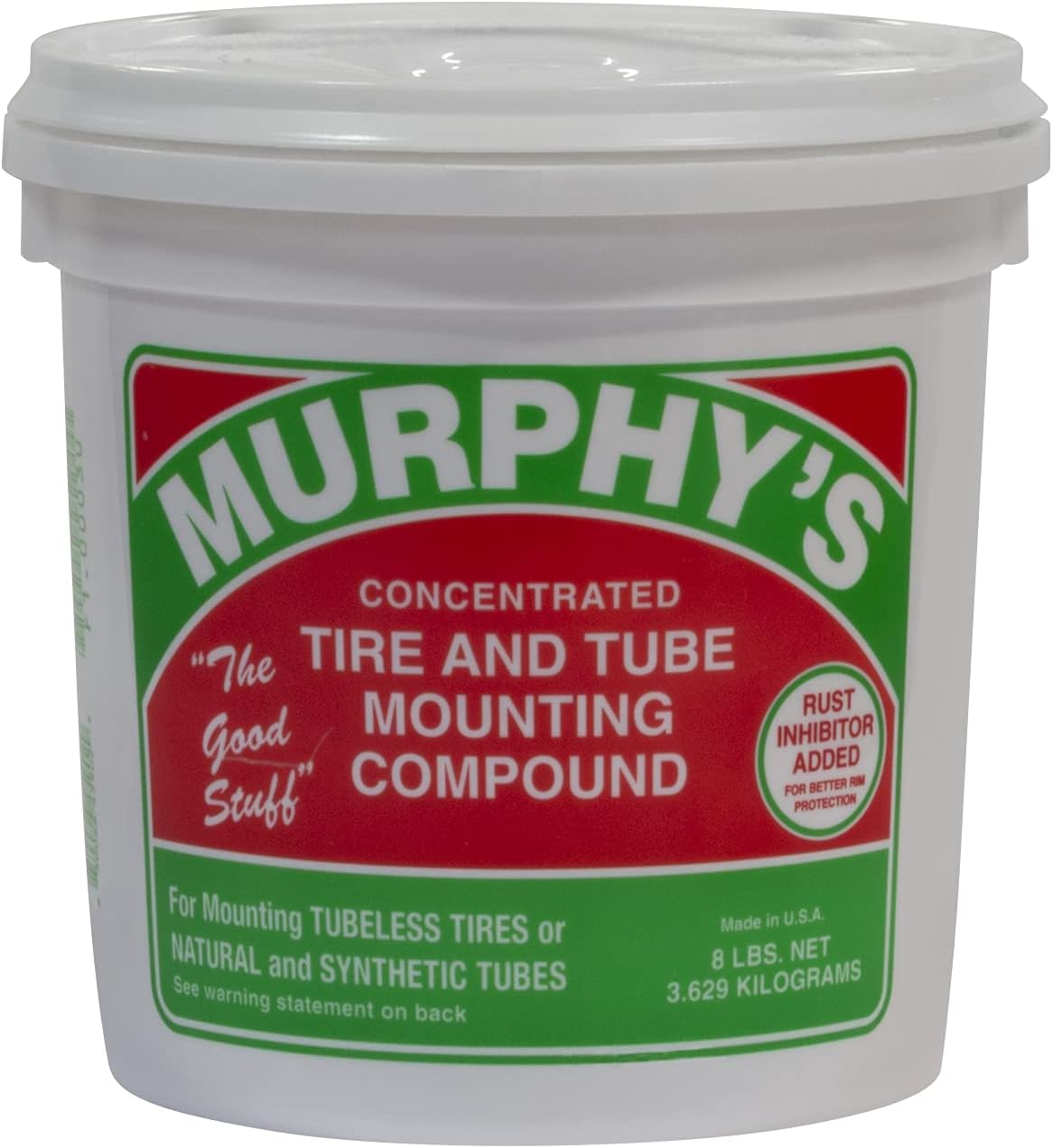
A concentrated tire and tube mounting compound designed to help simplify mounting rubber tires and tubes on passenger, semi truck, construction, and OTR applications. Its ultra-thick formula packs beads effectively and includes rust inhibitors to help protect against corrosion during use.

This ALL-TOP auto-stop tire deflator valve kit lets you air down off-road tires quickly without watching pressure, automatically stopping when your preset PSI is reached. Each valve is individually calibrated for reliable performance with an acceptable +/- 2 PSI tolerance. The adjustable deflator range covers 10 to 30 PSI and includes four valves plus valve caps and a zipper pouch for easy setup on trucks, SUVs, RVs, UTVs, and powersports.

The 22800 wheel stud installer makes replacing wheel studs quick and secure, saving time and effort during tire service. It uses a ratchet or impact wrench to pull new studs firmly into place, helping when existing studs are too long. Compatible with most automotive wheels and light-duty truck wheel studs, it’s designed for easy, tool-assisted installation.
Final Recommendations: Choosing the Right Tire for Your Needs
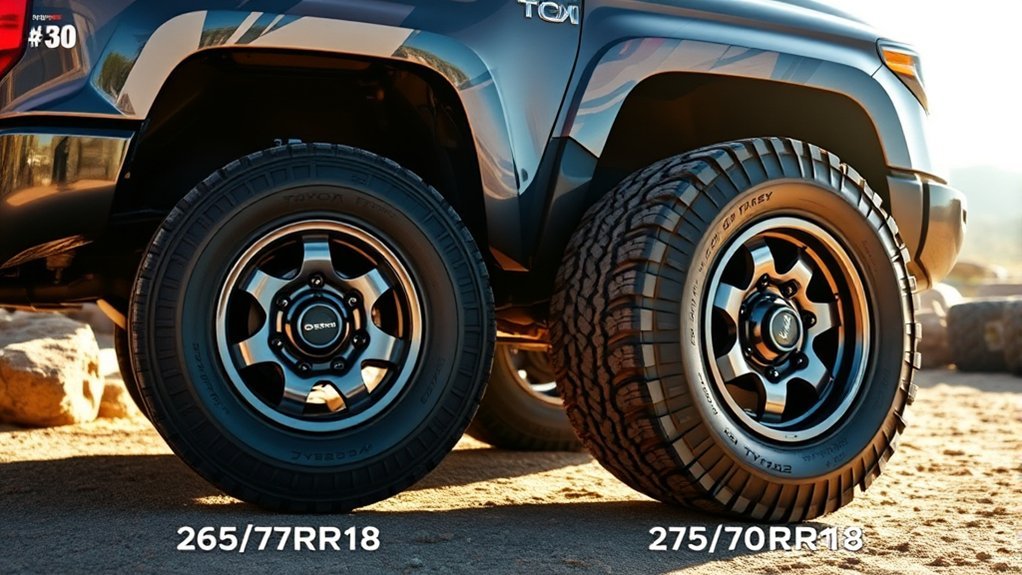
Choose 265/70R18 if you want the simplest, most factory-like setup, especially if that is the size on your door-jamb placard. It is the better choice for daily driving, predictable handling, lower fitment risk, and owners who do not want to worry about rubbing or recalibration.
Choose 275/70R18 if you want a slightly wider and taller tire with a more aggressive look and a small clearance boost. It is a reasonable mild upgrade for many Tundras, but it should be checked carefully before final installation.
The best answer is not just “265” or “275.” The best answer is the size that fits your specific Tundra, meets the correct load and speed rating, keeps safe clearance, and matches how you actually use the truck.
Frequently Asked Questions
How big of tires can I fit on a stock Tundra?
It depends on the Tundra’s year, trim, original tire size, wheel offset, suspension, and tire model. Many stock Tundras can run mild upsizes, but you should verify full-lock steering clearance, fender-liner clearance, mud flap clearance, load rating, and the spare-tire fit before buying.
Is 275/70R18 much bigger than 265/70R18?
No. The 275/70R18 is about 0.39 inches wider and about 0.55 inches taller overall. That gives roughly 0.28 inches of extra axle clearance, not a full inch.
Will 275/70R18 tires rub on a Tundra?
They may fit without rubbing on some trucks, but rubbing is possible depending on wheel offset, mud flaps, liners, tire shoulder shape, suspension setup, and alignment. Check clearance at full steering lock and under suspension compression.
How much will 275/70R18 affect my speedometer?
If your truck is calibrated for 265/70R18, switching to 275/70R18 makes actual speed about 1.7% higher than indicated. At an indicated 60 mph, actual speed is about 61 mph.
Do I need LT tires on a Tundra?
Not always. Some owners prefer LT tires for towing, hauling, and off-road durability, but LT tires are often heavier and can ride firmer. The key is choosing a tire with the correct load index, speed rating, and inflation requirements for your truck and how you use it.
Conclusion
Both 265/70R18 and 275/70R18 can make sense on a Toyota Tundra, but they serve different goals. The 265/70R18 is the cleaner, safer, more factory-like choice when it matches your placard. The 275/70R18 gives a slightly wider stance, about 0.28 inches more axle clearance, and a tougher look, but it also adds speedometer error and needs a better fitment check.
Before buying, confirm the original tire size, load index, speed rating, cold inflation pressure, wheel offset, and clearance. That quick check is what separates a tire upgrade that looks good from one that works well every day.
Sources
- Toyota Tundra specifications — factory tire and vehicle-spec reference.
- NHTSA TireWise — tire pressure, tire placard, and tire safety guidance.
- Tire Industry Association: Tire Replacement — replacement tire load index, speed rating, and placard guidance.
- U.S. Tire Manufacturers Association: Replacing Tires — replacement tire size, load index, and speed rating recommendations.
- TireSize.com Tire Size Calculator — tire diameter, sidewall, circumference, and speedometer comparison calculations.