
Honda Accord Lug Nut Torque Specs: What You Should Use
What’s in This Article
- How to Find Honda Accord Lug Nut Torque Specifications
- Why Proper Lug Nut Torque Keeps You Safe
- Before You Begin: Tools and Safety Checks
- How to Accurately Torque Your Honda Accord Lug Nuts to Specs
- Common Mistakes to Avoid When Torquing Lug Nuts
- Why You Should Retorque Your Lug Nuts After Installation?
- Essential Tools for Accurate Lug Nut Torque
- Frequently Asked Questions
- References
Your Honda Accord’s lug nuts need the right torque to keep each wheel tight against the hub. Too little torque can let a wheel loosen, while too much can stretch studs or damage threads. This guide explains how to find the correct Honda Accord lug nut torque, apply it with the right tools, and avoid common mistakes.
Quick Answer
Most Honda Accord lug nut torque specs fall near 80 lb-ft, but the exact setting depends on your model year and wheel type. Always confirm the correct torque in your owner’s manual, on Honda service information, or with a qualified technician before tightening the wheels.
Key Takeaways
- Check your owner’s manual or trusted service data before you set the torque wrench.
- Use a calibrated torque wrench for final tightening, not an impact gun.
- Tighten lug nuts in a star pattern so the wheel seats evenly on the hub.
- Recheck lug nut torque after wheel service, especially after a short break-in drive.
- Clean the wheel mounting surface and studs before you torque the lug nuts.
How to Find Honda Accord Lug Nut Torque Specifications

Start with your Honda Accord owner’s manual or official service information. Honda may list the wheel nut torque in the tire changing section, wheel service section, or specifications pages. Some tire shops and repair databases also list torque by model year, trim, and wheel type.
Avoid relying on one generic range for every Accord. Aftermarket wheels, replacement studs, or damaged threads can change the best repair approach. If the manual and wheel maker list different specs, ask a qualified mechanic before you drive.
Many Accord models use a torque value near 80 lb-ft, but you should confirm the exact figure for your car. This matters most if you changed wheels, installed spacers, or repaired a wheel hub. Tire pressure also affects handling, so check it while you inspect the wheels.
Why Proper Lug Nut Torque Keeps You Safe
Proper lug nut torque keeps the wheel clamped firmly to the hub. When you use the right torque, the studs stretch enough to hold the wheel without harming the threads. That clamping force helps the wheel stay stable during braking, cornering, and highway driving.
Incorrect torque can cause several problems:
- Loose wheels: Low torque can let the wheel shift against the hub.
- Wheel vibration: Uneven torque can cause shaking and uneven wheel seating.
- Thread damage: Too much torque can stretch studs or strip lug nuts.
- Brake issues: Uneven clamping force can contribute to rotor distortion after service.
Warning: Do not drive if you hear wheel knocking, feel strong vibration after wheel service, or see a missing lug nut.
Regular checks help you catch small issues before they become dangerous. Retorque the wheels after a tire change if your manual, wheel maker, or installer recommends it.
Before You Begin: Tools and Safety Checks
Plan for about 10 to 20 minutes to check and torque all four wheels. Park on level ground, set the parking brake, and make sure the wheels sit flat against the hubs before you begin.
You’ll need these tools and supplies:
- A calibrated torque wrench with the correct torque range
- The correct socket for your Accord’s lug nuts
- A breaker bar for loosening lug nuts if needed
- A clean cloth or brush for the hub and wheel surface
- Your owner’s manual or verified service specification
Use the torque wrench only for final tightening. A breaker bar or impact wrench can loosen nuts, but a torque wrench gives the final measured clamp load.
[Products Worth Considering]

Upgrade your wheels with MIKKUPPA closed-end lug nuts designed for reliable fit and corrosion resistance. The one-piece, cold-forged and heat-treated steel construction helps resist rust and stripping, while the integrated finish delivers a durable black appearance. Built to OEM standards with a conical 60-degree seat, these nuts provide a secure solution for compatible Ford, Honda, Jeep, and Chevrolet models.

This 1/2-inch drive breaker bar delivers powerful leverage for loosening and tightening stubborn lug nuts and automotive fasteners. The 180-degree flex head helps you reach tight spaces at the angle you need, making tire and brake jobs easier. A spring-loaded ball detent design holds 1/2-inch sockets securely while the chrome-moly head provides durable strength for everyday use.

These M14x1.5 closed-end chrome lug nuts are a one-piece replacement designed for secure fitment on compatible GM, Ford, and select Chrysler/Dodge models. Featuring a 60-degree conical seat and anti-rust chrome plating, they help resist corrosion and maintain a bright look for everyday driving. Built for long-term durability, they include OEM-style part references and are backed by 12 months of support.
How to Accurately Torque Your Honda Accord Lug Nuts to Specs
To torque your Honda Accord lug nuts correctly, start with clean parts and finish with a torque wrench. Tighten the lug nuts in a star pattern so the wheel sits evenly against the hub.
[Products Worth Considering]

The Trivd Frol 1/2" air impact wrench delivers high performance torque up to 1500 ft-lbs with a twin hammer impact mechanism for strong, balanced blows. It features an ergonomic grip, compact lightweight design, and quick-stop control with 3 forward speeds up to 8000 RPM plus a reverse speed. Built for demanding automotive repair and tire shop work, the rear exhaust helps keep debris away from the surface.

Upgrade your wheels with MIKKUPPA M12x1.5 mag seat lug nuts built for secure, corrosion-resistant performance. These closed-end chrome lug nuts are a direct replacement for select Toyota models, including Camry, Corolla, RAV4, Sienna, Avalon, Highlander, Matrix, Venza, and Prius. Triple-chromium plating and cold-forged, heat-treated steel help deliver strength for daily driving and replacement needs.

The 22800 wheel stud installer makes replacing wheel studs quick and secure, saving time and effort during tire service. It uses a ratchet or impact wrench to pull new studs firmly into place, helping when existing studs are too long. Compatible with most automotive wheels and light-duty truck wheel studs, it’s designed for easy, tool-assisted installation.
Steps for Accurate Torque
Follow these steps after you confirm the correct torque for your model year:
| Step | Description | Tool Needed |
|---|---|---|
| 1. Clean | Remove dirt from the lug nuts, studs, hub, and wheel mounting face | Clean cloth or brush |
| 2. Hand-tighten | Thread each lug nut by hand to avoid cross-threading | None |
| 3. Seat the wheel | Snug each nut lightly in a star pattern | Socket or wrench |
| 4. Set the torque wrench | Set the wrench to the verified Honda Accord lug nut torque spec | Torque wrench |
| 5. Tighten in pattern | Torque each nut in a star pattern until the wrench clicks or signals | Torque wrench |
| 6. Recheck | Verify each lug nut once more in the same pattern | Torque wrench |
Do not jerk the torque wrench. Pull it smoothly from the handle until it clicks or reaches the target reading.
Why the Star Pattern Matters
The star pattern spreads force across the wheel instead of loading one side first. This helps the wheel center against the hub and reduces uneven pressure. Use the pattern for both initial snugging and final torque.
Pro tip: After the final pass, mark the torqued wheel on a checklist so you don’t miss one.
Tools for Torque Application
Accurate torque starts with the right tool. A 1/2-inch drive click-type torque wrench works well for most wheel service tasks. A digital torque wrench can also help if you prefer a clear display and audible alert.
Keep your torque wrench in good condition. Store it at its lowest setting if the maker recommends that step, and have it calibrated on a regular schedule. Never use it as a breaker bar.
Common Mistakes to Avoid When Torquing Lug Nuts
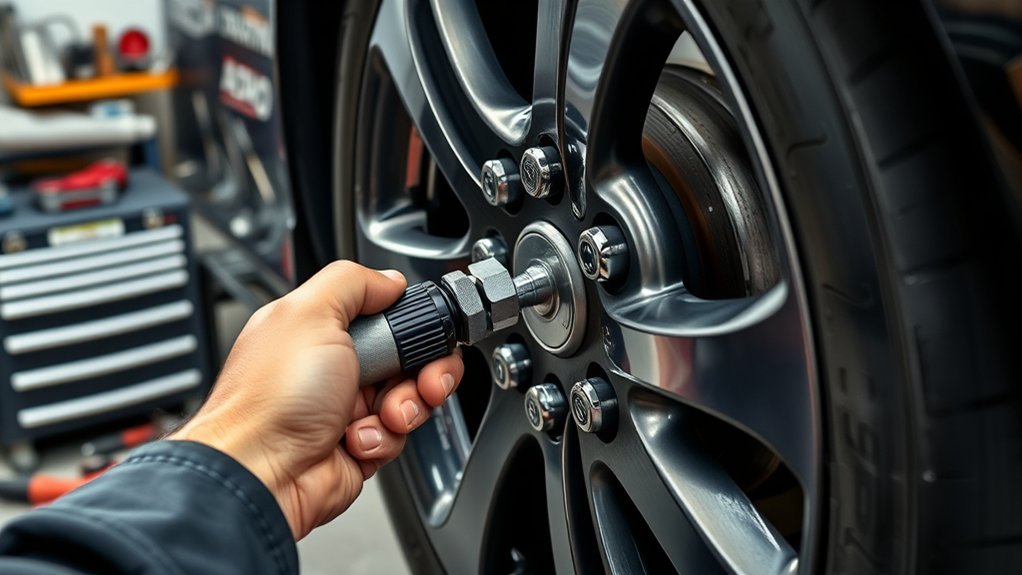
Small mistakes can weaken the clamping force that keeps your wheels secure. Avoid these errors when you torque Honda Accord lug nuts:
- Using an impact gun for final tightening: Impact tools can over-tighten lug nuts and create uneven torque.
- Skipping the manual: A generic torque number may not match your model year or wheel setup.
- Lubricating threads without guidance: Oil or anti-seize can change friction and lead to over-tightening.
- Ignoring dirty hubs: Dirt, rust, or debris can keep the wheel from sitting flat.
- Tightening in a circle: A circular pattern can pull the wheel unevenly against the hub.
If a lug nut feels rough, binds, or will not tighten smoothly by hand, stop and inspect the threads. Forcing it can damage the stud and create an unsafe repair.
Why You Should Retorque Your Lug Nuts After Installation?
Retorquing helps confirm that the wheel stayed seated after installation. New wheels, cleaned mounting faces, and fresh hardware can settle after the first short drive. That small shift can change the clamp load on the studs.
Many installers recommend a retorque after about 50 to 100 miles, especially after tire rotation, wheel replacement, or seasonal wheel changes. Follow your owner’s manual, wheel maker, or installer’s guidance. If you feel vibration before that point, stop driving and inspect the wheels sooner.
Ensures Wheel Security
A retorque check helps confirm that each lug nut still holds the wheel firmly against the hub. It also gives you a chance to spot missing nuts, cracked wheels, or damaged studs. This simple check can prevent a larger safety problem.
Prevents Loosening Issues
Loose lug nuts can create vibration, clicking noises, or visible wheel movement. Retorquing catches those issues before the wheel and studs suffer more damage. Use the same star pattern during the retorque check.
Essential Tools for Accurate Lug Nut Torque
The right tools make the job safer and more precise. You do not need a large tool collection, but you do need tools that fit your wheel hardware correctly.
- 1/2-inch drive torque wrench: Use it for the final measured tightening pass.
- Correct lug nut socket: Match the socket to the lug nut size and seat style.
- Breaker bar: Use it to loosen tight lug nuts without damaging your torque wrench.
- Cleaning brush or cloth: Clean the hub face, studs, and wheel mounting surface.
- Owner’s manual: Confirm the correct Honda Accord lug nut torque before tightening.
Do not guess the torque by feel. A lug nut can feel tight long before it reaches the correct clamp load. It can also feel fine after you have already over-tightened it.
[Products Worth Considering]

The SEESII cordless impact wrench delivers high tightening and loosening power for fast wheel bolt and industrial bolt work. Its brushless motor and variable-speed 3 forward/2 reverse modes help you control precision installs and stubborn nut removal. A dual-battery system with rapid charging and an included storage case make it ready for home, car, and jobsite use.

This 38-piece tire spoon set provides everything you need for safer tire changes with dual-size hardened steel levers for leverage and control. Rim protectors help prevent wheel scratches, while valve tools and included valve cores/caps support quick deflation and maintenance. Designed for motorcycles, dirt bikes, bicycles, ATVs, and lawn equipment, it comes in a storage bag for easy transport and organization.

This 15-inch tire spoons kit makes tire removal and installation easier with added leverage, reducing time and effort for everyday repairs. It includes tire spoons, rim protectors, a valve tool, and valve cores/caps, helping protect rims and streamline deflation and re-sealing. Built with durable hardened steel and a non-slip ergonomic grip for confident use on motorcycles, dirt bikes, ATVs, and lawn equipment.
Frequently Asked Questions
How Important Is It to Torque Lug Nuts to Spec?
Torquing lug nuts to spec helps keep the wheel tight against the hub. It also lowers the risk of loose wheels, damaged studs, and uneven wheel seating.
What Should I Torque My Honda Accord Wheels To?
Many Honda Accord models use a lug nut torque near 80 lb-ft, but you should verify the exact number for your model year. Check your owner’s manual, official service data, or a qualified repair professional before you tighten the wheels.
Can I Use an Impact Wrench to Tighten Honda Accord Lug Nuts?
You can use an impact wrench carefully to snug lug nuts, but do not use it for the final torque. Finish with a calibrated torque wrench so each lug nut reaches the correct setting.
Should I Lubricate Honda Accord Lug Nuts Before Torquing Them?
Do not lubricate lug nut threads unless Honda service information or the wheel hardware maker tells you to do so. Lubrication changes friction and can cause over-tightening at the same torque setting.
How Often Should I Check My Lug Nut Torque?
Check lug nut torque after wheel service and after any vibration or noise starts near a wheel. You should also inspect lug nuts during tire rotations, seasonal wheel swaps, and brake service.
Safety Disclaimer: This article is for informational purposes only and does not replace professional vehicle service advice. Always consult your owner’s manual, official Honda service information, or a qualified mechanic before servicing wheels or suspension parts.
Conclusion
The safest Honda Accord lug nut torque is the verified spec for your exact model year and wheel setup. Use a clean mounting surface, a star pattern, and a calibrated torque wrench every time you install a wheel. Recheck the lug nuts after service if your manual, wheel maker, or installer recommends it. Careful torque work helps your Accord feel stable, safe, and ready for the road.
References
- Honda Owner’s Manuals — American Honda Motor Co.
- Honda Service Information — American Honda Motor Co.
- Tire Safety — National Highway Traffic Safety Administration