
Toyota Tacoma Tires for Overlanding Adventures
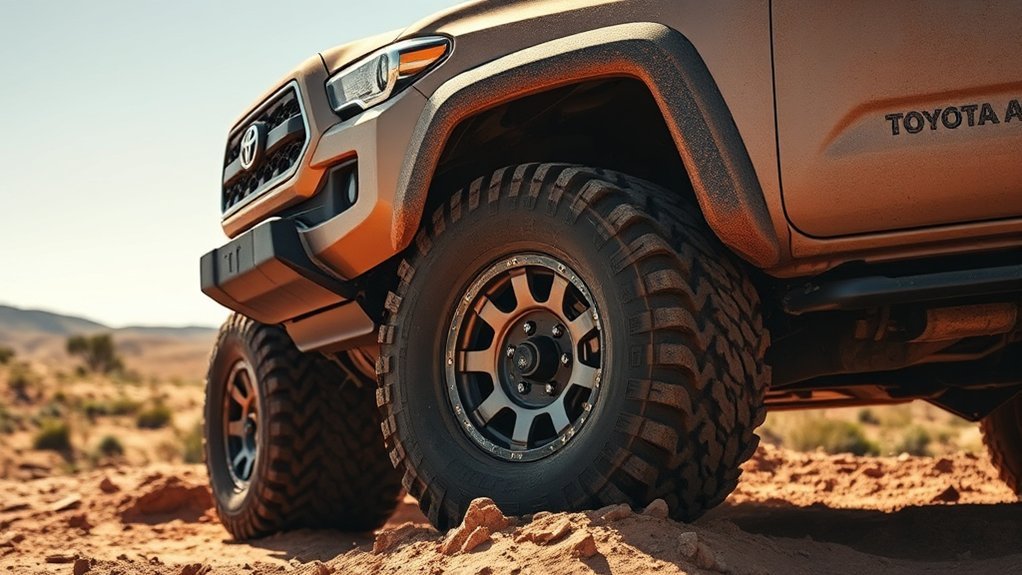
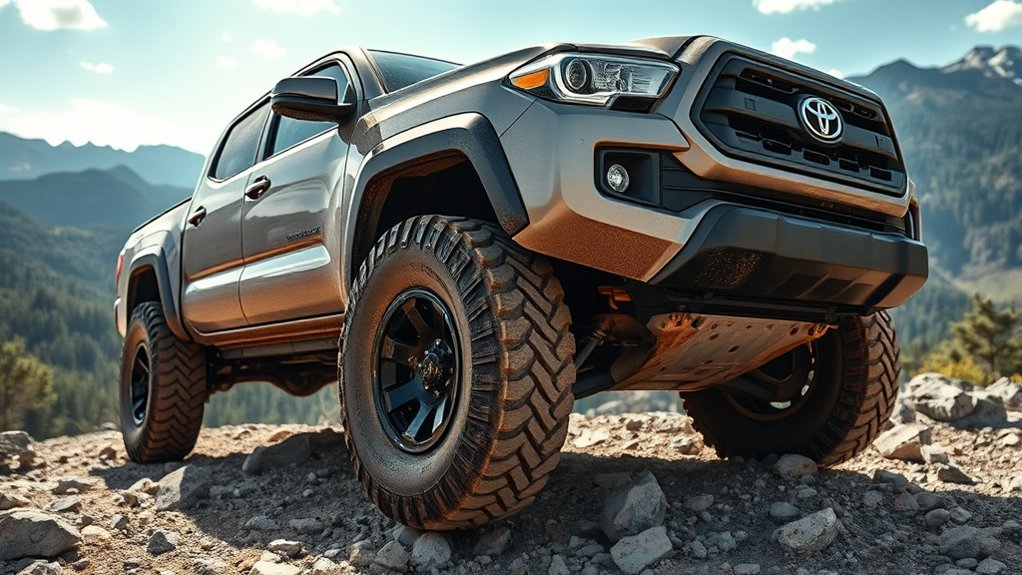
Choosing overlanding tires for a Toyota Tacoma is not just about picking the most aggressive tread. The right tire depends on your terrain mix, highway miles, payload, wheel size, suspension setup, and how much road noise or fuel-economy loss you are willing to accept. A mud-terrain tire can be excellent for deep mud and rock, but many Tacoma owners are better served by an all-terrain or rugged-terrain tire for long trips that include pavement, gravel, rain, and occasional snow.
Quick Answer
For most Toyota Tacoma overlanding builds, start with a quality all-terrain or rugged-terrain tire in a properly fitted LT size. Choose a mud-terrain only if your trips regularly include deep mud, sharp rocks, or slow technical trails. Always confirm load rating, rubbing clearance, spare fitment, and cold tire pressure before buying.
Key Takeaways
- All-terrain tires are usually the best starting point for Tacoma overlanding because they balance highway comfort, gravel traction, tread life, and wet-road manners.
- Mud-terrain tires add off-road bite, but they can be louder, heavier, less efficient, and faster-wearing on pavement.
- Load range matters, but more is not always better. A heavy-duty tire can support gear better, while also adding weight and a firmer ride.
- Fitment is critical. Bigger tires may rub without the right suspension, wheel offset, trimming, or alignment.
- Tire pressure, rotation, tread depth, and sidewall inspections are just as important as the tire model you choose.
At a Glance
| Best Starting Point | All-terrain or rugged-terrain LT tire for most Tacoma overlanding trips |
| Choose Mud-Terrain If | You regularly drive deep mud, ruts, sharp rocks, or slow technical trails |
| Check Before Buying | Load rating, size, wheel offset, suspension clearance, spare fitment, speedometer impact, and cold inflation pressure |
| Cost Approach | Compare current out-the-door pricing by exact size, including mounting, balancing, road-hazard coverage, and a full-size spare |
Top Mud-Terrain Tire Options for Your Tacoma
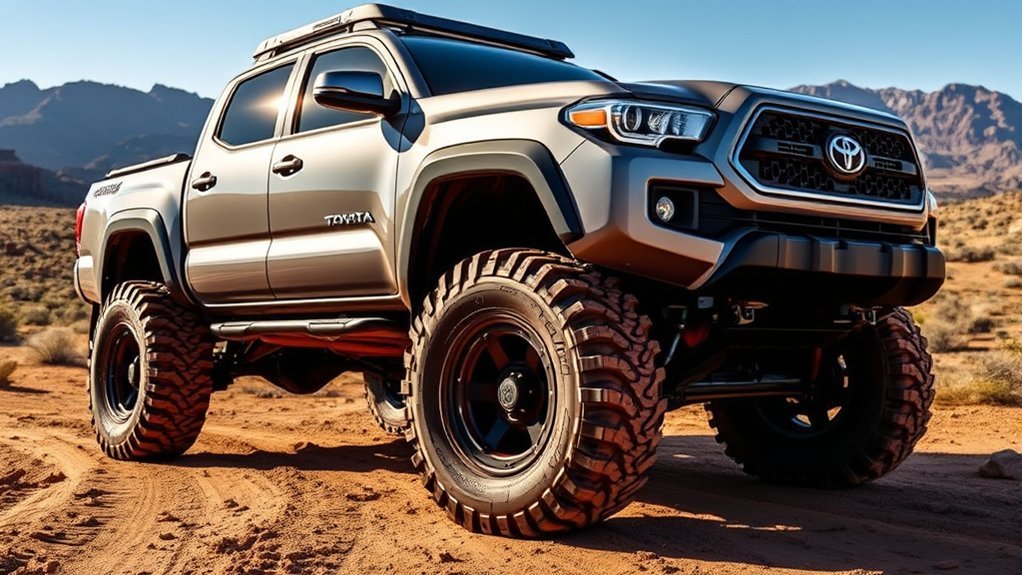
When it comes to off-roading with your Toyota Tacoma, mud-terrain tires can make a big difference in loose soil, ruts, slick rock, and deep mud. The tradeoff is that many M/T tires are heavier, louder, and less comfortable than all-terrain tires on long highway drives.
The BFGoodrich Mud-Terrain T/A KM3 is a serious off-road option for drivers who want strong rock and mud traction. BFGoodrich highlights its Krawl-TEK compound, CoreGard Max technology, and Terrain-Attack tread pattern for off-road grip and toughness. It is a better fit for frequent trail use than for a Tacoma that spends nearly all of its time commuting.
The Nitto Mud Grappler is another aggressive mud-terrain choice for drivers who prioritize deep-lug traction and a bold sidewall look. It can make sense for mud, loose dirt, and show-truck style builds, but expect more tread noise and a less refined highway feel than a milder tire.
The Yokohama GEOLANDAR M/T G003 is a useful option if you want mud-terrain capability with a more road-friendly design. Yokohama lists off-road traction, off-road durability, advanced pitch variation for a quieter highway ride, mud and stone ejectors, and GEO-SHIELD construction among its key features.
The Toyo Open Country M/T is built around durability, off-road traction, and an aggressive tread pattern. Toyo describes open, scalloped shoulder blocks for muddy, sandy, or snowy off-road conditions, over-the-shoulder tread for deep mud and snow, and deep siping to help maintain grip on wet surfaces.
The Milestar Patagonia M/T can be worth considering for budget-minded Tacoma owners who want an aggressive tread pattern without premium-brand pricing. Before choosing any lower-cost tire, compare the exact size, load range, weight, reviews, warranty terms, and availability of a matching spare.
Note: Tire prices change constantly by size, retailer, rebate, shipping, and installation cost. Instead of relying on a fixed per-tire price, compare the current out-the-door cost for five tires if you want a full-size matching spare.
[Products Worth Considering]

This VEVOR tire bead breaker uses a slide-hammer impact and wedge tip to separate tire beads from rims quickly and efficiently without damaging hub surfaces. The long handle and sturdy steel construction help reduce user strain while providing reliable, portable tire changing for cars, trucks, and more. Ideal for home mechanics and repair shops handling multiple vehicle tire sizes.

This portable cordless tire inflator delivers up to 160 PSI with fast 17 L/min airflow to help you quickly top up tires and get back on the road. It features dual power mode, running on a 21V rechargeable battery or a 12V DC adapter for convenient roadside use. An automatic shut-off with digital pressure gauge helps prevent overinflation, and a built-in LED light improves visibility in low-light conditions.

Cristal Products Untouchable Tire Shine Spray delivers a deep, wet-look gloss that enhances your vehicle’s tires. It’s quick-drying and spreads smoothly for consistent, streak-free coverage, while forming a protective coating against UV rays, road grime, and weather. Suitable for all tire types, it helps restore dull, faded tires to a showroom-quality finish.
All-Terrain vs. Rugged-Terrain vs. Mud-Terrain Tires
For overlanding, the best tire is often the one that matches your real driving mix, not the most aggressive option on the shelf. A Tacoma that spends 70% of its time on pavement and gravel needs a different tire than a Tacoma used for weekend mud holes and rock gardens.
| Tire Type | Best For | Main Tradeoff |
| All-Terrain (A/T) | Daily driving, gravel roads, forest roads, light snow, long overland routes | Less bite in deep mud than an M/T |
| Rugged-Terrain (R/T) | Drivers who want a tougher look and more off-road grip than A/T without going full M/T | Usually heavier and louder than mild A/T tires |
| Mud-Terrain (M/T) | Deep mud, rocks, ruts, slow trail work, aggressive off-road builds | More noise, weight, rolling resistance, and possible wet-road compromise |
If you travel through snow or icy mountain passes, also look for a Three-Peak Mountain Snowflake rating. For example, the BFGoodrich All-Terrain T/A KO2 is listed by BFGoodrich as 3PMSF rated and severe-snow rated. That does not make it a dedicated winter tire, but it is an important feature for mixed overland travel in cold regions.
Essential Features for Choosing Overlanding Tires
When choosing overlanding tires for your Tacoma, focus on tread design, load capacity, casing strength, size, weight, weather performance, and road manners. The best tire should support your truck and gear without making the Tacoma worse to drive every day.
Tread Design Considerations
Tread design controls how a tire clears mud, grips rock, handles gravel, and behaves on pavement. Larger tread blocks and wider voids help in mud and loose surfaces because they allow the tire to dig and self-clean. Tighter all-terrain patterns usually feel more stable and quieter on the highway.
For rocky routes, look beyond tread depth. Sidewall strength, shoulder lugs, and puncture resistance matter because rocks often damage the sidewall before the center tread wears out. Softer rubber compounds can grip well, but they may wear faster under heavy highway use.
Load Capacity Requirements
Understanding load capacity is vital for overlanding. A Tacoma loaded with a camper shell, drawer system, fridge, water, recovery gear, tools, passengers, and fuel can become much heavier than a stock daily driver. That extra weight affects braking, handling, tire heat, and tread wear.
Load Range E tires are common on overland builds because they usually offer stronger construction and higher load capacity than lighter passenger-rated tires. The downside is extra weight and a firmer ride. Do not choose Load Range E just because it sounds tougher; choose it because your actual loaded setup needs it.
Warning: Never use tire size or sidewall pressure alone to decide what is safe. Check the Tacoma’s Tire and Loading Information label, owner’s manual, wheel rating, and loaded vehicle weight. A stronger tire does not increase your truck’s GVWR.
Weather Performance Factors
Weather performance matters because overlanding rarely happens on one perfect surface. Mud-terrain tires may claw through ruts, but they are not always the best choice for wet pavement, packed snow, or icy roads. If your trips include mountain passes, winter storms, or cold-weather travel, prioritize a tire with better siping and a severe-snow rating.
For rainy highways, look for tread features that evacuate water and maintain contact with the road. For winter travel, a 3PMSF-rated all-terrain can be a safer and more versatile choice than a dedicated mud-terrain tire that lacks snow-focused siping.
Tacoma Fitment and Sizing Checklist
Tire size is where many Tacoma owners make expensive mistakes. A tire that fits one generation, trim, wheel offset, or suspension setup may rub badly on another. Even tires with the same listed size can vary by actual diameter, section width, tread width, and shoulder shape.
- Confirm your wheel size and width. The tire must be approved for your wheel width.
- Check offset and backspacing. Wheel position can create rubbing at the cab mount, upper control arm, fender liner, or bumper.
- Account for suspension changes. A lift may improve clearance, but alignment, caster, and compression travel still matter.
- Plan for the spare. A full-size spare is ideal for overlanding, but larger tires may not fit in the factory spare location without adjustment.
- Consider tire weight. Heavier tires can reduce acceleration, braking feel, fuel economy, and ride comfort.
- Ask about speedometer impact. Taller tires can change speedometer and odometer accuracy.
Pro Tip: Before buying five tires, ask your tire shop to test-fit one front tire and turn lock-to-lock on level ground. Then check clearance again after alignment and during suspension compression.
User Recommendations for Tacoma Tire Choices
What makes a tire truly exceptional for overlanding in your Toyota Tacoma? Balance. A great overlanding tire should be tough enough for remote trails but predictable enough for the long pavement miles between them.
Drivers who want a comfortable daily tire with real trail ability often lean toward all-terrain options such as the BFGoodrich All-Terrain T/A KO2 or similar 3PMSF-rated A/T tires. Drivers who want more bite without going to a full mud-terrain may prefer a rugged-terrain hybrid. Drivers who spend a lot of time in mud, ruts, and rock gardens may be happier with mud-terrain options such as the BFGoodrich KM3, Yokohama GEOLANDAR M/T G003, Toyo Open Country M/T, or similar tires.
Budget-focused adventurers can still find capable options, but the cheapest tire is not always the lowest-cost tire over time. Compare tread life, road noise, balancing reports, sidewall strength, warranty terms, and whether you can easily replace a damaged tire while traveling.
How to Evaluate Performance in Different Terrains?
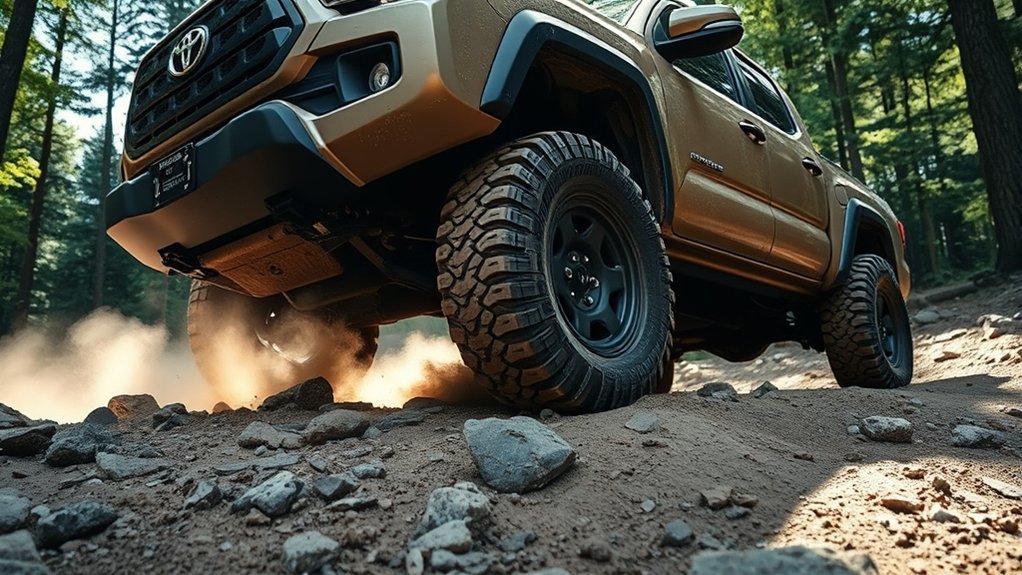
When evaluating tire performance across different terrains, think about your most common surface first and your worst-case surface second. A tire that is perfect for one weekend mud trail may be frustrating on a 2,000-mile road trip.
[Products Worth Considering]

This compact capsule-style tire repair kit helps you quickly fix punctures and plug flats with minimal effort. The rugged stainless steel shell protects the contents for reliable roadside use, while the simple plug assembly makes repairs fast and tool-free. Suitable for motorcycles, cars, ATVs, UTVs, and even mountain bikes.
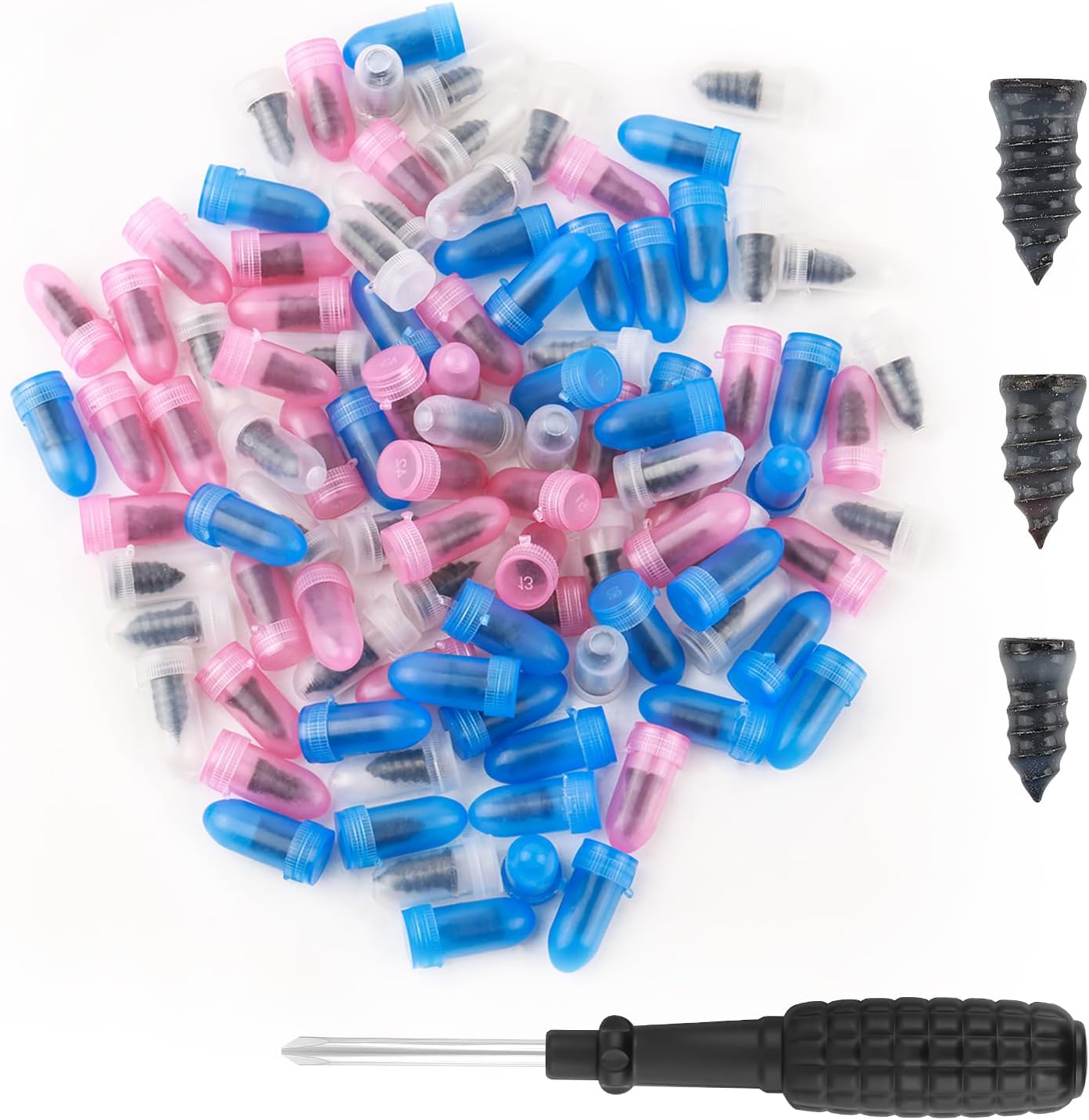
This 100-piece tire repair screw plug kit provides a fast, self-service solution for punctures on the road. Choose the correct plug size, insert it into the break, and screw it in to help seal the puncture and temporarily restore tire pressure. Thickened threads and rubber-wrapped plugs improve bite and sealing while remaining compact and easy to carry.
Terrain-Specific Tire Features
Highway and gravel: Choose an all-terrain or mild rugged-terrain tire with stable tread blocks, good wet traction, and manageable road noise. This is the best choice for most long-distance overlanding.
Mud and ruts: Choose wider voids, deeper tread, and strong self-cleaning ability. Mud-terrain tires shine here, but they usually bring more road noise and faster wear.
Rocks: Prioritize sidewall protection, shoulder lugs, puncture resistance, and controlled aired-down performance. Rock traction is not only about tread depth.
Snow and cold weather: Look for the 3PMSF symbol and enough siping. A tire that works well in mud is not automatically good on packed snow or ice.
Wet pavement: Do not ignore braking and hydroplaning resistance. Overlanding tires still need to get you safely through rain on the highway.
Off-Road Traction Considerations
Off-road traction depends on tread design, compound, air pressure, vehicle weight, suspension, and driver technique. A tire with big lugs can still perform poorly if it is overinflated for the trail or overloaded beyond its intended use.
Airing down can improve ride quality and traction on dirt, sand, and rocks by increasing the tire’s contact patch and allowing it to conform to obstacles. However, driving too fast or too far at low pressure can overheat and damage the tire.
Warning: Reinflate to safe road pressure before highway driving. Low trail pressure can cause heat buildup, poor handling, bead debeading, and tire failure at speed.
Finding the Right Balance Between Price and Tire Lifespan
Choosing the right tires for your Toyota Tacoma overland adventure means looking beyond the sticker price. The real cost includes the tire itself, installation, balancing, alignment, road-hazard coverage, rotation frequency, fuel economy, tread life, and whether you buy a matching spare.
Mud-terrain tires often cost more over time because they can be heavier, noisier, and faster-wearing on pavement. All-terrain tires often last longer and ride better, but they may not clear mud as well. Rugged-terrain tires sit between the two for drivers who want tougher looks and more trail grip without the full M/T penalty.
For the best value, compare tires in the exact size and load range you plan to run. A cheaper tire that wears quickly, balances poorly, or is hard to replace during travel may cost more than a premium tire over the life of the set.
The best overlanding tire is not the most aggressive tire. It is the tire that matches your loaded Tacoma, your real terrain, and the miles you drive between trails.
How to Maintain Your Overlanding Tires
Maintaining your overlanding tires is essential for safety and performance. Start by checking tire pressure before each trip and at least monthly. Use the cold pressure listed on your Tacoma’s Tire and Loading Information label or owner’s manual, not the maximum pressure printed on the tire sidewall. NHTSA explains that proper pressure affects safety, tire durability, and fuel consumption.
- Check pressure cold. Measure before driving or after the tires have cooled for several hours.
- Inspect tread depth. NHTSA says tires are not safe and should be replaced when tread reaches 2/32 inch. For overlanding, replace earlier if traction is poor, tread is chunked, or the tire is damaged.
- Rotate regularly. Follow your owner’s manual. If the vehicle manufacturer recommends it, NHTSA notes that rotation is commonly done every 5,000 to 8,000 miles or sooner if uneven wear appears.
- Inspect sidewalls. Look for cuts, cracks, bulges, punctures, exposed cords, or rock damage after trail use.
- Clean after mud. Mud packed into wheels can cause vibration, hide damage, and speed corrosion.
- Balance and align. If the truck vibrates, pulls, cups tread, or wears unevenly, have the tires and alignment checked.
Carry a quality tire pressure gauge, compressor, plug kit, valve cores, and the tools needed to access your spare. For remote travel, a full-size matching spare is strongly preferred over a temporary or mismatched spare.
Frequently Asked Questions
Are Tacomas good for overlanding?
Yes, Toyota Tacomas are popular overlanding trucks because they are compact, capable, widely supported by aftermarket parts, and proven on rough roads. Their biggest limitation is payload. Heavy bumpers, rooftop tents, campers, drawers, water, tools, and passengers can add up quickly, so weigh the truck loaded and choose tires that match the real setup.
What tires does Expedition Overland use?
Expedition-style media builds can change tires by vehicle, route, sponsor, and season. Instead of copying one build, use their trucks as inspiration and choose a tire for your own terrain, payload, weather, and highway mileage. For many Tacoma owners, a premium all-terrain or rugged-terrain tire is more practical than a full mud-terrain.
Do I need Load Range E tires on a Tacoma?
Not always. Load Range E can make sense for a heavily loaded Tacoma, but it can also add weight and make the ride firmer. Check your loaded vehicle weight, wheel rating, tire load rating, and Toyota’s tire placard guidance before deciding.
Are mud-terrain tires good for daily driving?
They can be used daily, but they are usually louder, heavier, and less efficient than all-terrain tires. If your Tacoma sees mostly pavement, gravel roads, and light trails, an all-terrain tire will usually be more comfortable and cost-effective.
What tire size is best for Tacoma overlanding?
There is no single best size. The right size depends on Tacoma generation, trim, wheel diameter, wheel offset, suspension, alignment, and how much trimming you accept. Choose the smallest tire that gives you the clearance and traction you need, because bigger tires add weight and can create rubbing.
Should I buy five tires instead of four?
For serious overlanding, yes. A full-size matching spare gives you a safer backup if you cut a tire far from a shop. It also lets you include the spare in a five-tire rotation if your tire shop and vehicle setup allow it.
Conclusion
Selecting the right tires for your Toyota Tacoma is one of the most important overlanding decisions you will make. Mud-terrain tires are excellent for deep mud, sharp rocks, and aggressive trail use, but they are not automatically the best choice for every overland build. For many Tacoma owners, a strong all-terrain or rugged-terrain tire provides the best mix of traction, comfort, tread life, weather performance, and value.
Before buying, confirm fitment, load rating, wheel compatibility, spare storage, and current installed price. Then maintain your tires with regular pressure checks, rotations, inspections, and alignment. Choose wisely and your Tacoma will be safer, more capable, and more enjoyable on every mile between home and the trail.
Sources
- BFGoodrich Mud-Terrain T/A KM3 — manufacturer-backed KM3 traction, construction, and warranty claims
- BFGoodrich All-Terrain T/A KO2 — 3PMSF, severe-snow rating, and warranty information
- Yokohama GEOLANDAR M/T G003 — off-road traction, durability, quiet-ride, and construction features
- Toyo Open Country M/T — tread design, wet grip, mud/snow traction, and load/spec reference information
- NHTSA TireWise — tire pressure, tread depth, rotation, tire size, TPMS, and maintenance safety guidance

Related Articles
How Tire Weight Affects Toyota Tacoma Performance
How does tire weight influence your Toyota Tacoma's performance and efficiency? Discover the surprising effects that could change your driving experience.
Read More
Tire Noise Levels by Tire Type on a Toyota Tacoma
A comprehensive look at how tire types affect noise levels in your Toyota Tacoma reveals surprising insights that could enhance your driving experience.
Read More
How To Choose Tires for a Dual Use Toyota Tacoma
Unlock the secrets to selecting the perfect tires for your dual-use Toyota Tacoma, ensuring optimal performance and comfort on every adventure. Discover more inside!
Read More