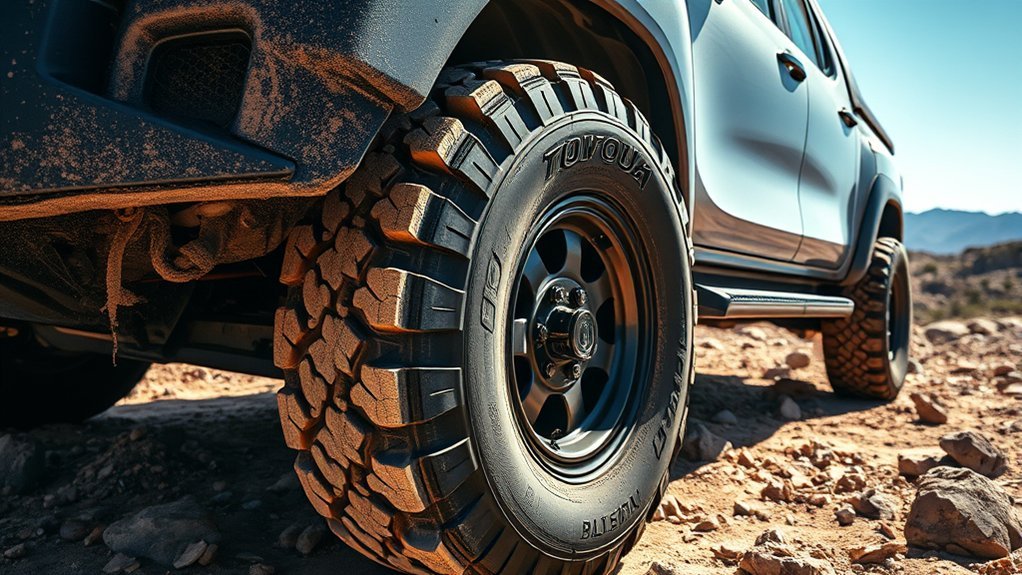
Choosing tires for a Toyota Hilux overlanding build is about matching the tire to your real route, not simply buying the most aggressive tread you can find. A Hilux that spends 70% of its time on highways and gravel needs a different tire from one that regularly crawls through clay mud, sharp rock, or winter mountain passes.
Quick Answer
For most Toyota Hilux overlanding trips, a strong light-truck all-terrain tire is the best starting point because it balances road comfort, gravel durability, and trail traction. Choose mud-terrain tires only if deep mud and rutted tracks are common, and always confirm size, load rating, and pressure against your Hilux manual or tire placard.
Key Takeaways
- All-terrain tires are the best default for mixed road, gravel, sand, and moderate trails.
- Mud-terrain tires give stronger mud bite, but usually add noise, weight, and road-performance trade-offs.
- Do not choose tires by tread alone; check load index, sidewall strength, rim fit, spare fit, and speed rating.
- Use the Toyota tire placard or owner’s manual for road pressure, then air down only for slow off-road driving and re-inflate before pavement.
- For snow travel, look for the 3PMSF mark, but remember it is a severe-snow rating, not a guarantee on ice.
At a Glance
| Time Required | 30–60 minutes to compare sizes, load ratings, terrain needs, and current prices |
| Difficulty | Moderate; easy if staying with the factory size, more complex if upsizing |
| Tools Needed | Owner’s manual, tire placard, tire-pressure gauge, tread-depth gauge, calculator, and advice from a tire fitter if upsizing |
| Cost | Varies by country, size, load rating, brand, and whether you buy four tires or a matching full-size spare |
Identify Your Overlanding Terrain and Conditions
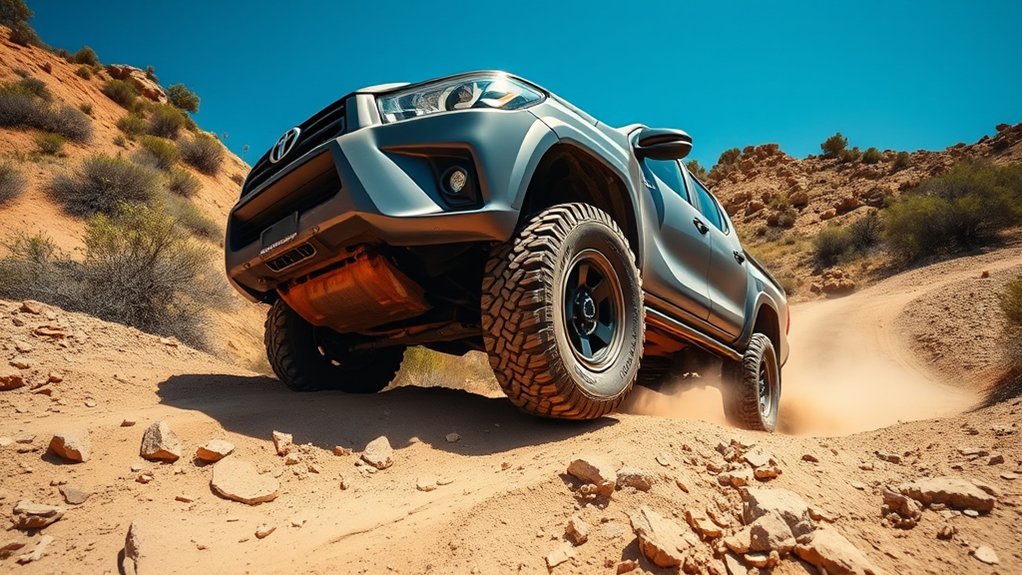
Before choosing tires for your Toyota Hilux, write down where the vehicle will actually spend its time. A long-distance touring Hilux may cover thousands of paved miles before reaching a campsite. A farm-track or expedition Hilux may spend more time on mud, rock, corrugations, and loose climbs. The best tire is the one that handles your most common surface while still surviving your worst expected surface.
| Main Terrain | Best Tire Focus | What to Watch |
|---|---|---|
| Highway, gravel, mild trails | All-terrain tire with good wet-road manners | Noise, braking, tread life, and fuel use matter because road miles add up fast. |
| Sand and desert tracks | All-terrain or hybrid tire with a strong sidewall and manageable weight | A very aggressive mud tread can dig instead of float if pressure and driving style are wrong. |
| Deep mud and clay | Mud-terrain tire with open voids and self-cleaning tread | Expect more road noise, extra weight, and weaker comfort on long highway drives. |
| Rocks and rutted tracks | Reinforced sidewalls, puncture resistance, and controlled airing down | Sidewall cuts and rim strikes are bigger risks than tread wear. |
| Snow and cold-weather travel | 3PMSF-rated all-terrain or dedicated winter tire | The 3PMSF mark identifies severe-snow performance; ice still needs careful driving and may require winter-specific tires. |
If you are unsure, choose the tire that suits the surface you drive most often, not the surface you see in the most dramatic overlanding videos. For many Hilux owners, that means a durable all-terrain tire rather than a full mud-terrain tire.
All-Terrain vs. Mud-Terrain Tires for Overlanding
All-terrain and mud-terrain tires can both work on a Toyota Hilux, but they solve different problems. The right choice depends on how much highway driving you do, how heavy your setup is, and how often you face deep mud, wet grass, clay, ruts, or sharp rock.
| Tire Type | Best For | Trade-Offs |
|---|---|---|
| All-terrain tires | Mixed pavement, gravel, dirt, sand, touring, towing, and moderate trails | Less bite in deep mud than a mud-terrain tire, but usually better road comfort and easier long-distance use. |
| Mud-terrain tires | Deep mud, ruts, clay, aggressive trail use, and slow technical off-roading | More road noise, more weight, faster wear in some road use, and weaker wet-road manners depending on the model. |
| Rugged-terrain or hybrid tires | Drivers who want more off-road bite than a mild all-terrain without going fully mud-terrain | Can be a good compromise, but compare actual weight, noise rating, load capacity, and wet braking before buying. |
Current all-terrain examples worth comparing include the BFGoodrich All-Terrain T/A KO3, which BFGoodrich positions for trucks, SUVs, and overland vehicles, and the Goodyear Wrangler DuraTrac, which Goodyear describes as a rugged tire for off-road terrain including snow. Treat these as examples to compare, not automatic winners for every Hilux.
Note: If your Hilux is a daily driver, an aggressive mud-terrain tire can become tiring on long paved trips. Noise, vibration, braking feel, and fuel economy matter just as much as trail grip when you are far from home.
[Products Worth Considering]

Upgrade your Toyota’s wheels with durable aluminum alloy valve stem caps that help protect valve cores from corrosion and direct exposure to road grime, clay, water, and snow. Rubber rings improve sealing to help prevent air leakage and maintain stable tire pressure for safer driving. These caps are easy to install or remove without tools and add a unique, stylish look to your car.

These universal tire valve stem caps help protect valve cores from dust, debris, and moisture while helping maintain stable tire pressure. The corrosion-resistant metal construction and sealed design provide reliable protection in road grime, mud, and winter conditions. Twist-on installation makes them quick to fit on cars, SUVs, trucks, and motorcycles.
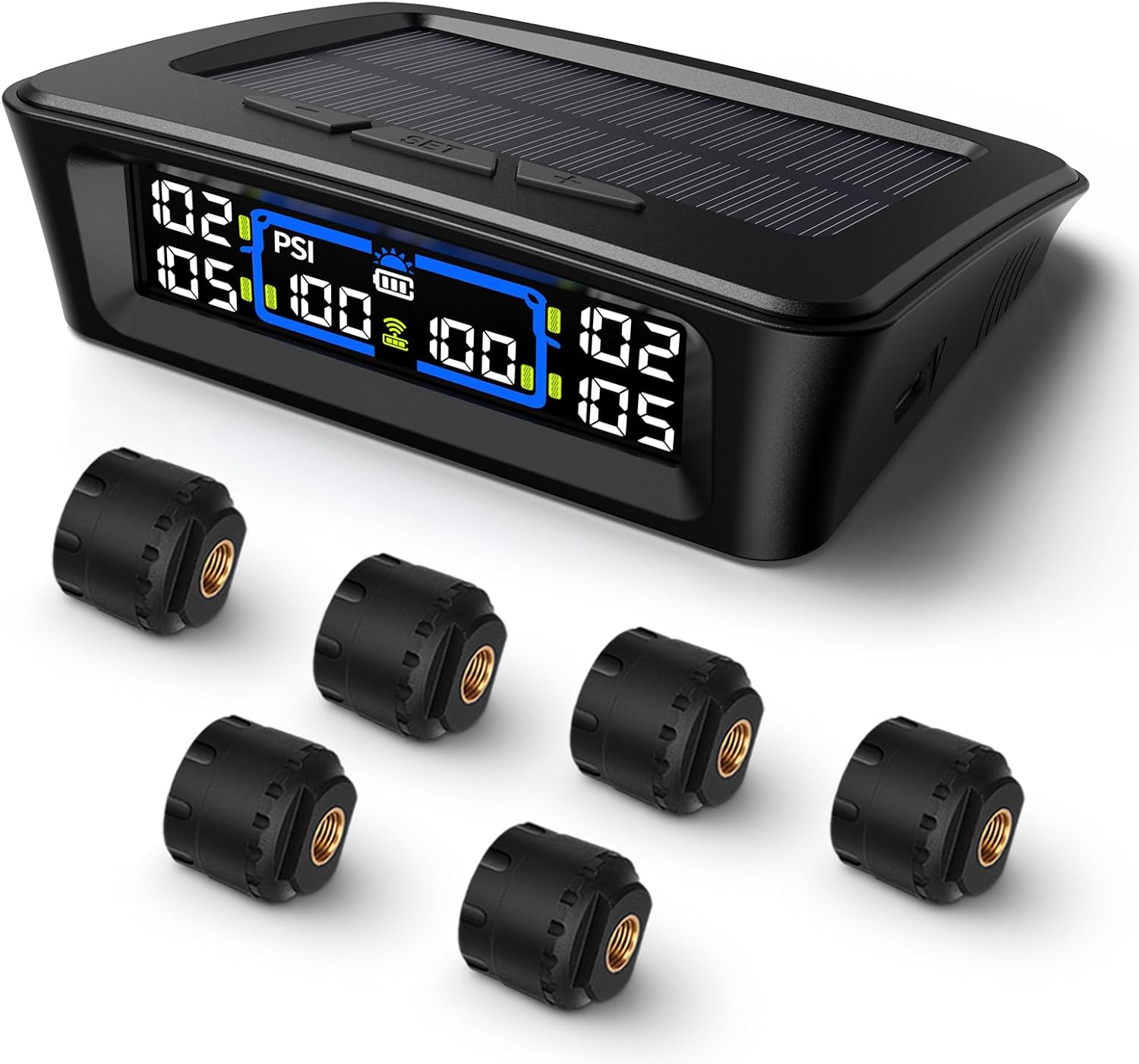
The Tymate TM12 RV TPMS delivers real-time tire pressure and temperature monitoring with a stable 433Hz display for safer long-distance driving. It supports simultaneous monitoring across vehicle and trailer zones, includes six alarm modes for pressure, temperature, leakage, battery, and signal loss, and features easy DIY installation with auto calibration. Power is supplied via USB-C charging or solar recharging, with a wide 0–144 PSI range and up to 50 ft signal coverage for RVs and towable trailers.
Essential Features for Overlanding Tires
Once you know the terrain, compare tires by construction and ratings. Tread pattern matters, but it is only one part of a safe overlanding setup.
| Feature | Why It Matters | What to Look For |
|---|---|---|
| Tread Pattern | Controls grip on mud, gravel, wet roads, and loose climbs | Balanced all-terrain blocks for mixed use; wider voids for mud-heavy trips. |
| Sidewall Strength | Helps resist cuts, bruising, and punctures on rocks and ruts | Reinforced sidewall construction, especially for remote rocky routes. |
| Load Index and Load Range | Supports passengers, canopy, drawers, water, recovery gear, roof tent, and towing load | A rating that meets or exceeds the original tire’s load capacity and suits your loaded axle weights. |
| LT Construction | Light-truck tires are often better suited to heavy 4×4 touring than passenger-car construction | Consider LT-metric tires for heavy touring builds, but expect a firmer ride. |
| 3PMSF Rating | Shows the tire meets severe-snow service criteria | Useful for snow-prone routes; not a substitute for dedicated ice tires where needed. |
| Wet-Road and Noise Performance | Overlanding still includes long paved sections | Check independent reviews, owner feedback, and manufacturer specs before choosing the most aggressive tread. |
Warning: Do not fit a replacement tire with a lower load-carrying capacity than the original tire specified for your Hilux. The U.S. Tire Manufacturers Association tire-care guide warns against choosing a smaller size or lower load capacity than the original-equipment tire at the vehicle placard pressure.
Load Range E can be useful on a heavily loaded Hilux, especially with a canopy, drawer system, long-range tank, rooftop tent, or towing setup. But it is not automatically the best choice for every driver. Focus on the actual load index, your vehicle’s loaded weight, the axle loads, and the type of driving you do.
[Products Worth Considering]

Measure tire tread depth quickly and accurately with this LUMITECO dial gauge that reads in 1/32" increments up to 14/32". The color-coded green/yellow/red zones make it easy to judge tire wear and know when replacement is needed. A rugged, compact design with a protective pouch helps keep the gauge ready for use on cars, trucks, motorcycles, and more.

Keep your tires properly inflated with this analog VONDIOR tire pressure gauge, designed for fast, easy readings without batteries. The swiveling, two-axis hose and large glow dial help you measure at any tire angle with instant visibility. Built with a protective rubber shield, it supports durable, low-maintenance use for cars and trucks.
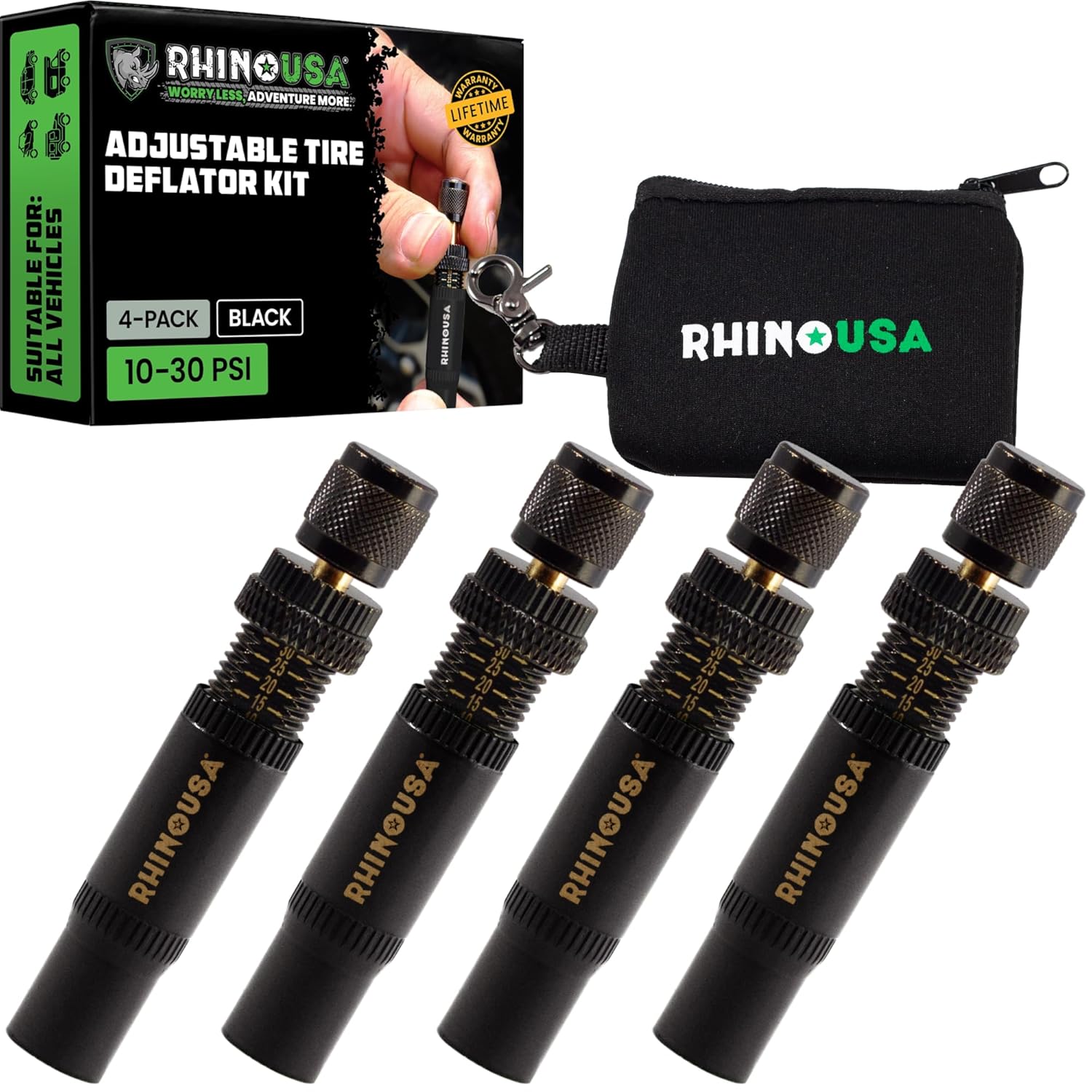
Use the Rhino USA adjustable tire deflators to air down all four tires at once by screwing one deflator onto each valve stem, letting you step away while the tires reach your preset pressure. Each deflator independently adjusts across a 10–30 PSI range with laser-etched indicators for quick setup and verification, making it ideal for beach, sand, and rocky off-road trails.
Choosing the Right Tire Size
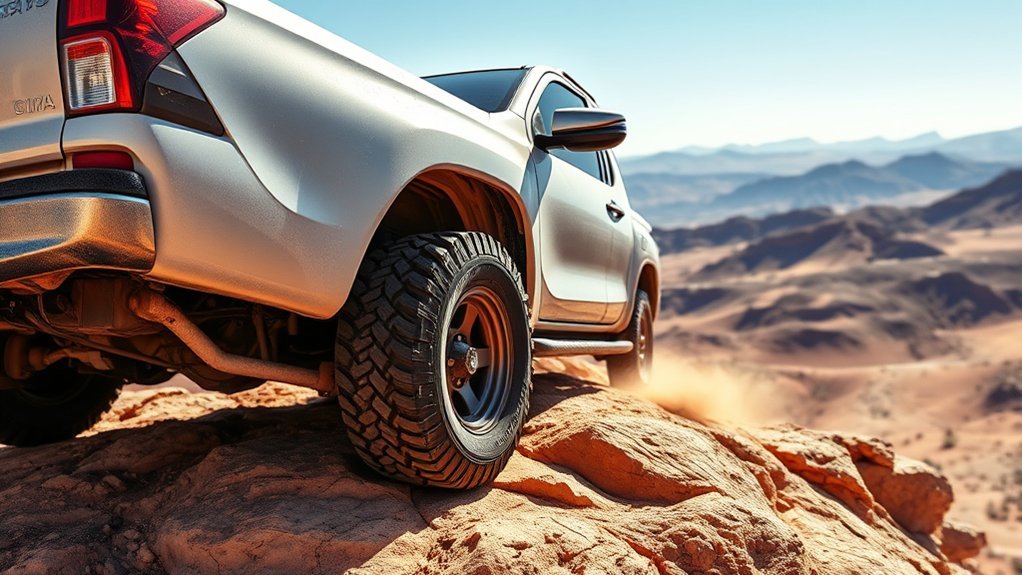
Selecting the right tire size for your Toyota Hilux is crucial for braking, steering, gearing, speedometer accuracy, clearance, and safety. Start with the factory tire size on the door placard or in the owner’s manual, then decide whether you truly need to upsize.
- Check the placard and manual first. Toyota provides owner-manual access through its official owner resources, and road pressure should be based on the vehicle manufacturer’s recommendation, not the maximum pressure molded on the tire sidewall. You can start with Toyota UK owner’s manuals and the NHTSA TireWise tire-safety guide.
- Decide whether factory size is enough. Staying close to the original size usually keeps handling, gearing, braking, spare fit, and speedometer accuracy simpler.
- Confirm the load index and speed rating. The tire must carry the vehicle safely when loaded for travel. Do not choose only by diameter or tread design.
- Check rim width and offset. A tire that fits one Hilux wheel may not fit another wheel safely. Wheel width, offset, and suspension setup all matter.
- Test clearance before a trip. Turn the steering fully left and right, check under compression, and inspect for rubbing on liners, mud flaps, suspension, body mounts, and brake lines.
- Think about the spare. A matching full-size spare is strongly recommended for remote overlanding. Make sure it fits the carrier or tray setup.
- Confirm legality and insurance rules. Tire size, tread pattern, poke, lift, and speedometer error rules vary by country and region.
Pro Tip: If your Hilux is used for long-distance touring, a modest size increase with the correct load rating is often more useful than the biggest tire that can be forced under the guards. Reliability beats show size on remote tracks.
How to Set Tire Pressure by Terrain
Tire pressure has a huge effect on comfort, traction, puncture risk, tire heat, and fuel economy. For normal road driving, use the cold pressure listed by Toyota on the tire placard or in the owner’s manual. Off-road pressure changes are temporary trail adjustments, not highway settings.
| Use Case | Pressure Approach | Important Caution |
|---|---|---|
| Highway and daily driving | Use the Toyota placard/manual cold pressure for your tire size and load condition. | The tire sidewall pressure is usually a maximum, not the recommended road pressure. |
| Gravel and corrugations | A modest reduction can improve comfort and grip at lower speeds. | Drive slower and monitor tire heat, especially with a heavy canopy or trailer. |
| Sand | Lower pressure helps lengthen the contact patch and reduce digging. | Avoid sharp steering, sudden braking, and high speed when aired down. |
| Mud | Airing down can help, but tread pattern and momentum control matter too. | Too little pressure can unseat a bead or damage the sidewall. |
| Rocky tracks | Use enough sidewall flex for grip, but keep enough pressure to protect the rim. | Crawl slowly and avoid pinching the tire between rock and wheel. |
Warning: Re-inflate before returning to highway speeds. Driving fast on aired-down tires can build heat, damage the casing, reduce handling, and increase the chance of tire failure.
Best Tire Types for Different Hilux Overlanding Builds
The “best” tire for a Toyota Hilux depends on the build. Use these profiles as a practical starting point:
- Mostly road with weekend trails: choose a quiet all-terrain tire with strong wet-road performance, good tread life, and the right load index.
- Remote touring with a canopy and gear: look for an LT all-terrain tire with reinforced sidewalls, a suitable load index, and a matching full-size spare.
- Mud-heavy routes: consider a mud-terrain or rugged-terrain tire with open tread voids and strong shoulders, but accept the road trade-offs.
- Snow-prone overlanding: choose a 3PMSF-rated tire for severe-snow traction. The USTMA severe snow-service bulletin explains that tires meeting the criteria may carry the mountain snowflake symbol.
- Ice-heavy winter driving: use dedicated winter tires, studs where legal, or chains where required. A 3PMSF all-terrain tire helps in snow, but it does not make ice harmless.
The best Hilux overlanding tire is not the most aggressive tire; it is the tire that carries your loaded vehicle safely, fits without drama, grips your real terrain, and still behaves on the road home.
[Products Worth Considering]

This manual duck head tire changer kit makes tire installation and removal simpler by letting you embed the duck head into the tire with applied pressure. The integrated design and durable steel construction help reduce friction and improve efficiency and safety during use. Suitable for 16–21 inch wheels, it’s convenient for cars, trucks, SUVs, and ATV tires, with 24-hour after-sales support.

These aluminum alloy tire valve stem caps with an O-ring seal help protect valve stems from corrosion while adding a clean, stylish look to your vehicle. The universal fit works across cars, trucks, motorcycles, bicycles, and more, making them an easy upgrade for everyday driving and off-road use. Installation is quick, and the included four-pack keeps all your tires dressed and protected.

This tire inflator with pressure gauge delivers long-lasting performance with a durable rubber-protected gauge and sturdy build. The longer hose and 360 swivel air chuck help you seal the valve securely and keep your hands free while measuring, inflating, or deflating. It’s battery-free for reliable use and provides ±2 PSI accuracy in the mid-range for most typical tires, with universal compatibility for 1/4 NPT compressor outputs.
How to Budget for Quality Tires
Budgeting for Toyota Hilux overlanding tires involves more than the price of four tires. Tire prices change by retailer, country, size, load rating, and availability, so fixed price claims go stale quickly. Instead, compare the complete cost of the setup.
- Four tires plus a matching spare: remote travel is safer with five matching tires, especially if you change size.
- Fitting and balancing: include mounting, balancing, disposal fees, valve stems, and TPMS service where fitted.
- Wheel alignment: important after changing tires, suspension, or load setup.
- Compressor and gauge: essential if you air down for sand, rocks, corrugations, or mud.
- Repair gear: carry a plug kit, spare valve cores, valve tool, tread-depth gauge, and a safe jack base.
- Rotation plan: regular rotation can help even out wear, especially with a loaded rear axle.
Premium tires can be worth the extra money when they offer the load capacity, sidewall strength, wet-road performance, and tread life your route demands. But the most expensive tire is not automatically the best tire for your Hilux. Compare real specifications, not just brand reputation.
Pro Tip: When comparing tire prices, compare the exact same size, load index, speed rating, and construction. A cheaper listing may be a different specification, not a better deal.
Pre-Trip Tire Checklist for Overlanding
Good tire choice is only the first step. Before a long Hilux overlanding trip, check the tires as carefully as you check fuel, water, and recovery gear.
- Inspect tread depth across the full width of each tire, not just the center.
- Look for sidewall cuts, bulges, cracking, plugs, and embedded objects.
- Check pressures cold, including the spare.
- Confirm wheel nuts are torqued correctly after tire installation or wheel changes.
- Carry a compressor that can refill LT tires from trail pressure to road pressure.
- Pack repair basics: plug kit, pliers, valve cores, valve tool, pressure gauge, and gloves.
- Know your loaded weight. Water, fuel, drawers, roof tents, fridges, tools, and passengers can quickly change tire demands.
- Recheck tires daily on remote routes. Heat, cuts, and slow leaks are easier to manage early.
Common Tire Mistakes to Avoid
- Buying for looks only: a huge mud-terrain tire can make the Hilux louder, heavier, slower, and less pleasant on road.
- Ignoring load rating: overlanding gear can push a tire beyond what a mild passenger construction is meant to carry.
- Upsizing without checking clearance: rubbing can damage tires, liners, brake lines, and bodywork.
- Using trail pressure on the highway: aired-down tires need low speed and careful driving.
- Forgetting the spare: a stock-size spare may not be ideal if the four fitted tires are larger.
- Assuming 3PMSF means ice-proof: snow traction and ice traction are not the same thing.
Frequently Asked Questions
Is the Toyota Hilux good for overlanding?
Yes. The Toyota Hilux is widely used for overlanding because it is a body-on-frame pickup with strong aftermarket support, good payload potential, and 4×4 capability in suitable trims. Tire choice still matters: the wrong tire size, pressure, or load rating can hurt braking, handling, and reliability.
What is the best tyre for a Toyota Hilux?
For most Hilux owners, the best tyre is a high-quality all-terrain tire in the correct size and load rating. Heavy touring builds may benefit from LT construction and reinforced sidewalls. Mud-heavy routes may justify mud-terrain tires, while frequent snow travel should push you toward 3PMSF-rated options or dedicated winter tires.
What kind of tires are best for overlanding?
All-terrain tires are usually best for overlanding because they handle mixed surfaces without making highway driving miserable. Choose mud-terrain tires if deep mud is common, and choose snow-rated or winter-specific tires if cold-weather traction is a major part of your route.
Should I fit Load Range E tires on my Hilux?
Load Range E tires can make sense for a heavily loaded overlanding Hilux, but they are not mandatory for every build. Check the load index, original tire specification, axle loads, and how much gear you carry. A tire professional can help confirm the right rating if your Hilux has a canopy, drawers, rooftop tent, long-range tank, or towing load.
Can I put bigger tires on a Toyota Hilux for overlanding?
Often yes, but only after checking clearance, rim width, offset, spare fit, speedometer accuracy, gearing, braking feel, and local road rules. A modest increase can improve clearance, but oversized tires can create rubbing, extra weight, worse fuel use, and more strain on the drivetrain.
What tire pressure should I use for Hilux overlanding?
Use the Toyota placard or owner’s manual pressure for normal road driving. For off-road driving, you may air down to improve grip and comfort, but only at reduced speeds and with care. Re-inflate before highway driving and check pressures when the tires are cold.
Is 3PMSF enough for winter overlanding?
A 3PMSF-rated tire is a strong choice for severe snow compared with a non-rated all-season or mild all-terrain tire. For regular ice, freezing rain, or mountain winter roads, dedicated winter tires, studs where legal, or chains may still be the safer option.
Sources
- Toyota UK Owner’s Manual Portal — supports checking the correct manual for tire size and vehicle-specific guidance.
- NHTSA TireWise — supports using the vehicle manufacturer’s recommended tire pressure and checking tire safety basics.
- U.S. Tire Manufacturers Association Tire Care and Safety Guide — supports replacement tire load-capacity and tire-care guidance.
- USTMA Severe Snow Service Tire Bulletin — supports the explanation of the 3PMSF severe-snow marking.
- BFGoodrich All-Terrain T/A KO3 — supports current all-terrain tire example and overland-use positioning.
- Goodyear Wrangler DuraTrac — supports rugged all-terrain tire example and snow/off-road positioning.
Conclusion
For most Toyota Hilux overlanding adventures, a quality all-terrain tire with the right size, load rating, sidewall strength, and pressure plan is the smartest choice. Mud-terrain tires are worth it when deep mud is a regular part of your route, but they are not the best answer for every Hilux. Start with your Toyota placard and manual, match the tire to your terrain and loaded weight, carry a proper spare and repair kit, and re-inflate before highway speeds. Do that, and your Hilux will be far better prepared for the trail than it would be with tires chosen on looks alone.