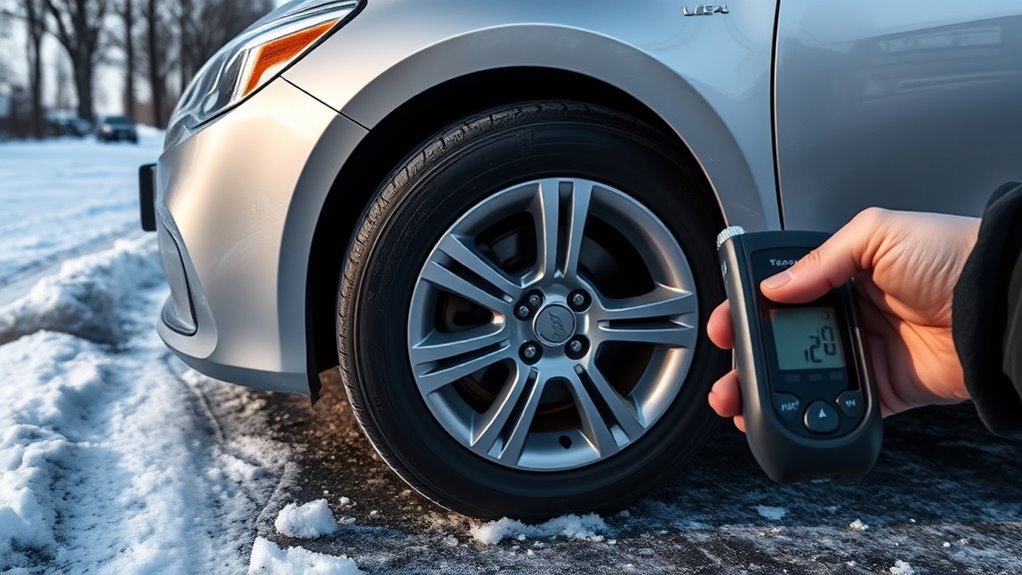
Your Toyota Camry tire loses pressure in cold weather because the air inside the tire cools and contracts. That pressure drop can trigger the TPMS light even when there is no puncture. The safe fix is simple: check the tires when they are cold, inflate them to the PSI on the driver-side door-jamb placard or Toyota owner’s manual, and inspect for leaks if the same tire keeps dropping.
Quick Answer
Your Toyota Camry tire loses pressure in cold weather because cooler air contracts. A 10°F temperature drop often changes tire pressure by about 1 PSI. Check the tires cold, inflate to the driver-side door-jamb placard PSI, and inspect for leaks if one tire keeps dropping faster than the others.
Key Takeaways
- Cold weather commonly lowers tire pressure by about 1 PSI for every 10°F drop.
- Use the Camry’s door-jamb tire placard or Toyota owner’s manual for the correct cold PSI, not the tire sidewall maximum.
- A steady TPMS light usually means low pressure; a flashing light that stays on can mean a TPMS malfunction.
- If one tire loses pressure repeatedly, treat it as a possible leak, valve-stem issue, wheel problem, or tire damage.
At a Glance
| Time Required | 5–10 minutes for all four tires |
| Difficulty | Easy |
| Tools Needed | Tire pressure gauge, air compressor or portable inflator, valve-stem caps, door-jamb PSI label |
| Cost | Usually free to a few dollars for air; about $5–$20 for a basic gauge |
Why Camry Tire Pressure Drops in Cold Weather?
When temperatures drop, the air inside your Toyota Camry tires cools. Cooler air creates less pressure inside the same tire volume, so the PSI reading falls even if no air has leaked out. As a practical rule, tire pressure changes by about 1 PSI for every 10°F change in ambient temperature.
That is why the TPMS light often appears after the first cold night of the season. If your tires were already close to the low-pressure threshold, a sudden overnight chill can push one or more tires below the warning level. That does not automatically mean you have a puncture, but it does mean you should check the pressure with a gauge before driving far.
A 40°F drop can lower a Camry tire by about 4 PSI, enough to change handling, increase wear, and trigger the TPMS warning if the tire was already low.
How Cold Weather Lowers Camry Tire Pressure?
Cold weather lowers Camry tire pressure because tire air pressure follows temperature. When the air cools, molecules move more slowly and press less forcefully against the inside of the tire. When the tire warms again during driving, the pressure may rise, but that does not mean the tire was properly inflated when cold.
Use this table as an estimate only. Always confirm with a tire pressure gauge and inflate to your Camry’s door-jamb placard PSI.
| Temperature Drop | Likely PSI Drop | What To Do |
|---|---|---|
| 10°F | About 1 PSI | Check at the next cold reading |
| 20°F | About 2 PSI | Check and add air if below spec |
| 30°F | About 3 PSI | Recheck all four tires cold |
| 40°F | About 4 PSI | Inflate promptly if below placard PSI |
Note: Do not use the pressure printed on the tire sidewall as your Camry’s daily target. The sidewall number is usually the tire’s maximum pressure, not Toyota’s recommended cold inflation pressure for your vehicle.
What the TPMS Light Really Means?
Your Camry’s tire pressure monitoring system warns you when one or more tires are significantly underinflated. Toyota says that if the tire pressure warning indicator stays on, you should check all tires and refill, repair, or replace any tire below the proper pressure.
A steady TPMS light often means pressure is low. A TPMS light that flashes for about a minute and then stays on can point to a TPMS malfunction, such as a sensor, registration, or wheel/tire compatibility issue. Federal TPMS rules also make clear that TPMS is a warning system, not a replacement for regular tire maintenance.
Warning: Do not ignore a TPMS light, a visibly soft tire, a bulge, a deep cut, or rapid pressure loss. Driving on a significantly underinflated tire can cause overheating, tire failure, poor handling, and longer stopping distance.
How to Find the Correct Camry Tire Pressure
The correct Camry tire pressure can vary by model year, trim, tire size, and load rating. The best source is the Tire and Loading Information label on the driver-side door jamb. You can also confirm the recommended cold PSI in your Toyota owner’s manual.
Look for wording such as “cold tire inflation pressure.” “Cold” means the tires have been parked long enough to cool down, usually at least three hours. If you have just driven, the tires may read higher because heat raises pressure.
Pro Tip: Check pressure in the morning before driving. That gives you the most accurate cold reading and avoids chasing pressure changes caused by road heat.
[Products Worth Considering]

Keep your tires properly inflated with this analog VONDIOR tire pressure gauge, designed for fast, easy readings without batteries. The swiveling, two-axis hose and large glow dial help you measure at any tire angle with instant visibility. Built with a protective rubber shield, it supports durable, low-maintenance use for cars and trucks.

Milton S-921 pencil tire pressure gauge helps you maintain optimal tire pressure for passenger cars with accurate readings in PSI and kPa. It features a built-in deflator valve for convenient pressure adjustments, plus a single chuck head and nylon indicator bar for easy use on the go. Built from durable plated brass and designed for reliable performance, it’s a practical road trip and cold-weather maintenance tool.

This tire inflator with pressure gauge delivers long-lasting performance with a durable rubber-protected gauge and sturdy build. The longer hose and 360 swivel air chuck help you seal the valve securely and keep your hands free while measuring, inflating, or deflating. It’s battery-free for reliable use and provides ±2 PSI accuracy in the mid-range for most typical tires, with universal compatibility for 1/4 NPT compressor outputs.
How to Check Camry Tire Pressure Correctly?
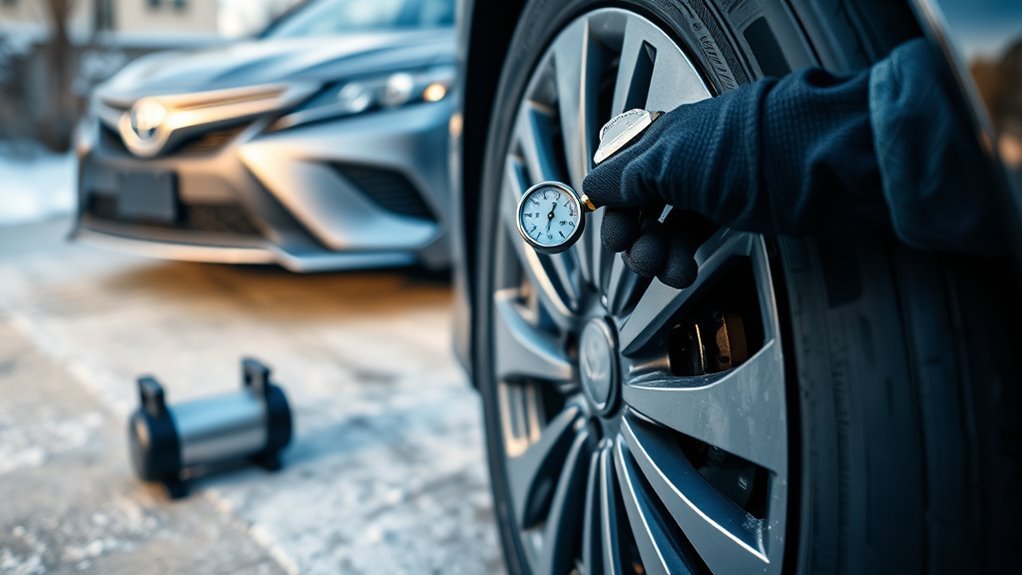
To check your Camry’s tire pressure correctly, use a reliable gauge and measure each tire when it is cold. NHTSA recommends checking all tires, including the spare if your vehicle has one, at least once a month when cold.
- Park safely and let the tires cool. For the best reading, check before driving or after the car has been parked for at least three hours.
- Find the correct PSI. Use the driver-side door-jamb placard or Toyota owner’s manual. Do not use the sidewall maximum as the target.
- Remove the valve cap. Keep it in your hand or pocket so it does not roll away.
- Press the gauge squarely onto the valve stem. A short hiss is normal, but a long hiss means the gauge is not seated correctly.
- Compare the reading to the placard PSI. If the tire is low, add the missing PSI. If it is high while cold, release small amounts of air and recheck.
- Repeat for all four tires. Front and rear tires may have the same or different specs depending on the vehicle label.
- Reinstall valve caps. Caps help keep dirt and moisture away from the valve core.
- Check the TPMS light. After proper inflation, the light may turn off after driving briefly. If it stays on or flashes, follow the owner’s manual or have the system inspected.
[Products Worth Considering]

Upgrade your Toyota’s wheels with durable aluminum alloy valve stem caps that help protect valve cores from corrosion and direct exposure to road grime, clay, water, and snow. Rubber rings improve sealing to help prevent air leakage and maintain stable tire pressure for safer driving. These caps are easy to install or remove without tools and add a unique, stylish look to your car.

Monitor tire tread wear with a smart, color-coded depth gauge that shows clear condition ranges at a glance. The bar is range marked for fast, easy readings, helping you maintain safer traction and performance. Each gauge is portable with a pocket clip, and the set includes 20 units for daily use and sharing.

This Dr.Roc tire valve stem puller tools set helps install or remove snap-in tubeless valve stems safely and efficiently. It includes ozone-resistant EPDM snap-in valve stems, a valve stem installer, and a valve core remover for quick core removal or installation during tire service. Designed for reliable tubeless tire repair on motorcycles, ATVs, lawn equipment, cars, and trucks.
When Your Camry Tires Need Inspection?
You should inspect your Camry’s tires whenever you notice abnormal pressure loss, visible damage, vibration, pulling, or uneven tread wear. Cold weather can make small problems easier to notice because pressure drops faster when the tire already has a leak.
Check tread depth, sidewalls, valve stems, and the area around the wheel rim. NHTSA says tires are not safe and should be replaced when tread is worn to 2/32 of an inch. Replace or professionally inspect a tire with exposed cords, cracks, bulges, embedded nails, cuts, or repeated pressure loss.
If one tire loses several PSI while the others stay steady, cold weather is probably not the only cause. The issue could be a nail, leaking valve stem, cracked rubber, corroded wheel bead, damaged rim, or a TPMS sensor seal leak.
How to Keep Camry Tires Properly Inflated?
Keep your Toyota Camry’s tires properly inflated by checking pressure at least once a month, before long trips, and after sharp temperature swings. Use a dependable gauge, not only TPMS, because TPMS may not warn you until a tire is already significantly underinflated.
| Check | Action |
|---|---|
| Monthly PSI reading | Compare each cold tire reading with the door-jamb placard spec |
| Cold-weather drop | Add air promptly if pressure falls below the recommended cold PSI |
| Repeated loss in one tire | Inspect for punctures, valve leaks, bead leaks, or rim damage |
| Low tread or sidewall damage | Schedule tire service before the tire becomes unsafe |
Consistent inflation supports handling, braking, tire life, and fuel efficiency. FuelEconomy.gov notes that properly inflated tires are safer and can improve gas mileage, while underinflation can reduce fuel economy as average tire pressure drops.
[Products Worth Considering]

Upgrade your Toyota tire setup with these corrosion-resistant, leak-proof valve stem caps designed to help protect the valve core from water, snow, and road grime. The caps feature a snug rubber seal and durable copper alloy construction to resist rust and oxidation while maintaining stable tire pressure. Ideal for replacing worn original caps and keeping your wheels looking clean and stylish.

These aluminum alloy tire valve stem caps protect the valve core from corrosion and help prevent air leakage for more stable tire pressure. The rubber ring design helps support a secure, safe seal while adding a stylish look to your Honda wheels. Easy to install by hand, these caps are ideal for everyday driving and weather exposure.

Marsflex brand TPMS replacement sensors help restore tire pressure monitoring for compatible Toyota, Lexus, Scion, and Pontiac models. Each sensor is pre-programmed for the vehicle application and includes a long-life battery for up to 8 years of normal use. Designed to replace common OE numbers and requires relearning using a TPMS scan tool after installation.
Common Camry Tire Pressure Mistakes in Winter
- Using the tire sidewall as the target PSI. Use the door placard or owner’s manual instead.
- Bleeding air from warm tires. Warm tires read higher, so lowering them to cold spec after driving can leave them underinflated later.
- Ignoring a light that turns off after driving. A cold-morning TPMS light can disappear as tires warm, but you should still check cold pressure.
- Only checking the tire that looks low. Underinflated tires can look normal, so check all four tires with a gauge.
- Resetting TPMS before fixing pressure. Inflate to the correct PSI first, then follow the owner’s manual if the system needs initialization.
Frequently Asked Questions
Is 25 PSI too low in winter?
Yes, 25 PSI is usually too low for a Toyota Camry, but the correct answer is always the PSI on your driver-side door-jamb placard or owner’s manual. Inflate the tire to the recommended cold PSI and inspect for a leak if it drops back to 25 PSI again.
Should I inflate Camry tires to the number on the tire sidewall?
No. The sidewall number is usually the tire’s maximum pressure, not the recommended daily pressure for your Camry. Use the door-jamb Tire and Loading Information label or Toyota owner’s manual for the correct cold inflation pressure.
Why does my Camry TPMS light come on in the morning and go off later?
Cold morning air can drop tire pressure below the TPMS warning threshold. As you drive, the tires warm up and pressure rises, so the light may turn off. Still check the tires cold because a disappearing light does not prove the tires are correctly inflated.
Do I need to reset the TPMS after adding air?
Sometimes. Many Camry TPMS warnings turn off after the tires are inflated correctly and the car is driven briefly. Some model years or tire-service situations may require TPMS initialization through a button, menu, or service tool. Follow your owner’s manual if the warning stays on.
How often should I check Camry tire pressure in cold weather?
Check pressure at least once a month, before long trips, and after major temperature swings. In winter, weekly checks are smart if the TPMS light has come on recently or if overnight temperatures are changing quickly.
Why does only one Camry tire keep losing pressure?
If one tire drops faster than the others, suspect a puncture, leaking valve stem, bead leak, rim corrosion, tire damage, or TPMS sensor seal issue. Reinflate it to spec, recheck it cold, and have it inspected if the loss returns.
Conclusion
Cold weather makes your Camry’s tire pressure drop because cooler air creates less pressure inside the tire. A small seasonal drop is normal, but a TPMS light, repeated pressure loss, or visible tire damage needs attention. Check all four tires cold, inflate them to the factory-spec PSI on the door-jamb placard, and inspect for leaks or wear before the next temperature swing. Small pressure checks can prevent big handling, braking, fuel-economy, and tire-life problems.
Sources
- NHTSA TireWise: Tire Safety Ratings and Awareness — backs monthly cold-pressure checks, door-placard PSI guidance, TPMS limitations, tread depth, and tire inspection guidance.
- Toyota Owners Manuals and Warranties — official source for model-specific Toyota owner’s manual information.
- Toyota Support: How the Tire Pressure Monitor System Works — backs Toyota TPMS warning-light response guidance.
- eCFR 49 CFR 571.138: Tire Pressure Monitoring Systems — backs federal TPMS warning and malfunction requirements.
- FuelEconomy.gov: Keeping Your Vehicle in Shape — backs fuel-economy effects of proper tire inflation and sidewall-pressure caution.
- Bridgestone: Proper Tire Inflation and Tire Pressure Tips — backs the 1 PSI per 10°F rule of thumb and tire-sidewall maximum pressure caution.