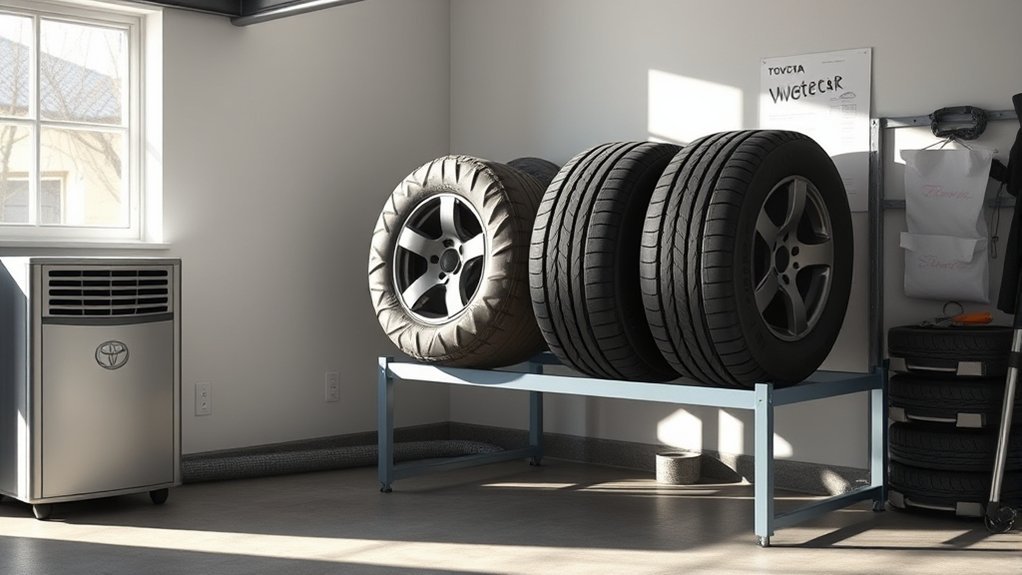
Storing Toyota Camry tires the right way is simple, but the details matter. Clean and dry each tire, inspect it for damage, check tread depth and age, then store it in a cool, dry, shaded indoor space away from chemicals, heat, and ozone sources. The best position depends on whether the tire is mounted on a wheel or unmounted.
Quick Answer
To store Toyota Camry tires properly, wash them with water and mild soap, dry them fully, inspect tread and sidewalls, place each tire in an opaque airtight bag if possible, and keep them indoors in a cool, dry, dark area. Store mounted tires stacked or hung; store unmounted tires upright.
Key Takeaways
- Clean and dry tires before storage so brake dust, road grime, and moisture do not sit on the rubber or wheels.
- Use the Toyota Camry tire placard or owner’s manual for the correct cold inflation pressure if the tires are mounted on wheels.
- Store tires indoors, away from sunlight, gasoline, oil, solvents, furnaces, electric motors, generators, and battery chargers.
- Mounted tires can be stacked flat or hung. Unmounted tires should stand upright and be rotated slightly from time to time.
- Replace tires with tread worn to 2/32 inch, serious cracks, bulges, punctures, or age-related damage instead of storing them for another season.
At a Glance
| Time Required | 30–60 minutes for a full set |
| Difficulty | Easy |
| Tools Needed | Mild soap, water, tire brush, clean towels, tread depth gauge or penny, tire pressure gauge, tire bags, labels, and a rack or clean wood platform |
| Cost | $0–$20 if you already have basic cleaning supplies; more if you buy a tire rack or storage bags |
Why Proper Tire Storage Matters for Your Toyota Camry
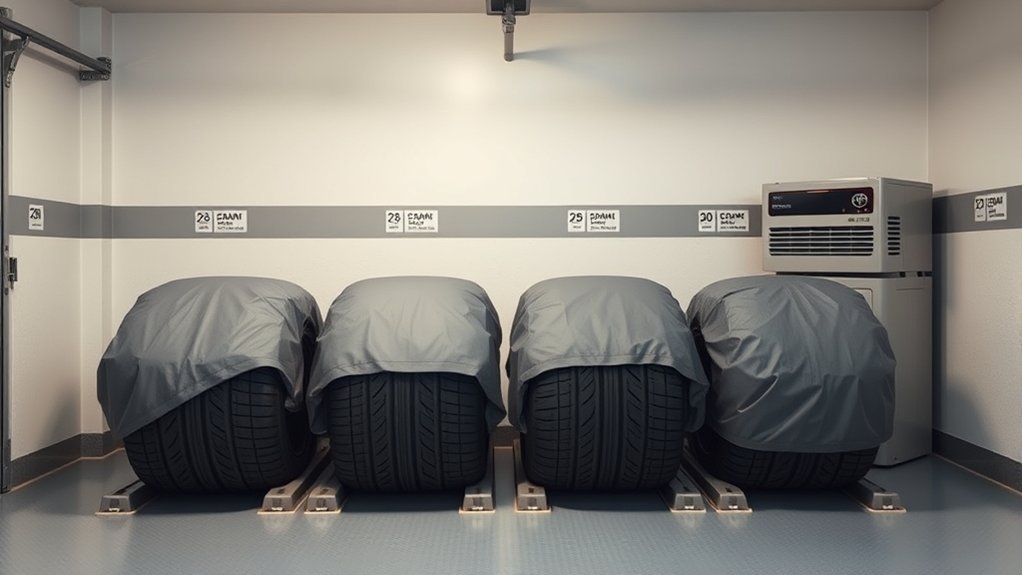
Good storage protects the rubber, tread, sidewalls, wheels, and valve stems while the tires are off your Camry. Poor storage exposes tires to sunlight, heat, moisture, ozone, gasoline, oils, and solvents, all of which can speed up aging or damage rubber compounds.
The U.S. Tire Manufacturers Association tire storage recommendations explain that tires should be protected from sunlight, ozone, and other damaging conditions. NHTSA also notes that storage and environmental conditions can contribute to tire aging.
Warning: Do not store a tire for “one more season” if it has exposed cords, a bulge, deep cracks, a puncture that has not been professionally repaired, or tread worn to 2/32 inch. Replace it before the next use.
Before You Remove the Tires
Before removing your Camry’s seasonal tires, mark each tire’s position with tape or a tire crayon: LF for left front, RF for right front, LR for left rear, and RR for right rear. This makes it easier to rotate the tires correctly when they go back on the car.
If the tires are mounted on wheels, check the Toyota Camry’s Tire and Loading Information Label on the driver-side doorjamb or the owner’s manual for the correct cold inflation pressure. Toyota’s manual section on tire inflation pressure and NHTSA’s tire guidance both point drivers back to the vehicle’s tire label or owner’s manual. Do not use the maximum PSI molded on the tire sidewall as your storage target.
Note: Pressure guidance applies to tires mounted on wheels. Unmounted tires do not hold air pressure because they are not installed on rims.
Step-by-Step Guide to Cleaning Your Tires Before Storage
Gather the Right Cleaning Supplies
You only need basic supplies: a bucket of water, mild automotive soap, a tire brush, clean towels, and a small tool for removing stones from tread grooves. Avoid petroleum-based cleaners, harsh solvents, and tire shine products before storage.
Clean the Tires and Wheels
Rinse each tire first. Scrub the tread blocks, sidewalls, and grooves with mild soap and water to remove brake dust, mud, salt, and road grime. If the tires are mounted on wheels, clean the wheels too so grime and moisture do not sit against the rim during storage.
Remove stones or debris trapped in the tread grooves. This is also a good time to check for nails, screws, or sharp objects that may have caused a slow leak.
Dry Everything Completely
Use clean towels to dry each tire and wheel. Let them air-dry in the shade until no moisture remains. Do not bag damp tires, because trapped moisture can encourage corrosion on wheels and can create a poor storage environment.
Pro Tip: Clean tires on the same day you remove them, not months later. Road salt, brake dust, and grime are easier to remove before they sit through an entire storage season.
How to Inspect Tires for Damage Before Storing
Check Tread Depth
Use a tread depth gauge for the most accurate reading. You can also use the penny test: place a penny into the tread with Lincoln’s head upside down. If you can see the top of Lincoln’s head, the tire is at or below the common 2/32-inch replacement threshold. NHTSA says tires are not safe and should be replaced when tread is worn down to 2/32 inch.
Inspect Sidewalls and Tread
Look closely for cuts, bulges, cracks, punctures, exposed cords, flat spots, or uneven wear. Uneven wear can point to alignment, suspension, inflation, or rotation issues that should be fixed before the tires go back on your Camry.
Inspect Valve Stems
Check valve stems for cracks, brittleness, missing caps, or signs of leakage. If the tires are mounted and you suspect a leak, apply soapy water around the valve stem and bead area. Bubbles can indicate air loss that needs professional attention.
Check Tire Age
Find the DOT Tire Identification Number on the sidewall. The last four digits show the week and year the tire was made. For example, 2422 means the tire was made in the 24th week of 2022. NHTSA explains that some vehicle and tire manufacturers recommend replacing tires at six to 10 years old regardless of treadwear, so have older tires inspected by a tire professional before reuse.
Storage can slow tire aging, but it cannot stop it. Inspect tread, sidewalls, valve stems, and tire age every time a tire comes out of seasonal storage.
Where’s the Best Place to Store Your Tires?
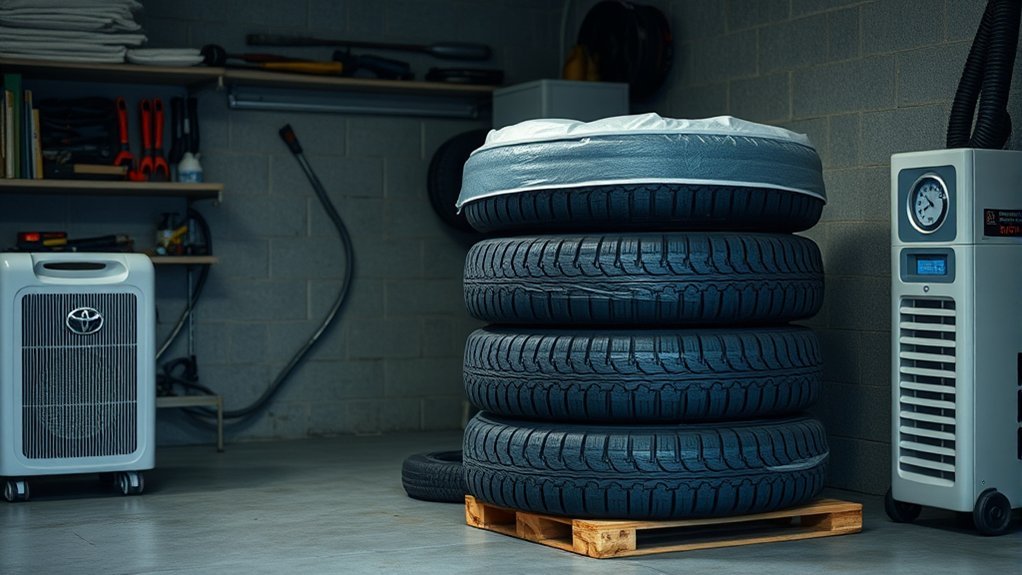
The best place to store Toyota Camry tires is indoors in a clean, dry, cool, dark, well-ventilated space. A basement, interior storage room, or climate-controlled garage is better than a hot attic, shed, open carport, or damp garage corner.
Keep tires away from direct sunlight, standing water, gasoline, motor oil, solvents, grease, furnaces, sump pumps, electric motors, generators, battery chargers, and welding equipment. Michelin’s tire storage guidance recommends indoor storage away from direct sunlight, heat, ozone, grease, gasoline, solvents, oils, and other substances that can deteriorate rubber.
If short-term outdoor storage is unavoidable, raise the tires off the ground and cover them with an opaque waterproof cover that has ventilation openings. Do not wrap outdoor tires in a way that creates a hot, sealed “steam bath” around the rubber.
[Products Worth Considering]

The SAFELIFE dial tire tread depth gauge measures tread depth in 1/32 inch increments with clear, easy-to-read 2-inch dial face. Color zones using a traffic light system help you quickly judge whether tread is low, marginal, or ample for safer driving. Built with a durable zinc cast body and a metal detect probe for precise, comfortable use across cars, motorcycles, trucks, and buses.

Monitor tire tread wear with a smart, color-coded depth gauge that shows clear condition ranges at a glance. The bar is range marked for fast, easy readings, helping you maintain safer traction and performance. Each gauge is portable with a pocket clip, and the set includes 20 units for daily use and sharing.

This professional wheel and rim brush kit makes it easy to lift brake dust, grime, and dirt from wheels and tires without scratching finishes. The brushes feature soft, metal-free wool heads and a flexible 360-degree rim brush design for reaching hard-to-clean areas. Includes multiple brush types plus accessories for thorough car, motorcycle, and general vehicle detailing.
Mounted vs. Unmounted Tire Storage
The right storage position depends on whether the tire is mounted on a wheel. This is the most common storage mistake.
| Tire Type | Best Storage Position | Avoid |
| Mounted tires on wheels | Stack flat on their sides or hang from the wheel. Keep them inflated to the Camry’s recommended cold pressure before storage. | Do not store mounted tires standing upright for long periods. |
| Unmounted tires without wheels | Stand upright on the tread and rotate each tire slightly every month or so to reduce pressure on one spot. | Do not hang unmounted tires, and avoid stacking them for long periods. |
[Products Worth Considering]

This 3-piece wheel and tire brush set makes it easy to clean light, medium, and heavy dirt from wheels, rims, tires, and exterior surfaces. It includes both soft and stiff bristle options for gentle scrubbing and tough grime removal, helping lift brake dust and road buildup. The long-handle design supports comfortable cleaning across cars, trucks, SUVs, RVs, motorcycles, and more, with simple care instructions to restore brush shape.

The Kurgo Seasonal Tire Tote helps protect your car interior, clothes, and garage from tire grime, brake dust, and residue during seasonal tire changes. Its universal design fits most passenger tires between 22" and 31" in diameter, making storage and transport simpler with less mess. Built for rugged, repeated use, it’s machine washable for easy care and comes with a lifetime warranty.

Measure tire tread depth quickly and accurately with this LUMITECO dial gauge that reads in 1/32" increments up to 14/32". The color-coded green/yellow/red zones make it easy to judge tire wear and know when replacement is needed. A rugged, compact design with a protective pouch helps keep the gauge ready for use on cars, trucks, motorcycles, and more.
Best Practices for Stacking Tires
If your Camry tires are mounted on wheels, stacking is acceptable. Place them flat, sidewall to sidewall, on a clean surface or tire rack. Keep the stack stable and avoid making it so tall that the lower tires carry excessive weight.
If the tires have white lettering or whitewalls, store white side to white side and black side to black side to reduce staining. If every tire is sealed in its own storage bag, staining is less of a concern.
For unmounted tires, upright storage is usually the better homeowner method. Set them on a clean rack, smooth pallet, or piece of clean wood rather than directly on a damp floor. Rotate them slightly from time to time so the same contact patch is not always carrying the weight.
How to Protect Your Tires During Seasonal Storage
Once each tire is clean and completely dry, place it in an opaque airtight plastic bag if possible. Tire Rack’s tire storage guide recommends placing each clean, dry tire in its own large, opaque, airtight plastic bag and removing as much air as practical before sealing it.
Do not use breathable fabric totes as the only protection if your goal is to reduce air and moisture exposure. Fabric totes are useful for carrying tires and keeping your trunk clean, but they are not airtight. If you use totes, seal the tire in a plastic bag first, then place the bagged tire in the tote.
Keep stored tires off bare concrete when possible. A tire rack, smooth pallet, or clean wood platform helps reduce exposure to moisture, dirt, and sharp objects.
[Products Worth Considering]
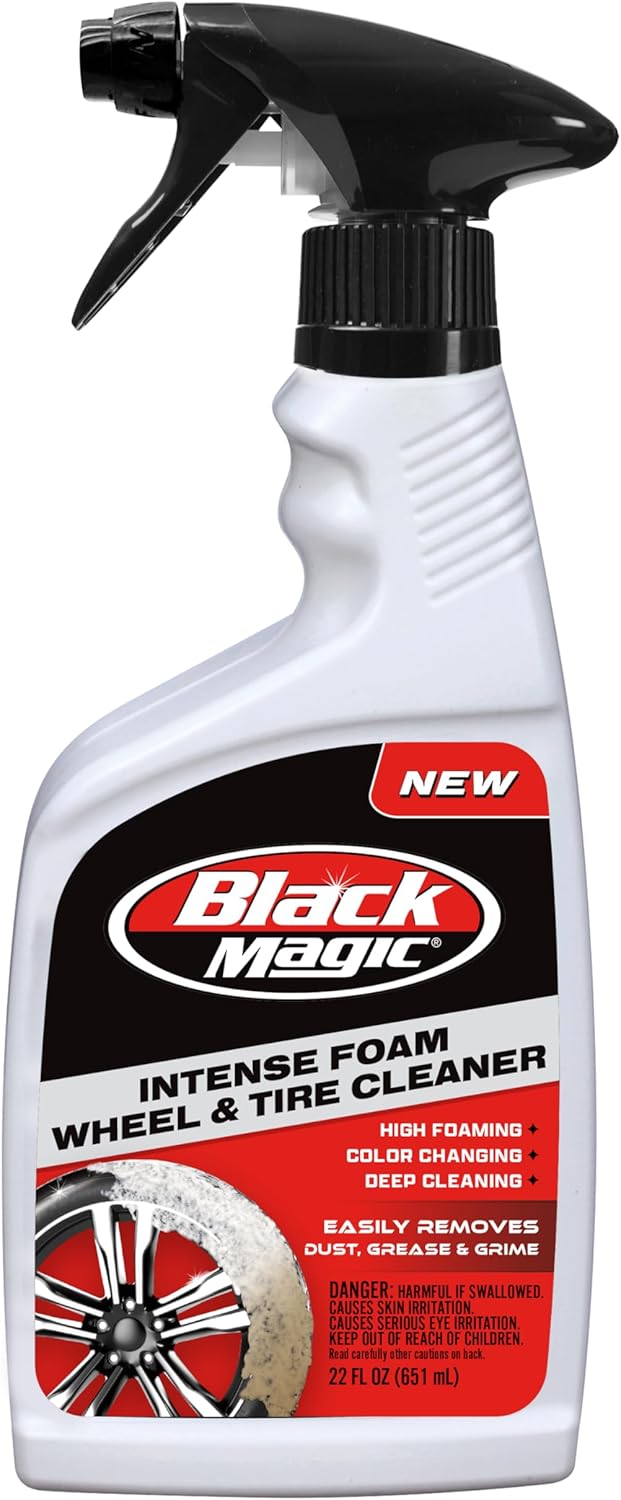
Black Magic Intense Foam Wheel & Tire Cleaner uses a high-foaming action to lift away dirt, grime, and brake dust without scrubbing. The color-changing formula helps show contaminants being dissolved as foam turns from white to brown. Safe for all wheel types and even wheel wells, it leaves a like-new, slick finish with a fresh cherry scent.

Clean wheels and rims with soft feathered bristles that safely remove dirt and road grime while helping restore original luster. The short non-slip handle makes it easy to scrub in tight wheel wells, and the brush is suitable for vehicles and hard-to-reach areas. It can also be soaked and rubbed to help restore bristles to their shape after use.

Accurately measure tire tread depth with a calibrated gauge marked from 0 to 1 inch in 1/32 inch increments. The color-coded bar helps you quickly identify tread condition ranges, supporting safe driving for trucks, motorcycles, automobiles, and passenger vehicles.
Before Reinstalling Stored Tires on Your Camry
Before the tires go back on your Toyota Camry, inspect them again. Look for cracks, bulges, air loss, flat spots, punctures, and uneven wear. Check the DOT date if the tires are older or have been stored for several seasons.
For mounted tires, adjust pressure when the tires are cold. NHTSA defines cold tires as tires that have not been driven on for at least three hours. After installation, pay attention to vibration, pulling, repeated pressure loss, or unusual noise. If anything feels wrong, have a qualified tire professional inspect the tire and wheel assembly.
Frequently Asked Questions
How do you properly store seasonal Toyota Camry tires?
Clean the tires, dry them completely, inspect tread and sidewalls, label their previous positions, and store them indoors in a cool, dry, dark area. Bag each tire if possible. Store mounted tires stacked or hung, and store unmounted tires upright.
Should winter tires be stored flat or upright?
It depends on whether the winter tires are mounted on wheels. Mounted winter tires can be stacked flat or hung. Unmounted winter tires should be stored upright on the tread and rotated slightly from time to time.
Should I inflate Toyota Camry tires before storing them?
Yes, if the tires are mounted on wheels. Inflate them to the cold pressure listed on your Camry’s Tire and Loading Information Label or owner’s manual. Do not inflate to the maximum PSI shown on the tire sidewall. Unmounted tires are not inflated for storage.
Can I store Camry tires in the garage?
Yes, if the garage stays dry, shaded, and reasonably cool. Avoid garage areas near furnaces, electric motors, battery chargers, gasoline, oil, solvents, or direct sunlight. A climate-controlled garage or basement is better than a hot shed or attic.
Is it okay to store tires outside?
Outdoor storage is not ideal and should only be short term. If you must store tires outside briefly, raise them off the ground and use an opaque waterproof cover with ventilation openings so moisture and heat do not build up around the tires.
How long can tires stay in storage?
There is no single safe storage limit for every tire because age, heat, sunlight, ozone, and prior use all matter. Inspect stored tires before reuse and check the DOT date. If tires are several years old, cracked, damaged, or repeatedly losing air, have them inspected by a tire professional before driving.
Conclusion
Proper Toyota Camry tire storage is not complicated: clean, dry, inspect, bag, and store the tires in the right position. The key is matching the method to the tire type. Mounted tires can be stacked or hung, while unmounted tires should stand upright. Keep every tire away from sun, moisture, heat, ozone, oils, and solvents, and inspect the set again before reinstalling it. A little care now helps your tires return to service safer, cleaner, and ready for the next season.
Sources
- Toyota Owners — Tire inflation pressure — supports using Toyota owner information for tire inflation guidance.
- NHTSA TireWise — supports cold tire pressure, placard guidance, tread depth, tire aging, and inspection safety.
- U.S. Tire Manufacturers Association — Tire Storage Recommendations — supports indoor storage, ozone/sunlight protection, and raised storage surfaces.
- Michelin — Storing My Tires — supports cleaning, drying, indoor storage, mounted vs. unmounted positioning, and outdoor-storage cautions.
- Tire Rack — How Do I Store Tires? — supports opaque airtight storage bags and cool, dry storage locations.
- Continental Tire — Seven Tips for Storing Tires — supports cleaning, drying, avoiding tire dressing, and storing away from ozone sources.