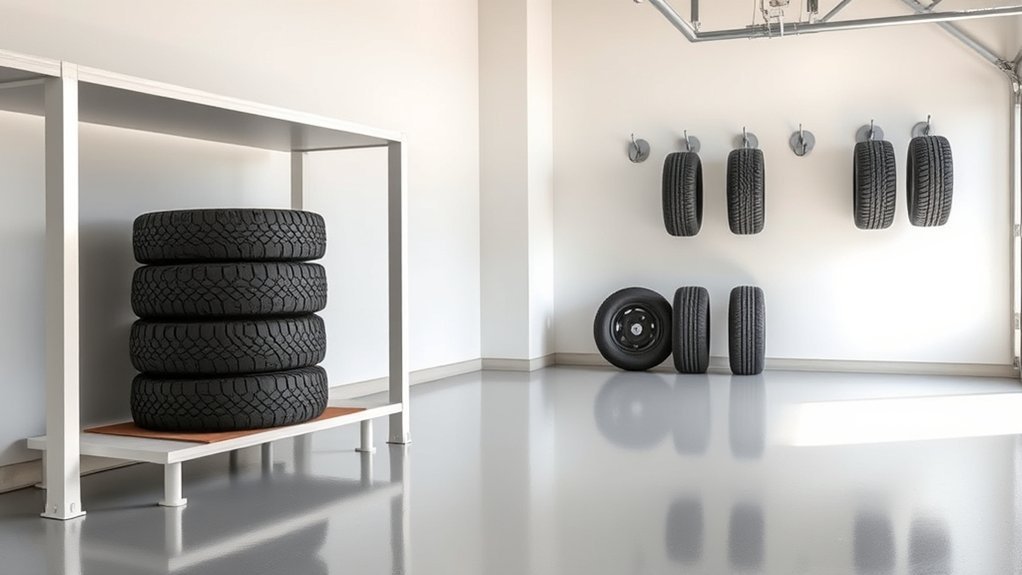
Storing seasonal tires is simple, but the details matter. A clean, dry tire kept in the wrong place can still age faster if it sits in heat, sunlight, ozone, oil, or moisture. The safest approach is to clean the tires, label their positions, choose the right storage position based on whether they are mounted on rims, and inspect them before they go back on your vehicle.
Quick Answer
To store tires properly for the off-season, clean and dry them, mark their vehicle positions, place them in sealed tire bags when possible, and keep them indoors in a cool, dry, dark area. Store tires mounted on rims stacked or hung; store unmounted tires upright and never hang them.
Key Takeaways
- Store tires indoors whenever possible, away from direct sunlight, heat, moisture, oil, fuel, solvents, and ozone-producing equipment.
- Mounted tires can be stacked flat or hung by the wheel/rim; unmounted tires should stand upright or sit sidewall-to-sidewall on a proper rack.
- Use the vehicle’s tire placard or owner’s manual for the correct cold PSI before reinstalling and driving, not the number molded on the tire sidewall.
- Check stored tires before reuse for cracking, bulges, tread damage, foreign objects, and age shown by the DOT tire identification number.
- If a tire looks damaged, has deep cracks, or has been stored in poor conditions, have it inspected by a tire service professional before using it.
At a Glance
| Time Required | 30–45 minutes for a set of four tires |
| Difficulty | Easy |
| Tools Needed | Mild soap, water, tire brush, clean towels, tire bags or large plastic bags, marker, tire pressure gauge, and a rack, pallet, hooks, or clean wood barrier |
| Cost | Usually $0–$30 if you already have cleaning supplies; more if you buy a wall rack or storage hooks |
Why Proper Storage Matters for Seasonal Tires
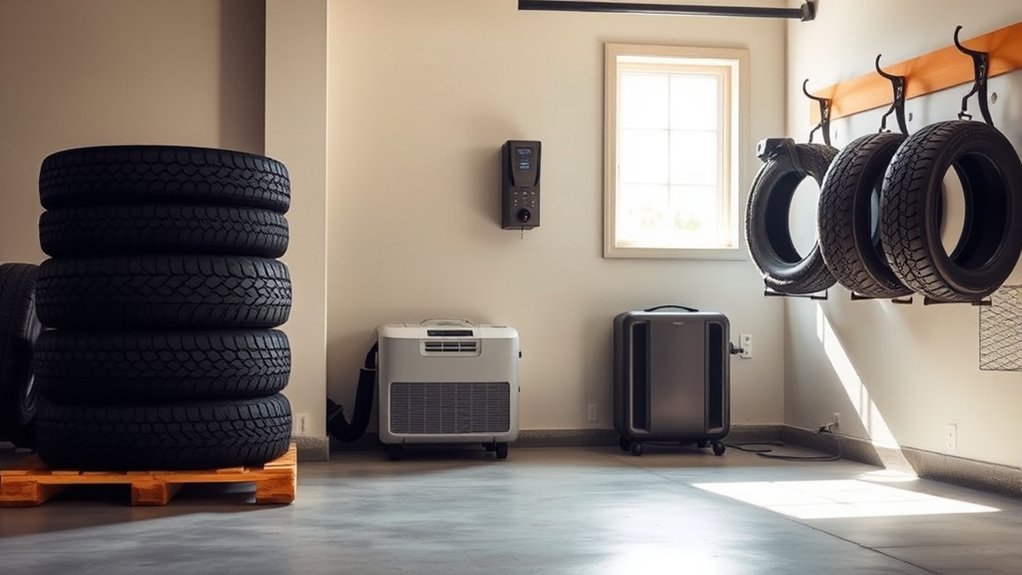
When you store seasonal tires properly, you help preserve the rubber, tread, sidewalls, and bead area until the next changeover. Michelin’s tire storage guidance recommends storing tires indoors in a clean, cool, dark location away from direct sunlight, heat, and ozone sources such as electric generators. The U.S. Tire Manufacturers Association also notes that poor storage conditions can damage tires and may eventually lead to tire failure.
Good tire storage is not just about saving space. It helps limit exposure to the heat, sunlight, ozone, moisture, and chemicals that can speed up rubber aging.
The goal is not to create a perfect laboratory environment. For most drivers, a clean basement, climate-controlled garage, or interior storage room works well. A hot attic, damp shed, sunny patio, or area near electric motors, battery chargers, generators, welding equipment, gasoline, oil, or solvents is a poor choice because those conditions can speed up cracking, staining, and rubber deterioration.
Warning: Do not store tires near petroleum-based products such as gasoline, oil, lubricants, or volatile solvents. These substances can damage rubber and may make a tire unsafe to use.
How to Prepare Your Tires for Off-Season Storage
Before storing tires, take a few minutes to prepare them correctly. This prevents dirt, brake dust, road salt, moisture, and hidden damage from sitting on the rubber all season.
- Label each tire before removal. Mark the position it came from, such as LF for left front, RF for right front, LR for left rear, and RR for right rear. This makes the next rotation easier and helps promote even wear.
- Inspect the tire. Look for cuts, bulges, exposed cords, nails, uneven wear, tread cracking, sidewall cracking, and weather checking. Also check the DOT tire identification number; the last four digits show the week and year the tire was manufactured.
- Clean the tire and wheel. Use mild soap, water, and a tire brush. Remove stones and debris from the tread grooves. Avoid harsh solvents and petroleum-based cleaners.
- Dry completely. Let the tires air-dry, then wipe away remaining moisture with a clean towel. Never seal a wet tire in a bag.
- Bag the tire when possible. Place each tire in a tire storage bag or large plastic bag and remove as much air as you reasonably can before sealing. This helps limit dust, moisture, and ozone exposure.
- Check pressure at the right time. If the tire is mounted on a rim, check inflation before storage and again before reinstalling. Before driving, inflate to the cold PSI listed on your vehicle’s tire placard or owner’s manual, as explained by NHTSA TireWise.
Note: The maximum PSI molded on the tire sidewall is not the normal driving pressure for your vehicle. Use the tire and loading information label on the driver’s door area or the owner’s manual for the correct cold inflation pressure.
[Products Worth Considering]

The Chemical Guys Gerbil Wheel & Rim Brush is designed to safely clean wheels, rims, exhaust tips, tires, and engine bay components without scratching delicate finishes. Its soft natural bristles help lift brake dust, grime, and buildup while conforming to tight spaces and intricate contours. A comfort grip handle delivers control for extended detailing sessions.

This 3-piece wheel and tire brush set makes it easy to clean light, medium, and heavy dirt from wheels, rims, tires, and exterior surfaces. It includes both soft and stiff bristle options for gentle scrubbing and tough grime removal, helping lift brake dust and road buildup. The long-handle design supports comfortable cleaning across cars, trucks, SUVs, RVs, motorcycles, and more, with simple care instructions to restore brush shape.

This tire inflator with pressure gauge delivers long-lasting performance with a durable rubber-protected gauge and sturdy build. The longer hose and 360 swivel air chuck help you seal the valve securely and keep your hands free while measuring, inflating, or deflating. It’s battery-free for reliable use and provides ±2 PSI accuracy in the mid-range for most typical tires, with universal compatibility for 1/4 NPT compressor outputs.
How to Stack, Hang, and Store Tires Effectively
The best storage position depends on whether the tire is mounted on a rim. Using the wrong position can stress the bead, sidewall, or lower tires in the stack.
| Tire Type | Best Storage Method | Avoid |
|---|---|---|
| Mounted tires on rims | Stack flat, sidewall-to-sidewall, or hang by the wheel/rim on a sturdy hook. | Do not hang by the rubber. Do not overload wall hooks or racks. |
| Unmounted tires | Store upright on the tread for home storage, or sidewall-to-sidewall on a smooth rack or pallet without overstacking. | Do not hang unmounted tires. Avoid tall, heavy stacks that press on the lower tires. |
| Tires still on a parked vehicle | Store the vehicle on blocks if possible so the tires do not carry the weight. If not, unload the vehicle, maintain recommended pressure, and move it periodically. | Do not leave a loaded vehicle sitting on the same tire contact patches for months. |
For most home storage, mounted tires are easiest to stack horizontally, while unmounted tires are easiest to store upright. If you stack mounted tires, keep the stack stable and avoid crushing the bottom tire. If you use hooks, make sure the hook supports the wheel, not the tire sidewall.
Pro Tip: Put a piece of clean wood, a pallet, a tire rack, or a mat under stored tires. This keeps them away from moisture, grit, sharp edges, and dirty floor residue.
[Products Worth Considering]
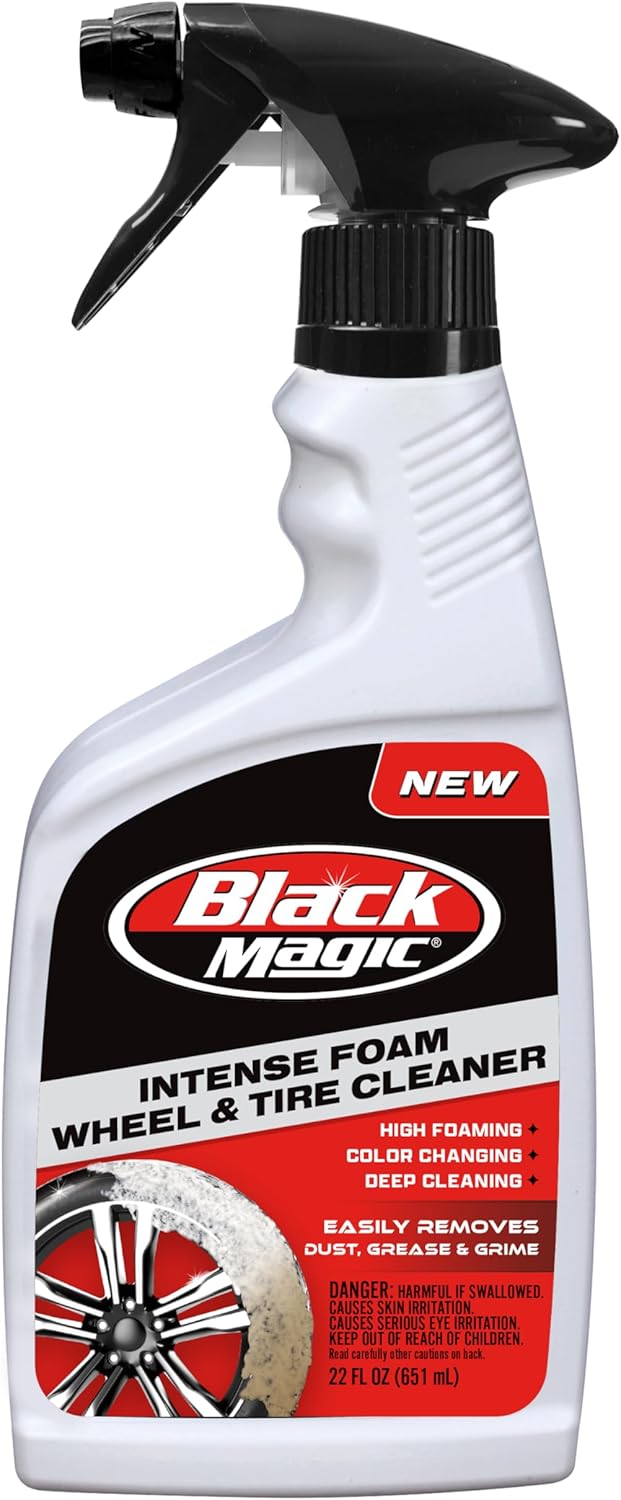
Black Magic Intense Foam Wheel & Tire Cleaner uses a high-foaming action to lift away dirt, grime, and brake dust without scrubbing. The color-changing formula helps show contaminants being dissolved as foam turns from white to brown. Safe for all wheel types and even wheel wells, it leaves a like-new, slick finish with a fresh cherry scent.

Rubber Care delivers a beautiful dark black satin/matte finish on tires and other rubber or plastic surfaces, drying to the touch without oily shine. Its ceramic aircraft-grade formula helps repel dirt and brake dust residue, keeping surfaces cleaner longer. Triple nano ceramic polymer technology provides best-in-industry UV protection, restoring and protecting rubber while also working on weather stripping and de-ice boot care.

Steelman white tire marking crayons provide high-contrast, semi-permanent marks for repairing and inspecting tires and equipment. They write on wet or dry, smooth or coarse surfaces including rubber, metal, glass, and wood, making them ideal for puncture location and damage outlining. The lead- and zinc-free crayons resist weather and fading yet wipe away when you no longer need the marks.
Avoid These Common Mistakes in Tire Storage
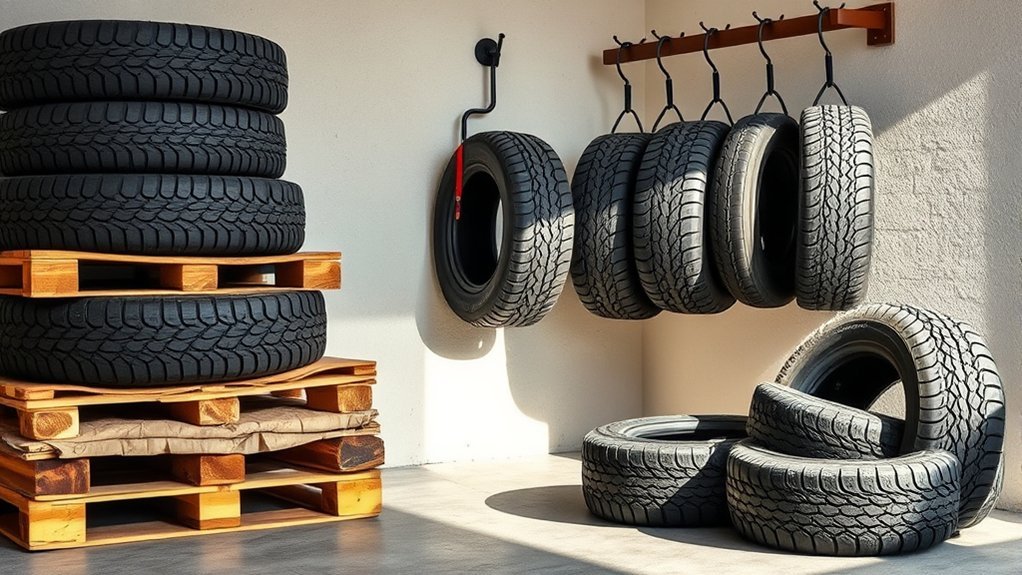
Proper tire storage is mostly about avoiding the conditions that age rubber faster. Use this checklist to prevent the most common problems.
| Mistake | Consequence | Solution |
|---|---|---|
| Storing tires in direct sunlight or high heat | Faster rubber aging, drying, and surface cracking | Choose a cool, dry, shaded indoor location |
| Ignoring ozone sources | Sidewall cracking and weather checking | Keep tires away from electric motors, generators, compressors, welders, and battery chargers |
| Leaving oil, fuel, solvents, or harsh cleaners on the tire | Chemical damage to rubber compounds | Clean with mild soap and water; keep storage surfaces free from chemicals |
| Hanging unmounted tires | Bead or sidewall distortion | Store unmounted tires upright or on a proper rack |
| Overstacking tires | Too much weight on the bottom tires | Keep stacks short, stable, and sidewall-to-sidewall, or use a tire rack |
| Skipping inspection before reinstalling | Hidden cracks, damage, or age-related problems may be missed | Inspect every tire and have questionable tires checked by a professional |
[Products Worth Considering]

This wheel brush kit delivers pro-level cleaning at home, lifting dirt, grime, and brake dust to help restore wheel appearance. It includes multiple brush styles and applicator pads for tackling different wheel surfaces, with gentle, metal-free bristles designed to reduce scratching risk. The flat and double-ended brushes are built for comfort and reach, making wheel care easier for cars, trucks, and RVs.

This professional wheel and rim brush kit makes it easy to lift brake dust, grime, and dirt from wheels and tires without scratching finishes. The brushes feature soft, metal-free wool heads and a flexible 360-degree rim brush design for reaching hard-to-clean areas. Includes multiple brush types plus accessories for thorough car, motorcycle, and general vehicle detailing.

The SAFELIFE dial tire tread depth gauge measures tread depth in 1/32 inch increments with clear, easy-to-read 2-inch dial face. Color zones using a traffic light system help you quickly judge whether tread is low, marginal, or ample for safer driving. Built with a durable zinc cast body and a metal detect probe for precise, comfortable use across cars, motorcycles, trucks, and buses.
Tire Storage Tips for Maintaining Integrity and Performance
To maintain the integrity and performance of your tires, focus on environment, position, and inspection. The best storage area is clean, dry, moderately ventilated, shaded or dark, and close to normal room temperature. Continental’s tire storage guidance also recommends keeping tires away from solvents, fuels, lubricants, chemicals, heat sources, direct sunlight, and ozone-generating equipment.
Best Places to Store Tires
- Best: basement, interior storage room, climate-controlled garage, or dedicated tire rack area.
- Acceptable: clean garage area if it stays dry and is away from heat, sunlight, motors, and chemicals.
- Avoid: attic, damp shed, sunny balcony, uncovered patio, black asphalt, exposed outdoor ground, or an area beside generators, compressors, furnaces, welders, or battery chargers.
- Short-term outdoor storage only: raise tires off the ground and use an opaque waterproof cover with vent openings so heat and moisture do not build up underneath.
Before You Put Stored Tires Back on the Vehicle
Stored tires should be checked before they go back into service. Look closely at the tread, sidewalls, bead area, and valve stems. If you find deep cracking, bulges, exposed cords, separation, punctures, severe flat spotting, or unusual discoloration, do not drive on the tire until it has been inspected.
- Remove the tire from its bag and check for trapped moisture or foreign objects.
- Inspect tread grooves, sidewalls, and bead areas for cracks, cuts, bulges, or other visible damage.
- Check the DOT tire identification number to understand the tire’s age.
- Confirm tread depth and replace tires that are worn to unsafe levels.
- If the tires are mounted on rims, inflate them to the vehicle’s recommended cold PSI before driving.
- After installation, drive gently at first and pay attention to vibration, pulling, pressure loss, or unusual noise.
Warning: Storage does not make an old or damaged tire safe. If a tire shows cracking, bulges, tread separation, exposed cords, or repeated air loss, replace it or have it inspected by a qualified tire service professional before use.
Frequently Asked Questions
How do you store off-season tires?
Clean and dry the tires, label their original vehicle positions, bag them when possible, and store them indoors in a cool, dry, dark space. Mounted tires can be stacked flat or hung by the rim. Unmounted tires should be stored upright or on a proper rack and should not be hung.
Is it better to store winter tires upright or flat?
If winter tires are unmounted, store them upright on the tread. If they are mounted on rims, stack them flat or hang them by the wheel. The rim supports mounted tires, while unmounted tires can distort if hung or crushed in a tall stack.
Should tires be stored in bags?
Yes, tire bags or large sealed plastic bags are helpful when the tires are clean and completely dry. Remove as much air as practical before sealing. Bags help limit dust, moisture, and ozone exposure, but they should never trap water against the tire.
Can I store tires in a garage or shed?
A garage can work if it stays dry, shaded, and away from heat, chemicals, and ozone-producing equipment. A shed is less ideal if it gets damp, very hot, very cold, or exposed to sunlight. A basement or climate-controlled indoor space is usually better.
Should I inflate tires before storage?
Unmounted tires do not hold air, so pressure does not apply. For tires mounted on rims, check the pressure before storage and again before reinstalling. Before driving, inflate to the cold PSI listed on your vehicle’s tire placard or owner’s manual.
How long can tires be stored safely?
There is no single storage timeline that applies to every tire. Age, storage conditions, tire design, climate, and previous use all matter. Check the DOT date, inspect for cracking or damage, and follow the tire or vehicle manufacturer’s service-life recommendations.
Conclusion
Proper storage helps seasonal tires stay cleaner, drier, and better protected until they are needed again. Clean each tire, let it dry fully, label its position, bag it when possible, and store it in the correct position for mounted or unmounted tires. Most importantly, keep tires away from heat, sunlight, ozone, moisture, petroleum products, and sharp or dirty surfaces. Before reinstalling them, inspect each tire carefully and adjust mounted tires to the vehicle’s recommended cold pressure. A few careful steps now can help your tires deliver safer, more reliable performance when the season changes.
Sources
- Michelin — Storing My Tires — backs cleaning, drying, marking tire positions, indoor storage, sealed bags, and mounted vs. unmounted storage positions.
- U.S. Tire Manufacturers Association — TISB 23 Tire Storage Recommendations — backs storage conditions, ozone and chemical warnings, outdoor storage cautions, stored-vehicle guidance, DOT date, and pre-service inspection.
- Continental Tire — Tire Storage and Handling Guidelines — backs cool, dry, ventilated storage, normal-room-temperature guidance, ozone avoidance, and inspection before return to service.
- NHTSA TireWise — Tire Safety Ratings and Awareness — backs tire pressure placard guidance, tread inspection, pressure checks, and tire aging safety information.