
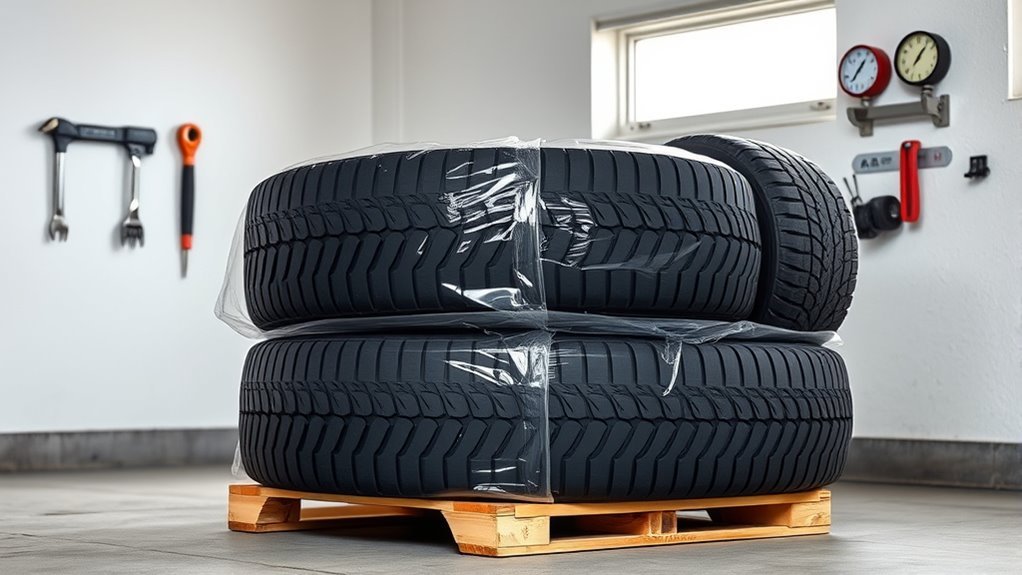
Storing your Toyota RAV4 tires the right way keeps the rubber cleaner, drier, and better protected between seasonal swaps. Whether you are storing winter tires, all-season tires, mounted wheel-and-tire sets, or loose tires, the goal is simple: clean them, dry them, protect them from heat, sunlight, ozone, moisture, and deformation, then inspect them before reinstalling.
Quick Answer
To store Toyota RAV4 tires properly, wash and dry them, inspect for damage, mark their wheel positions, seal each tire in an airtight bag, and keep them in a cool, dry, dark indoor space. Store mounted tires stacked, upright, or hanging; store unmounted tires upright and rotate their position occasionally.
Key Takeaways
- Clean and dry tires before storage so brake dust, road salt, oil, and moisture do not sit on the rubber or wheels.
- Store tires indoors in a cool, dry, dark place away from direct sunlight, heaters, motors, generators, solvents, and ozone-producing equipment.
- Mounted tires can be stacked, hung, or stored upright; unmounted tires should be stored upright rather than hung by the bead.
- Use your RAV4’s driver-side door placard or owner’s manual for the correct cold tire pressure before reinstalling the tires.
- Inspect tread, sidewalls, valve stems, wheels, and tire age before putting stored tires back on the road.
At a Glance
| Time Required | 30–60 minutes for a full set |
| Difficulty | Easy DIY maintenance |
| Tools Needed | Mild soap, water, tire brush, microfiber towel, tire pressure gauge, marker or labels, airtight tire bags |
| Cost | Low if storing at home; professional tire storage often costs extra per season |
Why Proper Tire Storage Matters for Your RAV4

Proper tire storage matters because tires keep aging even when they are not being driven. Heat, sunlight, moisture, ozone, petroleum products, and poor storage position can dry the rubber, encourage cracking, corrode wheels, or create temporary flat spots. Tire manufacturers recommend storing tires in a clean, cool, dry, indoor environment to help preserve appearance and performance.
For a Toyota RAV4, this is especially useful if you swap between winter tires and all-season or summer tires. Seasonal tires may sit unused for several months, so a small amount of preparation before storage can help them stay safer, cleaner, and easier to reinstall when temperatures change.
Warning: Do not store tires near furnaces, electric motors, generators, welders, battery chargers, solvents, fuel, lubricants, or chemicals. Ozone and chemical exposure can accelerate rubber deterioration.
Essential Steps for Tire Storage Preparation
Before putting your RAV4 tires away for the season, prepare them like you would prepare any safety-critical part of the vehicle. A clean, labeled, inspected tire is easier to track, rotate, and reinstall correctly later.
1. Clean Tires Thoroughly
Wash each tire with mild soap, water, and a tire brush to remove dirt, brake dust, road salt, grease, and small stones from the tread grooves. Rinse thoroughly so soap residue is not left behind, then dry the tire completely with a microfiber towel.
If the tires are mounted on wheels, clean the wheels too. Moisture and road salt left on the wheel surface can encourage corrosion during long storage.
Note: Avoid applying glossy tire dressings before storage. Some dressings are cosmetic, and tires do not need them to be stored safely. Clean, dry rubber is the better starting point.
2. Mark Each Tire’s Position
Before removing the tires, label where each one came from: front left, front right, rear left, and rear right. You can write on masking tape, use tire tags, or mark the storage bag. This helps you follow the correct rotation pattern when the tires go back on the RAV4.
If your tires are directional, also note the rotation arrow on the sidewall. Directional tires must be reinstalled so they roll in the correct direction.
3. Inspect for Damage
Check every tire before storage. Look for visible cracks, cuts, punctures, bulges, exposed cords, uneven wear, sidewall damage, embedded nails, missing valve caps, and bent or corroded wheels.
- Use a tread depth gauge for the most accurate tread reading.
- Check multiple points across each tire, not just one groove.
- Replace tires that are at or below the legal minimum tread depth in your area.
- Have a tire professional inspect any tire with a bulge, deep cut, repeated air loss, or sidewall damage.
In the United States, NHTSA advises that tread should be at least 2/32 inch, but wet-road traction can decline before that point. If you drive in heavy rain, snow, or mountain conditions, do not wait until the last legal moment to replace worn tires.
4. Check Tire Pressure
If your tires are mounted on wheels, check and adjust pressure before storage. Use the cold tire pressure listed on your Toyota RAV4’s driver-side door placard or in the owner’s manual, not the maximum pressure molded into the tire sidewall. The sidewall number is a maximum limit, not the everyday recommended setting for your vehicle.
Unmounted tires do not hold vehicle air pressure because they are not sealed to wheels, so focus on keeping them upright, clean, dry, and protected.
5. Package Tires to Limit Air and Moisture Exposure
Once the tires are clean and fully dry, place each tire in its own airtight plastic tire storage bag, lawn bag, or leaf bag. Push out as much air as practical and tape the bag closed. This helps reduce exposure to moisture and air movement while the tires sit.
| Tire Condition | Best Packaging Method |
|---|---|
| Mounted Tires | Clean, dry, inflate to vehicle placard pressure, then seal individually in bags |
| Unmounted Tires | Clean, dry, seal individually in bags, and store upright |
| Tires on Vehicle | Inflate correctly, avoid long stationary periods, and move the vehicle monthly if possible |
Best Tire Storage Locations
The best tire storage location is indoors, dry, shaded, clean, and stable in temperature. Tires should not be left outside for long periods, even under a tarp, because outdoor storage exposes them to sunlight, humidity, temperature swings, and standing water.
[Products Worth Considering]

This professional wheel and rim brush kit makes it easy to lift brake dust, grime, and dirt from wheels and tires without scratching finishes. The brushes feature soft, metal-free wool heads and a flexible 360-degree rim brush design for reaching hard-to-clean areas. Includes multiple brush types plus accessories for thorough car, motorcycle, and general vehicle detailing.

This oesee 8-piece wheel care kit helps you clean, scrub, and dry wheels safely with purpose-built brushes and towels. The scratch-free microfiber wheel brush lifts brake dust and grime, while the stiff pro-grip tire brush removes tire browning and embedded dirt. A twist loop microfiber drying towel and an applicator help achieve a streak-free finish and cleaner, more even product application.

Monitor tire tread wear with a smart, color-coded depth gauge that shows clear condition ranges at a glance. The bar is range marked for fast, easy readings, helping you maintain safer traction and performance. Each gauge is portable with a pocket clip, and the set includes 20 units for daily use and sharing.
Indoor Storage Options
A basement, climate-controlled garage, storage room, or utility area is usually better than an outdoor shed. Choose a spot that is away from heat sources and chemical fumes.
- Choose a cool, dry, dark area with moderate ventilation.
- Keep tires away from furnaces, radiators, water heaters, and direct sunlight.
- Do not place tires directly on damp concrete; use a pallet, shelf, rack, or clean mat.
- Keep tires away from gasoline, oil, solvents, lubricants, pesticides, and cleaning chemicals.
- Avoid areas with electric motors or ozone-producing equipment.
Professional Storage Facilities
Professional tire storage can be worth it if you lack indoor space, live in an apartment, or want the convenience of having the shop store and reinstall your seasonal tires. Many tire shops and dealerships store tires in controlled indoor areas and may inspect them during seasonal changeovers.
Before paying for storage, ask how the tires are stored, whether they are kept indoors, whether the facility labels each tire position, and whether an inspection is included before reinstalling them.
How to Store Mounted and Unmounted Tires
The best storage position depends on whether the tires are mounted on wheels. Mounted tires have wheel support; unmounted tires rely on the tire casing and bead to hold their shape.
[Products Worth Considering]

The SAFELIFE dial tire tread depth gauge measures tread depth in 1/32 inch increments with clear, easy-to-read 2-inch dial face. Color zones using a traffic light system help you quickly judge whether tread is low, marginal, or ample for safer driving. Built with a durable zinc cast body and a metal detect probe for precise, comfortable use across cars, motorcycles, trucks, and buses.

Measure tire tread depth quickly and accurately with this LUMITECO dial gauge that reads in 1/32" increments up to 14/32". The color-coded green/yellow/red zones make it easy to judge tire wear and know when replacement is needed. A rugged, compact design with a protective pouch helps keep the gauge ready for use on cars, trucks, motorcycles, and more.

Measure tyre tread depth precisely with a digital gauge that reads in both MM and inches, helping you monitor safe driving conditions. The large LCD screen is easy to operate, and the compact tool fits for cars, trucks, and motorcycles. It provides high accuracy with a 0-25.4mm range and includes a 1-year warranty for added peace of mind.
Storing Mounted Tires on Wheels
Mounted RAV4 tires can be stored stacked, upright, or hanging from proper wheel hooks. If stacking, keep the stack stable and avoid placing heavy items on top. If hanging, hang the wheel, not the rubber sidewall.
- Inflate mounted tires to the recommended cold pressure before storage.
- Stack them horizontally if space is limited.
- Hang them by the wheel if you have sturdy wall-mounted hooks.
- Do not hang mounted tires by the tire sidewall.
Storing Unmounted Tires Without Wheels
Unmounted tires should be stored upright on their tread, side by side. Avoid hanging unmounted tires because the bead area can be stressed. If they will sit for a long time, rotate each tire slightly every month or so to reduce pressure on one contact patch.
- Store them upright rather than hanging.
- Keep them on a clean rack, pallet, or dry floor mat.
- Rotate their position occasionally during long storage.
- Do not crush them under heavy boxes or tools.
Pro Tip: Take a photo of the tire labels before storage. When the next seasonal swap comes around, you will know exactly which tire came from each position.
Best Practices for Ensuring Tire Longevity During Storage
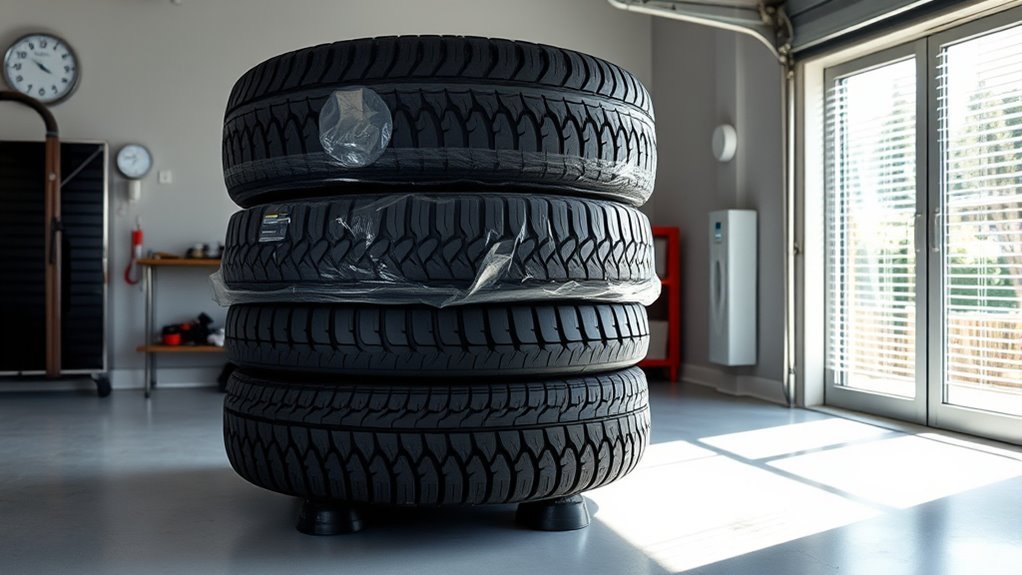
Good storage is not complicated, but consistency matters. Once your RAV4 tires are clean, dry, labeled, and bagged, keep them undisturbed in a safe indoor space and check them occasionally.
| Task | When to Do It | Why It Helps |
|---|---|---|
| Clean tires and wheels | Before storage | Removes brake dust, salt, grime, and moisture |
| Dry completely | Before bagging | Helps prevent trapped moisture and wheel corrosion |
| Label tire position | Before removal or immediately after | Makes future rotation easier |
| Check pressure on mounted tires | Before storage and before reinstalling | Helps reduce deformation and supports safe driving |
| Inspect condition | Before storage and before use | Catches damage before it becomes a road hazard |
| Rotate upright unmounted tires | About monthly during long storage | Reduces pressure on one tread area |
Stored tires should be protected from sunlight, ozone, moisture, heat, and chemicals. A clean indoor space is almost always better than a covered outdoor corner.
Common Tire Storage Blunders and How to Avoid Them
Even small storage mistakes can shorten tire life or make the next installation more difficult. Avoid these common tire storage problems:
- Storing tires outside: Outdoor air, sunlight, humidity, and temperature swings can speed up weathering.
- Putting tires away dirty: Brake dust, road salt, and grime can sit on the rubber and wheels for months.
- Bagging wet tires: Trapped moisture can encourage corrosion on mounted wheels.
- Using the tire sidewall maximum as the RAV4 pressure: Always use the Toyota placard or owner’s manual for operating pressure.
- Hanging unmounted tires: This can stress the bead area. Store unmounted tires upright instead.
- Forgetting tire position labels: Without labels, it is harder to rotate tires evenly at the next installation.
- Ignoring old or damaged tires: Storage does not fix cracks, bulges, punctures, or dangerously low tread.
How to Manage Seasonal Tire Swaps
Seasonal tire swaps are common for RAV4 owners who drive in snow, ice, heavy rain, or changing climates. Many winter tire manufacturers recommend switching to winter tires when average temperatures are consistently around 7°C or 45°F, because winter compounds are designed to stay more flexible in cold weather.
| Action | Best Timing |
|---|---|
| Install winter tires | When temperatures are consistently near 7°C / 45°F or lower |
| Install all-season or summer tires | When cold weather and snow risk have passed |
| Check tire pressure | Before each swap and monthly while in use |
| Inspect tread and sidewalls | Before storage and before reinstalling |
| Re-torque wheel nuts | After installation, following your installer’s guidance |
If you use a shop for seasonal swaps, ask them to check tread depth, tire age, valve stems, wheel condition, and TPMS sensors. If you swap at home, follow your RAV4 owner’s manual and use proper lifting points, wheel chocks, a torque wrench, and safe jack stands.
What to Check for Tire Readiness Before Use
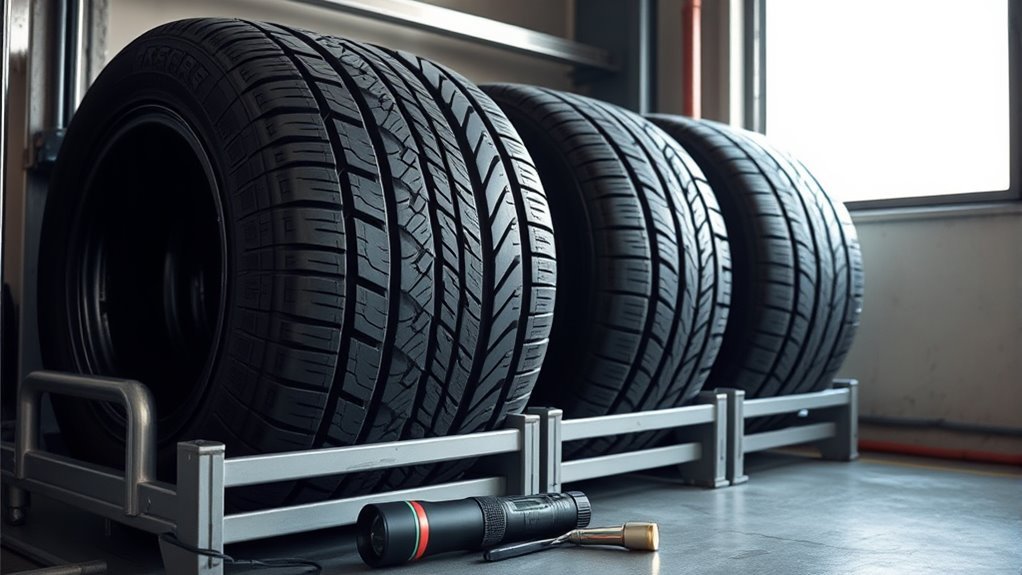
Before reinstalling stored tires on your RAV4, give each tire a final inspection. Tires can lose air, age, or show hidden damage after months of storage.
- Tread Depth: Measure tread with a gauge. Replace tires that are at or below the legal minimum, and consider earlier replacement for winter or wet-weather driving.
- Sidewall Condition: Look for cracks, bulges, cuts, scrapes, or deformation.
- Tire Pressure: Adjust cold pressure to the RAV4’s door placard or owner’s manual specification.
- Wear Patterns: Uneven wear may point to alignment, suspension, rotation, or inflation problems.
- Valve Stems and Caps: Replace cracked stems and missing caps.
- Wheel Condition: Check for corrosion, bends, cracks, or bead-seat damage on mounted tires.
- Tire Age: Check the DOT date code. Many manufacturers recommend professional inspection as tires age, even if tread remains.
Warning: Do not drive on a tire with a sidewall bulge, exposed cords, deep cracking, or repeated air loss. Have it inspected or replaced before use.
Evaluating Professional Tire Storage Options: Are They Worth It?
Professional tire storage is worth considering if you do not have a clean indoor space or if you prefer one-stop seasonal service. The biggest benefits are convenience, saved garage space, proper labeling, and the chance to have the tires inspected during each swap.
Before choosing a storage provider, ask these questions:
- Are the tires stored indoors, away from sunlight and moisture?
- Are they labeled by vehicle and wheel position?
- Are mounted tires stored in a way that avoids unnecessary load or deformation?
- Is a tire inspection included before reinstalling?
- Are TPMS sensors, valve stems, tread depth, and tire age checked?
- What happens if a tire is found unsafe before the next season?
If the facility gives clear answers and stores tires in a controlled indoor space, the service can be a practical option for RAV4 owners who want less lifting, less clutter, and fewer seasonal storage headaches.
[Products Worth Considering]

Upgrade your Toyota’s wheels with durable aluminum alloy valve stem caps that help protect valve cores from corrosion and direct exposure to road grime, clay, water, and snow. Rubber rings improve sealing to help prevent air leakage and maintain stable tire pressure for safer driving. These caps are easy to install or remove without tools and add a unique, stylish look to your car.

Rubber Care delivers a beautiful dark black satin/matte finish on tires and other rubber or plastic surfaces, drying to the touch without oily shine. Its ceramic aircraft-grade formula helps repel dirt and brake dust residue, keeping surfaces cleaner longer. Triple nano ceramic polymer technology provides best-in-industry UV protection, restoring and protecting rubber while also working on weather stripping and de-ice boot care.

Steelman white tire marking crayons provide high-contrast, semi-permanent marks for repairing and inspecting tires and equipment. They write on wet or dry, smooth or coarse surfaces including rubber, metal, glass, and wood, making them ideal for puncture location and damage outlining. The lead- and zinc-free crayons resist weather and fading yet wipe away when you no longer need the marks.
Frequently Asked Questions
Is it better to store RAV4 tires flat or upright?
It depends on whether the tires are mounted. Mounted tires can be stacked, stored upright, or hung by the wheel. Unmounted tires are best stored upright on their tread and rotated occasionally during long storage.
Is it better to store tires inside or outside?
Inside is better. Tire makers recommend a clean, cool, dry, indoor storage area because outdoor storage exposes tires to sunlight, moisture, ozone, and temperature swings that can accelerate aging.
How do I keep tires from getting flat spots during storage?
For mounted tires stored on a vehicle, inflate them correctly and move the vehicle about once a month if possible. For tires stored off the vehicle, use the correct storage position and avoid leaving heavy items on top of them.
Should I put tire dressing on tires before storing them?
No. Tire dressing is not needed for safe storage. Wash the tires with mild soap and water, rinse them well, dry them completely, and store them in airtight bags in a cool, dry, dark indoor space.
Where do I find the correct Toyota RAV4 tire pressure?
Use the tire and loading information placard on the driver-side door jamb or the Toyota owner’s manual for your exact model year and tire size. Do not use the maximum pressure printed on the tire sidewall as your normal driving pressure.
Conclusion
Storing your RAV4’s tires properly is one of the easiest ways to protect your investment between seasonal swaps. Clean them, dry them, label their positions, inspect them carefully, bag them, and keep them in a cool, dry, dark indoor location. When it is time to reinstall them, check tread depth, sidewalls, pressure, valve stems, and tire age before driving. A careful storage routine helps your tires stay safer, cleaner, and ready for the next season.
Sources
- Michelin: Storing My Tires — supports storing tires in a cool, dry, clean indoor environment.
- Continental Tire: 7 Tips for Storing Your Tires — supports cleaning tires and protecting them from heat, ozone, and the elements.
- Continental Tire Storage and Handling Guidelines — supports monthly movement for vehicles on stored tires and safe storage guidance.
- NHTSA TireWise — supports routine tire pressure, tread, and tire safety checks.
- NHTSA Tire Safety Brochure — supports tire pressure, load limit, and damage inspection guidance.
- Toyota Owners: RAV4 Tire Inflation Pressure — supports using Toyota’s recommended tire inflation pressure and checking valve caps.

