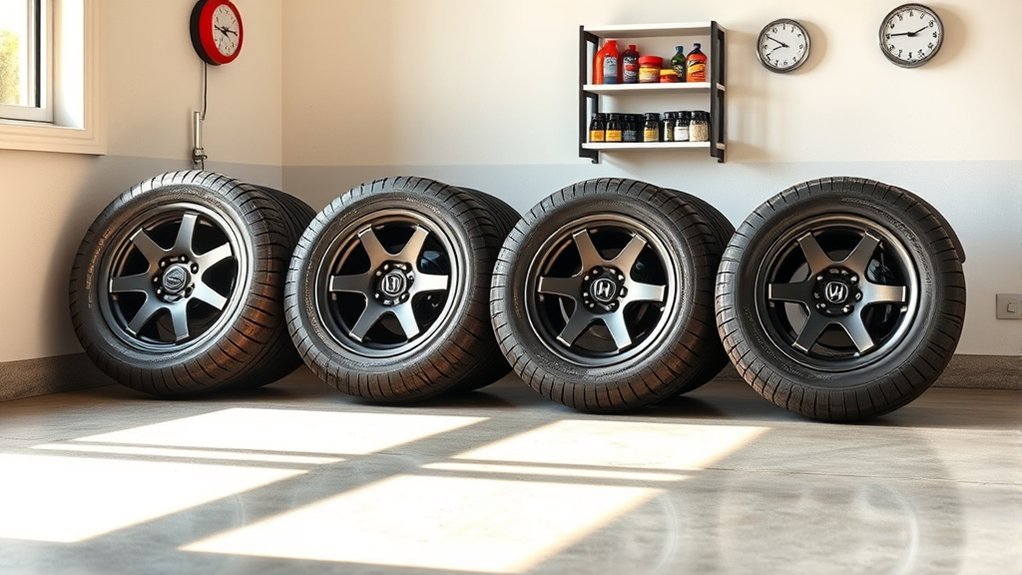
Storing Honda Accord tires the right way is simple, but a few details matter: clean them first, keep them dry, protect them from sunlight and ozone, and store mounted and unmounted tires differently. Before you drive on them again, always inspect the tread and sidewalls and set the pressure to the value on your Accord’s driver-side tire and loading label.
Quick Answer
To store Honda Accord tires, wash them with mild soap and water, dry them completely, seal each tire in an opaque airtight bag, and keep them in a cool, dry, dark place away from heat, sunlight, motors, fuel, and chemicals. Store unmounted tires upright; stack or hang tires that are mounted on wheels.
Key Takeaways
- Clean and dry tires before storage so brake dust, road grime, oils, and trapped moisture do not sit on the rubber.
- Use the tire pressure shown on your Honda Accord’s driver-side tire and loading label before driving; do not rely on a generic storage PSI.
- Store unmounted tires upright. Store tires mounted on wheels stacked flat or hung by the wheel, not by the tire sidewall.
- Keep tires away from sunlight, ozone-producing motors, heat, gasoline, oil, solvents, and damp areas.
- Before reinstalling, check tread depth, cracks, bulges, embedded objects, valve stems, and tire age.
At a Glance
| Time Required | 30–60 minutes for a full set |
| Difficulty | Easy |
| Tools Needed | Mild soap, water, tire brush, towels, tire pressure gauge, opaque airtight bags, tape, labels or marker, tread-depth gauge or penny |
| Cost | Usually under $20 if you already own a tire gauge and cleaning supplies |
How to Clean and Inflate Your Honda Accord Tires Before Storage
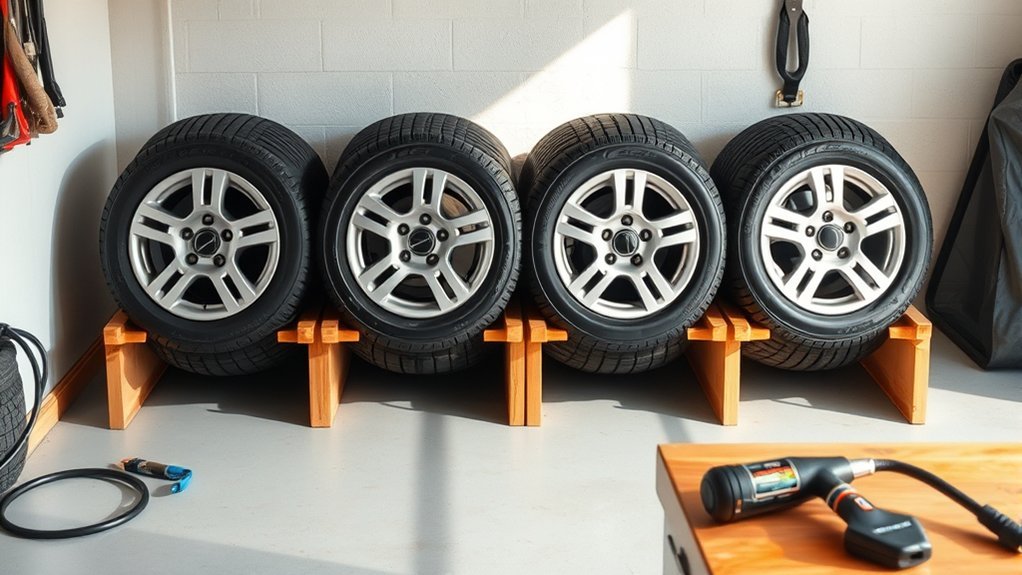
Start by marking each tire’s position before removal, such as LF for left front or RR for right rear. This makes it easier to rotate the tires correctly the next time they go back on the car. Michelin recommends noting tire position, inspecting each tire, cleaning the tires and wheels with water, drying them well, and removing stones or debris from the grooves before storage.
Wash each tire with mild soap, water, and a tire brush. Remove brake dust, road grime, oil, and small stones from the tread. If the tires are mounted on wheels, clean the wheels too, then dry everything completely with towels and let the tires air-dry before bagging.
Warning: Do not apply tire dressing, shine, or gloss products before storage. Tire Rack and Continental both warn that tire compounds are already formulated for environmental resistance, and dressings can hinder rather than help long-term storage.
For pressure, do not use a one-size-fits-all storage number for your Honda Accord. Before the tires go back on the road, inflate them cold to the pressure shown on your Accord’s driver-side tire and loading information label or in the owner’s manual. Honda states that this label lists the original tire sizes and the proper cold tire pressure for the front, rear, and spare tires.
Tire Inflation Tips for Storage
If your Honda Accord tires are stored loose and mounted on wheels, check that they are not visibly flat or damaged before storage, then set the correct cold pressure before reinstalling and driving. If the tires stay on the vehicle during long-term storage, reduce the weight on the tires by safely lifting the vehicle on approved stands when possible, or move the car periodically to help reduce flat spotting.
The National Highway Traffic Safety Administration recommends checking tire pressure at least once a month when tires are cold. It also notes that tire pressure monitoring systems warn only when a tire is significantly underinflated, so a TPMS light is not a substitute for using a tire pressure gauge.
Recommended PSI Levels
Your Honda Accord’s correct PSI depends on the model year, trim, tire size, and load rating. Use the tire and loading information label on the driver-side doorjamb, not the PSI molded into the tire sidewall and not a generic online range. The sidewall number is usually the tire’s maximum pressure, not the vehicle manufacturer’s recommended driving pressure.
Note: Always set pressure when tires are cold, meaning the car has not been driven for at least three hours. Recheck pressure before the first drive after storage.
Monthly Pressure Checks
During storage, look over the tires monthly for visible pressure loss, cracking, moisture inside bags, or deformation. Before driving, use a gauge to set all four tires to the Honda placard pressure and check the spare if your Accord has one. Proper pressure supports safer handling, tire durability, fuel economy, and even wear.
Choosing the Right Storage Method: Flat vs. Upright
The best storage position depends on whether your Honda Accord tires are mounted on wheels or unmounted. Use this simple rule:
- Unmounted tires: Store them upright, like books on a shelf. Rotate their position occasionally so the same spot is not always carrying the load.
- Tires mounted on wheels: Stack them flat or hang them by the wheel/rim. Stacking is often the easiest choice for a garage or basement.
- Do not hang unmounted tires: Hanging a tire without a wheel can distort the sidewall.
- Tires left on the vehicle: For long storage, take weight off the tires with proper stands when possible, or move the vehicle periodically.
Continental notes that tires mounted on rims can be stacked or hung, while unmounted tires should not be hung because they can distort. Michelin also advises removing weight from tires when a vehicle is parked for a long period.
[Products Worth Considering]

Keep your tires properly inflated with this analog VONDIOR tire pressure gauge, designed for fast, easy readings without batteries. The swiveling, two-axis hose and large glow dial help you measure at any tire angle with instant visibility. Built with a protective rubber shield, it supports durable, low-maintenance use for cars and trucks.

This 3-piece wheel and tire brush set makes it easy to clean light, medium, and heavy dirt from wheels, rims, tires, and exterior surfaces. It includes both soft and stiff bristle options for gentle scrubbing and tough grime removal, helping lift brake dust and road buildup. The long-handle design supports comfortable cleaning across cars, trucks, SUVs, RVs, motorcycles, and more, with simple care instructions to restore brush shape.

Clean wheels and rims with soft feathered bristles that safely remove dirt and road grime while helping restore original luster. The short non-slip handle makes it easy to scrub in tight wheel wells, and the brush is suitable for vehicles and hard-to-reach areas. It can also be soaked and rubbed to help restore bristles to their shape after use.
Where Should You Store Your Tires?
Choose a clean, cool, dry, and dark indoor area. A basement, climate-controlled workshop, or dry garage corner is usually better than a hot attic, outdoor shed, balcony, or exposed driveway. Keep the tires away from direct sunlight, heaters, furnaces, sump pumps, generators, compressors, central vacuum systems, and other electric motors that may produce ozone.
Tire Rack explains that heat and exposure to the elements influence tire aging, and it recommends a cool, dry location away from ozone sources. Michelin also recommends an indoor, clean, cool, dark location away from sunlight, heat, and ozone.
[Products Worth Considering]

This professional wheel and rim brush kit makes it easy to lift brake dust, grime, and dirt from wheels and tires without scratching finishes. The brushes feature soft, metal-free wool heads and a flexible 360-degree rim brush design for reaching hard-to-clean areas. Includes multiple brush types plus accessories for thorough car, motorcycle, and general vehicle detailing.

This 7-piece car wheel brush kit delivers gentle, scratch-free cleaning with extra-soft, metal-free brush heads designed to lift brake dust, dirt, and grime. The brushes bend up to 360 degrees for hard-to-reach wheel areas, while the included tire shine applicator pad helps apply tire dressing evenly with less build-up. An organizer bag is included for convenient storage, making it ideal for regular wheel and tire detailing.

The Chemical Guys Gerbil Wheel & Rim Brush is designed to safely clean wheels, rims, exhaust tips, tires, and engine bay components without scratching delicate finishes. Its soft natural bristles help lift brake dust, grime, and buildup while conforming to tight spaces and intricate contours. A comfort grip handle delivers control for extended detailing sessions.
Ideal Storage Locations
- Best: Climate-controlled basement, dry storage room, or indoor tire rack.
- Acceptable: Clean garage corner away from heat, sun, water, and electric motors.
- Avoid: Outdoor storage, damp sheds, hot attics, balconies, direct sunlight, and areas near fuel or solvents.
Temperature and Humidity Control
Temperature swings and moisture can speed up rubber aging. Keep the storage space as stable as possible, and never seal damp tires inside bags. If your storage area is humid, use fully dry tires, airtight bags, and a small desiccant packet outside the tread area inside each bag.
Avoiding Sunlight Exposure
Direct sunlight and UV exposure can dry and crack rubber over time. Use opaque bags or covers and keep tires away from windows. If you must store tires outdoors for a short period, raise them off the ground and cover them with waterproof material that allows some ventilation so moisture does not build up.
Protecting Tires From UV Damage and Moisture
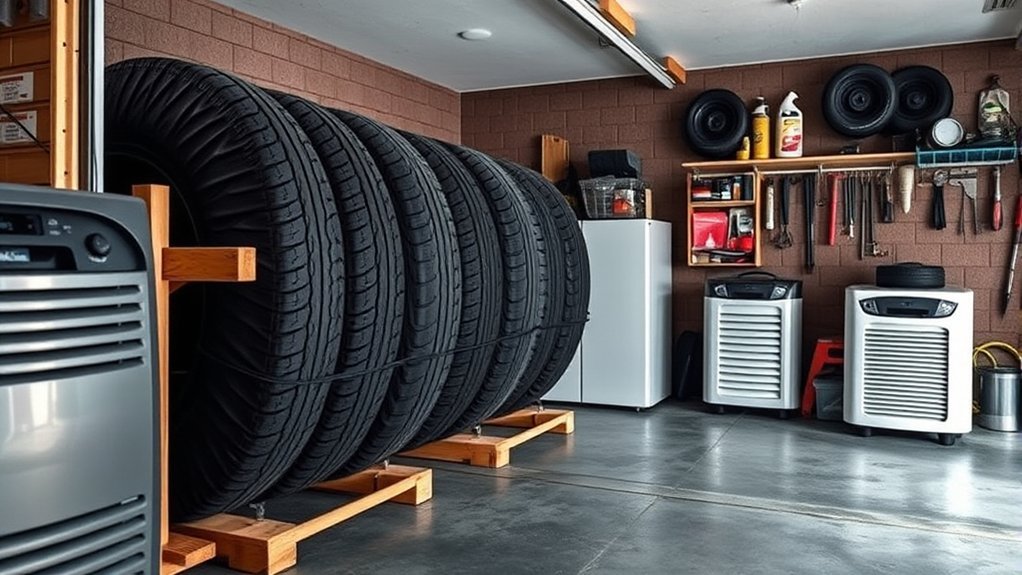
After the tires are clean and completely dry, place each one in its own large, opaque, airtight plastic bag. Remove as much air as practical, then tape the bag shut. Tire Rack recommends clean, dry tires in large opaque airtight bags to reduce exposure to the atmosphere and help slow oil evaporation from the rubber compounds.
Do not trap moisture in the bag. If you see condensation later, open the bag, dry the tire and bag fully, then reseal it. Keep bagged tires off damp floors by using shelves, a rack, or a clean pallet.
Pro Tip: Label each bag with tire position and date stored. That small step saves time when you reinstall and rotate the tires later.
[Products Worth Considering]

This wheel brush kit delivers pro-level cleaning at home, lifting dirt, grime, and brake dust to help restore wheel appearance. It includes multiple brush styles and applicator pads for tackling different wheel surfaces, with gentle, metal-free bristles designed to reduce scratching risk. The flat and double-ended brushes are built for comfort and reach, making wheel care easier for cars, trucks, and RVs.

Monitor tire tread wear with a smart, color-coded depth gauge that shows clear condition ranges at a glance. The bar is range marked for fast, easy readings, helping you maintain safer traction and performance. Each gauge is portable with a pocket clip, and the set includes 20 units for daily use and sharing.

Cristal Products Untouchable Tire Shine Spray delivers a deep, wet-look gloss that enhances your vehicle’s tires. It’s quick-drying and spreads smoothly for consistent, streak-free coverage, while forming a protective coating against UV rays, road grime, and weather. Suitable for all tire types, it helps restore dull, faded tires to a showroom-quality finish.
Inspect Your Tires Before Long-Term Storage
Before storing your Honda Accord tires, inspect every tire in bright light. Look for cuts, cracks, bulges, exposed cords, punctures, uneven wear, embedded nails, sidewall bubbles, and damaged valve stems. If you find structural damage, have the tire inspected by a qualified tire professional before using it again.
Measure tread depth. NHTSA says tires are not safe and should be replaced when tread is worn down to 2/32 of an inch. It also recommends checking tread at least once a month when checking pressure. If you do not have a tread-depth gauge, use the penny test as a quick screen, but a gauge gives a more precise reading.
Tire storage is not only about saving money. NHTSA reported 511 tire-related crash fatalities in 2024, so pressure, tread, and condition checks matter before the tires return to the road.
Organizing Stored Tires: Best Practices
A simple storage system keeps the tires cleaner and makes reinstalling easier:
- Label each tire: Mark LF, RF, LR, or RR before removal.
- Bag each tire separately: Use clean, dry, opaque airtight bags.
- Keep tires off damp floors: Use a shelf, pallet, or tire rack.
- Do not stack too high: If tires are mounted on wheels, stack them securely so they cannot tip.
- Separate whitewalls or raised white letters correctly: If not bagged, store white-to-white and black-to-black to prevent staining.
- Check monthly: Look for moisture, pests, sidewall changes, and pressure loss before reinstalling.
Common Mistakes to Avoid When Storing Tires

Avoid these tire storage mistakes:
- Using a generic PSI: Set pressure to the Honda doorjamb label before driving.
- Storing dirty or damp tires: Moisture and grime can speed up corrosion and rubber deterioration.
- Leaving tires in sunlight: UV rays and heat can damage rubber.
- Keeping tires near motors or furnaces: Ozone can contribute to cracking.
- Using tire dressing: Storage dressings are unnecessary and may interfere with the tire compound.
- Hanging unmounted tires: This can distort the sidewall.
- Ignoring tire age: Check the DOT date code and have older tires inspected before use.
- Driving without a full check: Inspect tread, sidewalls, pressure, and valve stems before the first trip after storage.
Before Reinstalling Your Honda Accord Tires
When storage season ends, remove each tire from its bag and inspect it again. Check tread depth, sidewalls, valve stems, wheel condition, and the DOT date code. Set pressure cold to the value listed on your Accord’s tire and loading information label. After installation, make sure the TPMS light is off, listen for vibration, and have the tires balanced or inspected if the car shakes, pulls, or feels unusual.
If the tires show cracks, bulges, exposed cords, repeated pressure loss, severe uneven wear, or tread at 2/32 inch, do not drive on them. Replace the tire or have it checked by a qualified tire shop.
Frequently Asked Questions
How do you store Honda Accord tires for a long time?
Clean them with mild soap and water, dry them completely, seal each tire in an opaque airtight bag, and store them indoors in a cool, dry, dark place. Keep them away from direct sunlight, moisture, heat, ozone-producing motors, gasoline, oil, and solvents. Inspect them before reinstalling.
Should Honda Accord tires be stored upright or flat?
Store unmounted tires upright. If the tires are mounted on wheels, stacking them flat or hanging them by the wheel is usually best. Do not hang unmounted tires because the sidewall can distort.
What PSI should Honda Accord tires be stored at?
Do not use a generic PSI for driving. Before reinstalling and driving, inflate the tires cold to the pressure listed on your Honda Accord’s driver-side tire and loading information label or in the owner’s manual. If the tires stay on the car during storage, reduce weight on them when possible and recheck pressure before driving.
Can I store Honda Accord tires outside?
Indoor storage is better. If outdoor storage is unavoidable for a short time, keep the tires raised off the ground, covered from sunlight and rain, and ventilated enough to avoid moisture buildup. Do not leave them exposed to weather for long periods.
Should I use tire shine before storing tires?
No. Tire dressings, shine, and gloss products are not needed before storage. Clean the tires with mild soap and water, dry them fully, and store them in airtight bags instead.
How do I know if stored tires are still safe?
Check tread depth, sidewall cracks, bulges, cuts, embedded objects, valve stems, air loss, and the DOT date code. NHTSA says tires are not safe when tread is worn to 2/32 inch. If a tire is old, cracked, bulging, or repeatedly losing pressure, have it inspected or replace it.
Conclusion
To maximize the life of your Honda Accord tires, clean and dry them first, bag them properly, choose the right storage position, and keep them away from sunlight, heat, ozone, chemicals, and moisture. The most important correction is pressure: before driving, use the exact cold PSI on your Accord’s tire and loading information label. A careful inspection before storage and again before reinstalling helps protect your tires, your budget, and your safety.
Sources
- Honda — Tire and Loading Information Label — backs up using the driver-side label for proper cold tire pressure and tire size.
- NHTSA TireWise — backs up monthly cold-pressure checks, tread-depth safety, TPMS limitations, and tire-related crash safety context.
- Michelin — Storing Tires — backs up marking tire position, cleaning, drying, debris removal, indoor storage, and removing weight from tires during long vehicle storage.
- Tire Rack — How Do I Store Tires? — backs up airtight opaque bagging, avoiding tire dressings, cool/dry storage, sunlight avoidance, and ozone-source warnings.
- Continental — How to Correctly Store Your Tires — backs up no dressing, airtight bagging, UV/chemical/ozone avoidance, and mounted vs. unmounted storage position guidance.