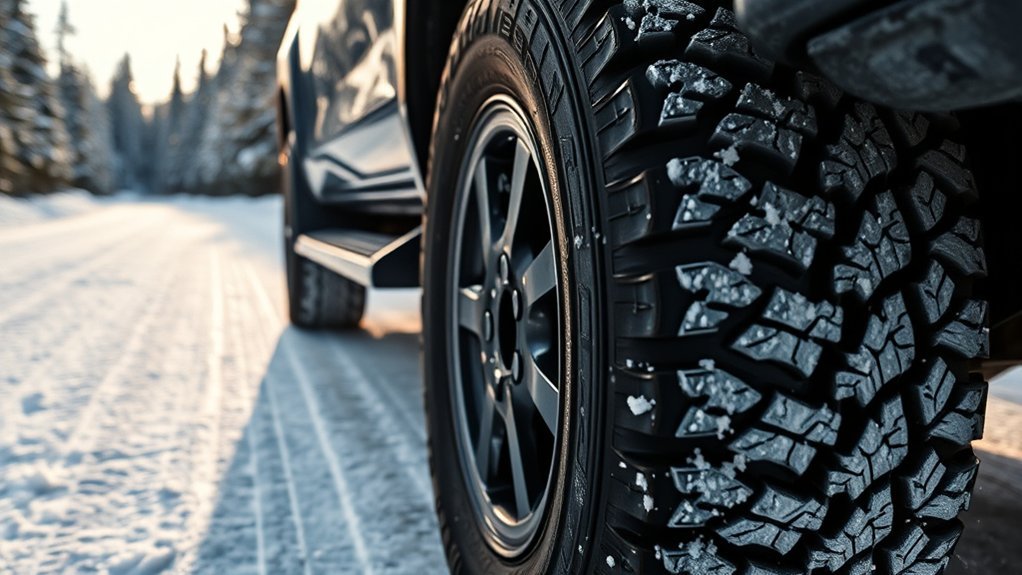
Winter tire rubber compounds matter for your Hilux because the tire has to stay soft enough to grip when the road is cold, icy, snowy, or covered in slush. A Hilux may have four-wheel drive, but braking, cornering, and steering still depend on the four contact patches touching the road. The right winter compound helps those contact patches stay flexible, stable, and predictable when ordinary all-season or summer tires begin to lose grip.
Quick Answer
Winter tire rubber compounds matter for a Hilux because they stay flexible in cold weather, helping the tire grip snow, ice, slush, and cold pavement. That flexibility improves braking, steering, and traction, especially when temperatures stay below about 45°F / 7°C.
Key Takeaways
- Winter tires use rubber compounds designed to remain flexible in cold weather, while many all-season and summer compounds stiffen as temperatures drop.
- For a Hilux, compound choice matters because pickup weight, cargo, towing, and 4×4 use all place high demands on tire grip.
- Look for the three-peak mountain snowflake symbol, also called 3PMSF, because it shows the tire meets specific snow-traction performance requirements.
- Always match the correct tire size, load index, speed rating, and pressure listed by Toyota or on the vehicle tire placard.
At a Glance
| Time Required | 10–20 minutes to check your tire placard, size, load rating, and winter symbol before buying |
| Difficulty | Easy if you compare the tire sidewall to the Hilux placard or owner’s manual |
| Tools Needed | Tire pressure gauge, tread-depth gauge, owner’s manual or driver-door tire placard |
| Cost | Varies by Hilux tire size, load rating, wheel size, brand, and whether you buy separate winter wheels |
Understanding Winter Tire Rubber Compounds
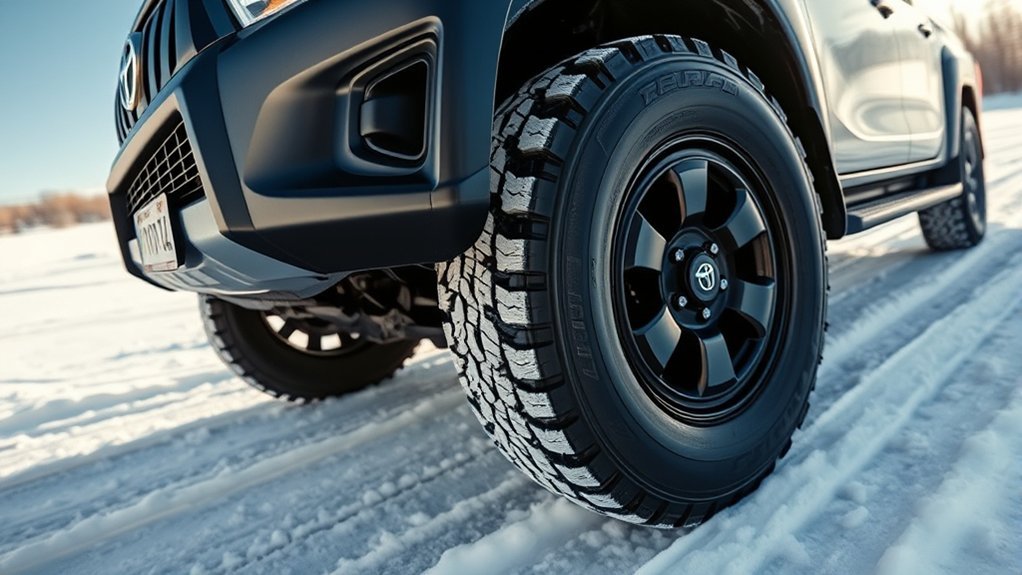
Winter tire rubber compounds are designed to stay pliable when temperatures fall. This matters because a tire that becomes stiff cannot conform as well to rough pavement, packed snow, or ice. Michelin notes that winter tires are designed for cold temperatures, not only snowfall, and recommends installing them when daily temperatures consistently fall below 45°F. Michelin’s winter tire guidance also explains that specialized winter compounds stay flexible as temperatures drop.
Manufacturers tune winter compounds with a mix of natural rubber, synthetic rubber, silica, oils, resins, and other additives. The exact formula is usually proprietary, so it is better to focus on performance rather than a single “ideal” rubber ratio. A good winter compound should remain flexible in cold weather, resist cracking, support the vehicle’s load, and work with the tread pattern to move snow, water, and slush away from the contact patch.
For a Hilux, that flexibility is especially important. A pickup may carry tools, passengers, cargo, or tow a trailer. That extra load increases the demand on the tire during braking and cornering. The rubber compound must keep grip without feeling vague, squirmy, or unstable.
The Role of Rubber Flexibility in Cold Weather Performance
Rubber flexibility is one of the main reasons winter tires feel more controlled in cold weather. Below about 45°F / 7°C, many all-season and summer tires begin to lose elasticity. Transport Canada explains that all-season and summer tires begin to lose elasticity below 7°C, while winter tires keep their elasticity and grip at much lower temperatures. Transport Canada’s winter tire guidance also recommends looking for the peaked mountain with snowflake symbol when shopping for winter tires.
When the rubber stays flexible, the tread blocks can press into small road imperfections instead of sliding across them. That gives the tire more mechanical grip during acceleration, braking, and turning. This is why winter tires can help even on cold dry roads before the first heavy snowfall arrives.
Warning: Do not install winter tires on only two wheels of your Hilux. For stable braking and handling, use four matching winter tires with the correct size, load index, and speed rating.
How Tire Compounds Enhance Grip on Ice and Snow
Winter tire compounds help grip ice and snow in three main ways: they stay flexible, they support the tread pattern, and they help maintain contact with the road. The compound alone is not everything, but it is the foundation that allows the tread blocks, sipes, and biting edges to work.
Silica is one important ingredient in many modern tire compounds. Continental AG explains that silica in tire compounds has helped improve wet braking and rolling resistance, and that Continental introduced a winter tire with silica in the rubber compound in the 1990s. Continental’s silica overview shows why compound chemistry matters, not just tread depth.
On snow, the tread edges bite into the surface. On ice, the tire needs a flexible compound and fine siping to create as much usable friction as possible. On slush, the compound must work with grooves that clear water and soft snow from beneath the tire. If the compound is too stiff for the weather, even an aggressive-looking tread can struggle to stay planted.
Pro Tip: If your Hilux sees regular snow, mountain roads, or icy mornings, choose a tire with the three-peak mountain snowflake symbol rather than relying on an M+S marking alone.
Differences Between Standard and Winter Tire Compounds
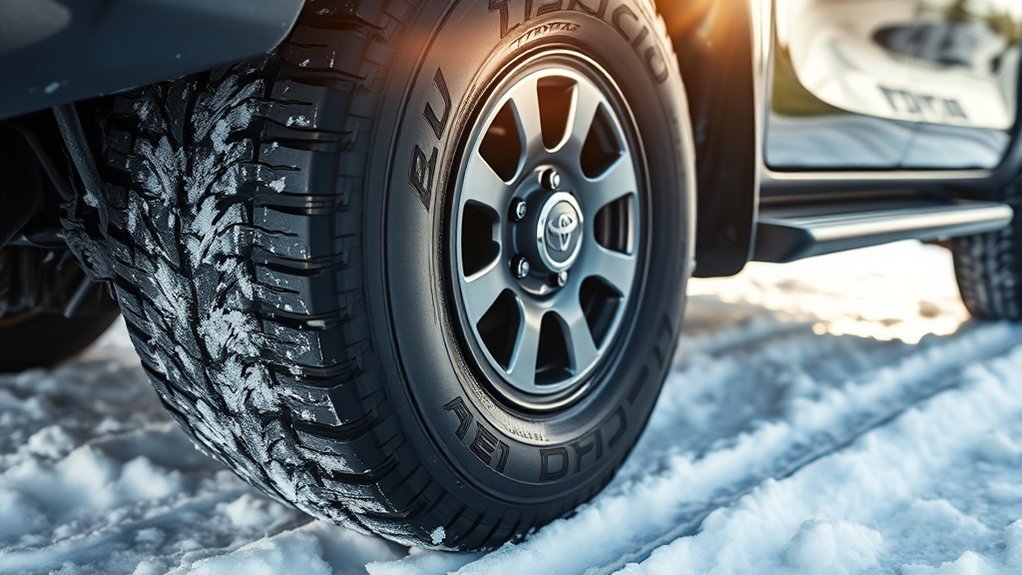
The biggest difference between winter and non-winter tires is not just tread shape. It is the way the tread compound behaves in low temperatures. Continental explains that winter tires use a special rubber compound that remains flexible in cold temperatures, while all-season tires stiffen in cold weather and lack the specialized tread design needed for optimal winter safety. Continental’s winter tire guide recommends switching when temperatures consistently drop below 45°F / 7°C.
[Products Worth Considering]

Cool Coolers by Fit & Fresh provides reusable XL slim ice blocks designed for strong, long-lasting cooling in coolers and cooler bags. The break-resistant, BPA-free packs are leak-proof and easy to clean, helping keep food and beverages cold without a messy melt. A space-saving slim shape fits top or side placements, and the tire-pattern design boosts cooling surface area for next-day use.

These universal tire valve stem caps help protect valve cores from dust, debris, and moisture while helping maintain stable tire pressure. The corrosion-resistant metal construction and sealed design provide reliable protection in road grime, mud, and winter conditions. Twist-on installation makes them quick to fit on cars, SUVs, trucks, and motorcycles.

The Topeak SmartGauge D2 delivers precise digital tire pressure readings for bikes, motorcycles, and sports equipment up to 250 psi (17 bar). Its rotating SmartHead works with both Presta and Schrader valves, so you can check pressure quickly without adapters. The LCD display makes it easy to read results in psi, bar, or kg/cm² with an included CR2032 battery for immediate use.
Composition Variations Explained
Summer tires are usually optimized for warm dry and wet roads. Their compounds can become too stiff in winter. All-season tires are a compromise for moderate climates, but they are not the same as dedicated winter tires. All-weather tires sit between those categories: many carry the 3PMSF symbol and can be used year-round in some climates, but a dedicated winter tire is still the stronger choice for frequent snow, ice, and severe cold.
| Tire Type | Compound Behavior | Best Use |
|---|---|---|
| Summer tire | Optimized for warm pavement; can lose grip in cold weather | Warm dry and wet roads |
| All-season tire | Balanced compound, but less specialized for ice and snow | Mild climates and occasional light snow |
| All-weather tire | Broader temperature range; many models carry 3PMSF | Drivers who want one tire for varied conditions |
| Dedicated winter tire | Soft, cold-weather-focused compound with winter tread design | Frequent snow, ice, frost, slush, and cold temperatures |
Performance in Cold Weather
Cold-weather performance comes from the combined effect of compound, tread depth, siping, and tire structure. The compound keeps the tread flexible; the tread design helps evacuate snow and slush; the sipes create biting edges. When these features work together, the tire can stop, turn, and accelerate with more control.
Grip and Handling Differences
A Hilux with winter tires should feel more predictable on cold roads than the same vehicle on tires not designed for winter. Four-wheel drive can help the truck move from a stop, but it does not create extra braking grip on ice. Steering and stopping are still limited by tire traction. That is why compound choice matters even if your Hilux has 4×4.
How Tread Design Influences Winter Tire Performance
The compound gives the tire flexibility, but tread design decides how that grip reaches the road. A good winter tread usually has deep grooves, many sipes, and block edges that bite into packed snow. These features help the tire clear slush and hold snow in the tread, which can improve snow-on-snow traction.
- Deep grooves help move slush and water away from the contact patch.
- Sipes create small biting edges for snow and ice.
- Open shoulder channels help clear loose snow.
- Stable tread blocks reduce squirm when the truck is loaded or braking hard.
For Hilux owners who drive on rural roads, work sites, mountain passes, or unplowed lanes, tread design should match the real driving surface. Ice-focused winter tires, snow-focused winter tires, and winter-rated all-terrain tires can feel different, even when all carry winter markings.
Why the Right Tire Compound Matters for the Hilux
The Hilux is often used as a working pickup, not just a commuter. That makes tire selection more important. The right winter tire must fit the wheel, carry the load, match the correct speed rating, and maintain pressure in cold weather. Toyota explains that correct tire pressure specs can be found on the driver’s door jamb sticker, in the owner’s manual, and through online manuals. Toyota’s tire pressure guide also recommends checking pressure at least monthly and before long trips or heavy loads.
Key Performance Factors
- Cold flexibility: The compound should remain pliable below about 45°F / 7°C.
- Load capacity: The tire must meet or exceed the Hilux load index required for your model and use.
- Stability: Pickup tires need enough structure to handle cargo, towing, and rough roads.
- Winter certification: Look for the three-peak mountain snowflake symbol for severe snow service.
- Pressure control: Cold temperatures lower tire pressure, so check pressures regularly.
Cold Weather Flexibility
Cold-weather flexibility is the reason winter tires can grip cold pavement before snow even appears. A flexible compound can conform to the road surface and keep the tread working. If your Hilux is driven early in the morning, on shaded roads, or in areas with frost and black ice, this flexibility can be the difference between a controlled stop and a slide.
Traction on Icy Surfaces
Ice is the hardest surface for any tire. Winter compounds help because they stay softer and allow siped tread blocks to work against the surface. Studded winter tires may add grip on ice where legal, but they can be noisy and restricted by local rules. Studless winter tires rely more heavily on compound technology, siping, and tread design.
Note: If you tow, carry heavy loads, or drive off-road in winter, ask the tire shop to confirm the load index and light-truck rating. Do not choose a passenger-car winter tire simply because the rim diameter matches.
What Do Real-World Tests Say About Winter Tire Performance?
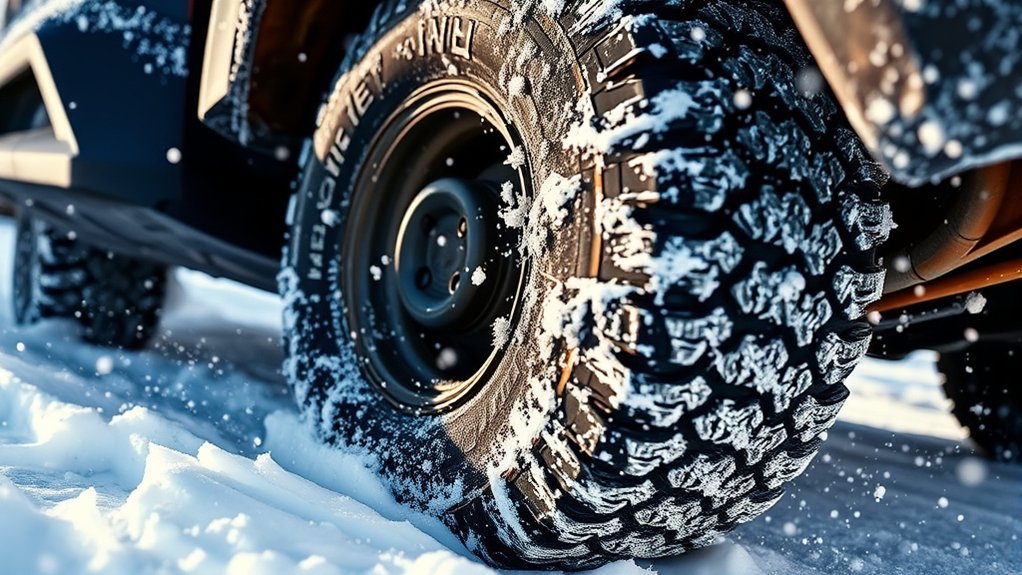
Real-world tire tests show that winter tires can make a major difference, but the result depends on tire model, surface, vehicle, temperature, and speed. That is why exact percentages should be treated carefully.
In one Tire Rack snow test, a winter-tire-equipped car stopped from 30 mph on packed snow in about 59 feet, while the all-season-equipped car needed about 30 more feet. Tire Rack’s snow test also found the winter-tire car accelerated 200 feet faster and completed a snowy corner that the all-season car could not complete at the same speed.
In Tire Rack’s packed-snow braking test, the winter-tire-equipped car stopped about 30 feet shorter from 30 mph than the all-season-equipped car.
In a separate Tire Rack ice test, studless winter tires stopped from 10 mph in about 21 feet 2 inches, while all-season tires needed about 39 feet 10 inches. Tire Rack’s ice test also found the winter tires accelerated and cornered better on the ice surface.
These tests are not a promise that every Hilux will stop in the same distance. A loaded pickup, worn tires, downhill grade, black ice, and driver reaction time can all change the result. The lesson is simple: winter tire compounds and tread designs can provide more usable grip when conditions are cold and slippery.
Soft vs. Hard Rubber Compounds: Which Is Best for Winter Driving?
For winter driving, the best compound is not simply “the softest.” It is the compound that stays flexible in cold weather while still supporting the vehicle’s weight, resisting wear, and keeping the tread blocks stable. A tire that is too soft may feel vague or wear quickly on dry roads. A tire that is too hard may lose grip on snow and ice.
[Products Worth Considering]

The Kurgo Seasonal Tire Tote helps protect your car interior, clothes, and garage from tire grime, brake dust, and residue during seasonal tire changes. Its universal design fits most passenger tires between 22" and 31" in diameter, making storage and transport simpler with less mess. Built for rugged, repeated use, it’s machine washable for easy care and comes with a lifetime warranty.

Milton S-921 pencil tire pressure gauge helps you maintain optimal tire pressure for passenger cars with accurate readings in PSI and kPa. It features a built-in deflator valve for convenient pressure adjustments, plus a single chuck head and nylon indicator bar for easy use on the go. Built from durable plated brass and designed for reliable performance, it’s a practical road trip and cold-weather maintenance tool.

Monitor tire tread wear with a smart, color-coded depth gauge that shows clear condition ranges at a glance. The bar is range marked for fast, easy readings, helping you maintain safer traction and performance. Each gauge is portable with a pocket clip, and the set includes 20 units for daily use and sharing.
Soft Rubber Compound Advantages
Soft winter compounds help the tire conform to cold road surfaces. This improves the way the tread edges and sipes bite into snow and ice. For a Hilux driven in severe winter conditions, a dedicated winter compound usually gives better cold-road control than a general all-season compound.
Hard Rubber Compound Benefits
Harder compounds can improve tread life, heat resistance, and steering stability in warmer conditions. That is why summer tires and some all-season tires feel strong on warm dry roads. In winter, however, a compound that becomes too hard will lose traction. The goal is not maximum softness; it is the right balance for the temperature range.
Selecting the Right Compound
Choose the compound based on your winter pattern. If your Hilux sees frequent snow, ice, mountain routes, or sub-freezing mornings, choose a dedicated winter tire. If your winters are mild but cold and wet, an all-weather tire with 3PMSF may be enough. If you drive on warm pavement most of the year, remove dedicated winter tires once temperatures consistently rise above the winter range to reduce wear.
New Innovations in Winter Tire Compound Technology
Modern winter tires use more than just soft rubber. Many premium tires combine silica-rich compounds, specialized polymers, multi-layer tread designs, micro-textures, and siping patterns that change as the tire wears. The goal is to keep grip consistent across cold dry pavement, wet roads, slush, snow, and ice.
Some winter tires are tuned for ice braking, while others focus on deep snow, wet-road control, or long tread life. For Hilux owners, this means the “best” compound depends on use. A highway commuter, a mountain driver, and a work-truck owner carrying heavy gear may need different winter tire designs.
Choosing the Right Winter Tires for Your Hilux
Before buying winter tires for your Hilux, check the tire placard and owner’s manual. Match the correct size, load index, and pressure. If your Hilux carries heavy loads or tows, do not downsize or switch to a tire that cannot support the required load.
- Check the size: Match the tire size listed for your Hilux or an approved alternate size.
- Confirm the load index: Pick a tire that can safely support the truck, passengers, cargo, and towing needs.
- Look for 3PMSF: The three-peak mountain snowflake symbol shows the tire meets specific snow-traction performance requirements.
- Buy four matching tires: Mixing tire types can make the vehicle unstable on ice or during emergency braking.
- Check pressure cold: Cold weather lowers tire pressure, so check with a gauge before driving or after the truck has been parked.
- Monitor tread depth: Transport Canada advises not using tires worn close to 4 mm / 5/32 inch tread depth on snow-covered roads.
- Store them correctly: Keep winter tires in a cool, dry place away from direct sunlight, oil, and ozone sources.
Also think about where you drive. For urban roads with occasional snow, a quiet studless winter tire may be ideal. For rural snow and gravel, a winter-rated light-truck or all-terrain design may fit better. For ice-heavy areas, check whether studded tires are legal and whether they suit your roads.
[Products Worth Considering]

Vigorder rubber cement glue delivers superior adhesion and cures quickly within about 30 seconds for seamless rubber bonding. Once cured, it helps provide a strong, durable, waterproof seal that holds up to vehicle weight, pressure, and heat. Suitable for cars, motorcycles, trucks, bicycles, and off-road tires, it’s designed for emergency patch and maintenance repairs.

Measure tire tread depth quickly and accurately with this LUMITECO dial gauge that reads in 1/32" increments up to 14/32". The color-coded green/yellow/red zones make it easy to judge tire wear and know when replacement is needed. A rugged, compact design with a protective pouch helps keep the gauge ready for use on cars, trucks, motorcycles, and more.

The SAFELIFE dial tire tread depth gauge measures tread depth in 1/32 inch increments with clear, easy-to-read 2-inch dial face. Color zones using a traffic light system help you quickly judge whether tread is low, marginal, or ample for safer driving. Built with a durable zinc cast body and a metal detect probe for precise, comfortable use across cars, motorcycles, trucks, and buses.
Frequently Asked Questions
Are winter tires made from a harder compound?
No. Winter tires usually use compounds designed to stay softer and more flexible in cold weather. That flexibility helps the tire grip cold pavement, snow, and ice better than a tire that stiffens as temperatures drop.
Which tires have the softest ride in winter?
A dedicated studless winter tire often feels softer and more cushioned in cold weather because the compound stays flexible. Ride comfort also depends on tire size, sidewall height, pressure, tread design, road surface, and the Hilux suspension setup.
Do I need winter tires if my Hilux has four-wheel drive?
Yes, if you regularly drive in cold, snowy, or icy conditions. Four-wheel drive can help you move from a stop, but it does not replace tire grip for braking and steering. Winter tires improve the grip available at each contact patch.
What does the three-peak mountain snowflake symbol mean?
The three-peak mountain snowflake symbol, often called 3PMSF, means the tire meets specific snow-traction performance requirements and is designed for severe snow conditions. It is a stronger winter indicator than a simple M+S marking.
When should I install winter tires on a Hilux?
Install winter tires when daily temperatures consistently fall below about 45°F / 7°C. Do not wait for the first snowfall, because frost, cold rain, and black ice can appear before deep snow arrives.
Conclusion
Winter tire rubber compounds matter for your Hilux because they decide how well the tire works when the road is cold. The right compound stays flexible, supports the tread, and helps the truck brake, steer, and accelerate with more control on snow, ice, slush, and cold pavement. Choose a tire with the correct Hilux fitment, proper load index, four matching positions, and the three-peak mountain snowflake symbol if you drive in real winter conditions.
Sources
- Michelin — Winter Tire Timing & PSI Tips — backs up the 45°F winter tire switch point and cold-weather compound flexibility.
- Continental Tires — Tires for Winter — backs up winter compound flexibility, tread design, and the 45°F / 7°C recommendation.
- Transport Canada — Using Winter Tires — backs up 3PMSF guidance, elasticity below 7°C, four-tire installation, and tread-depth safety.
- Tire Rack — All-Season vs. Winter Snow Test — backs up real-world packed-snow acceleration, braking, and cornering comparisons.
- Tire Rack — Winter vs. All-Season vs. Summer Ice Test — backs up real-world ice braking, acceleration, and cornering comparisons.
- Toyota — How to Check Tire Pressure — backs up tire pressure, door-jamb placard, owner’s manual, and monthly pressure-check guidance.