
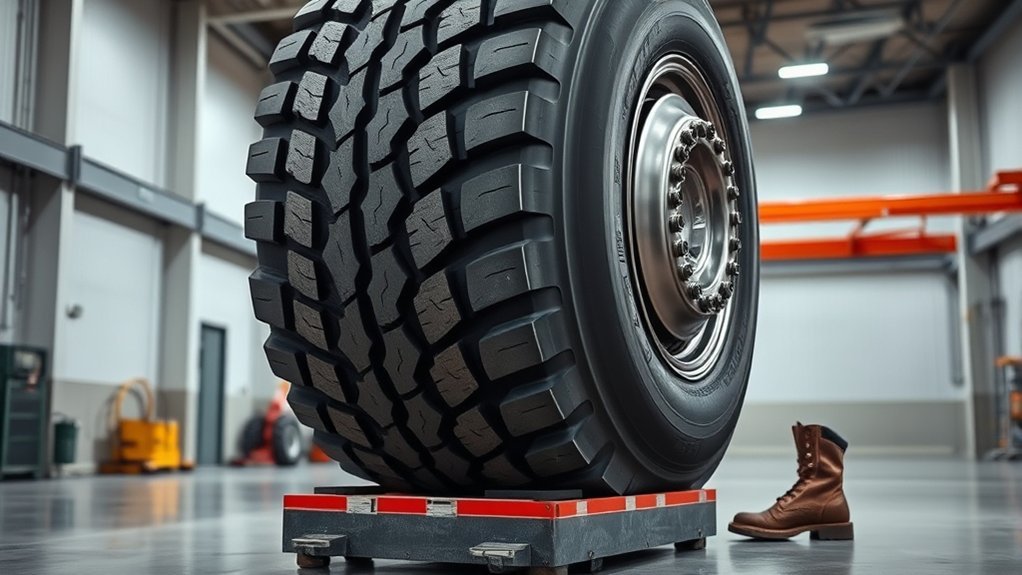
A semi tire usually weighs about 110 to 135 pounds without a rim, but the exact number depends on tire size, tread depth, load range, casing design, and whether it is built for steer, drive, trailer, regional, or on/off-road service. Once you add the wheel, a mounted semi tire and rim assembly can easily reach 150 to 215 pounds or more.
Quick Answer
Most common 22.5-inch semi-truck tires weigh about 110 to 135 pounds without a rim. A complete tire-and-wheel assembly usually weighs about 150 to 175 pounds with a lightweight aluminum wheel, or about 175 to 215 pounds with a heavier steel wheel.
Key Takeaways
- A typical highway semi tire weighs about 110 to 135 pounds without the rim.
- Deep-lug drive tires, larger 315/80R22.5 tires, and on/off-road tires can weigh more than standard steer or trailer tires.
- A 22.5 x 8.25 aluminum wheel may weigh around 36 to 39 pounds, while some steel wheels can weigh about 65 to 80 pounds.
- Tire weight matters because it affects payload, wheel-end weight, rolling resistance, handling, and how difficult the assembly is to lift safely.
- Retreading does not have one fixed weight reduction; the finished weight depends on the casing and new tread package.
How Much Does a Semi Tire Weigh?
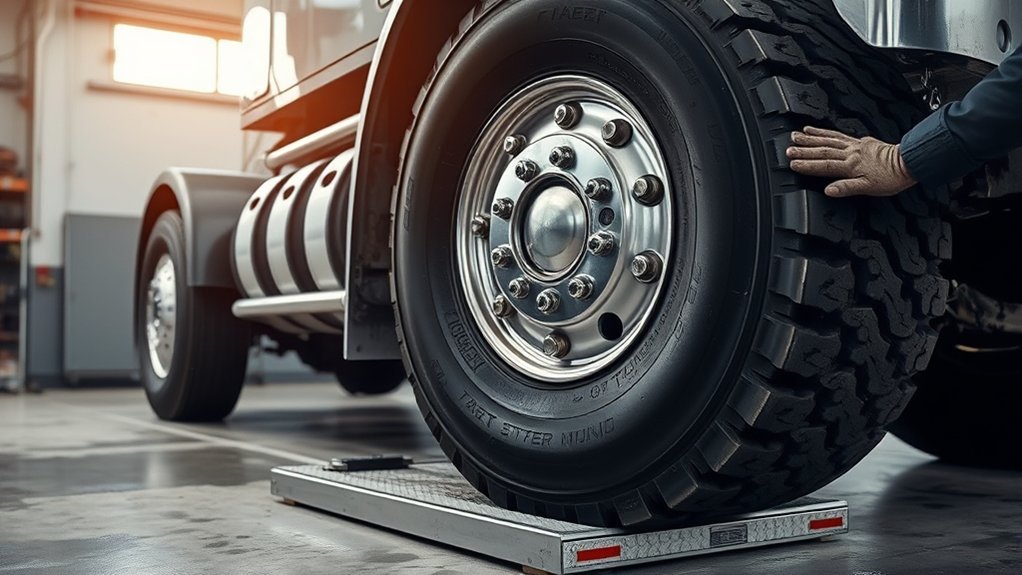
A common 22.5-inch semi tire often weighs about 110 to 135 pounds without a wheel. That range fits many highway steer, drive, and trailer tires used on Class 8 tractors and trailers. Some commercial tire models are lighter or heavier, so the tire’s actual data sheet is always the best source.
For example, Goodyear lists a 295/75R22.5 commercial steer/all-position tire at 111.17 pounds and a 315/80R22.5 regional all-position tire at 131.6 pounds. Those examples show why one “average” number is useful for quick planning, but not exact enough for spec work, payload calculations, or shipping.
Weight rises when the tire has a larger casing, deeper tread, higher load range, wider section width, stronger sidewall protection, or an aggressive drive/on-off-road tread pattern. It also changes by brand and model. A fuel-efficient line-haul tire may weigh less than a waste-haul or construction-service tire in the same rim diameter because the service demands are different.
Note: Use average weights only for rough planning. For axle loading, freight estimates, or wheel-end service, check the tire manufacturer’s spec sheet for the exact size and model.
Semi Tire Weight by Size and Type
Semi tire weight is easiest to understand by size and application. Steer, drive, and trailer tires can share the same rim diameter, but the tread pattern and casing design may be different enough to change the final weight.
| Tire / setup | Typical weight | What it means |
|---|---|---|
| 295/75R22.5 highway tire | About 110 to 120 lb | Common steer, trailer, and all-position size on many tractors and trailers. |
| 11R22.5 highway tire | About 120 to 130 lb | Very common Class 8 truck size; weight changes with tread depth and position. |
| 315/80R22.5 heavy regional tire | About 130 lb or more | Larger tire with higher load capacity; common in regional, coach, refuse, and heavier-duty uses. |
| Deep-lug drive or on/off-road tire | Often 125 to 150+ lb | More rubber in the tread and more protection in the casing can add weight. |
| Specialty off-road, mining, or agricultural tire | Several hundred pounds or more | These are not standard highway semi tires, so they should be treated as a separate category. |
[Products Worth Considering]

These pre-assembled 15x6.00-6 front tire and wheel assemblies are designed for quick replacement on riding lawn mowers and lawn tractors. Built with natural rubber pneumatic tires and turf-friendly tread for solid traction and improved shock absorption. A thickened welded rim and 3/4" sintered iron bushing help provide stable, heavy-duty support for everyday mowing use.

A concentrated tire and tube mounting compound designed to help simplify mounting rubber tires and tubes on passenger, semi truck, construction, and OTR applications. Its ultra-thick formula packs beads effectively and includes rust inhibitors to help protect against corrosion during use.
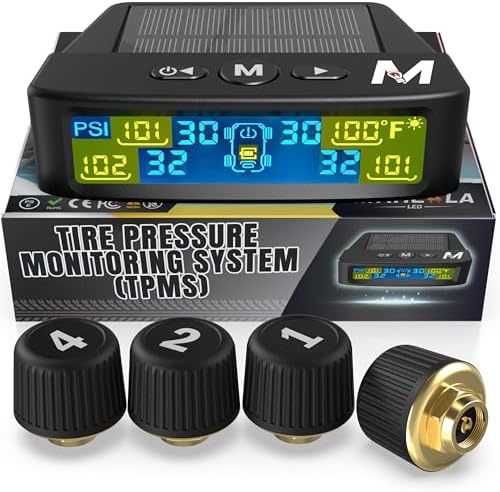
Marcala’s TPMS set of four sensors helps you monitor tire pressure and temperature in real time while driving, with updates every second. The bright color LCD uses auto-dimming for easy viewing, powered by dual solar and USB charging, and offers six alarm modes. Built for trailers, RVs, campers, trucks, and towing setups, the sensors support monitoring 1-4 wheels up to 98 PSI with IP67 waterproof protection.
Steer, Drive, and Trailer Tire Weight
Steer tires are designed for handling, even wear, and stable tracking. They often have ribbed tread patterns and may weigh less than aggressive drive tires in a similar size.
Drive tires need traction. Their lug or block tread patterns usually contain more rubber, which can add weight. A deep drive tread can also increase rolling resistance if it is not designed for fuel efficiency.
Trailer tires are usually optimized for scrub resistance, durability, and rolling efficiency. They can be lighter than some drive tires, but the exact weight still depends on size, tread depth, and casing construction.
Why Load Range Changes Weight
A higher load range usually means the tire is built to carry more weight at a specified cold inflation pressure. That often requires stronger casing materials, more reinforcement, and a design that can handle heat and stress. The result is usually a heavier tire.
Federal tire rules also matter here: a commercial motor vehicle tire should not be loaded beyond the tire’s marked or published load capacity, and it should not be run below the cold inflation pressure required for the load being carried.
What Affects Semi Tire Weight?
Tire Size and Width
Larger and wider tires usually weigh more because they use more rubber, steel, and fabric reinforcement. A 315/80R22.5 tire, for example, is normally heavier than many 295/75R22.5 tires because it has a larger overall casing and a higher load capacity.
Width also changes the contact patch and dual-spacing requirements. That is why size selection is not only about weight. It also affects handling, load rating, rolling resistance, wheel compatibility, and clearance.
Materials and Construction
A semi tire is not just rubber. It includes steel belts, bead bundles, sidewall compounds, tread rubber, inner liner material, and casing reinforcement. More protection usually means more weight. Tires built for construction, logging, waste haul, or mixed service often weigh more than tires designed only for long-haul highway use.
Fuel-efficient tires may use tread compounds and casing designs that reduce rolling resistance. The U.S. EPA’s SmartWay program maintains a verified list of low-rolling-resistance new and retread tire technologies for Class 8 long-haul tractor-trailers.
Tread Depth and Tread Design
Tread depth has a direct effect on weight. A deep-lug drive tire contains more tread rubber than a shallow-rib steer or trailer tire. That extra rubber can help with traction and long wear in the right application, but it also adds rotating mass.
A highway fleet that values fuel economy may choose low-rolling-resistance tires. A construction or regional fleet may accept extra tire weight to gain durability, cut-and-chip resistance, or traction.
Semi Tire Weight With and Without Rims
A bare semi tire is only part of the wheel-end weight. Once you add the wheel, valve hardware, balancing material, and sometimes a tire pressure monitoring sensor, the total assembly gets much heavier.
| Assembly example | Estimated total weight | How to estimate it |
|---|---|---|
| 110 lb tire + 36 to 39 lb aluminum wheel | About 146 to 149 lb before small hardware | Lightest common setup for many 22.5 x 8.25 aluminum wheels. |
| 130 lb tire + 39 lb aluminum wheel | About 169 lb before small hardware | Common heavier highway tire on a lightweight wheel. |
| 110 lb tire + 65 to 79 lb steel wheel | About 175 to 189 lb before small hardware | Steel wheels add noticeable weight compared with aluminum. |
| 135 lb tire + 79 lb steel wheel | About 214 lb before small hardware | A realistic heavy mounted assembly for some standard 22.5-inch setups. |
That is why “semi tire weight” and “semi wheel assembly weight” are not the same thing. If you are lifting, shipping, or calculating spare-tire weight, use the full mounted assembly weight, not just the bare tire number.
Warning: A mounted semi tire and wheel can weigh well over 150 pounds. Use proper lifting equipment, keep hands and feet clear of pinch points, and follow shop safety procedures when moving or mounting a wheel assembly.
[Products Worth Considering]

Keep your tires properly inflated with this analog VONDIOR tire pressure gauge, designed for fast, easy readings without batteries. The swiveling, two-axis hose and large glow dial help you measure at any tire angle with instant visibility. Built with a protective rubber shield, it supports durable, low-maintenance use for cars and trucks.

The SAFELIFE dial tire tread depth gauge measures tread depth in 1/32 inch increments with clear, easy-to-read 2-inch dial face. Color zones using a traffic light system help you quickly judge whether tread is low, marginal, or ample for safer driving. Built with a durable zinc cast body and a metal detect probe for precise, comfortable use across cars, motorcycles, trucks, and buses.

The Tymate TM2 RV tire pressure monitoring system keeps you informed with a color LCD display, automatic backlight, and solar charging for dependable operation. It supports up to 10 tire positions with four pre-paired sensors, while offering multiple alarm modes for fast leak detection, pressure extremes, temperature alerts, and low-signal warnings. Built-in monitoring uses accurate readings and reliable 433.92MHz communication to help protect your RV, trailer, truck, or SUV.
Why Semi Tire Weight Matters on the Road
Tire weight matters because every tire and wheel is part of the truck’s total vehicle weight. On U.S. Interstate highways, federal rules generally cap gross vehicle weight at 80,000 pounds unless a lower bridge-formula limit or a special permit applies. Tires and wheels are not cargo, but their weight still counts against the truck’s total mass.
Heavier tire assemblies can also affect handling and ride because they increase rotating and unsprung mass. That does not automatically make a tire bad. A heavier tire may be the correct choice for high-scrub, regional, construction, or severe-service work. The key is matching the tire to the job.
Rolling resistance is another factor. The EPA says low-rolling-resistance tire and retread technologies can reduce costs and emissions for long-haul Class 8 tractor-trailers by 3% or more. Tire weight is only one part of rolling resistance, but casing design, tread compound, inflation, alignment, and maintenance all matter.
A tire that is too light for the job can fail early, while a tire that is heavier than needed can reduce payload flexibility and efficiency. The right tire is the one that matches the load, route, axle position, and service conditions.
How Retreading Affects Semi Tire Weight
Retreading changes a tire by removing worn tread from a usable casing and bonding or curing new tread onto that casing. The finished tire’s weight depends on the casing, the amount of old tread removed, and the depth and design of the new tread. That means a retread is not always a fixed percentage lighter than a new tire.
The larger benefit of retreading is resource efficiency. CalRecycle reports that manufacturing a new medium truck tire requires about 22 gallons of oil, while retreading requires about 7 gallons. Retreading also extends the useful life of a quality casing that would otherwise be removed from service sooner.
Retreads can be a smart fleet choice when the casing is inspected properly, the retread is made by a qualified shop, and the tire is matched to the correct axle position and service. For weight planning, however, use the retreader’s finished product specs rather than assuming a universal weight reduction.
How to Find the Exact Weight of Your Semi Tire
The most reliable way to find the exact weight is to search the tire manufacturer’s spec sheet by size and model. Look for:
- Tire size: such as 295/75R22.5, 11R22.5, or 315/80R22.5.
- Load range or load index: this tells you how much load the tire is designed to carry at the required pressure.
- Tread depth: deeper tread usually adds weight.
- Axle position: steer, drive, trailer, or all-position.
- Application: line haul, regional, urban, mixed service, construction, waste haul, or on/off-road.
- Wheel material: aluminum wheels are usually much lighter than steel wheels in the same common 22.5-inch size.
Pro Tip: If you need a shipping or lifting estimate, weigh the complete mounted assembly on a scale. Tire data sheets usually list the bare tire, not the valve stem, wheel, balance material, or sensors.
[Products Worth Considering]

The Tymate TM12 RV TPMS delivers real-time tire pressure and temperature monitoring with a stable 433Hz display for safer long-distance driving. It supports simultaneous monitoring across vehicle and trailer zones, includes six alarm modes for pressure, temperature, leakage, battery, and signal loss, and features easy DIY installation with auto calibration. Power is supplied via USB-C charging or solar recharging, with a wide 0–144 PSI range and up to 50 ft signal coverage for RVs and towable trailers.

The Milton S-693-12 straight foot dual head air chuck provides extended 12-inch reach for efficiently inflating inner dual tires on trucks and semi trucks. It has 1/4" female NPT threading and locks securely onto valve core threads for reliable sealing up to 150 PSI. Designed for use on an air line with a cushioned grip handle for comfortable operation.
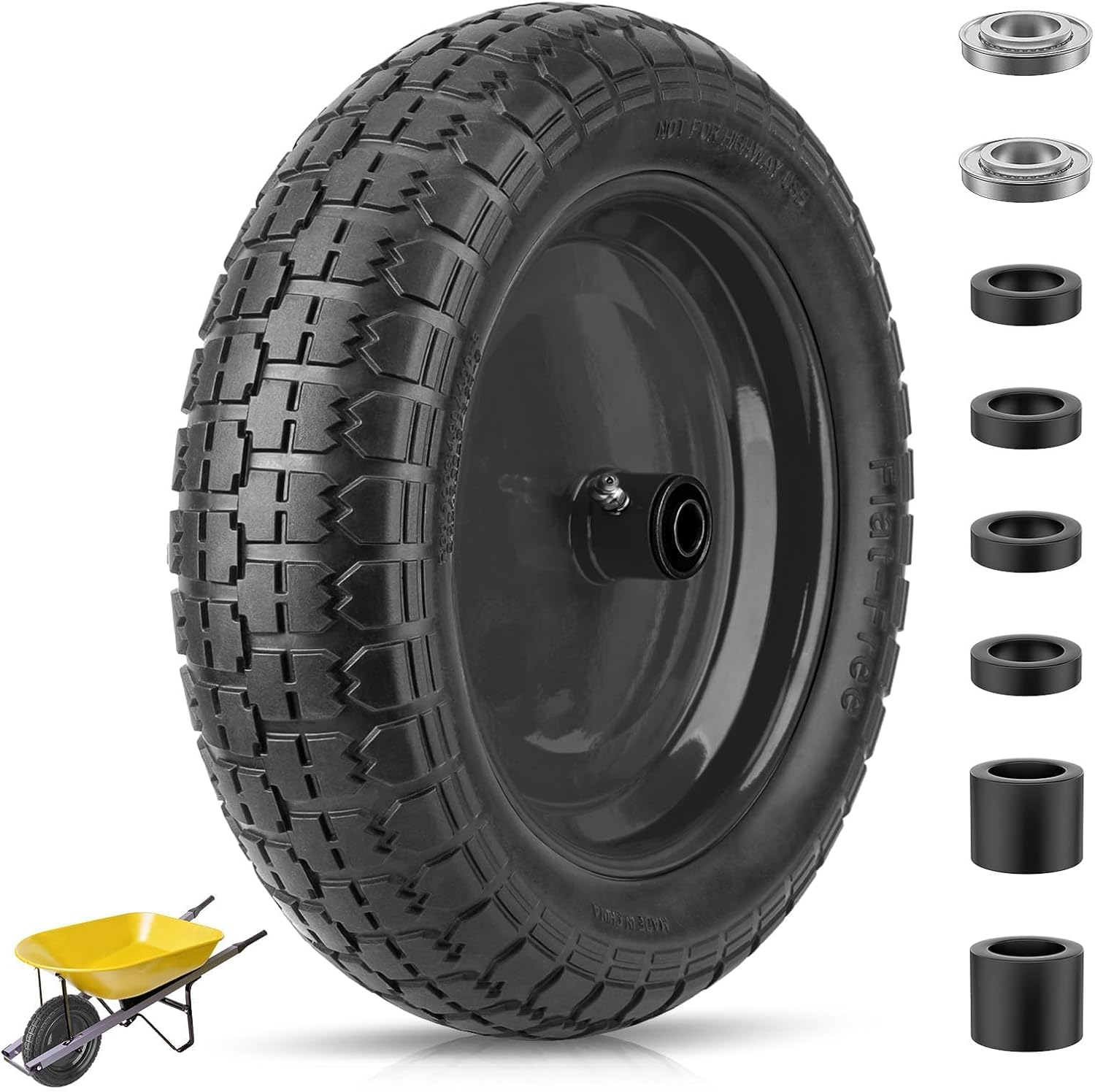
This flat-free TICONN wheelbarrow tire features durable polyurethane foam construction that never needs inflation, helping prevent punctures and reducing maintenance on rough outdoor terrain. With a 300 lb max load capacity and stable steel rim design, it supports safer transport for yard work and hauling tasks. An adapter kit with ball bearings and nylon spacers is included for easier fit and customization across common wheelbarrow and cart axle setups.
Semi Tire Safety and Legal Notes
Weight is not the only tire specification that matters. A tire also has to be safe, properly inflated, and legal for the position where it is used. Under federal commercial motor vehicle rules, a tire should not be used if it has exposed body ply or belt material, tread or sidewall separation, is flat, has an audible leak, or has certain cuts exposing ply or belt material.
The same federal rule requires at least 4/32 inch of tread depth on the front wheels of a bus, truck, or truck tractor, and at least 2/32 inch on other tires. It also restricts overloading and underinflation for the load being carried. In plain terms: do not choose a tire by weight alone. Choose it by size, load capacity, inflation requirement, speed rating, axle position, and service conditions.
Frequently Asked Questions
How much does a 22.5 truck tire weigh?
Many 22.5-inch commercial truck tires weigh about 110 to 135 pounds without the wheel. Smaller or fuel-efficient highway tires may be near the lower end, while larger 315/80R22.5 tires, deep-lug drive tires, and mixed-service tires can weigh more.
How heavy is an 18-wheeler tire?
A single 18-wheeler tire usually weighs about 110 to 135 pounds by itself. With a wheel installed, the assembly commonly weighs about 150 to 215 pounds, depending on whether the wheel is aluminum or steel and how heavy the tire model is.
How much does a semi tire and rim weigh together?
A semi tire and rim together often weigh about 150 to 175 pounds with a lightweight aluminum wheel, or about 175 to 215 pounds with a steel wheel. Heavier tires, severe-service treads, sensors, and balancing material can push the total higher.
Do steer, drive, and trailer tires weigh the same?
Not always. Steer tires often use ribbed tread patterns for handling and even wear. Drive tires may use deeper lug patterns for traction, which can add weight. Trailer tires are often designed for scrub resistance and rolling efficiency. Size, tread depth, and casing design matter more than axle position alone.
Are retreaded semi tires lighter than new tires?
Not by one fixed amount. A retread reuses the casing and adds a new tread package, so the final weight depends on the casing, tread design, and tread depth. Retreading is better understood as a material- and oil-saving process, not as a guaranteed weight-reduction method.
How much does a Peterbilt 379 weigh in pounds?
A Peterbilt 379’s actual weight depends on wheelbase, sleeper, engine, transmission, axle setup, fuel tanks, accessories, and whether it is bobtail or loaded. For an exact number, use the truck’s build sheet, door label, or scale ticket. A loaded tractor-trailer combination is often planned around the 80,000-pound federal gross weight limit where that limit applies.
How many semi tires equal 1 ton?
Using a short ton of 2,000 pounds, it takes about 15 to 18 bare semi tires to equal 1 ton if each tire weighs about 110 to 135 pounds. Mounted tire-and-wheel assemblies are heavier, so fewer assemblies would equal 1 ton.
Conclusion
A semi tire usually weighs about 110 to 135 pounds without a rim, but the exact weight depends on size, tread, load range, construction, and service type. Once mounted on a wheel, the assembly can weigh roughly 150 to 215 pounds or more. For quick estimates, those ranges are useful. For payload, shipping, tire service, or compliance decisions, always use the exact tire and wheel specifications.
Sources
- Goodyear Commercial Tire & Service Centers — 295/75R22.5 tire specs — backs up common 22.5-inch tire weight examples.
- Goodyear Commercial Tire & Service Centers — 315/80R22.5 tire specs — backs up larger commercial tire weight examples.
- Alcoa Wheels ULA18x 22.5 x 8.25 product specs — backs up lightweight aluminum wheel weight.
- Accuride 28828 22.5 x 8.25 steel wheel specs — backs up steel wheel weight and load information.
- eCFR 49 CFR 393.75 — Tires — backs up tire condition, tread depth, loading, and inflation safety notes.
- CalRecycle — Retreads — backs up retread oil-use comparison.

