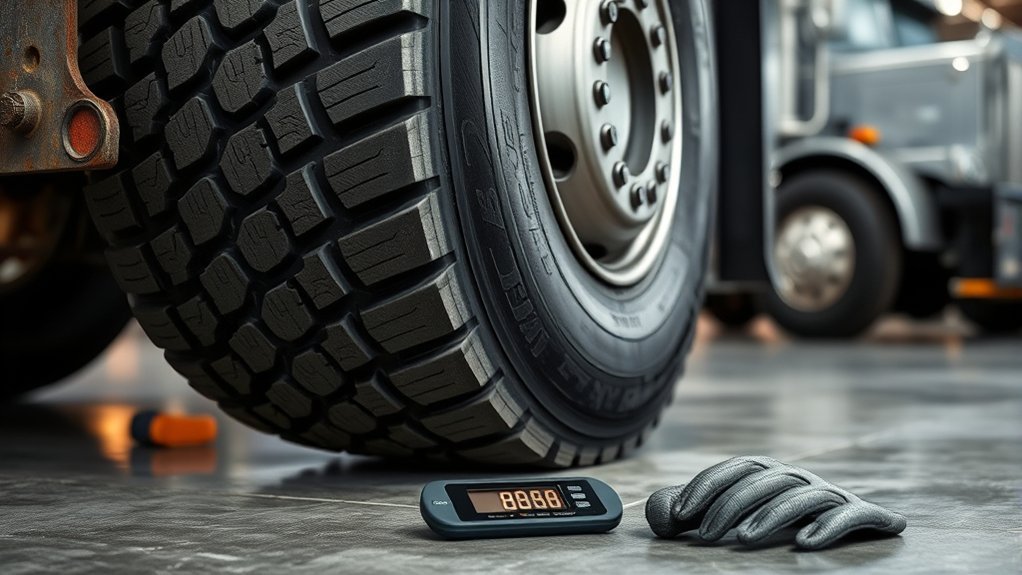
A truck tire can weigh anywhere from about 45 pounds on a light pickup or SUV to well over 100 pounds on a highway semi-truck. The exact number depends on tire size, load range, tread depth, casing construction, and whether you are weighing the tire alone or the full tire-and-wheel assembly.
Quick Answer
A highway semi-truck tire usually weighs about 100 to 150 pounds by itself, with many common 22.5-inch tires landing around 120 to 140 pounds. Light truck and SUV tires are often much lighter, while agricultural, mining, and off-road tires can weigh several hundred pounds or more.
Key Takeaways
- Most highway semi-truck tires weigh roughly 100 to 150 pounds without the wheel.
- Light truck and SUV tires commonly fall around 45 to 70 pounds, but heavy-duty LT tires can be higher.
- A mounted tire-and-wheel assembly is much heavier because steel or aluminum wheels add significant weight.
- Tire weight affects payload, handling, braking effort, fuel use, and how safely the tire can be handled.
- The best way to know the exact weight is to check the manufacturer’s spec sheet for the tire size, load range, and model.
How Much Does a Truck Tire Weigh?
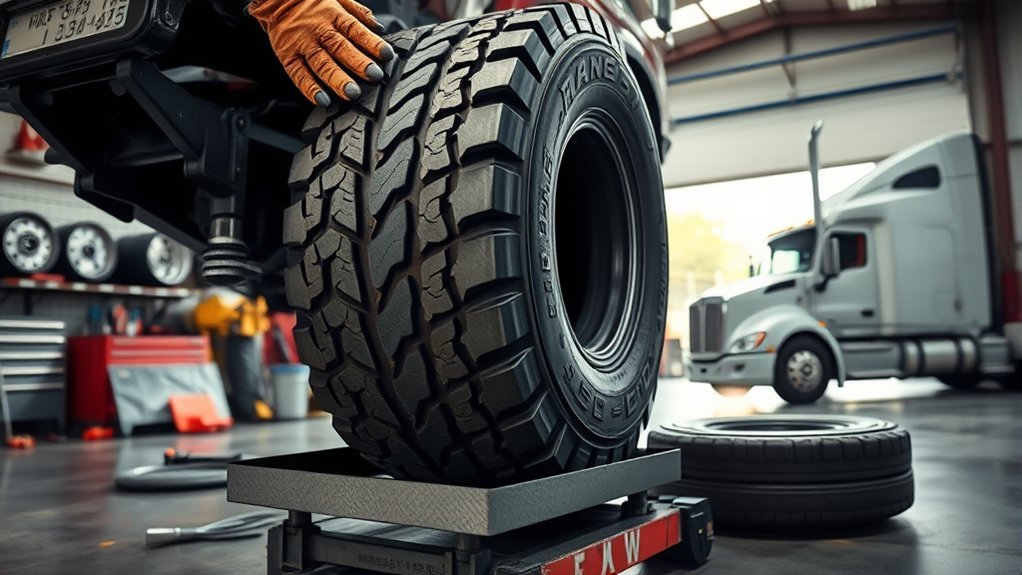
A truck tire’s weight depends on what kind of truck you mean. A pickup tire, a Class 8 highway tire, and a loader tire are all “truck tires,” but they are built for very different loads.
For a practical starting point, use these tire-only ranges:
| Tire type | Typical tire-only weight | Common use |
|---|---|---|
| Light truck / SUV tire | About 45–70 lb | Pickups, SUVs, vans, smaller work trucks |
| Common highway semi tire | About 100–150 lb | Steer, drive, and trailer positions on Class 8 trucks |
| Heavy regional / deep-tread commercial tire | Often 120–160+ lb | Regional haul, construction, mixed service |
| Agricultural, mining, or OTR tire | Several hundred pounds or more | Tractors, loaders, quarry trucks, mining equipment |
Manufacturer data gives a useful reality check. For example, Continental’s HDR2+ commercial tire data lists a 10R22.5 at 103 lb, 295/75R22.5 sizes at 124–126 lb, 11R22.5 sizes at 129–132 lb, and an 11R24.5 at 141 lb, depending on load range and exact article number. You can see the weight column in the Continental HDR2+ product data sheet.
Note: Tire weight is usually listed for the tire only. If someone says a “truck tire” weighs 180 or 220 pounds, they may be talking about the mounted tire-and-wheel assembly, not just the rubber tire.
Truck Tire Weights by Size and Type
Size is the easiest clue, but it is not the only one. Two tires with the same size can weigh differently if one has a deeper tread, a heavier casing, a higher load range, or a mixed-service design.
| Example size or category | Approx. weight | What changes the weight |
|---|---|---|
| LT pickup tire, 17–20 inch wheel | About 45–70 lb | Load range, all-terrain tread, sidewall reinforcement |
| 295/75R22.5 highway truck tire | Often about 120–130 lb | Load range, tread pattern, casing design |
| 11R22.5 highway or regional tire | Often about 125–135 lb | Steer vs. drive design, tread depth, casing weight |
| 11R24.5 commercial tire | Often about 140 lb or more | Larger diameter and more material |
| OTR / agricultural tire | Hundreds of pounds or more | Very large diameter, heavy lugs, extreme load capacity |
For the most accurate answer, do not rely only on a general chart. Match the tire’s brand, model, size, load range, and tread design to the manufacturer’s product data.
[Products Worth Considering]

Protect your spare wheel with a waterproof, dustproof tire cover made to resist sun and harsh weather. The elastic band design makes it easy to install and remove without tools, while reinforced stitching helps it keep its shape. Available in multiple sizes, it fits common RV, trailer, Jeep, SUV, and truck spare tires.

Malco tire mounting and demounting lubricant is a ready-to-use tire lube formulated to reduce friction during tire installation for passenger cars, light trucks, farm tires, and heavy-duty equipment. It provides rust-inhibiting protection to help reduce corrosion on rims and wheels, and helps support proper tire bead seating during inflation to reduce air leakage. The silicone-free, soap-free formula is whitewall safe to help prevent discoloration on whitewall tires and sensitive sidewall markings.

A concentrated tire and tube mounting compound designed to help simplify mounting rubber tires and tubes on passenger, semi truck, construction, and OTR applications. Its ultra-thick formula packs beads effectively and includes rust inhibitors to help protect against corrosion during use.
What Changes Truck Tire Weight?
The biggest tire-weight factors are size, casing strength, tread depth, and intended service. A tire built for long-haul fuel efficiency is usually lighter than a deep-lug mixed-service or construction tire in a similar size.
- Diameter and width: A larger tire needs more rubber, steel, fabric, and bead material.
- Load range: Higher load capacity often requires a stronger casing and more reinforcement.
- Tread depth: Deep drive and regional treads add rubber mass.
- Sidewall and belt package: Cut-resistant or reinforced designs can weigh more.
- Application: Highway, regional, refuse, logging, agricultural, and mining tires are built differently.
- Retreadability: Premium commercial casings may be designed for multiple tread lives, which can affect casing construction.
Pro Tip: When comparing two tires, check the tire weight and the load rating together. A lighter tire is not automatically better if it gives up the load capacity, durability, or retreadability your truck needs.
Tire Only vs. Tire-and-Wheel Weight
A tire’s listed weight is usually for the tire alone. Once the tire is mounted, the wheel adds a lot of mass.
For example, Accuride lists some lightweight 22.5-inch steel wheels at 65–67 lb, while another 22.5 x 8.25 steel wheel product page lists a 79 lb wheel. Alcoa also lists a 22.5 x 8.25 forged aluminum wheel at 36 lb. That means a 130 lb semi tire can become roughly a 166–209 lb assembly before you add valve hardware, balancing material, or other small components. See examples from Accuride steel wheel specifications and Alcoa’s ULT36x wheel specifications.
| Example | Approx. weight |
|---|---|
| Commercial tire only | About 100–150 lb |
| 22.5-inch aluminum wheel example | About 36 lb |
| 22.5-inch steel wheel examples | About 65–79 lb |
| Mounted commercial tire-and-wheel assembly | Often about 160–230 lb |
How Truck Tire Weight Affects Payload and Fuel Use
Truck tire weight matters because tires and wheels are part of the truck’s empty weight. Every extra pound on the vehicle reduces how much legal payload remains, assuming the truck is already close to its gross or axle-weight limits.
Federal weight rules for the Interstate System include an 80,000 lb maximum gross vehicle weight, along with single-axle and tandem-axle limits, subject to the federal Bridge Formula and exceptions. You can review the current rule in 23 CFR § 658.17.
Payload Capacity Impact
Here is the simple math: if a truck has 18 tires and each tire weighs 10 lb more than another approved option, that is 180 lb of extra vehicle weight before you count wheels. If a fleet is already weight-limited, those 180 lb can come straight out of payload.
For a smaller example, 12 tires at 130 lb each equal 1,560 lb of tire mass. If the same positions used 120 lb tires with the same correct rating and application fit, tire mass would be 1,440 lb. That 120 lb difference may not matter on a light load, but it can matter on routes where every pound counts.
Fuel Economy Effects
Heavier tires can increase rotational mass, which takes more energy to start, stop, and accelerate. Tread design and rolling resistance matter even more. The U.S. EPA says SmartWay-verified low rolling resistance tires and retread technologies can reduce costs and emissions for long-haul Class 8 tractor-trailers by 3% or more when used in the verified application. See the EPA’s Low Rolling Resistance Tires and Retreads page.
A tire’s weight matters, but it is only one part of efficiency. Rolling resistance, inflation pressure, tread condition, alignment, and route conditions can matter just as much.
Rotational Weight Tradeoffs
Reducing tire or wheel weight can help payload and handling, but only if the tire still matches the axle position, load rating, speed rating, road conditions, and service type. A lighter steer tire may be useful for long-haul efficiency, while a heavier drive tire may be justified for traction, casing strength, or mixed-service durability.
| Factor | Effect | Operational result |
|---|---|---|
| Heavier tire | More rotating mass | More effort to accelerate and brake |
| More unsprung mass | More weight below the suspension | Can affect ride and control response |
| Lower rolling resistance | Less energy lost as heat | Potential fuel and emissions savings |
| Correct load rating | Matches tire to axle load | Safer operation and better casing life |
How to Weigh a Truck Tire and Wheel
At a Glance
| Time Required | 5–15 minutes once the tire or assembly is safely accessible |
| Difficulty | Moderate for tire-only weighing; difficult for mounted commercial assemblies |
| Tools Needed | Rated platform scale, wheel dolly or lift assist, gloves, eye protection, and manufacturer spec sheet |
| Cost | Free if you already have a rated scale; otherwise use a tire shop, fleet shop, or freight scale |
Warning: A mounted commercial truck tire and wheel can weigh well over 160 pounds. Do not lift one alone. Use a wheel dolly, hoist, forklift attachment, or trained help. Mounting, demounting, or servicing inflated commercial tires should be done only with proper equipment and training.
To weigh a truck tire or tire-and-wheel assembly safely:
- Confirm what you are weighing. Decide whether you need tire-only weight, wheel-only weight, or the full mounted assembly weight.
- Check the scale rating. Use a platform scale rated above the expected load. Do not use a small household scale for a commercial truck assembly.
- Zero the scale. Make sure the platform is clear, level, and calibrated or tared before weighing.
- Move the tire safely. Use a dolly, lift table, or helper. Keep hands and feet clear of pinch points.
- Center the tire on the scale. Wait for the reading to stabilize, then record the weight.
- Compare with the spec sheet. If the measured weight is far from the published spec, check whether the tire is mounted, retreaded, filled, damaged, or carrying debris.
[Products Worth Considering]

Slip the Powerbuilt tire step over your vehicle’s tire to reach roof racks, engine bays, truck boxes, and more without overreaching. Its adjustable, universal design fits tires with a cross tread width up to 13 inches, including car, truck, RV, and semi tires. The non-slip cheesegrater surface and anti-slip tape provide secure grip while the open design lets mud and debris pass through. Fold-flat storage with rubber bumpers helps keep your tire and the step protected between uses.
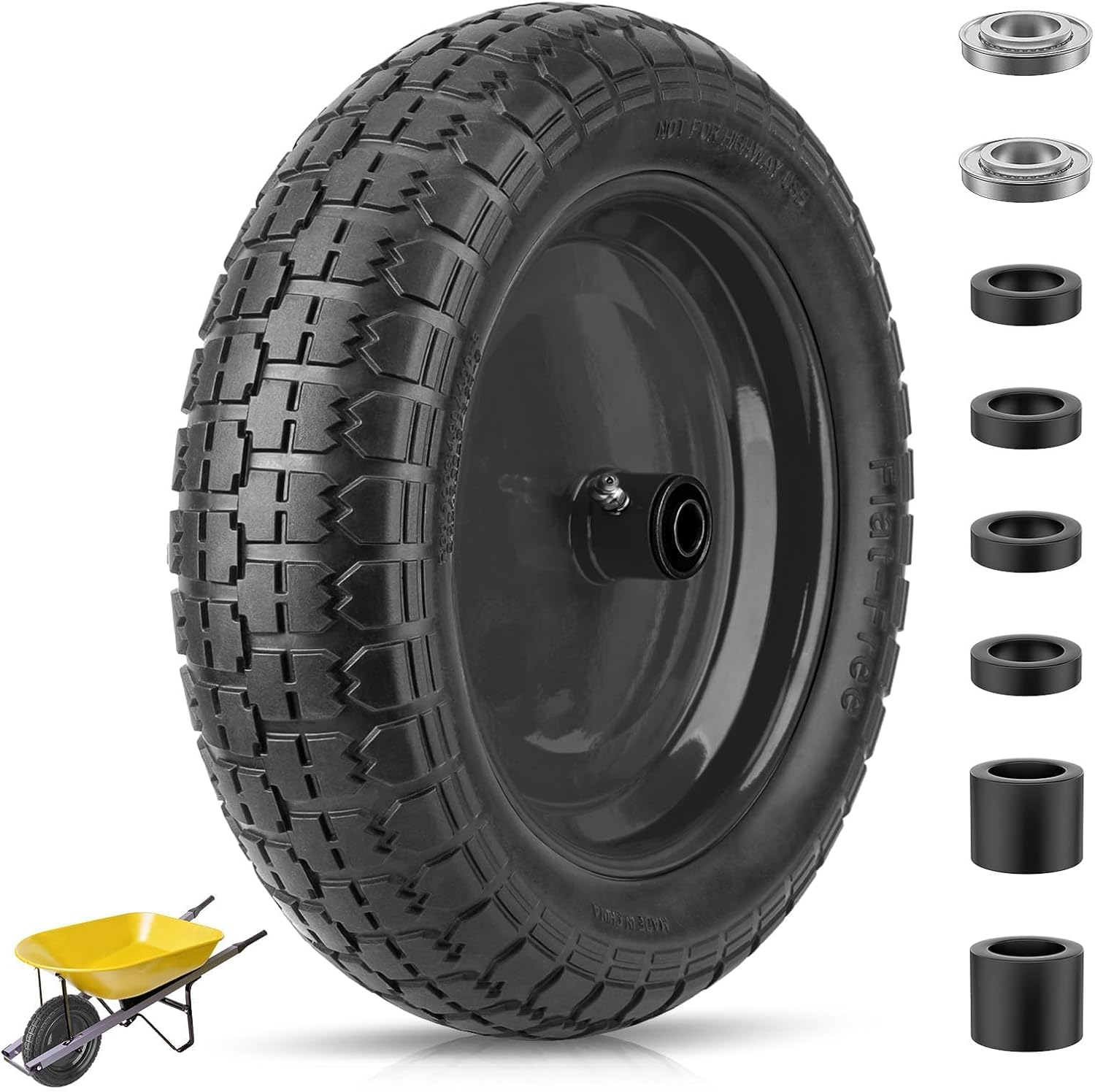
This flat-free TICONN wheelbarrow tire features durable polyurethane foam construction that never needs inflation, helping prevent punctures and reducing maintenance on rough outdoor terrain. With a 300 lb max load capacity and stable steel rim design, it supports safer transport for yard work and hauling tasks. An adapter kit with ball bearings and nylon spacers is included for easier fit and customization across common wheelbarrow and cart axle setups.

The SAFELIFE dial tire tread depth gauge measures tread depth in 1/32 inch increments with clear, easy-to-read 2-inch dial face. Color zones using a traffic light system help you quickly judge whether tread is low, marginal, or ample for safer driving. Built with a durable zinc cast body and a metal detect probe for precise, comfortable use across cars, motorcycles, trucks, and buses.
How to Find the Exact Weight Before You Lift It
If you need the exact number before handling the tire, look for these details on the sidewall or invoice:
- Brand and model: Example: Continental HDR2+, Michelin X Line Energy Z, or another specific line.
- Size: Example: 295/75R22.5, 11R22.5, 11R24.5, or LT275/65R18.
- Load range or ply rating: A higher load range can mean a heavier casing.
- Axle position: Steer, drive, trailer, and all-position tires often have different tread designs.
- New vs. retread: A retread may weigh differently from a new tire depending on casing and tread package.
Then search the manufacturer’s data sheet for “tire weight,” “unit weight,” or “product data.” If you are managing a fleet, save these spec sheets with your tire records so drivers and technicians do not have to guess.
[Products Worth Considering]

This digital tire pressure gauge with built-in inflator helps you accurately check and adjust tire pressure for safer driving and better fuel efficiency. It supports multiple units (PSI, KPA, BAR, KG/CM²) and reads within 1% for reliable results. The 3-in-1 design inflates, deflates, and measures, with a quick-connect air chuck and compatible hose setup for cars, trucks, SUVs, RVs, and motorcycles.

The Trivd Frol 1/2" air impact wrench delivers high performance torque up to 1500 ft-lbs with a twin hammer impact mechanism for strong, balanced blows. It features an ergonomic grip, compact lightweight design, and quick-stop control with 3 forward speeds up to 8000 RPM plus a reverse speed. Built for demanding automotive repair and tire shop work, the rear exhaust helps keep debris away from the surface.

Accurately measure tire tread depth with a calibrated gauge marked from 0 to 1 inch in 1/32 inch increments. The color-coded bar helps you quickly identify tread condition ranges, supporting safe driving for trucks, motorcycles, automobiles, and passenger vehicles.
Truck Tire Weight by Semi Size
Most modern semi-truck tires use 22.5-inch or 24.5-inch wheel sizes, but the tire size printed on the sidewall tells the real story. A 295/75R22.5, an 11R22.5, and an 11R24.5 are not the same weight.
Semi Tire Weight Ranges
For common highway and regional semi tires, a practical estimate is about 100 to 150 pounds per tire. Smaller or lighter commercial tires may be near the low end, while larger, deeper-tread, or heavier-duty designs move toward the high end.
In kilograms, that is roughly 45 to 68 kg for many highway commercial tires. A common 22.5-inch tire around 130 lb is about 59 kg.
Factors Affecting Semi Tire Weight
The same semi tire size can vary because of:
- Steer vs. drive tread: Drive tires often have deeper, more aggressive tread blocks.
- Regional vs. long-haul design: Regional tires may use tougher compounds and casing features.
- Load range: More load capacity can add casing strength and weight.
- Retreadability: Premium casings may be engineered for multiple retreads.
- Rim width and wheel material: Assembly weight changes a lot depending on steel vs. aluminum wheels.
Retreads and Recycling for Truck Tires
Retreading can reduce waste and lower cost because it reuses a sound tire casing and replaces the worn tread. CalRecycle notes that manufacturing a new medium truck tire requires about 22 gallons of oil, while retreading uses about seven gallons. It also states that many fleets, airlines, bus fleets, construction companies, and farmers buy retreaded tires to save money and reuse resources. You can read more on CalRecycle’s retread tire page.
Recycling also matters after the tire’s useful life ends. The U.S. Tire Manufacturers Association reports that 79% of U.S. end-of-life tires went to beneficial end-use markets in 2023, including tire-derived fuel, ground rubber, rubber-modified asphalt, tire-derived aggregate, and other uses. See the USTMA 2023 End-of-Life Tire report.
| Topic | Useful number | Why it matters |
|---|---|---|
| Oil use for new medium truck tire | About 22 gallons | Shows the resource cost of a new casing |
| Oil use for retreading | About 7 gallons | Retreading reuses the casing and uses less oil |
| U.S. end-of-life tire beneficial use, 2023 | 79% | Shows current recycling and reclamation progress |
Frequently Asked Questions
How much does a 22.5 truck tire weigh?
Many 22.5-inch commercial truck tires weigh about 100 to 140 pounds by themselves, depending on size, load range, tread depth, and tire model. Common examples such as 295/75R22.5 and 11R22.5 tires often fall around 120 to 135 pounds, but you should always check the manufacturer’s data sheet for the exact tire.
How heavy is an 18-wheeler tire?
A single 18-wheeler tire commonly weighs about 100 to 150 pounds without the wheel. Once mounted on a steel or aluminum wheel, the full assembly can often weigh about 160 to 230 pounds, depending on the tire and wheel combination.
How heavy is a truck tire in kg?
A highway semi-truck tire often weighs about 45 to 68 kg. A 120 lb tire is about 54 kg, and a 140 lb tire is about 64 kg. Light truck tires can be lower, while agricultural, construction, and mining tires can be much higher.
Does truck tire weight include the rim?
Usually, no. Tire spec sheets normally list the tire-only weight. A mounted tire-and-wheel assembly includes the tire, wheel, valve hardware, and sometimes balance material. That is why a semi tire listed at 130 pounds can become a 170- to 210-pound assembly after mounting.
How many truck tires equal 1 ton?
One U.S. ton is 2,000 pounds. If a semi tire weighs 125 pounds, it would take about 16 tires to equal one ton. If the tires weigh 100 pounds each, it would take about 20. If they weigh 150 pounds each, it would take about 14.
Do heavier truck tires use more fuel?
They can, but weight is only part of the fuel-use picture. Rolling resistance, tread design, inflation pressure, alignment, vehicle speed, and route conditions also matter. For long-haul Class 8 trucks, EPA SmartWay-verified low rolling resistance tires and retreads can reduce costs and emissions by 3% or more when used in verified applications.
Conclusion
Truck tire weight is not one fixed number. A light truck tire may weigh around 45 to 70 pounds, while many highway semi-truck tires weigh about 100 to 150 pounds by themselves. Add the wheel, and the assembly can easily move into the 160- to 230-pound range.
For quick planning, use general ranges. For lifting, payload planning, compliance, or fleet purchasing, use the exact tire model’s spec sheet and weigh the mounted assembly when needed. The safest and most accurate answer always comes from matching the tire size, load range, application, and wheel type to real product data.
Sources
- Continental HDR2+ Product Data Sheet — commercial truck tire examples, dimensions, load ratings, and tire weights.
- U.S. EPA SmartWay Low Rolling Resistance Tires and Retreads — fuel, cost, and emissions benefits for verified Class 8 applications.
- 23 CFR § 658.17 — federal gross and axle weight rules for the Interstate System.
- USTMA 2023 End-of-Life Tire Report — U.S. end-of-life tire recycling and reclamation data.
- CalRecycle Retreads — oil-use comparison, retread benefits, and safety information.
- Accuride Steel Wheel Specifications and Alcoa ULT36x Wheel Specifications — wheel-weight examples for mounted tire-and-wheel estimates.