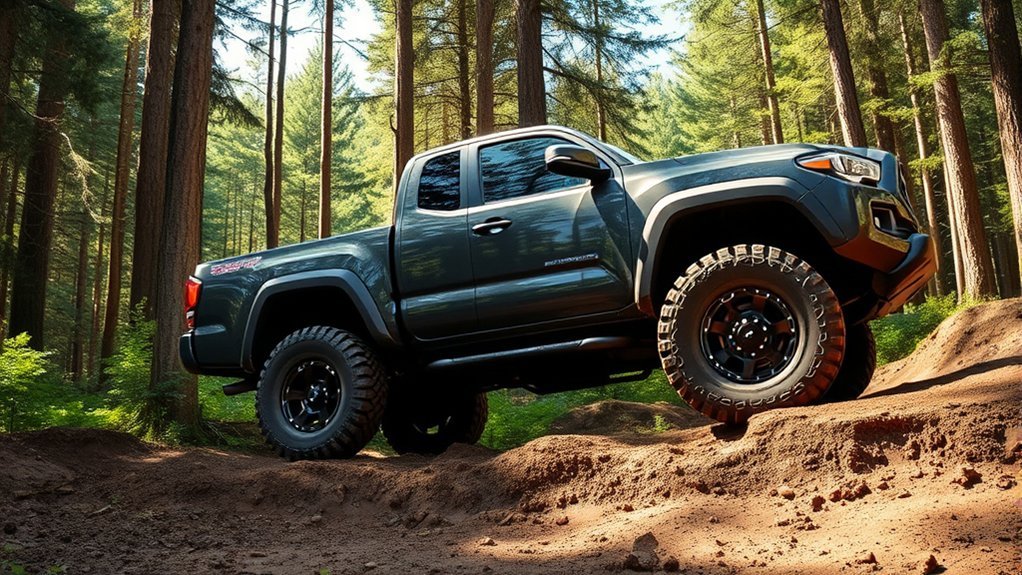
Choosing between all-terrain and mud-terrain tires comes down to where you drive most. All-terrain tires are the better fit for daily driving, highways, gravel roads, dirt trails, and light mud. Mud-terrain tires are built for deep mud, loose dirt, rocks, ruts, and dedicated off-road use, but they usually trade away road comfort, tread life, and fuel efficiency.
Quick Answer
Choose all-terrain tires if your truck or SUV spends most of its time on pavement with occasional trails, gravel, snow, or light mud. Choose mud-terrain tires if you regularly drive in deep mud, rocky trails, rutted tracks, or technical off-road conditions and can accept more road noise, faster wear, and lower fuel economy.
Key Takeaways
- All-terrain tires are the best all-around choice for daily drivers, overlanders, work trucks, and SUVs that split time between pavement and mild off-road use.
- Mud-terrain tires offer stronger bite in deep mud and rough trails, but they are usually louder, heavier, and less comfortable on highways.
- Tread life and fuel economy vary by model, but many all-terrain tires offer longer mileage warranties than comparable mud-terrain tires.
- For winter driving, look for the 3PMSF symbol instead of relying only on an M+S marking.
- Before buying, confirm tire size, load range, speed rating, wheel clearance, and your vehicle placard recommendations.
What Are All-Terrain Tires and Their Benefits?
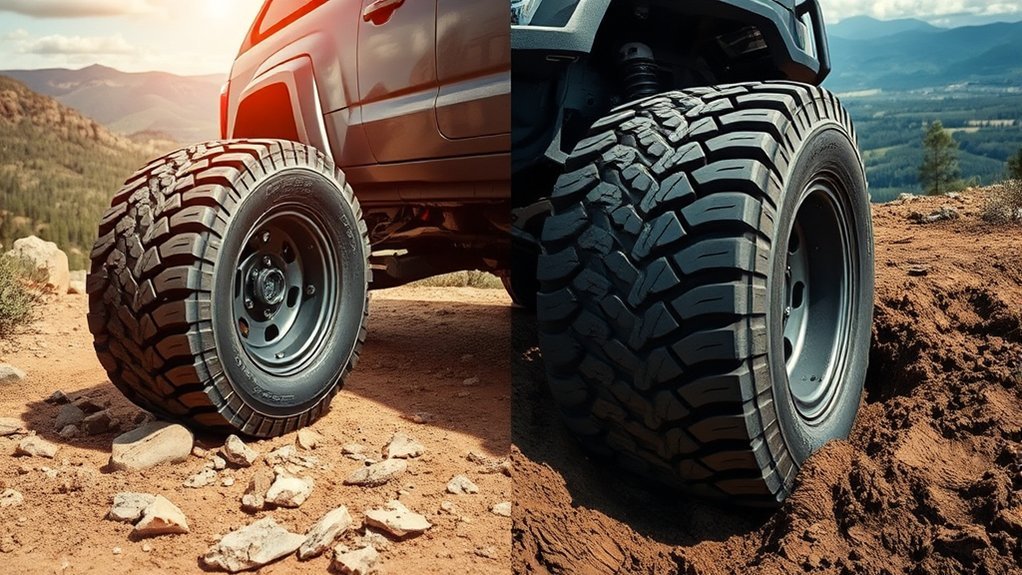
All-terrain tires, often called A/T tires, are designed to balance road manners with off-road grip. Their tread blocks are more open and aggressive than highway tires, but not as wide, deep, or chunky as mud-terrain tires. That makes them useful on pavement, gravel, dirt roads, light trails, and mild mud.
The main benefit is versatility. A good all-terrain tire can make a truck or SUV more capable without making daily driving feel harsh. Tire Rack describes all-terrain tires as a category that attempts to balance dirt, gravel, and mud capability with moderate highway noise and, in some cases, long tread life. Tire Rack’s all-terrain tire guide is a helpful reference for that category overview.
All-terrain tires are usually the better choice if you:
- Drive on pavement most days
- Use your truck for commuting, towing, camping, hunting, or light trails
- Want better off-road grip than highway tires
- Need a quieter ride than most mud-terrain tires
- Care about tread life and fuel economy
- See gravel, dirt, rain, or occasional snow
Note: All-terrain does not mean “best at everything.” A/T tires are a compromise. They are usually much better than highway tires off-road, but they will not match a true mud-terrain tire in deep mud or technical trail conditions.
What Are Mud-Terrain Tires and Their Advantages?
Mud-terrain tires, often called M/T tires, are built for serious off-road traction. They use large tread blocks, wide voids, aggressive shoulders, and reinforced construction to dig into soft ground and release packed mud. That design helps in deep mud, loose soil, rocky climbs, ruts, and trail sections where an all-terrain tire may clog or spin.
For example, the BFGoodrich Mud-Terrain T/A KM3 is marketed for serious off-road use and uses mud-release features, large tread blocks, and off-road-focused construction. That type of design shows what mud-terrain tires are meant to do: trade some pavement comfort for more grip in difficult terrain.
Key Features Explained
Mud-terrain tires usually include these features:
- Large tread blocks: They dig into mud, loose dirt, and uneven trails.
- Wide tread voids: The open channels help clear mud, sand, stones, and debris.
- Aggressive sidewall lugs: These can help when crawling through ruts or aired-down trail driving.
- Stronger sidewalls: Many M/T tires are built to resist cuts and punctures from rocks and trail obstacles.
- Trail-first rubber compounds: These can improve off-road grip but may wear faster on pavement.
Ideal Use Cases
Mud-terrain tires make sense when off-road performance matters more than quiet road manners. They are best for trail rigs, farm trucks, hunting vehicles, mud parks, rock crawling, and drivers who often face soft ground or rough terrain.
| Terrain or Use | All-Terrain Tires | Mud-Terrain Tires |
|---|---|---|
| Daily highway driving | Best choice for most drivers | Usually louder and rougher |
| Gravel and dirt roads | Very good | Good, but may be overkill |
| Light mud | Good if the tread does not clog | Excellent |
| Deep mud and ruts | Limited | Best choice |
| Rocky trails | Good for moderate trails | Better for technical terrain |
| Rain and wet pavement | Usually better road control | Can be less confident than A/T tires |
| Snow and ice | Best if 3PMSF-rated | Usually not ideal on ice or packed snow |
Warning: Do not choose a mud-terrain tire just for looks if you mostly drive on highways. The extra noise, weight, rolling resistance, and wear can make daily driving more expensive and less comfortable.
Comparing Performance: All-Terrain vs. Mud-Terrain
The biggest difference is tread design. All-terrain tires use closer tread blocks and more siping to keep road contact more consistent. Mud-terrain tires use larger lugs and bigger voids to dig and self-clean in mud. One design is balanced; the other is specialized.
| Category | All-Terrain Tires | Mud-Terrain Tires |
|---|---|---|
| On-road comfort | Better for commuting and long trips | Rougher and louder |
| Off-road versatility | Good for mixed surfaces | Excellent for difficult trails |
| Deep mud traction | Moderate | Strongest option |
| Noise | Usually quieter | Usually louder |
| Fuel economy | Usually better than M/T tires | Often lower because of weight and rolling resistance |
| Tread life | Often longer, depending on model | Often shorter on pavement |
| Best owner | Daily driver with occasional off-road use | Frequent off-roader or dedicated trail vehicle |
For most drivers, the practical rule is simple: if you spend most of your time on pavement, choose all-terrain. If your tires regularly need to claw through deep mud, loose dirt, or rough trail obstacles, choose mud-terrain.
Cost of All-Terrain vs. Mud-Terrain Tires
Mud-terrain tires often cost more upfront because they use heavier construction, larger tread blocks, reinforced sidewalls, and trail-focused compounds. They may also cost more over time if they wear faster on pavement or reduce fuel economy.
All-terrain tires are often the better value for mixed driving because many models include mileage warranties. For example, the BFGoodrich All-Terrain T/A KO3 lists a 50,000-mile mileage warranty, while the Falken Wildpeak A/T4W lists up to a 65,000-mile limited tread life warranty for non-LT sizes and 60,000 miles for LT sizes. Those are examples, not a promise that every all-terrain tire will last that long.
Mud-terrain tires may still have a standard limited warranty for workmanship and materials, but many do not include the same kind of treadwear mileage warranty. Always read the warranty document for the exact tire model, size, and load range before buying.
Pro Tip: Compare total ownership cost, not just the tire price. Include installation, balancing, alignment, fuel economy, expected tread life, rotation schedule, and whether the tire has a mileage warranty.
Longevity and Maintenance: Which Tires Last Longer?
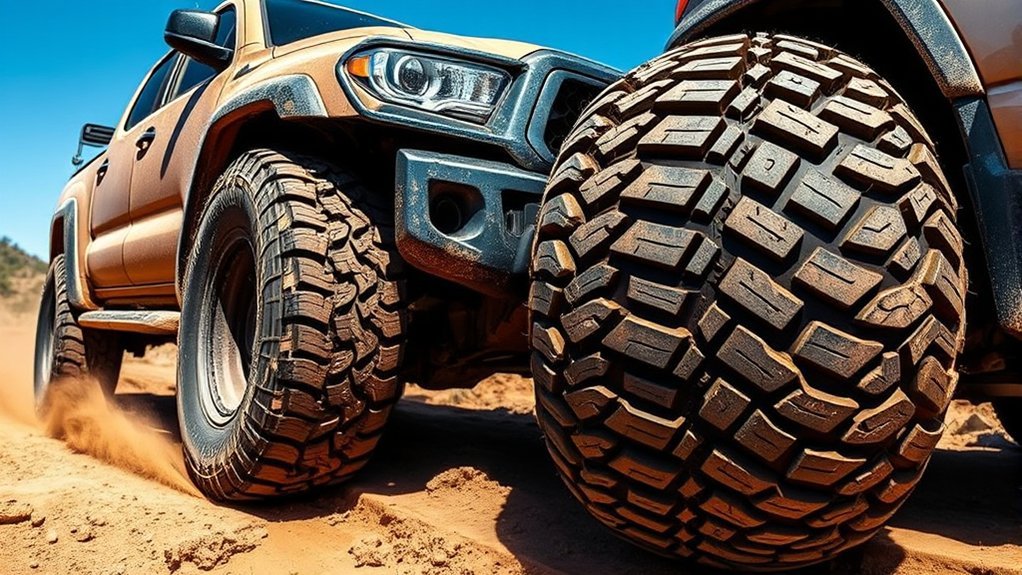
In general, all-terrain tires tend to last longer on pavement than mud-terrain tires. That is because A/T tires usually have more road-friendly tread patterns and compounds. Mud-terrain tires are built to grab loose terrain, and their large tread blocks can wear unevenly when used mostly on asphalt.
That said, tire life is never guaranteed. It depends on:
- Vehicle weight and suspension condition
- Driving speed and braking habits
- Towing and payload
- Inflation pressure
- Alignment
- Rotation schedule
- Road surface
- Tire size, load range, and compound
The U.S. Tire Manufacturers Association highlights pressure, tread, rotation, and alignment as the four core tire-care essentials. Following those basics helps any tire last longer, whether it is all-terrain or mud-terrain.
Maintenance Checklist
- Check pressure monthly: Use the pressure listed on your vehicle placard or owner’s manual, not the maximum pressure printed on the tire sidewall.
- Rotate on schedule: Many drivers rotate every 5,000–7,500 miles, but follow your tire and vehicle recommendations.
- Watch for uneven wear: Cupping, feathering, and edge wear can point to alignment, balance, inflation, or suspension problems.
- Inspect tread depth: Replace tires before they become unsafe for rain, snow, towing, or off-road use.
- Recheck after off-roading: Look for cuts, sidewall damage, embedded stones, and bead damage.
Fuel Economy: How Tire Choice Affects Your Wallet
Tire choice can affect fuel economy because of rolling resistance, tire weight, tread depth, tread pattern, air pressure, and size. More aggressive tires often need more energy to roll, especially if they are heavier or wider than the factory tire size.
FuelEconomy.gov notes that tire pressure and rolling resistance are connected to fuel economy. Tire Rack testing also found that a deeper, blockier all-terrain tread pattern required more energy to roll than a highway all-season tire in that specific test. The exact MPG change will vary, so it is better to think in terms of “possible efficiency loss” rather than expecting one fixed number.
Tire Weight Impact
Mud-terrain tires are often heavier than all-terrain tires in the same general size. That extra rotating weight can affect acceleration, braking feel, ride quality, and fuel use. Oversizing the tire can increase the effect even more.
Rolling Resistance Effects
Rolling resistance is the energy your vehicle uses to keep the tires moving. Wider tires, heavier LT sizes, deeper tread, softer compounds, and low inflation pressure can all increase rolling resistance. If you want the best fuel economy, stay close to the factory tire size and choose the least aggressive tire that still meets your terrain needs.
Which Tire Is Best for Off-Road Conditions?
The best off-road tire depends on the type of trail. “Off-road” can mean a graded gravel road, a sandy wash, a rocky climb, a forest trail, or axle-deep mud. Each condition rewards a different tread design.
- Gravel roads: All-terrain tires are usually ideal because they add durability and traction without hurting road comfort too much.
- Light trails: All-terrain tires work well for camping trails, forest roads, and mild ruts.
- Deep mud: Mud-terrain tires are the clear winner because the open tread can dig and self-clean.
- Rock crawling: Mud-terrain or hybrid rugged-terrain tires often work better because of sidewall strength and aggressive shoulders.
- Sand: Both can work, but flotation, pressure management, and tire width matter as much as tread type.
- Snow: Choose a tire with the Three-Peak Mountain Snowflake symbol if winter traction matters.
[Products Worth Considering]

Keep your tires properly inflated with this analog VONDIOR tire pressure gauge, designed for fast, easy readings without batteries. The swiveling, two-axis hose and large glow dial help you measure at any tire angle with instant visibility. Built with a protective rubber shield, it supports durable, low-maintenance use for cars and trucks.

Slip the Powerbuilt tire step over your vehicle’s tire to reach roof racks, engine bays, truck boxes, and more without overreaching. Its adjustable, universal design fits tires with a cross tread width up to 13 inches, including car, truck, RV, and semi tires. The non-slip cheesegrater surface and anti-slip tape provide secure grip while the open design lets mud and debris pass through. Fold-flat storage with rubber bumpers helps keep your tire and the step protected between uses.

Upgrade your 2024-2026 Tesla Model 3 Highland with REEVAA all-weather mud flaps designed for seamless fit along the original body lines. The set of four delivers strong splash protection against mud, gravel, and road debris while using OEM-grade durable materials. Installation is non-destructive with original hole positions and snap-in clips, and the aerodynamic design helps minimize impact on efficiency.
Snow, Rain, and 3PMSF: What to Know Before You Buy
Winter performance is one of the easiest areas to misunderstand. An M+S marking means the tread pattern meets certain mud-and-snow geometry criteria, but it does not guarantee a tested snow-traction performance level. A Three-Peak Mountain Snowflake or 3PMSF symbol means the tire passed a minimum light-snow acceleration traction threshold. Tire Rack explains that 3PMSF is different from M+S because it reflects a tested snow-traction threshold.
Some all-terrain tires are 3PMSF-rated, including examples like the BFGoodrich All-Terrain T/A KO3 and Falken Wildpeak A/T4W. Many mud-terrain tires are not ideal for packed snow, ice, or wet pavement because their large tread voids and reduced siping can limit contact with the road.
Warning: 3PMSF-rated all-terrain tires can help in snow, but they are not the same as dedicated winter tires on ice. If you regularly drive on icy roads, mountain passes, or severe winter highways, consider dedicated winter tires.
[Products Worth Considering]

Add style while helping protect your tire valve stems with handmade crystal rhinestone caps and a durable plastic insert. These caps resist corrosion and help keep out rain, snow, and muddy water, extending tire life. Textured non-slip design makes them easy to grip for quick install and removal when checking tire pressure.

TIRESHIELD PRO RV tire covers in a set of four deliver year-round protection against UV rays, cracking, fading, water, and snow. The StormLock-System helps keep the covers securely fastened through high wind, while heavy-duty, double-stitched construction supports long-lasting performance. Designed for universal fit, they’re intended for RV, camper, truck, car, and trailer tires within the 26–28.75 inch diameter range, with easy wipe-clean care and storage in the included bag.

Protect tire valves from water, dust, and sand to help prevent leaks and support safe driving. These universal stem caps install quickly by hand and feature durable aluminum alloy construction with an inner sealing ring for better air retention. Compatible with cars, SUVs, trucks, motorcycles, and bicycles for everyday convenience.
Tire Noise and Driving Comfort
All-terrain tires are usually more comfortable on the road because their tread blocks are closer together and more stable at highway speeds. Mud-terrain tires have larger gaps and more aggressive shoulders, which can create a louder hum, more vibration, and a rougher feel.
Noise also gets worse when tires wear unevenly. Mud-terrain tires are especially sensitive to poor rotation habits, worn shocks, bad alignment, or incorrect pressure. If you choose M/T tires for a daily driver, plan on more frequent inspections and rotations.
How to Choose the Best Tire for Your Driving Needs
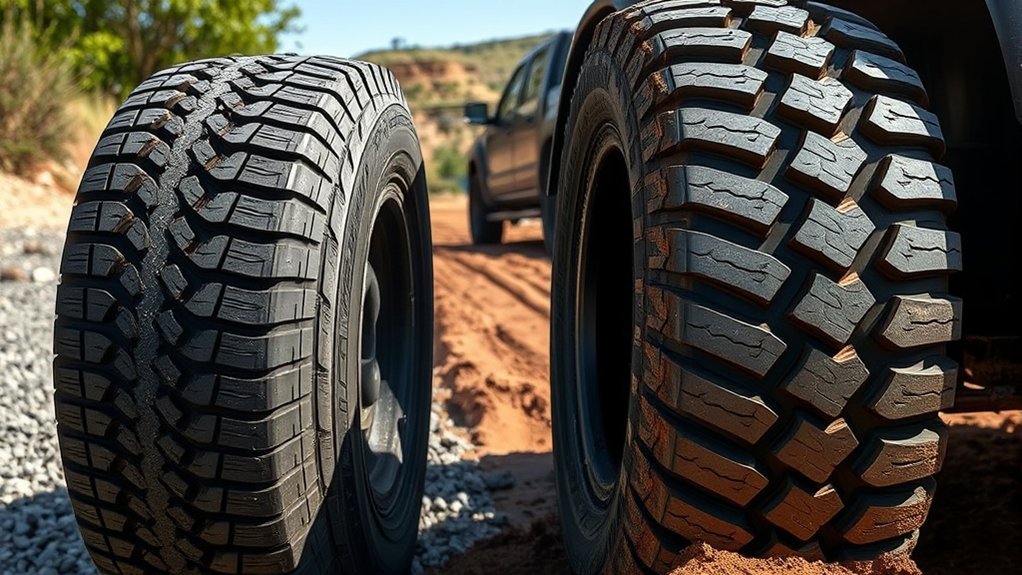
Start with your real driving habits, not the most extreme trip you might take once a year. A tire that is perfect for a mud park can be frustrating on a 40-mile daily commute. A tire that is perfect on the highway may leave you stuck in deep mud.
[Products Worth Considering]
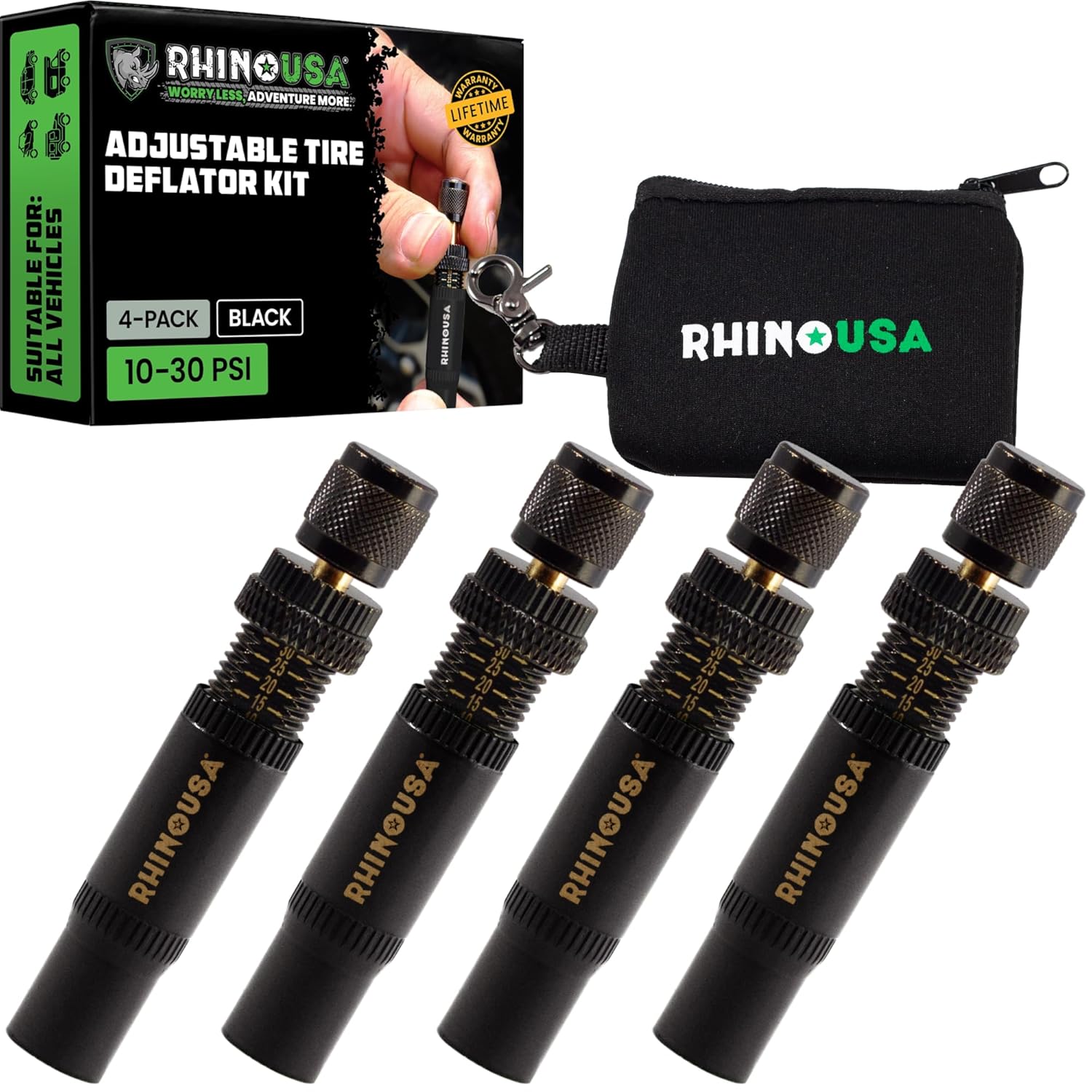
Use the Rhino USA adjustable tire deflators to air down all four tires at once by screwing one deflator onto each valve stem, letting you step away while the tires reach your preset pressure. Each deflator independently adjusts across a 10–30 PSI range with laser-etched indicators for quick setup and verification, making it ideal for beach, sand, and rocky off-road trails.

This digital tire pressure gauge with built-in inflator helps you accurately check and adjust tire pressure for safer driving and better fuel efficiency. It supports multiple units (PSI, KPA, BAR, KG/CM²) and reads within 1% for reliable results. The 3-in-1 design inflates, deflates, and measures, with a quick-connect air chuck and compatible hose setup for cars, trucks, SUVs, RVs, and motorcycles.

Upgrade your ride with a 2-pack set of 26x1.95 folding mountain bike tires built for dependable traction on mud, rocks, and trail surfaces. A reinforced puncture-resistant layer helps protect against sharp debris, while included butyl inner tubes provide strong sealing and shock absorption. Ready for fast swaps with included tire levers and universal sizing for most bikes.
Choose All-Terrain Tires If:
- You drive on pavement most of the week
- You want one tire for commuting, towing, road trips, and light off-road use
- You care about lower road noise
- You want stronger tread life and warranty options
- You drive on gravel, dirt, rain, or occasional snow
- You want a practical upgrade from highway tires
Choose Mud-Terrain Tires If:
- You regularly drive in deep mud, ruts, or loose soil
- You do technical off-roading or rock crawling
- Your vehicle is a weekend trail rig more than a commuter
- You need stronger sidewall protection
- You are comfortable with more road noise
- You accept faster wear and lower fuel economy as part of the tradeoff
Before You Buy, Check These Details
- Tire size: Match your vehicle placard or confirm clearance before upsizing.
- Load index or load range: Make sure the tire can handle your vehicle, passengers, cargo, and towing needs.
- Speed rating: Do not choose a tire with an unsuitable speed rating for your vehicle and driving conditions.
- Wheel clearance: Larger tires can rub the fender, control arms, mud flaps, or bumper.
- Weight: Heavier tires can affect acceleration, braking, fuel economy, and suspension wear.
- Warranty: Compare mileage warranty, workmanship coverage, road-hazard coverage, and exclusions.
- Winter rating: Look for 3PMSF if snow traction is important.
Frequently Asked Questions
Should I get all-terrain or mud-terrain tires?
Get all-terrain tires if you drive mostly on pavement and want a balanced tire for commuting, gravel, dirt roads, light trails, and occasional snow. Get mud-terrain tires if you regularly drive through deep mud, rough trails, rocky terrain, or rutted off-road conditions.
Is there a downside to all-terrain tires?
Yes. All-terrain tires are a compromise. They are usually louder and less fuel-efficient than highway tires, and they cannot match mud-terrain tires in deep mud or technical off-road conditions. They are still the best choice for many mixed-use trucks and SUVs.
Are mud-terrain tires bad on the highway?
They are not unsafe just because they are mud-terrain tires, but they are usually less comfortable than all-terrain tires on the highway. Expect more tread noise, more vibration, shorter tread life, and lower fuel economy, especially if the tire is oversized or poorly maintained.
Do all-terrain tires work in snow?
Some all-terrain tires work well in snow, especially models with the Three-Peak Mountain Snowflake symbol. However, all-terrain tires are not automatically winter tires. For frequent ice, severe winter highways, or mountain driving, dedicated winter tires are usually the safer choice.
Do mud-terrain tires wear faster than all-terrain tires?
Often, yes, especially when used mostly on pavement. Mud-terrain tires have larger tread blocks and trail-focused compounds that can wear faster or unevenly on highways. Rotation, alignment, pressure, and driving style make a big difference.
Can I use mud-terrain tires for daily driving?
You can, but most daily drivers are happier with all-terrain tires. Mud-terrain tires make sense for daily use only if you truly need their off-road traction and are willing to accept the added noise, wear, and fuel cost.
Conclusion
For most truck and SUV owners, all-terrain tires are the smarter everyday choice. They offer the best mix of road comfort, light off-road traction, tread life, wet-road control, and value. Mud-terrain tires are the better choice for serious off-road use, especially deep mud, ruts, rocks, and rough trails where traction matters more than highway comfort.
The right answer is not the most aggressive tire. It is the tire that matches your real driving. If your week is mostly pavement with weekend trails, choose all-terrain. If your weekends involve deep mud, trail damage, and technical terrain, choose mud-terrain.
Sources
- Tire Rack — All-Terrain Tires — supports the definition of all-terrain tires as a balance of on-road comfort and off-road capability.
- BFGoodrich — All-Terrain T/A KO3 — supports all-terrain warranty and 3PMSF examples.
- BFGoodrich — Mud-Terrain T/A KM3 — supports mud-terrain design and off-road-use examples.
- Falken — Wildpeak A/T4W — supports all-terrain mileage warranty and 3PMSF examples.
- U.S. Tire Manufacturers Association — Tire Care Essentials — supports pressure, tread, rotation, and alignment maintenance guidance.
- FuelEconomy.gov — Gas Mileage Tips — supports the connection between tire pressure, rolling resistance, and fuel economy.