
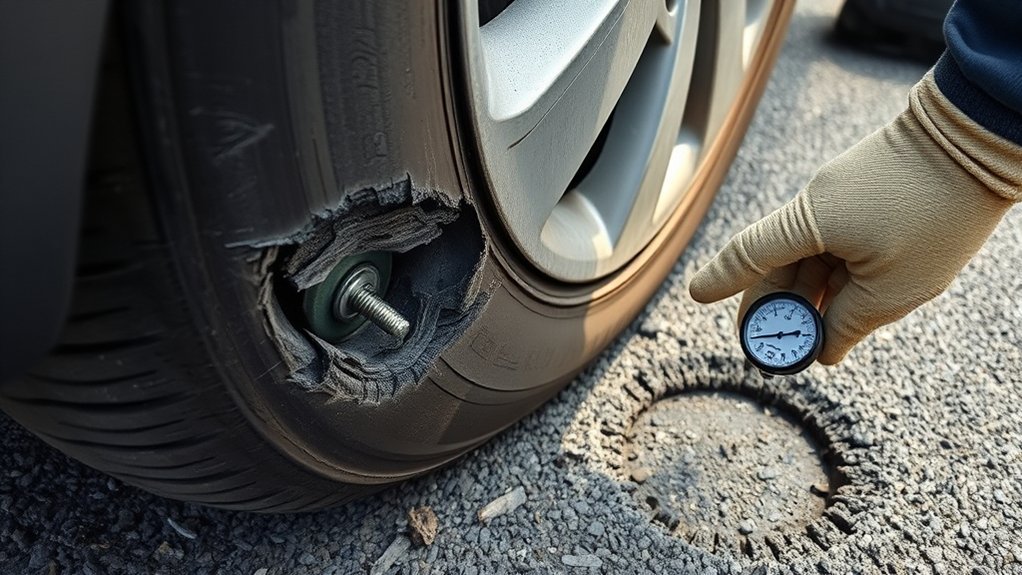
A tire usually busts when heat, air-pressure problems, impact damage, age, or excess load weakens the tire until it can no longer hold air. Most blowouts are preventable when you keep tires at the vehicle maker’s cold PSI, inspect tread and sidewalls, avoid overloading, and act quickly after pothole or curb hits.
Quick Answer
A tire can bust when its casing is damaged or overheated. Common causes include underinflation, overloading, impact damage, worn tread, aging rubber, punctures, and driving on a tire that was previously run flat. Check cold pressure monthly, inspect damage, respect load limits, and replace unsafe tires before failure.
Key Takeaways
- Underinflation is one of the biggest preventable blowout risks because it increases sidewall flexing, heat buildup, and structural stress.
- Overloading a vehicle can exceed the tire’s load rating and make heat-related failure more likely.
- Potholes, curbs, nails, glass, and hidden impact damage can weaken belts, cords, and sidewalls.
- Worn, aged, cracked, bulging, or unevenly worn tires should be inspected or replaced before long drives.
- The safest prevention routine is monthly cold-pressure checks, tread inspections, rotation when recommended, alignment checks, and correct load control.
At a Glance
| Time Required | 10–15 minutes for a monthly tire check |
| Difficulty | Easy for basic checks; professional inspection needed for bulges, exposed cords, vibration, or impact damage |
| Tools Needed | Accurate tire pressure gauge, flashlight, tread-depth gauge or penny, and your vehicle owner’s manual or door placard |
| Cost | Usually $0–$15 for basic checks; repair or replacement cost depends on tire condition |
NHTSA reports that 511 people died in tire-related motor vehicle traffic crashes in 2024, which is why pressure, tread, load, and damage checks are more than routine maintenance.
What Causes a Tire Blowout?
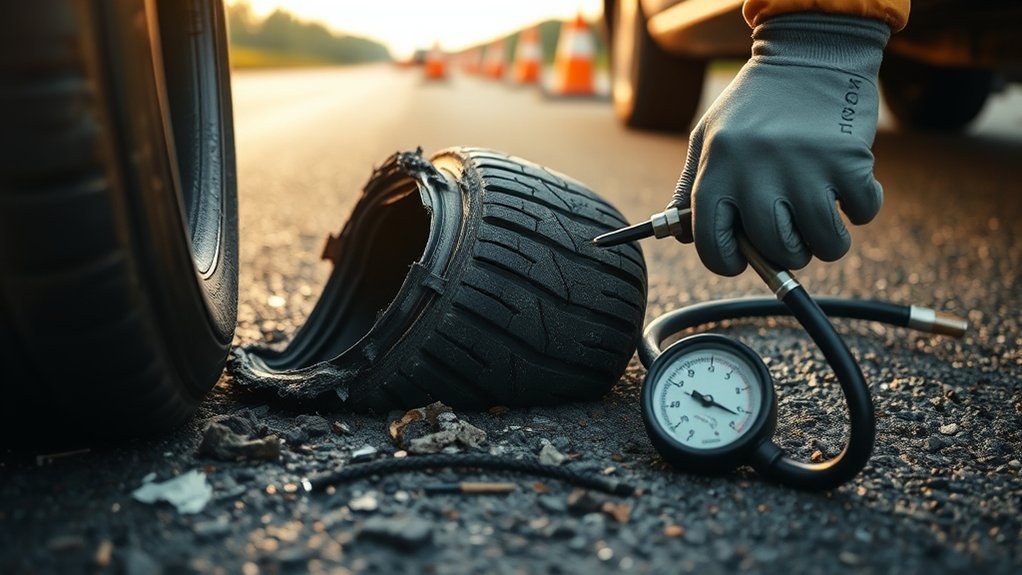
A tire blowout is a rapid loss of air pressure that can make a vehicle difficult to control. The most common preventable causes include low pressure, excess load, road-impact damage, punctures, worn tread, aging rubber, and ignored warning signs.
NHTSA TireWise warns that poor tire maintenance, including not having enough air in the tires and failing to rotate them, can lead to a flat tire, a blowout, or tread separation. That means the tire usually does not “bust” for one reason alone. Pressure, heat, load, speed, tread condition, and previous damage often combine until the tire structure fails.
- Underinflation: Low air pressure makes the sidewalls flex too much, which creates heat and weakens the tire.
- Overloading: Cargo or passengers beyond the vehicle’s rated capacity force the tire to carry more weight than designed.
- Road hazards: Potholes, curbs, debris, nails, glass, and metal can puncture the tread or bruise the sidewall internally.
- Worn tread: Thin tread reduces protection and traction, especially in wet weather.
- Aging and cracking: Rubber and internal materials change over time because of service, storage, heat, sunlight, and poor maintenance.
- Previous run-flat damage: A tire driven while very low or flat may look usable later, but the sidewall can be damaged inside.
Note: The correct pressure for your vehicle is the manufacturer’s recommended cold PSI on the Tire and Loading Information Label or in the owner’s manual, not the maximum pressure printed on the tire sidewall.
Why Does Underinflation Cause Tire Failure?
Underinflation is dangerous because it changes how the tire carries the vehicle. When a tire does not have enough air, more of the sidewall bends with every rotation. That repeated bending creates heat. If the heat and stress keep building, the tire’s internal materials can weaken, separate, or fail suddenly.
Low Pressure Heat Buildup
Driving on a significantly underinflated tire can cause overheating and lead to tire failure. It also reduces fuel efficiency, shortens tread life, and can affect handling and stopping ability. Federal TPMS language makes this clear in the owner-manual warning required for vehicles equipped with tire pressure monitoring systems.
Low pressure also wastes fuel. FuelEconomy.gov says properly inflated tires can improve gas mileage by 0.6% on average, up to 3% in some cases, and that underinflated tires can lower gas mileage by about 0.2% for every 1 psi drop in the average pressure of all tires.
Sidewall Flex and Failure
The tire sidewall is built to flex, but only within its design limits. Too little air makes the sidewall bend farther than intended. That extra flex can damage the casing, increase shoulder wear, and reduce the tire’s ability to handle impacts.
- Check pressure when the tires are cold, before driving or after the vehicle has been parked for at least three hours.
- Check every tire, including the spare if your vehicle has one.
- Look for shoulder wear, bulges, cuts, cracks, or exposed cords.
- Do not keep driving on a tire that repeatedly loses pressure.
Pro Tip: Keep a quality pressure gauge in your glove box. Gas-station gauges can be damaged or inaccurate, and a monthly cold-pressure check is one of the easiest ways to prevent tire trouble.
How Overloading and Overinflation Damage Tires
Air pressure and load work together. A correctly inflated tire can still fail if the vehicle is overloaded. An overloaded vehicle forces the tires to carry more weight than their load rating allows, which increases heat and stress inside the casing.
Overloading Strains Tire Structure
Your vehicle’s Tire and Loading Information Label lists the recommended cold tire pressure and loading information. Respect that label, especially before road trips, towing, or hauling heavy cargo. Overloading can cause excessive heat, uneven wear, poor handling, and blowout risk.
- Check the vehicle’s payload and load limit before carrying heavy cargo.
- Do not assume larger tires automatically allow more weight.
- Distribute cargo evenly and secure it.
- If towing, follow the vehicle and trailer manufacturer instructions.
Overinflation Raises Impact Risk
More air is not always safer. Overinflation can make a tire ride harder, reduce the tire’s ability to absorb impacts, and accelerate center tread wear. It can also make the tire more vulnerable to damage from potholes and sharp impacts.
Use the vehicle manufacturer’s recommended cold PSI. Do not inflate to the maximum PSI on the sidewall unless that number also matches the vehicle maker’s instruction for your exact load and tire setup.
Preventive Checks Protect Tires
Most tire problems start before they are obvious from the driver’s seat. Preventive checks help you spot damage early, before the tire fails at speed.
- Check cold pressure at least once a month and before long trips.
- Compare cargo weight to the vehicle’s load limit.
- Inspect for cuts, cracks, sidewall bubbles, nails, and uneven wear.
- Have alignment and balance checked if the vehicle pulls, shakes, or wears tires unevenly.
Signs Your Tire Is About to Blow
A tire may not give much warning before it fails, but many blowouts are preceded by visible or physical symptoms. Stop in a safe place and inspect the tire if you notice any of these signs:
- Thumping, flapping, or popping sounds: These can point to tread separation, impact damage, or a tire coming apart.
- Bulges or bubbles: A sidewall bulge often means internal cords are damaged. Do not ignore it.
- Cracks, cuts, or exposed cords: These weaken the tire and can let air escape quickly.
- Vibration at speed: Shaking can come from imbalance, separation, wheel damage, or uneven wear.
- Vehicle pulling to one side: This can signal low pressure, alignment problems, or internal tire damage.
- Repeated pressure loss: A tire that needs air again and again may have a puncture, valve leak, wheel leak, or sidewall damage.
- Low tread: Tires worn to 2/32 inch are not safe and should be replaced.
Warning: Do not drive on a tire with a sidewall bulge, exposed cords, severe cracking, or rapid air loss. Install the spare only if you can do it safely away from traffic, or call roadside assistance.
How to Check Tire Pressure Correctly
Checking pressure is simple, but the details matter. The wrong PSI reading can lead you to overinflate or underinflate the tire.
- Find the correct PSI. Look at the Tire and Loading Information Label on the driver’s door edge, doorjamb, or in the owner’s manual.
- Check tires cold. Measure pressure before driving or after the car has been parked for at least three hours.
- Check all tires. Include the spare if your vehicle has one.
- Use a reliable gauge. Press it firmly onto the valve stem and read the pressure.
- Add or release air as needed. Match the vehicle maker’s recommended cold PSI.
- Recheck after adjusting. Confirm the reading before replacing the valve cap.
- Investigate repeated loss. If one tire keeps dropping, have it inspected for punctures, valve leaks, wheel damage, or sidewall damage.
Note: A TPMS light means at least one tire may already be significantly underinflated. TPMS is helpful, but it is not a replacement for monthly manual pressure checks.
[Products Worth Considering]

Keep your tires properly inflated with this analog VONDIOR tire pressure gauge, designed for fast, easy readings without batteries. The swiveling, two-axis hose and large glow dial help you measure at any tire angle with instant visibility. Built with a protective rubber shield, it supports durable, low-maintenance use for cars and trucks.

Monitor tire tread wear with a smart, color-coded depth gauge that shows clear condition ranges at a glance. The bar is range marked for fast, easy readings, helping you maintain safer traction and performance. Each gauge is portable with a pocket clip, and the set includes 20 units for daily use and sharing.

Measure tire tread depth quickly and accurately with this LUMITECO dial gauge that reads in 1/32" increments up to 14/32". The color-coded green/yellow/red zones make it easy to judge tire wear and know when replacement is needed. A rugged, compact design with a protective pouch helps keep the gauge ready for use on cars, trucks, motorcycles, and more.
Tread Depth, Tire Age, and Recalls
Pressure is only one part of tire safety. A tire can be properly inflated and still be unsafe if the tread is too low, the rubber is aged, or the tire has an unresolved recall.
Check Tread Depth
Tread provides grip, especially on wet roads. NHTSA says tires are not safe and should be replaced when tread is worn down to 2/32 of an inch. You can check with a tread-depth gauge, built-in treadwear indicators, or the penny test. If you place a penny into the tread with Lincoln’s head upside down and can see the top of his head, replace the tire.
Check Tire Age
Tire aging happens as rubber and internal materials change over time because of use, storage, sunlight, heat, and maintenance conditions. You cannot judge tire age only by appearance. Check the DOT date code on the sidewall and follow your tire maker’s and vehicle maker’s replacement guidance, especially for spare tires, low-mileage vehicles, RVs, trailers, and vehicles stored outdoors.
Check Tire Recalls
Tires can be recalled just like vehicles and other equipment. Use the NHTSA recalls search to check for tire, vehicle, and equipment recalls. NHTSA recommends registering vehicles, tires, car seats, and equipment and checking recalls twice a year.
What to Do During a Tire Blowout
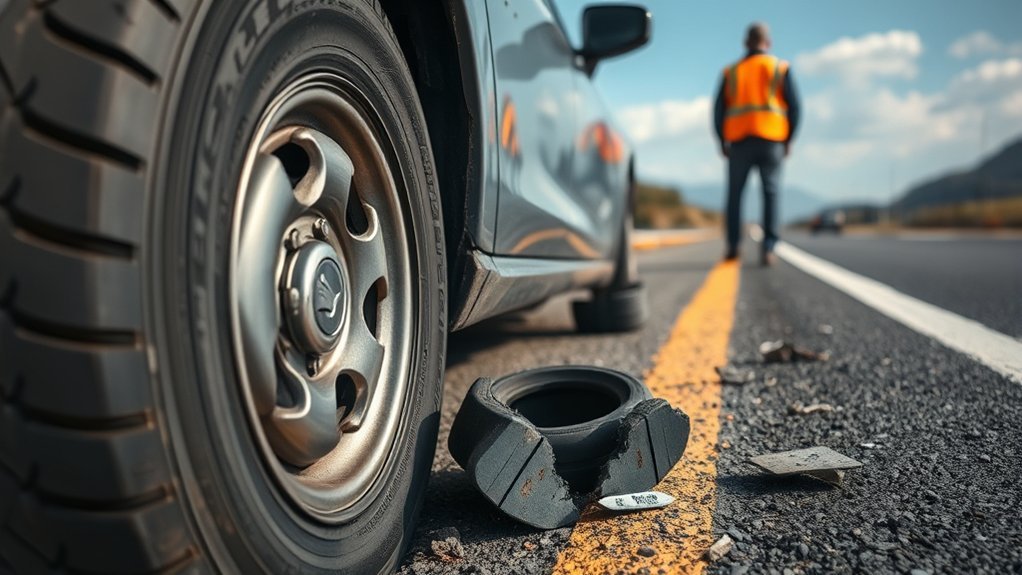
If a tire blows out while driving, your first job is to keep the vehicle balanced and controllable. Do not slam the brakes, jerk the steering wheel, or make a sudden lane change.
- Hold the steering wheel firmly with both hands.
- Keep the vehicle moving straight. Correct gently if it pulls.
- Maintain speed only if it is safe. Avoid sudden braking or abrupt accelerator release.
- Gradually release the accelerator. Let the vehicle slow in a controlled way.
- Signal and move off the road once stable. Aim for a shoulder, exit, parking lot, or other safe area.
- Turn on hazard lights. Make your vehicle visible to other drivers.
- Exit only if it is safe. If you are near traffic, stay belted inside the vehicle and call roadside assistance.
Warning: Never try to inspect or change a tire from the traffic side of the vehicle. If you cannot reach a safe location, call for help and wait in the safest available position.
How to Prevent Tire Blowouts
Preventing a tire blowout starts with controlling the factors that stress the tire before failure occurs. Use this routine to reduce risk:
- Monthly: Check cold tire pressure, including the spare.
- Monthly: Inspect tread depth, sidewalls, valve stems, and visible damage.
- Before long trips: Check pressure, load, tread, spare tire, and emergency tools.
- After pothole or curb impact: Inspect for bulges, vibration, pulling, pressure loss, or wheel damage.
- Every 5,000–8,000 miles if recommended: Rotate tires according to the owner’s manual, or sooner if uneven wear appears.
- As needed: Have tires balanced and alignment checked if the vehicle shakes, pulls, or wears tires unevenly.
- Anytime a tire looks unsafe: Have a qualified tire professional inspect it before continuing to drive.
Choose tires with the correct size, load index, speed rating, and UTQG rating for your vehicle and driving conditions. Good tire construction helps, but it cannot overcome low pressure, overloading, or ignored damage.
[Products Worth Considering]

The SAFELIFE dial tire tread depth gauge measures tread depth in 1/32 inch increments with clear, easy-to-read 2-inch dial face. Color zones using a traffic light system help you quickly judge whether tread is low, marginal, or ample for safer driving. Built with a durable zinc cast body and a metal detect probe for precise, comfortable use across cars, motorcycles, trucks, and buses.

Accurately measure tire tread depth with a calibrated gauge marked from 0 to 1 inch in 1/32 inch increments. The color-coded bar helps you quickly identify tread condition ranges, supporting safe driving for trucks, motorcycles, automobiles, and passenger vehicles.
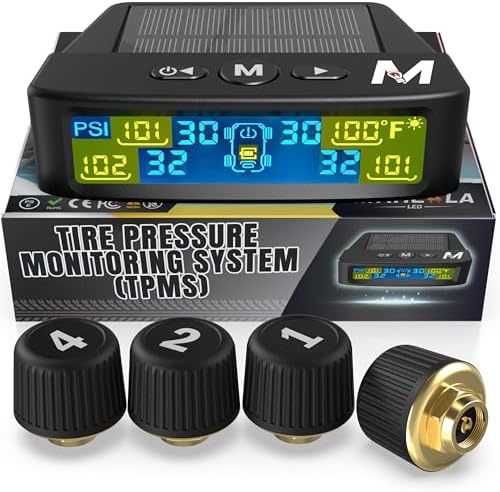
Marcala’s TPMS set of four sensors helps you monitor tire pressure and temperature in real time while driving, with updates every second. The bright color LCD uses auto-dimming for easy viewing, powered by dual solar and USB charging, and offers six alarm modes. Built for trailers, RVs, campers, trucks, and towing setups, the sensors support monitoring 1-4 wheels up to 98 PSI with IP67 waterproof protection.
Tire Maintenance Tips That Extend Tire Life
Small tire problems become expensive when they are ignored. A simple maintenance schedule helps your tires last longer and perform more predictably.
- Use the right tire for the season. All-season, summer, winter, and all-terrain tires are built for different temperatures and road conditions.
- Track tread depth. Wet-road performance drops as tread wears down.
- Watch for uneven wear. Inner-edge, outer-edge, cupping, or center wear can point to pressure, alignment, balance, or suspension problems.
- Keep tires matched when possible. Mismatched size, type, or wear can affect handling, especially on AWD vehicles.
- Do not ignore slow leaks. Repeatedly adding air is not a repair.
- Replace damaged tires early. Sidewall damage, exposed cords, and bulges are not safe repair candidates.
Maintaining proper tire tread depth, choosing appropriate all-season tires when they fit your climate, and understanding low rolling resistance tires can improve durability, efficiency, and confidence on the road.
[Products Worth Considering]

The Tymate TM12 RV TPMS delivers real-time tire pressure and temperature monitoring with a stable 433Hz display for safer long-distance driving. It supports simultaneous monitoring across vehicle and trailer zones, includes six alarm modes for pressure, temperature, leakage, battery, and signal loss, and features easy DIY installation with auto calibration. Power is supplied via USB-C charging or solar recharging, with a wide 0–144 PSI range and up to 50 ft signal coverage for RVs and towable trailers.

ETENWOLF’s tire pressure gauge helps you quickly and accurately check tire PSI across cars, trucks, motorcycles, bikes, and more. It’s manually calibrated to ANSI B40.1 Grade A for reliable readings, includes a large glow dial for easy nighttime viewing, and features a 360-degree swivel chuck for use at any valve angle. The gauge also works consistently in extreme hot or cold weather.

Measure tyre tread depth precisely with a digital gauge that reads in both MM and inches, helping you monitor safe driving conditions. The large LCD screen is easy to operate, and the compact tool fits for cars, trucks, and motorcycles. It provides high accuracy with a 0-25.4mm range and includes a 1-year warranty for added peace of mind.
Common Mistakes That Lead to Tire Failure
- Using the sidewall max PSI as the normal PSI. Use the vehicle placard or owner’s manual instead.
- Trusting TPMS alone. TPMS may not warn you until a tire is already significantly underinflated.
- Checking pressure after driving. Warm tires give a higher reading than cold tires.
- Ignoring the spare. A flat or underinflated spare is useless during an emergency.
- Driving after a hard impact without inspection. Potholes and curbs can damage the tire internally.
- Overloading the vehicle. Extra cargo increases heat and stress on the tires.
- Delaying replacement. Tires with low tread, bulges, exposed cords, or severe cracking should not stay in service.
Frequently Asked Questions
What causes a tire to bust?
A tire usually busts because pressure, heat, load, impact damage, or age weakens the casing. Underinflation is especially risky because it makes the sidewall flex too much and overheat. Potholes, punctures, worn tread, bulges, and overloaded vehicles can also trigger sudden tire failure.
What cuts tires easily?
Nails, screws, glass, sharp metal, construction debris, jagged rocks, and damaged road surfaces can cut or puncture tires. Sidewalls are more vulnerable than tread because they are thinner and flex more, so sidewall cuts usually require replacement rather than repair.
What damages tires the most?
The most common preventable damage comes from underinflation, overloading, pothole impacts, poor alignment, lack of rotation, and driving on worn or aged tires. Heat is the major failure accelerator because it weakens internal materials and can lead to tread separation or rapid air loss.
What can burst a tire while driving?
A tire can burst while driving if it is severely underinflated, overloaded, punctured, damaged by a pothole, worn below safe tread depth, or weakened by age. High speed and hot weather can add stress, especially when the tire already has low pressure or hidden damage.
Can overinflation cause a blowout?
Yes. Overinflation can make the tire stiffer and less able to absorb impacts, which may increase damage from potholes or road debris. It can also cause center tread wear. Use the vehicle maker’s recommended cold PSI instead of assuming more air is safer.
How often should I check tire pressure?
Check tire pressure at least once a month and before long trips. Check when the tires are cold, and include the spare if your vehicle has one. Use the PSI on the door placard or owner’s manual, not the maximum PSI printed on the tire sidewall.
Is it safe to drive with the TPMS light on?
Do not ignore the TPMS light. It means at least one tire may be significantly underinflated or the system may have a malfunction. Slow down, avoid hard braking or sharp turns, stop somewhere safe, and check the tire pressure as soon as possible.
Conclusion
A tire failure can feel sudden, but many blowouts start with preventable problems: low pressure, excess load, worn tread, aging rubber, impact damage, or ignored warning signs. Check cold pressure monthly, inspect tread and sidewalls, rotate tires when your vehicle maker recommends it, and do not drive on a tire with bulges, exposed cords, rapid air loss, or severe cracking. Good tire care keeps the tire cooler, stronger, and safer under real road stress.
Sources
- NHTSA TireWise: Tire Safety Ratings and Awareness — tire pressure, tread depth, tire aging, tire blowouts, maintenance, and 2024 tire-related crash fatalities.
- FuelEconomy.gov: Keeping Your Vehicle in Shape — fuel-economy impact of proper tire inflation and underinflation.
- eCFR 49 CFR 571.138: Tire Pressure Monitoring Systems — TPMS purpose, warning thresholds, and required owner-manual tire-pressure language.
- NHTSA Recalls — tire, vehicle, equipment recall searches and recall safety guidance.

