
V vs Y Speed Rating: Which Do You Actually Need?
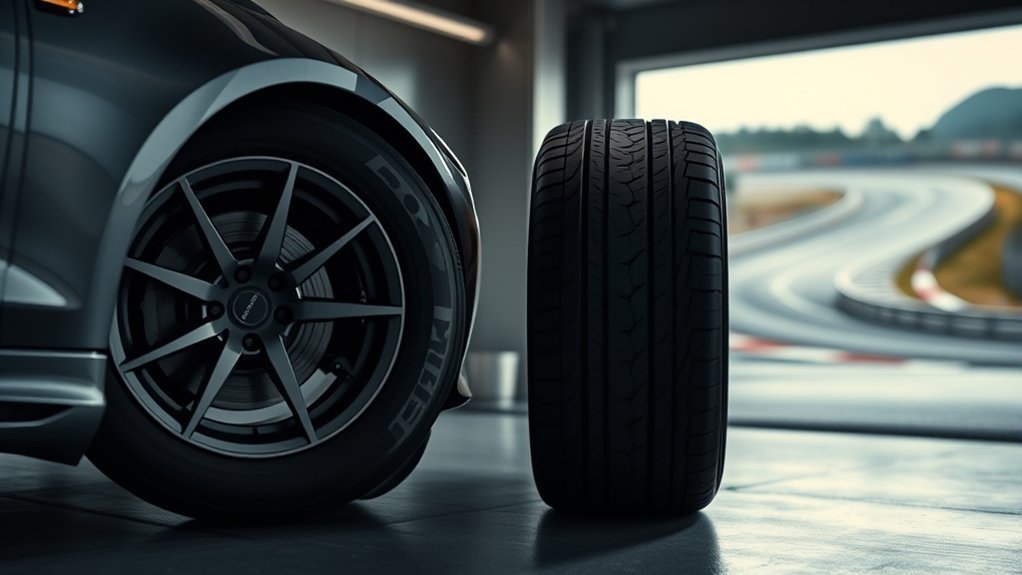
The difference between V- and Y-rated tires is their tested speed capability: V is rated for up to 149 mph (240 km/h), while Y is rated for up to 186 mph (300 km/h). But you should not choose between them simply by asking how fast you normally drive. Start with the tire size, load index, and speed rating specified by your vehicle manufacturer, then compare individual tires for grip, comfort, tread life, noise, and weather performance.
Quick Answer
A V-rated tire has a maximum speed capability of 149 mph, while a Y-rated tire is rated to 186 mph under specified test conditions. Use the speed rating recommended by your vehicle manufacturer. A higher rating may be acceptable, but a lower rating generally should not replace the specified tire simply because you drive slowly.
Key Takeaways
- V = 149 mph (240 km/h); Y = 186 mph (300 km/h).
- A tire marked (Y) is designed for speeds above 186 mph; plain Y does not mean “186 mph or more.”
- Speed rating and load index are different specifications. A Y rating does not automatically mean greater load capacity than a V rating.
- Y-rated tires are common on high-performance vehicles, but the Y symbol alone does not guarantee better wet grip, braking, comfort, steering response, or tread life.
- For replacement tires, follow the vehicle or tire manufacturer’s specified size, load index, speed rating, and inflation requirements.
- Never treat the speed rating as permission to drive at that speed; legal limits, tire pressure, load, tire condition, weather, and road conditions still apply.
What V and Y Speed Ratings Mean
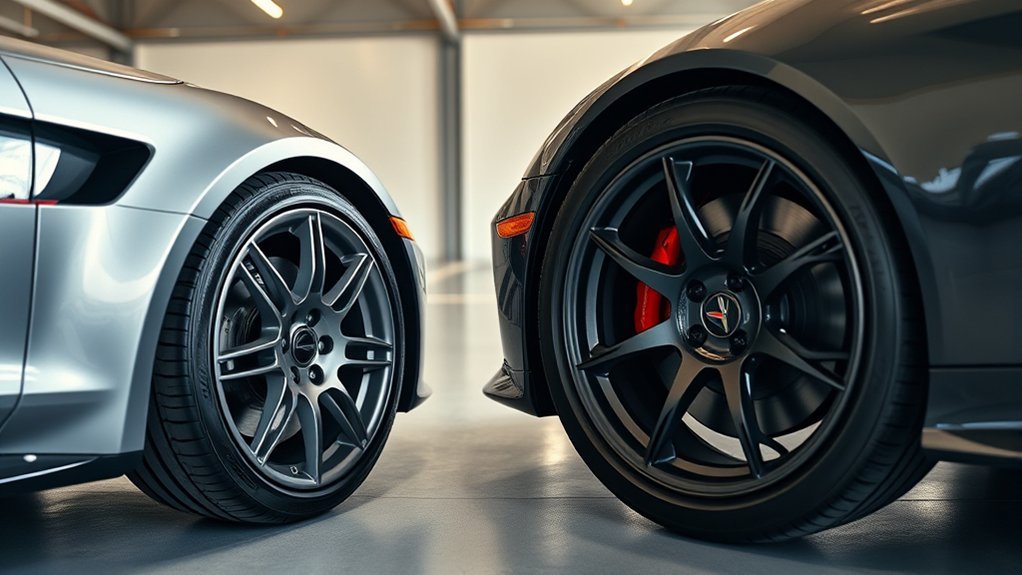
V and Y speed ratings identify the maximum sustained-speed capability assigned to a tire under specified test and operating conditions. According to the National Highway Traffic Safety Administration, V corresponds to 149 mph and Y to 186 mph.
The rating is part of the tire’s operating specification, not a recommendation to drive at that speed. Actual safe operation also depends on tire pressure, load, damage, wear, temperature, road conditions, and the vehicle itself.
V means 149 mph and Y means 186 mph under specified conditions; neither rating is a target speed for public-road driving.
The speed symbol should be considered together with the tire’s size and load index. The U.S. Tire Manufacturers Association recommends using replacement tires with the size, load index, and speed-rating designation recommended by the vehicle or tire manufacturer.
Warning: A speed rating is established under controlled conditions. Underinflation, overloading, tire damage, excessive wear, incorrect fitment, or severe road and weather conditions can reduce real-world capability. Never exceed legal speed limits or a speed that is unsafe for the conditions.
[Products Worth Considering]

This universal wheel alignment tool helps you accurately restore tire tilt angles after tire or suspension repairs using an adjustable camber gauge. It features a powerful magnetic base that firmly attaches to brake rotors for stationary, slip-free readings, improving consistency during measurement. Built from durable PC plastic, it resists wear and corrosion and is compact enough for car, truck, RV, and motorcycle alignment tasks.

Keep your tires properly inflated with this analog VONDIOR tire pressure gauge, designed for fast, easy readings without batteries. The swiveling, two-axis hose and large glow dial help you measure at any tire angle with instant visibility. Built with a protective rubber shield, it supports durable, low-maintenance use for cars and trucks.

The SAFELIFE dial tire tread depth gauge measures tread depth in 1/32 inch increments with clear, easy-to-read 2-inch dial face. Color zones using a traffic light system help you quickly judge whether tread is low, marginal, or ample for safer driving. Built with a durable zinc cast body and a metal detect probe for precise, comfortable use across cars, motorcycles, trucks, and buses.
Y vs (Y): What the Parentheses Mean
A standard Y-rated tire is rated to 186 mph (300 km/h). A tire showing (Y) in its service description indicates a speed capability above 186 mph. Michelin’s current speed-rating chart distinguishes Y at 186 mph from (Y) above 186 mph.
You may also see ZR within the tire-size designation on high-speed tires. ZR historically identifies tires intended for speeds above 149 mph. Modern high-performance tires commonly combine ZR with a W, Y, or (Y) service description that gives more specific information.
How to Read a Tire Service Description
Suppose a tire is marked 245/40R19 98Y. The final two parts tell you two different things:
- 98 is the load index. It corresponds to the tire’s rated load capacity under the applicable conditions.
- Y is the speed symbol. It indicates a maximum speed capability of 186 mph under specified conditions.
The number and letter work together as the tire’s service description, but one does not replace the other. A higher speed symbol does not automatically increase the tire’s load index.
V vs Y Speed Rating: The Key Differences
The measurable difference between V and Y is straightforward: Y has the higher standardized speed capability. Other characteristics—such as grip, noise, ride firmness, treadwear, rolling resistance, and price—depend on the particular tire model rather than the speed-rating letter by itself.
| Specification | V Rating | Y Rating |
| Maximum rated speed | 149 mph / 240 km/h | 186 mph / 300 km/h |
| Above 186 mph | No | Plain Y: no; (Y): designed for capability above 186 mph |
| Load capacity | Determined separately by load index and applicable load/inflation rules | Determined separately by load index and applicable load/inflation rules |
| Typical applications | Many touring and performance-oriented passenger tires | Common on many high-performance vehicle fitments |
| Grip, comfort and tread life | Depends on the specific tire | Depends on the specific tire |
Speed Limit Comparison
A V-rated tire is rated to 149 mph, while a Y-rated tire is rated to 186 mph. That difference describes standardized speed capability rather than an appropriate driving speed.
Both limits are far above ordinary public-road speeds in the United States. More importantly, the speed symbol does not override the vehicle manufacturer’s tire specification. A vehicle engineered around a Y-rated fitment should not automatically be downgraded to V merely because its owner never approaches 149 mph.
Likewise, installing Y-rated tires on a vehicle specified for V does not make the vehicle safe to drive at 186 mph. Vehicle speed capability depends on far more than the tires, including brakes, suspension, aerodynamics, cooling, electronic limits, mechanical condition, and road conditions.
Load Capacity Differences
Load capacity is not determined by the V or Y speed symbol. Check the tire’s load index and the vehicle manufacturer’s load requirements.
For example, a tire marked 98V and another marked 98Y share the same numerical load index of 98 even though their speed ratings differ. The tire manufacturer may also specify changes to permissible load or inflation pressure for very-high-speed operation.
Michelin’s published high-speed tables, for example, show that applicable inflation and load requirements can change as speed increases. That is another reason not to assume that a higher speed symbol simply means “more load capacity.”
Your tire-selection checks should include vehicle load, axle requirements, correct cold inflation pressure, and whether the vehicle requires Standard Load, Extra Load/XL, High Load/HL, or another specific construction.
Underinflating either a V- or Y-rated tire increases flex and heat buildup and can raise the risk of tire damage or failure.
Best Use Cases
A V-rated tire is appropriate when it meets or exceeds the specification for your particular vehicle. Many touring, all-season, grand-touring, and performance tires are available with V ratings, giving buyers a broad choice of comfort, wet-weather, efficiency, and tread-life characteristics.
A Y-rated tire is appropriate when the vehicle manufacturer specifies Y or when a compatible higher-rated replacement is chosen for a vehicle with a lower required speed rating. Y is common in performance-oriented sizes, but you should still compare individual tire models rather than buying solely because of the letter.
For ordinary street driving, factors such as wet braking, hydroplaning resistance, snow capability, treadwear, noise, rolling resistance, and ride quality will normally be more noticeable than the difference between 149- and 186-mph speed capability.
Pro Tip: Compare two tires with the correct size, load index, and acceptable speed rating first. Then choose between them using independent wet/dry testing, seasonal capability, treadwear warranty, noise, rolling resistance, and your local climate.
How V and Y Tires Affect Grip and Handling
Moving from a V-rated tire to a Y-rated tire does not automatically give you more grip or sharper steering. The speed rating tells you about high-speed capability, while handling depends on the complete tire design.
Speed rating is one specification within a tire design; it is not a stand-alone grip, braking, comfort, or handling grade.
Many Y-rated tires happen to belong to ultra-high-performance product families that use performance-focused tread compounds, reinforcement, and tread patterns. Those tires may provide quicker steering response and stronger dry grip than a comfort-oriented V-rated touring tire. But that difference comes from the complete designs being compared, not from the Y symbol alone.
The reverse comparison is also possible. A well-developed V-rated tire may outperform a different Y-rated tire in wet braking, cold-weather traction, noise, or tread life.
For that reason, treat the speed symbol as an eligibility requirement and use model-specific test data to judge grip and handling.
V vs Y Speed Rating: Highway Safety and Performance
At highway speeds, a healthy V-rated tire that meets the vehicle manufacturer’s specification already has a rated speed capability well above normal U.S. legal highway speeds. A Y-rated tire provides a higher standardized speed capability, but that fact alone does not prove that it will stop shorter, resist hydroplaning better, or feel more stable at 70 mph.
Highway safety depends heavily on correct inflation, adequate tread depth, proper loading, alignment, tire condition, weather, and matching tires to the vehicle. Michelin notes that severe underinflation can create heat buildup and premature tire failure.
If a vehicle was engineered with Y-rated original-equipment tires, keeping the specified speed capability helps preserve the vehicle’s intended operating envelope. If the vehicle specifies V, moving to Y can be acceptable when the size, load index and other fitment requirements are compatible, but there may be no meaningful benefit for your particular use.
Note: The maximum speed shown by a rating assumes an appropriate tire in suitable condition and under specified operating conditions. Damage, repairs, wear, pressure, load and prolonged heat exposure can change what is safe in real-world use.
Which Cars Need Y-Rated Tires?
A car needs Y-rated tires when its manufacturer specifies that speed rating for the applicable tire size and fitment. Y ratings are common on many high-performance sedans, coupes, sports cars, supercars, and performance-oriented EVs, but vehicle type alone does not determine the required rating.
Check the owner’s manual, tire information label where applicable, OEM fitment documentation, or a manufacturer-approved tire database. Confirm the complete service description, including size, load index, speed symbol, and any XL or other load designation.
If your car was designed around a Y-rated fitment, do not substitute a lower rating merely because you intend to stay below 149 mph.
High-Speed Performance Cars
High-performance vehicles frequently use Y-rated tires because their engineers require the corresponding high-speed capability as part of the vehicle’s approved tire specification.
For a vehicle requiring capability above 186 mph, a plain Y symbol is not enough by itself. Michelin distinguishes tires marked (Y) as having capability above 186 mph and advises following manufacturer and tire-dealer guidance for operation in that range.
The correct tire must also meet the vehicle’s required load capacity, dimensions, inflation requirements, and any manufacturer-specific homologation requirements.
Do not assume that installing a higher-rated tire raises the car’s safe top speed. Tire specification is only one part of the vehicle’s engineering.
Track-Ready Sports Models
Track driving adds repeated braking, cornering, temperature, and speed loads that ordinary road use may not. However, a generic “track car = Y tire” rule is too simple. Before a circuit session, verify the exact recommendations for your vehicle, tire model, track use, starting pressure, hot pressure, load, and temperature range.
| Factor | What to Verify | Why It Matters |
|---|---|---|
| Speed rating | Meets the vehicle/tire maker’s requirement | Establishes the applicable speed capability |
| Load index | Meets or exceeds required load capacity | Prevents under-rated fitment |
| Tire type | Road, UHP, track-focused, or competition specification | Determines temperature range and intended use |
| Pressure | Vehicle/tire/track guidance | Pressure changes substantially as tires heat |
| Condition | Tread, damage, age, repairs and heat history | Track loads can expose existing weaknesses |
A Y rating may be part of the correct track fitment, but it does not tell you by itself whether a tire is suitable for repeated track sessions. A road-oriented Y-rated all-season tire and a track-focused Y-rated summer tire can have very different operating characteristics.
Manufacturer Tire Specs
Manufacturer tire specifications are the most reliable starting point when deciding whether your car needs V- or Y-rated tires. USTMA recommends replacement tires with the same size, load index, and speed-rating designation recommended by the vehicle or tire manufacturer.
If your vehicle specifies Y, use Y or an appropriate manufacturer-approved higher-speed fitment rather than automatically downgrading to V. If it specifies V, a compatible Y-rated tire may be acceptable, but the higher letter is not automatically an upgrade in every other performance category.
The Continental tire-size guidance likewise advises matching the size, load index, and speed-rating specification provided by the vehicle or tire manufacturer.
Some vehicles also use manufacturer-specific approved tire versions. If your owner’s manual or manufacturer specifies such an approval, include it in your replacement decision rather than shopping by speed symbol alone.
When V-Rated Tires Are the Better Choice
A V-rated tire is the appropriate choice when V satisfies the vehicle manufacturer’s required specification and the individual tire provides the characteristics you want.
For many vehicles, that can give you access to touring and performance-oriented models designed around everyday priorities such as quiet operation, all-season traction, long treadwear, or low rolling resistance.
However, do not assume that every V tire is softer, quieter, cheaper, or longer-lasting than every Y tire. Those differences must be checked at the product level.
If your vehicle was originally specified with Y-rated tires, ordinary commuting does not by itself make V a suitable replacement. Follow the vehicle manufacturer’s fitment requirements.
V vs Y Speed Rating: Ride Comfort and Tread Life
Speed rating alone cannot reliably predict ride comfort or tread life. These characteristics depend on factors such as carcass construction, sidewall design, tire size, load specification, tread compound, tread depth, wheel diameter, inflation pressure, vehicle suspension, alignment, and driving style.
There is a real market trend behind the common V-versus-Y stereotype: many Y-rated products are sold in ultra-high-performance categories, while many V-rated products are available in comfort- and touring-focused categories. As a result, a shopper comparing typical products may encounter Y-rated tires with firmer responses or shorter warranties.
- A V rating does not guarantee a softer ride.
- A Y rating does not automatically create more road noise.
- A V rating does not guarantee longer tread life.
- A Y rating does not guarantee better cornering or braking.
Compare the actual tire model’s test results, treadwear warranty, construction, intended category, and owner requirements instead of using the speed symbol as a shortcut.
[Products Worth Considering]

AstroAI AIRUN H is a compact 12V tire inflator designed for fast, convenient inflation with an easy-to-read digital pressure gauge. Set your target pressure with programmable controls and let the auto shut-off turn off the pump when the preset is reached. It also includes a backlit screen and LED flashlight for nighttime use, with a ToughUltra durability design for longer service life.

Measure tire tread depth quickly and accurately with this LUMITECO dial gauge that reads in 1/32" increments up to 14/32". The color-coded green/yellow/red zones make it easy to judge tire wear and know when replacement is needed. A rugged, compact design with a protective pouch helps keep the gauge ready for use on cars, trucks, motorcycles, and more.

Black Magic Tire Wet delivers a deep wet-look shine that makes tires appear dark, rich, and freshly detailed. Its long-lasting formula helps resist rain, dust, and road grime for weeks of glossy protection, not days. Apply by spraying onto clean, dry tires—no buffing or wiping required—with a low-sling design to reduce splatter on paint and wheels.
How to Choose the Right Tire for Your Driving Style
Choosing the right tire starts with the vehicle’s requirements and then moves to your driving conditions. Do not reverse that order.
First, identify the approved size, load index, speed rating, and load designation. Then compare compatible tires for the qualities that affect your daily driving: dry braking, wet braking, hydroplaning resistance, snow or cold-weather performance, steering response, noise, treadwear, and rolling resistance.
If you drive spiritedly on dry roads, you may prioritize steering response and heat-resistant performance. If you commute through heavy rain, wet braking and hydroplaning resistance may matter more. Drivers in cold or snowy climates should prioritize the appropriate seasonal capability rather than assuming a Y rating provides superior all-weather traction.
Hot climates, heavy loads, rough pavement, frequent highway travel, potholes, and aggressive driving can all change what matters most in a tire.
Proper inflation and alignment remain essential regardless of whether the sidewall ends in V or Y.
Choosing the Best Speed Rating for Daily Driving
For daily driving, choose a speed rating that satisfies your vehicle manufacturer’s specification rather than selecting the lowest letter that seems adequate for your normal cruising speed.
- Confirm the correct tire size.
- Meet or exceed the required load index.
- Use the manufacturer-recommended speed-rating designation.
- Confirm Standard Load, XL/Extra Load, HL, run-flat, or other required construction where applicable.
- Use the vehicle manufacturer’s recommended cold tire pressures.
- Compare wet, dry, winter, treadwear, noise, and efficiency performance separately.
Michelin states that a higher speed rating than originally specified may generally be installed. It also notes a limited exception in which certain winter-capable tires may use a lower speed rating, provided the vehicle is not operated above that tire’s maximum rating and the application follows the relevant guidance.
For ordinary replacement shopping, the safest simple rule is still to match the manufacturer’s recommended rating unless the vehicle or tire manufacturer explicitly approves an alternative.
Can You Replace V-Rated Tires With Y-Rated Tires?
Generally, moving from a V-rated specification to a compatible Y-rated tire is possible because Y has the higher speed capability. But the tire must still have the correct size, adequate load index, suitable load designation, correct wheel compatibility, and any other specification required by the vehicle manufacturer.
The higher Y rating does not guarantee that the replacement will ride, grip, wear, or perform better than the original V-rated tire. Compare the complete tire specifications and intended use.
Can You Replace Y-Rated Tires With V-Rated Tires?
You generally should not downgrade a Y-rated original specification to V simply because your normal driving speed is low. Doing so reduces the tire speed capability below the vehicle’s specified fitment and can change the vehicle’s intended performance envelope.
Michelin notes that lower speed ratings may be acceptable in specific winter-tire applications, but that is an exception with operating limitations, not a general rule for ordinary replacement tires.
Caution: Never use your personal top driving speed as the only justification for downgrading an OEM tire’s speed rating. Check the vehicle manufacturer’s replacement-tire guidance first.
Frequently Asked Questions
Can I mix V-rated and Y-rated tires on the same car?
Avoid mixing speed ratings unless your vehicle manufacturer specifically permits the combination. USTMA recommends replacement tires with the speed-rating designation specified for the vehicle. If different ratings are fitted, the vehicle should never be operated beyond the capability of the lowest-rated tire, and differences between tire models can also affect handling.
Does a higher speed rating always mean better wet traction?
No. Speed rating measures speed capability under specified conditions; it is not a wet-traction grade. Wet performance depends on the complete tread pattern, compound, construction, tread depth, pressure, temperature, and road conditions. Compare model-specific wet-braking and hydroplaning tests.
Will Y-rated tires make my fuel economy worse?
Not necessarily. Some performance-focused Y-rated tires may have greater rolling resistance than efficiency-focused touring tires, but the Y symbol itself does not determine fuel economy. Tire size, compound, tread design, pressure, rolling-resistance engineering, vehicle alignment, and driving conditions all matter.
Are V-rated tires cheaper to replace than Y-rated tires?
They can be, because many Y-rated tires are sold in premium performance categories, but price depends on tire size, brand, product line, load rating, season, construction, warranty, and availability. A V-rated premium tire can cost more than a Y-rated tire in another product line.
Do speed ratings affect tire noise levels?
The speed rating alone does not tell you how noisy a tire will be. Tread pattern, tread pitch, construction, tire size, inflation, wear, road surface, wheel-well insulation, and vehicle design have a much more direct effect on the noise you hear.
What is the difference between Y and (Y) on a tire?
A plain Y speed symbol corresponds to 186 mph (300 km/h). A service description with Y in parentheses, such as 101(Y), indicates capability above 186 mph. For vehicles designed to operate in that range, follow the exact vehicle and tire manufacturer’s approved fitment and operating guidance.
Is a Y-rated tire automatically better than a V-rated tire?
No. Y has a higher speed capability, but “better” depends on the job. A particular V-rated tire may provide better snow traction, wet braking, tread life, comfort, noise, or efficiency than a particular Y-rated tire. Compare tires that meet your vehicle’s requirements using the performance categories that matter to you.
Conclusion
The practical difference between V and Y speed ratings is 149 versus 186 mph of standardized speed capability. That does not make V the automatic choice for commuters or Y the automatic choice for anyone who wants better grip. Start with your vehicle manufacturer’s required tire size, load index and speed rating, then compare compatible tire models for the performance characteristics you actually need. If operation above 186 mph is part of an approved vehicle application, look for the correct (Y) or other manufacturer-specified fitment rather than assuming plain Y covers speeds above its rating.
Sources
- National Highway Traffic Safety Administration — Tire Safety — supports the V 149 mph and Y 186 mph speed-rating values and general tire-sidewall guidance.
- U.S. Tire Manufacturers Association — Replacing Tires — supports matching manufacturer-recommended tire size, load index and speed-rating designation and provides replacement guidance.
- Michelin USA — Tire Load Rating & Speed Rating Explained — supports the distinction between load index and speed rating and current replacement-rating guidance.
- Michelin USA — Tire Size and Speed Rating Guide — supports V = 149 mph, Y = 186 mph, and (Y) = above 186 mph.
- Continental Tires — Tire Size Guide — supports checking size, speed rating and load index against vehicle or tire manufacturer specifications.
[Products Worth Considering]
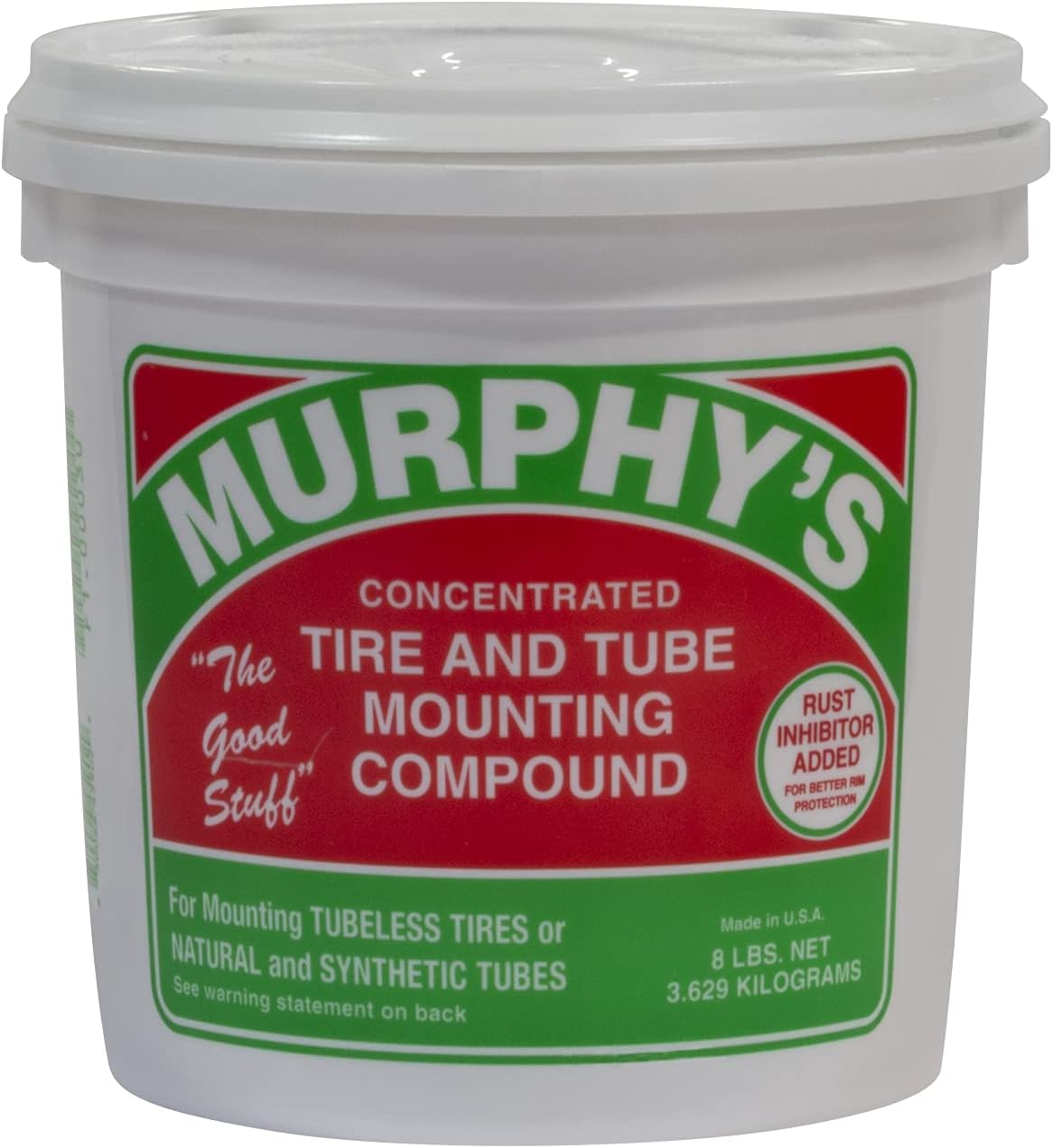
A concentrated tire and tube mounting compound designed to help simplify mounting rubber tires and tubes on passenger, semi truck, construction, and OTR applications. Its ultra-thick formula packs beads effectively and includes rust inhibitors to help protect against corrosion during use.

Monitor tire tread wear with a smart, color-coded depth gauge that shows clear condition ranges at a glance. The bar is range marked for fast, easy readings, helping you maintain safer traction and performance. Each gauge is portable with a pocket clip, and the set includes 20 units for daily use and sharing.

Measure tyre tread depth precisely with a digital gauge that reads in both MM and inches, helping you monitor safe driving conditions. The large LCD screen is easy to operate, and the compact tool fits for cars, trucks, and motorcycles. It provides high accuracy with a 0-25.4mm range and includes a 1-year warranty for added peace of mind.

Related Articles
6 Ply Vs 8 Ply Tires: Which Do You Need?
Torn between 6 ply and 8 ply tires? Discover which one fits your driving needs before you buy.
Read More
265 Vs 285 Tires: Key Differences Explained
Why choose 265 vs 285 tires when the tradeoffs could change your ride, grip, and fitment more than you expect?
Read More
How to Choose Tires for 20×10 Wheels
Just how wide should your tires be for 20x10 wheels, and which size best balances fitment, grip, and clearance?
Read More